The Art of Automotive 3D: Elevating Projects with Premium Car Models
In the dynamic realm of digital design and interactive media, the demand for exceptionally crafted 3D automotive assets has never been higher. From breathtaking cinematic renders and immersive game worlds to cutting-edge AR/VR experiences and detailed product visualizations, a high-fidelity 3D car model serves as the cornerstone of many ambitious projects. The intricate details, realistic textures, and optimized geometry of a professional-grade vehicle asset can truly define the visual quality and performance of a digital environment.
For professionals seeking to infuse their projects with unparalleled realism and versatility, sourcing assets from dedicated marketplaces like 88cars3d.com offers a significant advantage. These platforms specialize in delivering models that are not only visually stunning but also technically robust, designed to integrate seamlessly into diverse production pipelines. Today, we’re diving deep into an exemplary asset that perfectly embodies this blend of luxury and utility: the Mercedes-Benz GLB-Class Mk1 AMG Line 2019 3D Model.
This comprehensive guide will explore the technical nuances of creating, utilizing, and optimizing premium 3D car models, using the Mercedes-Benz GLB-Class Mk1 AMG Line 2019 as our prime example. We’ll delve into file formats, professional workflows in leading software like 3ds Max, Blender, and Unreal Engine, and demonstrate how such a sophisticated asset can transform your automotive rendering, game development, and visualization endeavors.
The Foundation of Digital Realism: Dissecting a Premium 3D Car Model
A truly exceptional 3D car model is far more than just a pretty picture; it’s a meticulously engineered digital object built for performance and precision. The Mercedes-Benz GLB-Class Mk1 AMG Line 2019 3D model from 88cars3d.com stands as a testament to this philosophy, offering a perfect blend of aesthetic fidelity and technical optimization.
Anatomy of the Mercedes-Benz GLB-Class Mk1 AMG Line 2019
The first step in appreciating a high-quality asset is understanding its inherent design and how that is translated into the digital realm. This particular model captures the essence of the Mercedes-Benz GLB-Class (Mk1) AMG Line 2019 with remarkable accuracy:
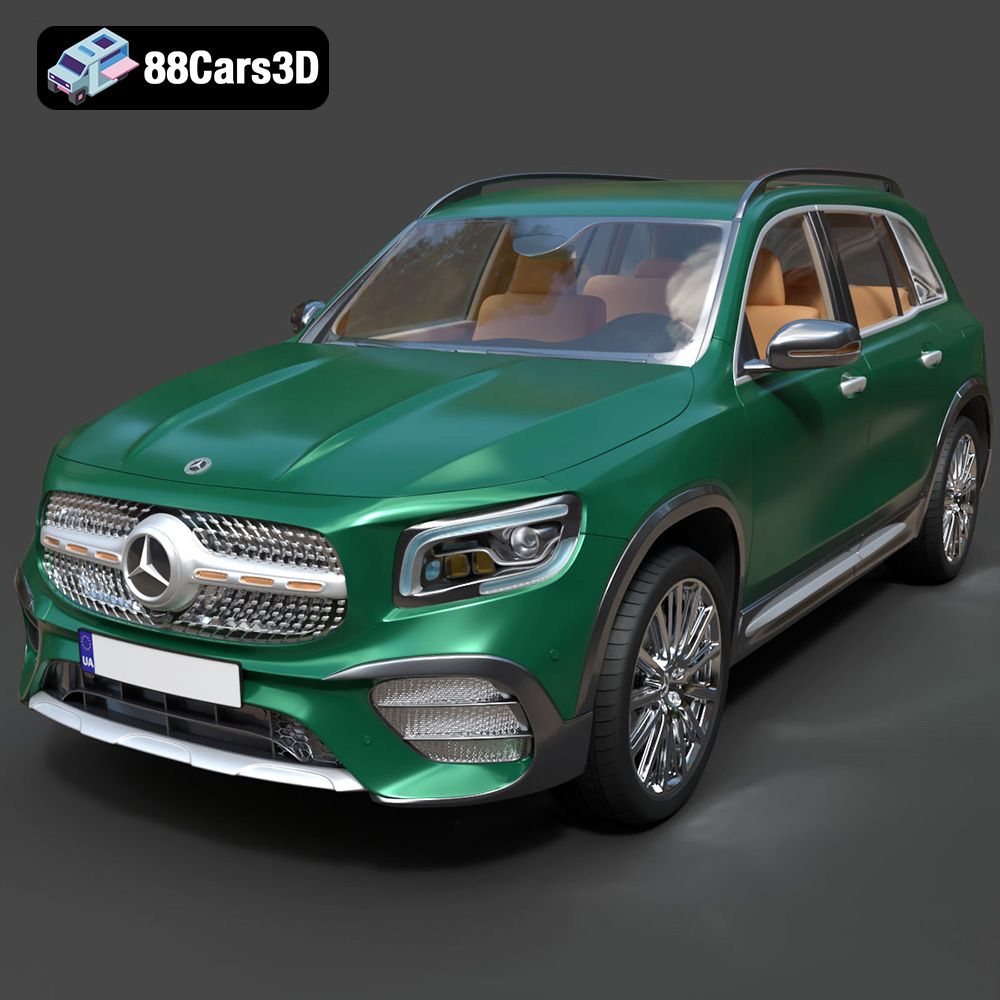
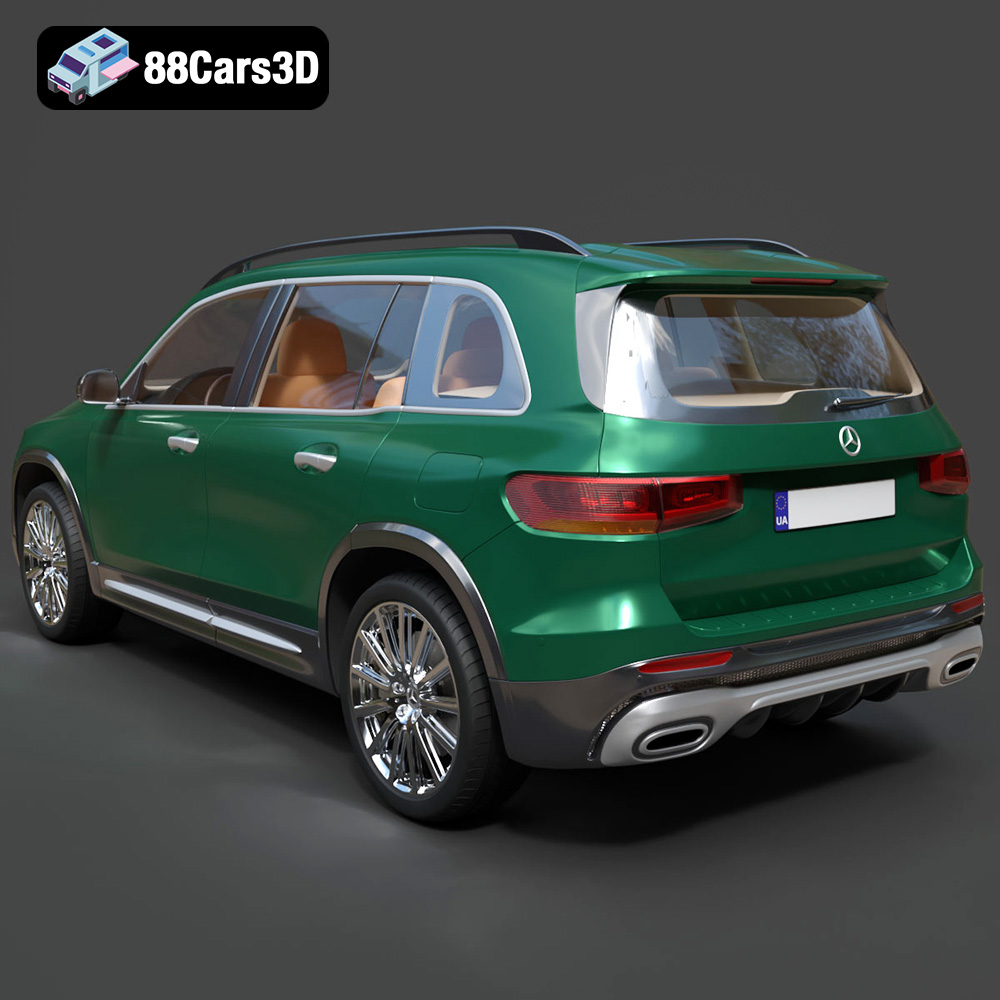
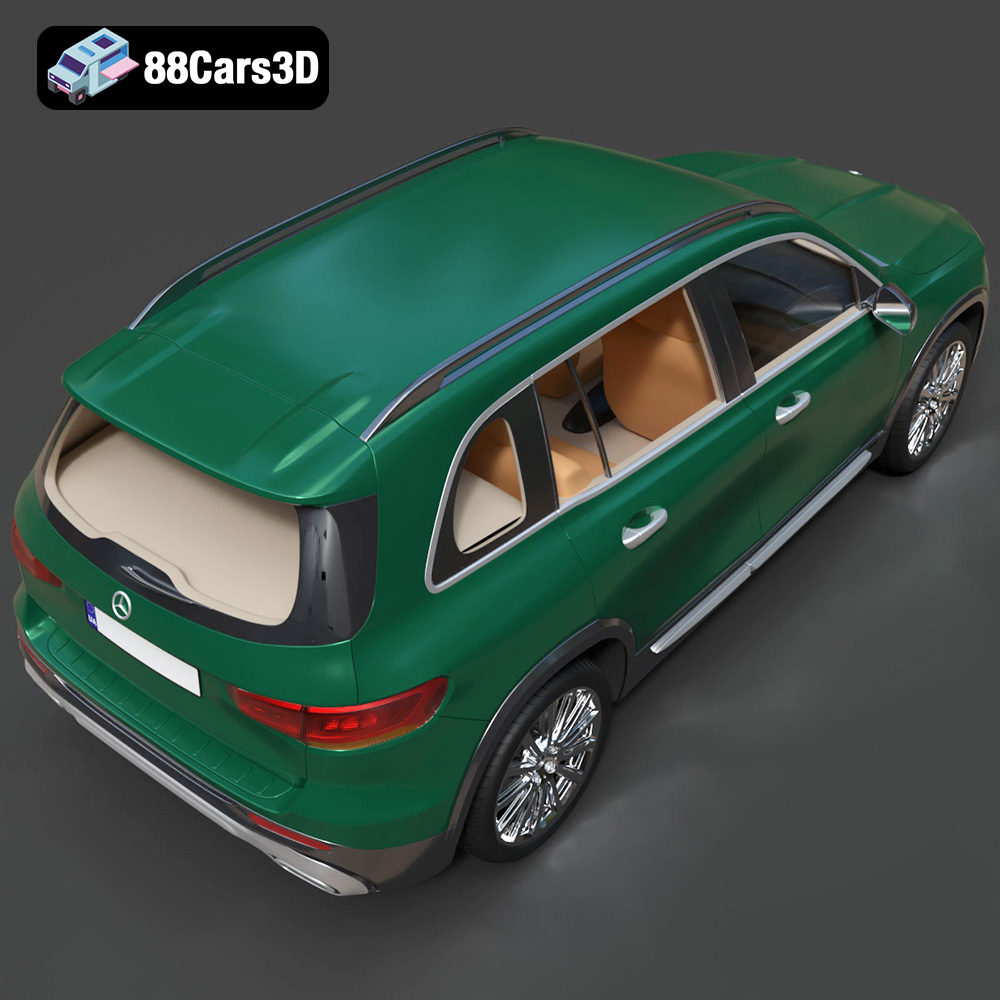
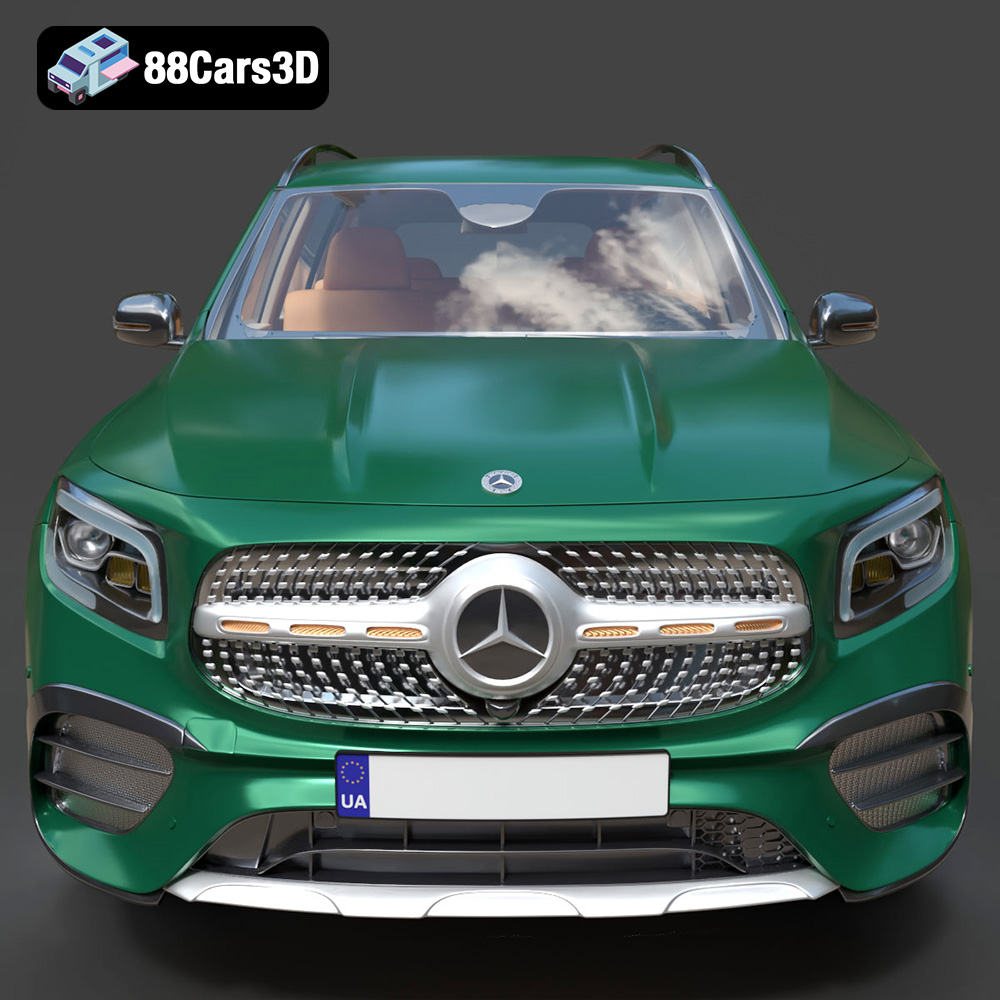
- Exterior Features: The model faithfully replicates the distinctive boxy silhouette and commanding stance of the GLB-Class. The aggressive AMG Line styling cues are all present, from the signature diamond radiator grille and sporty front aprons to the prominent dual exhaust system and rear diffuser. High-detail LED High Performance headlamps and distinctive taillight clusters are precisely modeled, as are the authentic AMG 5-twin-spoke light-alloy wheels and performance tires. Even the sport-tuned suspension detailing and accurate frame geometry and proportions are meticulously accounted for, including a detailed engine block and undercarriage components.
- Cockpit & Interior Features: The interior is equally impressive, crafted for an immersive experience. It features detailed sport seating with intricate stitching and contouring, a Nappa leather multifunction sports steering wheel with precise switchgear, and an accurate MBUX dual-screen digital instrument cluster and infotainment system. The central console, air vents, and pedals are all rendered with attention to detail, making it ideal for first-person POV in gaming and VR simulations.
Technical Fidelity and Optimization
Beyond visual accuracy, the true strength of a professional 3D car model lies in its technical specifications and optimization. The Mercedes-Benz GLB-Class model is built with performance in mind:
- Optimized Topology: With approximately 250,000 triangles, the model strikes an impeccable balance. This “game-ready” polycount ensures exceptional visual realism for high-end rendering while remaining efficient enough for real-time engines like Unreal and Unity. This careful optimization means developers don’t have to compromise between detail and frame rate.
- PBR Texturing: The model leverages Physically Based Rendering (PBR) texturing. This modern texturing workflow ensures that materials respond realistically to light, regardless of the rendering environment. PBR maps (Albedo, Normal, Roughness, Metallic, Ambient Occlusion) provide a consistent and believable appearance, crucial for photorealistic results.
- Real-World Scale and Proper Pivots: Accuracy is paramount. The model is built to real-world scale, based on actual vehicle chassis dimensions. Furthermore, it features proper pivot setups for crucial animated components like steering, wheel rotation, and suspension travel. This attention to detail simplifies animation workflows and ensures realistic movement in simulations or games.
- Compatibility: Designed for maximum versatility, the model is compatible with major 3D software platforms and real-time rendering engines, providing a seamless integration experience for artists and developers across various tools.
Understanding 3D Model File Formats: The Gateway to Versatility
The choice of a 3D model file format is not a trivial decision; it dictates compatibility, workflow efficiency, and the ultimate utility of your digital asset. A comprehensive understanding of these formats is essential for any professional in 3D modeling, game development, or visualization. The Mercedes-Benz GLB-Class Mk1 AMG Line 2019 3D model, available on 88cars3d.com, offers a wide array of formats, ensuring maximum flexibility for diverse projects.
Formats for Production & Interoperability
- .blend – Fully Editable Blender Scene with Materials: Blender’s native file format is a powerhouse for artists working within the Blender ecosystem. A `.blend` file contains the entire scene, including mesh geometry, materials, textures, lighting, cameras, animation data, and even physics simulations. When you download a `.blend` file, you’re getting a fully editable project, allowing for deep customization, modification of topology, tweaking of node-based PBR materials, and integration into existing Blender scenes. This format is ideal for users who want complete control over the asset and intend to perform extensive edits or create custom animations directly within Blender.
- .max – Editable 3ds Max Project for Animation and Rendering: The `.max` format is 3ds Max’s proprietary scene file. Similar to `.blend`, it encapsulates all scene data relevant to 3ds Max, including object geometry, modifiers, materials (often V-Ray, Corona, or standard Max materials), lighting, and animation tracks. For professionals heavily invested in the Autodesk ecosystem, `.max` offers the most robust and editable version of the model, ensuring perfect compatibility with 3ds Max’s extensive toolset for modeling, rigging, animation, and high-fidelity rendering. It’s the go-to for complex architectural visualizations and broadcast-quality renders.
- .fbx – Ideal for Unreal, Unity, and Real-Time Pipelines: Autodesk’s FBX format is arguably the most prevalent interchange format in the 3D industry, particularly for game development and animation. An `.fbx` file efficiently stores 3D models, animation, cameras, and lights, and importantly, it can embed PBR textures. Its robust support across major 3D applications (Blender, 3ds Max, Maya, Cinema 4D) and game engines (Unreal Engine, Unity) makes it a universal choice for real-time applications. When importing into Unreal or Unity, `.fbx` typically brings in the mesh, UVs, basic materials, and skeletal animations with great fidelity, making it highly efficient for game asset integration.
- .obj – Universal Format for Cross-Software Compatibility: The Wavefront OBJ format is a foundational, non-proprietary format known for its excellent cross-software compatibility. An `.obj` file primarily stores geometry data (vertices, normals, texture coordinates, and faces) and can reference an accompanying `.mtl` (material library) file for basic material properties. While it doesn’t support animation or complex scene data like `.fbx`, its simplicity and widespread adoption make it a reliable choice for transferring static meshes between virtually any 3D software. It’s perfect for scenarios where you only need the raw mesh data and plan to set up materials and lighting from scratch in your target application.
Formats for Real-time, AR/VR & Specialized Uses
- .glb – Optimized for AR, VR, and Browser-Based Display: GL Transmission Format Binary (.glb) is a compact, single-file version of the glTF format, specifically designed for efficient transmission and loading of 3D scenes and models in web and AR/VR applications. It’s a “runtime asset delivery format” that includes geometry, materials, textures, and animation data in a single binary file. Its optimization for rapid loading and smaller file sizes makes it the standard for interactive web experiences, mobile AR (like Apple’s AR Quick Look), and immersive VR environments. The Mercedes-Benz GLB-Class in `.glb` format is perfect for virtual showrooms or online configurators.
- .unreal – Engine-Ready Asset for Real-Time Environments: While not a single, universal file extension, the inclusion of an “.unreal” file often implies a packaged asset specifically prepared for Unreal Engine. This typically means the model, its PBR textures, materials, and possibly even pre-setup blueprints or prefabs are ready to be dragged and dropped directly into an Unreal project. This format streamlines the workflow dramatically for Unreal Engine users, saving considerable time on import and material setup.
- .stl – Suitable for 3D Printing Output: The Stereolithography (STL) format is the de facto standard for 3D printing. It represents 3D surfaces as a collection of unconnected triangular facets. While not suitable for rendering or animation (as it lacks color, texture, or material information), it’s essential for converting digital models into physical objects. For the Mercedes-Benz GLB-Class Mk1 AMG Line 2019 model, the `.stl` version allows hobbyists and professionals to print scaled replicas, requiring careful consideration of print settings like scale (1:12 / 1:18 / 1:24 recommended), layer height (0.04–0.12 mm for resin printing), infill, and support structures for detailed parts.
- .ply – Precision Mesh Format for CAD or Analysis: The Polygon File Format (PLY) is a versatile format primarily used for storing 3D data from 3D scanners or for CAD/CAM applications. It can store various properties beyond just geometry, such as color, transparency, normals, texture coordinates, and even reliability information for each vertex and face. While less common for everyday rendering than FBX or OBJ, its precision and ability to carry detailed attribute data make it valuable for scientific visualization, reverse engineering, and applications requiring highly accurate mesh analysis.
Choosing the right format is crucial. For dynamic, game-ready integration, `.fbx` and `.unreal` are king. For detailed customization in dedicated software, `.blend` or `.max` are ideal. For broad compatibility, `.obj` works. And for the exciting new frontiers of AR/VR, `.glb` shines, while `.stl` opens doors to the physical world of 3D printing.
Powering Professional Workflows: Integration and Application
The true value of a premium 3D car model, such as the Mercedes-Benz GLB-Class Mk1 AMG Line 2019, lies in its ability to seamlessly integrate into and enhance various professional workflows. Its meticulous design and technical optimization make it a versatile asset for a wide range of industries.
Game Development and Interactive Experiences
In the fast-paced world of game development, efficiency and visual quality are paramount. The GLB-Class model is explicitly designed to be game-ready, making it an invaluable asset for:
- Racing Games and Open-World Environments: With its optimized polycount (~250,000 triangles) and PBR textures, the model delivers high visual fidelity without bogging down real-time performance. This makes it perfect for populating virtual cities, featuring in high-octane racing simulations, or serving as a player’s primary vehicle in an open-world adventure. The separate components for wheels, suspension, and steering, along with proper pivot setups, allow for realistic vehicle physics and animation within game engines like Unreal Engine and Unity, providing a truly immersive driving experience.
- Virtual Car Configurators: For automotive brands, a virtual configurator is an essential marketing tool. The GLB-Class model’s PBR materials and ability to change body colors, tire textures, and material finishes make it ideal for creating interactive experiences where users can customize their dream car in real-time. The `.glb` format, in particular, excels here, enabling browser-based or mobile AR configurators.
High-End Rendering and Architectural Visualization
For those focused on creating stunning static images or cinematic sequences, the GLB-Class model provides a solid foundation for:
- Brand Campaigns and Lifestyle Shots: Marketing agencies and automotive brands can leverage the model for photorealistic renders that showcase the vehicle in various lifestyle settings. Its detailed geometry, especially for exterior and interior features, holds up under extreme close-ups and high-resolution outputs. Whether rendered in 3ds Max with V-Ray or Corona, or in Blender with Cycles, the PBR texturing ensures that light interacts with the surfaces precisely, yielding breathtakingly realistic results.
- Architectural Visualization (ArchViz): Placing a high-fidelity car model into an architectural scene instantly adds realism, scale, and a touch of luxury. The Mercedes-Benz GLB-Class Mk1 AMG Line 2019, with its commanding presence, can elevate an otherwise sterile architectural render, making an empty building feel lived-in and aspirational. Artists can quickly integrate the model into their scenes, adjusting lighting and materials to match the environment, creating compelling visual narratives.
The Frontier of AR/VR and 3D Printing
Beyond traditional rendering and gaming, this versatile model also caters to emerging technologies:
- Immersive AR/VR Showrooms: Imagine clients walking around a virtual showroom, interacting with the GLB-Class in augmented reality on their mobile device or experiencing it in a full VR environment. The optimized `.glb` format is perfectly suited for these applications, offering efficient loading and smooth performance for immersive virtual showrooms, product demonstrations, or even interactive training simulations.
- 3D Printing for Physical Prototypes or Collectibles: For enthusiasts, designers, or educators, the inclusion of an `.stl` format allows for the physical manifestation of the digital model. Hobbyists can print scaled replicas of the Mercedes-Benz GLB-Class, creating custom display pieces. Designers can use it for rapid prototyping or studying physical forms. The product description even provides specific 3D print settings, recommending scales (1:12 / 1:18 / 1:24), layer heights, and infill percentages, along with crucial advice on supports and post-processing, underscoring the thoughtfulness behind this comprehensive asset.
Mastering the Art of Automotive Rendering: Bringing the GLB-Class to Life
Creating truly photorealistic renders of a 3D car model like the Mercedes-Benz GLB-Class Mk1 AMG Line 2019 involves a deep understanding of PBR texturing, lighting, environment design, and animation principles. These elements work in concert to transform a static model into a dynamic, believable presence.
PBR Texturing and Material Setup
The foundation of realism for the GLB-Class model lies in its PBR texturing. PBR materials accurately simulate how light interacts with surfaces in the real world, leading to consistent and believable results across different lighting conditions:
- Understanding PBR Maps: The model comes equipped with essential PBR maps: Albedo (base color), Normal (for surface detail), Roughness (controlling specularity and reflections), Metallic (defining conductive vs. dielectric surfaces), and Ambient Occlusion (simulating indirect shading). Properly assigning and tweaking these maps in your chosen software (Blender, 3ds Max, Unreal Engine) is crucial.
- Material Creation in Software: In Blender’s Cycles or Eevee, you would typically use a Principled BSDF shader, plugging in the respective texture maps. In 3ds Max, renderers like V-Ray or Corona have their own PBR material types (e.g., V-Ray Physical Material, Corona Physical Material) where these maps can be connected. For Unreal Engine, the process involves importing textures and setting up a material graph using nodes to define the car paint, tire rubber, glass, and chrome. The advantage of a pre-textured model from 88cars3d.com is that much of this setup is already done, requiring only fine-tuning.
- UV Mapping: While often invisible, proper UV mapping is indispensable for PBR textures to display correctly. The GLB-Class model features precise structural proportions and optimized topology, which implies careful UV unwrapping, ensuring textures stretch accurately across the vehicle’s complex surfaces without distortion.
Lighting and Environment Design
Even the most perfectly textured model will look flat without compelling lighting. Lighting is crucial for defining shape, mood, and realism:
- HDRI Lighting for Realism: High Dynamic Range Image (HDRI) maps are widely used to provide realistic, image-based lighting. An HDRI captures the full range of light from a real-world environment, projecting it onto your scene. This provides accurate reflections, global illumination, and ambient light, making the GLB-Class appear truly integrated into its surroundings. Using different HDRIs (e.g., urban street, studio, open field) can drastically alter the mood and context of your render.
- Studio Lighting Setups: For product shots or stylized renders, a controlled studio lighting setup is often preferred. This might involve three-point lighting (key, fill, back light), softbox simulations, or area lights to highlight specific curves and reflections on the GLB-Class’s bodywork. Focusing on reflections on the car paint and chrome accents can dramatically enhance perceived quality.
- Integrating Dynamic Lighting in Real-Time: In game engines, dynamic lighting is crucial. For the GLB-Class in Unreal or Unity, this means setting up real-time sun and sky systems, volumetric fog, and individual light sources (headlights, taillights) that interact with the environment. Performance optimization for dynamic lighting is key to maintaining frame rates in interactive experiences.
Animation and Dynamics
Bringing the Mercedes-Benz GLB-Class to life through movement adds another layer of sophistication:
- Leveraging Separate Components: The model’s design with separate wheels, suspension, and steering components is a significant advantage for animators. This allows for precise control over individual parts, enabling realistic steering, wheel rotation, and suspension compression and rebound over uneven terrain. Rigging these components to an animation skeleton or a physics-based vehicle system in a game engine becomes a much smoother process.
- Setting Up Physics for Game Engines: In Unreal Engine, for instance, you can utilize the Chaos Vehicle physics system or similar tools in Unity to simulate realistic driving dynamics for the GLB-Class. The proper pivot setup for wheels and suspension is vital for these physics simulations to behave correctly, ensuring the car handles and reacts to the environment just like its real-world counterpart. This attention to detail contributes significantly to the immersive quality of racing games and simulators.
Customization and Scalability: Adapting the Mercedes-Benz GLB-Class for Any Project
While the Mercedes-Benz GLB-Class Mk1 AMG Line 2019 3D model arrives with a pristine, high-fidelity appearance, its true power for professionals often lies in its flexibility and the potential for customization. A versatile asset reduces development time and costs by allowing adaptation to various project requirements without starting from scratch.
Personalizing the Digital Automotive Experience
The product description highlights several key customization options that empower artists and developers:
- Change Body Colors: The ability to easily modify the body color is fundamental. Whether a client requires the vehicle in a specific factory shade like Mountain Grey or Cosmos Black, or a completely custom finish to match branding or a unique artistic vision, this flexibility is crucial. In most 3D software, this is a straightforward material parameter adjustment, allowing for rapid iteration and client feedback.
- Modify Tire Textures: Different scenarios demand different tire types. The option to switch between street variants and winter tread textures allows the GLB-Class to fit seamlessly into diverse environments—from a sunny urban street scene to a snow-covered mountain pass. This small detail significantly enhances realism and environmental context.
- Adjust Material Finishes: Beyond color, the material finish profoundly impacts the car’s aesthetic. The model allows for adjustments to finishes such as matte, gloss, metallic, or the addition of carbon fiber accents. This capability opens up a world of possibilities for luxury customization, allowing the digital car to perfectly reflect various trim levels or aftermarket styling preferences.
- Adapt Lighting for Different Environments: While not a direct model customization, the inherent quality of the GLB-Class asset means it reacts beautifully to different lighting scenarios. Artists can adapt the lighting for various daytime or night-time environments, or even dramatic studio setups, knowing the PBR materials will respond realistically to produce stunning results.
The Value of a Versatile Asset
The scalability and customization potential of a high-quality 3D car model like the Mercedes-Benz GLB-Class Mk1 AMG Line 2019 from 88cars3d.com offers significant benefits:
- Reduced Development Time and Cost: Investing in a professionally made asset means avoiding the time and expense of modeling and texturing a car from scratch. The customization options further accelerate workflows, as artists can quickly adapt the existing model rather than creating multiple variations.
- Consistency Across Projects: For studios working on multiple projects, a robust asset library ensures a consistent level of quality. The GLB-Class can be re-purposed for different game titles, visualization projects, or AR/VR experiences, maintaining a high standard of realism and technical optimization across the board.
- Future-Proofing Assets: The optimized topology, PBR materials, and wide range of file formats make this model highly adaptable to evolving technologies and software updates. It’s an investment that will remain relevant and useful for years to come, capable of being integrated into the next generation of real-time engines and rendering solutions.
In essence, a premium 3D car model is not just a digital replica; it’s a flexible foundation upon which countless creative visions can be built and iterated upon with efficiency and unparalleled visual fidelity.
Conclusion
The journey through the intricate world of 3D automotive design reveals that the distinction between a good model and a truly exceptional one lies in its blend of aesthetic precision and technical robustness. The Mercedes-Benz GLB-Class Mk1 AMG Line 2019 3D model exemplifies this pinnacle of digital craftsmanship, offering a comprehensive solution for professionals across game development, architectural visualization, high-end rendering, and emerging AR/VR applications.
From its meticulously replicated exterior and interior features to its optimized polycount and PBR texturing, every aspect of this model is designed for seamless integration and stunning output. The detailed breakdown of file formats – from the editable `.blend` and `.max` to the game-ready `.fbx` and AR/VR-optimized `.glb`, and even the 3D printable `.stl` – underscores its unparalleled versatility. This flexibility ensures that no matter your chosen workflow or target platform, the Mercedes-Benz GLB-Class Mk1 AMG Line 2019 asset provides an ideal starting point.
Ultimately, investing in high-quality 3D car models like this one is an investment in efficiency, realism, and creative potential. It allows artists and developers to focus on innovation and storytelling, confident that their foundational assets are of the highest caliber. For those ready to elevate their projects with premium 3D car models, exploring the extensive collection available at 88cars3d.com is a definitive step towards achieving digital excellence.
Featured 3D Model
Mercedes-Benz GLB-Class Mk1 AMG Line 2019 3D Model Download | STL FBX OBJ GLB Blend
Experience the perfect blend of rugged versatility and premium luxury with our meticulous 3D model of the Mercedes-Benz GLB-Class (Mk1) AMG Line 2019. This compact crossover SUV stands out with its distinctive boxy silhouette, commanding stance, and aggressive AMG Line styling cues, including the signature diamond radiator grille, sporty front aprons, and prominent dual exhaust system. Designed to encapsulate the modern elegance and muscular heritage of the Mercedes-Benz brand, this digital replica captures every striking curve and sophisticated detail. This high-fidelity, game-ready 3D model is meticulously crafted with optimized topology (~250,000 triangles), striking an impeccable balance between exceptional visual realism and efficient real-time performance. Designed for maximum versatility, the model features PBR texturing and precise structural proportions, making it a premium asset for game engines, high-end rendering, and immersive interactive media. Perfect for urban racing games, luxury vehicle configurators, architectural visualizations, and mobile AR experiences.
$19.99
View This Model
Related Tags
.2019
.blend
.fbx
.glb
.luxury suv
.max
.obj
.ply
.rendering
.stl
.unreal
amg-line
car-3d-model
compact-suv
game asset
game-ready
glb-class
low-poly
mercedes-benz
optimized
VR/AR