Get 50% OFF All Premium 3D & STL Models!

In the rapidly evolving world of digital content creation, the demand for highly realistic and meticulously crafted 3D assets has never been greater. From blockbuster video games and cinematic visual effects to immersive architectural visualizations and cutting-edge industrial design, accurate 3D models form the backbone of countless professional projects. Automotive design, in particular, thrives on this digital fidelity, where every curve, shadow, and material finish contributes to the overall impact. High-quality 3D car models are not just static objects; they are dynamic tools that drive innovation, streamline workflows, and enable creators to push the boundaries of visual storytelling.
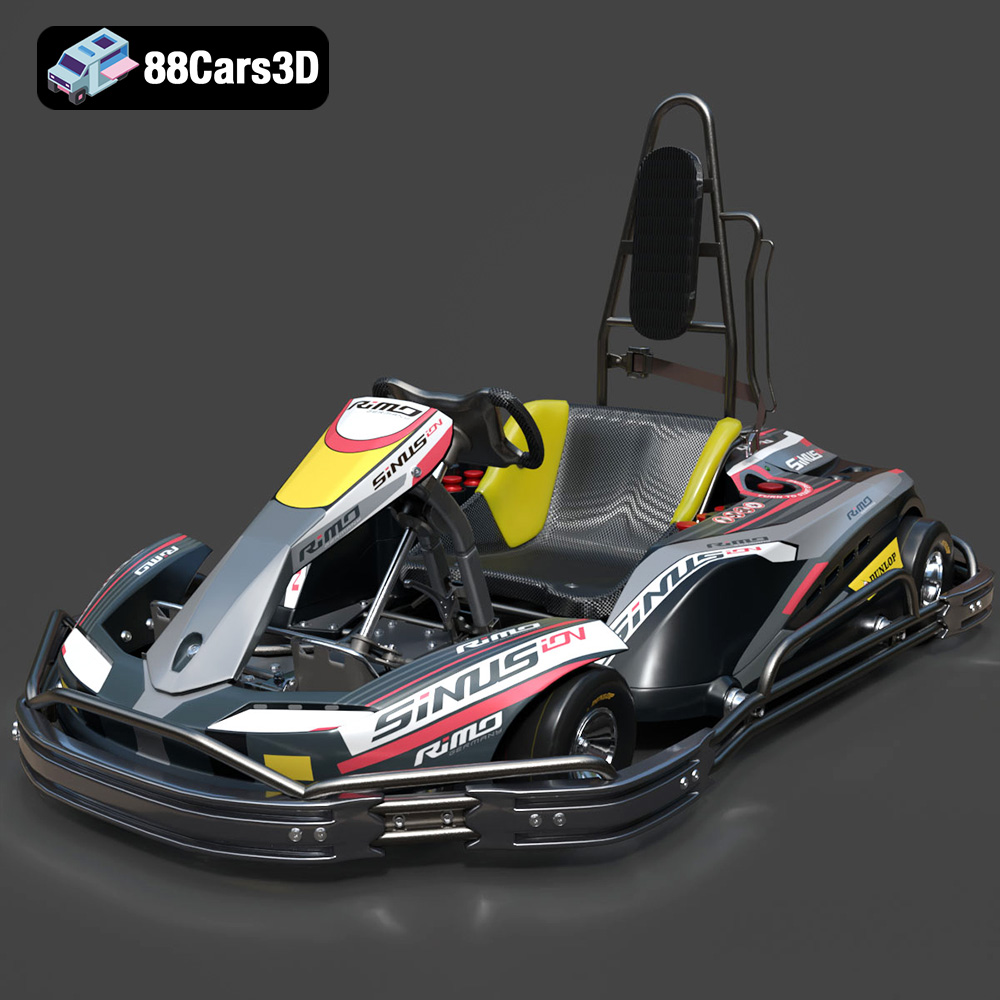
Today, we delve into the intricate world of professional 3D car models, exploring their technical nuances, diverse applications, and the significant advantages they offer. We’ll examine specific workflows in industry-standard software like 3ds Max and Blender, discuss optimization for real-time engines such as Unreal Engine, and touch upon emerging uses in AR/VR and 3D printing. As a prime example of a versatile, high-fidelity asset, we’ll feature the RiMO SiNUS iON-001 Kart 3D Model, an exceptional offering that encapsulates precision, realism, and cross-platform compatibility, available on marketplaces like 88cars3d.com.
The journey of any 3D model begins with its file format. Each format serves a specific purpose, offering unique advantages in terms of compatibility, data retention, and optimization for particular applications. Understanding these distinctions is crucial for anyone working with 3D car models, ensuring seamless integration into various pipelines and maximizing project efficiency. The RiMO SiNUS iON-001 Kart 3D Model, for instance, comes equipped with a comprehensive suite of formats, catering to virtually every professional need.
The .blend file is the native format for Blender, a powerful open-source 3D creation suite. When you receive a .blend file, you’re not just getting the geometry; you’re getting a fully editable Blender scene. This includes all materials (often set up for Cycles or Eevee rendering engines), lighting setups, camera positions, modifiers, animation data, and even custom scripts. For artists who prefer Blender, the .blend format for the RiMO SiNUS iON-001 Kart provides the ultimate flexibility for customization, allowing for deep modifications to the model, retexturing, or integrating it into an existing Blender scene with minimal effort. It’s an all-in-one package for Blender users, ensuring consistency and ease of use.
Developed by Autodesk, the .fbx (Filmbox) format has become the de facto standard for exchanging 3D data between various software applications, especially within game development. It’s renowned for its ability to store not just geometry, but also materials, textures, animations, skinning, and camera data. For game engines like Unreal Engine and Unity, an .fbx file of the RiMO SiNUS iON-001 Kart is typically game-engine ready, providing a robust and reliable way to import complex animated or static assets. Its widespread support makes it indispensable for real-time pipelines and collaborative projects.
The .obj (Wavefront OBJ) format is one of the oldest and most universally supported 3D file formats. It primarily stores geometric data – vertices, faces, UV coordinates, and normals – making it highly compatible across virtually all 3D software. While it can reference external material files (.mtl), it doesn’t embed animations or complex scene data. The .obj version of the RiMO SiNUS iON-001 Kart is perfect for users who need raw, clean geometry for importing into specialized modeling software, CAD programs, or for situations where only the mesh data is required, offering excellent cross-software compatibility.
The .glb (GL Transmission Format Binary) is a relatively new but rapidly growing format, particularly optimized for AR (Augmented Reality), VR (Virtual Reality), and web-based applications. It’s a binary container format that embeds the 3D model, textures, and animations into a single, compact file. This self-contained nature and efficiency make the .glb version of the RiMO SiNUS iON-001 Kart ideal for quick loading in browsers, mobile AR apps, and VR experiences, where performance and ease of distribution are paramount. It’s a fantastic choice for showcasing interactive 3D content online.
The .stl (Stereolithography) format is the cornerstone of 3D printing. It represents a 3D model as a series of connected triangles, defining only the surface geometry of an object. It lacks color, texture, or material information, focusing purely on the form factor necessary for physical fabrication. The .stl variant of the RiMO SiNUS iON-001 Kart is perfectly suited for bringing the digital model into the physical world, allowing for rapid prototyping, creating scale models, or even producing custom parts using additive manufacturing techniques.
The .ply (Polygon File Format) is another popular format for storing 3D data, particularly known for its ability to represent precision meshes and point clouds. It can store various properties beyond just geometry, such as color, transparency, and even texture coordinates for each vertex. It’s often used in scientific applications, 3D scanning, and reverse engineering, where accurate representation of complex surfaces and detailed analysis are critical. The .ply file for the RiMO SiNUS iON-001 Kart could be valuable for engineers or designers needing a highly detailed polygon mesh for further analysis or integration into CAD-centric workflows.
While not a standalone general-purpose format, the .unreal designation often refers to assets specifically configured or packaged for seamless integration into Unreal Engine. This implies that the model has been optimized, potentially with correct scale, material setups (PBR), collision meshes, and LODs (Levels of Detail) already prepared within an Unreal project structure or as a UAsset. The .unreal package for the RiMO SiNUS iON-001 Kart signifies a truly ‘plug-and-play’ solution for developers working in Unreal, drastically reducing setup time and ensuring optimal performance within the engine.
Finally, the .max file is the native project format for Autodesk 3ds Max, a leading software for 3D modeling, animation, and rendering. Similar to .blend, a .max file encapsulates the entire scene, including geometry, materials (often V-Ray, Corona, or Arnold specific), lighting, cameras, animation timelines, and scene configurations. For professionals working in 3ds Max, the .max version of the RiMO SiNUS iON-001 Kart offers complete creative control, enabling advanced rendering, complex animation sequences, or integration into sophisticated architectural or product visualization projects. It’s the full native package for 3ds Max users.
Beyond the raw geometry, it’s the rendering process that truly breathes life into 3D car models. Automotive rendering is a specialized skill, demanding an understanding of light, shadow, reflections, and material properties to achieve photorealism. A high-quality asset like the RiMO SiNUS iON-001 Kart 3D Model provides the perfect foundation, but the final output relies on expert rendering techniques.
Modern rendering relies heavily on Physically Based Rendering (PBR), a methodology that accurately simulates how light interacts with surfaces in the real world. This involves meticulously crafted PBR texture maps such as Albedo (base color), Normal (surface detail), Roughness (micro-surface imperfections), Metallic (conductive vs. dielectric properties), and Ambient Occlusion (contact shadows). For the RiMO SiNUS iON-001 Kart, having clean UVs (unwrapped texture coordinates) and well-prepared PBR textures ensures that its bodywork, tires, and chassis components will respond realistically to light, whether in 3ds Max with V-Ray or in Blender with Cycles.
Effective lighting is paramount. High Dynamic Range Images (HDRIs) are commonly used to capture real-world lighting environments, providing accurate reflections and ambient illumination. Combining HDRIs with targeted area lights, spot lights, and volumetric effects can create dramatic and compelling visuals. For automotive rendering, showcasing the kart’s sleek lines and dynamic form requires careful attention to rim lighting, reflections in its painted surfaces, and subtle shadowing that defines its contours. A well-constructed model allows artists to focus on the artistic aspects of lighting rather than wrestling with mesh errors.
The materials applied to the RiMO SiNUS iON-001 Kart model contribute significantly to its realism. This includes complex multi-layered car paint shaders that simulate clear coat, metallic flake, and base color; realistic rubber for tires; chrome for metallic accents; and textured plastics for interior elements. After rendering, post-processing in software like Adobe Photoshop or DaVinci Resolve further enhances the image, adding effects like depth of field, motion blur, color grading, and lens flares to achieve that final, polished, magazine-quality look. The precision of the 3D model ensures that these intricate material properties are rendered without artifacts.
While photorealistic rendering aims for ultimate fidelity, real-time applications like video games demand a delicate balance between visual quality and performance. High-fidelity 3D car models like the RiMO SiNUS iON-001 Kart must be meticulously optimized to run smoothly in game engines like Unreal Engine and Unity, forming essential “game assets.”
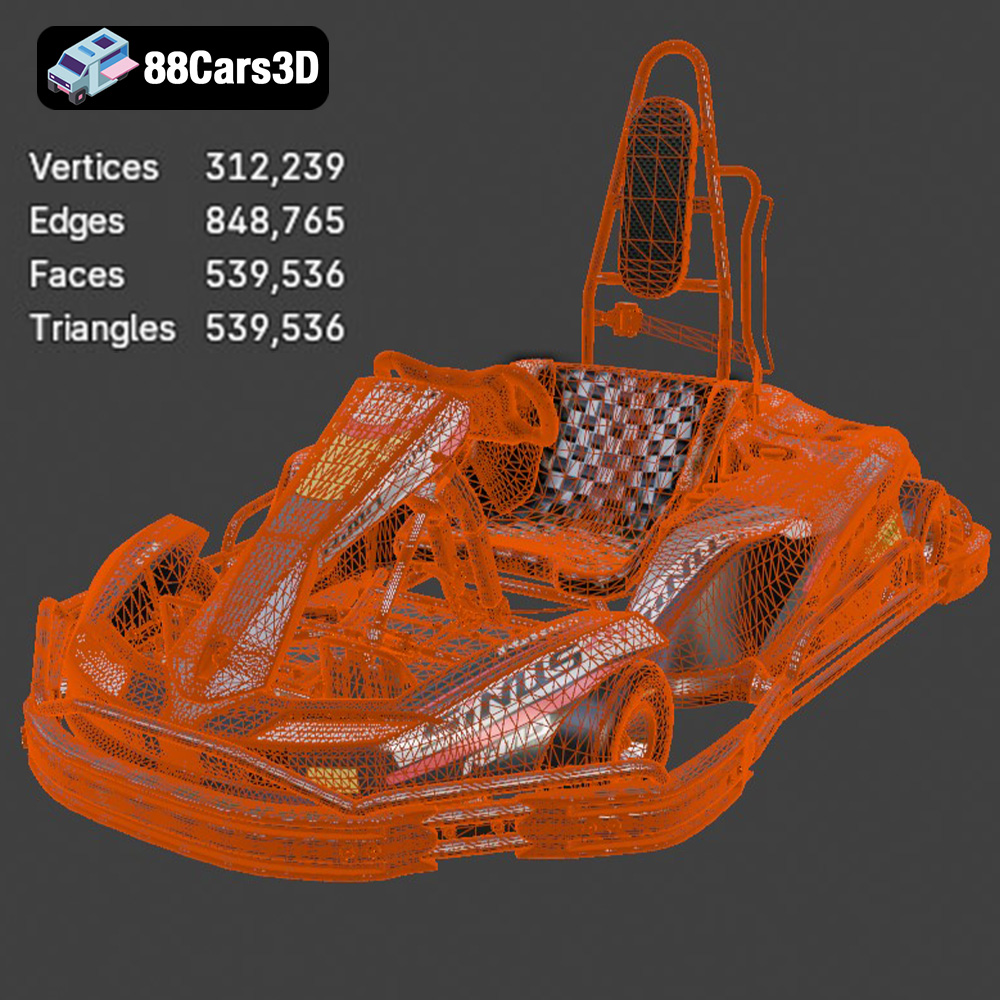
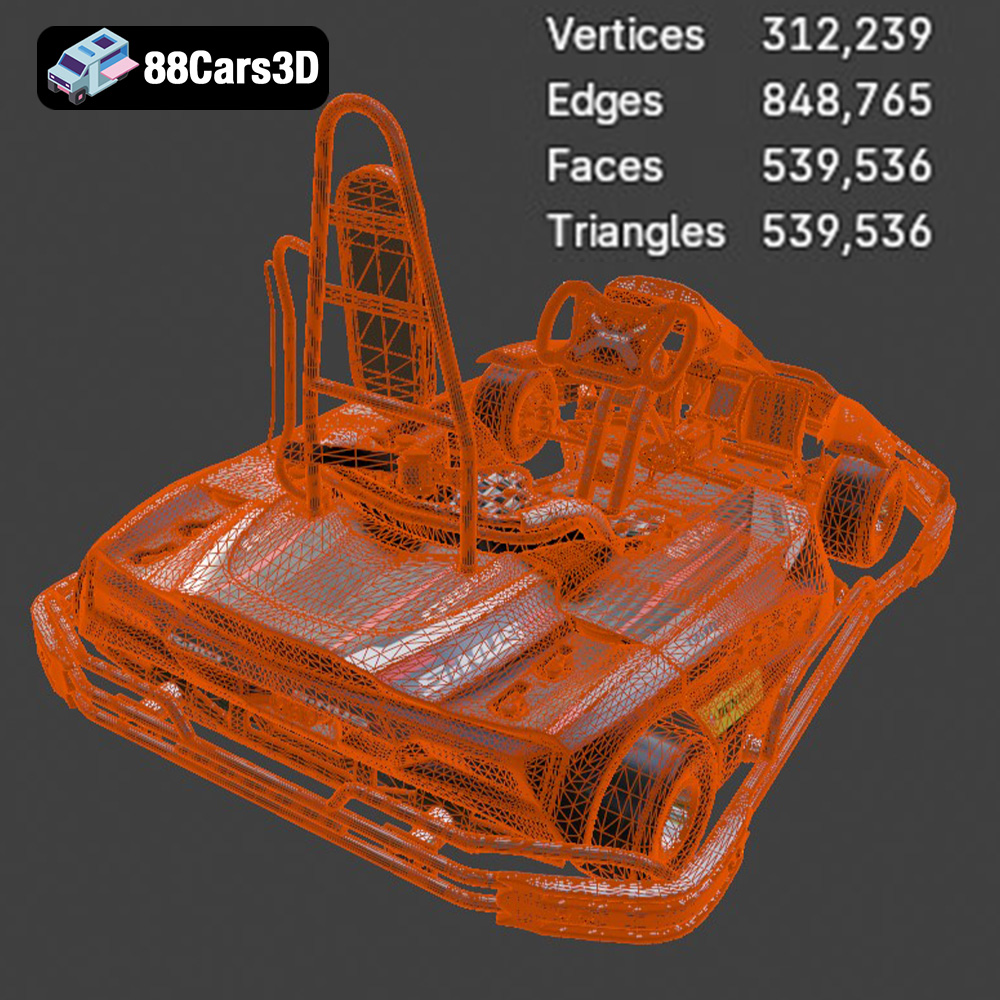
Every polygon in a scene consumes computational resources. For game assets, managing polygon counts (the “poly budget”) is crucial. While a high-resolution model is excellent for cinematic renders, a game-ready version requires careful decimation. This is where Levels of Detail (LODs) come into play. Multiple versions of the RiMO SiNUS iON-001 Kart would be created, each with progressively lower polygon counts, displayed based on the camera’s distance from the object. This ensures that when the kart is far away, the engine renders a simpler, less resource-intensive mesh, significantly improving frame rates without noticeable visual degradation.
For a kart in a racing game, accurate physics and collision detection are paramount. Separate, simpler collision meshes are often created for the RiMO SiNUS iON-001 Kart. These “invisible” meshes are used by the game engine’s physics system to calculate impacts and interactions, being much less complex than the visual mesh to ensure real-time performance. Furthermore, setting up physics constraints, wheel colliders, and suspension systems within Unreal Engine or Unity allows the kart to react realistically to the game world, transforming a static 3D car model into a dynamic, playable vehicle.
Beyond geometry, texture size and material complexity greatly impact real-time performance. Game assets utilize highly optimized texture atlases (combining multiple textures into one) and compressed formats. In Unreal Engine, Material Instancing is a powerful technique where a master material defines the core properties, and instances are created to vary parameters like color or roughness without compiling new shaders, saving draw calls and improving performance. For the RiMO SiNUS iON-001 Kart, this means maintaining its visual quality across different kart variations or liveries efficiently.
The utility of premium 3D car models extends far beyond traditional screens. Augmented Reality (AR), Virtual Reality (VR), and 3D printing represent exciting new frontiers for interacting with digital content, and the RiMO SiNUS iON-001 Kart 3D Model is perfectly positioned for these innovative applications.
AR and VR offer unprecedented levels of immersion, allowing users to experience the RiMO SiNUS iON-001 Kart in a completely new way. Imagine placing a life-sized virtual kart in your living room via your smartphone’s AR camera, or “sitting” inside the kart in a VR simulation. The .glb file format, with its compact size and self-contained nature, is ideal for these scenarios. It ensures quick loading and smooth interaction on various devices, making it a powerful tool for product showcases, interactive training modules, or even virtual showrooms where potential buyers can explore the kart’s design in a truly engaging manner.
The .stl file for the RiMO SiNUS iON-001 Kart bridges the gap between digital design and physical reality. This format allows the model to be sent directly to a 3D printer, fabricating a physical replica. This capability is invaluable for various purposes: creating scale models for display, prototyping custom modifications to the kart’s design (e.g., experimenting with different spoiler shapes or chassis components), or even producing parts for educational purposes. For designers and engineers, 3D printing a physical representation provides tactile feedback and allows for real-world testing of ergonomic or aesthetic considerations that might be missed in a purely digital environment.
Whether in AR, VR, or web-based applications, high-quality 3D car models enable interactive visualization tools. Imagine a web configurator where customers can customize the RiMO SiNUS iON-001 Kart’s paint color, wheel types, or decals in real-time. This level of interaction is not only engaging but also highly effective for sales and marketing, providing a rich, detailed preview that static images cannot match. Leveraging formats like .glb, such interactive experiences become accessible directly through a web browser, democratizing access to complex 3D visualizations.
The versatility and technical robustness of 3D car models like the RiMO SiNUS iON-001 Kart make them indispensable across a spectrum of professional industries. Let’s explore how studios and individual creators leverage these assets in real-world scenarios.
For automotive brands, high-quality 3D car models are a cornerstone of modern marketing. Instead of costly physical photoshoots, companies can produce stunning, photorealistic images and animations of their vehicles in any environment imaginable, long before a physical prototype exists. A studio might use the .max file of the RiMO SiNUS iON-001 Kart within 3ds Max, rendering breathtaking promotional videos with V-Ray or Corona. This allows for rapid iteration on visual campaigns, showcasing various color options, accessories, or even demonstrating performance characteristics through dynamic animation, all without ever leaving the digital realm. The cost savings and creative freedom are immense.
Game developers constantly seek to populate their virtual worlds with authentic and engaging content. A racing game studio might acquire the RiMO SiNUS iON-001 Kart as a game asset from 88cars3d.com, leveraging its .fbx or .unreal formats. They would then integrate it into Unreal Engine, applying the pre-configured materials, setting up advanced physics, and potentially creating a series of LODs to ensure optimal performance across different gaming platforms. Similarly, simulation developers for training or research purposes require precise 3D models to build accurate virtual environments, where the kart’s exact dimensions and visual fidelity are critical for realistic user experiences.
Beyond entertainment, industrial designers utilize 3D car models for rapid prototyping and visualization. A design firm tasked with conceptualizing a new electric kart might use the RiMO SiNUS iON-001 Kart as a reference or a base model in Blender (using the .blend file). They could then modify its geometry, experiment with new materials, and visualize design iterations in a virtual space. This iterative process, supported by high-fidelity models, significantly reduces development cycles and manufacturing costs by identifying potential issues or refining aesthetics before physical production begins. Furthermore, the .ply or .stl formats could be used for advanced analysis or 3D printing quick physical mock-ups.
In a world saturated with digital content, the distinction between a generic 3D model and a professionally crafted asset is profound. Investing in high-quality 3D car models is not merely an aesthetic choice; it’s a strategic decision that impacts project efficiency, visual integrity, and overall professional output.
Creating a detailed 3D model from scratch, like the RiMO SiNUS iON-001 Kart, requires hundreds of hours of skilled labor – from meticulous blueprint matching and polygonal modeling to UV unwrapping, texturing, and material setup. Purchasing a pre-made, high-quality asset from a reputable source like 88cars3d.com instantly bypasses this extensive process. This translates into significant time savings for individual artists and studios, allowing them to focus on creative direction, rendering, or game development rather than foundational asset creation, drastically reducing project timelines and associated costs.
Professional 3D models are built with clean topology, proper scale, non-overlapping UVs, and optimized geometry. This technical precision is vital for seamless integration into various software and workflows. A poorly constructed model can lead to frustrating issues: rendering artifacts, unwieldy poly counts, problematic UVs that make texturing a nightmare, or compatibility errors when importing into game engines. The RiMO SiNUS iON-001 Kart 3D Model, with its clean geometry and diverse file formats, offers reliability, ensuring that it performs as expected across all your chosen applications, from 3ds Max to Unreal Engine.
Ultimately, the quality of a 3D model directly translates to the visual fidelity of your final output. Whether it’s a photorealistic render for an advertisement, a responsive game asset, or an interactive AR experience, a well-modeled and textured asset stands out. The meticulous detail and realistic materials of the RiMO SiNUS iON-001 Kart ensure that it will elevate any project it’s integrated into, providing consistent visual excellence. This consistency is crucial for brand image, user engagement, and achieving professional-grade results across all media.
The digital landscape is continually pushing the boundaries of what’s possible, and at the heart of much of this innovation lies the humble 3D model. As we’ve explored, a high-quality 3D car model is far more than just a collection of polygons; it’s a meticulously engineered digital asset, ready to be deployed across a multitude of applications, from cinematic automotive rendering to exhilarating game development and immersive AR/VR experiences. The choice of file format, from the comprehensive .blend and .max files to the game-engine ready .fbx and .unreal, and the 3D-print friendly .stl, dictates its journey and ultimate utility.
The RiMO SiNUS iON-001 Kart 3D Model stands as a testament to the power of precision and versatility in digital asset creation. Its clean geometry, realistic materials, and extensive format support make it an invaluable tool for professionals and enthusiasts alike. Whether you’re a game developer seeking compelling game assets, a visualization artist aiming for photorealism, or an innovator exploring AR/VR frontiers, this model offers a robust and reliable foundation for your creative endeavors. When seeking premium 3D car models that deliver on quality, technical excellence, and broad compatibility, look no further than the curated selection available at 88cars3d.com.
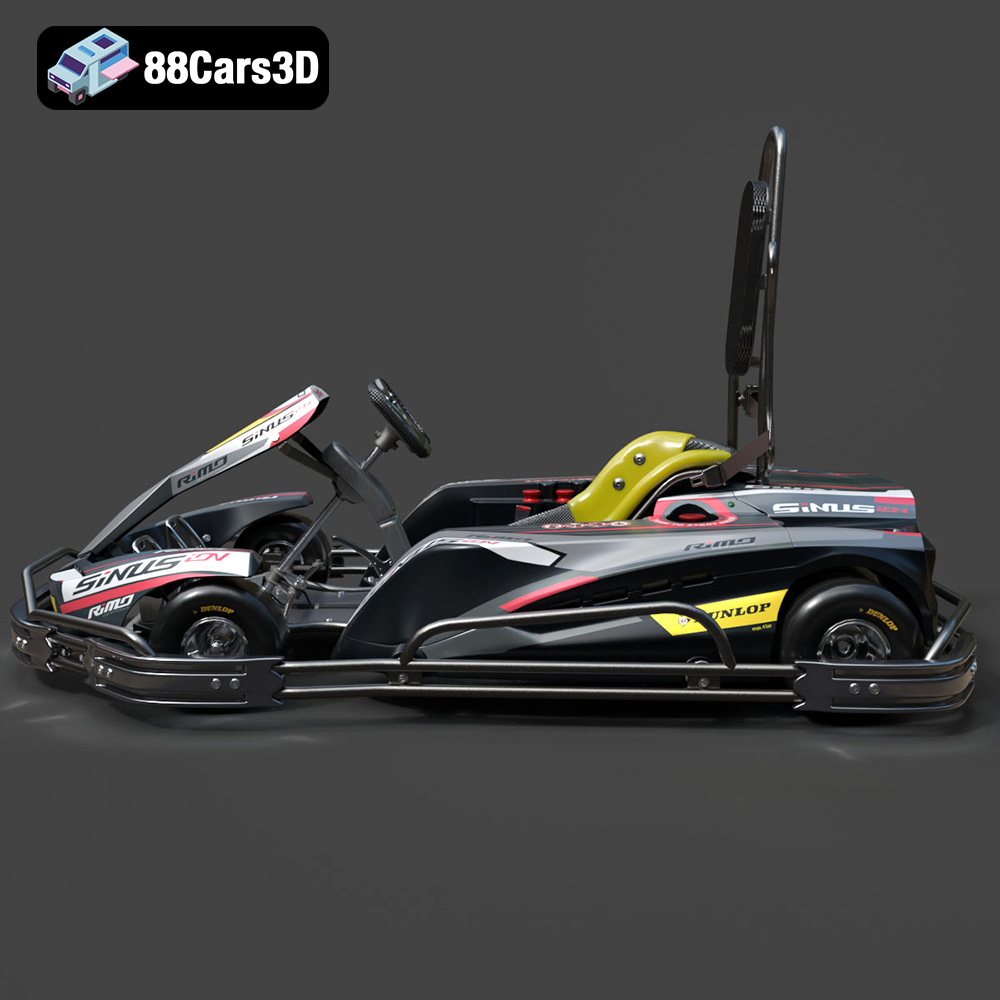
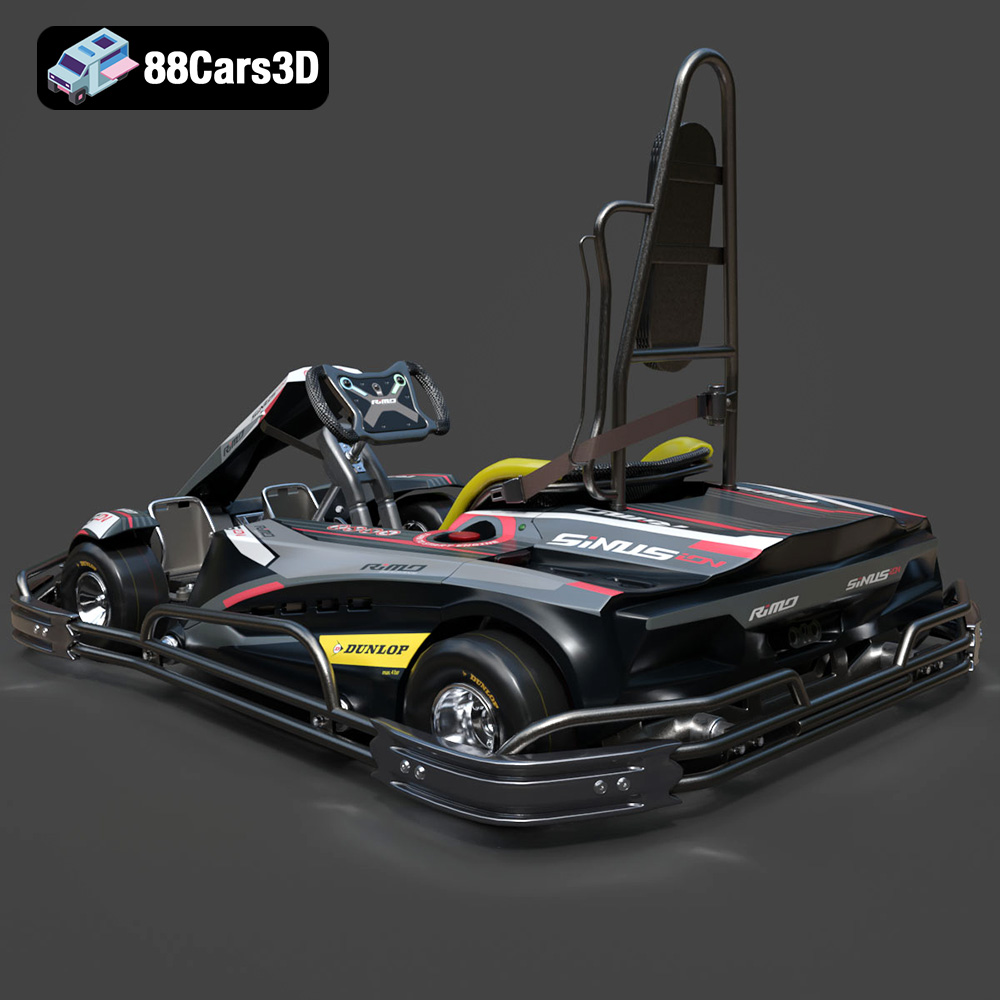
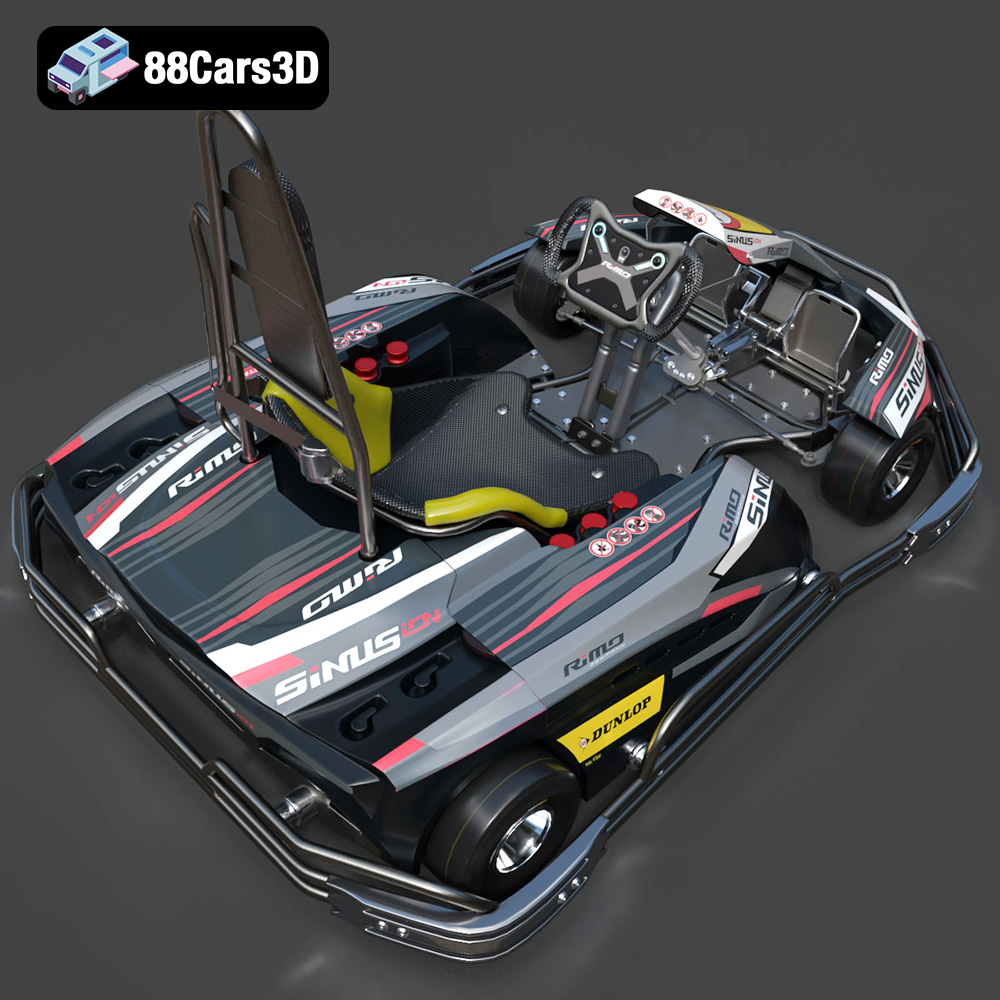
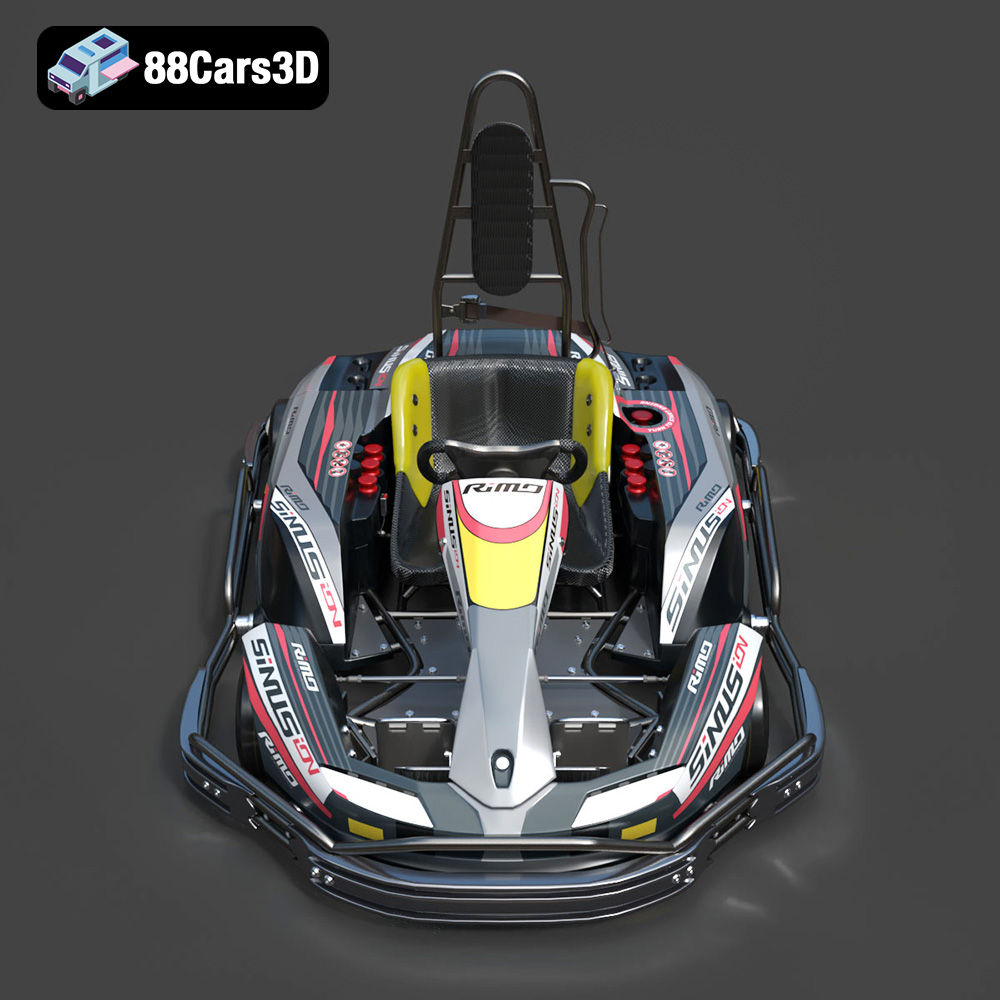
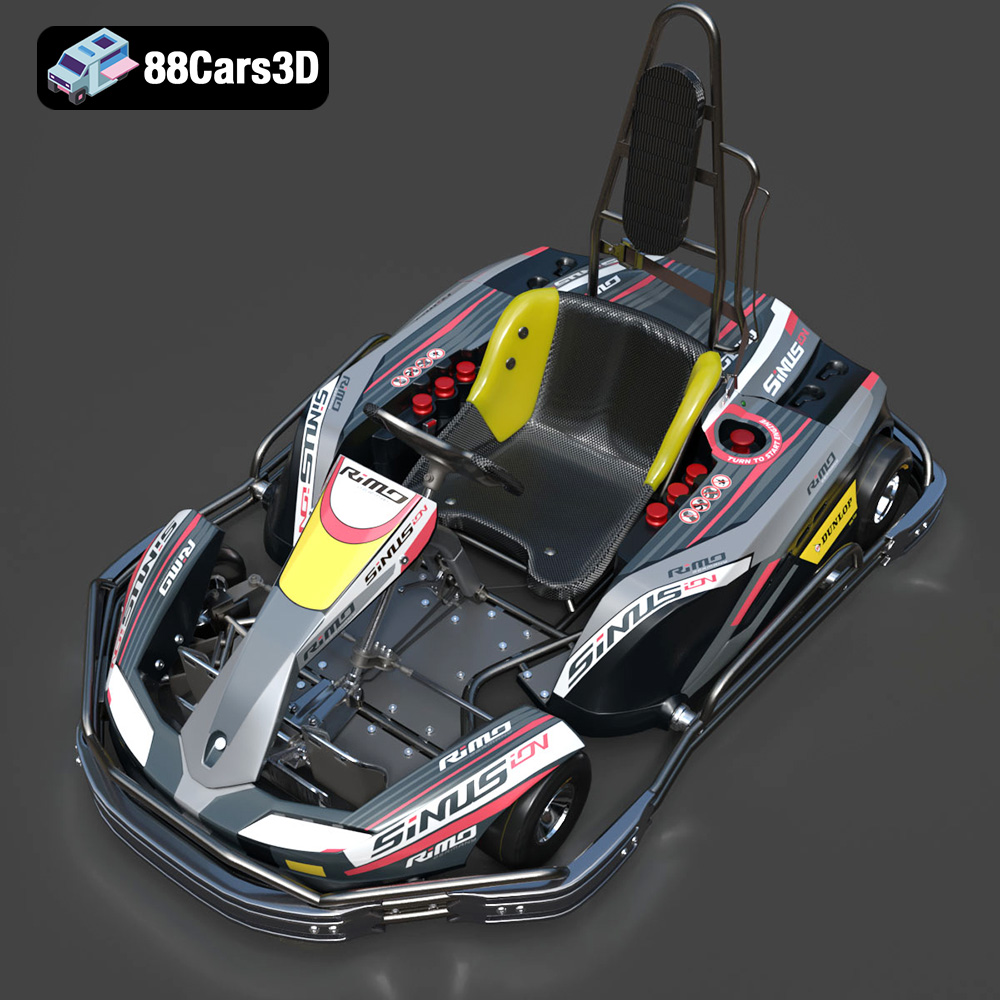
Experience the thrill of the race with this highly detailed 3D model of the RiMO SiNUS iON-001 Kart. Crafted with precision, this model captures the essence of speed and agility, making it perfect for a variety of applications. This 3D model features clean geometry and realistic materials, ensuring a visually stunning representation. Every detail has been meticulously recreated to provide a professional-quality asset that stands out. Ideal for game development, rendering projects, AR/VR experiences, and visualization, this RiMO SiNUS iON-001 Kart 3D model is versatile and ready to enhance your projects. Whether you’re creating a racing game, a simulation, or a presentation, this model delivers exceptional quality and realism. Provided File Formats: .blend – Editable Blender file with materials and lighting setup; .fbx – Game-engine ready format for Unreal Engine and Unity; .obj – Standard 3D model format compatible with all major software; .glb – Optimized for AR/VR and web-based visualization; .stl – Suitable for 3D printing and prototyping; .ply – Detailed polygon mesh for analysis and visualization; .unreal – Pre-configured for Unreal Engine use; .max – Editable 3ds Max file for rendering and animation.
$19.99
.arvr
.blend
.car3dmodel
.fbx
.gameasset
.glb
.kart
.max
.obj
.ply
.rendering
.rimo
.simulation
.sinusion001kart
.stl
.unreal