Get 50% OFF All Premium 3D & STL Models!

In the dynamic worlds of automotive design, advanced visualization, game development, and interactive media, the demand for truly exceptional 3D car models has never been higher. Professionals across these industries understand that the quality of their digital assets directly correlates with the impact and realism of their final output. From stunning photorealistic renders that captivate audiences to perfectly optimized game assets that deliver seamless performance, the foundation of every successful project lies in meticulously crafted 3D models.
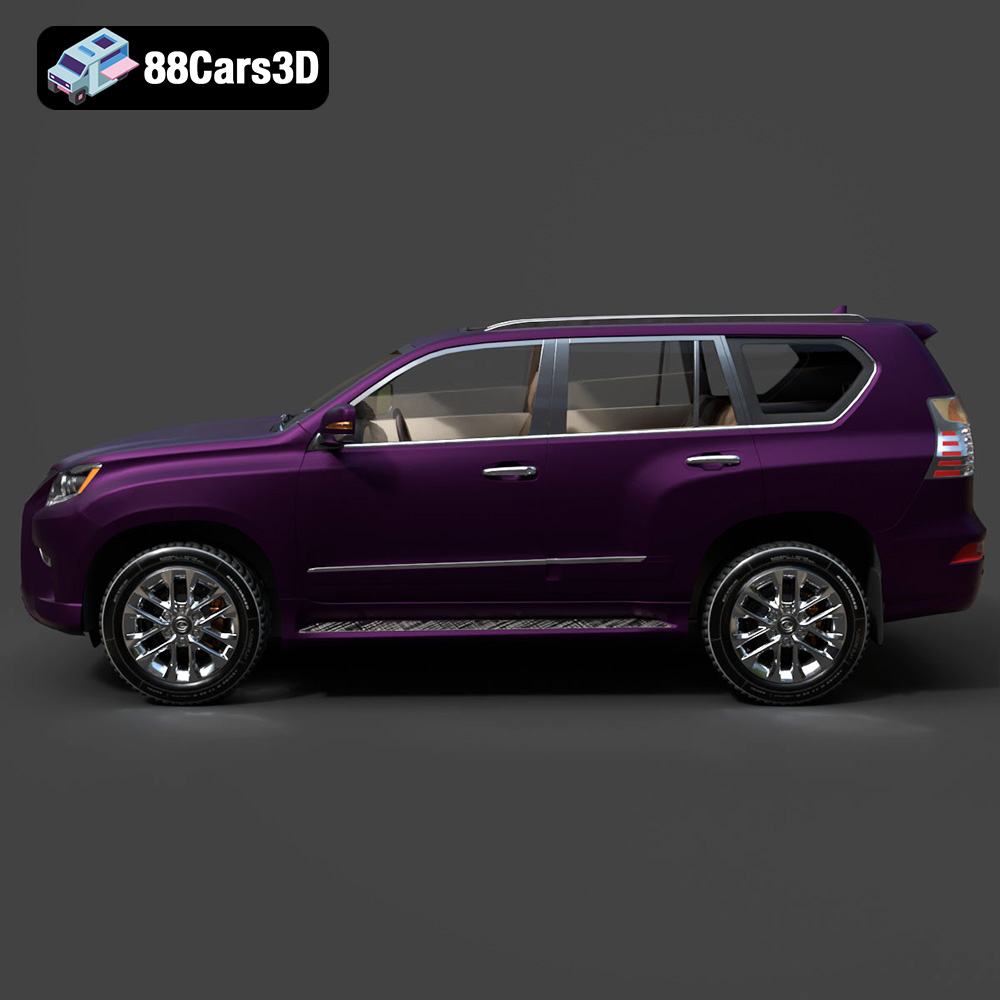
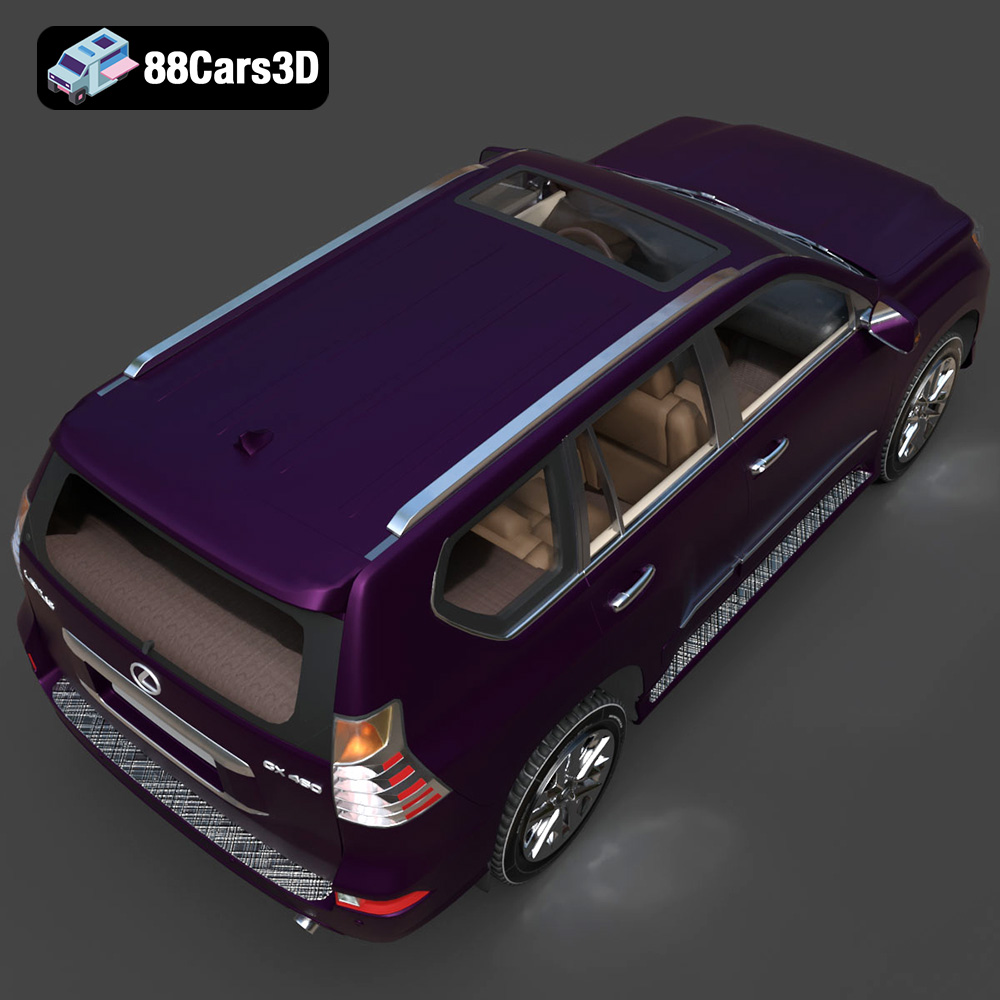
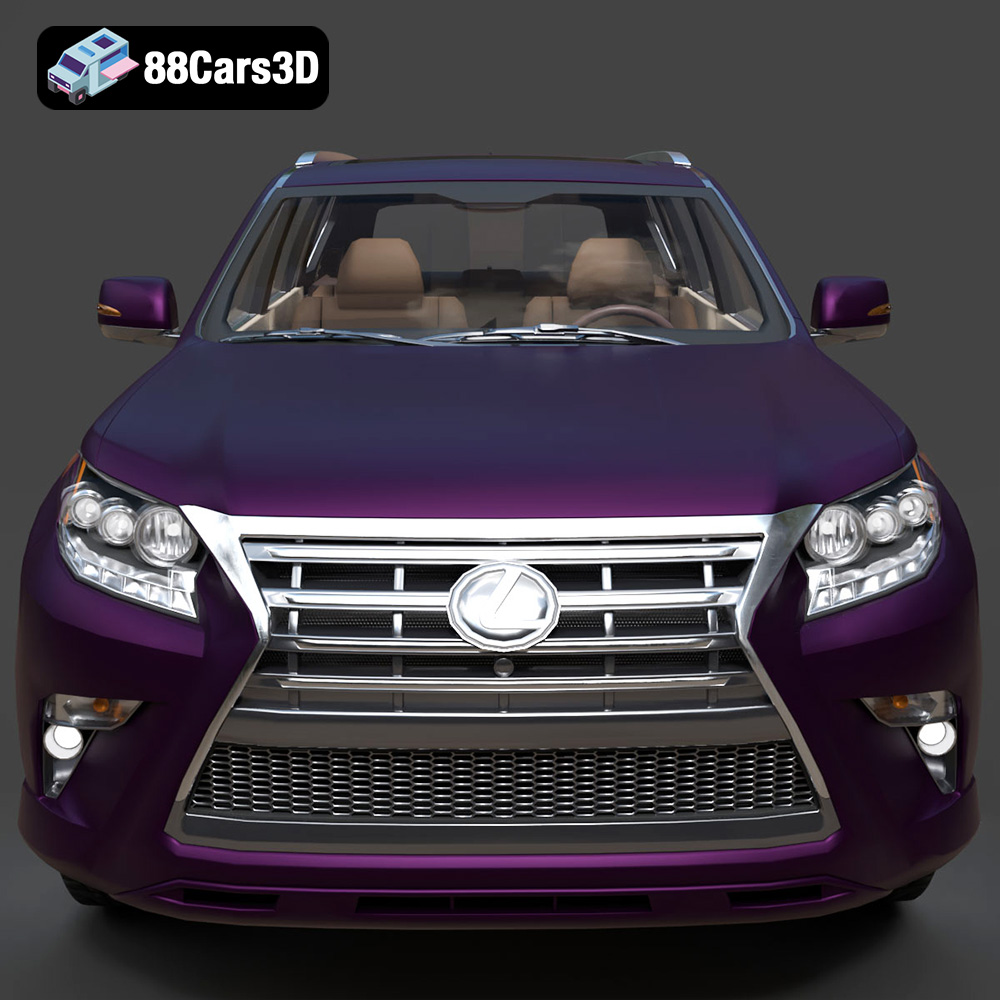
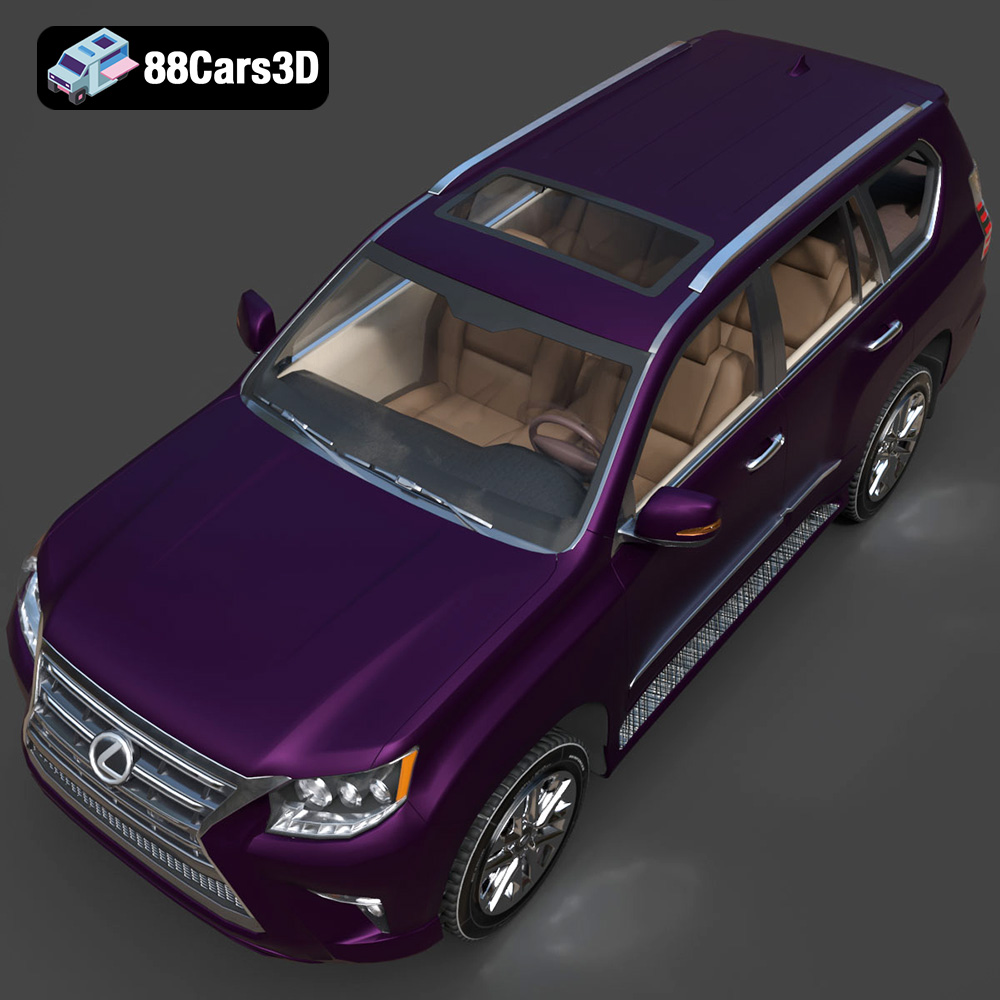
A premium 3D car model isn’t just a collection of polygons; it’s a digital blueprint, an artistic statement, and a powerful tool designed to integrate flawlessly into complex production pipelines. It embodies countless hours of skilled modeling, precise texturing, and intelligent optimization. Take, for instance, the Lexus GX460 2014 3D Model available on 88cars3d.com. This asset exemplifies the meticulous attention to detail and technical robustness required by today’s leading professionals. Its accurate representation of the iconic SUV, coupled with its versatile file formats, positions it as an invaluable resource for anyone aiming to elevate their digital projects, whether for a high-end commercial visualization or an immersive virtual reality experience.
This comprehensive guide delves into the technical intricacies, diverse applications, and workflow advantages that high-quality 3D car models bring to the table. We’ll explore how models like the Lexus GX460 2014 integrate into professional pipelines, from detailed rendering in 3ds Max and Blender to real-time deployment in Unreal Engine, and even preparing for 3D printing. Understanding the nuances of these digital assets is crucial for anyone looking to achieve unparalleled realism and efficiency in their creative endeavors.
The true utility of a 3D car model, such as the Lexus GX460 2014, is significantly amplified by its availability in a range of industry-standard file formats. Each format serves a distinct purpose, optimized for specific software, workflows, or target platforms. Choosing the correct format is paramount for seamless integration, preserving data integrity, and achieving optimal performance. Let’s delve into the technical specifics and use cases for the common formats provided with a professional-grade 3D car model.
The .blend format is the native file type for Blender, the powerful open-source 3D creation suite. When a model is provided in .blend, it typically means a fully editable Blender scene. This includes not only the mesh geometry but also materials, textures, lighting setups, camera positions, and sometimes even basic animation rigs. For artists heavily invested in Blender’s workflow, this format offers unparalleled flexibility. It allows for direct manipulation of the model’s components, modification of shaders, adjustment of scene lighting, and integration into existing Blender projects without any loss of information that can occur during format conversions. This makes it ideal for animation, detailed rendering within Cycles or Eevee, and iterative design changes.
The .fbx (Filmbox) format, originally developed by Kaydara and now owned by Autodesk, has become one of the most widely adopted interchange formats in the 3D industry. Its strength lies in its ability to store a comprehensive array of 3D data, including mesh geometry, materials, textures, animations, skinning information, and cameras. This rich data payload makes .fbx the go-to format for transferring assets between different 3D applications and, critically, for game engine integration. For Unreal Engine and Unity developers, .fbx is often the preferred choice due to its robust support for importing complex hierarchical data, animation curves, and PBR (Physically Based Rendering) material setups. Its binary nature typically results in smaller file sizes and faster parsing compared to text-based formats.
The .obj (Wavefront OBJ) format is a venerable and highly compatible format, often considered the “lingua franca” of 3D geometry. It’s a simple, text-based format primarily used for exchanging pure geometric data – vertices, normals, UV coordinates, and faces. While it can reference external material (.mtl) files for basic color and texture information, it lacks the advanced features of .fbx such as animation or complex shader networks. However, its simplicity ensures near-universal compatibility across virtually all 3D software packages. When you need to export just the raw mesh data, perhaps for sculpting in ZBrush, retopology, or simply as a clean base mesh for a new project, .obj is an excellent and reliable choice. Its widespread support makes it a safe bet for cross-software workflows.
The .glb (GL Transmission Format Binary) is the binary version of the glTF format, specifically designed for efficient transmission and loading of 3D scenes and models by engines and applications. Developed by the Khronos Group, glTF is often dubbed the “JPEG of 3D.” The .glb format packages all necessary data – geometry, materials, textures, and animations – into a single, self-contained file. This makes it incredibly efficient for web-based 3D viewers, AR/VR applications, and mobile platforms, where quick loading times and minimal dependencies are crucial. Its focus on real-time rendering and PBR materials makes it increasingly popular for interactive product showcases, metaverse experiences, and augmented reality applications, offering a lightweight yet visually rich solution.
The .stl (STereoLithography) format is the undisputed standard for 3D printing. Unlike other formats that describe surfaces with polygons and often include material and texture data, .stl exclusively represents the surface geometry of a 3D object using a tessellated mesh of triangles. It’s a simple, robust format that conveys only the essential information needed by a 3D printer: the shape. For the Lexus GX460 2014, providing an .stl means the model has been processed or is suitable for physical fabrication, potentially with manifold geometry and optimized for printability. While it lacks color or texture, its fundamental role in manufacturing and rapid prototyping remains unchallenged.
The .ply (Polygon File Format or Stanford Triangle Format) is a versatile format for storing 3D data, particularly known for its ability to handle data from 3D scanners. It can store not only polygonal mesh data but also point clouds, colors, transparency, normals, and even confidence values for each data point. While less common for general 3D asset exchange than .fbx or .obj, .ply is frequently used in scientific applications, 3D scanning, reverse engineering, and CAD/CAM pipelines where precise geometric data and additional attribute information are critical. Its ability to represent complex and dense meshes makes it valuable for detailed analysis and measurement.
The designation .unreal typically refers to a file that is either specifically packaged for Unreal Engine or indicates that the model has been pre-configured and optimized for direct import and use within Unreal Engine’s native asset pipeline. This might involve optimized mesh topology, collision setups, level of detail (LOD) groups, and possibly pre-setup materials ready to be dropped into an Unreal project. While Unreal primarily uses .fbx for import, an “.unreal” file suggests an even higher degree of readiness, potentially saving developers significant time on asset preparation and integration within the engine’s ecosystem. This is a huge advantage for game developers and real-time visualization artists.
The .max format is the native scene file for Autodesk 3ds Max, a powerhouse for 3D modeling, animation, and rendering. Similar to .blend for Blender, a .max file contains the complete scene, including geometry, complex material definitions (e.g., V-Ray, Corona), lighting rigs, camera setups, animations, modifiers, and plugin-specific data. For professionals whose primary workflow revolves around 3ds Max, having the model in its native format is incredibly beneficial. It offers full editability, allowing for fine-tuning of every aspect of the model and its environment, making it ideal for high-fidelity architectural visualizations, detailed automotive rendering, and complex animation sequences. The Lexus GX460 2014 3D Model, with its .max file, provides a complete environment for immediate high-end rendering.
The provision of this extensive range of file formats with a single asset, like the Lexus GX460 2014 3D Model from 88cars3d.com, underscores its professional-grade quality and unparalleled versatility. It ensures that designers, artists, and developers, regardless of their preferred software or target platform, can seamlessly integrate and utilize this exceptional 3D car model without compatibility hurdles.
Automotive rendering stands as one of the most demanding disciplines in 3D visualization, pushing the boundaries of realism to create images indistinguishable from actual photographs. The foundation of such stunning visuals is an incredibly detailed and accurately modeled 3D car model. The Lexus GX460 2014 3D Model offers this critical starting point, enabling artists to craft compelling renders for marketing, design reviews, or pure aesthetic appreciation.
Photorealism in automotive rendering hinges significantly on the fidelity of materials and textures. A high-quality 3D car model must come with meticulously crafted Physically Based Rendering (PBR) materials. This means defining properties like base color, metallic, roughness, normal maps, and often specific clear-coat layers for paintwork. For a vehicle like the Lexus GX460, this translates to accurately simulating the specular reflections of its glossy paint, the intricate weaves of its interior upholstery, the precise imperfections of tire rubber, and the reflectivity of chrome accents. The “realistic materials” and “fully textured” description of the Lexus GX460 2014 3D Model means these complex properties have been carefully engineered. Artists using 3ds Max with renderers like V-Ray or Corona, or Blender with Cycles, can leverage these pre-configured materials, fine-tuning them to react convincingly to various lighting scenarios, adding an invaluable layer of authenticity to their renders.
Even the most perfect model will fall flat without expert lighting. Professional automotive rendering often utilizes High Dynamic Range Image (HDRI) maps for environment lighting, combined with targeted area lights or photometric lights to accentuate body lines and details. In 3ds Max, artists can import the .max file of the Lexus GX460 and quickly set up a studio environment with softboxes or a dramatic outdoor scene using an HDRI for global illumination. Blender users, working with the .blend file, can achieve similar results, leveraging the power of Cycles for unbiased rendering. The goal is to simulate how light interacts with the car’s surfaces in the real world – from the subtle reflections on the side panels to the deep shadows cast by its robust chassis. Understanding light bounce, reflection, and refraction through glass is key, transforming a static model into a vibrant, dynamic image.
While rendering engine output is crucial, the final polish often comes in post-production. Software like Adobe Photoshop or Affinity Photo allows artists to add subtle touches that push realism further. This includes color grading to establish mood, adjusting exposure and contrast, adding depth of field to draw attention to specific areas, and introducing lens flares or subtle atmospheric haze. For a powerful SUV like the Lexus GX460, post-production can emphasize its ruggedness or luxurious appeal, depending on the marketing objective. Motion blur can be added to wheels and backgrounds to simulate movement, creating dynamic action shots even from a static render. This final stage is where a good render becomes a great image, telling a story and evoking emotion, all built upon the solid foundation of a high-quality 3D car model.
In the realm of video games and interactive simulations, 3D car models are more than just visual elements; they are interactive characters, essential components of gameplay, and critical factors in performance. The detailed yet optimized nature of the Lexus GX460 2014 3D Model makes it an ideal asset for game developers looking to integrate high-fidelity vehicles without compromising frame rates or game stability.
Game development operates under strict performance budgets. A “realistic materials” and “optimized polygon count” are paramount. While a render-ready model might have millions of polygons, a game asset needs to balance visual fidelity with polygon efficiency. This often involves reducing polygon count through retopology, creating multiple Levels of Detail (LODs), and ensuring efficient UV mapping to minimize draw calls. For a detailed SUV like the Lexus GX460, multiple LODs would be created: a high-poly version for close-up shots, medium and low-poly versions for distant views, significantly reducing the computational load. Clean, non-overlapping UVs are essential for baking normal maps and ambient occlusion, allowing lower-poly models to retain high-detail appearances without needing excessive geometry. The availability of formats like .fbx and .unreal with the Lexus GX460 3D Model points to its readiness for these optimization challenges.
Unreal Engine and Unity are the leading platforms for real-time interactive experiences. Importing a 3D car model like the Lexus GX460 2014 typically begins with the .fbx or, even better, the pre-configured .unreal file. Once imported, the raw mesh and textures are processed. Developers then set up PBR materials within the engine’s material editor, ensuring the car paint, glass, and chrome react accurately to the game world’s lighting. Collision meshes are created or automatically generated to define the physical boundaries of the vehicle, allowing for realistic interactions with the environment. Advanced setups might involve rigging the wheels for suspension, creating destructive meshes for damage systems, and implementing custom physics properties specific to an SUV’s handling characteristics. This meticulous integration transforms a static model into a fully functional, interactive game asset.
The applications for high-quality 3D car models extend beyond simple driving mechanics. They are central to virtual showrooms, where users can explore vehicles in 360 degrees, customize colors and trims, and even open doors to view interiors. They are crucial for automotive simulations, from professional driver training to vehicle dynamics analysis. With the Lexus GX460 2014 3D Model, developers can create scenarios where players can drive off-road, engage in realistic physics-based challenges, or use the vehicle in an open-world environment. The fidelity of the model allows for believable interactions and a heightened sense of presence, enriching the overall player experience and adding depth to simulation scenarios. Furthermore, its optimized geometry makes it suitable for mobile gaming platforms, expanding its utility across a broader spectrum of interactive applications.
The versatility of professional-grade 3D car models extends far beyond traditional rendering and game development, finding critical applications in emerging technologies like Augmented Reality (AR), Virtual Reality (VR), and even physical fabrication through 3D printing. The Lexus GX460 2014 3D Model is designed to excel in these diverse fields, offering specific file formats tailored for their unique demands.
AR and VR technologies aim to create immersive experiences, whether by overlaying digital content onto the real world (AR) or by fully submerging users in a virtual one (VR). For automotive applications, this translates into virtual showrooms where potential buyers can explore a car at real-world scale, customize features, and even “sit inside” it, all from the comfort of their home. The .glb format, included with the Lexus GX460 2014 3D Model, is particularly well-suited for these applications. Its optimized, self-contained nature ensures quick loading times and efficient rendering on web browsers and mobile AR/VR devices. When an AR app projects the Lexus GX460 onto a driveway, the model’s accurate scale and realistic textures ensure a convincing and engaging presentation, allowing for interactive exploration and a deep connection with the product before a physical encounter. This bridges the gap between digital representation and tangible experience.
For designers and engineers, the ability to transition from a digital model to a physical prototype is invaluable. 3D printing allows for rapid iteration of design concepts, form factor testing, and the creation of display models. The .stl format, provided with the Lexus GX460 2014 3D Model, is the industry standard for sending models to 3D printers. This format tessellates the 3D surface into a series of interconnected triangles, providing the precise geometry a printer needs to build the object layer by layer. When preparing a model for 3D printing, careful consideration of manifold geometry (ensuring a watertight model without holes or intersecting surfaces), wall thickness, and scale is crucial. While an .stl model won’t carry color or texture information, its value lies in accurately representing the physical dimensions and contours of the vehicle. This enables designers to create small-scale prototypes of the Lexus GX460 for display, aerodynamic testing, or even for creating custom accessories that precisely fit the vehicle’s unique design language.
In the fast-paced world of digital content creation, efficiency and quality are two sides of the same coin. Professionals are constantly seeking ways to optimize their workflows without compromising the final product. Leveraging premium 3D assets, such as the Lexus GX460 2014 3D Model from 88cars3d.com, is a strategic decision that significantly enhances both aspects, providing a substantial competitive advantage across various industries.
Modeling a high-quality vehicle from scratch is an incredibly time-consuming and resource-intensive endeavor. It requires expert 3D artists, extensive blueprint research, meticulous detailing, and rigorous optimization. For a complex SUV like the Lexus GX460, this process could easily span weeks or even months for a single artist. By acquiring a pre-made, professional-grade 3D car model, studios and individual artists can drastically cut down on development time and associated labor costs. This allows teams to allocate their valuable resources to other critical areas of a project, such as scene composition, animation, lighting, or interactivity scripting. The initial investment in a high-quality asset like the Lexus GX460 2014 3D Model pays dividends by accelerating project timelines and improving profitability.
When working on large-scale projects or across multiple departments, maintaining a consistent level of quality across all assets is paramount. Developing assets internally can lead to variations in style, optimization levels, and technical specifications if not rigorously managed. Purchasing from reputable marketplaces like 88cars3d.com provides assurance of a standardized level of quality. The “clean geometry, realistic materials, and optimized polygon count” of the Lexus GX460 2014 3D Model indicates it meets professional benchmarks. This reliability means artists can integrate the model into their scenes with confidence, knowing it’s built to withstand the demands of high-end rendering, real-time game engines, and AR/VR applications without requiring extensive rework or troubleshooting. This foundational quality minimizes unexpected technical hurdles and ensures a smoother production pipeline.
One of the most powerful advantages of a meticulously crafted 3D car model is its inherent versatility. A single asset, like the Lexus GX460 2014 3D Model, can be utilized across a multitude of disciplines within an organization. The marketing department can use it for photorealistic advertising campaigns. The design team can integrate it into virtual design reviews or rapid prototyping via 3D printing. Game developers can incorporate it into racing titles or open-world simulations. AR/VR specialists can deploy it for interactive product showcases. This multi-faceted utility means that an investment in one high-quality asset serves various needs, maximizing its return on investment and fostering a cohesive brand identity across all digital and physical representations. The comprehensive file formats further enable this cross-disciplinary deployment, making it a true workhorse in any digital production environment.
The landscape of digital content creation is constantly evolving, demanding ever-increasing levels of detail, performance, and versatility from its core assets. As we’ve explored, a high-quality 3D car model is not merely a visual component; it’s a technical masterpiece, a workflow accelerator, and a catalyst for immersive experiences across various industries. From the intricacies of automotive rendering in 3ds Max and Blender to the optimization crucial for game development in Unreal Engine, and the unique demands of AR/VR and 3D printing, the foundational strength of a well-crafted model underpins every successful project.
The Lexus GX460 2014 3D Model stands as a prime example of such an indispensable asset. Its meticulous detail, clean geometry, realistic materials, and comprehensive file format support ensure that professionals have the tools they need to achieve their creative visions without compromise. By offering compatibility across major software and platforms, it streamlines workflows, saves valuable production time, and guarantees a consistent level of quality that is paramount in today’s competitive environment.
For studios and individual artists seeking to elevate their projects and deliver truly impactful visual and interactive experiences, investing in premium 3D car models is a strategic imperative. Whether you’re crafting a stunning advertisement, building an expansive virtual world, or developing the next generation of interactive applications, the right assets make all the difference. Explore the vast selection of high-quality 3D car models, including the exceptional Lexus GX460 2014, at 88cars3d.com and unlock the full potential of your digital endeavors.
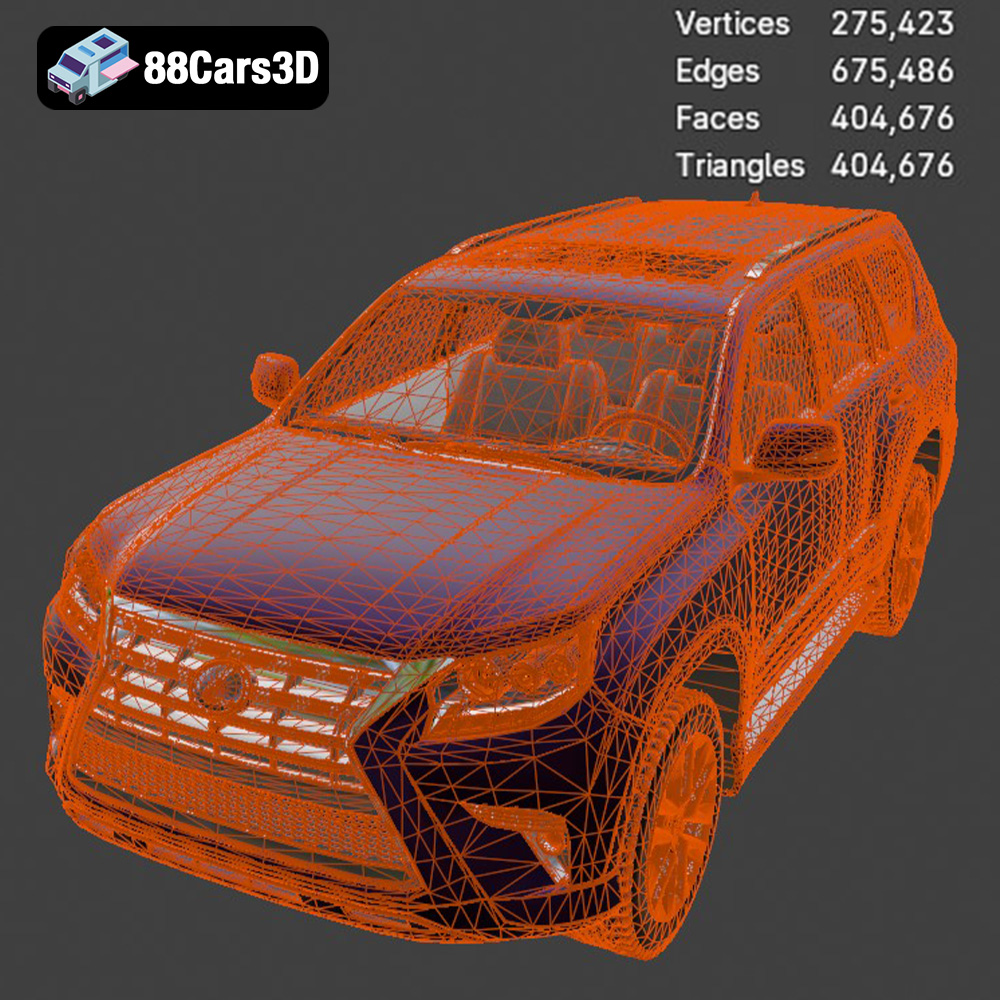
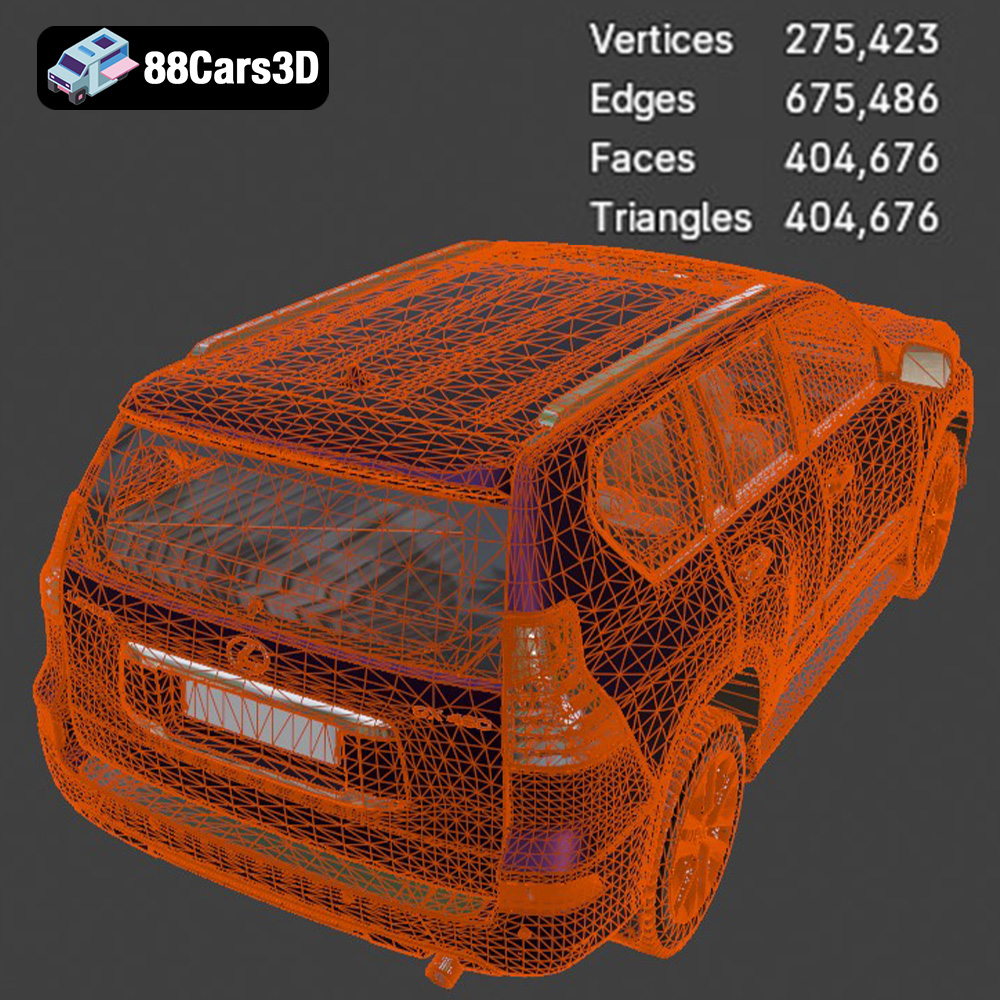
Discover the exceptional realism and precision of the Lexus GX460 2014 3D Model. Crafted with meticulous attention to detail, this digital asset perfectly replicates the powerful stance and luxurious design of the iconic SUV, making it an outstanding addition to your digital library. Designed for optimal performance, this model features clean geometry, realistic materials, and an optimized polygon count. Every exterior curve and interior element has been modeled to deliver professional quality results. The asset is fully textured and ready for immediate deployment in your chosen software. Whether you are developing an immersive video game, creating photorealistic architectural visualizations, producing interactive AR/VR experiences, or conducting automotive simulations, this versatile 3D model adapts seamlessly to any demanding production environment. This comprehensive package includes multiple industry-standard file formats to ensure maximum compatibility: .blend – Editable Blender file with materials and lighting setup; .fbx – Game-engine ready format for Unreal Engine and Unity; .obj – Standard 3D model format compatible with all major software; .glb – Optimized for AR/VR and web-based visualization; .stl – Suitable for 3D printing and prototyping; .ply – Detailed polygon mesh for analysis and visualization; .unreal – Pre-configured for Unreal Engine use; .max – Editable 3ds Max file for rendering and animation.
$19.99
.arvr
.blend
.car3dmodel
.fbx
.gameasset
.glb
.gx460
.lexus
.luxury
.max
.obj
.offroad
.ply
.rendering
.simulation
.stl
.unreal
SUV