Get 50% OFF All Premium 3D & STL Models!

In the fast-evolving landscape of digital content creation, the demand for hyper-realistic and technically robust 3D assets has never been higher. From breathtaking cinematic renderings to immersive real-time game experiences and interactive AR/VR applications, the foundation of any successful project lies in the quality of its core assets. Automotive visualization, in particular, demands an exceptional level of detail and accuracy, given the intricate designs and engineering marvels that modern vehicles represent.
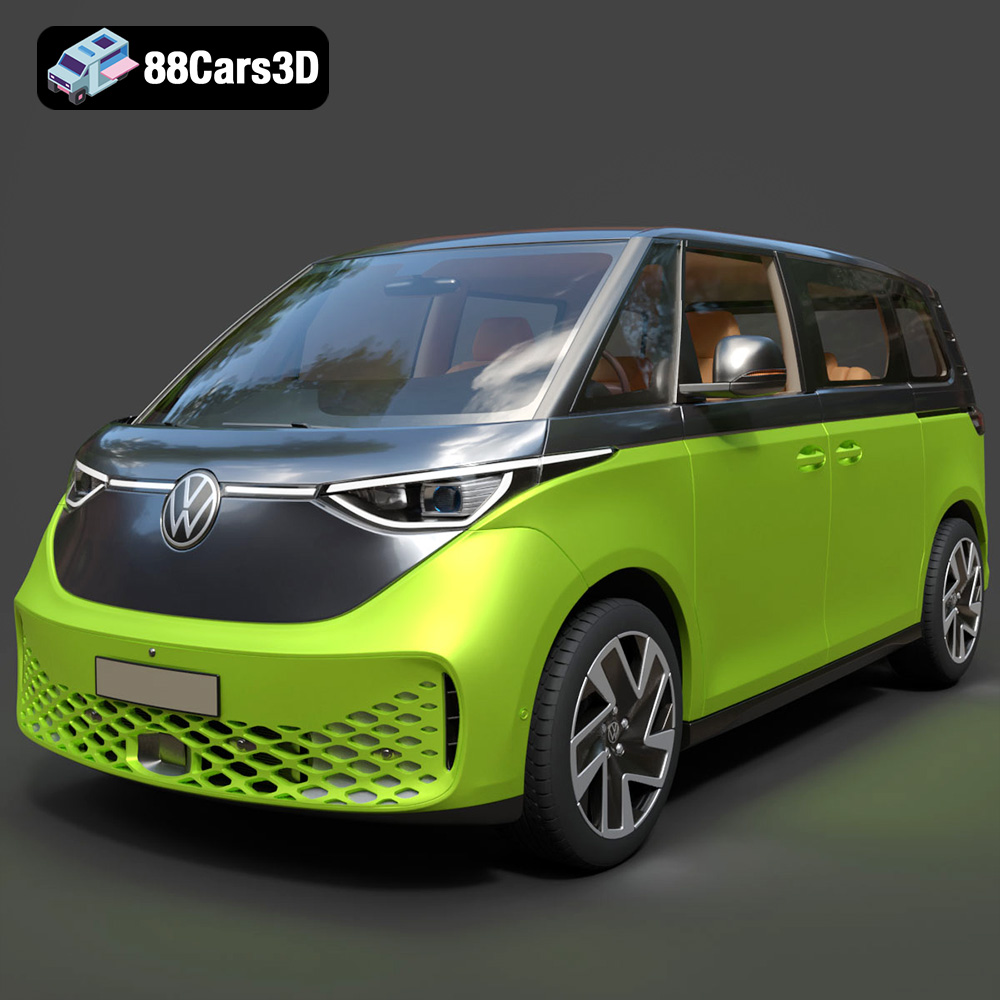
For professionals striving to push the boundaries of visual fidelity and functionality, a truly outstanding 3D car model is more than just an aesthetic component; it’s a versatile toolkit. It needs to be precise, well-optimized, and compatible across a myriad of software environments. This is precisely where assets like the Volkswagen ID. Buzz 2023 3D Model stand out. This exceptional asset, available on 88cars3d.com, encapsulates the unique blend of retro charm and futuristic technology of the celebrated electric van, making it an indispensable resource for demanding visual projects across various industries.
This article will delve into the technical intricacies that define a premium 3D car model, explore its diverse applications, and highlight how a meticulously crafted asset such as the Volkswagen ID. Buzz 2023 3D Model can elevate your professional workflows, ensuring unparalleled quality and efficiency.
The versatility of a 3D model often hinges on the range and quality of its available file formats. Each format serves a specific purpose, catering to different software ecosystems and project requirements. Understanding these distinctions is crucial for selecting the right asset for your workflow and maximizing its utility. The Volkswagen ID. Buzz 2023 3D Model, for instance, offers a comprehensive suite of formats, ensuring broad compatibility and professional-grade flexibility.
The .blend format is native to Blender, the powerful open-source 3D creation suite. A .blend file typically includes the full scene setup: geometry, materials, textures, lighting, cameras, animation data, and even physics simulations. For artists working primarily in Blender, this format offers the most flexibility, allowing for deep editing and customization without loss of information. When you acquire a .blend file for the Volkswagen ID. Buzz 2023 3D Model, you’re getting a fully editable project, ready for rendering with Cycles or Eevee, animation, or integration into a larger Blender scene.
Autodesk’s .fbx (Filmbox) format is an industry standard for interoperability between 3D software applications, particularly prevalent in game development. It efficiently packages mesh data, materials (though PBR textures are often referenced externally), animations, and scene hierarchy. Its strength lies in its ability to transfer complex data reliably, making it ideal for export to game engines like Unreal Engine and Unity. The .fbx version of the ID. Buzz model ensures that the vehicle’s geometry and basic material assignments are preserved, ready for a real-time pipeline where performance optimization is key.
The .obj (Wavefront Object) format is one of the oldest and most universally supported 3D file formats. It’s a simple, text-based format that defines geometry (vertices, normals, UVs) and can reference external .mtl (material) files for basic material properties and texture maps. While it doesn’t store animation or complex scene data, its widespread compatibility makes it an excellent choice for cross-software transfers. If you need to import the Volkswagen ID. Buzz 2023 3D Model into virtually any 3D application for rendering or static visualization, .obj is a reliable fallback.
.glb (GL Transmission Format Binary) is quickly becoming the standard for 3D models in augmented reality (AR), virtual reality (VR), and web-based applications. It’s a single, self-contained binary file that bundles geometry, materials (with PBR data), textures, animations, and scene hierarchy. Its compactness and efficiency make it perfect for rapid loading and rendering in real-time web viewers and mobile AR/VR experiences. For showcasing the ID. Buzz in an interactive web configurator or an immersive AR experience, the .glb format is indispensable.
The .stl (Stereolithography) format represents a 3D model as a series of connected triangles. It is the de facto standard for 3D printing, focusing solely on the surface geometry without color, texture, or material information. While not suitable for rendering or animation, an .stl version of the Volkswagen ID. Buzz 2023 allows for the physical realization of the digital model through additive manufacturing, enabling rapid prototyping, scale models, or even custom parts.
.ply (Polygon File Format) is another format for storing 3D data, particularly useful for scanned data, engineering, and scientific visualization. It can store various properties beyond just geometry, such as color, transparency, and even specific data per vertex or face. While less common for general 3D asset distribution, its precision makes it valuable for detailed analysis or when integrating the ID. Buzz model into CAD or simulation software that requires accurate mesh data for engineering purposes.
The .unreal designation (often referring to a packaged asset or a project file fragment specifically designed for Unreal Engine) signifies an asset that has been pre-configured and optimized for the Unreal Engine environment. This typically means that the model’s meshes, materials (using Unreal’s PBR system), LODs (Levels of Detail), and potentially collision meshes are already set up correctly within an Unreal project structure. For game developers or real-time visualizers using Unreal Engine, this format for the Volkswagen ID. Buzz 2023 3D Model offers unparalleled ease of integration, saving significant time on setup and optimization.
Similar to .blend for Blender, the .max format is the native file type for Autodesk 3ds Max, a long-standing industry standard for architectural visualization, product design, and animation. A .max file contains the complete 3ds Max scene, including geometry, modifiers, materials, lighting, cameras, and animation data. Professionals working within the 3ds Max ecosystem will find the .max version of the ID. Buzz model to be fully editable, allowing for extensive customization, animation, and rendering with powerful renderers like V-Ray or Corona.
A truly professional 3D car model is distinguished not just by its visual appeal, but by the underlying technical quality that supports diverse high-end applications. The Volkswagen ID. Buzz 2023 3D Model exemplifies this standard, offering attributes that meet the rigorous demands of professional workflows.
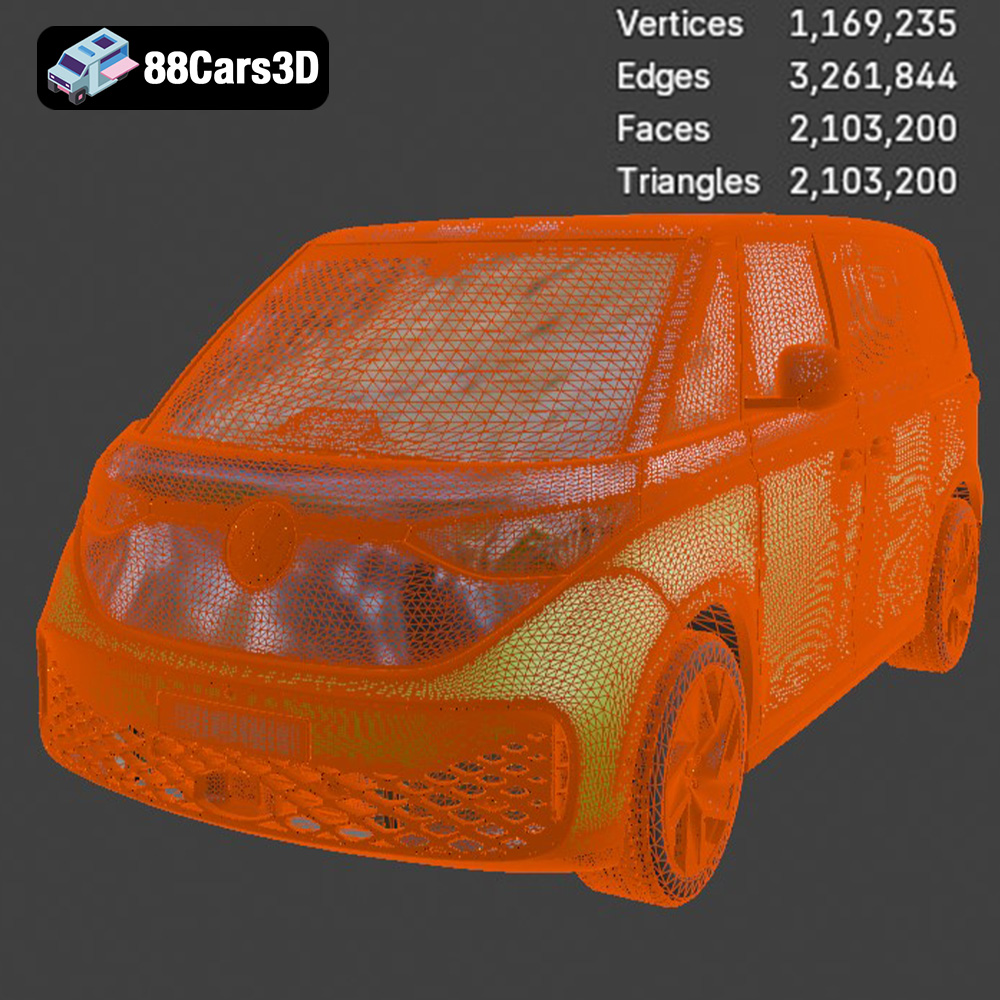
The product description highlights “clean geometry” and an “optimized mesh structure,” which are critical indicators of a superior 3D asset. Clean geometry means the mesh is free from artifacts like non-manifold edges, inverted normals, or overlapping faces, which can cause rendering issues or problems in game engines. An optimized mesh, while maintaining visual fidelity, uses polygons efficiently. For a model like the ID. Buzz, this implies a careful balance: enough polygons to capture the vehicle’s unique curves and sharp lines accurately for high-resolution rendering, but also structured in a way that allows for easy creation of Levels of Detail (LODs) for real-time applications, ensuring smooth performance even with a complex automotive model.
“Realistic materials” are paramount for convincing automotive rendering. Modern rendering pipelines heavily rely on Physically Based Rendering (PBR), which accurately simulates how light interacts with surfaces based on real-world material properties. A high-quality model, such as this ID. Buzz asset from 88cars3d.com, would come with PBR-ready material setups, including detailed texture maps for albedo (base color), roughness, metallic, normal, and possibly ambient occlusion. These maps are crucial for recreating the metallic sheen of the paint, the textured matte finish of the interior plastics, the reflectivity of glass, and the subtle imperfections that make a surface feel real, not just digital.
The description notes “fully modeled exterior components alongside detailed interior elements.” This is a significant differentiator. Many commercially available 3D car models prioritize the exterior, leaving the interior sparse or unmodeled. However, for applications like architectural visualization, product configurators, or even immersive VR experiences, a fully detailed interior is essential. This means meticulously modeled dashboards, seats, steering wheel, door panels, and even smaller components like pedals and rearview mirrors, all contributing to an authentic experience whether viewed from outside or inside the vehicle. This level of comprehensive detail ensures the Volkswagen ID. Buzz 2023 3D Model can be used in close-up shots or interactive walkthroughs without compromising visual integrity.
The true value of a high-quality 3D asset lies in its seamless integration into various professional workflows, saving time and elevating project quality. The Volkswagen ID. Buzz 2023 3D Model is engineered precisely for this purpose.
For marketing agencies, design studios, and automotive manufacturers, photorealistic rendering is vital for showcasing new vehicles, creating advertisements, or visualizing design concepts. Using the .max or .blend formats, professionals can import the ID. Buzz model into 3ds Max or Blender, set up complex lighting scenarios, and apply advanced rendering techniques with engines like V-Ray, Corona Renderer, Cycles, or Octane. The model’s clean geometry and PBR-ready materials ensure stunning results, accurately reflecting the vehicle’s design and finish in static images or animated sequences. Imagine visualizing the ID. Buzz in various urban or natural settings, exploring different paint finishes, or demonstrating its modular interior design – all with unparalleled realism.
The demand for realistic vehicle assets in video games and interactive simulations is immense. The .fbx and .unreal formats of the Volkswagen ID. Buzz 2023 3D Model are specifically tailored for game engines like Unreal Engine and Unity. Game developers can leverage the optimized mesh to implement LOD systems, ensuring efficient rendering across different distances and platforms. The asset’s robust structure supports the integration of custom physics, collision meshes, and interactive elements, bringing the electric van to life within a virtual world, whether as a drivable vehicle in an open-world game or a static prop in an immersive environment. The pre-configured .unreal asset, in particular, streamlines the import process, allowing artists to focus on level design and gameplay rather than asset preparation.
Augmented Reality (AR) and Virtual Reality (VR) are transforming how consumers interact with products. Automotive brands are increasingly using these technologies for immersive product configurators, virtual showrooms, and interactive training modules. The .glb format of the ID. Buzz model is perfectly optimized for these applications, offering a lightweight yet detailed asset that loads quickly in web browsers or mobile AR apps. Customers could virtually place the ID. Buzz in their driveway, explore its interior in VR, or customize its features in real-time, all powered by this versatile 3D asset. This interactive capability extends the model’s utility beyond traditional rendering, creating dynamic and engaging user experiences.
The utility of a high-quality 3D car model extends far beyond marketing renders and game assets. Its inherent accuracy and versatility make it suitable for a range of specialized, technical applications.
In fields requiring precision and real-world accuracy, such as autonomous vehicle development, driver training simulations, or logistics planning, a reliable 3D model is indispensable. The Volkswagen ID. Buzz 2023 3D Model can be integrated into advanced simulation platforms to study vehicle dynamics, test sensor configurations, or train future drivers in a safe, virtual environment. Its detailed geometry and realistic proportions are crucial for accurate physics simulations, ensuring that the virtual behavior of the vehicle closely mirrors its real-world counterpart. The .ply format, with its focus on precise mesh data, could be particularly useful for certain simulation platforms requiring specific geometric interpretations.
Before physical production, designers and engineers often create tangible prototypes to evaluate ergonomics, aesthetics, and fit. The .stl format of the ID. Buzz model is directly compatible with 3D printers, enabling the creation of physical scale models for design reviews, wind tunnel testing, or even as collectible items. This allows for rapid iteration of design elements or the production of custom accessories that perfectly fit the vehicle’s dimensions, bridging the gap between digital design and physical manifestation. The ability to quickly generate a physical representation from the digital data significantly accelerates the design and manufacturing pipeline.
For automotive designers and modders, a precise base model like the ID. Buzz provides an excellent starting point for conceptual work. Designers can use the .max or .blend files to explore custom body kits, interior modifications, unique livery designs, or even entirely new vehicle variants. The model’s clean topology makes it easy to sculpt, modify, and retopologize without introducing errors, facilitating rapid design iteration and creative exploration. This flexibility makes the asset valuable not just for rendering the existing vehicle, but for imagining its future possibilities.
Investing in premium 3D assets, such as the Volkswagen ID. Buzz 2023 3D Model from 88cars3d.com, is a strategic decision that pays dividends in project quality, efficiency, and long-term value.
Modeling a complex vehicle from scratch, to professional standards, can take hundreds of hours of a skilled artist’s time. This includes meticulous blueprint matching, clean topology creation, UV unwrapping, material setup, and optimization for various platforms. By purchasing a pre-built, high-quality asset, you bypass this arduous process entirely. The time saved can be redirected towards creative aspects of your project, client feedback, or other critical development tasks, significantly accelerating project timelines and reducing costs associated with in-house asset creation.
Using professionally crafted 3D models ensures a consistent level of quality across all your projects. These assets are built to industry standards, incorporating best practices for geometry, materials, and file structure. This eliminates the uncertainty that can come with self-created or lower-quality models, guaranteeing accurate representations and reliable performance in demanding visual projects. Clients and audiences will immediately perceive the difference that a meticulously detailed and accurately represented vehicle brings to the overall presentation.
A versatile 3D asset, offered in multiple formats, offers significant future-proofing. As technology evolves and new rendering engines or platforms emerge, having an asset available in common, interoperable formats like .fbx, .obj, and .glb, along with native software files like .blend and .max, means it can be adapted and re-used for upcoming projects. The Volkswagen ID. Buzz 2023 3D Model, with its comprehensive format support, ensures that your investment remains valuable across a wide spectrum of current and future digital applications, from cutting-edge AR to classic cinematic renders.
The digital realm thrives on detail, accuracy, and efficiency, especially in the demanding field of automotive visualization. A high-quality 3D car model is not merely an object; it’s a strategic asset that empowers creators to produce stunning, technically sound, and versatile content across a multitude of platforms. The Volkswagen ID. Buzz 2023 3D Model stands as a prime example of such an asset, meticulously designed to meet the rigorous demands of professional workflows, from photorealistic rendering in 3ds Max and Blender to immersive game development in Unreal Engine, interactive AR/VR experiences, and even physical 3D printing.
By offering clean geometry, realistic materials, and a comprehensive suite of file formats, this model ensures that designers, developers, and artists can integrate the iconic electric van into their projects with ease and confidence. Investing in premium 3D car models from trusted marketplaces like 88cars3d.com not only saves invaluable time and resources but also elevates the overall quality and professionalism of your digital creations. Whether you are crafting cinematic advertisements, building a new game world, or designing the next generation of interactive experiences, the right 3D asset is your foundation for success. Explore the possibilities with the Volkswagen ID. Buzz 2023 3D Model and redefine what’s possible in your next project.
Discover exceptional detail with the Volkswagen ID. Buzz 2023 3D Model. This comprehensively built asset accurately recreates the unique design and modern characteristics of the celebrated electric van. It incorporates key features such as clean geometry, realistic materials, and professional quality, guaranteeing accurate representations in demanding visual projects.
The optimized mesh structure offers precise surfacing and fully modeled exterior components alongside detailed interior elements. This asset is specifically tailored for advanced professional workflows where accuracy is essential.
Ideal applications for this model encompass game development, offline rendering, AR/VR experiences, simulation environments, and commercial visualization.
$19.99
.arvr
.blend
.buzz
.car3dmodel
.electricvehicle
.ev
.fbx
.gameasset
.glb
.idbuzz
.max
.minivan
.obj
.ply
.rendering
.simulation
.stl
.unreal
.van
.volkswagen