Get 50% OFF All Premium 3D & STL Models!

The world of 3D visualization is a dynamic landscape, constantly pushing the boundaries of realism and interactive experience. From blockbuster game titles to photorealistic architectural walkthroughs and immersive virtual reality environments, the demand for high-fidelity assets has never been greater. At the heart of many of these incredible digital experiences lies a meticulously crafted 3D car model, serving as a focal point, a functional component, or a crucial element in setting the scene.
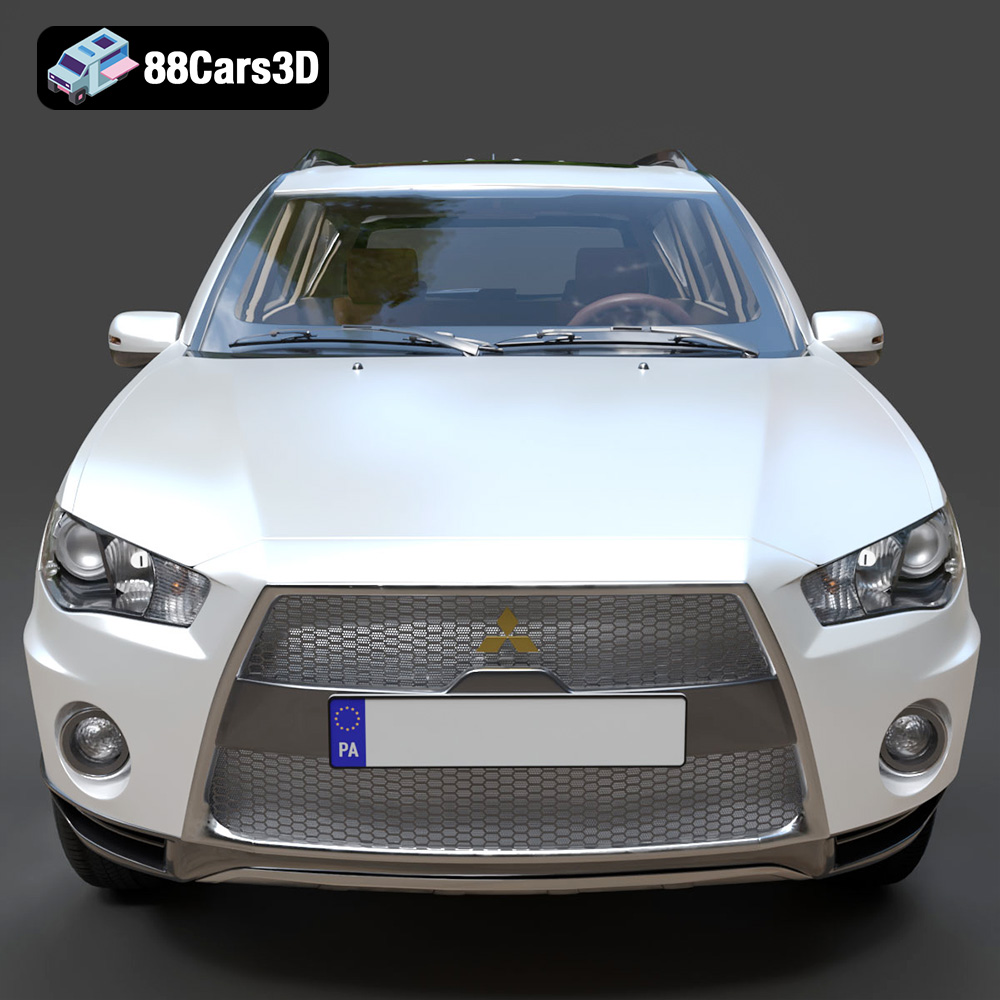
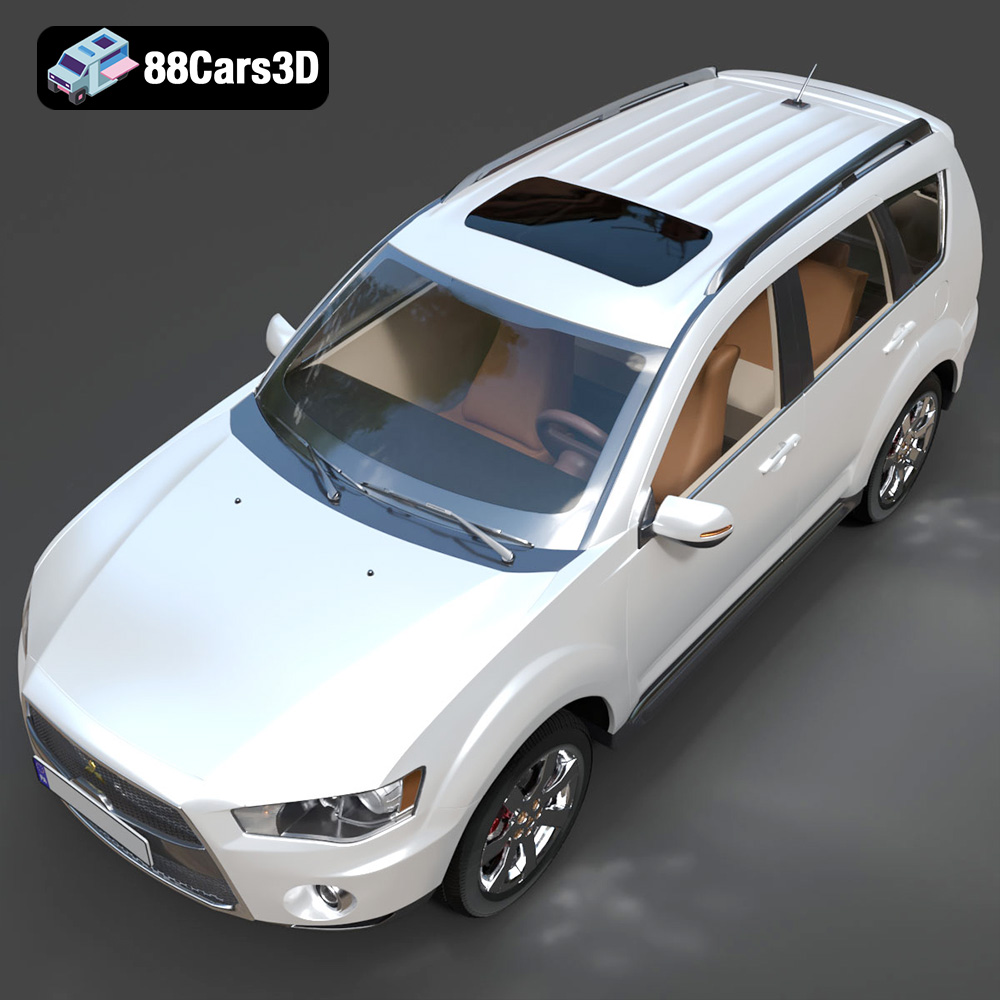
Creating such assets from scratch is a time-intensive endeavor, often requiring specialized skills in modeling, texturing, rigging, and optimization. This is where pre-made, production-ready 3D car models become invaluable tools for professionals across various industries. Consider the versatility and precision offered by a model like the Mitsubishi Outlander GT 2010 3D Model, an exemplar of how detailed engineering and optimized design can meet diverse project needs. With its aggressive Lancer Evolution-inspired ‘Jet Fighter’ front grille, advanced S-AWC all-wheel-drive system, and meticulously replicated V6 engine profile, this model isn’t just an accurate digital recreation; it’s a gateway to accelerating your creative projects without compromising on quality.
This comprehensive guide delves into the technical intricacies, diverse applications, and workflow advantages of incorporating professional-grade 3D car models into your pipeline. We’ll explore why investing in ready-to-use assets from platforms like 88cars3d.com can transform your projects, enabling you to achieve stunning results efficiently and effectively.
Choosing the right file format for your 3D car model is as crucial as selecting the model itself. Each format is designed with specific applications, software compatibility, and technical advantages in mind. Understanding these distinctions ensures a smooth workflow, preserves data integrity, and optimizes performance across different platforms and pipelines. The Mitsubishi Outlander GT 2010 3D Model, for instance, comes packaged with a wide array of formats, signifying its adaptability for various professional uses.
The .blend format is Blender’s native file type, offering a complete and fully editable Blender scene. When you download a .blend file, you’re not just getting the mesh; you’re getting the entire project with all its associated data: materials, textures, lighting setups, camera positions, animations, modifiers, and even custom scripts. This makes .blend files ideal for users deeply integrated into the Blender ecosystem, allowing for immediate customization, re-rendering, or further development within the software without any loss of information.
FBX (Filmbox) is a proprietary file format owned by Autodesk, widely regarded as the most robust format for exchanging 3D data between different software applications. Its strength lies in its ability to store not only geometry but also complex data like animations, rigs, skinning, materials, and camera information. .fbx files are the go-to choice for game engines like Unreal Engine and Unity, and for transferring models between DCC (Digital Content Creation) software like Maya, 3ds Max, and Blender, making it indispensable for real-time pipelines and collaborative projects.
OBJ (Object) is one of the oldest and most universally supported 3D file formats. It’s a simple, open standard primarily focused on geometry (vertices, normals, UVs, faces) and material references (via an accompanying .mtl file). While it doesn’t support animation or advanced rigging, its simplicity and widespread compatibility make it an excellent choice for straightforward mesh exchange across virtually any 3D software. It’s perfect when you need to port a clean mesh into a new environment for texturing or rendering.
GLB (GL Transmission Format Binary) is the binary version of glTF, a royalty-free specification for the efficient transmission and loading of 3D scenes and models by applications. GLB files package all assets (geometry, textures, animations) into a single file, making them highly efficient for web-based 3D, augmented reality (AR), virtual reality (VR), and mobile applications. Their compact size and rapid loading capabilities are crucial for delivering immersive experiences on lower-powered devices or over networks.
STL (STereoLithography) is the most common file format used for 3D printing. It represents a 3D model as a collection of unconnected triangles, defining only the surface geometry of an object without color, texture, or other CAD attributes. While simple, its ubiquity in the 3D printing world means that any model intended for physical fabrication, like the Mitsubishi Outlander GT 2010 3D Model, will almost certainly need an .stl version to be compatible with slicer software.
PLY (Polygon File Format or Stanford Triangle Format) is another format for storing 3D data, particularly useful for scanned data. It can store a wider range of properties than .obj or .stl, including color, transparency, and even properties for individual vertices and faces. PLY is often used in scientific computing, CAD, and applications where precise mesh data and attributes are critical for analysis or high-fidelity reproduction.
While not a universal file extension like .fbx, when a model is offered in “.unreal” format, it typically means it comes pre-packaged and optimized for direct import into Unreal Engine. This could involve pre-configured material instances, collision meshes, LODs (Levels of Detail), and blueprint setups, significantly streamlining the asset integration process for game developers. It speaks to the production-readiness of assets from suppliers like 88cars3d.com.
Similar to .blend for Blender, .max is the native file format for Autodesk 3ds Max. It contains all scene data, including geometry, materials, lighting, animation, and scene settings. For those working within the 3ds Max ecosystem, a .max file offers complete editability and access to all parameters, making it ideal for rendering, animation, and detailed customization within this powerful software.
Automotive rendering demands an unparalleled level of detail and realism. Whether for marketing campaigns, product showcases, or design reviews, the goal is to create visuals indistinguishable from reality. This is where the technical superiority of a well-crafted 3D car model, such as the Mitsubishi Outlander GT 2010 3D Model, truly shines. It’s not just about polygons; it’s about precision, material definition, and an understanding of light interaction.
The foundation of any photorealistic render is accurate geometry. High-quality 3D car models are built to real-world scale, meticulously replicating every curve, panel gap, and intricate component of the vehicle. For the Mitsubishi Outlander GT 2010 model, this includes faithful reproduction of its exterior lines, the ‘Jet Fighter’ grille, detailed bi-xenon HID headlights, and 18-inch alloy wheels. This attention to detail ensures that when placed in a virtual environment, the car reacts to light and shadow exactly as its real-world counterpart would, providing a believable sense of presence.
Beyond geometry, materials play a critical role in realism. Modern rendering engines leverage physically-based rendering (PBR) workflows, requiring precise material properties like metallicness, roughness, and normal maps. A professional 3D car model comes with expertly crafted PBR textures that simulate the nuanced reflections of car paint, the subtle sheen of rubber tires, the distinct texture of leather upholstery, and the intricate details of engine components. These materials, when combined with sophisticated lighting setups, elevate a render from good to breathtaking, capturing the true essence of the vehicle’s finish and design.
For dynamic visualizations, animation capabilities are key. A premium 3D car model features separate, logically grouped components. The Mitsubishi Outlander GT 2010 model, for instance, includes separate wheels, suspension, and steering components. Crucially, these parts have proper pivot setups. This means the wheels rotate correctly on their axles, the suspension compresses and extends naturally, and the steering mechanism articulates believably. Such preparation allows artists to create realistic driving animations, intricate assembly sequences, or interactive configurators where viewers can explore the vehicle’s mechanical functions.
In game development and other real-time applications like AR/VR, performance is paramount. Achieving visual fidelity while maintaining high frame rates requires a delicate balance between detail and optimization. The Mitsubishi Outlander GT 2010 3D Model is explicitly designed to meet these stringent demands, acting as a game-ready asset that doesn’t compromise on visual quality.
A primary indicator of a game-ready asset is its polygon (or triangle) count. While high-poly models are fantastic for static renders, real-time engines demand optimized geometry to prevent performance bottlenecks. The Mitsubishi Outlander GT 2010 model boasts an efficient ~180,000 triangle count. This number strikes a perfect balance, offering exceptional visual fidelity for modern games and real-time experiences while ensuring the model is lightweight enough to be rendered smoothly across various hardware configurations. Furthermore, clean, optimized topology ensures efficient UV mapping and deformation, critical for realistic shading and any potential animation.
Time is money in game development, and a “plug-and-play” asset significantly reduces development cycles. Models like the Mitsubishi Outlander GT 2010 are prepared for direct import into major game engines like Unreal Engine and Unity. This means the model comes with properly configured materials, UV maps, and often even basic collision meshes, allowing developers to drop it directly into their scene and begin using it immediately. The availability of formats like .fbx and even specific “.unreal” packages underscores this commitment to seamless integration.
Modern games and simulators increasingly offer immersive first-person perspectives. A game-ready car model must, therefore, feature a meticulously detailed interior. The Mitsubishi Outlander GT 2010 model excels here, with premium leather-appointed seating, a multifunction steering wheel with paddle shifters, an accurate instrument cluster, and a central infotainment screen. Even subtle details like pedals, the gear shifter, and the drive mode selector are included. This level of internal detail ensures that players and users experience a fully realized and believable cockpit environment, enhancing immersion whether in a driving simulator or an open-world adventure.
The utility of high-quality 3D car models extends far beyond traditional screens. Augmented Reality (AR), Virtual Reality (VR), and 3D printing are rapidly expanding fields, each presenting unique opportunities for interactive experiences and physical manifestations of digital designs. The versatility of assets from 88cars3d.com, particularly models like the Mitsubishi Outlander GT 2010 3D Model, makes them perfectly suited for these cutting-edge applications.
AR and VR offer unprecedented levels of immersion, making them ideal for virtual showrooms, interactive product configurators, and training simulations. For these applications, optimized 3D models are essential. The Mitsubishi Outlander GT 2010 model, with its efficient polygon count and game-ready optimization, is perfect for integration into AR/VR platforms. The .glb format, in particular, is a game-changer for web-based AR/VR, enabling quick loading and efficient rendering of detailed car models on mobile devices or within browser-based experiences. Imagine a customer exploring the Outlander’s features in a virtual garage or seeing it parked in their driveway through their phone’s camera.
The ability to transform a digital model into a physical object via 3D printing opens up a world of possibilities for hobbyists, educators, and product designers. The Mitsubishi Outlander GT 2010 model includes an .stl file, making it directly compatible with 3D printing workflows. While optimization for printing differs from real-time rendering, the underlying clean geometry provides an excellent foundation. For enthusiasts, this means being able to print their own scale models, experimenting with different finishes and modifications. Professional modelers can use it to create physical prototypes or display pieces. The provided print settings (recommended scale, layer height, wall thickness, infill, supports, and orientation) guide users toward a successful print, especially when using resin printers for fine detail reproduction.
Whether for AR/VR or 3D printing, customization is often desired. The flexibility offered by professional 3D models allows for extensive modifications. Artists can easily change body colors to match factory options or create custom finishes, swap out tire textures for off-road or street variants, adjust material properties (matte, gloss, metallic), and adapt lighting to suit different virtual environments. For 3D printing, post-processing techniques like sanding, priming, and painting with authentic factory colors can bring the physical model even closer to its digital counterpart.
The true value of a professional 3D car model lies in its ability to integrate effortlessly into existing production pipelines. Designers, animators, and game developers rely on assets that are not only high-quality but also well-structured and compatible with their chosen software. Products available on platforms like 88cars3d.com are curated with this professional efficiency in mind.
The inclusion of native project files like .blend and .max means that artists working in Blender or 3ds Max can immediately open and manipulate the model within their familiar environment. This allows for unparalleled flexibility in customization. For example, a visualization artist can open the Mitsubishi Outlander GT 2010 .max file, adjust studio lighting, add custom camera angles, and render photorealistic stills or animations with their preferred V-Ray or Corona renderer setup. Similarly, a Blender artist can utilize the .blend file to integrate the vehicle into an architectural scene, experiment with Eevee for real-time previews, or animate it using Blender’s robust animation tools.
While native files offer maximum flexibility, universal formats like .fbx and .obj are critical for cross-software compatibility. An art director might be using Maya, while a texture artist uses Substance Painter, and a game developer integrates into Unreal Engine. An .fbx file ensures that the model, its UVs, and basic material assignments transfer smoothly between these diverse applications, minimizing conversion issues and accelerating collaborative workflows. This universality saves countless hours that would otherwise be spent on file conversions, re-importing, and fixing broken assets, allowing teams to focus on creative output.
Imagine a project to develop an online automotive configurator for a car manufacturer. Starting from scratch would mean weeks or months of modeling and optimization. However, by utilizing a production-ready model like the Mitsubishi Outlander GT 2010 3D Model from 88cars3d.com, the development team can fast-track the project. The model’s optimized ~180,000 triangle count makes it suitable for web-based rendering, and its separate components with proper pivots enable interactive customization of colors, wheels, and even interior elements. The .glb format would be ideal for web delivery, ensuring quick load times and smooth interaction for potential customers. This strategic use of pre-made assets drastically reduces development costs and time to market.
In the fast-paced world of 3D content creation, efficiency and quality are not mutually exclusive. High-quality 3D car models, meticulously crafted and optimized for a wide range of applications, are indispensable assets for professionals across automotive design, game development, architectural visualization, and interactive experiences. From the intricate details of a V6 engine profile to the game-ready polygon count, every aspect of a premium model is designed to empower creators.
The Mitsubishi Outlander GT 2010 3D Model serves as an excellent example of such a versatile asset. Its comprehensive package, including multiple file formats like .blend, .fbx, .obj, .glb, .stl, .ply, .unreal, and .max, ensures seamless integration into virtually any professional workflow. Whether you’re aiming for photorealistic renders, immersive AR/VR experiences, high-performance game assets, or even physical 3D prints, this model provides the technical foundation you need to succeed.
By leveraging expertly crafted 3D car models available on platforms like 88cars3d.com, artists and developers can significantly reduce production time, maintain a high standard of visual fidelity, and allocate more resources to creative innovation. Investing in such production-ready assets is not just a shortcut; it’s a strategic move that drives success in the competitive digital landscape.
Discover the dynamic and versatile 2010 Mitsubishi Outlander GT, a highly acclaimed crossover SUV known for its aggressive Lancer Evolution-inspired ‘Jet Fighter’ front grille and advanced S-AWC all-wheel-drive system. Our meticulously crafted 3D model perfectly captures the vehicle’s sporty aesthetic, featuring accurate exterior lines, a robust V6 engine profile, and its signature dual exhaust setup. Engineered with highly optimized topology and an efficient triangle count, this game-ready asset guarantees exceptional visual fidelity without compromising real-time performance. Designed to meet the stringent demands of modern 3D engines, it acts as a plug-and-play solution for game development, AR/VR experiences, animation, and architectural visualization.
$19.99
.2010
.blend
.crossover
.fbx
.glb
.max
.mitsubishi
.obj
.outlander
.ply
.rendering
.stl
.unreal
car-3d-model
game asset
game-ready
low-poly
optimized
outlander-gt
SUV
VR/AR