Get 50% OFF All Premium 3D & STL Models!

In the rapidly evolving landscape of digital visualization, the demand for exceptionally realistic and technically sound 3D assets has never been higher. From cinematic renderings to immersive gaming experiences and groundbreaking AR/VR applications, the foundation of any compelling visual project lies in the quality of its core models. Automotive design, in particular, stands at the forefront of this revolution, constantly pushing the boundaries of realism and precision.
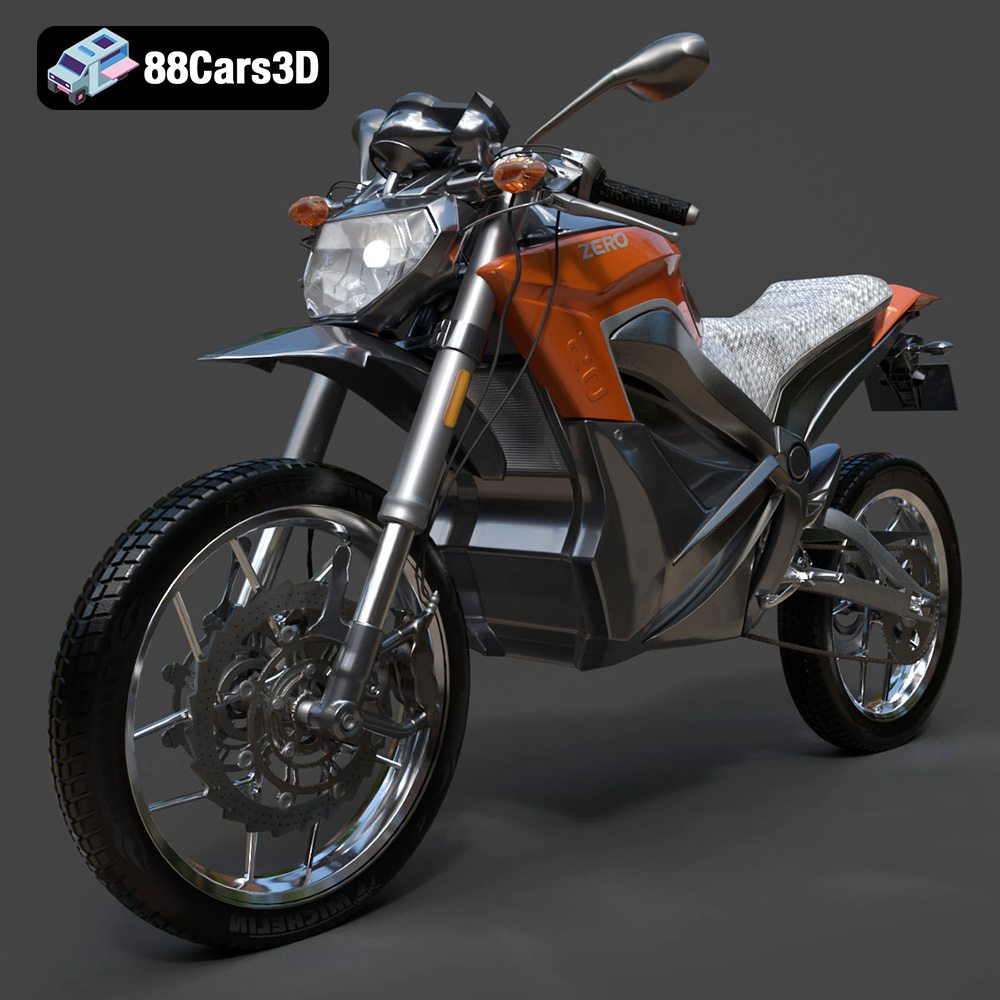
Today, we embark on an exploration of what makes a truly professional-grade 3D vehicle model indispensable, focusing on the intricate details, technical considerations, and diverse applications that elevate digital creations. We’ll delve into industry-standard workflows, examine the crucial role of file formats, and highlight how meticulously crafted assets drive innovation. Throughout this journey, we’ll reference a stellar example of digital craftsmanship: the Zero Motorcycles S ZF8.5 3D Model, a testament to unparalleled realism and versatility available on 88cars3d.com.
The choice of a 3D model’s file format is far more than a technicality; it’s a strategic decision that dictates compatibility, performance, and the very usability of an asset across different software and pipelines. Professional 3D models, such as the Zero Motorcycles S ZF8.5, are often provided in multiple formats to ensure maximum flexibility for artists, developers, and designers. Understanding the strengths and weaknesses of each is crucial for optimizing workflows.
The `.blend` format is native to Blender, a powerful open-source 3D creation suite. When a model is provided in `.blend` format, it typically means it comes as a fully editable Blender scene. This includes not just the mesh data but also materials, textures, lighting setups, cameras, and even animation data, all within a single file. For Blender users, this offers unparalleled convenience and control, allowing for immediate modification, relighting, and integration into existing Blender projects. It’s the ideal choice for artists who plan to work extensively within Blender’s environment, offering full access to the original project’s structure and settings.
Developed by Autodesk, the `.fbx` format has become an industry standard for exchanging 3D data between various applications, especially in game development. It’s a robust format that can store model geometry, UV maps, textures, materials, animations, and even rigging information. Its strength lies in its ability to maintain data integrity during transfers, making it ideal for pipelines involving Unreal Engine, Unity, and other real-time environments. Developers often prefer `.fbx` for its efficiency in handling complex scenes and its widespread compatibility, ensuring that assets like 3D car models and vehicle assets are readily usable across different game engines and DCC (Digital Content Creation) tools.
The `.obj` (or Wavefront OBJ) format is one of the oldest and most widely supported 3D file formats. It’s a simple, text-based format primarily used for transferring geometric data, including vertices, normals, UV coordinates, and faces. While it doesn’t typically store advanced features like animation or rigging, it is universally compatible with virtually all 3D software. This makes `.obj` an excellent choice for basic mesh exchange, ensuring that a model can be opened and worked with regardless of the user’s primary software. It’s a reliable fallback for cross-software compatibility when more complex formats might encounter issues.
GL Transmission Format (`.glb`) is an increasingly popular format, especially for augmented reality (AR), virtual reality (VR), and web-based 3D applications. It’s a binary file format that encapsulates 3D models, scenes, materials, animations, and even PBR (Physically Based Rendering) texture information into a single, compact file. Its efficiency and self-contained nature make it perfect for rapid loading and display in performance-sensitive environments, such as mobile AR apps or interactive web viewers. For visualizing high-quality assets like the Zero Motorcycles S ZF8.5 directly in a browser or on an AR device, `.glb` is the preferred format.
Stereolithography (`.stl`) is the de facto standard for 3D printing. This format represents a 3D model as a series of connected triangles (a triangulated surface mesh) without color, texture, or other CAD attributes. Its simplicity makes it highly effective for defining the surface geometry of an object for fabrication. When preparing a 3D model for physical production, `.stl` is the format of choice, ensuring that the digital design translates accurately into a tangible object.
The Polygon File Format (`.ply`) is a versatile format primarily used for storing 3D data from 3D scanners. It can store a wide range of information, including color, transparency, surface normals, texture coordinates, and even reliability information. While not as universally used as `.obj` or `.fbx` for general exchange, `.ply` is invaluable for applications requiring precise mesh analysis, CAD integration, or detailed scientific visualization where rich geometric and attribute data is paramount.
The `.unreal` format, or often referring to a package specifically optimized for Unreal Engine, implies an asset that has been meticulously prepared and configured for direct integration into an Unreal project. This typically means the model comes with pre-set materials, collision meshes, Level of Detail (LOD) setups, and often even blueprint configurations. For game developers or real-time visualization specialists working with Unreal Engine, an asset provided in this “engine-ready” state dramatically reduces setup time and ensures optimal performance and visual fidelity within the engine.
The `.max` format is the native file type for Autodesk 3ds Max, a powerful 3D modeling, animation, and rendering software widely used in architectural visualization, automotive rendering, and character animation. Similar to `.blend`, a `.max` file contains the complete scene data, including geometry, materials, lighting, cameras, and animation keyframes. For professionals whose primary workflow revolves around 3ds Max, having the original `.max` file provides the highest level of control and editability, enabling deep customization and seamless integration into complex rendering pipelines.
The digital realm thrives on realism, and nowhere is this more evident than in the demanding world of automotive rendering and visualization. A high-quality 3D model isn’t just a collection of polygons; it’s a meticulously engineered digital twin designed to evoke the same presence and detail as its physical counterpart. The Zero Motorcycles S ZF8.5 3D Model from 88cars3d.com exemplifies this dedication to authenticity.
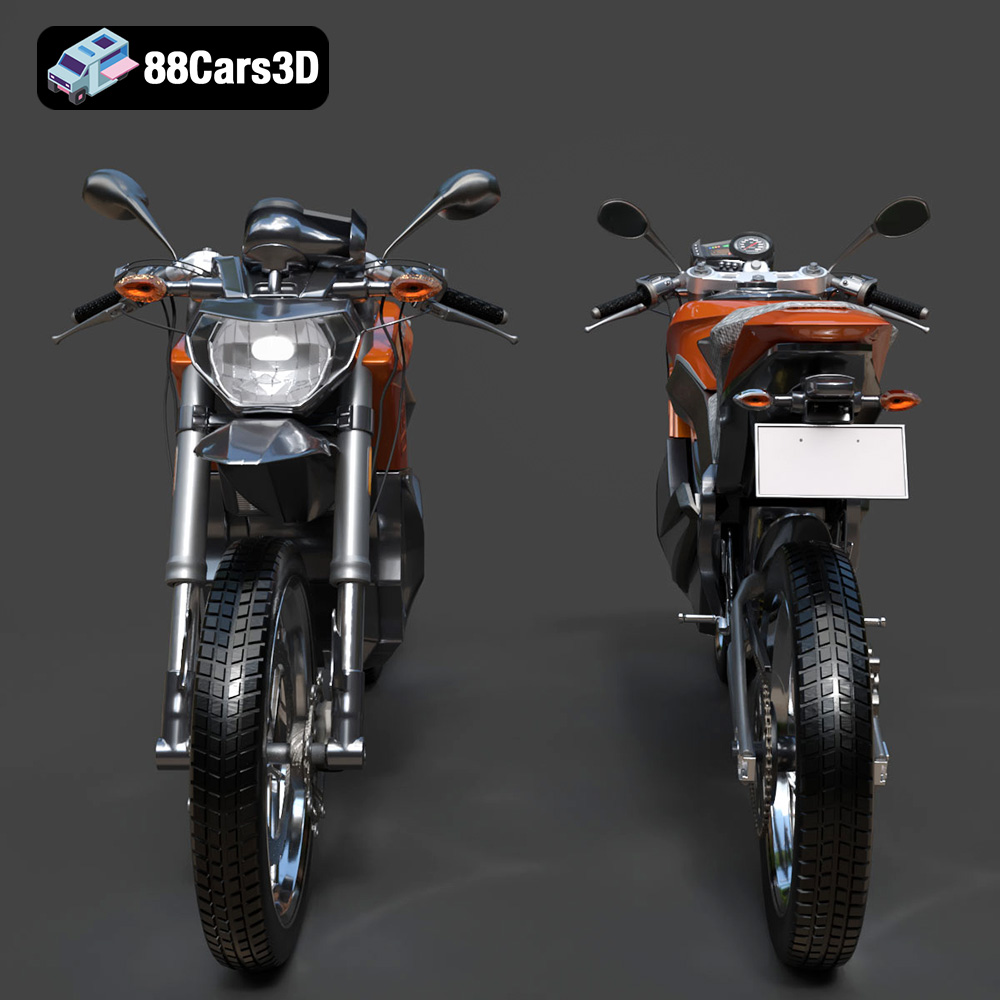
The foundation of any realistic 3D model lies in its geometry. The Zero Motorcycles S ZF8.5 model boasts “clean geometry,” meaning its mesh is free from artifacts, n-gons (polygons with more than four sides), or overlapping faces that can cause rendering issues or shading problems. This clean topology is crucial for smooth subdivisions and deformations, ensuring that the model holds up even under close-up shots or complex lighting scenarios. Coupled with “accurate proportions,” the model precisely mirrors the real-world dimensions and form of the innovative electric motorcycle. Every curve, every panel gap, and every component ratio is faithfully recreated, allowing for true-to-life visualization that satisfies the discerning eye of professionals.
Beyond the mesh, materials and textures are the skin and soul of a 3D model. The Zero Motorcycles S ZF8.5 3D Model features “realistic materials tailored for advanced digital projects.” This implies the use of Physically Based Rendering (PBR) workflows, where materials are designed to react to light in a way that mimics real-world physics. Expect nuanced reflections on painted surfaces, accurate metallic sheen on chrome components, subtle roughness on rubber tires, and the precise interplay of light and shadow that makes an object feel tangible. High-resolution textures, including diffuse, normal, roughness, metallic, and ambient occlusion maps, contribute to an impressive level of visual fidelity, making the model render indistinguishable from a photograph in expert hands.
Professional assets must not only look good but also perform efficiently. The “optimized polygon structure” of the Zero Motorcycles S ZF8.5 model ensures that while exceptional visual fidelity is maintained, the poly count is managed to prevent unnecessary strain on system resources. This optimization is critical for real-time applications like game development or AR/VR experiences, where high frame rates are paramount. Furthermore, its versatile design allows for seamless integration across a wide range of applications – from striking cinematic visuals to interactive environments, architectural visualizations, and even complex simulation software. This adaptability makes it a valuable asset for diverse creative needs, proving its worth far beyond a single use case.
A professional 3D model’s true value is unlocked when it can be seamlessly integrated into established industry workflows. The Zero Motorcycles S ZF8.5 3D Model, with its multiple file formats, is designed precisely for this purpose, offering flexibility for users of various Digital Content Creation (DCC) tools and real-time engines.
For artists and studios focused on high-end visualization and animation, 3ds Max remains a cornerstone. Importing the `.max` version of the Zero Motorcycles S ZF8.5 allows for immediate access to the original project structure. This means artists can quickly set up advanced lighting environments using tools like V-Ray or Corona Renderer. The clean geometry facilitates further detailing or modification if required, and the pre-configured materials can be fine-tuned to match specific scene lighting or artistic directives. Imagine a promotional video showcasing the motorcycle in a futuristic urban setting; the `.max` file provides the perfect starting point for complex camera animations, dynamic lighting, and detailed environmental reflections that would bring such a scene to life.
Blender’s growing popularity makes its native `.blend` format highly sought after. Users can import the Zero Motorcycles S ZF8.5 and immediately benefit from its editable nature. This is particularly useful for indie game developers or freelance artists who need to adapt the model to specific project requirements without starting from scratch. Blender’s Cycles or Eevee renderers can produce stunning visuals, and the model’s clean topology makes it easy to add custom modifications, create variations, or even rig the wheels for animation. An artist might use Blender to integrate the motorcycle into a concept art piece, custom environment, or an animated short, leveraging its powerful sculpting and texturing tools for further personalization.
The inclusion of `.fbx` and an `.unreal` optimized package for the Zero Motorcycles S ZF8.5 3D Model is a game-changer for real-time development. When imported into Unreal Engine, these formats ensure that materials are correctly interpreted, UV maps are intact for texturing, and often, collision meshes and LODs are already set up. This drastically reduces the time spent on preparation, allowing developers to focus on gameplay, interactivity, and level design. Consider a racing game featuring electric motorcycles, or an architectural walkthrough where the vehicle provides scale and context; the engine-ready model enables swift integration, immediate testing, and optimal performance within the demanding constraints of a real-time environment. It’s an ideal asset for crafting immersive driving simulations or dynamic virtual showrooms.
The utility of a high-quality 3D asset like the Zero Motorcycles S ZF8.5 extends far beyond static renders, touching diverse industries and innovative applications. Its versatility makes it an invaluable tool for professionals across various digital disciplines.
In the world of gaming, realism directly correlates with player immersion. The Zero Motorcycles S ZF8.5, as a high-detail game asset, offers unparalleled fidelity for racing simulations, open-world adventures, or even educational training modules. Its optimized geometry ensures smooth performance, while detailed textures and materials create a believable virtual experience. Developers can integrate this model into driving mechanics, customize its appearance with in-game liveries, or use it as a hero asset that draws players into the game’s environment. For military or industrial training simulations involving vehicle operation, the accurate representation of the motorcycle’s components provides a crucial layer of realism for effective learning.
Architectural visualization benefits immensely from realistic contextual elements. Placing a high-fidelity vehicle like the Zero Motorcycles S ZF8.5 into an architectural scene instantly adds scale, life, and a sense of dynamic presence. Whether it’s parked elegantly outside a modern minimalist home, cruising through a planned urban development, or displayed within a futuristic showroom, the motorcycle elevates the overall realism and narrative of the visualization. Its contemporary design complements modern structures, helping architects and designers effectively communicate the lifestyle and atmosphere surrounding their creations.
The rise of Augmented Reality (AR) and Virtual Reality (VR) demands highly optimized yet visually stunning 3D models. The `.glb` format, specifically optimized for AR/VR, makes the Zero Motorcycles S ZF8.5 an ideal candidate for these platforms. Imagine a prospective buyer viewing the motorcycle in their driveway via an AR app, or exploring its features in a virtual showroom. For digital prototyping, designers can use the model to test different color schemes, material finishes, or even propose minor design modifications in an immersive virtual space before committing to expensive physical prototypes. This application alone highlights the model’s immense value in reducing development cycles and fostering innovation.
While primarily a digital asset, the inclusion of the `.stl` format opens avenues for physical manifestation. Designers, engineers, or hobbyists can use the Zero Motorcycles S ZF8.5 model as a basis for 3D printing miniature replicas, conceptual prototypes, or components for physical models. This bridges the gap between digital design and tangible objects, allowing for hands-on evaluation of form and scale. For instance, an automotive design student could print a scaled model to present during a design review, offering a tactile reference alongside digital renders.
Achieving both stunning visuals and optimal performance requires a deep understanding of 3D modeling best practices. High-quality 3D car models and vehicle assets, such as those found on 88cars3d.com, are built with these considerations in mind.
A “high-quality” model isn’t necessarily one with an exorbitant polygon count. It’s about intelligent polygon budgeting. The Zero Motorcycles S ZF8.5 model features an “optimized polygon structure,” meaning the mesh density is appropriately distributed to crucial areas (like the engine, wheels, and rider controls) while being efficiently managed in less visible parts. For real-time applications, this often involves the creation of Level of Detail (LOD) models. LODs are simplified versions of the main model that are swapped in when the object is further from the camera, significantly reducing rendering overhead without a noticeable drop in visual quality. This ensures consistent performance in game engines or AR/VR environments.
Effective UV mapping is critical for applying textures without distortion and for optimizing render performance. Professional models come with clean, unwrapped UVs, allowing for efficient texture painting and consistent texture resolution across the surface. For complex models like the Zero Motorcycles S ZF8.5, texture atlases (multiple textures packed into a single image) are often used to reduce draw calls in game engines, further improving performance. This attention to detail ensures that the realistic materials appear crisp and consistent, contributing significantly to the overall visual fidelity.
The shift to Physically Based Rendering (PBR) has revolutionized realism in 3D. The “realistic materials tailored for advanced digital projects” in the Zero Motorcycles S ZF8.5 model are built using PBR principles, utilizing maps like Albedo, Normal, Roughness, Metallic, and Ambient Occlusion. These maps accurately simulate how light interacts with surfaces, providing a much more believable look than older rendering techniques. For real-time applications, these PBR materials translate directly into efficient real-time shaders within engines like Unreal or Unity, ensuring consistent visual quality from high-end rendering to interactive experiences. This dedication to PBR makes the model future-proof and compatible with modern rendering pipelines.
The digital automotive landscape is constantly pushing boundaries, demanding assets that are not only visually stunning but also technically robust and versatile. As we’ve explored, a truly professional 3D model is a confluence of meticulous craftsmanship, adherence to industry standards, and a deep understanding of diverse application needs.
The Zero Motorcycles S ZF8.5 3D Model stands as a prime example of such an asset. Its clean geometry, accurate proportions, realistic materials, and optimized structure make it an invaluable tool for professionals in automotive rendering, game development, AR/VR experiences, and beyond. With its availability in a comprehensive range of industry-standard file formats, it ensures seamless integration into virtually any professional workflow, from 3ds Max for cinematic excellence to Unreal Engine for immersive real-time applications.
Investing in high-quality 3D models like the Zero Motorcycles S ZF8.5 is an investment in efficiency, realism, and creative potential. For those seeking top-tier 3D car models and vehicle assets that meet the most stringent professional standards, 88cars3d.com provides a curated marketplace of exceptional digital content. Elevate your projects and bring your visions to life with assets designed for distinction.
Experience unparalleled realism with the Zero Motorcycles S ZF8.5 3D Model. Crafted for professionals, this digital asset brings realistic detailing to life, offering an authentic representation of the innovative electric motorcycle. Designed with precision, the model features clean geometry, accurate proportions, and realistic materials tailored for advanced digital projects. Built to meet strict professional standards, this 3D model ensures seamless integration into various pipelines. Its optimized polygon structure maintains exceptional visual fidelity while keeping performance steady. Whether you are rendering striking cinematic visuals or building interactive environments, the detailed exterior and intricate components guarantee an impressive output. This versatile 3D model is perfect for a wide range of applications. It excels in game development, offering realistic assets for immersive simulations and environments. It is equally suited for architectural visualizations, vehicle design showcases, and cutting-edge AR/VR experiences. From complex simulation software to promotional rendering, this digital asset adapts effortlessly to your creative needs. The Zero Motorcycles S ZF8.5 3D Model is provided in multiple industry-standard file formats to ensure maximum compatibility: .blend – Editable Blender file with materials and lighting setup .fbx – Game-engine ready format for Unreal Engine and Unity .obj – Standard 3D model format compatible with all major software .glb – Optimized for AR/VR and web-based visualization .stl – Suitable for 3D printing and prototyping .ply – Detailed polygon mesh for analysis and visualization .unreal – Pre-configured for Unreal Engine use .max – Editable 3ds Max file for rendering and animation.
$19.99
.arvr
.blend
.car3dmodel
.electricmotorcycle
.fbx
.gameasset
.glb
.max
.motorcycle
.obj
.ply
.rendering
.simulation
.stl
.szf85
.unreal
.zeromotorcycles