Get 50% OFF All Premium 3D & STL Models!

In the dynamic worlds of automotive design, photorealistic rendering, and immersive game development, the foundation of every successful project lies in the quality of its digital assets. High-fidelity 3D models are no longer a luxury; they are an absolute necessity, serving as the bedrock for everything from preliminary concept validation to final marketing campaigns and interactive user experiences. As technology advances, so too does the demand for incredibly detailed, accurately proportioned, and meticulously textured virtual vehicles that can stand up to the closest scrutiny.
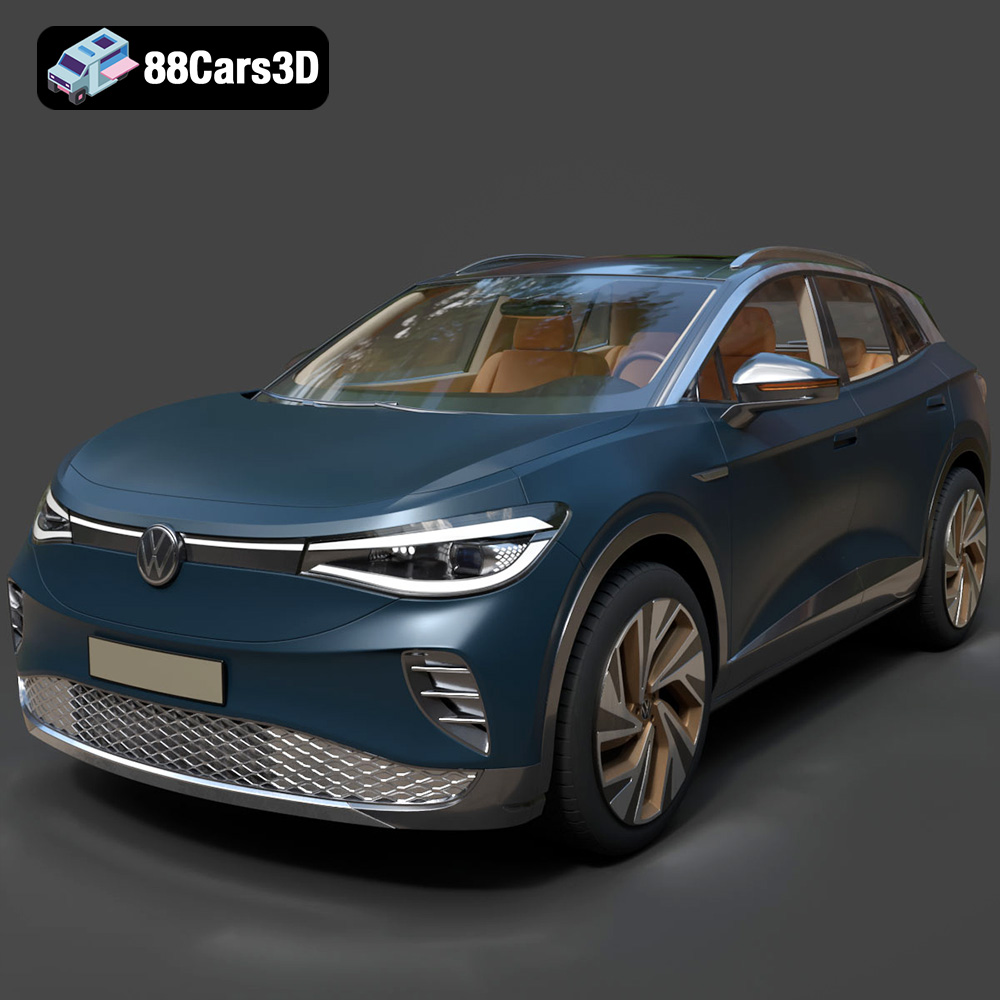
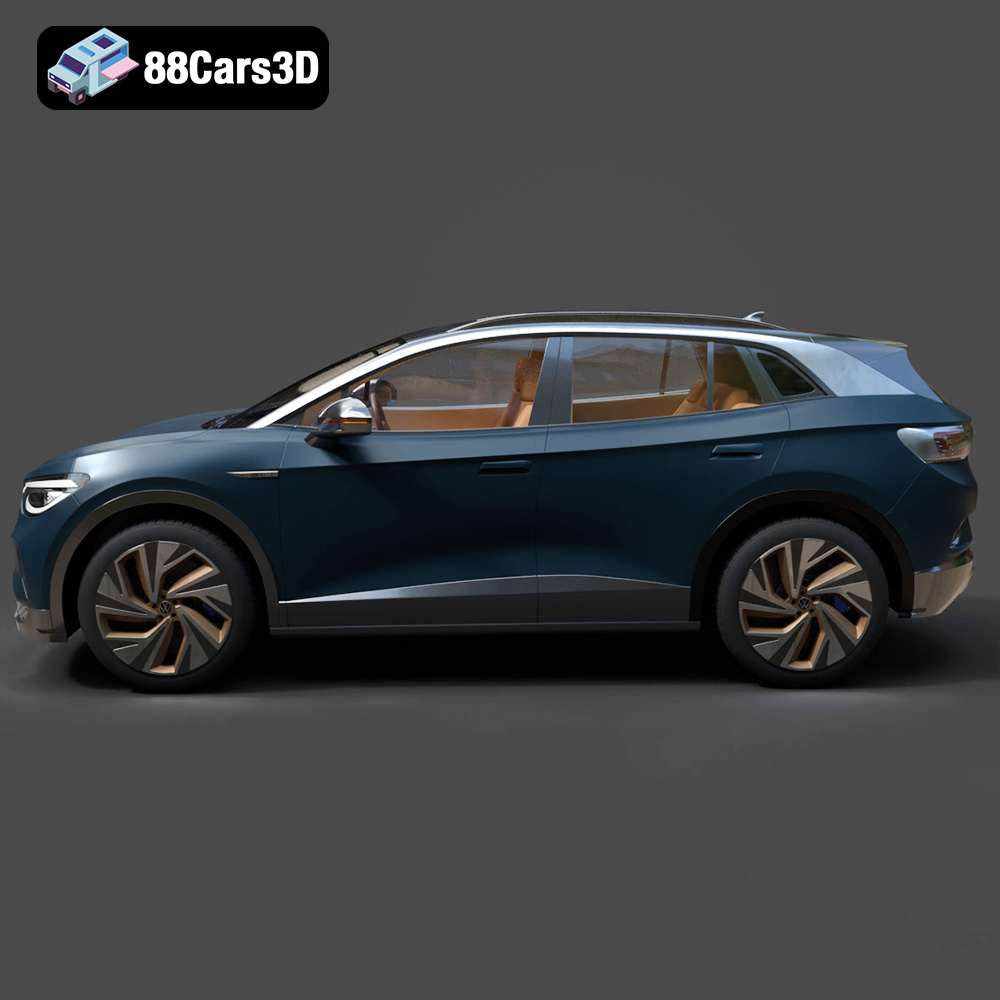
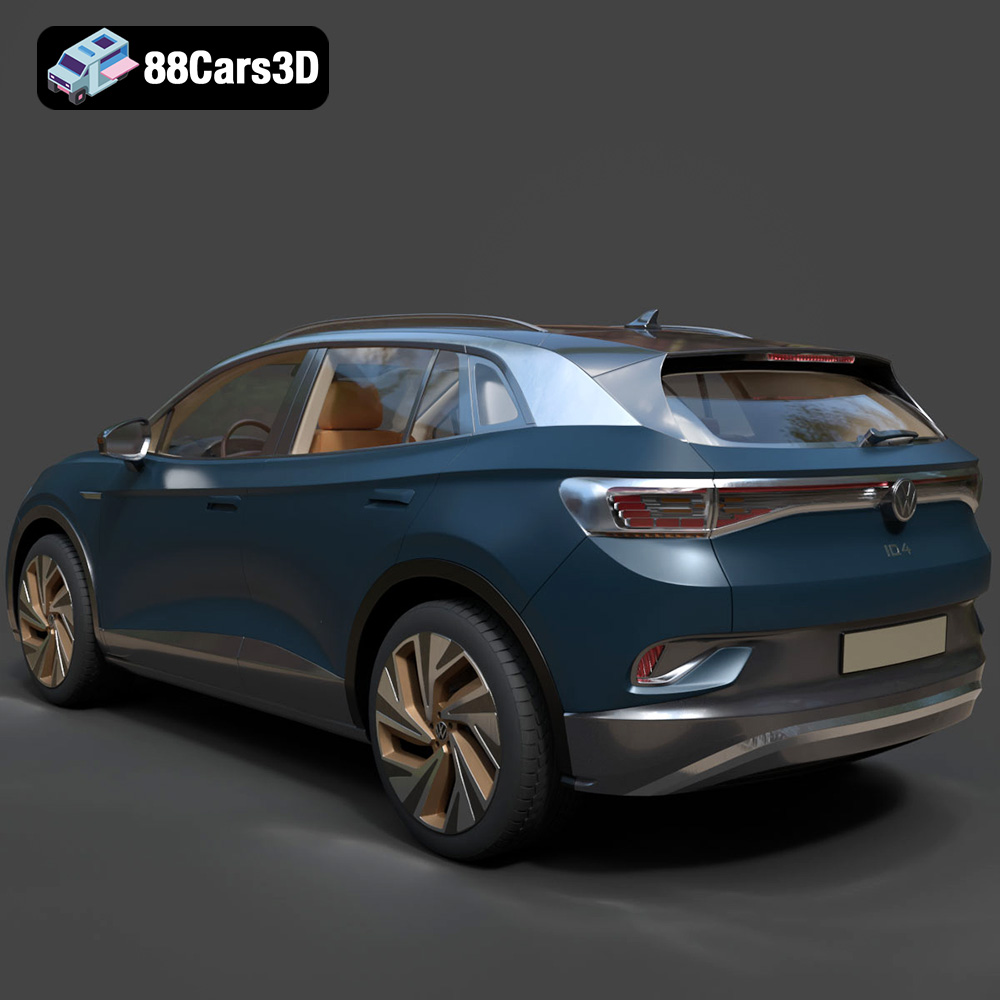
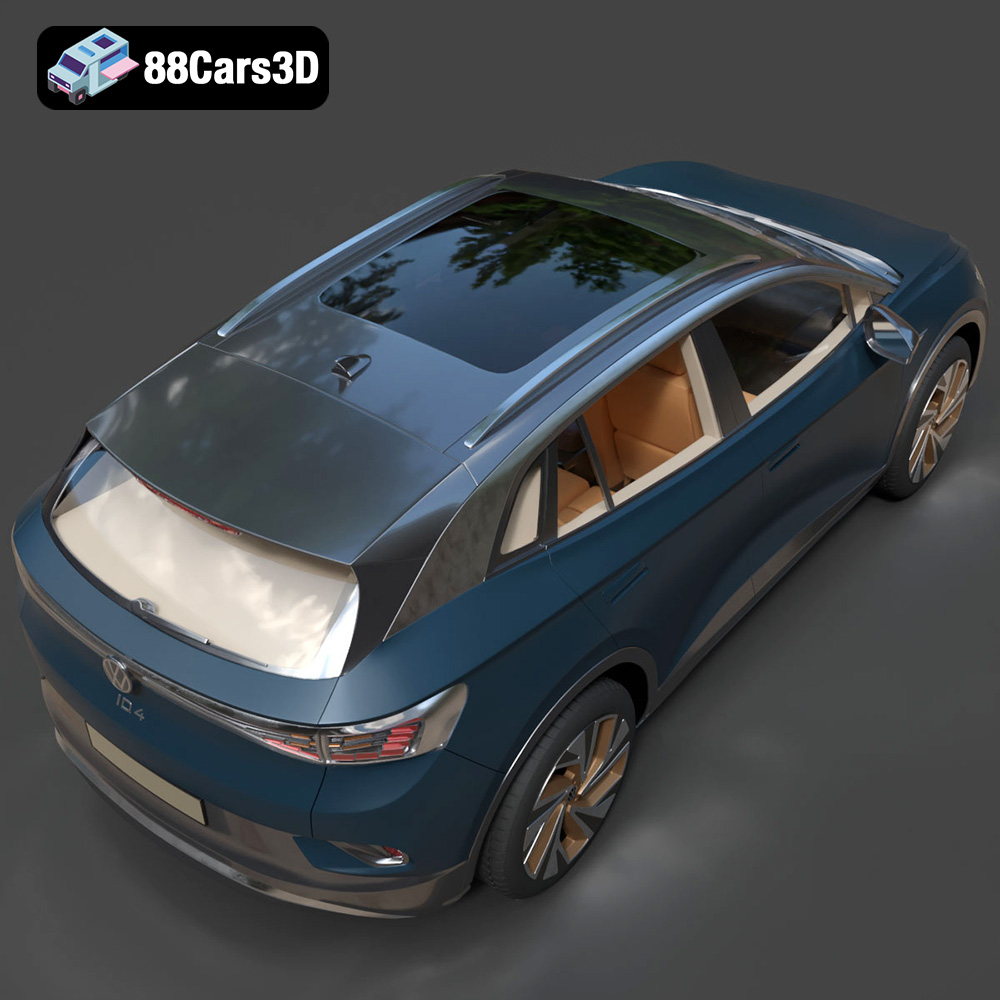
Today, we delve into the critical role such assets play, exploring the technical nuances that define excellence in 3D modeling. We will examine how a top-tier model can seamlessly integrate into diverse professional pipelines, offering flexibility and performance. Our journey through these intricate workflows will highlight the immense value of expertly crafted resources, using the Volkswagen ID4 2021 3D Model as a prime example of an asset that sets a high bar for realism and utility. This extensively detailed model perfectly captures the aerodynamic curves and modern design of the popular electric vehicle, providing an accurate representation suitable for professional digital environments, whether for cutting-edge automotive rendering or developing captivating game assets.
The digital automotive landscape is more competitive than ever, demanding perfection at every stage. From the initial sketch to the final promotional material, a high-quality 3D car model acts as the central pillar, influencing design decisions, marketing effectiveness, and the overall immersion of a digital experience. These models are not just static representations; they are dynamic tools that empower artists, engineers, and developers.
For automotive designers and marketers, accuracy is paramount. A high-quality 3D car model, such as the Volkswagen ID4 2021 3D Model, allows for unparalleled precision in visualization. Engineers can evaluate ergonomics and aerodynamics long before physical prototypes are built, saving significant time and resources. Marketing teams can generate breathtaking photorealistic renders for advertisements, brochures, and online configurators that showcase every angle and feature with stunning fidelity. These digital assets enable iterative design, immediate feedback, and global collaboration, fundamentally transforming the product development lifecycle from concept to market. The intricate modeling of both interior and exterior elements ensures seamless integration into close-up shots and demanding digital scenes, crucial for conveying the luxury and functionality of a modern vehicle.
In the realm of game development, the demands on 3D car models are multifaceted. Beyond visual fidelity, game assets must be optimized for real-time performance, encompassing efficient poly counts, clean UV mapping, and robust material setups. A high-quality model like the Volkswagen ID4 2021 3D Model, engineered with clean geometry and accurate proportions, ensures that virtual vehicles look realistic without bogging down the game engine. This balance between aesthetic excellence and technical efficiency is what creates truly immersive driving simulations, racing games, and open-world adventures, where players can feel a genuine connection to the vehicles they control.
The utility of premium 3D car models extends far beyond traditional screens. Augmented Reality (AR) and Virtual Reality (VR) experiences are increasingly leveraging these assets to create interactive product showcases, virtual showrooms, and training simulations. Imagine walking around a full-scale Volkswagen ID4 in your living room via AR, or exploring its interior in a VR environment – all made possible by a meticulously crafted 3D model. Furthermore, specific formats like .stl open doors to 3D printing, enabling rapid prototyping of scale models or even custom parts, bridging the gap between the digital design and physical manifestation.
The versatility of a professional 3D car model is often defined by the range and quality of its supported file formats. Each format serves distinct purposes, optimized for different software, workflows, and output requirements. Understanding these differences is crucial for any professional working with 3D assets, ensuring compatibility, preserving data integrity, and maximizing efficiency. The Volkswagen ID4 2021 3D Model from 88cars3d.com thoughtfully includes a comprehensive suite of formats, catering to virtually any professional pipeline.
The .blend format is Blender’s native project file, encapsulating an entire scene with remarkable efficiency. This includes not just the mesh data, but also materials, textures, lighting, cameras, animations, rigging, and even internal scripts. For users of Blender, this is the most powerful format as it retains full editability and all scene configurations. When a 3D model like the Volkswagen ID4 is provided in .blend, it means artists can open it directly in Blender, ready to render with Cycles or Eevee, modify geometry, adjust materials, or integrate it into a larger scene with minimal setup. It ensures that all original artistic decisions, such as a specific material node setup or lighting scheme, are preserved.
.fbx (Filmbox) is arguably the most widely used interchange format in the 3D industry, particularly popular for its robust support of complex data beyond just mesh geometry. It excels at transferring models, animations, rigs, cameras, and lights between various 3D applications and game engines. For developers working with Unreal Engine or Unity, the .fbx version of the Volkswagen ID4 2021 3D Model is game-engine ready, often importing with materials, UVs, and even skeletal data if present. While it may not retain every minute detail of an original scene file (like a .blend or .max), it is the most reliable choice for a smooth transition across different software ecosystems, making it indispensable for collaborative projects and real-time pipelines.
The .obj (Wavefront OBJ) format is a universal standard, prized for its widespread compatibility across virtually all 3D software. It primarily stores geometric data (vertices, normals, texture coordinates, and faces) and can link to external .mtl files for material definitions. While .obj does not support animation or rigging, its simplicity and ubiquitous support make it an excellent choice for basic mesh transfer and archiving. For the Volkswagen ID4, the .obj file serves as a robust fallback for maximum cross-software compatibility, ensuring that artists can access the core mesh data regardless of their preferred modeling application.
.glb (GL Transmission Format Binary) is a relatively newer format, rapidly gaining traction, especially for AR/VR and web-based visualization. It is the binary version of glTF, a royalty-free specification for the efficient transmission and loading of 3D scenes and models by applications. .glb packages all necessary data (geometry, materials, textures, animations) into a single, compact file, making it ideal for quick loading and deployment on platforms like Sketchfab, Babylon.js, or within AR/VR applications. The .glb version of the Volkswagen ID4 2021 3D Model is optimized for these emerging interactive environments, providing a streamlined asset for digital showrooms or immersive experiences.
.stl (Stereolithography) is the de facto standard for 3D printing. It represents a 3D model as a collection of unconnected triangular facets, making it excellent for describing surface geometry without any color, texture, or material information. While not suitable for rendering or animation due to its lack of texture data, its strength lies in its simplicity and universal acceptance by 3D printers and CAD software for manufacturing. The .stl version of the Volkswagen ID4 enables users to produce physical prototypes, scale models, or even custom parts, directly from the digital design.
.ply (Polygon File Format or Stanford Triangle Format) is a file format for storing graphical objects that have a list of polygons. It supports a wider range of properties than .obj, including color, transparency, normals, texture coordinates, and data confidence values, often used for 3D scan data. While less common for general 3D model distribution, its precision and ability to store complex attributes make it valuable for scientific visualization, CAD, and specific analysis workflows where fine mesh details are critical. The inclusion of .ply for the Volkswagen ID4 2021 3D Model caters to users requiring this level of data fidelity.
The .unreal format signifies an asset pre-configured specifically for Unreal Engine. This means the model has likely undergone optimization, material setup, and possibly even collision mesh generation within the Unreal ecosystem. While .fbx is a general interchange format for Unreal, a dedicated .unreal file suggests a more seamless, drag-and-drop integration with fewer manual adjustments required by the user. This is a significant time-saver for game developers and real-time visualization artists, allowing them to instantly drop the Volkswagen ID4 into their projects and begin working with minimal setup.
Similar to .blend for Blender, .max is the native project file for Autodesk 3ds Max. It stores all scene data, including geometry, materials, textures, lights, cameras, animations, and render settings. For professionals entrenched in the 3ds Max ecosystem, this format offers full editability and ensures that all intricate details and advanced rendering setups are preserved. Using the .max file for the Volkswagen ID4 means artists can leverage 3ds Max’s powerful rendering engines like V-Ray or Corona, its robust animation tools, and extensive plugin support without any data loss or conversion complexities.
The true power of a high-quality 3D car model, such as the Volkswagen ID4 2021 3D Model from 88cars3d.com, lies in its adaptability across various professional workflows. Whether your specialization is cinematic rendering, interactive game development, or architectural visualization, this versatile asset provides the foundation for exceptional results. Let’s explore how it fits into some of the industry’s leading software environments.
For Blender artists, the inclusion of the .blend file for the Volkswagen ID4 2021 is a game-changer. Upon opening, you’ll find a fully editable scene, often complete with materials, lighting setup, and potentially even camera angles. This allows immediate iteration and customization. Artists can leverage Blender’s Cycles renderer for physically accurate, photorealistic results, adjusting studio lighting, HDRI environments, and material properties like metallic reflectivity, clear coat, and subsurface scattering for the car paint and interior fabrics. For real-time previews and animations, Blender’s Eevee renderer offers speed without sacrificing significant visual quality. The clean geometry of the ID4 model ensures smooth subdivision and deformation, making it ideal for high-resolution renders or even short cinematic animations showcasing the vehicle’s features.
3ds Max remains a cornerstone for many automotive visualization studios, and the provided .max file for the Volkswagen ID4 2021 3D Model seamlessly integrates into this robust environment. Professionals can directly open the file, benefiting from pre-configured elements. Artists can then deploy industry-standard renderers like V-Ray or Corona to achieve breathtaking realism, utilizing advanced lighting techniques such as global illumination, caustic effects on glass, and volumetric fog to enhance environmental realism. The ID4’s detailed geometry allows for precise material assignments to every component, from the intricate wheel designs to the nuanced textures of the dashboard, making it perfect for generating marketing-ready visuals or high-impact presentations.
The future of interactive visualization and game development heavily relies on real-time engines like Unreal Engine. With the Volkswagen ID4 2021 3D Model available in .fbx and dedicated .unreal formats, integration is straightforward. The .fbx file offers a flexible import path, allowing developers to set up materials using Unreal’s powerful PBR (Physically Based Rendering) system, configure collision meshes, and apply Level of Detail (LOD) settings for optimal performance across different viewing distances. The dedicated .unreal asset, on the other hand, streamlines this process even further, often coming pre-optimized and ready to be dropped into a scene. Developers can then leverage Unreal’s advanced features like Lumen for real-time global illumination, Nanite for incredibly detailed geometry, and Niagara for particle effects, to create truly immersive simulations, virtual showrooms, or dynamic in-game environments featuring the ID4 as a prominent game asset.
Beyond aesthetic appeal, the true mark of a premium 3D car model lies in its underlying technical excellence. These details dictate how well a model performs in different scenarios, its flexibility for modification, and the ultimate realism it can achieve. The Volkswagen ID4 2021 3D Model exemplifies meticulous craftsmanship, ensuring it meets the rigorous demands of professional production pipelines.
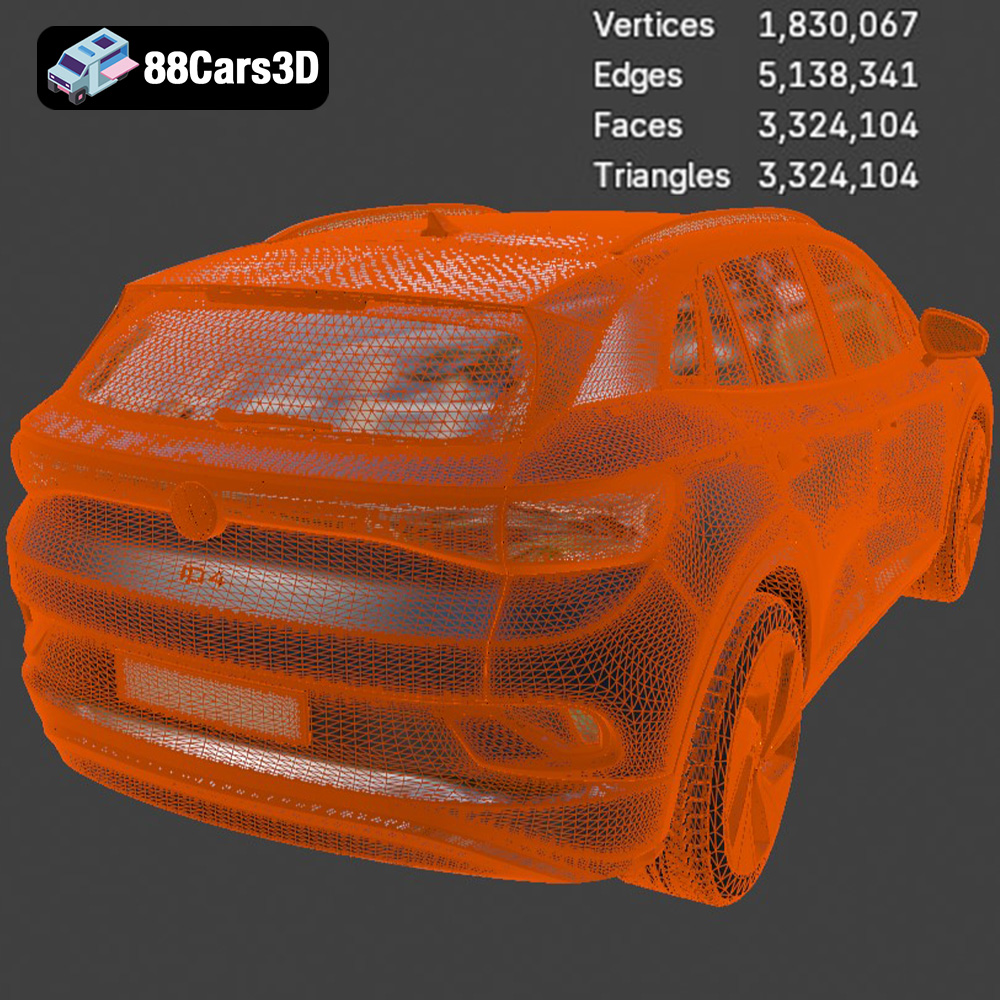
A “clean geometry” is fundamental. This means the mesh is predominantly quad-based, avoiding unnecessary triangles or Ngons where possible. Quad topology is crucial for smooth subdivision (e.g., using a subdiv modifier in Blender or TurboSmooth in 3ds Max), which allows for incredible detail at render time without excessively dense base meshes. The Volkswagen ID4 2021 3D Model features clean geometry and accurate proportions, minimizing artifacts like pinching or stretching, especially on curved surfaces. An optimized poly count, balanced for both high-resolution renders and real-time applications, ensures the model is both visually stunning and performant. Efficient edge flow is also key for animation and deformation, should the model be integrated into a simulated environment with dynamic parts.
Realistic materials are achieved through the implementation of Physically Based Rendering (PBR) workflows. This involves a suite of textures (Albedo/Base Color, Metallic, Roughness, Normal, Ambient Occlusion, etc.) that accurately simulate how light interacts with different surfaces. The Volkswagen ID4 2021 3D Model employs realistic materials, meaning its textures are meticulously crafted and UV-mapped to prevent distortion and ensure consistent scale. Clean, non-overlapping UVs are essential for applying these textures effectively and for baking lighting or ambient occlusion maps. A well-executed PBR setup ensures that the car paint, glass, rubber, plastics, and interior fabrics react believably to various lighting conditions, making the vehicle look truly integrated into any digital environment.
Professional 3D assets must be scalable. This often means providing multiple Levels of Detail (LODs) for game assets, allowing the engine to swap lower-polygon versions of the model when viewed from a distance, saving rendering resources. While specific LODs are an implementation detail for the end-user, the underlying clean geometry of the Volkswagen ID4 2021 3D Model facilitates this process. The availability of various file formats like .fbx for games and .max/.blend for high-resolution rendering further emphasizes its versatility. An asset that can transition smoothly from a cinematic close-up render to a real-time interactive experience without requiring a complete rebuild is invaluable, and this model delivers on that front, offering a robust foundation for diverse demands.
The investment in premium 3D car models from marketplaces like 88cars3d.com directly translates into tangible benefits across multiple industries. These assets are not merely decorative; they are integral tools driving innovation and efficiency in professional settings.
Consider a major automotive manufacturer preparing to launch a new electric vehicle like the Volkswagen ID4. Before physical cars are even produced in significant numbers, marketing teams need compelling visuals. A high-quality 3D model allows for the creation of stunning promotional renders, dynamic video advertisements, and interactive online configurators. With the Volkswagen ID4 2021 3D Model, a studio can produce virtual photo shoots in any imagined environment – from a futuristic cityscape to a serene countryside – long before a physical prototype ever leaves the factory. This significantly accelerates time-to-market for marketing campaigns and provides early, accurate representations to potential customers, shaping their perception of the vehicle.
In the world of simulation and gaming, realism is key to immersion. Driving schools can use a model like the Volkswagen ID4 2021 3D Model to develop realistic training simulators, allowing new drivers to familiarize themselves with the car’s controls and dynamics in a safe, virtual environment. Game developers can integrate this model as a playable vehicle in racing titles or open-world games, ensuring that players experience a high level of visual fidelity. The model’s optimized geometry and multiple file formats make it a perfect game asset, providing the performance required for real-time rendering while maintaining the visual integrity expected by today’s sophisticated gamers.
The frontiers of digital interaction are expanding into Augmented and Virtual Reality. Imagine a car dealership offering a VR experience where customers can sit inside the Volkswagen ID4 2021, customize its interior colors, or even take a virtual test drive, all powered by an accurate 3D model. Companies are also using these models for digital prototyping, allowing designers and engineers to collaborate in virtual spaces, reviewing and refining designs without the cost and lead time of physical mock-ups. The .glb format, included with the ID4 model, is particularly suited for these emerging AR/VR applications, making interactive visualizations accessible across web and mobile platforms.
The journey through the intricate world of 3D car models reveals a landscape where technical precision meets artistic vision. The demand for high-quality assets in automotive rendering, game development, and emerging AR/VR experiences continues to grow, underscoring the vital role of expertly crafted 3D models. The Volkswagen ID4 2021 3D Model stands as a testament to this evolving standard, offering unparalleled realism, clean geometry, realistic materials, and a diverse range of file formats that ensure seamless integration into any professional workflow.
From detailed product visualization for marketing campaigns to optimized game assets for immersive driving simulations, this model provides the flexibility and fidelity that professionals require. It encapsulates the meticulous attention to detail and technical prowess necessary to thrive in today’s digital creation landscape. For those seeking to elevate their projects with premium assets, 88cars3d.com consistently delivers high-quality 3D car models that empower creativity and drive innovation across industries. Investing in such robust assets ensures that your digital projects not only look exceptional but also perform flawlessly across a multitude of platforms and applications.
Experience exceptional realism with the Volkswagen ID4 2021 3D Model. This extensively detailed model perfectly captures the aerodynamic curves and modern design of the popular electric vehicle, providing an accurate representation suitable for professional digital environments. Engineered with precision, this model features clean geometry, accurate proportions, and realistic materials. The intricately modeled interior and exterior elements ensure seamless integration into close-up shots and demanding digital scenes. Ideal for a wide range of professional applications, this model is perfect for automotive visualization, game development, rendering, AR/VR experiences, and interactive simulations.
$19.99
.arvr
.blend
.car3dmodel
.crossover
.electricvehicle
.ev
.fbx
.gameasset
.glb
.id4
.max
.obj
.ply
.rendering
.simulation
.stl
.unreal
.volkswagen
SUV