Get 50% OFF All Premium 3D & STL Models!

In the fast-evolving landscape of digital content creation, the demand for highly realistic and technically sound 3D assets is paramount. From blockbuster video games to cutting-edge architectural visualization and immersive virtual reality experiences, a meticulously crafted 3D car model can elevate a project from good to extraordinary. It’s not just about creating a static object; it’s about capturing the essence, the engineering, and the sheer presence of an automotive masterpiece within a digital environment.
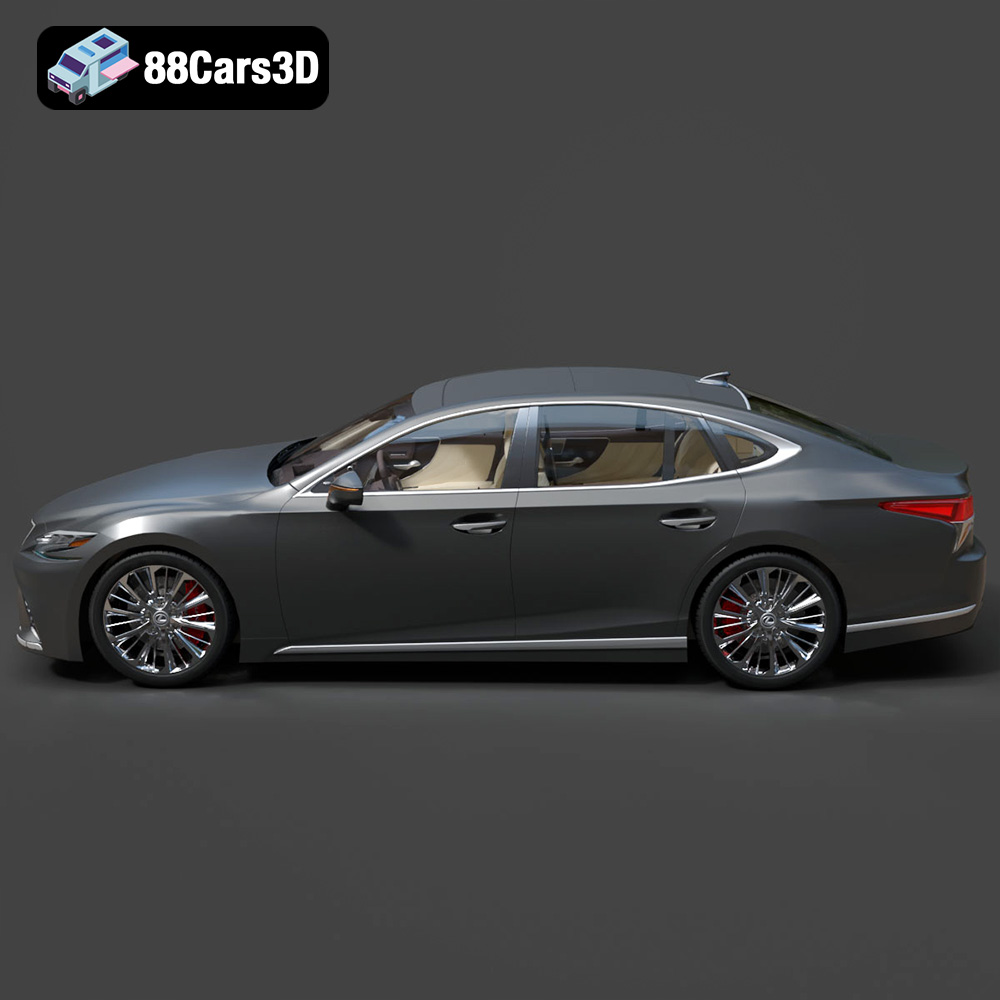
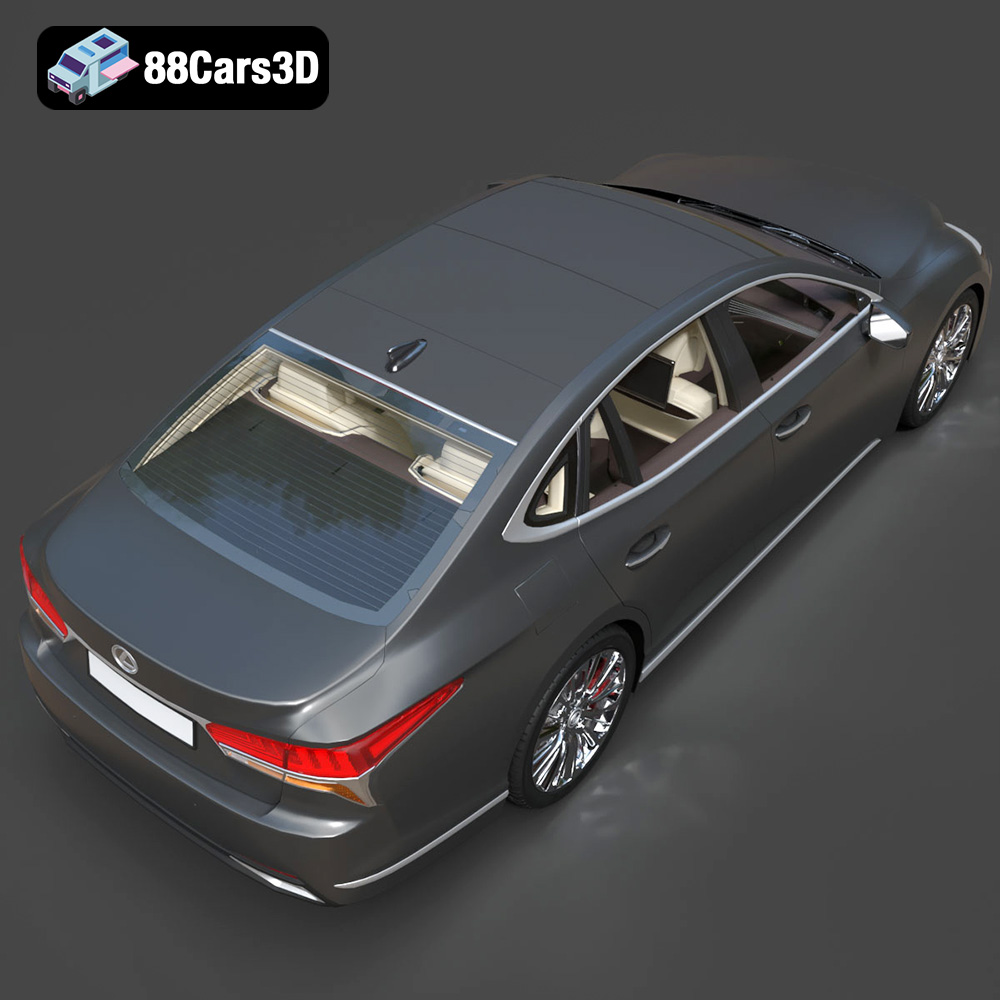
Today, we’re diving deep into the intricate world of premium 3D car models, using the magnificent 2018 Lexus LS 500 as our prime example. This luxury sedan, renowned for its striking spindle grille, elegant coupe-like silhouette, and whisper-quiet ride, embodies the meticulous Takumi craftsmanship that defines Japanese luxury. A high-fidelity digital representation of such a vehicle is more than just a model; it’s a testament to precision and an invaluable asset for any serious creative endeavor. Whether you’re a game developer seeking authentic vehicles, an architect visualizing a grand entrance, or a marketing professional crafting a brand campaign, understanding the technical depth behind these assets is crucial. The Lexus LS 500 2018 3D Model, available on 88cars3d.com, stands as a prime illustration of how high-quality 3D car models can seamlessly integrate into diverse professional workflows.
Creating a truly premium 3D car model is a sophisticated blend of artistic vision and engineering precision. It demands an eye for detail that rivals the automotive designers themselves, coupled with a deep technical understanding of 3D software, optimization techniques, and rendering pipelines. The goal is to produce a digital twin that not only looks identical but also behaves predictably within various simulations and engines.
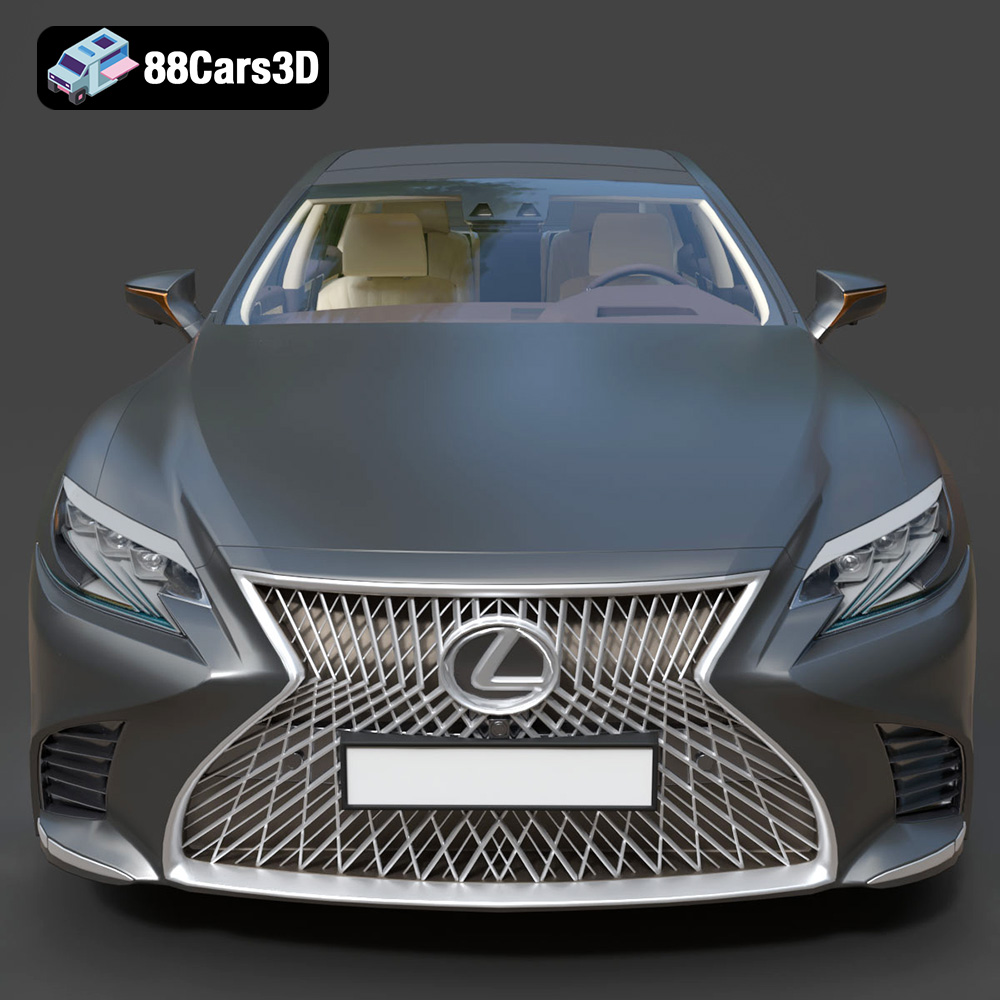
Automotive manufacturers invest countless hours in designing vehicles that communicate specific brand values and performance characteristics. For a luxury sedan like the Lexus LS 500, this includes its aggressive yet refined styling, its commanding road presence, and its signature design elements. Replicating this in 3D requires careful study of reference materials, precise blueprint matching, and a keen understanding of surface continuity and form. Every curve, every crease, from the complex front fascia with its detailed spindle grille mesh to the integrated dual exhaust finishers, must be accurately represented. The Lexus LS 500 2018 3D Model meticulously captures these details, including the Z-shaped LED headlights, L-shaped taillights, and authentic 19-inch/20-inch alloy wheels, ensuring the digital rendition mirrors the physical vehicle’s distinctive aesthetic.
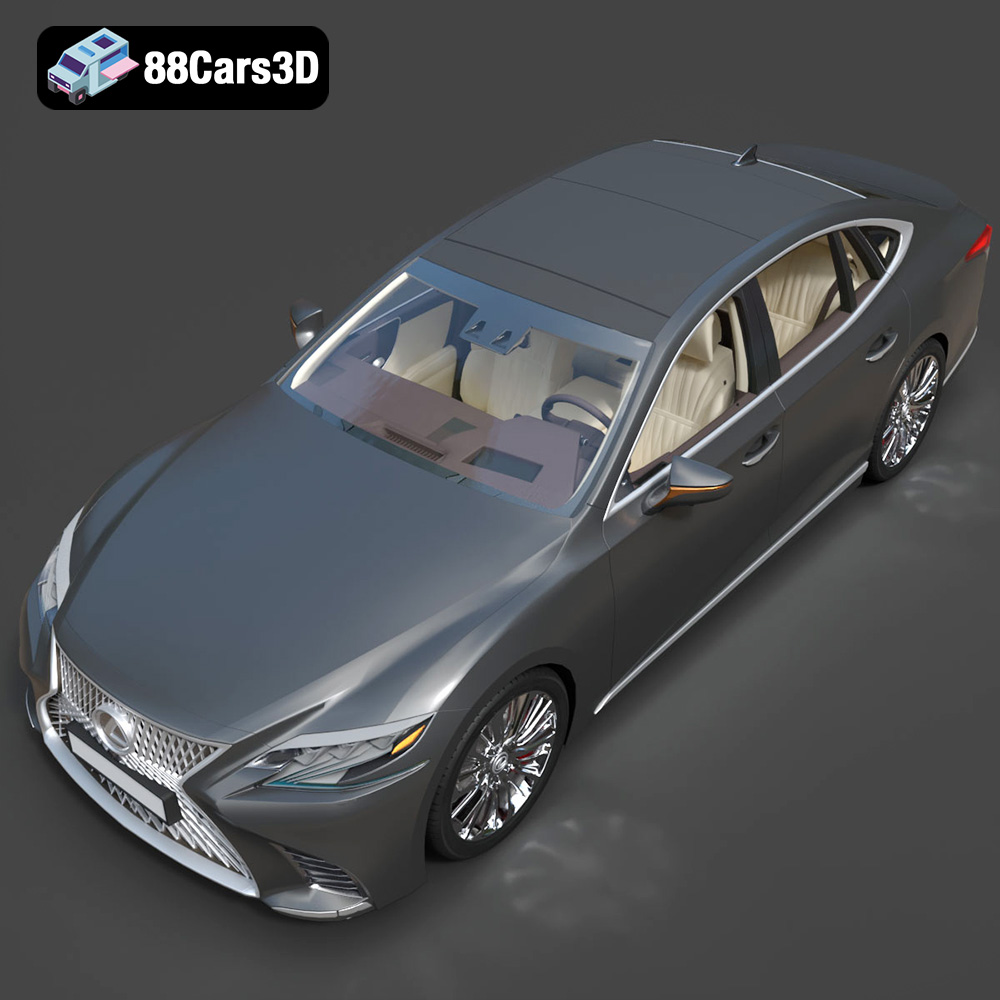
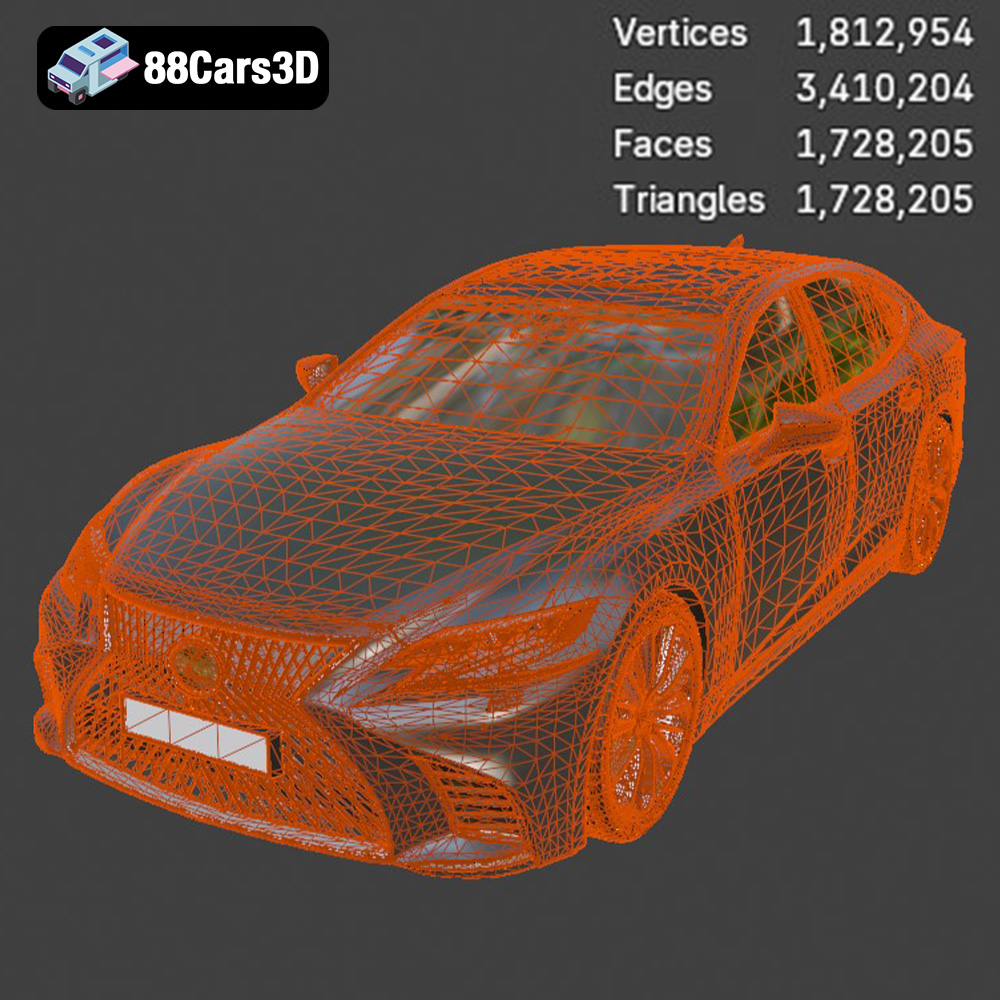
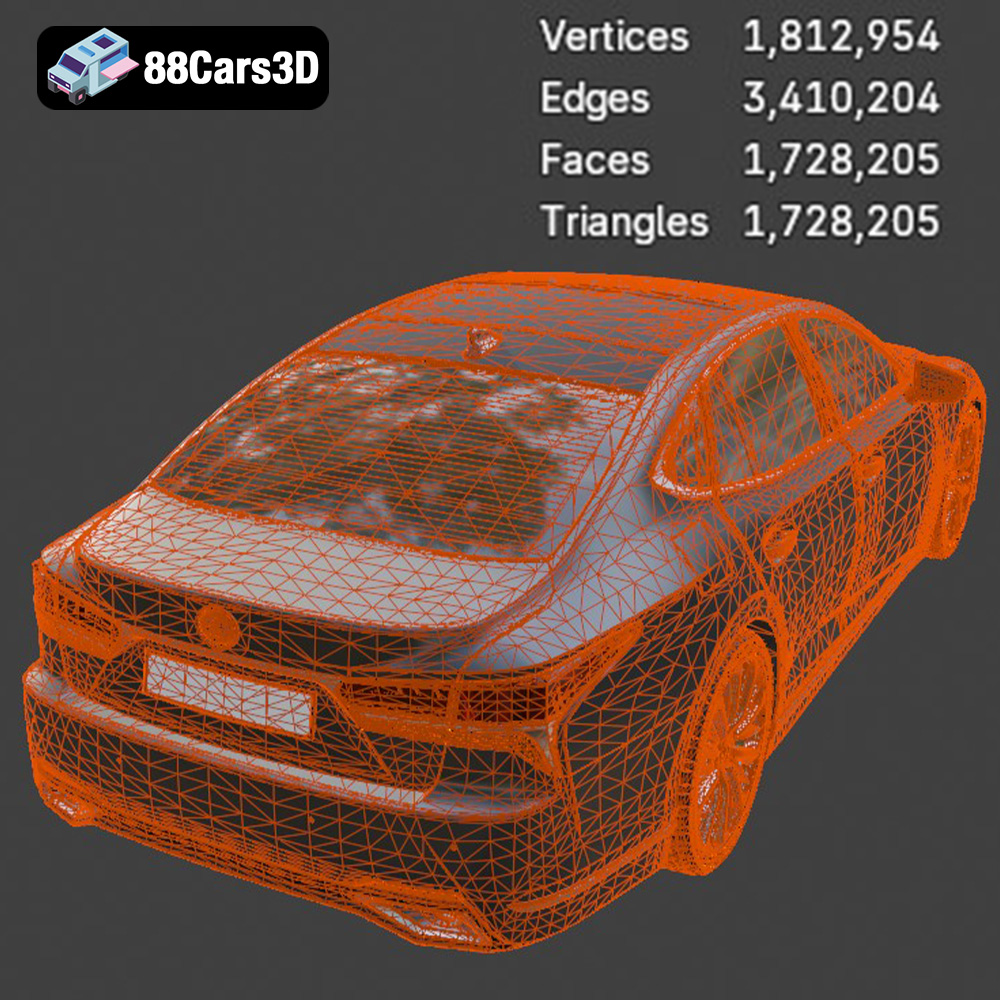
The challenge in 3D modeling, especially for applications like game development or AR/VR, lies in striking the perfect balance between visual fidelity and real-time performance. A model that is too dense in polygons will cripple frame rates, while one that is too simplified will lack realism. This balance is often achieved through optimized topology, which involves strategically placing polygons to define form efficiently without excessive tessellation. The Lexus LS 500 2018 3D Model exemplifies this principle with approximately 200,000 triangles. This polycount is carefully chosen to ensure top-tier visual fidelity for photorealistic results, while remaining game-ready and performant for demanding real-time engines such as Unreal Engine and Unity. This optimization extends to the interior as well, with luxurious leather-trimmed seating and a detailed steering wheel, all designed with an optimized geometry suitable for first-person POV in gaming and VR simulations.
Navigating the diverse world of 3D software and applications necessitates a clear understanding of the various file formats available. Each format serves specific purposes, offering different levels of compatibility, data retention, and optimization for particular workflows. For a comprehensive asset like the Lexus LS 500 2018 3D Model, which caters to a broad spectrum of professional needs, offering multiple formats is a crucial advantage. Let’s break down the most common ones and their technical implications.
.blend – Fully Editable Blender Scene with Materials: The native file format for Blender, a powerful open-source 3D creation suite. A .blend file preserves all aspects of a Blender project: mesh data, materials (including complex node setups), textures, animations, rigging, cameras, lighting, and scene settings. This format is ideal for Blender users who need full control over the model, allowing for extensive modifications, re-texturing, animation, and rendering directly within Blender. It ensures that the artistic and technical decisions made during the model’s creation are fully accessible and editable.
.max – Editable 3ds Max Project for Animation and Rendering: The proprietary format for Autodesk 3ds Max, a industry-standard software for 3D modeling, animation, and rendering. Similar to .blend, a .max file stores the complete 3ds Max scene, including geometry, materials, lighting, cameras, modifiers, and animation data. This format is essential for professionals working within the Autodesk ecosystem, particularly those focused on high-end architectural visualization, cinematic rendering, and complex animation. It provides the highest fidelity and flexibility for 3ds Max users to integrate and further develop the Lexus LS 500 model within their projects.
.fbx – Ideal for Unreal, Unity, and Real-time Pipelines: Developed by Autodesk, FBX (Filmbox) is one of the most widely adopted 3D exchange formats, especially prevalent in game development. It can store a vast array of 3D data, including geometry, UVs, textures, materials (though often simplified), skeletons, skinning, and animation. Its strength lies in its ability to transfer complex animated scenes between different 3D applications and game engines like Unreal Engine and Unity with minimal data loss. The .fbx variant of the Lexus LS 500 2018 3D Model is highly optimized for performance and ensures smooth integration into these real-time environments, often containing embedded textures for convenience.
.obj – Universal Format for Cross-Software Compatibility: OBJ (Object) is a foundational and highly universal 3D file format that has been around for decades. It primarily stores geometry (vertices, normals, texture coordinates, faces) and can reference an associated Material Template Library (.mtl) file for basic material properties and texture maps. While it doesn’t support animation or complex rigging, its simplicity and widespread compatibility make it an excellent choice for basic mesh transfer between virtually any 3D software. For the Lexus LS 500, the .obj format provides a clean, raw mesh suitable for import into almost any 3D package, where users can then apply their preferred materials and shaders.
.ply – Precision Mesh Format for CAD or Analysis: PLY (Polygon File Format, or Stanford Triangle Format) is primarily used for storing 3D data from 3D scanners, CAD software, and scientific applications. It can store polygon meshes and point clouds, along with properties like color, transparency, normals, and texture coordinates. While less common for general-purpose 3D asset exchange compared to .fbx or .obj, its robust structure for geometric data makes it valuable for applications requiring high precision or for processing 3D scan data. For the Lexus LS 500, the .ply format offers a solid, clean mesh suitable for certain engineering, analysis, or niche visualization tasks.
.glb – Optimized for AR, VR, and Browser-based Display: GLB (GL Transmission Format Binary) is the binary version of glTF (Graphics Language Transmission Format), designed as an efficient, runtime-optimized format for WebGL, AR, VR, and mobile applications. It packages geometry, materials, textures, and animation into a single, compact file, making it incredibly fast to load and display across various platforms, including web browsers. The .glb version of the Lexus LS 500 2018 3D Model is perfect for virtual showrooms, interactive product configurators on websites, and augmented reality apps, delivering a high-quality visual experience with minimal overhead.
.stl – Suitable for 3D Printing Output: STL (Stereolithography) is the de facto standard format for 3D printing. It represents a 3D model as a series of connected triangles (a triangulated surface), defining only the surface geometry of an object without color, texture, or other CAD attributes. For hobbyists and professionals looking to physically manifest the Lexus LS 500, the .stl format provides a watertight, print-ready mesh. The product description for the Lexus LS 500 model even provides detailed 3D printing settings, highlighting its readiness for physical fabrication.
.unreal – Engine-Ready Asset for Real-time Environments: While not a standalone file format in the traditional sense like .fbx or .obj, an “.unreal” asset typically refers to a model specifically prepared and perhaps exported directly from Unreal Engine, or an .fbx file pre-configured with Unreal-specific materials and collision settings. Such an asset implies a level of optimization and setup that makes it immediately usable within the Unreal Engine editor, including proper material assignments, UV channels, and potentially custom collision meshes. This makes the Lexus LS 500 2018 3D Model truly “plug-and-play” for Unreal developers, significantly accelerating their workflow.
The versatility of a high-quality 3D asset like the Lexus LS 500 2018 3D Model from 88cars3d.com lies in its adaptability across various professional disciplines. Each field demands specific attributes from a 3D model, and this asset is engineered to meet those diverse requirements.
For game developers, realism and performance are often at odds. The Lexus LS 500 2018 3D Model, with its optimized ~200,000 triangle count, strikes this balance perfectly. It offers exceptional visual detail for close-ups and cinematic sequences, while remaining efficient enough for integration into open-world environments, racing titles, and vehicle simulators. Its game-ready status means clean geometry, proper UV mapping, and PBR (Physically Based Rendering) texture compatibility, which are critical for engines like Unreal Engine and Unity. Furthermore, the model comes with separate components for wheels, doors, suspension, and steering, along with proper pivot setups, enabling realistic animation for driving mechanics, car damage systems, and interactive sequences. This level of preparation significantly reduces development time, allowing studios to focus on gameplay rather than asset optimization.
Architectural visualization (ArchViz), advertising, and product showcasing demand nothing short of photorealism. For these applications, the Lexus LS 500 2018 3D Model excels. Its meticulous detailing, from the complex signature spindle grille to the intricate interior stitching, allows for breathtaking renders in V-Ray, Corona Renderer, Redshift, or Arnold. Artists can place the model in elegant architectural scenes, dramatic studio lighting setups, or luxurious lifestyle environments to create compelling marketing collateral. The ability to easily change body colors, modify material finishes (matte, gloss, metallic), and adapt lighting allows for endless creative possibilities, making it ideal for presenting new luxury car concepts or demonstrating a building’s upscale amenities.
Augmented Reality (AR) and Virtual Reality (VR) are transforming how we interact with digital content, offering immersive experiences that blur the lines between virtual and real. The optimized geometry and clean topology of the Lexus LS 500 2018 3D Model make it perfect for AR/VR applications such as virtual showrooms, interactive car configurators, and mobile AR experiences. Imagine a prospective buyer exploring the LS 500 in their driveway via an AR app, or a designer walking through a virtual environment featuring the car. The model’s real-world scale accuracy and the ability to customize colors and finishes enhance the sense of presence and interactivity, providing a truly engaging user experience without compromising performance on mobile or headset devices.
Behind every stunning 3D model are layers of technical considerations that ensure its quality, versatility, and efficiency. The Lexus LS 500 2018 3D Model is a testament to these principles, built to rigorous standards for professional use.
The “optimized topology” mentioned in the product description refers to the intelligent construction of the 3D mesh. With approximately 200,000 triangles, the model strikes a crucial balance. This isn’t just a number; it indicates that polygons are strategically distributed to capture critical forms and details—like the flowing lines of the coupe-like sedan proportions, or the intricate mesh of the spindle grille—without creating unnecessary density in flat areas. Clean geometry means well-defined edges, smooth surfaces upon subdivision (if desired), and absence of common modeling issues like non-manifold geometry or flipped normals. This foundation ensures the model renders cleanly, deforms predictably if animated, and is easy to modify without introducing artifacts.
Photorealism is heavily reliant on high-quality materials and textures. The Lexus LS 500 2018 3D Model comes with high-resolution textures, implying a PBR (Physically Based Rendering) workflow. This means separate texture maps for diffuse/albedo, roughness, metallic, normal, and potentially ambient occlusion, which accurately simulate how light interacts with different surfaces. Proper UV mapping is fundamental here; it’s the process of unfolding the 3D mesh into a 2D space so textures can be applied without distortion. A clean, non-overlapping UV layout is essential for both realistic rendering and efficient game engine performance. The attention to detail extends to luxurious leather-trimmed seating with intricate quilting and stitching details, all of which rely on sophisticated material definitions and texture work to convey their tactile qualities.
A static model has limited utility in dynamic scenes. The Lexus LS 500 model is built for animation, featuring separate components for wheels, doors, suspension, and steering. Each of these parts has a properly configured pivot point. For instance, the wheels pivot precisely at their center for accurate rotation, while the steering wheel pivots at its axis. Suspension components are designed to articulate realistically, simulating vehicle movement over terrain. This modularity allows animators to easily create driving sequences, open and close doors, or showcase the functionality of the vehicle without needing extensive re-rigging or geometry manipulation, saving significant production time.
The journey of a 3D model doesn’t always end on a digital screen. For enthusiasts, designers, and hobbyists, the ability to bring a virtual creation into the physical world through 3D printing is incredibly rewarding. The Lexus LS 500 2018 3D Model is designed with this possibility in mind, offering an .stl format suitable for physical output.
Converting a high-detail rendering or game asset into a 3D printable model requires specific adjustments. Primarily, the mesh must be “watertight” – meaning it has no holes or open edges – to ensure it’s a solid, printable object. The provided .stl format for the Lexus LS 500 3D Model is engineered to meet these requirements. Scale accuracy is also critical; the model is based on real-world dimensions, making it suitable for printing at common hobby scales like 1:12, 1:18, or 1:24. This ensures that the printed model accurately represents the proportions and intricate details of the actual vehicle, allowing for precise scaled replicas.
The product description offers practical guidance for 3D printing, recommending resin printing for fine details. This is due to resin printers’ ability to achieve much finer layer heights (0.04–0.12 mm) and sharper features compared to filament-based FDM printers. Wall thickness recommendations (1.2–2.0 mm) ensure structural integrity, preventing fragile parts. Support structures are crucial for complex geometries like the exhaust, mirrors, and grille, ensuring successful prints. Furthermore, specific print orientations are suggested (frame angled, wheels separately) to optimize for strength and detail. After printing, post-processing steps like sanding, priming, and painting with authentic factory colors, including metallic finishes, are essential to transform the raw print into a museum-quality display piece. This comprehensive guidance ensures that even those new to 3D printing can achieve impressive results with the Lexus LS 500 2018 3D Model.
One of the most powerful advantages of a meticulously crafted 3D model like the Lexus LS 500 2018 is the unparalleled freedom it offers for customization. This isn’t merely about changing a color; it’s about adapting the asset to perfectly fit any creative vision or technical requirement.
The ability to customize body colors, material finishes, and other visual attributes is fundamental for any professional project. For the Lexus LS 500 2018 3D Model, artists can effortlessly switch between authentic factory colors, experiment with custom metallic or pearl finishes, or even apply unique branding liveries. Material adjustments allow for alterations to gloss, matte, chrome, or even textured surfaces, fundamentally changing the perceived luxury and style of the vehicle. This flexibility is invaluable for advertising agencies needing to showcase a car in various configurations, game developers implementing in-game customization systems, or automotive configurators that allow users to personalize their dream vehicle. Beyond aesthetics, the option to modify tire textures from street to performance variants adds another layer of realism and customization, catering to specific driving scenarios or visual preferences.
The environment in which a 3D car model is placed profoundly impacts its visual appeal. High-quality 3D car models, such as those found on 88cars3d.com, are designed to be adaptable. This means they can respond realistically to diverse lighting conditions and backgrounds. Whether the scene calls for the crisp reflections of a sunny daylight street, the dramatic interplay of headlights and shadows in a night driving scenario, or the controlled perfection of a studio lighting setup, the Lexus LS 500 model’s robust material definitions will react appropriately. This adaptability ensures that the model always looks its best, regardless of the contextual demands, making it a versatile asset for a wide range of visualization projects, from cinematic cutscenes to architectural walkthroughs.
The journey through the intricacies of premium 3D car models reveals a profound truth: high-quality digital assets are not merely conveniences; they are cornerstones of modern digital content creation. The Lexus LS 500 2018 3D Model stands as a shining example of this principle, showcasing how meticulous craftsmanship, technical optimization, and broad format compatibility converge to create an invaluable resource for professionals across various industries. From the initial artistic capture of its Takumi-inspired design to its optimized geometry for real-time engines and its readiness for physical 3D printing, every aspect of this model is engineered for excellence.
Whether you’re developing the next generation of open-world games, crafting photorealistic architectural visualizations, designing immersive AR/VR experiences, or simply seeking a stunning piece for a personal project, the Lexus LS 500 2018 3D Model provides the fidelity, performance, and flexibility you need. By offering a comprehensive suite of file formats—from .blend and .max for native software users to .fbx and .unreal for game developers, and .glb for web-based AR/VR—it ensures seamless integration into virtually any professional pipeline. Explore this exceptional asset and many more at 88cars3d.com, where quality meets versatility to power your creative endeavors.
The 2018 Lexus LS 500 is the pinnacle of Japanese luxury, featuring a striking spindle grille, elegant coupe-like silhouette, and a powerful twin-turbo V6 engine. Known for its meticulous Takumi craftsmanship, whisper-quiet ride, and aggressive yet refined styling, the LS 500 represents the intersection of executive comfort and cutting-edge automotive design. From its complex front fascia to the dual exhaust outlets, every curve is captured to convey its dynamic road presence.This highly detailed, game-ready 3D model boasts optimized topology (approximately 200,000 triangles), ensuring top-tier visual fidelity without sacrificing real-time performance. Designed with clean geometry and high-resolution textures, it delivers photorealistic results ideal for modern game development, immersive AR/VR experiences, high-end animation, and architectural visualization.Perfect for luxury car configurators, urban open-world games, cinematic architectural renderings, and high-end brand showcases.
$19.99
.2018
.blend
.fbx
.glb
.lexus
.max
.obj
.ply
.rendering
.stl
.unreal
car-3d-model
executive-car
game asset
game-ready
low-poly
ls-500
luxury-sedan
optimized
VR/AR