Get 20% OFF All Premium 3D & STL Models!

In the dynamic world of 3D visualization, the demand for highly realistic and technically sound assets is ever-present. From captivating cinematic sequences to immersive game environments and precise architectural renders, the quality of a 3D model can significantly impact the overall success and perceived professionalism of a project. Automotive design, in particular, thrives on accuracy, detail, and seamless integration into various digital pipelines.
Automotive manufacturers, advertising agencies, game developers, and architectural firms consistently seek out superior 3D car models to drive their projects forward. These models are not merely visual props; they are critical components for prototyping, marketing, simulation, and entertainment. A truly professional 3D car model must excel in geometry, material fidelity, and adaptability, ensuring it performs flawlessly whether under a magnifying glass in a studio render or animating across an open-world landscape.
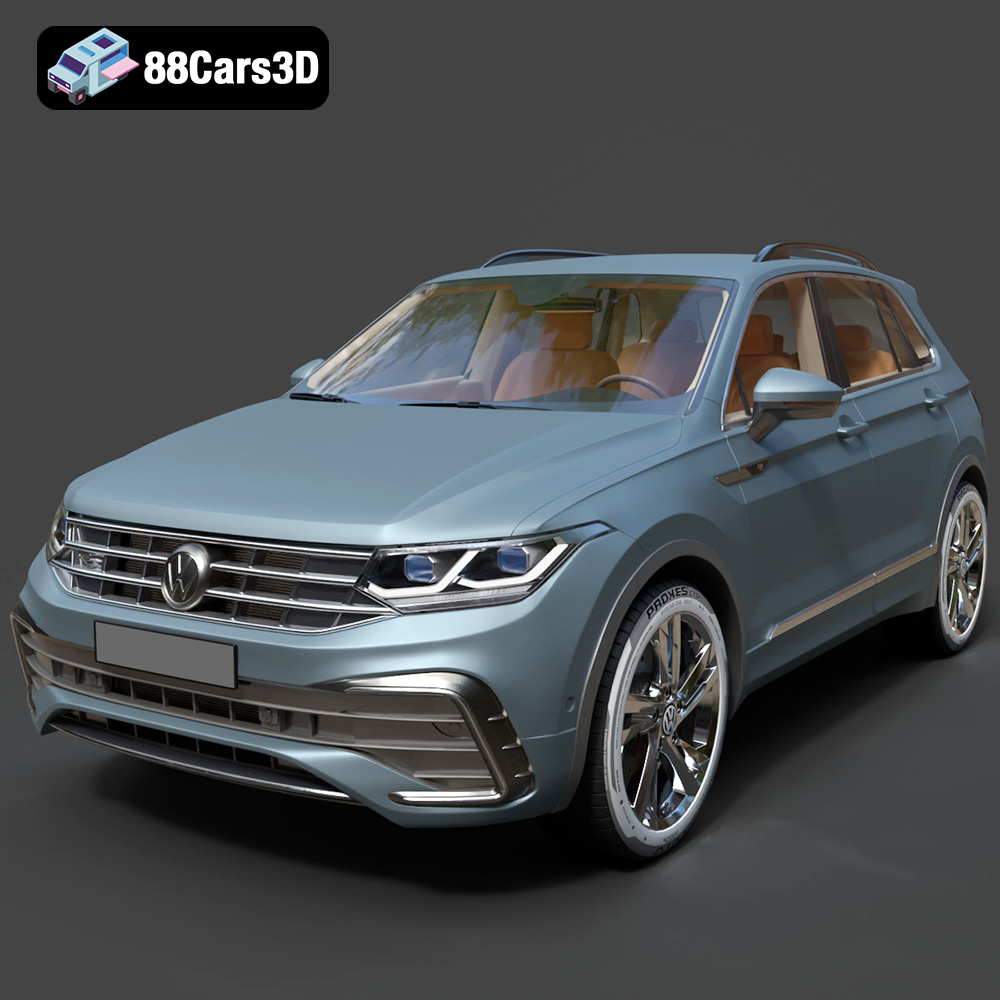
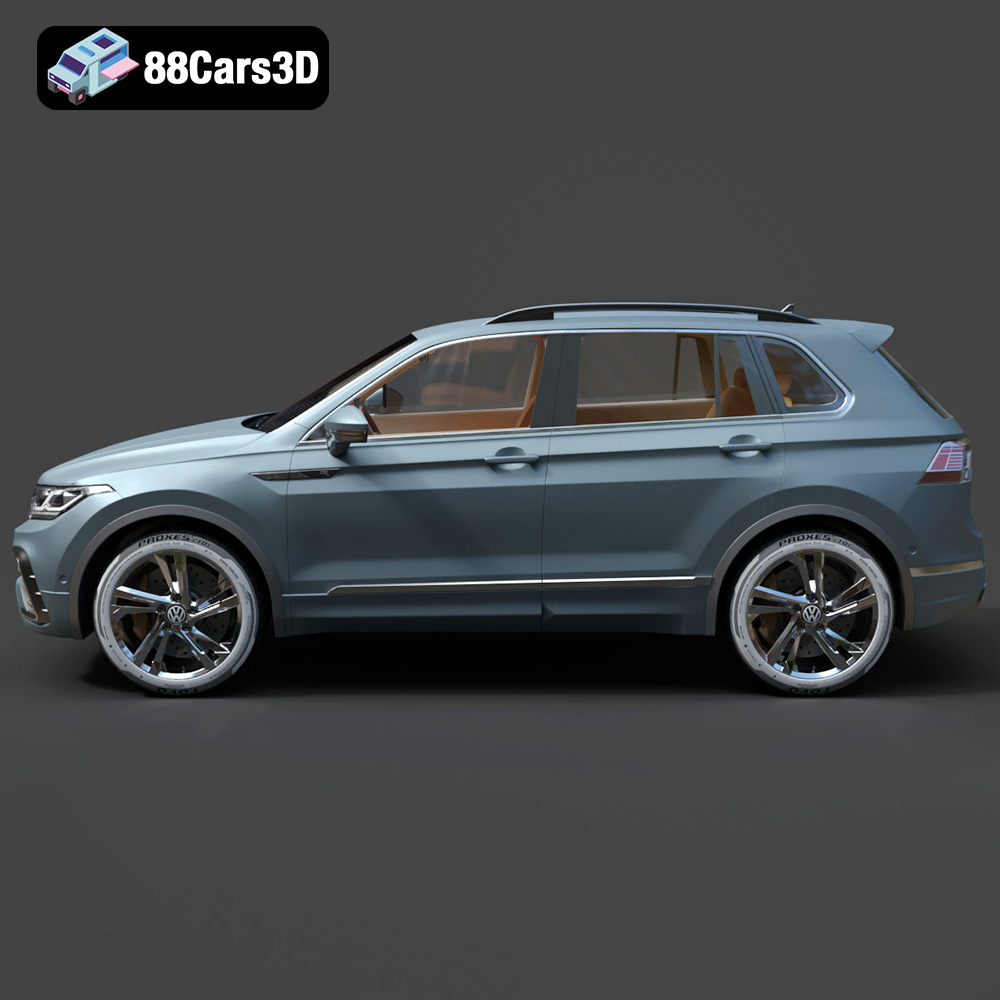
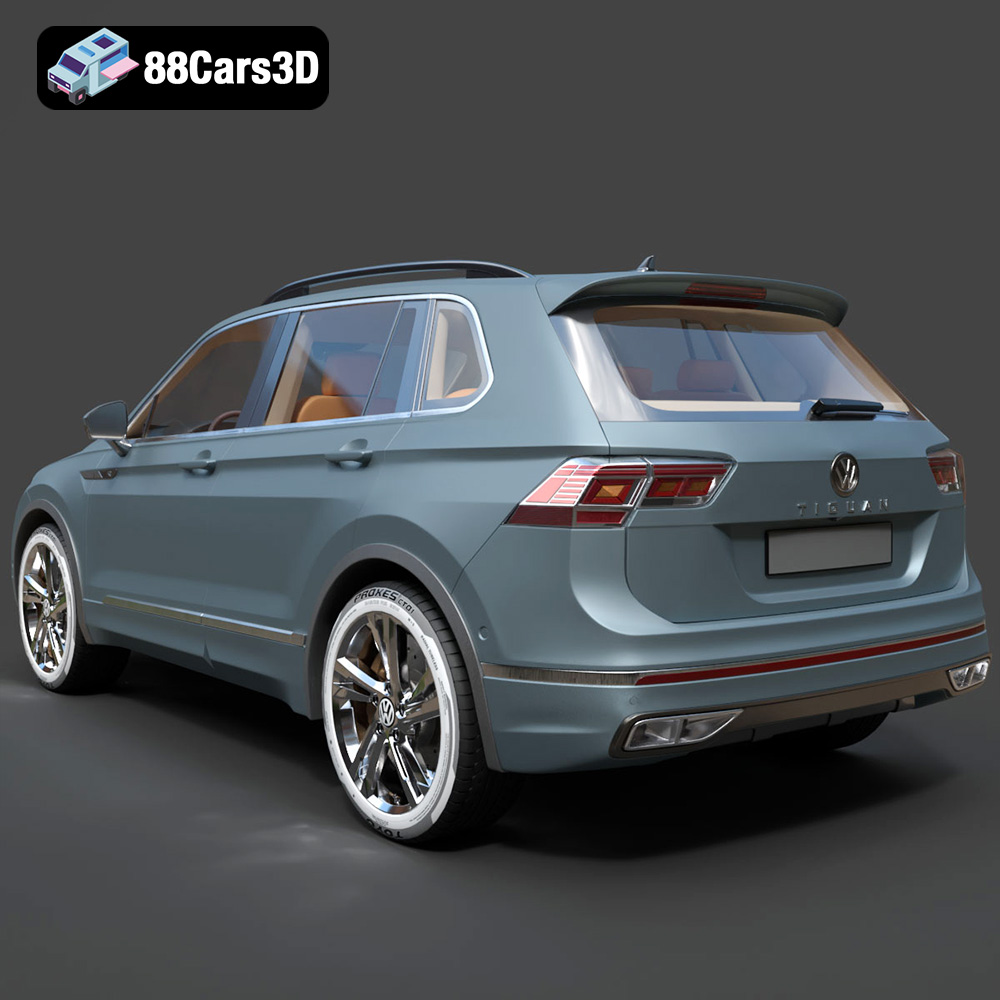
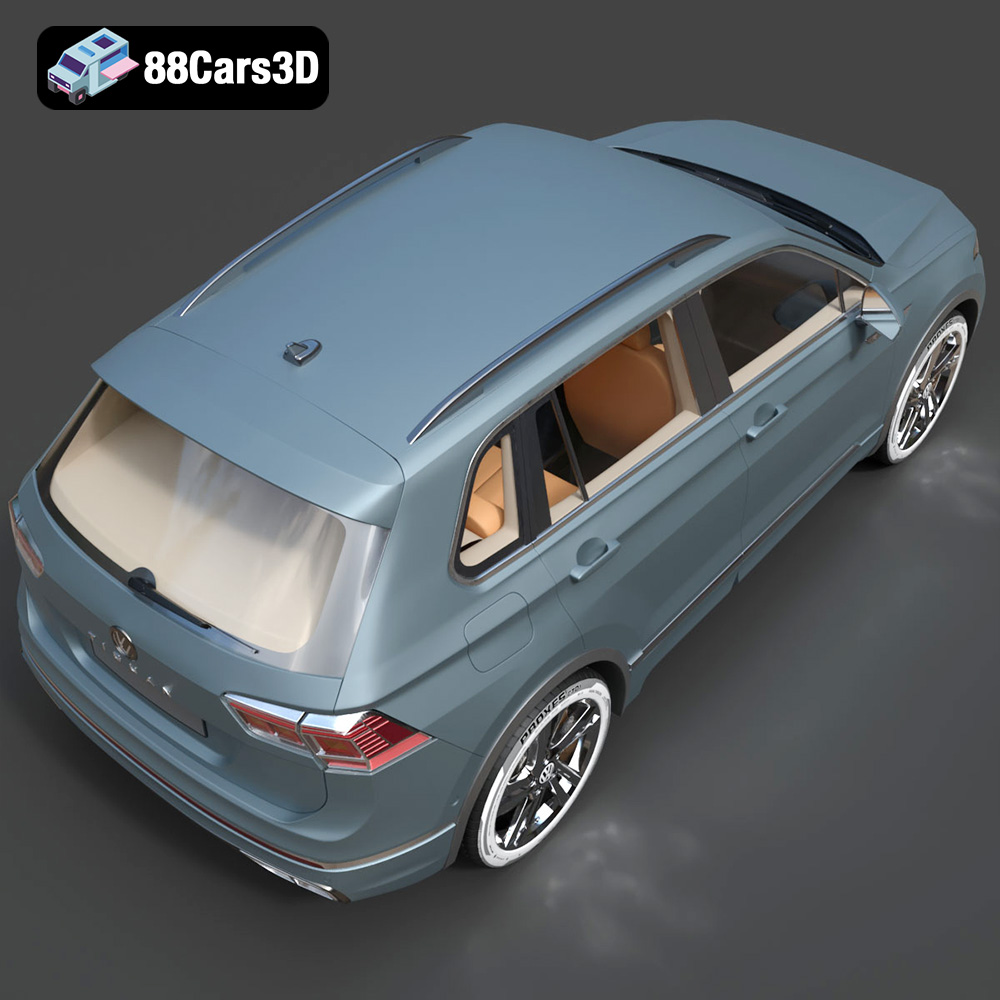
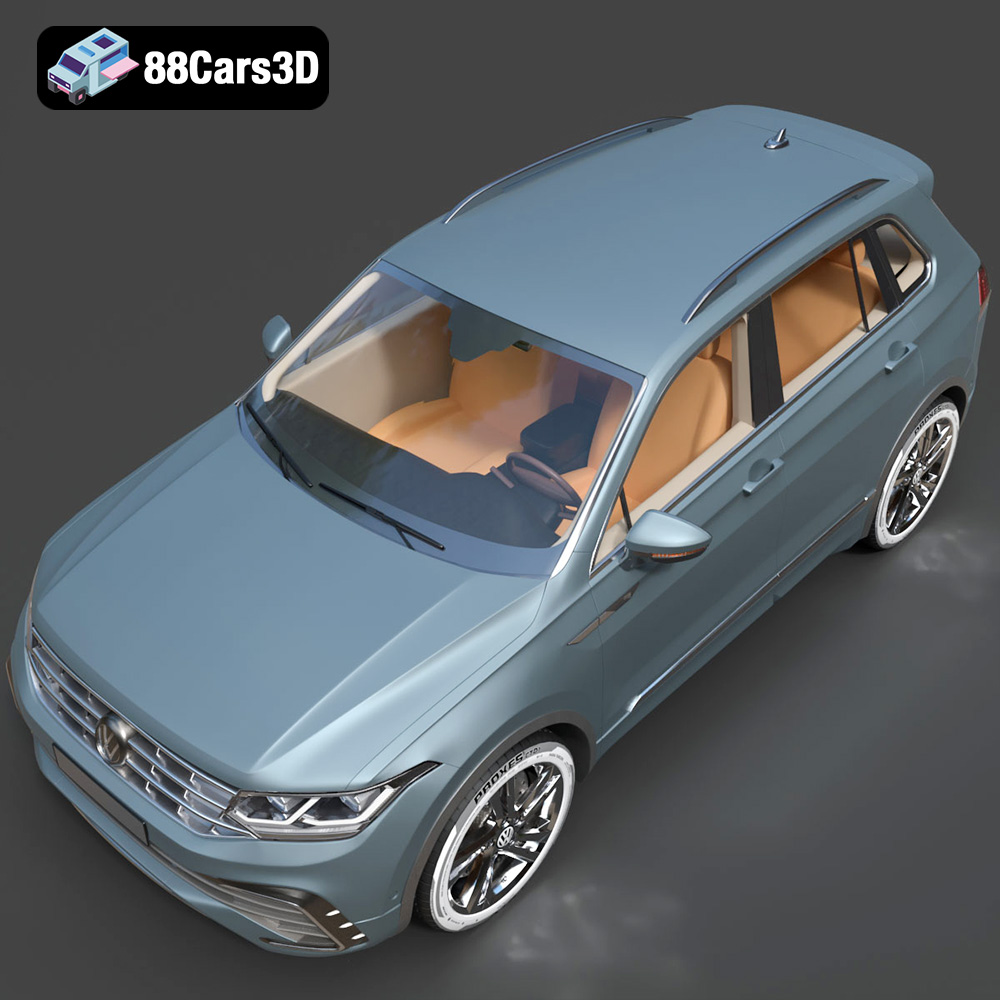
This commitment to excellence is perfectly embodied by the Volkswagen Tiguan 2021 3D Model. It stands as a testament to meticulous craftsmanship, designed to meet the rigorous standards of professional use. This digital replica precisely captures the modern styling, dynamic stance, and sophisticated details that define the popular SUV. With clean geometry, accurate proportions, and realistic materials, it offers an exceptional asset for a diverse array of digital projects. Its well-structured topology ensures seamless workflow integration, promising outstanding results in both tight studio close-ups and expansive dynamic environments. For artists and developers seeking top-tier 3D car models, this Volkswagen Tiguan 2021 3D Model provides a robust foundation for any ambitious endeavor.
The versatility of a 3D model often hinges on the range and quality of its available file formats. Each format is engineered with specific strengths and intended uses, dictating how a model integrates into different software environments and pipelines. Understanding these distinctions is crucial for selecting the right asset for your project, ensuring compatibility, preserving data integrity, and optimizing performance. The Volkswagen Tiguan 2021 3D Model, for instance, offers a comprehensive suite of formats, empowering artists and developers with unparalleled flexibility.
The .blend format is native to Blender, the increasingly popular open-source 3D creation suite. When a 3D car model is provided as a .blend file, it typically includes not just the mesh data, but also the full scene setup: materials, textures, lighting, cameras, and even animation data. This makes it ideal for Blender users who want a fully editable and ready-to-render scene, allowing for deep customization of every aspect of the Volkswagen Tiguan 2021 3D Model without needing to reconstruct materials or lighting from scratch. It’s perfect for artists heavily invested in the Blender ecosystem for their automotive rendering or animation projects.
.fbx is arguably the most widely used interchange format in the 3D industry, especially prevalent in game development. Developed by Autodesk, it efficiently stores 3D model data, including geometry, materials, textures, animations, and skeletal data. Its robust nature makes it ideal for transferring assets between different software packages like Maya, 3ds Max, Cinema 4D, and critically, game engines such as Unreal Engine and Unity. When the Volkswagen Tiguan 2021 3D Model is provided in .fbx, it’s typically optimized for real-time applications, ensuring proper scaling, material assignments (often PBR-ready), and efficient polygon count for optimal performance in interactive environments.
The .obj format is a universal standard, known for its widespread compatibility across virtually all 3D software. It primarily stores geometry (vertices, faces, normals, UV coordinates) and can reference external material (.mtl) files for basic color and texture mapping. While it doesn’t support advanced features like animation or complex material nodes, its simplicity and ubiquity make it an excellent choice for straightforward mesh transfer. For the Volkswagen Tiguan 2021 3D Model, the .obj format serves as a reliable fallback, ensuring that the core geometry and UVs are accessible to any 3D artist, regardless of their preferred software.
.glb is the binary form of glTF (Graphics Language Transmission Format), designed for efficient transmission and loading of 3D scenes and models by engines and applications. It packages all model data (geometry, materials, textures, animations) into a single file, making it incredibly well-suited for web-based 3D viewers, augmented reality (AR), virtual reality (VR), and other real-time interactive experiences. The Volkswagen Tiguan 2021 3D Model in .glb format would be optimized for quick loading and minimal overhead, essential for seamless integration into web browsers or AR/VR applications where performance is paramount.
The .stl format is synonymous with 3D printing. It describes only the surface geometry of a 3D object as a collection of triangles, without any color, texture, or material information. It’s the standard input for additive manufacturing processes. If your project involves creating physical prototypes or scale models of the Volkswagen Tiguan 2021, the .stl file would be the go-to format, ready to be sliced and sent to a 3D printer.
.ply (Polygon File Format) is another format for storing 3D data, often used in scientific and industrial applications. It can store a wider range of properties than .obj, including color, transparency, normals, texture coordinates, and even reliability information for each vertex and face. While less common in general animation or game development, its ability to store detailed mesh attributes makes it valuable for precise analysis or visualization where a rich dataset is required, such as in reverse engineering or scanning applications for the Volkswagen Tiguan 2021.
The .unreal format, or more accurately, assets pre-configured for Unreal Engine, implies that the model has been specifically prepared and packaged to drop directly into an Unreal Engine project. This often means optimized meshes, PBR (Physically Based Rendering) materials set up with proper textures (Albedo, Normal, Roughness, Metallic, AO), collision meshes, and sometimes even LODs (Levels of Detail) or blueprint setups. For game developers or real-time visualization specialists, having the Volkswagen Tiguan 2021 3D Model in an Unreal-ready package drastically cuts down on import and setup time, accelerating project timelines and ensuring optimal performance within the engine.
The .max format is native to Autodesk 3ds Max, a powerful software widely used for architectural visualization, product rendering, and animation. A .max file of the Volkswagen Tiguan 2021 3D Model would include the complete scene, often with V-Ray or Corona Renderer materials, sophisticated lighting setups, and potentially animation rigs. This format is crucial for professionals who require full editability, advanced rendering features, and the ability to integrate the car model into complex scenes with other architectural or product elements.
The difference between a generic 3D asset and a professional-grade 3D car model lies in its underlying technical foundation. Achieving photorealism and optimal performance demands attention to geometry, materials, and overall structure. The Volkswagen Tiguan 2021 3D Model exemplifies these principles, making it a reliable asset for any demanding project.
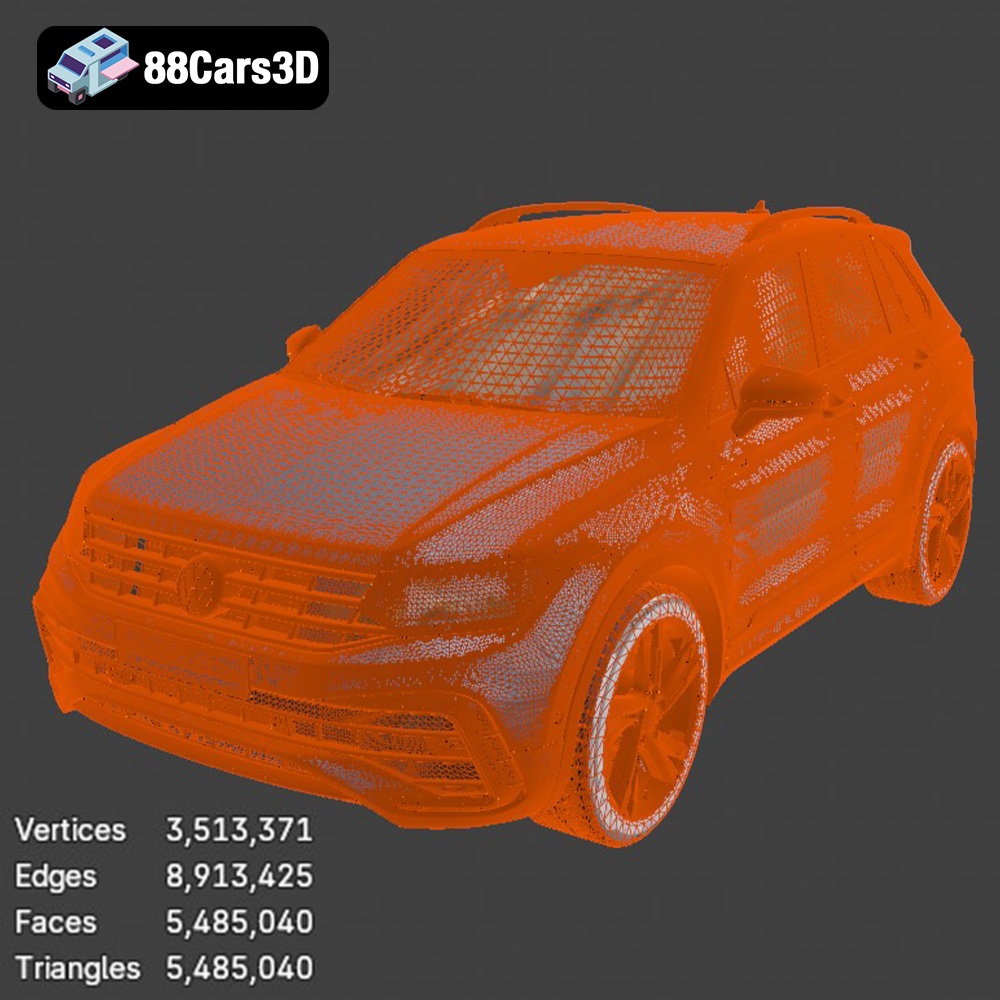
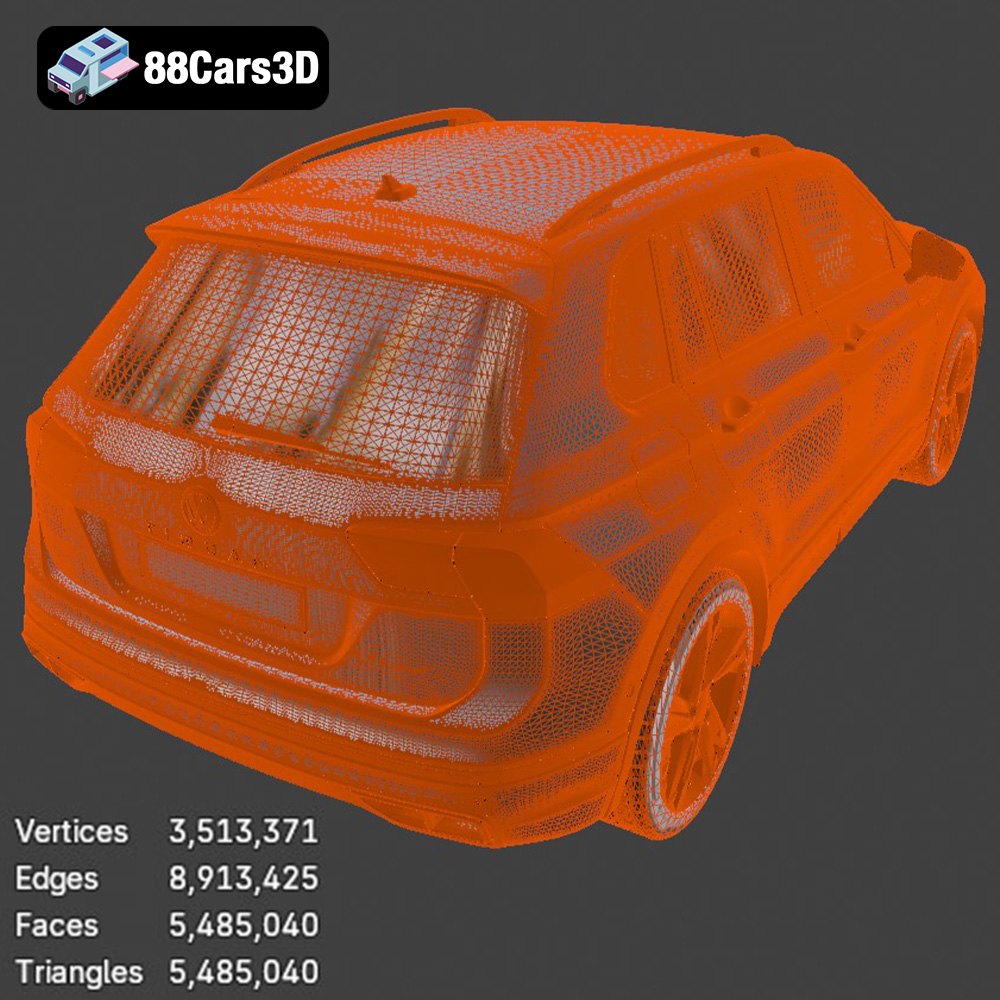
Clean topology refers to the arrangement of polygons (typically quads) that define the surface of the model. For a vehicle like the Volkswagen Tiguan 2021, clean topology is crucial for several reasons: it ensures smooth deformations during animation, allows for consistent subdivision smoothing (e.g., Catmull-Clark), and prevents unsightly shading artifacts. Professional 3D car models like those found on 88cars3d.com maintain an all-quad or mostly-quad topology where possible, enabling artists to easily modify the mesh without introducing errors.
Optimized poly counts are equally vital. A model that is too dense can cripple real-time performance in game engines or significantly increase render times. Conversely, a model that is too low-poly will lack detail. The ideal poly count strikes a balance, providing sufficient detail for close-up shots while remaining efficient. High-quality 3D car models often come with various Levels of Detail (LODs) to automatically swap lower-poly versions when the model is further from the camera, a critical feature for game assets and large-scale architectural visualizations.
PBR (Physically Based Rendering) materials are the cornerstone of modern photorealistic rendering. They accurately simulate how light interacts with surfaces by defining properties like albedo (base color), metallic, roughness, normal maps, and ambient occlusion. A professional Volkswagen Tiguan 2021 3D Model will feature meticulously crafted PBR textures, ensuring that its paintwork, glass, tires, and interior materials react realistically to various lighting conditions, whether in V-Ray, Corona, Arnold, or Unreal Engine.
UV mapping is the process of flattening the 3D surface of a model into 2D space, allowing textures to be applied accurately. Good UVs are continuous, non-overlapping, and efficiently packed, maximizing texture resolution and preventing stretching or distortion. For complex objects like cars, precise UV mapping is essential for projecting intricate details like panel lines, logos, and tire treads without visible seams. The Volkswagen Tiguan 2021 3D Model’s attention to detail extends to its UVs, ensuring textures will display flawlessly.
The Volkswagen Tiguan 2021 3D Model’s engineering is rooted in these principles. Its clean geometry and well-structured topology ensure it’s not just visually appealing but also a flexible and robust asset. The attention to accurate proportions and realistic materials, combined with its various optimized file formats, means this model is ready to perform at the highest levels across diverse applications, from high-resolution renders to real-time interactive experiences.
The versatility of a high-quality 3D car model, such as the Volkswagen Tiguan 2021 3D Model, allows it to transcend mere digital representation and become a pivotal tool across numerous professional fields. Its adaptable nature makes it indispensable for a wide array of creative and technical endeavors.
In the automotive industry, compelling visuals are paramount. Before a physical car is even produced, 3D renders are used for design validation, marketing materials, and configurators. The Volkswagen Tiguan 2021 3D Model, with its accurate detailing and realistic materials, is perfect for creating stunning marketing imagery, animations, and virtual showrooms. Imagine a dynamic advertisement showcasing the Tiguan navigating a scenic route, or an interactive web configurator allowing customers to customize paint colors, wheel designs, and interior trims—all powered by this precise 3D asset. This level of visual fidelity helps automotive brands connect with potential buyers long before the vehicle hits the dealership floor.
For game developers, creating believable virtual worlds requires high-quality game assets that are optimized for real-time performance. The Volkswagen Tiguan 2021 3D Model, especially in its .fbx and .unreal formats, is an ideal game asset. Its balanced poly count, efficient UVs, and PBR materials make it suitable for integration into racing games, open-world adventures, or simulation titles. Developers can use it to populate virtual cities, serve as a driveable vehicle, or even as background elements, enhancing the realism and immersion of their game environments without sacrificing frame rates. Its pre-configured nature for game engines significantly reduces development time and resources.
Architectural visualization (ArchViz) benefits immensely from realistic contextual elements. Placing a high-fidelity car model, like the Volkswagen Tiguan 2021, in an architectural rendering instantly brings a scene to life, providing scale, context, and a sense of realism. It helps clients envision how a building or urban space will look and feel with everyday activity. Similarly, in product visualization, the Tiguan could be used to showcase car accessories, charging stations, or even smart home integration features, placing the product within a relevant and appealing environment. Its accurate proportions ensure it sits naturally within any scene, enhancing the overall composition.
The burgeoning fields of Augmented Reality (AR) and Virtual Reality (VR) demand highly optimized 3D assets for seamless, immersive experiences. The Volkswagen Tiguan 2021 3D Model, particularly in its .glb format, is primed for these applications. Imagine a potential customer using an AR app on their phone to virtually “park” the Tiguan in their driveway, explore its interior, or view it from any angle in real-time. VR experiences could transport users into a fully interactive virtual showroom, allowing them to open doors, sit inside, and experience the vehicle’s features without ever leaving their home. These innovative applications push the boundaries of digital engagement, with the 3D model at their core.
A truly professional 3D car model isn’t just about visual quality; it’s about how easily and efficiently it integrates into an artist’s or developer’s existing workflow. The Volkswagen Tiguan 2021 3D Model offers a suite of formats tailored to popular software packages, ensuring a smooth transition into various production pipelines.
For users of Autodesk 3ds Max, the provided .max file is invaluable. It typically comes with all parts of the Volkswagen Tiguan 2021 organized, materials (often V-Ray or Corona-ready) applied, and possibly basic studio lighting setups. This allows designers to immediately drop the car into architectural scenes, animate it for commercials, or use it for detailed product shots. Artists can quickly adjust materials, add custom textures, or integrate the model into a larger environment without the time-consuming process of re-importing and re-texturing, saving countless hours in a professional production schedule.
Blender artists will find the .blend file of the Volkswagen Tiguan 2021 3D Model to be a comprehensive package. This native file format ensures that all aspects—geometry, PBR materials, textures, and even a basic lighting setup—are perfectly preserved and immediately accessible within Blender. This allows for direct manipulation, integration into Blender-specific animation pipelines, or rendering with Cycles or Eevee. Its open-source nature means a vast community of artists can leverage this asset, further expanding its utility for independent developers and studios alike.
For game developers and real-time visualizers, the .fbx and .unreal file formats of the Volkswagen Tiguan 2021 are game-changers. The .fbx is a reliable interchange format for both Unreal Engine and Unity, preserving mesh data, UVs, and material assignments crucial for PBR workflows. The dedicated .unreal package goes a step further, often including pre-configured assets that can be directly imported into Unreal Engine, complete with optimized meshes, collision volumes, LODs, and PBR materials correctly set up for the engine’s rendering pipeline. This “plug-and-play” capability dramatically accelerates asset integration, allowing teams to focus on gameplay and interactive elements rather than asset preparation.
In a competitive digital landscape, efficiency and quality are paramount. Sourcing high-quality 3D car models from a reputable marketplace like 88cars3d.com provides a significant advantage for individuals and studios alike.
Developing a high-fidelity 3D car model from scratch is an incredibly time-consuming and expensive process, requiring specialized skills in modeling, UV mapping, texturing, and optimization. By purchasing a ready-made asset like the Volkswagen Tiguan 2021 3D Model, artists and developers can bypass weeks or even months of development time. This allows them to allocate their resources to other critical aspects of their project, leading to faster turnaround times and substantial cost savings. The investment in a premium asset pays dividends in expedited production cycles.
Maintaining a consistent level of quality across multiple projects can be challenging. By utilizing professionally crafted 3D car models from a trusted source, you ensure a baseline of excellence. The Volkswagen Tiguan 2021 3D Model, for instance, adheres to professional standards for geometry, materials, and optimization, guaranteeing that it will seamlessly integrate with other high-quality assets. This consistency is vital for maintaining brand identity in marketing campaigns or for achieving a cohesive visual style in game development.
88cars3d.com offers a diverse collection of high-quality 3D car models, providing artists with an expansive library to choose from. Whether you need a modern SUV like the Volkswagen Tiguan 2021, a classic sedan, or a futuristic concept car, having access to such a repository allows for greater creative freedom and flexibility. It empowers artists to explore new ideas, experiment with different vehicle types, and quickly find the perfect asset to fulfill their creative vision without the burden of starting from zero. This access to premium, varied assets becomes an invaluable extension of any creative toolkit.
The journey from concept to captivating visualization or immersive interactive experience demands precision, efficiency, and uncompromised quality. The Volkswagen Tiguan 2021 3D Model represents the pinnacle of professional-grade 3D car models, offering a meticulously crafted asset ready to meet the diverse needs of modern digital production. Its clean geometry, accurate materials, and broad array of file formats—from .blend and .max for comprehensive studio work to .fbx and .unreal for real-time applications, and .glb for cutting-edge AR/VR—ensure seamless integration into virtually any professional pipeline.
Whether you are rendering a high-impact automotive advertisement, developing an engaging new game, or creating stunning architectural visualizations, the Volkswagen Tiguan 2021 3D Model provides the robust and flexible foundation you need. By choosing premium 3D car models from marketplaces like 88cars3d.com, you invest in quality, save invaluable time, and enhance your capacity to deliver truly exceptional results. Elevate your projects and bring your visions to life with the unparalleled detail and performance of the Volkswagen Tiguan 2021 3D Model.
Experience the precision of the Volkswagen Tiguan 2021 3D Model, a realistic digital replica designed to meet professional standards. This model perfectly captures the modern styling, dynamic stance, and sophisticated details of the popular SUV, providing an exceptional asset for a diverse array of digital projects. Engineered with an emphasis on performance and visual fidelity, this 3D vehicle features clean geometry, accurate proportions, and realistic materials. The well-structured topology allows for seamless workflow integration, ensuring outstanding results in both tight studio close-ups and expansive dynamic environments. This versatile model is optimized for demanding applications, making it an excellent choice for game development, cinematic rendering, augmented and virtual reality (AR/VR) experiences, and architectural visualization. The comprehensive package is structured to integrate flawlessly into your preferred professional pipeline. Available file formats include: .blend – Editable Blender file with materials and lighting setup, .fbx – Game-engine ready format for Unreal Engine and Unity, .obj – Standard 3D model format compatible with all major software, .glb – Optimized for AR/VR and web-based visualization, .stl – Suitable for 3D printing and prototyping, .ply – Detailed polygon mesh for analysis and visualization, .unreal – Pre-configured for Unreal Engine use, .max – Editable 3ds Max file for rendering and animation.
$19.99
.arvr
.blend
.car3dmodel
.crossover
.fbx
.gameasset
.glb
.max
.obj
.ply
.rendering
.simulation
.stl
.tiguan
.unreal
.volkswagen
SUV