Get 20% OFF All Premium 3D & STL Models!

The allure of classic American automobiles is undeniable. They represent an era of bold design, powerful engines, and a distinct cultural identity that continues to captivate enthusiasts worldwide. From the iconic muscle cars of the 60s to the distinctive cruisers of the 70s, these vehicles are more than just transportation; they are pieces of history, engineering marvels, and canvases for artistic expression. In the digital realm, capturing this essence requires meticulous attention to detail, technical precision, and a deep understanding of how these assets will be utilized across various industries.
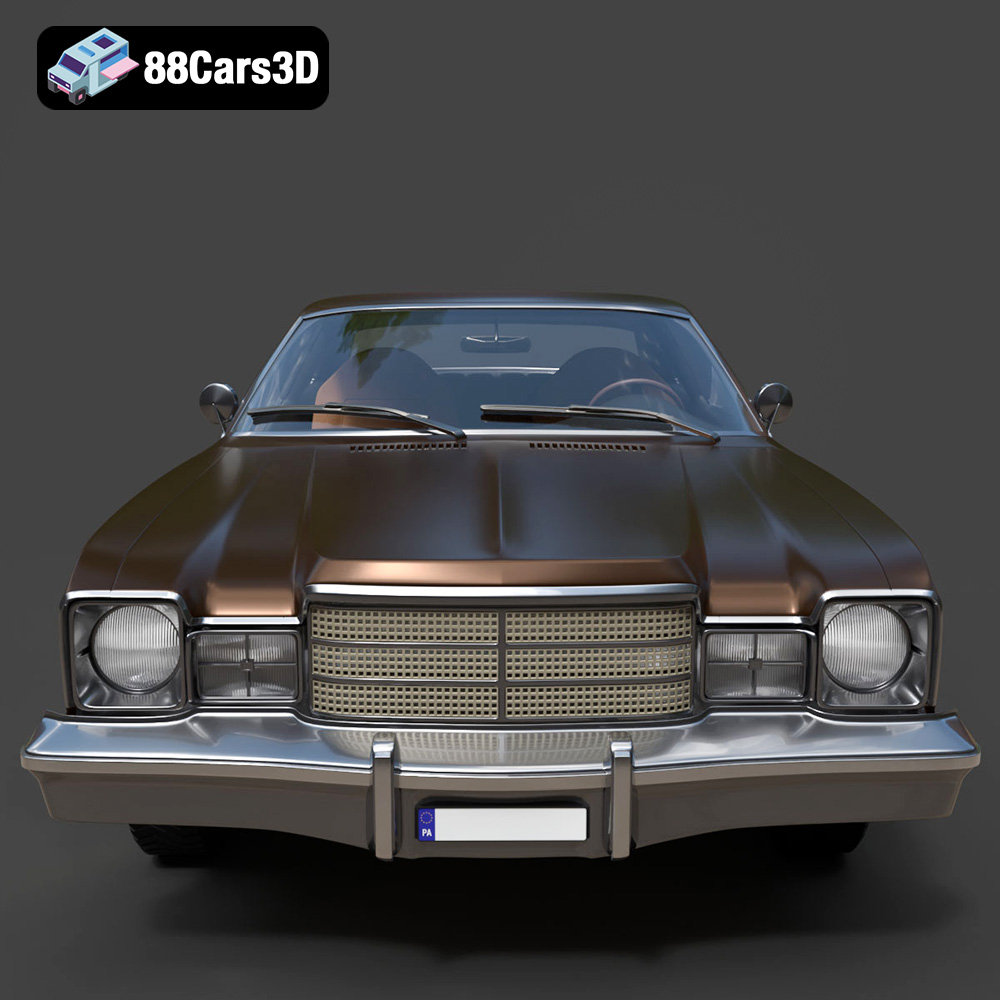
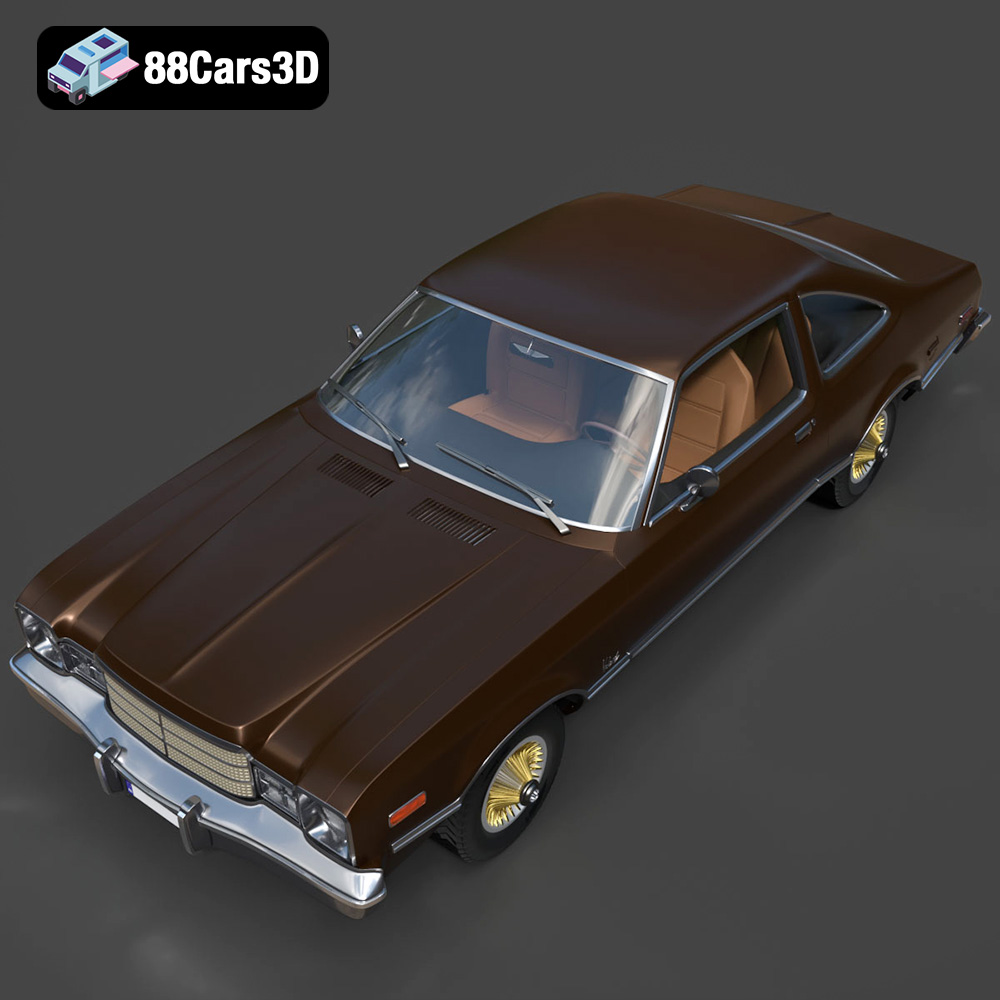
Today, we’re taking a closer look at a prime example of this digital craftsmanship: the Plymouth Volare Coupe 1977 3D Model. This particular model isn’t just a static representation; it’s a meticulously engineered asset designed to bring the spirit of late 70s American automotive design into contemporary game development, high-end rendering projects, immersive AR/VR experiences, and even precise 3D printing applications. It embodies the best of both worlds: authentic vintage styling paired with modern optimization for today’s demanding digital workflows. Whether you’re a game developer seeking period-accurate vehicles, an architect visualizing a retro scene, or a hobbyist looking to print a piece of automotive history, this model offers a robust foundation.
In the complex world of 3D content creation, the choice of file format is paramount. It dictates compatibility, workflow efficiency, and the ultimate utility of a 3D model. For a versatile asset like the Plymouth Volare Coupe 1977 3D Model, having a comprehensive suite of formats available is a significant advantage. Let’s delve into the specifics of each format included and their ideal applications, providing a solid technical understanding for professionals.
The .blend format is the native file type for Blender, the widely popular open-source 3D creation suite. When you download the Volare model in .blend format, you receive a fully editable Blender scene. This means not just the mesh, but also the materials, textures, lighting setups (if included), armatures, and any modifiers or procedural elements are preserved. For artists heavily integrated into the Blender ecosystem, this offers unparalleled flexibility. You can easily tweak topology, modify materials, add custom animations, or render directly within Blender using Cycles or Eevee. It’s the ideal starting point for anyone looking to deeply customize or integrate the model into a Blender-centric pipeline, offering full control over every aspect of the asset.
.fbx (Filmbox) stands as one of the most widely adopted proprietary file formats for 3D content interchange, particularly prevalent in game development. Its strength lies in its ability to store not just mesh data, but also animation, cameras, lights, and materials in a single, well-structured file. For the Plymouth Volare Coupe, the .fbx format is ideal for direct import into game engines like Unreal Engine and Unity. It ensures that crucial elements like proper pivot setups for steering and wheel rotation, as well as suspension travel, are retained. This makes it a go-to for designers creating interactive experiences, cinematics, or needing a robust, reliable transfer format between different professional 3D applications like 3ds Max, Maya, and Blender.
The .obj (Wavefront OBJ) format is a venerable and universally supported file type for 3D geometry. It’s a simple, text-based format that primarily stores mesh data (vertices, normals, texture coordinates, and faces) and can reference an accompanying .mtl (material) file for basic material properties and texture maps. While it doesn’t support animation or advanced rigging, its widespread compatibility makes it an excellent choice for cross-software transfers where only the static mesh is needed. For the Volare model, .obj is perfect for importing into virtually any 3D software for rendering, architectural visualization, or as a base for retopology or high-poly sculpting, ensuring maximum reach and foundational utility.
.glb (GL Transmission Format Binary) is the binary version of glTF, an open-standard format specifically designed for efficient transmission and loading of 3D scenes and models by engines and applications. It packages textures, materials, and geometry into a single, self-contained file, making it incredibly streamlined for web-based 3D viewers, augmented reality (AR), virtual reality (VR), and mobile applications. The .glb version of the Volare model is optimized for rapid deployment in virtual showrooms, immersive AR experiences on smartphones, or interactive 3D product displays directly within a web browser, prioritizing fast load times and performance.
The .stl (Stereolithography) format is the de facto standard for 3D printing. It represents a 3D model as a series of connected triangles, describing only the surface geometry without color, texture, or other attributes. For hobbyists and professionals looking to physically manifest the Plymouth Volare Coupe, the .stl file is essential. The product description for the Volare specifically provides recommended print settings, layer height, infill, and support requirements, ensuring a successful physical output. While not glamorous, its simplicity and ubiquitous support make it indispensable for additive manufacturing.
.ply (Polygon File Format) is another format primarily used for storing 3D data, often derived from 3D scanners or suitable for CAD/CAM applications. It can store a wider range of data than .stl, including color, transparency, and normal vectors, and supports both triangular and polygonal faces. For the Volare model, the .ply format offers a precision mesh that can be useful in specialized engineering or analytical workflows, or as an alternative robust mesh format for complex geometry transfer where accuracy is paramount, especially when interfacing with industrial design software or scientific visualization tools.
The .unreal format, while not a universal file extension in the same vein as .fbx, typically refers to an asset that has been specifically prepared and configured for direct import and optimal performance within Unreal Engine. This often implies proper material setup, collision meshes, LODs (Levels of Detail), and sometimes even a basic Blueprint integration. For the Plymouth Volare Coupe 1977, having an “engine-ready” asset means developers can drop it into their Unreal projects with minimal post-import work, leveraging Unreal’s advanced rendering capabilities immediately. This significantly accelerates development for racing games, simulators, or architectural visualizations built on the Unreal platform.
Similar to .blend for Blender, .max is the native file format for Autodesk 3ds Max, a leading software in architectural visualization, animation, and game asset creation. A .max file of the Volare model offers the full project scene, including all modifiers, materials (V-Ray, Corona, Arnold, etc.), lights, and cameras configured within 3ds Max. This is invaluable for professionals who use 3ds Max for high-fidelity rendering, complex animation sequences, or integration into existing Max-based pipelines. It provides the highest level of editability and allows artists to leverage 3ds Max’s powerful toolset to fully exploit the model’s potential for stunning visual outputs.
The inclusion of these diverse formats ensures that the 88cars3d.com Plymouth Volare Coupe 1977 3D Model is not just a high-quality asset but also an incredibly versatile one, ready to seamlessly integrate into virtually any professional 3D workflow.
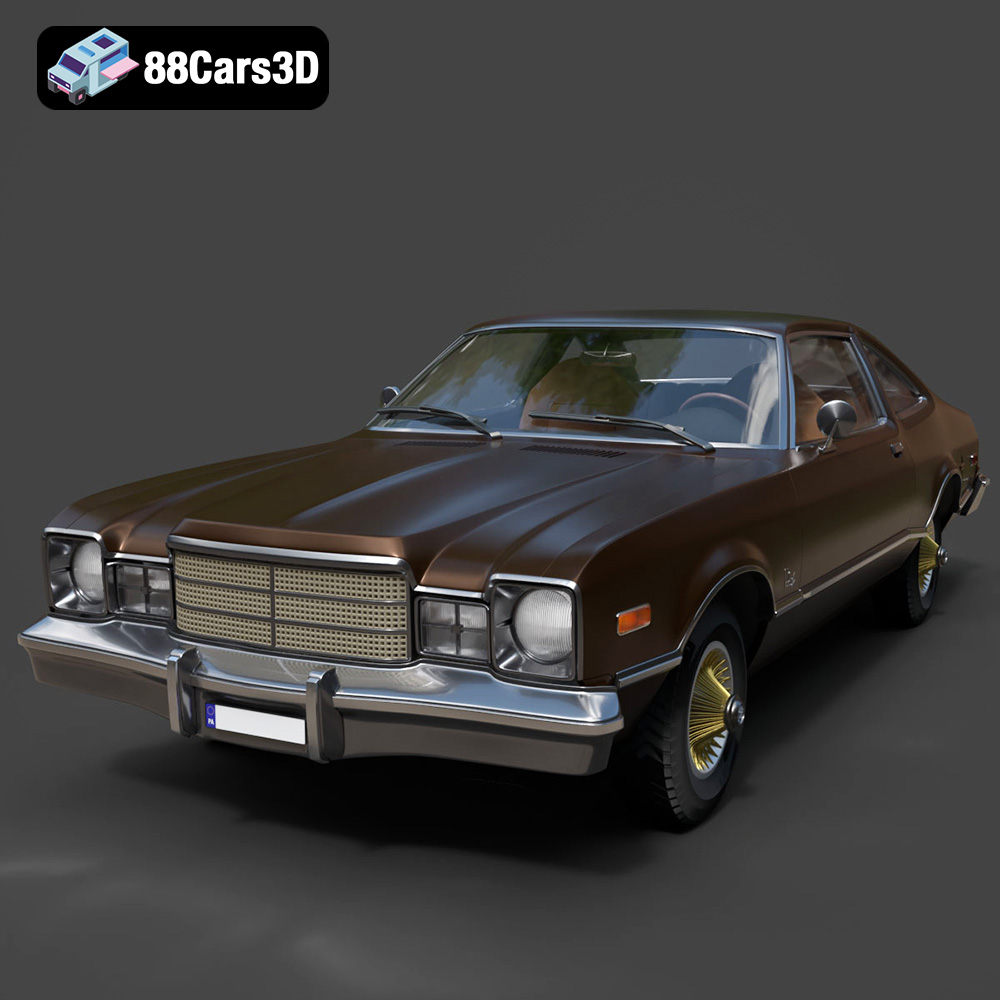
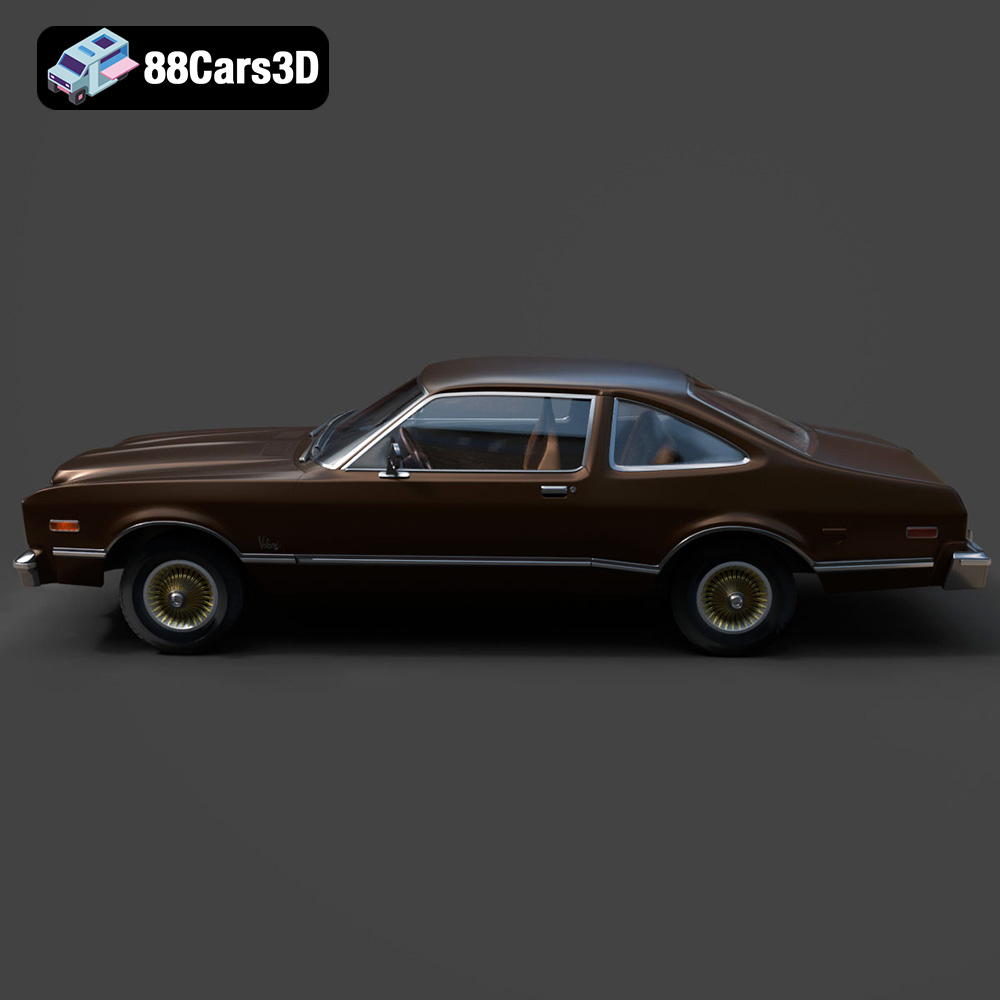
The 1977 Plymouth Volare Coupe is more than just a car; it’s a timestamp of a particular era in American automotive design. Its F-body platform, with its characteristic long-hood/short-deck proportions, and distinctive square headlights, instantly evoke the late 1970s. Recreating such an iconic vehicle in 3D requires a deep understanding of its real-world counterpart, translating its unique styling cues into a digital form that resonates with authenticity.
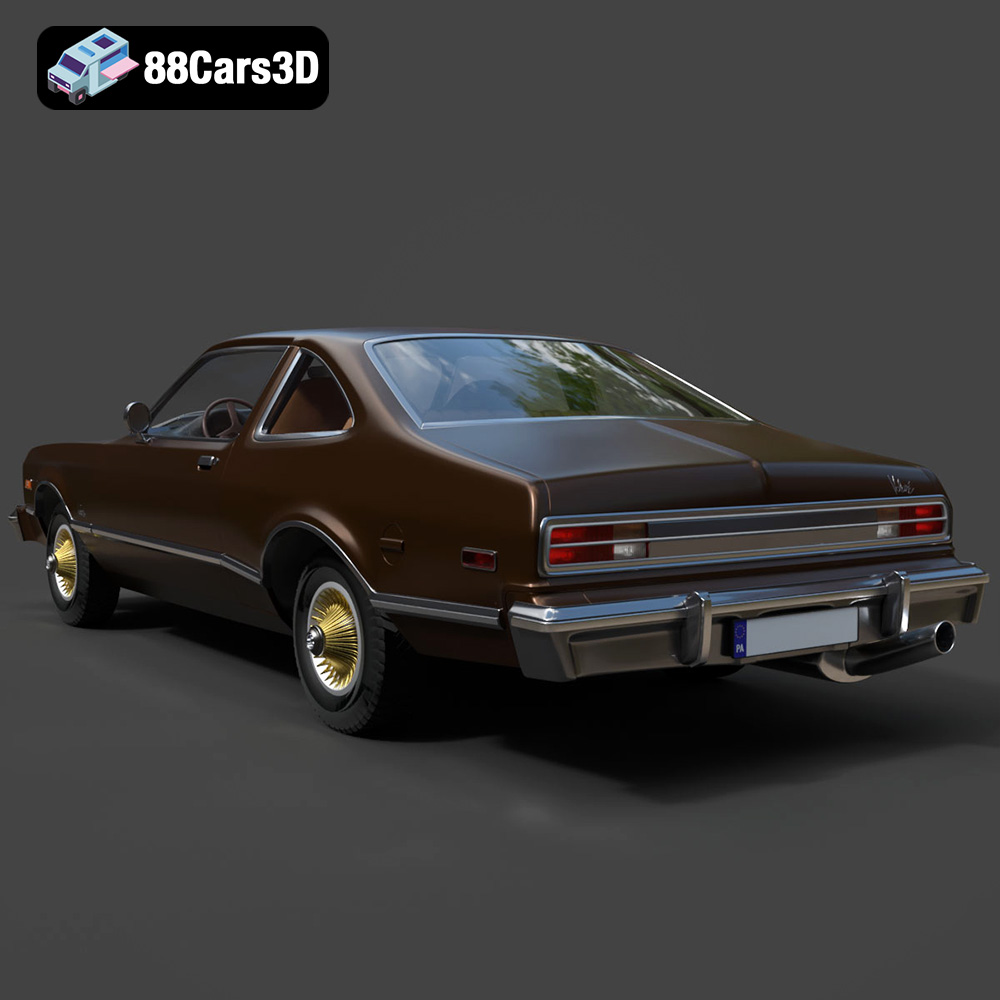
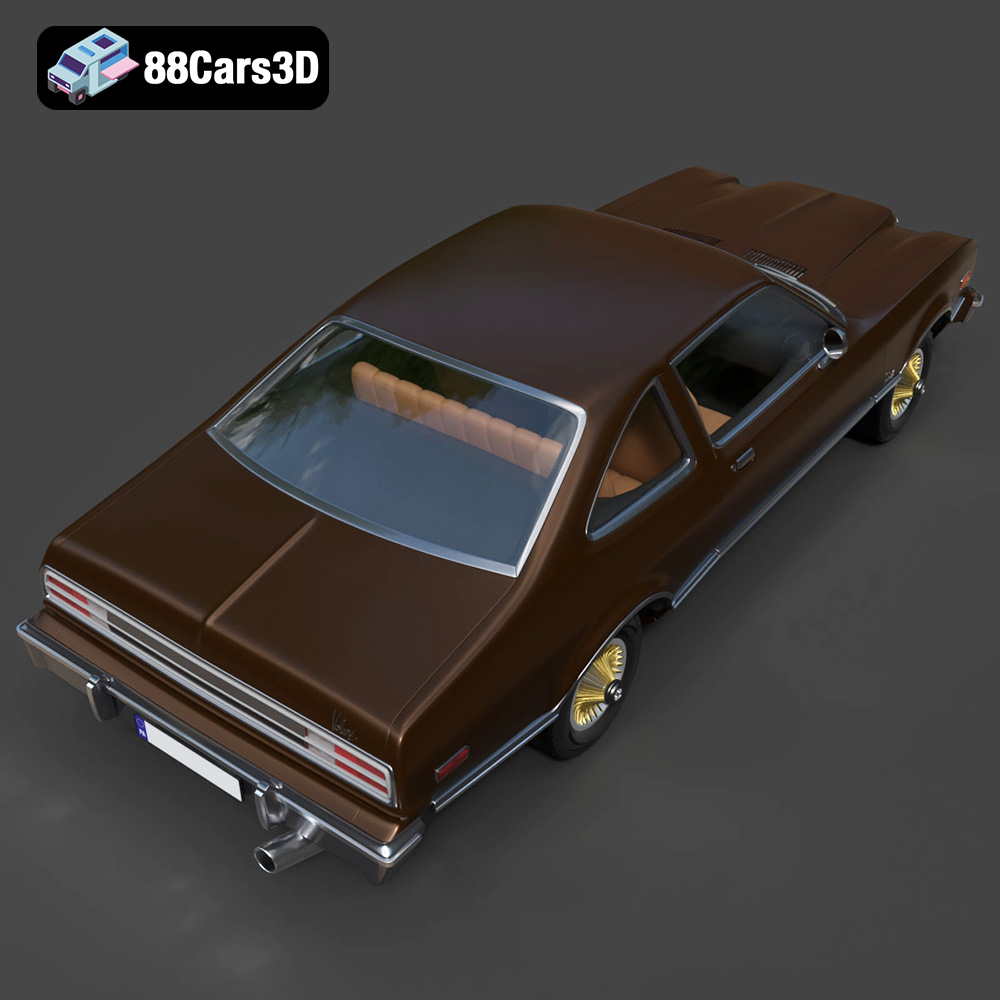
The digital rendition of the Volare Coupe meticulously captures the essence of its physical design. From the intricate grille pattern, often a defining feature of vehicles from this period, to the chrome bumpers that were a staple of American cars, every element is faithfully reproduced. The model boasts accurate frame geometry and proportions, ensuring that its digital silhouette is indistinguishable from the real vehicle. Details like the period-correct single exhaust system, the iconic square headlights, and the intricately detailed vintage taillights are not merely surface-level additions but integral parts of the model’s authentic character. Furthermore, the inclusion of classic wheel covers with detailed tire treads and whitewall options allows for nuanced customization to fit specific project needs. Critical for dynamic projects, separate wheels, suspension, and steering components are provided, pre-rigged with proper pivot setups. This foresight enables seamless animation for driving sequences, interactive simulations, and realistic physics within game engines, making it a truly game-ready asset.
The interior of the 1977 Volare was a testament to 70s comfort and design. The 3D model brings this to life with classic plush seating and detailed upholstery, reflecting the era’s aesthetic. The vintage two-spoke steering wheel with an accurate column layout, the period-accurate analog instrument cluster, and the dashboard layout all contribute to an immersive cockpit experience. Details extend to the foot pedals, gear shifter, and interior door panels, ensuring that whether viewed from an exterior glamor shot or from a first-person perspective in a game, the interior holds up to scrutiny. This level of detail is crucial for projects aiming for high realism, such as driving simulators or cinematic previz, where the viewer may spend significant time inside the vehicle.
The challenge in 3D modeling, especially for assets intended for diverse applications, lies in striking the perfect balance between visual fidelity and technical performance. The Plymouth Volare Coupe 1977 3D Model exemplifies this balance, engineered to deliver stunning visuals without compromising on real-time engine efficiency.
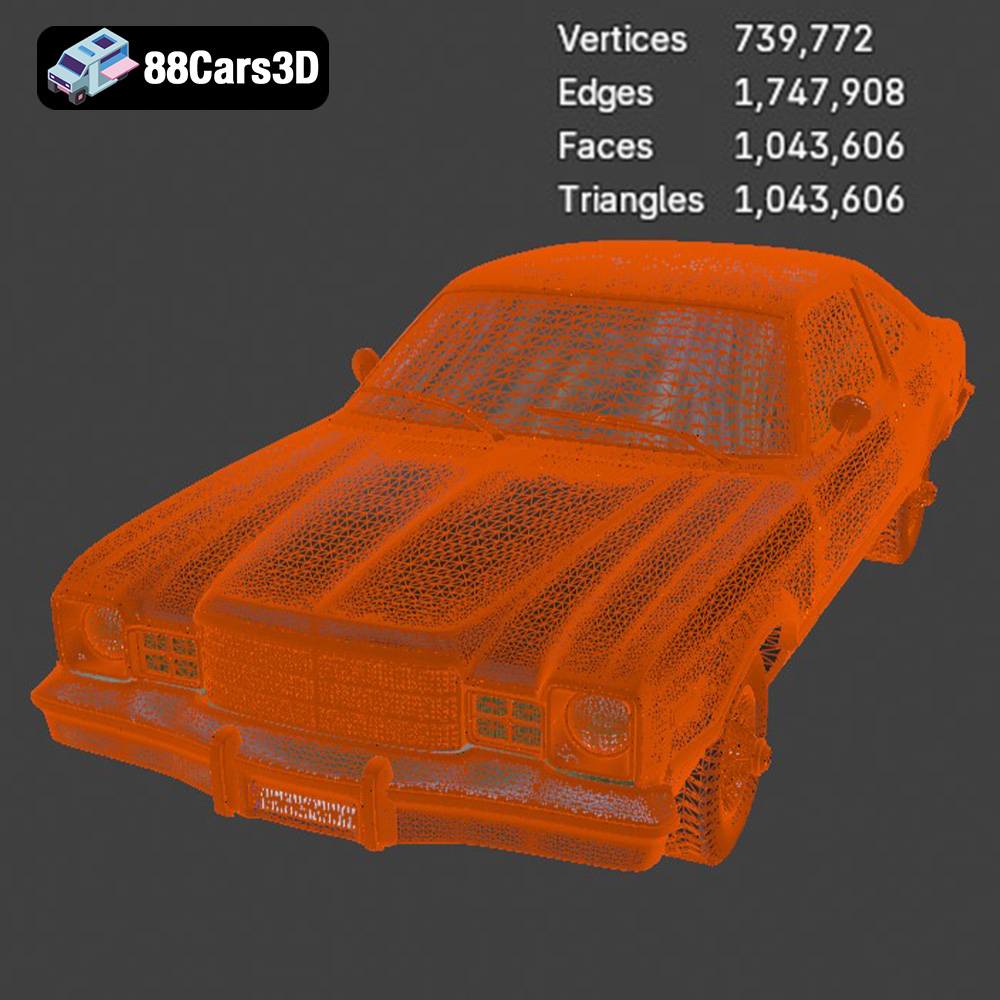
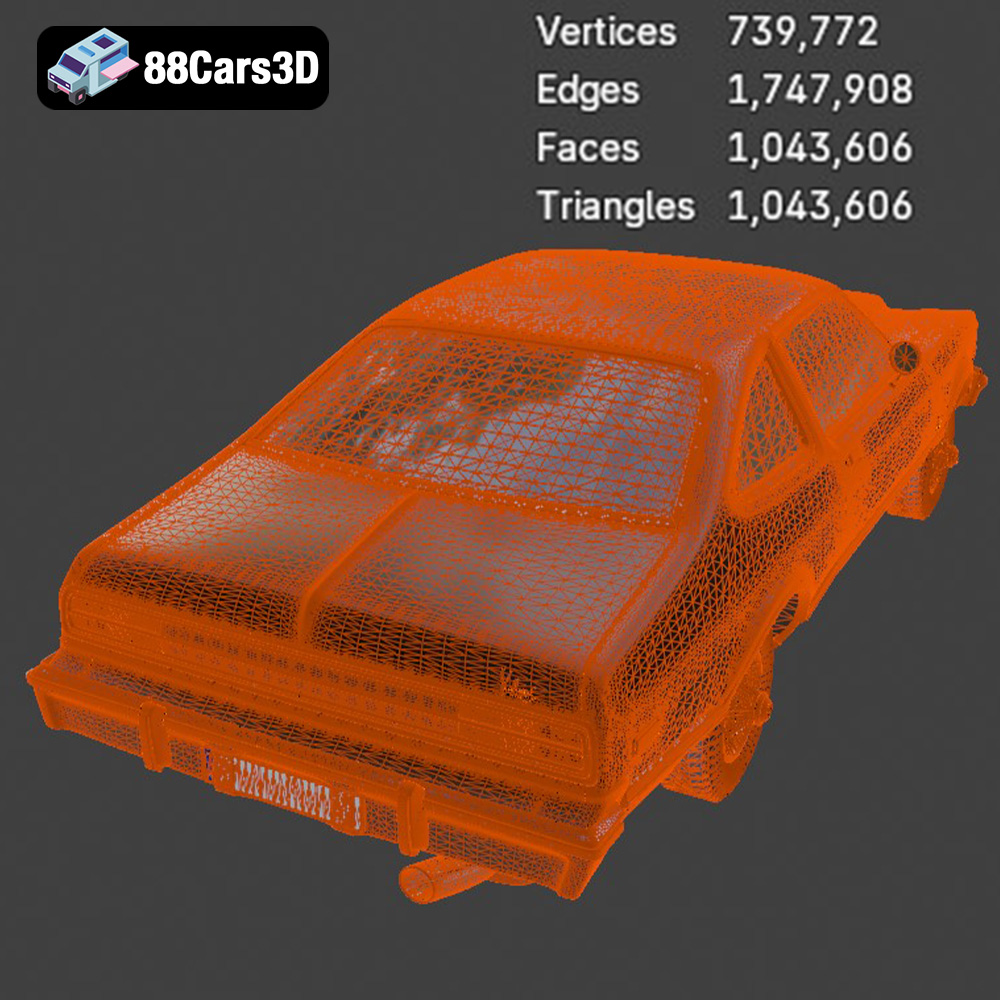
With an optimized topology of approximately 120,000 triangles, the Volare model hits a sweet spot for modern game development. This polycount is sufficiently detailed to provide high-end visual realism, capturing the nuanced curves and sharp edges of the car, while remaining performant enough for real-time engines like Unreal and Unity. In game development, optimizing polycount is critical for maintaining frame rates, especially in open-world environments or racing games where multiple vehicles may be present. A well-optimized base model like this also provides an excellent foundation for implementing Levels of Detail (LODs), where simpler versions of the model are rendered when it’s further from the camera, further enhancing performance without a noticeable drop in quality.
Beyond raw polygon count, the technical advantages extend to its structure. The model is built with real-world scale accuracy, based on actual vehicle chassis dimensions, ensuring it fits seamlessly into environments designed to real-world specifications. Crucially, it features proper pivot setups for steering, wheel rotation, and suspension travel. This is not a trivial detail; it means animators and game developers don’t have to spend valuable time correctly orienting and linking rotational axes for functional animation. For a driving simulator, for instance, accurate pivot points are fundamental for realistic physics and driver feedback, translating digital inputs into believable wheel and suspension movements. This pre-configured functionality saves significant development time and ensures a smooth integration into complex animation and simulation pipelines.
The true measure of a high-quality 3D model lies in its versatility. The Plymouth Volare Coupe 1977 3D Model transcends single-use scenarios, proving invaluable across a spectrum of creative and technical industries. Its robust design and diverse file format support make it a go-to asset for professionals seeking efficiency and excellence.
For game developers, the Volare model is a treasure trove. Its optimized polycount (~120,000 triangles) makes it ideal for integrating into open-world games, populating digital streets with period-accurate vehicles, or featuring it prominently in racing titles and simulators. Imagine cruising through a meticulously recreated 70s cityscape in a classic Volare, or challenging friends in a retro-themed racing game. The model’s game-ready status, complete with proper pivot setups for animation, dramatically cuts down development time, allowing artists and engineers to focus on gameplay mechanics and environmental design rather than asset preparation. Its realistic suspension geometry and undercarriage details also provide a solid foundation for advanced physics simulations, offering a truly immersive driving experience.
Beyond interactive experiences, the Plymouth Volare Coupe 1977 shines in static rendering and architectural visualization (ArchViz). For brand campaigns, lifestyle scenes, or studio lighting setups, this model provides an excellent foundation for high-fidelity imagery. Imagine it parked outside a retro-styled diner in an architectural rendering, or featured in a vintage-themed advertisement. Its detailed exterior and interior features allow for stunning close-ups and dramatic lighting, making it perfect for generating photorealistic marketing materials or adding a touch of period authenticity to any visual project. The .max and .blend formats, with their full scene capabilities, empower rendering artists to achieve maximum visual impact with advanced materials and lighting techniques.
The increasing prominence of Augmented Reality (AR) and Virtual Reality (VR) opens new avenues for 3D assets. The Volare model is perfectly suited for immersive virtual showrooms, configurators, and mobile AR experiences. Imagine walking around the 1977 Volare in a virtual garage, examining its details up close, or placing it virtually in your driveway using an AR app. The .glb format, optimized for AR/VR and web-based display, ensures efficient loading and smooth interaction, making it an excellent candidate for digital configurators where users can change colors, adjust materials, or simply admire the vehicle in a virtual space. This enables brands and enthusiasts to interact with classic cars in entirely new, engaging ways.
For hobbyists and designers, the ability to convert a digital asset into a physical object is a powerful capability. The Plymouth Volare Coupe 1977 3D Model includes an .stl format, making it directly convertible for 3D printing. The provided 3D print settings are invaluable, recommending scales (1:12, 1:18, 1:24), layer height (0.04–0.12 mm), wall thickness (1.2–2.0 mm), and infill (20–30%). Crucially, it highlights the need for supports for detailed parts like the exhaust, mirrors, and bumpers, and suggests printing the frame angled for structural integrity with wheels printed separately. For the finest details, resin printing is recommended, ensuring that the classic craftsmanship of the Volare can be appreciated in tangible form, ready for post-processing with sanding, primer, and authentic factory colors.
The value of a 3D model is often measured by how effortlessly it integrates into existing professional workflows. The Plymouth Volare Coupe 1977 3D Model, with its extensive file format support and optimized structure, is engineered for a seamless journey through various industry-standard software packages.
For artists and studios utilizing Blender, the inclusion of the native .blend file is a significant advantage. This allows direct access to the model’s full scene, including its mesh, materials, and any pre-configured setups. Blender users can leverage its powerful modeling tools to further customize the Volare, its robust animation features for cinematic sequences, or its advanced rendering engines (Cycles and Eevee) for photorealistic outputs. From indie game developers to VFX artists, Blender provides a flexible and comprehensive environment to work with the Volare, adapting it to specific project requirements with ease.
Autodesk 3ds Max remains a cornerstone in architectural visualization, high-end rendering, and detailed animation. The .max file for the Volare ensures that 3ds Max users can import the model with all its intended properties, including potentially advanced material setups compatible with renderers like V-Ray or Corona. This allows for immediate integration into studio lighting scenarios, complex scene compositions, or intricate animation projects. Professionals can harness 3ds Max’s extensive toolset for detailed prop placement, environment building, and generating stunning, marketing-ready visuals featuring the classic Volare.
The .fbx and dedicated .unreal formats are specifically tailored for real-time engines, with Unreal Engine being a prime example. The Plymouth Volare Coupe 1977 3D Model is optimized for game-ready performance, meaning developers can import it directly into their Unreal projects with minimal effort. This includes proper material assignments, correct scale, and the crucial pivot setups for animation (wheels, steering, suspension). Game designers can quickly integrate the Volare into open-world environments, set up driving mechanics, or use it for cinematic cutscenes within their games. Its efficient topology ensures that it runs smoothly, even in demanding real-time scenarios, making it an invaluable asset for creating immersive digital experiences.
A well-crafted 3D model isn’t just about initial quality; it’s also about its adaptability and longevity. The Plymouth Volare Coupe 1977 3D Model provides extensive customization options, allowing artists and developers to tailor its appearance to perfectly fit their creative vision and ensuring it remains a valuable asset for future projects.
The Volare model offers significant artistic freedom through its material and texture properties. Users can easily change body colors, choosing from authentic Malaise-era factory colors for historical accuracy or applying custom finishes for a unique look. Tire textures can be modified to switch between standard street variants and classic whitewall options, enhancing the vintage appeal. Furthermore, material finishes can be adjusted between matte, gloss, metallic, or classic chrome, allowing for a wide range of aesthetic outcomes. This flexibility is essential for designers working on diverse projects, from photorealistic advertising renders to stylized game environments, where subtle material changes can dramatically alter the mood and visual impact of the vehicle.
The inherent modularity of the Volare model, with separate components for wheels, suspension, and steering, greatly enhances its scalability. This structured approach allows for individual components to be easily modified, replaced, or animated independently. For instance, a game developer might want to integrate custom rims or entirely different suspension mechanics. A film previz artist might need to animate specific parts of the car with precise control. This modularity, combined with the comprehensive set of included file formats, means the Plymouth Volare Coupe 1977 3D Model is not a static purchase but a dynamic tool that can evolve with project needs, offering long-term value and future-proofing your digital asset library.
In the rapidly evolving landscape of 3D content creation, high-quality, versatile assets are the cornerstone of successful projects. The 1977 Plymouth Volare Coupe 3D Model stands as a testament to meticulous craftsmanship, blending authentic historical detail with modern technical optimization. Its ability to seamlessly integrate into diverse workflows – from game development in Unreal Engine and Unity, to high-fidelity rendering in Blender and 3ds Max, to immersive AR/VR experiences, and even precise 3D printing – makes it an exceptionally valuable resource for professionals across various industries.
Whether you’re aiming to populate a retro open-world game, create stunning automotive visualizations, or simply bring a piece of classic American motoring history to life in digital or physical form, this model delivers. Its comprehensive file format support, attention to technical detail (like optimized polycount and proper pivot setups), and extensive customization options ensure that it’s not just another asset, but a powerful tool for creative expression. Explore the possibilities and elevate your projects with exceptional 3D car models from 88cars3d.com, starting with this iconic Plymouth Volare Coupe 1977. It’s more than just polygons and textures; it’s a gateway to digital nostalgia and unparalleled creative potential.
The 1977 Plymouth Volare Coupe is an iconic representation of late 70s American automotive design. Known for its distinct F-body platform, classic long-hood/short-deck proportions, and unmistakable square headlights, this vehicle captures the true essence of classic American cruisers. From its detailed grille and chrome bumpers to the authentic vintage styling cues, this model brings retro nostalgia and classic craftsmanship to life in stunning detail. This highly detailed 3D model boasts an optimized topology of approximately 120,000 triangles, perfectly balancing high-end visual fidelity with game-ready performance. It is expertly crafted for real-time engines, rendering, and visual effects, ensuring seamless integration into modern workflows whether you are developing a game, rendering a film, or designing an immersive VR environment. Perfect for classic car driving simulators, period-accurate film previz, retro-themed open-world games, and high-end automotive visualization.
$19.99
.blend
.fbx
.glb
.max
.obj
.ply
.plymouth
.rendering
.stl
.unreal
.volare
american-muscle
car-3d-model
classic-car
game asset
game-ready
low-poly
optimized
retro-car
vintage-car
volare-coupe
VR/AR