Get 20% OFF All Premium 3D & STL Models!

In the dynamic world of digital content creation, the demand for high-quality, meticulously crafted 3D assets is more prevalent than ever. From blockbuster films and cutting-edge video games to immersive architectural visualizations and sophisticated product showcases, photorealistic 3D car models serve as indispensable tools for professionals across various industries. These aren’t just simple digital representations; they are complex assets designed to perform flawlessly under diverse technical requirements and creative demands.
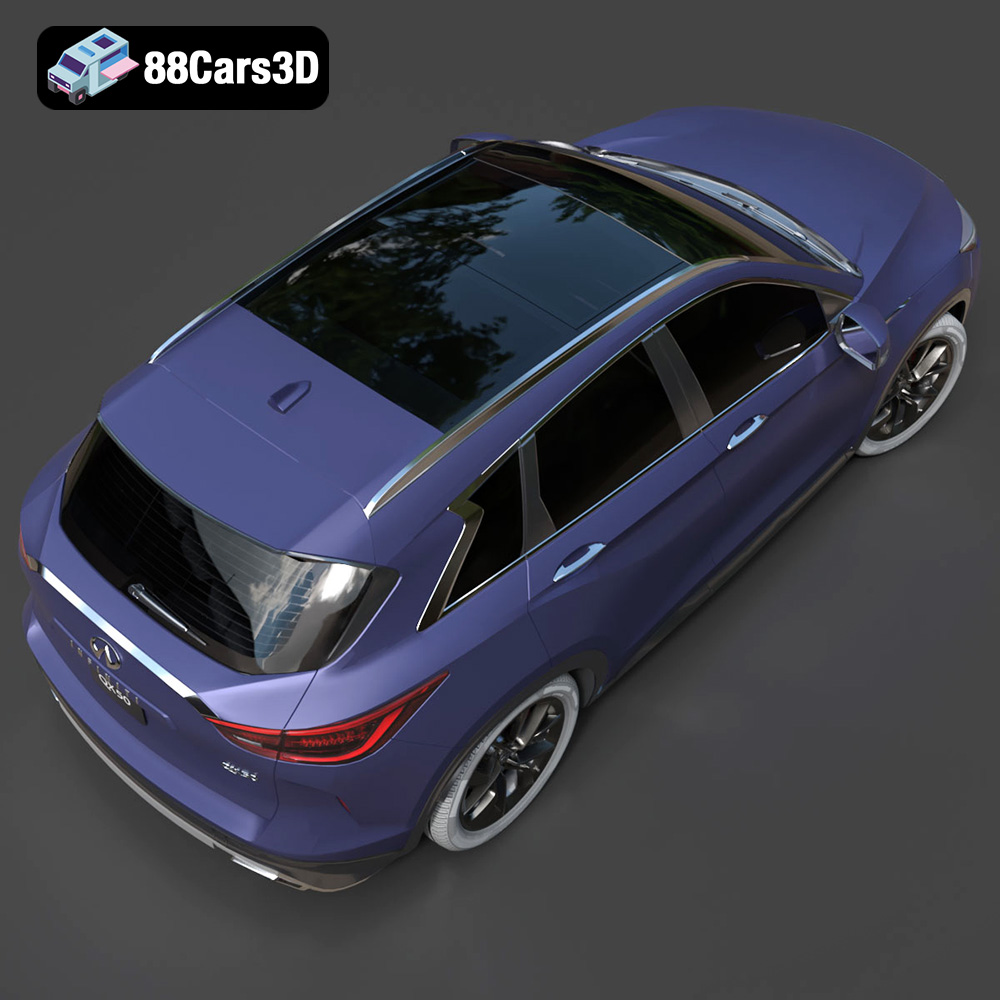
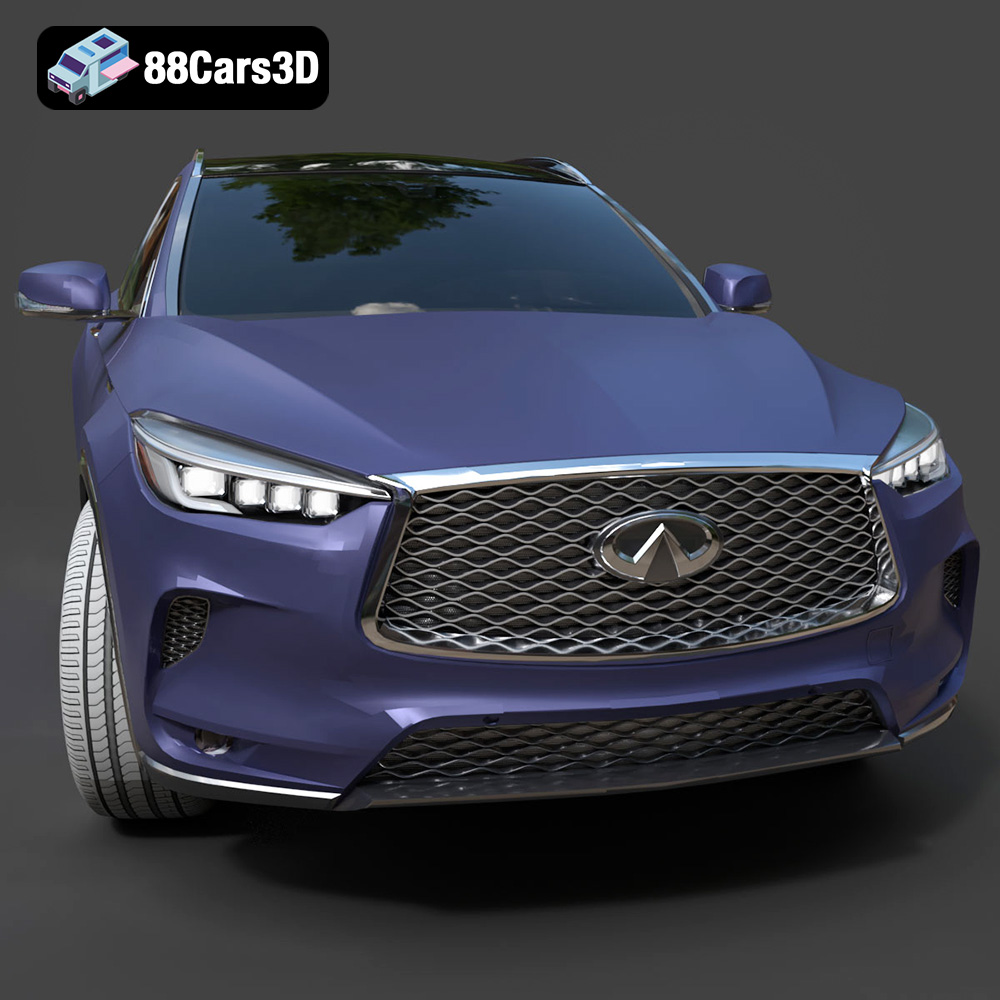
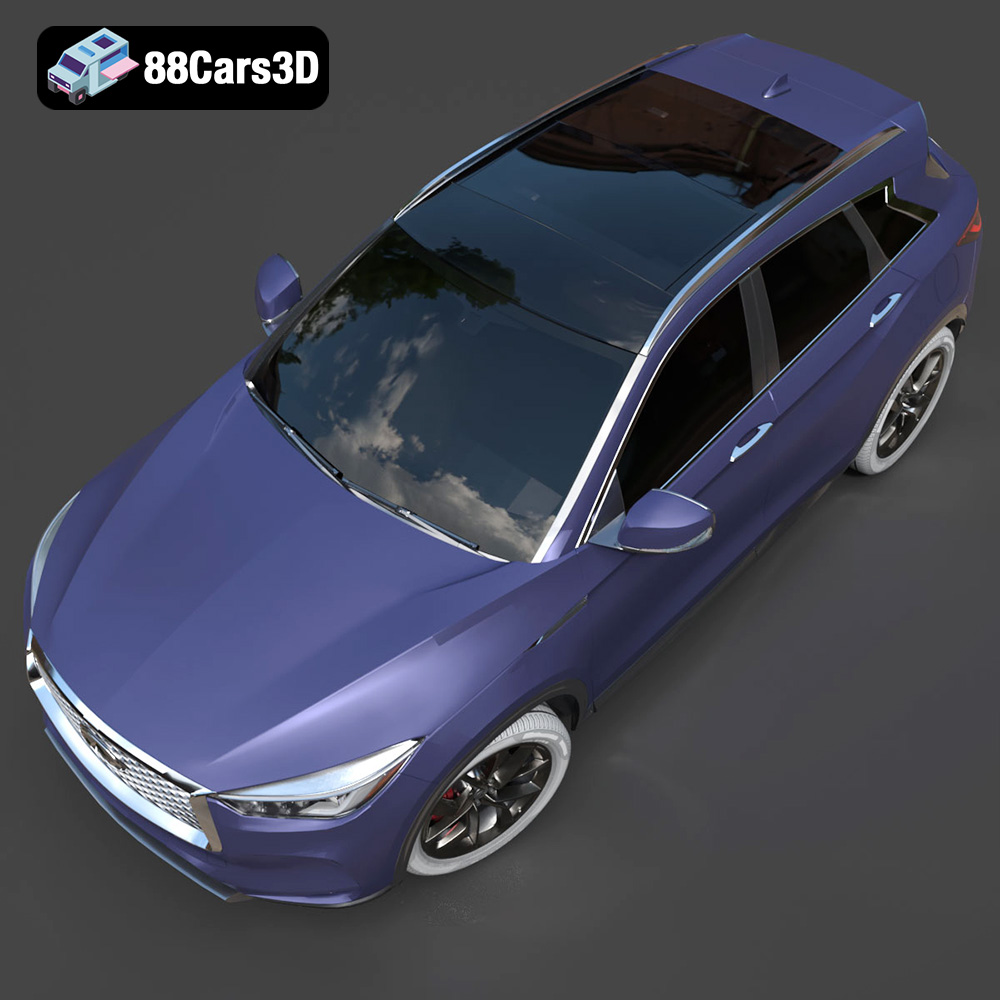
The journey from a blank canvas to a stunning automotive render or a compelling in-game vehicle relies heavily on the foundational quality of the 3D model itself. Poor topology, incorrect scaling, or subpar materials can derail an entire project, leading to costly revisions and missed deadlines. This is precisely why investing in professional-grade assets, such as the Infiniti QX50 2019 3D Model, is a strategic decision for any serious creator. This particular model stands out for its exceptional realism and precision, meticulously crafted to reflect the stunning aesthetics and sophisticated design of the renowned luxury crossover SUV. Its clean geometry, professional-grade topology, and realistic materials ensure outstanding performance, making it a cornerstone for any project demanding automotive excellence.
The versatility of a 3D model often hinges on the range and quality of its included file formats. Each format is designed with specific use cases and software environments in mind, offering unique advantages in terms of compatibility, data retention, and performance. Understanding these distinctions is crucial for seamless integration into various professional pipelines. The Infiniti QX50 2019 3D Model, for instance, provides a comprehensive suite of formats, ensuring maximum utility across the spectrum of 3D applications.
The .blend format represents a fully editable Blender scene, complete with materials, lighting setups, and even animation data if present. It’s the native format for Blender, a powerful open-source 3D creation suite. For users who primarily work in Blender, this format offers the most flexibility, allowing for deep customization, tweaking of shaders, modification of geometry, and seamless integration into existing Blender projects. It preserves all native Blender features and settings, making it ideal for artists who want full control over every aspect of the model.
FBX (Filmbox) is a proprietary file format developed by Autodesk, widely regarded as the industry standard for exchanging 3D data between different software applications. Its strength lies in its ability to store not just geometry, but also materials, textures, animations, and even rigging information in a single package. This makes .fbx ideal for game engines like Unreal Engine and Unity, as well as for transfer between DCC (Digital Content Creation) tools such as Maya, 3ds Max, and Cinema 4D. When an asset like the Infiniti QX50 2019 3D Model comes game-engine ready in .fbx, it means minimal setup and maximum compatibility for real-time pipelines.
OBJ (Object) is one of the oldest and most universally compatible 3D file formats. It’s a simple, text-based format that primarily stores geometry (vertices, normals, texture coordinates, and faces) and can reference external material (.mtl) and texture files. While it doesn’t support animation or rigging, its widespread compatibility makes it an excellent choice for cross-software transfers when the focus is purely on the mesh. Virtually every 3D software can import and export .obj, making it a reliable fallback for basic model exchange.
GLB (GL Transmission Format Binary) is a relatively newer format gaining significant traction, especially in augmented reality (AR), virtual reality (VR), and web-based 3D applications. It’s an efficient, single-file format that bundles 3D model data, textures, and animations into a compact package, making it perfect for quick loading and deployment in real-time web environments. For interactive 3D viewers on websites or immersive AR experiences on mobile devices, .glb delivers optimized performance and ease of use, making the Infiniti QX50 2019 3D Model suitable for modern digital engagement.
STL (Stereolithography) is almost exclusively used for 3D printing and rapid prototyping. It describes only the surface geometry of a 3D object using a tessellation of triangles. The format is simple, omitting color, texture, or other model attributes. When a model is provided in .stl, it means it’s already structured for additive manufacturing, with a solid, watertight mesh suitable for direct printing. This is invaluable for designers needing physical prototypes of their digital creations, such as a scale model of the Infiniti QX50 2019.
PLY (Polygon File Format) is another format for storing 3D data, particularly useful for scanned data, CAD, and scientific visualization. It can store a wider range of properties than .obj, including color per vertex, normal information, and confidence values for scanned points. Its precision and ability to handle complex mesh data make it suitable for applications requiring detailed geometric analysis or reverse engineering, often found in engineering and design fields.
This specifically indicates a model that has been pre-configured or optimized for direct import and use within Unreal Engine. This often implies proper scaling, collision meshes, material setups, and sometimes even basic blueprints or animations, significantly reducing the setup time for game developers or real-time visualization artists. An .unreal asset streamlines the process of bringing a vehicle like the Infiniti QX50 2019 into a dynamic virtual environment.
The .max format is the native project file for Autodesk 3ds Max, one of the leading software packages for 3D modeling, animation, and rendering. Similar to .blend, it retains all scene information, including complex material networks, lighting setups, camera positions, modifiers, and animation keyframes. For professionals working in architectural visualization or high-fidelity animation, having a .max file provides the utmost control for tweaking and rendering, making it indispensable for achieving photorealistic results with the Infiniti QX50 2019 3D Model.
Achieving true photorealism in 3D automotive rendering goes far beyond simply having a good-looking mesh. It requires an intricate understanding and application of technical principles that govern geometry, topology, UV mapping, and material construction. A premium 3D car model, such as those found on 88cars3d.com, embodies these principles to deliver unparalleled visual quality and performance.
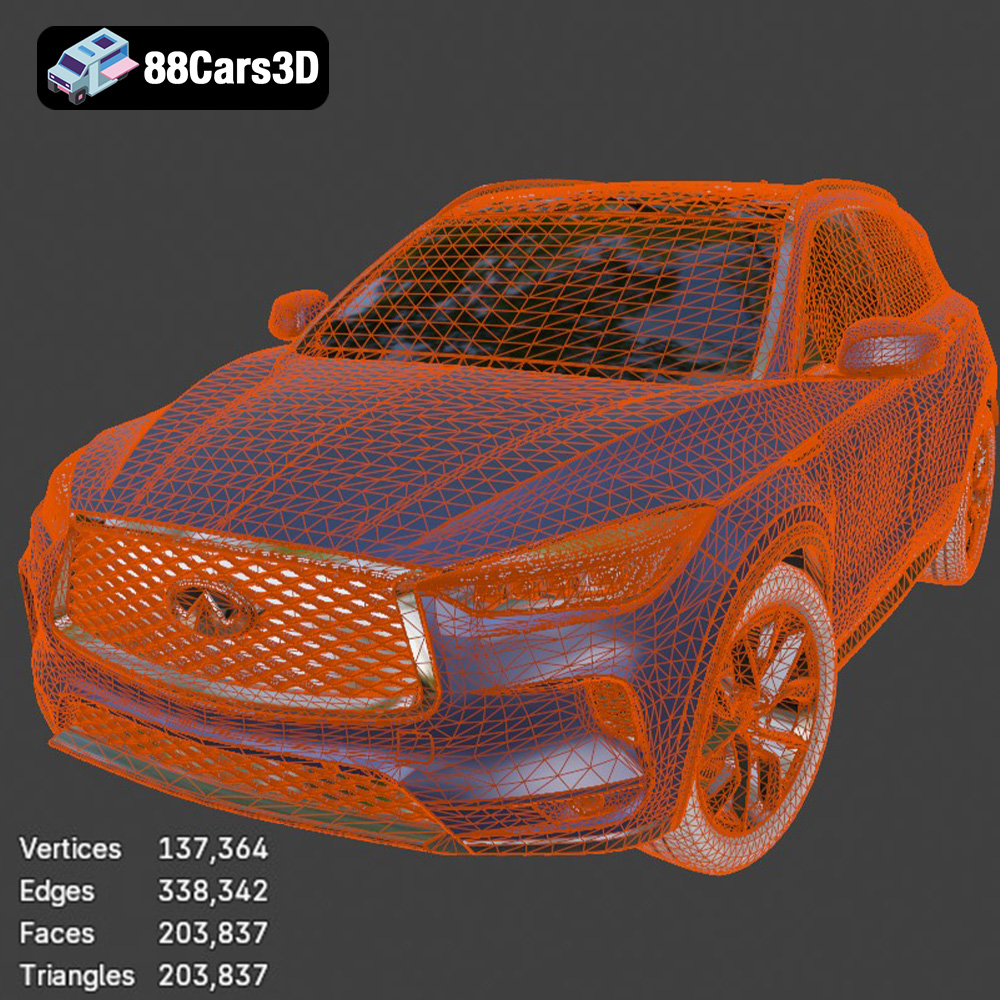
The “clean geometry” and “professional-grade topology” mentioned for the Infiniti QX50 2019 3D Model are critical technical differentiators. Clean geometry means the mesh is free of errors like non-manifold edges, inverted normals, or overlapping faces, which can cause rendering artifacts and issues during animation or texturing. Professional topology refers to the strategic arrangement of polygons (quads, primarily) to ensure smooth deformation, efficient texturing, and clean subdivision. This means edges follow the natural contours of the vehicle, allowing for perfect reflections and seamless surfaces even under extreme close-ups. High-quality topology also keeps poly counts manageable while preserving detail, which is vital for real-time applications where performance is paramount.
Modern rendering relies heavily on Physically Based Rendering (PBR) workflows, where materials accurately simulate how light interacts with surfaces in the real world. This involves meticulously crafted texture maps (albedo/base color, metallic, roughness, normal, ambient occlusion) that define a material’s properties. For the Infiniti QX50 2019 3D Model, “realistic materials” implies that these PBR textures are expertly created and applied, ensuring that the paint reflects light like actual automotive lacquer, the glass refracts accurately, and the interior fabrics have appropriate sheen and texture. This attention to detail means the model will look convincing under varied lighting conditions, from a bright outdoor scene to a moody studio shot, eliminating the need for extensive material setup by the user.
UV mapping is the process of flattening the 3D surface of a model into a 2D space, allowing textures to be applied accurately. “Outstanding performance under varied lighting conditions” is directly tied to excellent UV mapping, which prevents texture stretching, seams, or distortion. For a complex object like a car, multiple UV sets might be used for different components (exterior body, interior, wheels, lights) to maximize texture resolution and minimize wasted space. High-resolution textures, combined with precise UVs, are essential for achieving the minute details that elevate a render from good to exceptional, ensuring that every badge, grille, and stitch on the Infiniti QX50 2019 3D Model looks crisp and realistic.
The true value of a versatile 3D asset lies in its seamless integration into diverse professional workflows. Whether the end goal is a photorealistic advertisement, an interactive game environment, or an immersive AR/VR experience, a well-prepared 3D car model significantly streamlines the production pipeline. The Infiniti QX50 2019 3D Model, with its comprehensive file formats and professional attributes, is designed to excel in these demanding scenarios.
For automotive designers, marketing agencies, and architectural visualization studios, photorealistic rendering is often the primary output. In software like Autodesk 3ds Max or Blender, the Infiniti QX50 2019 3D Model can be easily imported and dropped into existing scene environments. Its clean topology and PBR-ready materials mean artists can spend less time on model preparation and more time on lighting, camera work, and scene composition. In 3ds Max, for example, artists can quickly assign V-Ray or Corona Renderer materials, set up studio-quality lighting, and produce stunning marketing imagery or configurator visuals. Blender users benefit from the native .blend file, which often includes a ready-to-render setup, allowing for immediate iteration and creative exploration with Cycles or Eevee.
Game developers and creators of interactive experiences require models that are optimized for real-time performance. This means efficient polygon counts, well-defined collision meshes, and streamlined material setups. The .fbx and .unreal formats of the Infiniti QX50 2019 3D Model are specifically tailored for integration into game engines like Unreal Engine. These formats often come with pre-configured settings that respect engine-specific requirements, such as UV channel assignments for lightmapping and appropriately scaled assets. This allows developers to quickly populate virtual worlds, simulate driving experiences, or create interactive showrooms with a high-fidelity vehicle that maintains smooth frame rates, crucial for an engaging user experience.
The burgeoning fields of AR and VR demand highly optimized 3D assets due to their strict performance budgets and the need for immersion. The .glb format included with the Infiniti QX50 2019 3D Model is particularly valuable here. GLB files are self-contained and highly compressed, making them ideal for deployment on mobile AR platforms or in standalone VR headsets where every megabyte and polygon counts. Developers can integrate the model into AR applications for virtual car showcases, or place it within VR environments for immersive driving simulators or interactive product tours, providing users with a realistic and responsive experience without sacrificing visual quality.
The utility of high-quality 3D car models like the Infiniti QX50 2019 extends across numerous industries, demonstrating their versatility and impact on diverse projects.
In the highly competitive automotive industry, compelling visuals are paramount. Car manufacturers and advertising agencies frequently utilize 3D models to create stunning commercials, print ads, and online campaigns. Instead of costly physical photoshoots, a 3D model allows for limitless creative control – vehicles can be placed in any environment, under any lighting condition, and even configured with custom options, all within a digital studio. The Infiniti QX50 2019 3D Model can serve as the centerpiece for such campaigns, producing hyper-realistic imagery that captures the essence of the luxury SUV without the logistical complexities and expense of real-world photography.
Architects and urban planners often need to contextualize their designs with realistic elements. Placing a high-fidelity car model in an architectural render immediately brings life and scale to a scene, enhancing its realism and relatability. Imagine an architectural render of a new luxury apartment complex, with the Infiniti QX50 2019 parked elegantly in the driveway. This not only grounds the visualization in reality but also subtly communicates a desired lifestyle. The model’s detailed exterior and interior can even be used for close-up shots of a garage or street-level view, adding an extra layer of authenticity to the overall presentation.
Beyond aesthetics, 3D car models play a functional role in the design and prototyping stages. While the Infiniti QX50 2019 is a finished product, the principles apply to new vehicle development. Designers can use similar detailed models to test new components, visualize different material finishes, or even create physical prototypes using the .stl format for 3D printing. This iterative digital process significantly reduces costs and accelerates the development cycle, allowing for rapid evaluation and refinement before committing to physical manufacturing.
The digital landscape is constantly evolving, with new platforms and technologies emerging regularly. Investing in 3D assets that offer broad compatibility and technical robustness is key to future-proofing your creative endeavors. The Infiniti QX50 2019 3D Model exemplifies this forward-thinking approach.
With its array of included file formats – from .blend and .max for native DCC workflows to .fbx and .unreal for game engines, and .glb for AR/VR/web – this model is designed for maximum adaptability. This means that regardless of whether your project evolves from a cinematic render to an interactive configurator or an augmented reality experience, the core asset remains compatible and ready for integration. This multi-format approach eliminates the need to rebuild or re-optimize models for different environments, saving valuable time and resources. Such versatility ensures that your initial investment continues to pay dividends as your projects expand in scope and target new audiences.
The meticulous attention to detail, clean geometry, and professional topology of the Infiniti QX50 2019 3D Model adhere to the highest industry standards. As rendering technologies advance and real-time graphics become increasingly sophisticated, models built on a solid technical foundation will continue to perform well. Assets with poor topology or non-PBR materials quickly become obsolete, requiring costly rework. By choosing a high-quality model from a reputable source like 88cars3d.com, you are ensuring that your digital assets are not just suitable for today’s projects but are also robust enough to meet the demands of tomorrow’s innovations, providing a reliable foundation for long-term creative success.
The comprehensive nature of this 3D model, including a fully modeled interior, opens up a world of creative possibilities. Beyond simple exterior shots, artists can create detailed interior renders, interactive virtual tours, or even character interactions within the vehicle. This level of detail allows for more immersive storytelling and richer visual content, enhancing the overall impact of any project. From dynamic camera animations showcasing the luxurious cabin to virtual reality walkthroughs, the complete package of the Infiniti QX50 2019 3D Model empowers creators to explore a vast array of visual narratives and applications.
In the demanding world of 3D content creation, the quality of your foundational assets can make or break a project. The Infiniti QX50 2019 3D Model stands as a prime example of a premium asset that combines exceptional realism with unparalleled technical precision and versatility. Its clean geometry, professional topology, realistic materials, and comprehensive suite of file formats (including .blend, .fbx, .obj, .glb, .stl, .ply, .unreal, and .max) ensure it’s ready for any professional application, from high-fidelity automotive rendering and cutting-edge game development to immersive AR/VR experiences and detailed 3D printing. By choosing such a meticulously crafted 3D car model, creators can streamline their workflows, achieve stunning visual results, and confidently future-proof their digital projects. Explore this and other top-tier 3D car models at 88cars3d.com, where quality meets professional demand.
Discover the exceptional realism and precision of the Infiniti QX50 2019 3D Model. Crafted with meticulous attention to detail, this premium digital asset accurately reflects the stunning aesthetics and sophisticated design of the renowned luxury crossover SUV. This model features exceptionally clean geometry, professional-grade topology, and realistic materials that ensure outstanding performance under varied lighting conditions. Every element, from its bold exterior curves to its fully modeled interior, has been constructed to meet the strictest industry standards for professional 3D design. Designed for unparalleled versatility, this 3D vehicle is ready to be integrated seamlessly into a wide range of professional applications. Whether you are working on advanced game development, creating photorealistic architectural renders, building immersive AR/VR experiences, or producing cinematic visual effects, this asset delivers reliable and visually striking results.
$19.99
.2019
.arvr
.blend
.car3dmodel
.crossover
.fbx
.gameasset
.glb
.infiniti
.max
.obj
.ply
.qx50
.rendering
.simulation
.stl
.unreal
SUV