Get 20% OFF All Premium 3D & STL Models!

In the dynamic world of digital content creation, the demand for exceptionally detailed and accurate 3D assets continues to escalate. From blockbuster game titles and cinematic advertisements to immersive virtual reality experiences and advanced product visualization, high-quality 3D car models form the bedrock of countless professional projects. These aren’t merely decorative elements; they are complex digital blueprints that dictate everything from visual fidelity and performance optimization to the very realism of a virtual environment.
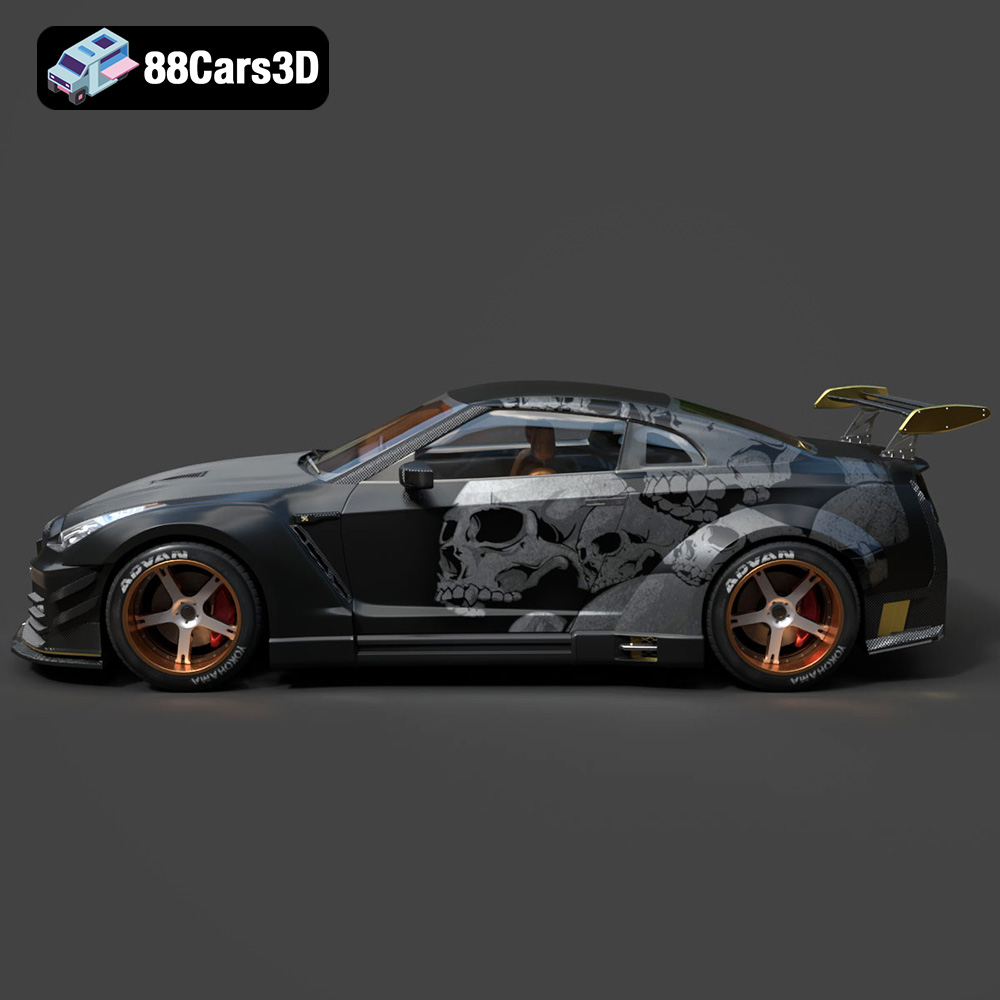
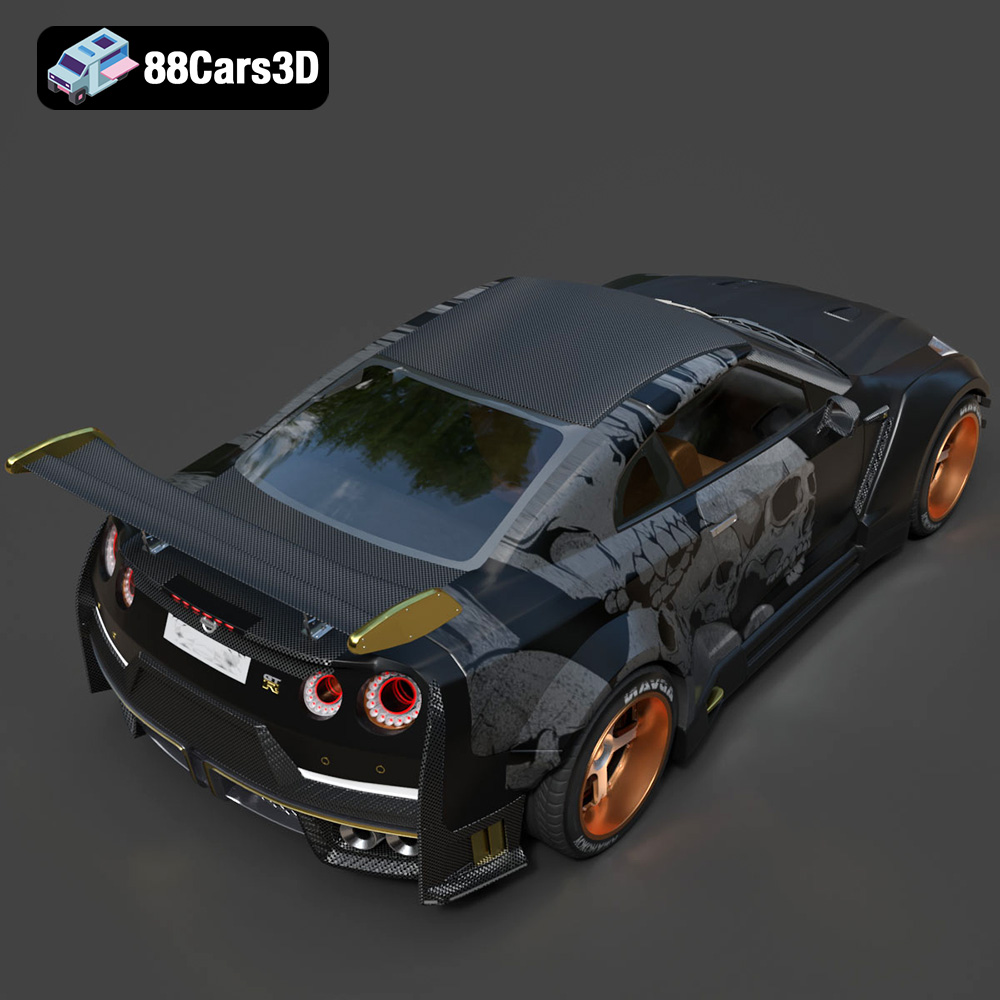
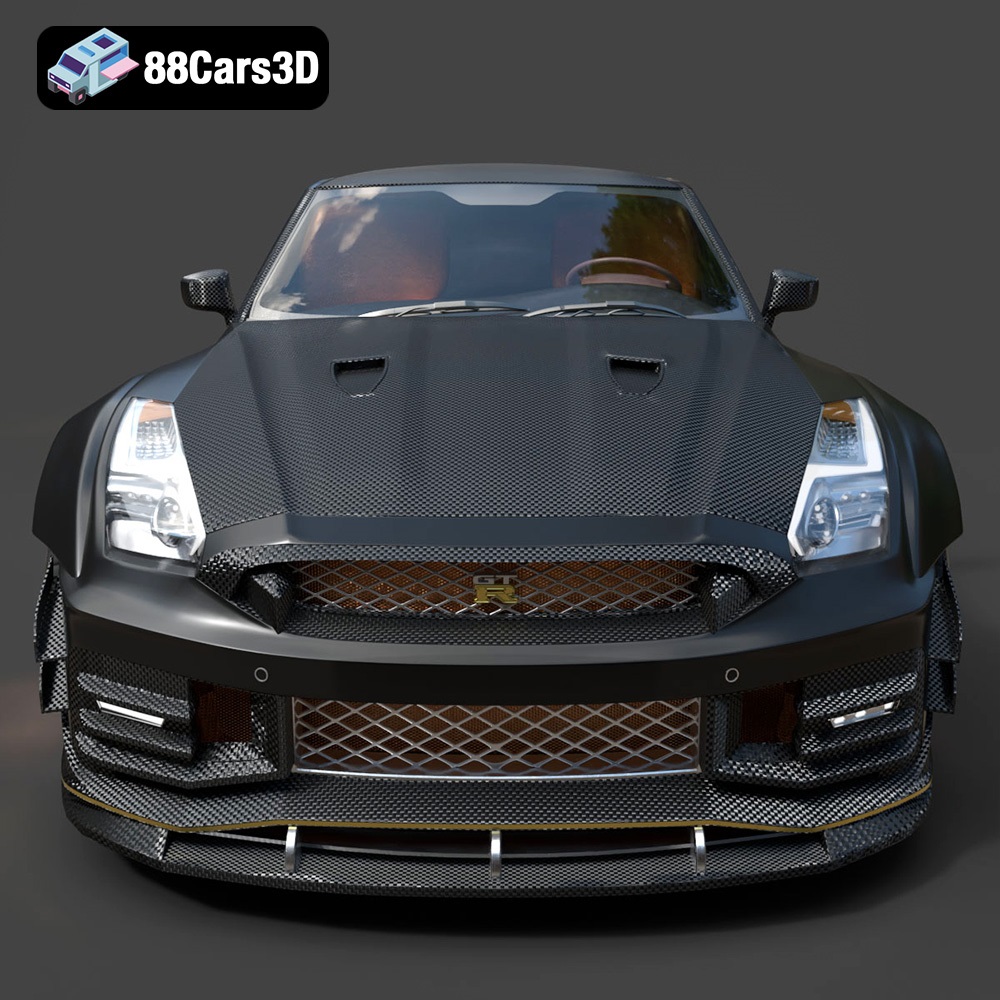
The quest for photorealism and precise technical accuracy drives artists and developers to seek out assets that not only look stunning but also integrate seamlessly into diverse workflows. This is where specialized marketplaces like 88cars3d.com prove invaluable, offering a curated selection of premium 3D vehicle assets designed to meet rigorous industry standards. Among their impressive collection stands a model that exemplifies this commitment to excellence: the Nissan GTR R35 Nismo 3D Model. This particular asset is a prime example of how meticulous attention to detail, coupled with robust technical construction, can elevate any project, capturing the aggressive aerodynamics, widened stance, and iconic design language of its real-world counterpart with stunning authenticity.
Join us as we explore the intricate technical landscape of professional 3D car models, dissecting the nuances of file formats, rendering techniques, game development optimization, and the exciting frontier of AR/VR and 3D printing. We’ll illustrate how a meticulously crafted asset like the Nissan GTR R35 Nismo 3D Model becomes an indispensable tool for professionals aiming to achieve unparalleled realism and performance.
The foundation of any successful 3D project lies in selecting the appropriate file format for your assets. Each format serves a specific purpose, offering unique advantages in terms of compatibility, data retention, and optimization for particular applications. Understanding these distinctions is crucial for seamless workflow integration, especially when dealing with complex assets like high-detail 3D car models. The Nissan GTR R35 Nismo 3D Model, for instance, provides a comprehensive suite of formats to cater to a broad spectrum of professional needs, ensuring maximum versatility.
The .blend file format is the native project file for Blender, a powerful open-source 3D creation suite. When you receive a .blend file, you’re not just getting the model; you’re often getting a complete scene. This typically includes the mesh data, materials (PBR setups, shaders), textures, lighting arrangements, camera positions, and even animation data. For the Nissan GTR R35 Nismo 3D Model, the .blend file means an editable Blender scene, allowing artists to immediately dive in, inspect the material setup, modify the geometry, or render it directly within Blender’s Cycles or Eevee engines. Its primary advantage is retaining full editability and all scene information without any loss of fidelity or conversion artifacts.
Autodesk’s .fbx (Filmbox) format has become an unofficial industry standard for 3D model interchange, particularly between different software packages and game engines. It’s renowned for its ability to store a wide range of data, including geometry (meshes, polygons, vertices), materials, textures, animations, skinning, and even camera and lighting information. The .fbx format is ideal for Unreal Engine, Unity, and real-time pipelines due to its robust support for skeletal animation and efficient data packaging. The Nissan GTR R35 Nismo 3D Model’s .fbx variant is game-engine ready, making it straightforward to import into your chosen engine with materials and UVs largely intact, minimizing setup time for developers.
The .obj (Wavefront Object) format is one of the oldest and most universally supported 3D file formats. It’s a simple, text-based format primarily used to store 3D geometry data (vertices, normals, texture coordinates, and faces). While it can reference external material files (.mtl) for basic shading information, it doesn’t typically store complex PBR materials or animation data. Its strength lies in its widespread compatibility, making it an excellent choice for cross-software transfers when you need a clean, mesh-only representation. For the Nissan GTR R35 Nismo 3D Model, the .obj provides a robust fallback for integration into virtually any 3D software on the market, ensuring accessibility.
GLB (GL Transmission Format Binary) is a relatively newer format, rapidly gaining traction for its efficiency and suitability for web, augmented reality (AR), and virtual reality (VR) applications. It’s a binary container format that bundles 3D models, textures, animations, and PBR materials into a single, self-contained file. This makes .glb incredibly lightweight and easy to load, reducing latency in real-time AR/VR experiences and speeding up web-based 3D viewers. For visualizing the Nissan GTR R35 Nismo 3D Model in a browser or bringing it into an AR app on a mobile device, the .glb format offers unparalleled optimization and ease of use.
The .stl (Stereolithography) format is almost exclusively associated with 3D printing and rapid prototyping. It describes only the surface geometry of a 3D object as a collection of unconnected triangular facets. It doesn’t store color, texture, or material properties, focusing purely on the physical shape. For users interested in bringing the Nissan GTR R35 Nismo 3D Model into the physical world, the .stl file provides the necessary clean, manifold mesh data for successful slicing and printing. Precision in this format ensures accurate physical replication.
The .ply (Polygon File Format) is another format primarily used for storing 3D data from 3D scanners, CAD software, and various scientific applications. It can store not only geometry (vertices, faces) but also additional attributes like color, transparency, surface normals, and even confidence values for each point. This makes it a richer format than .stl for data analysis and precise visualization, though it’s less commonly used for general artistic workflows. When high precision and additional vertex attributes are required, the .ply version of the Nissan GTR R35 Nismo 3D Model offers granular detail.
While often used interchangeably with .fbx, specifying “.unreal” usually implies a level of pre-configuration or optimization specifically for Unreal Engine. This might mean optimized material setups that leverage Unreal’s physically-based rendering (PBR) system, correct scale, collision meshes, or even basic blueprint setups. Having a dedicated .unreal file for the Nissan GTR R35 Nismo 3D Model signifies that the asset is not just compatible but truly “engine-ready,” potentially saving significant development time for artists and programmers working within Unreal’s ecosystem.
Similar to .blend for Blender, the .max file format is the native scene file for Autodesk 3ds Max, a leading software for 3D modeling, animation, and rendering in architectural visualization, product design, and cinematic production. A .max file contains the complete scene information, including the model’s geometry, modifiers, intricate material networks, lighting setups, cameras, animation timelines, and render settings. The .max version of the Nissan GTR R35 Nismo 3D Model allows 3ds Max users to access the original editable project, perfect for high-fidelity renders, detailed animations, or further customization within a familiar and powerful environment.
Automotive rendering is an intricate discipline, blending artistic vision with technical prowess to create images that are indistinguishable from photographs. For a legendary vehicle like the Nissan GTR R35 Nismo, capturing its aggressive stance and intricate details in a digital render requires more than just a good model; it demands a deep understanding of materials, lighting, and post-production. The Nissan GTR R35 Nismo 3D Model from 88cars3d.com provides an exceptional foundation for achieving stunning results.
The core of photorealistic rendering lies in the materials. Physically Based Rendering (PBR) workflows are standard, mimicking how light interacts with real-world surfaces. This involves detailed maps for albedo (base color), roughness, metallic, normal, and displacement. For the Nissan GTR R35 Nismo 3D Model, this translates into precise shader networks for its signature metallic paint – often a multi-layered clear coat effect – the fine weave of carbon fiber aero components, the subtle reflectivity of glass, and the various textures of the interior upholstery. The optimized polygon structure and clean UVs of the model ensure that these complex PBR materials map perfectly, avoiding stretching or distortion and maintaining visual fidelity across different rendering engines like V-Ray, Corona, or Octane. Every scratch, every specularity, and every diffuse reflection contributes to the illusion of reality.
Lighting is paramount in automotive rendering, shaping the vehicle’s form and highlighting its design. High Dynamic Range Images (HDRIs) are frequently used to provide realistic environmental lighting, simulating everything from an overcast sky to a vibrant cityscape. Studio lighting setups, employing virtual softboxes and spotlights, can emphasize specific curves and reflections, much like in a professional photography studio. For the Nissan GTR R35 Nismo 3D Model, a careful interplay of direct and indirect lighting, combined with accurate shadow casting, reveals the car’s sculpted lines and aggressive aerodynamics. The right environment, whether a race track, urban street, or pristine showroom, complements the vehicle and reinforces its narrative.
Even the most perfect raw render can be significantly enhanced through post-production. Techniques such as color grading, chromatic aberration, depth of field, motion blur, and lens flares add a cinematic quality and heightened realism. Compositing multiple render passes (e.g., diffuse, specular, reflections, ambient occlusion) allows for granular control over the final image. A skilled artist can use these techniques to bring out the gloss of the Nissan GTR R35 Nismo’s paintwork, emphasize the speed in an action shot, or create a moody, atmospheric portrait, pushing the visual impact beyond what’s possible with a single render pass.
Game development presents unique challenges for 3D assets, where visual fidelity must be balanced with strict performance requirements. Real-time rendering demands efficient geometry, streamlined textures, and meticulous optimization to maintain high frame rates. The Nissan GTR R35 Nismo 3D Model is engineered with these considerations in mind, making it an excellent game asset for titles targeting various platforms.
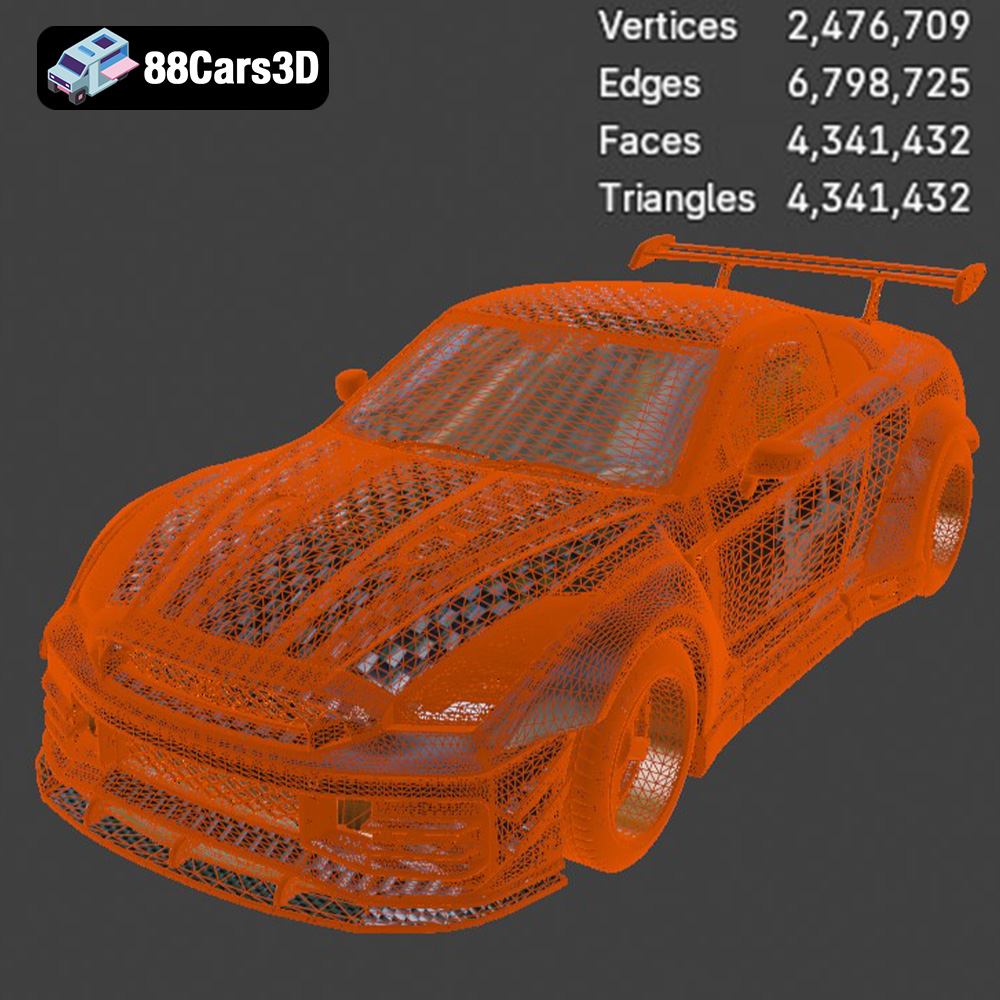
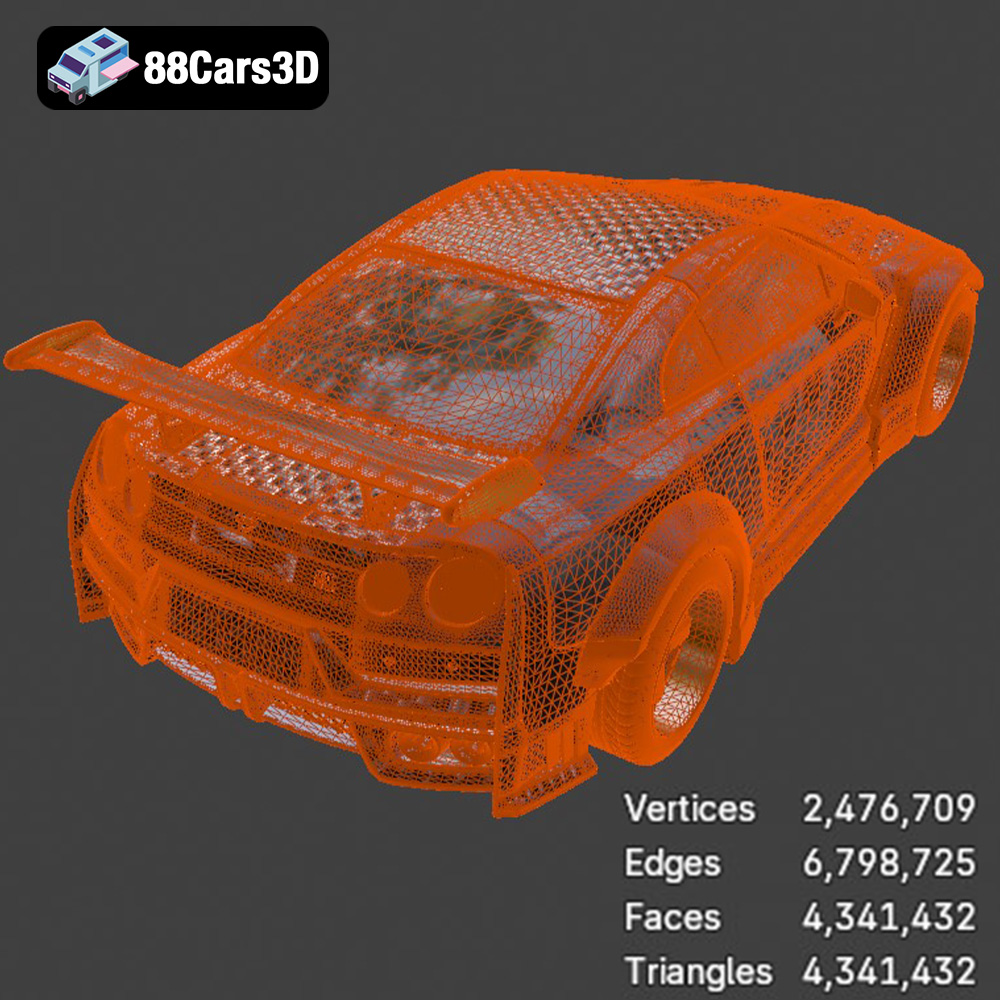
High-polygon models are fantastic for cinematic renders, but they can cripple game performance. A crucial aspect of game asset optimization is polycount management. The Nissan GTR R35 Nismo 3D Model features an optimized polygon structure, balancing visual detail with real-time efficiency. Furthermore, professional game assets often utilize Levels of Detail (LODs). This involves creating multiple versions of the same model, each with a progressively lower polygon count. When the car is close to the camera, the high-detail version is rendered. As it moves further away, the game engine automatically switches to a lower poly LOD, saving computational resources without a noticeable drop in visual quality. This strategy is vital for maintaining performance in racing simulations or open-world games with numerous vehicles.
Efficient UV mapping is critical for game assets. Clean UV layouts ensure that textures apply correctly without stretching or distortion, and that texture memory is used effectively. For a complex model like the Nissan GTR R35 Nismo, multiple texture sets (e.g., for body, interior, wheels) are often consolidated into texture atlases – a single large texture image containing multiple smaller textures. This reduces the number of draw calls, improving rendering performance. The model’s clean geometry and professional UVs make this process straightforward, ensuring efficient texture streaming and reduced VRAM usage in engines like Unreal Engine and Unity.
The provision of .fbx and .unreal file formats for the Nissan GTR R35 Nismo 3D Model highlights its readiness for game engines. Importing the .fbx into Unreal Engine or Unity is typically a straightforward process, allowing developers to set up materials, add physics properties, and define collision meshes. The .unreal format goes a step further, potentially providing pre-configured assets with proper scaling, pivot points, and even basic blueprint setups for things like wheel rotation or headlight functions. This drastically cuts down on the integration time, allowing developers to quickly populate their virtual worlds with high-fidelity, performance-optimized 3D car models that look and behave realistically.
Beyond traditional rendering and game development, high-quality 3D car models are opening doors to innovative applications in augmented reality (AR), virtual reality (VR), and even physical prototyping. The versatility of the Nissan GTR R35 Nismo 3D Model ensures its utility across these emerging fields, thanks to its accurate scaling and robust file format support.
AR and VR demand lightweight, optimized models that can be rendered in real-time on various devices, from powerful headsets to mobile phones. The .glb file format, provided with the Nissan GTR R35 Nismo 3D Model, is specifically optimized for these immersive experiences. Its single-file nature and efficient data packaging enable quick loading and smooth performance in AR apps where a virtual car might be placed in a real-world environment, or in VR simulations allowing users to walk around, inspect, or even virtually drive the vehicle. The model’s accurate scaling is crucial here, ensuring the GTR appears life-sized and proportionate when viewed through an AR headset or in a VR showroom, enhancing the sense of presence and realism.
The ability to transform a digital model into a physical object has revolutionized product design and prototyping. The .stl and .ply formats included with the Nissan GTR R35 Nismo 3D Model make it suitable for 3D printing. The .stl format, in particular, describes the surface geometry with high precision, making it ideal for generating watertight, manifold meshes required by 3D slicer software. This allows enthusiasts, designers, or engineers to print a detailed miniature replica of the Nismo, perfect for display, rapid prototyping of custom parts, or even educational purposes. Considerations for 3D printing include wall thickness, overhangs, and the resolution of the mesh, all of which are managed through the model’s robust construction to ensure successful physical output.
For professionals across industries, time is money. Leveraging pre-made, high-quality 3D assets like those found on 88cars3d.com significantly streamlines workflows, reduces development costs, and accelerates project timelines without compromising on visual quality. The Nissan GTR R35 Nismo 3D Model is a prime example of an asset designed for seamless professional integration.
The journey from acquiring a 3D model to integrating it into a professional project typically follows a clear path. First, after selecting and purchasing the Nissan GTR R35 Nismo 3D Model from 88cars3d.com, the user downloads the package containing all the specified file formats. Next, they import the most suitable format (.blend, .max, .fbx, etc.) into their preferred 3D software (Blender, 3ds Max, Maya, Cinema 4D, etc.) or game engine (Unreal, Unity). Once imported, the model is checked for scale, pivot points, and material integrity. Depending on the project’s needs, materials might be adjusted to fit a specific renderer, or the model might be further optimized with LODs for real-time applications. The clean geometry and realistic materials of this model minimize the “cleanup” phase, allowing artists to focus immediately on scene composition, lighting, and rendering.
The immediate availability of a high-fidelity asset like the Nissan GTR R35 Nismo 3D Model opens doors for various professional applications. Consider an automotive advertising agency needing to create a stunning visual campaign for a client – the model provides a perfect foundation for photorealistic renders and animations. A virtual reality startup could integrate it into an interactive car configurator, allowing prospective buyers to explore the vehicle’s features in immersive detail. Game developers can drop it directly into a racing simulation, knowing it’s optimized for performance and visual impact. Even forensic reconstruction or engineering visualization benefits from accurate, real-world scaling and precise geometry, ensuring technical integrity in critical analyses. The authenticity and professional-grade construction of models from 88cars3d.com are invaluable in these scenarios.
While the Nissan GTR R35 Nismo 3D Model is delivered production-ready, professional projects often require a degree of customization. Artists might need to change paint colors, swap out wheels, add custom decals, or even modify interior elements to match specific branding or client requirements. The editable nature of formats like .blend and .max allows for extensive modifications. The clean topology of the model ensures that such customizations can be applied efficiently without compromising the underlying mesh quality. Furthermore, the robust UV mapping supports easy texture replacement for alternative liveries or material finishes, making the asset incredibly adaptable for diverse creative visions.
The journey through the intricate world of 3D car models reveals a landscape where technical precision, artistic fidelity, and versatility converge. Assets like the Nissan GTR R35 Nismo 3D Model stand as a testament to the power of meticulous digital craftsmanship, serving as a critical tool for professionals across rendering, game development, AR/VR, and even 3D printing. Its comprehensive file format support, optimized geometry, and realistic materials make it not just a model, but a catalyst for creativity and efficiency in various demanding workflows.
Whether you are an automotive renderer striving for cinematic photorealism, a game developer pushing the boundaries of real-time performance, or an innovator exploring immersive AR/VR experiences, investing in high-quality 3D car models is a strategic decision. By choosing assets from platforms like 88cars3d.com, you are not just acquiring a digital object; you are gaining a foundational component that saves time, enhances quality, and enables you to focus on the unique creative aspects of your projects. The Nissan GTR R35 Nismo 3D Model is more than just a digital replica; it’s an accelerator for your digital automotive ambitions.
Experience the precision and performance of a legendary track-focused vehicle with the Nissan GTR R35 Nismo 3D Model. Crafted with meticulous attention to detail, this digital asset perfectly captures the aggressive aerodynamics, widened stance, and iconic design language of the real-world counterpart. The authentic proportions and realistic exterior styling make it an essential addition to any professional digital automotive library. This model boasts exceptionally clean geometry and is equipped with realistic materials to ensure a seamless integration into your projects. Built to professional standards, the optimized polygon structure guarantees efficient performance across various digital platforms without compromising visual fidelity. Every element, from the carbon fiber aero components to the intricate wheel designs and fully modeled interior, has been constructed with exacting precision. Ideal for a multitude of applications, this vehicle asset is tailored for seamless use in game development, cinematic automotive rendering, immersive AR/VR experiences, and technical visualization. Its versatility and accurate scaling ensure it functions flawlessly in physics simulations and interactive showroom displays. The package provides a comprehensive suite of file formats to guarantee full compatibility with your preferred creative software: .blend – Editable Blender file with materials and lighting setup; .fbx – Game-engine ready format for Unreal Engine and Unity; .obj – Standard 3D model format compatible with all major software; .glb – Optimized for AR/VR and web-based visualization; .stl – Suitable for 3D printing and prototyping; .ply – Detailed polygon mesh for analysis and visualization; .unreal – Pre-configured for Unreal Engine use; .max – Editable 3ds Max file for rendering and animation.
$19.99
.arvr
.blend
.car3dmodel
.coupe
.fbx
.gameasset
.glb
.gtr
.max
.nismo
.nissan
.obj
.ply
.r35
.rendering
.simulation
.sportsCar
.stl
.supercar
.unreal