Get 20% OFF All Premium 3D & STL Models!

In today’s fast-paced digital landscape, the demand for realistic and performant 3D assets has never been higher. From blockbuster video games to cutting-edge architectural visualizations, and from immersive augmented reality experiences to high-fidelity automotive rendering, 3D car models are central to bringing virtual worlds to life. These digital representations are far more than just pretty pictures; they are complex data structures meticulously crafted to serve a multitude of professional applications. The precision, optimization, and versatility of these models can significantly impact project quality, development time, and overall creative potential.
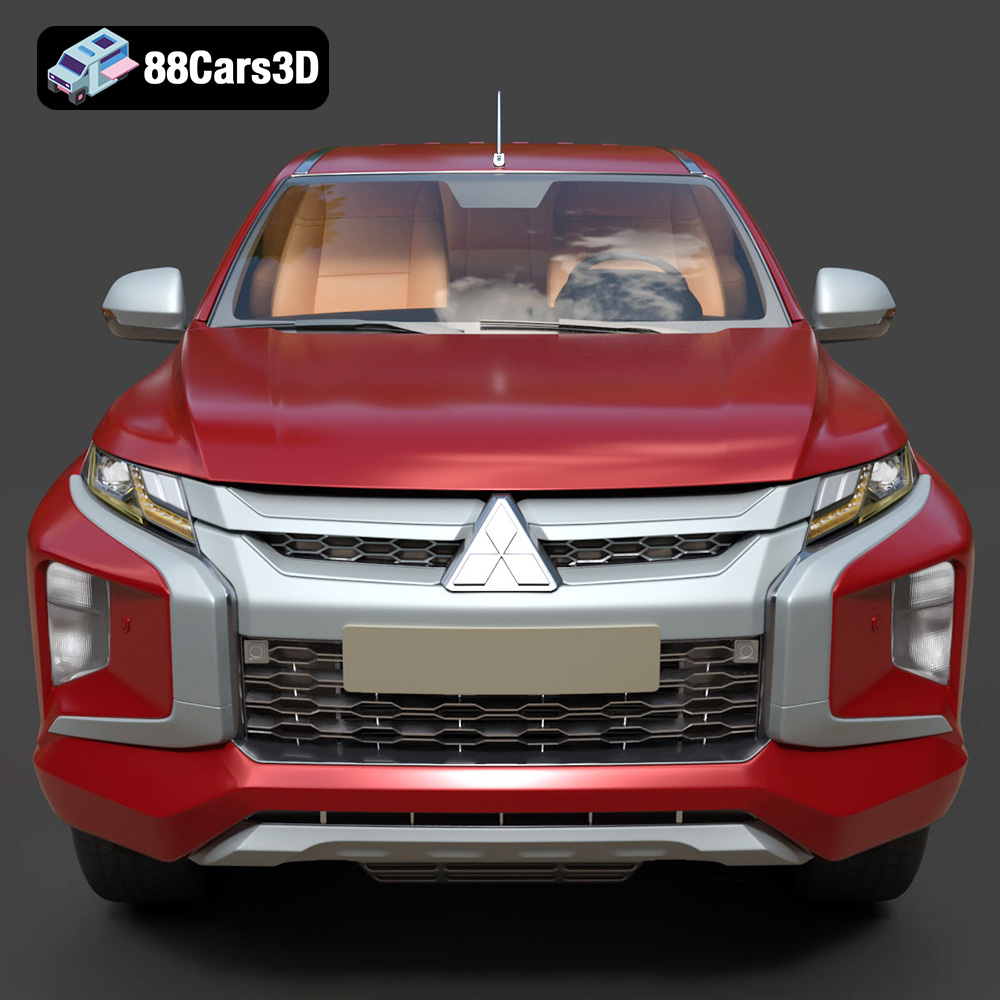
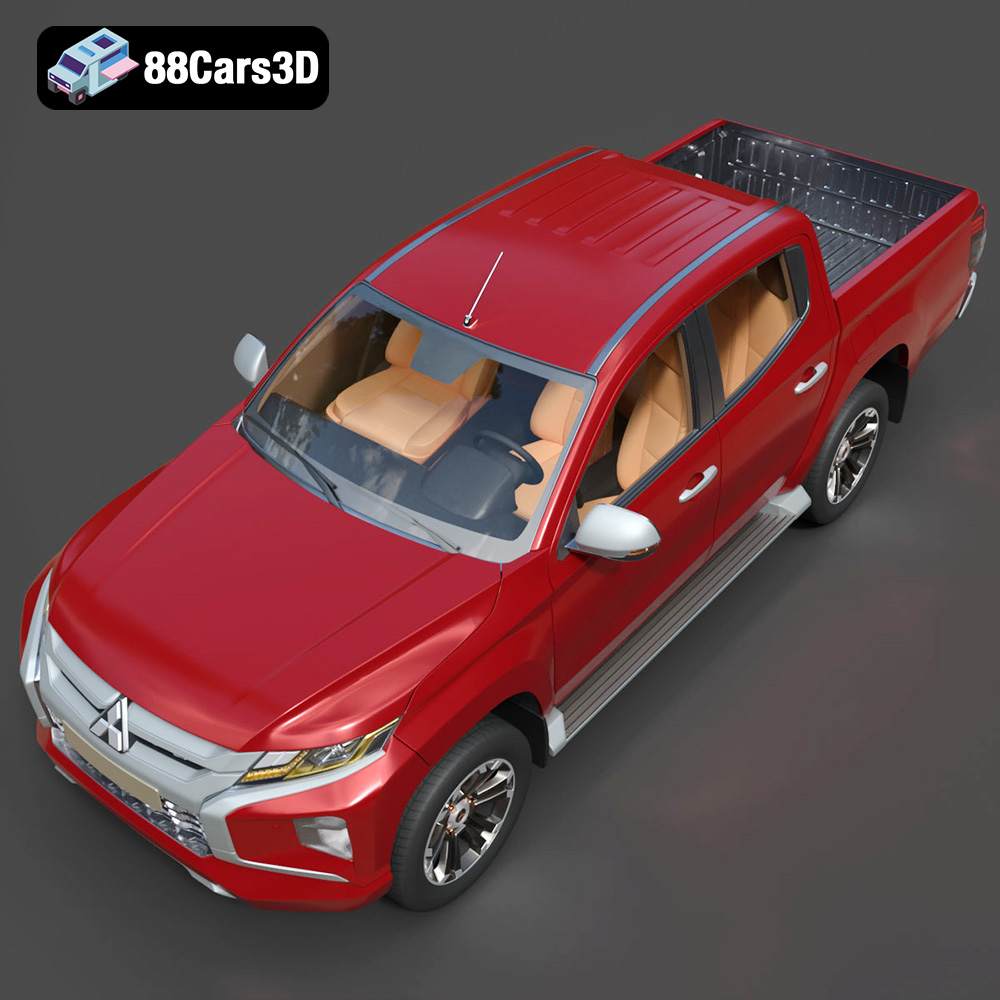
A prime example of such a versatile asset is the Mitsubishi L200 Crew Cab 2019 3D Model, a testament to the blend of rugged utility and modern design in the automotive world. This digital replica encapsulates the essence of the real-world vehicle, offering artists and developers a powerful tool for their projects. Whether you’re a game developer needing a robust vehicle for an off-road adventure, an architect seeking to populate a street scene, or a marketing professional crafting a compelling visual campaign, understanding the intricacies of high-quality 3D car models is paramount to success.
This comprehensive guide delves into the technical bedrock of 3D car modeling, exploring the journey from concept to integration, the critical role of various file formats, and how models like the Mitsubishi L200 Crew Cab 2019 are engineered to excel across diverse platforms and use cases. We’ll examine the specific technical advantages, practical applications, and the transformative power these assets bring to the creative industries.
The choice of a 3D model file format is a critical decision that impacts compatibility, performance, and the scope of manipulation available to the user. Different formats are optimized for specific workflows, software environments, and end-use applications. When acquiring a high-quality asset like the Mitsubishi L200 Crew Cab 2019 3D Model, understanding the included formats is crucial for seamless integration into your project pipeline. Here’s a detailed look at the common formats and their optimal use cases:
The .blend format is the native file type for Blender, the popular open-source 3D creation suite. A .blend file typically contains an entire scene, including the 3D model geometry, materials, textures, lighting, camera setups, animations, and even physics simulations. This format is ideal for users working primarily within Blender, offering full editability. You can easily modify the mesh, adjust materials, re-rig components, or tweak animations. For the L200 model, having a .blend file means artists can dive deep into its structure, customize the “Dynamic Shield” grille, adjust suspension pivot points, or alter interior upholstery with native Blender tools, providing unparalleled flexibility for detailed projects.
Autodesk’s .fbx (Filmbox) format is arguably the most widely adopted proprietary file format for 3D data exchange, particularly prevalent in game development and real-time pipelines. It supports geometry, materials (with texture references), animations, skinning, and camera data. FBX is excellent for transferring assets between different 3D software packages (like 3ds Max, Maya, Blender) and is especially crucial for game engines like Unreal Engine and Unity. Its strength lies in its ability to encapsulate complex scene data into a single, relatively portable file, making it ideal for the L200 model to be quickly imported into a game environment while retaining its crucial pivot setups for animation (steering, wheels, suspension).
The .obj (Wavefront OBJ) format is a universal, open-standard file format primarily used for geometric data. It stores vertex positions, UV coordinates, normals, and material group information, often accompanied by a separate .mtl file for basic material properties. While it doesn’t support animation or complex scene data, .obj is incredibly robust for static mesh exchange due to its broad compatibility across almost every 3D software. For the L200, the .obj format ensures that the core mesh data, including its detailed exterior and interior, can be accessed and rendered in virtually any 3D application, serving as a reliable fallback or primary export for static renders and foundational modeling work.
.glb (GL Transmission Format Binary) is a relatively newer, royalty-free format designed for efficient transmission and loading of 3D scenes and models in web and real-time applications. It’s the binary version of .gltf and bundles all necessary data (geometry, materials, textures, animations) into a single file, making it highly optimized for AR/VR experiences, browser-based 3D viewers, and mobile applications. The L200 model in .glb format would be perfect for an interactive virtual showroom on a website or an AR app allowing users to “place” the truck in their driveway, offering quick loading times and PBR material support.
The .stl (Stereolithography) format represents 3D surfaces as a collection of unconnected triangular facets. It’s the de facto standard for 3D printing, focusing solely on surface geometry without color, texture, or material information. While not ideal for rendering, its simplicity makes it perfect for additive manufacturing. The L200 model in .stl format can be directly fed into a slicer program, allowing hobbyists or designers to produce a physical replica of the truck. The product description even provides specific print settings, indicating its readiness for this application.
The .ply (Polygon File Format) is a versatile format for storing 3D data, particularly known for its ability to store properties beyond just geometry, such as color, transparency, and range data from 3D scanners. It can store both polygonal and point cloud data. While less common for general 3D model exchange than FBX or OBJ, .ply is valuable in scientific, CAD, and analysis fields where precise data capture and detailed property information are crucial. For the L200, this format could be used in engineering simulations or for transferring highly accurate mesh data where additional vertex properties are important.
The .unreal format, often referring to a packaged Unreal Engine asset or even a subset of an Unreal project, signifies a model specifically prepared and optimized for the Unreal Engine environment. This means the model would likely have appropriate material setups, collision meshes, LODs (Levels of Detail), and potentially even Blueprint integrations or animation controllers already configured. For the L200, having an .unreal asset means significant time savings for game developers, as the truck can be dropped directly into an Unreal project with minimal tweaking, ready for real-time interaction and rendering, leveraging Unreal’s advanced rendering capabilities.
Finally, the .max format is the native file type for Autodesk 3ds Max, a leading software for 3D modeling, animation, and rendering. Similar to .blend, a .max file contains the complete scene data, allowing for full editability within 3ds Max. This includes modifiers, complex material setups, intricate rigging, and animation sequences. For users of 3ds Max, the L200 model in .max format provides the ultimate level of control, enabling deep customization, advanced rendering with V-Ray or Corona, and the ability to integrate the model seamlessly into existing 3ds Max architectural or product visualization projects.
The creation of a high-fidelity 3D car model like the Mitsubishi L200 Crew Cab 2019 is a meticulous process that bridges artistic vision with technical precision. It’s an endeavor demanding keen observation of real-world details, mastery of 3D modeling software, and a deep understanding of optimization principles for various digital environments.
The journey begins with extensive research into the actual vehicle. This involves studying blueprints, high-resolution photographs, and often, direct measurements to accurately capture the L200’s distinctive “Dynamic Shield” front fascia, its rugged cargo bed, and the precise curves of its sculpted side panels. Every element, from the LED headlight clusters to the alloy wheel design and even the subtle contours of the interior, must be faithfully translated into 3D geometry. This initial phase ensures that the digital model possesses real-world scale accuracy, providing a solid foundation for all subsequent applications.
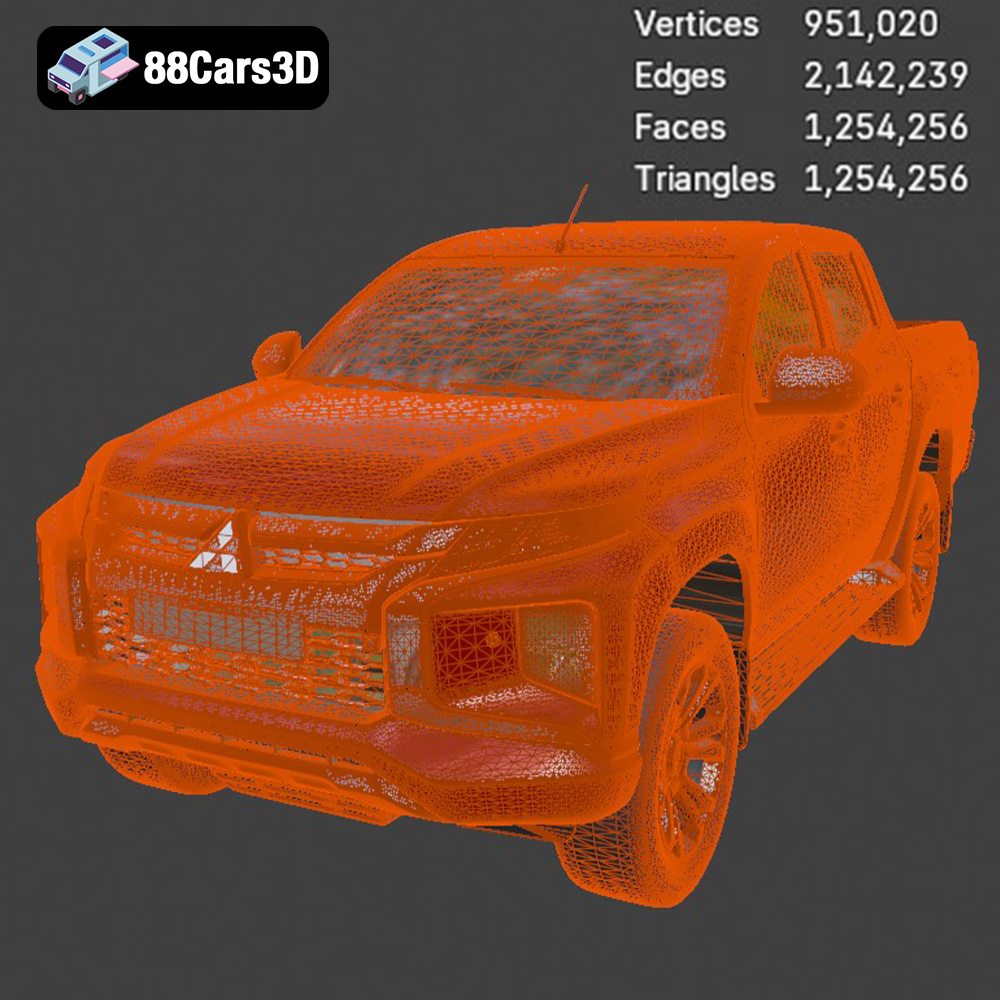
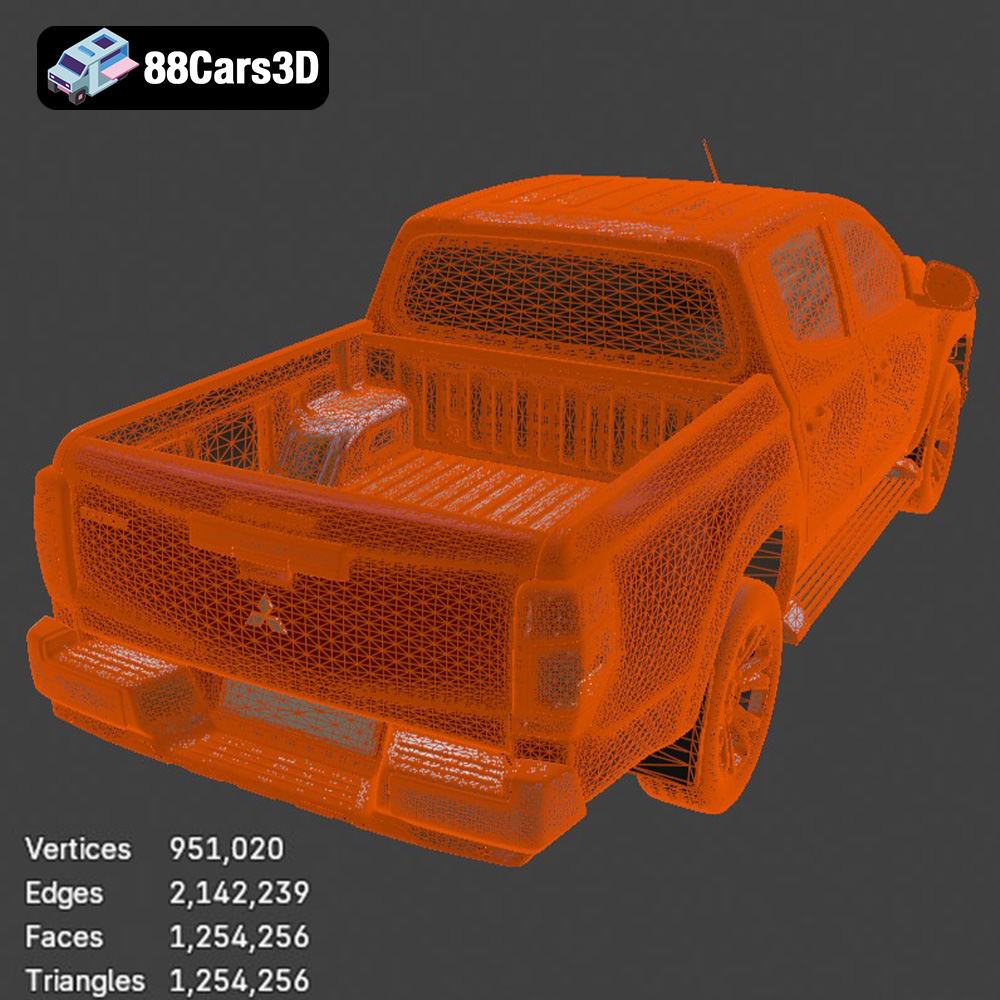
One of the most significant challenges in 3D car modeling is striking the perfect balance between visual fidelity and performance, especially for real-time applications. The Mitsubishi L200 Crew Cab 2019 3D Model achieves this with an optimized topology of approximately 550,000 triangles. This poly count is carefully chosen:
Beyond poly count, efficient UV mapping is critical for applying textures without distortion, and proper pivot setups for animated components (wheels, steering, suspension) ensure that the model behaves correctly in interactive environments.
The true value of a well-crafted 3D car model, such as the Mitsubishi L200 Crew Cab 2019 from 88cars3d.com, lies in its seamless integration into diverse professional workflows. Its versatility makes it an indispensable asset across multiple industries.
For game developers, the quality and optimization of vehicle assets are paramount. The L200 model, with its game-ready topology and accurate physics-ready components, is an ideal candidate for a variety of game genres.
Augmented Reality (AR) and Virtual Reality (VR) applications benefit immensely from optimized 3D models that can render efficiently on various devices. The L200 model is well-suited for:
For rendering artists and visualization specialists, the goal is often photorealism. The L200 model’s high visual fidelity allows for stunning output in various contexts.
While digital rendering and real-time applications are primary use cases, the versatility of a high-quality 3D model extends into the physical realm through 3D printing. The Mitsubishi L200 Crew Cab 2019 3D Model is designed with this possibility in mind, offering a tangible output for hobbyists, collectors, or even professional prototyping.
The `.stl` file format, included with the L200 model, is the direct pathway to 3D printing. This format strips away textures and animations, focusing purely on the geometric surface, which is precisely what 3D printers need. Converting the digital representation into a physical object involves several critical steps and considerations:
A raw 3D print is just the beginning. To achieve a professional, display-worthy replica of the L200, post-processing is essential:
The ability of a 3D car model to perform optimally in real-time environments, such as video games or interactive simulations, is a hallmark of its quality. The Mitsubishi L200 Crew Cab 2019 3D Model from 88cars3d.com is engineered with this demanding requirement in mind, balancing visual richness with computational efficiency.
As mentioned, the ~550,000 triangle count for the L200 model is not arbitrary. It represents a careful calculation to provide substantial detail without overwhelming a game engine’s rendering pipeline. This “game-ready” optimization is crucial because:
Beyond geometry, the setup of materials and textures is vital for real-time rendering. The L200 model would typically employ Physically Based Rendering (PBR) materials, which accurately simulate how light interacts with surfaces in the real world. This involves:
For any vehicle in a real-time environment, interactivity is key. The L200 model comes with practical advantages for animation and physics:
The inherent flexibility of a professional 3D car model like the Mitsubishi L200 Crew Cab 2019 extends far beyond its initial mesh and textures. Customization and advanced visualization techniques unlock its full potential, allowing artists and designers to tailor the model to specific project requirements and creative visions.
The ability to easily modify key visual attributes of the L200 model is a significant advantage:
Leveraging the L200 model in powerful rendering engines opens up a world of advanced visualization possibilities:
The adaptability of this 3D model means it can serve as a foundational asset that evolves with project needs, consistently delivering high-quality results across various creative endeavors. This level of flexibility is precisely what makes models available on platforms like 88cars3d.com so valuable to professionals.
The digital landscape continues to evolve at an astonishing pace, and at its heart lies the indispensable need for high-quality 3D assets. From the immersive worlds of game development and the groundbreaking experiences of AR/VR to the precision of architectural visualization and the allure of professional automotive rendering, expertly crafted 3D models are the backbone of modern digital creation. They are not merely visual elements but complex, optimized data packages designed to perform flawlessly across a spectrum of platforms and applications.
The Mitsubishi L200 Crew Cab 2019 3D Model stands as a prime example of this technical excellence. Its meticulous detailing, optimized topology, and comprehensive file format support (including .blend, .fbx, .obj, .glb, .stl, .ply, .unreal, and .max) empower professionals to integrate a robust, realistic, and highly versatile vehicle into their projects with confidence. Whether it’s driving through a virtual off-road course, gracing an interactive showroom, or being meticulously 3D printed for a collector’s display, this model demonstrates the profound impact of well-engineered 3D assets.
For those seeking to elevate their projects with top-tier 3D car models, exploring resources like 88cars3d.com offers access to a curated selection of assets that meet the rigorous demands of professional production. Investing in such quality models not only streamlines workflows but also ensures that your creative vision is realized with unparalleled fidelity and performance. As digital environments become ever more sophisticated, the role of precisely engineered 3D car models will only continue to grow, driving innovation across industries and pushing the boundaries of what’s possible in the virtual world.
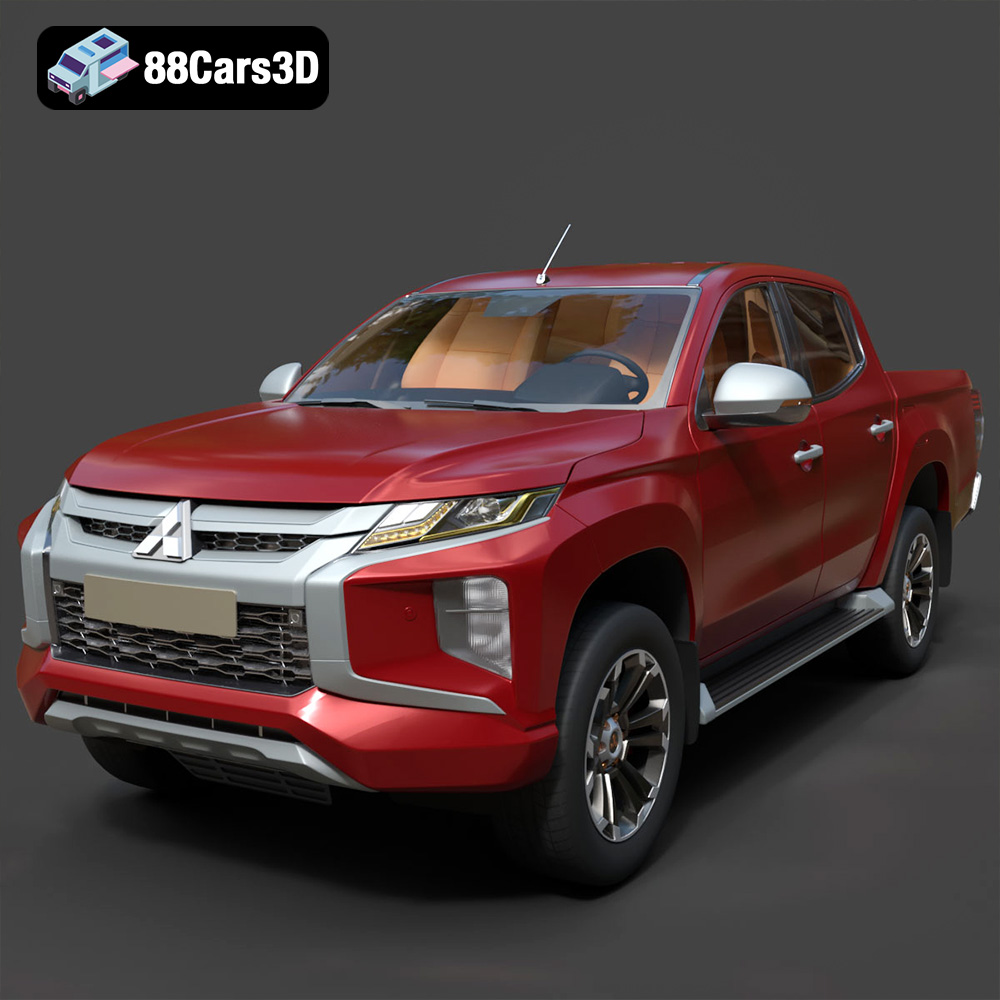
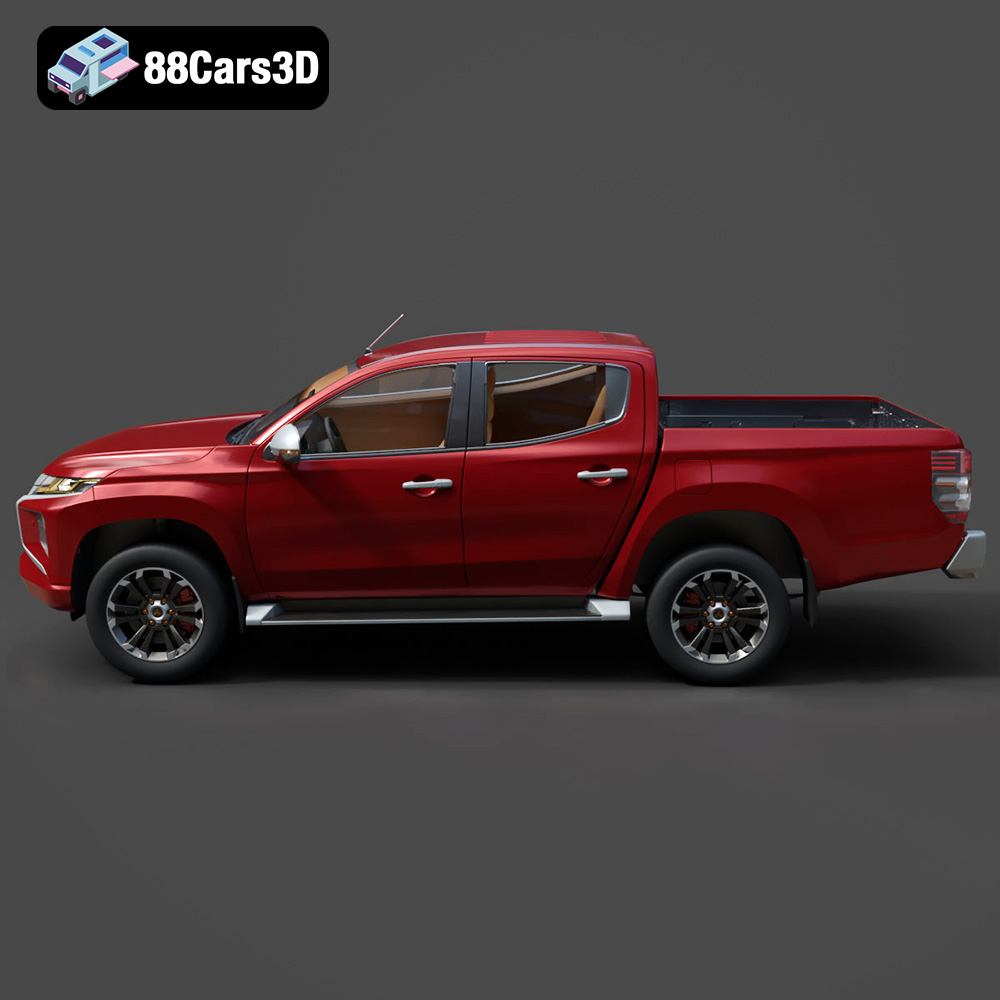
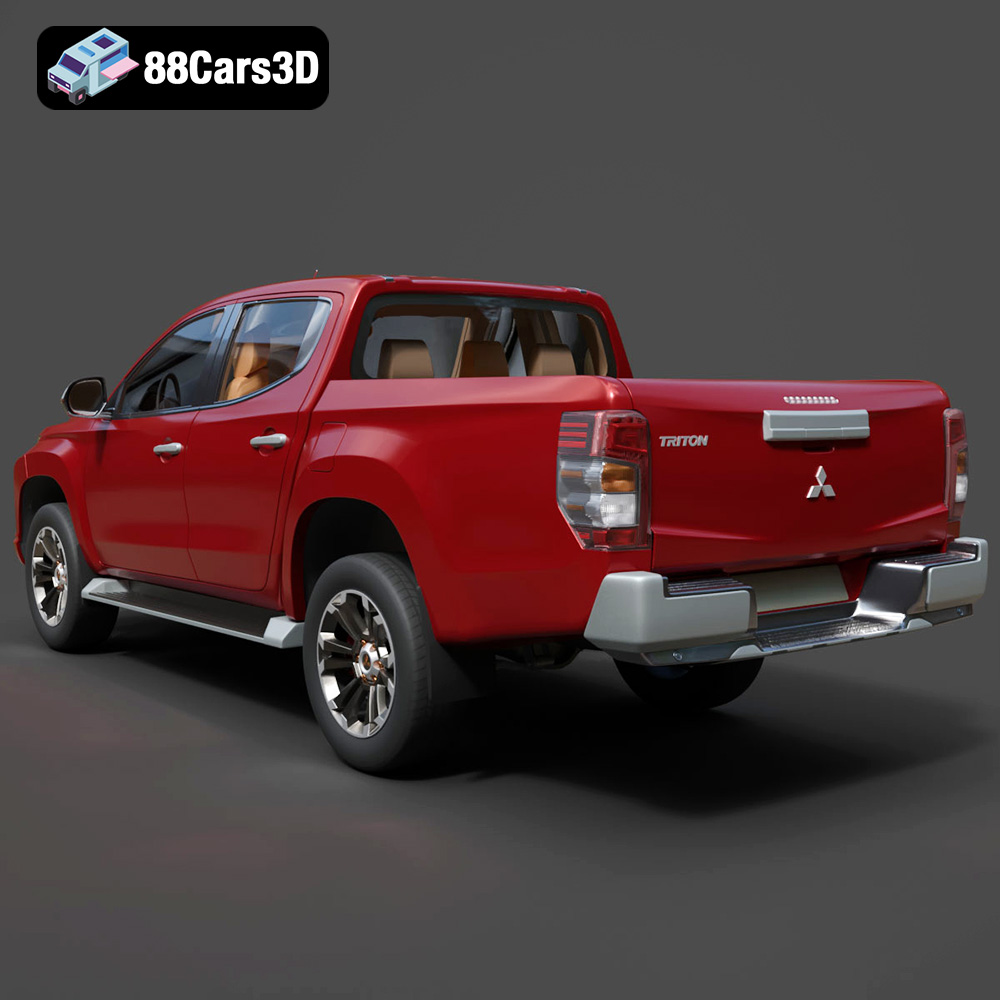
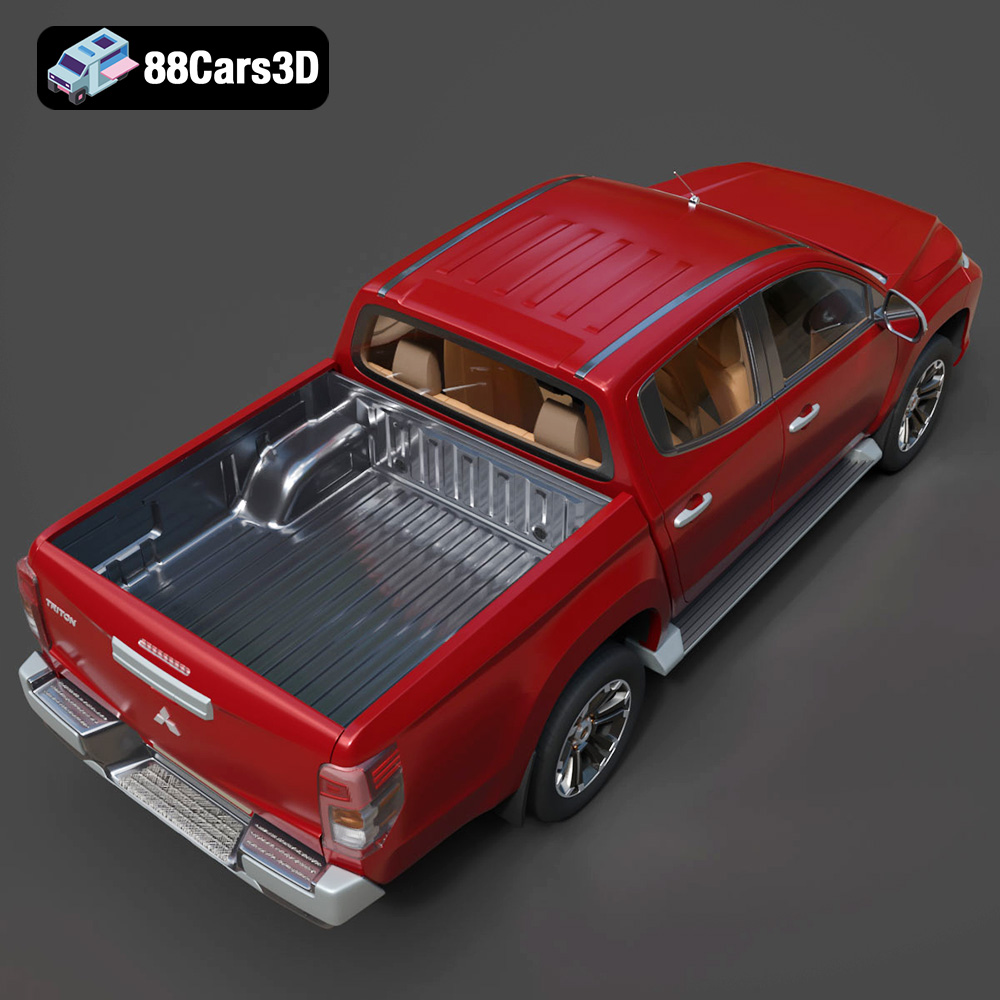
The 2019 Mitsubishi L200 Crew Cab (also known as the Triton) is a masterclass in rugged utility and modern design. Known for its robust “Dynamic Shield” front fascia, aggressive styling, and exceptional 4WD capabilities, this pickup truck bridges the gap between commercial workhorse and comfortable family vehicle. Key visual elements include the distinctive front grille, striking LED headlight arrays, sculpted side panels, and a durable cargo bed designed to handle any load.
This high-quality 3D model strikes the perfect balance between high-end visual fidelity and game-ready optimization. Featuring an optimized topology with approximately 550,000 triangles, it ensures smooth performance in real-time applications without sacrificing intricate details. It is meticulously crafted to serve primary use cases like game development, immersive AR/VR experiences, high-end animation, and architectural or automotive visualization.
$19.99
.2019
.4×4
.blend
.fbx
.glb
.max
.mitsubishi
.obj
.ply
.rendering
.stl
.unreal
car-3d-model
crew-cab
game asset
game-ready
l200
low-poly
off-road
optimized
pickup-truck
utility-vehicle
VR/AR