Get 20% OFF All Premium 3D & STL Models!

In the vibrant world of 3D visualization, where photorealism and immersive experiences reign supreme, the demand for exceptionally crafted digital assets is constant. Designers, architects, game developers, and animators all seek models that not only look authentic but also integrate seamlessly into complex production pipelines. Beyond just aesthetics, the underlying technical quality of a 3D model dictates its utility and longevity across diverse applications.
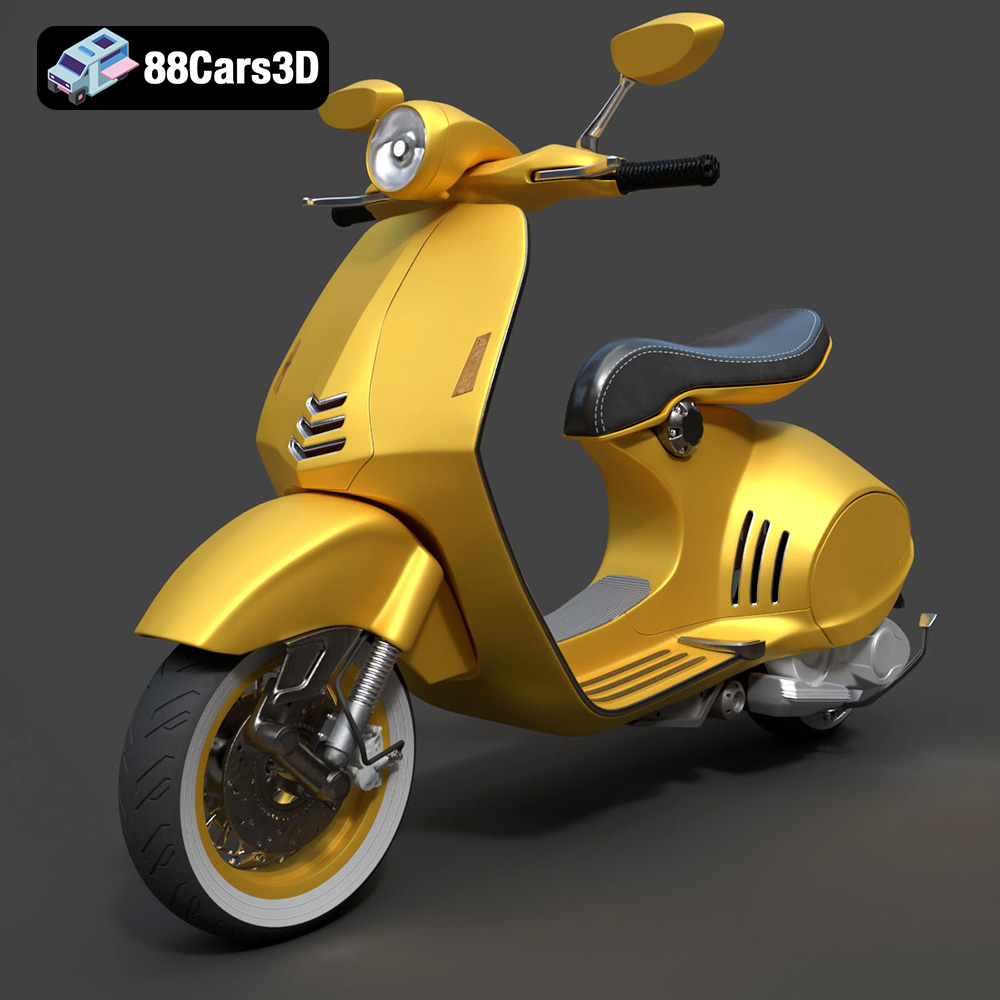
Few vehicles embody timeless design and cultural significance quite like the Vespa. Its sleek lines, distinctive silhouette, and undeniable charm have made it an icon of style and freedom. Translating such an iconic vehicle into a digital asset requires a meticulous approach, ensuring that every curve and detail is faithfully preserved. This is precisely where professional-grade 3D car models, such as the Vespa 946 3D Model available on 88cars3d.com, prove invaluable. These aren’t just mere approximations; they are digital sculptures built for precision, performance, and unparalleled visual fidelity, designed to elevate any project from a simple render to a compelling interactive experience.
For any visual project, be it a cinematic animation, a cutting-edge video game, or an architectural walkthrough, the vehicles present in a scene significantly contribute to its realism and aesthetic impact. An iconic vehicle like the Vespa 946 adds immediate character and a touch of sophisticated realism, drawing viewers in with its recognizable elegance. The challenge lies in capturing this essence digitally without compromising on technical quality.
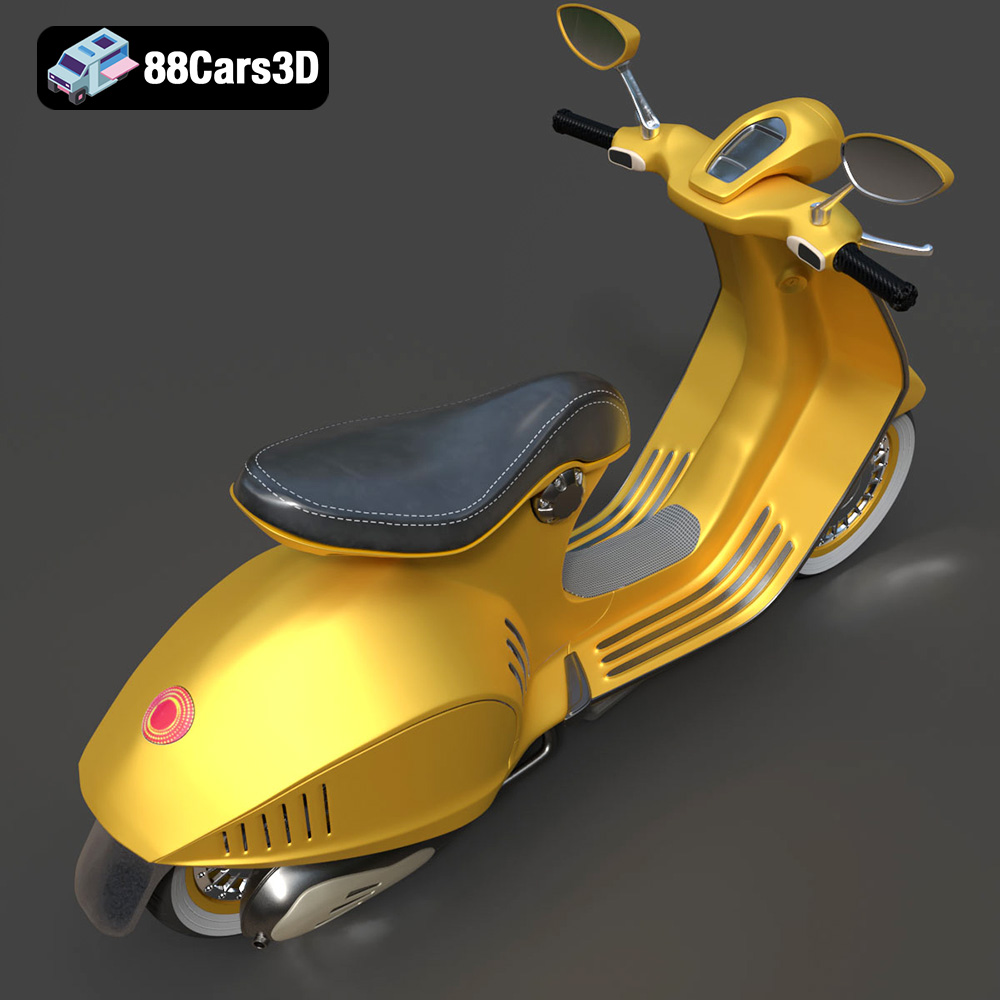
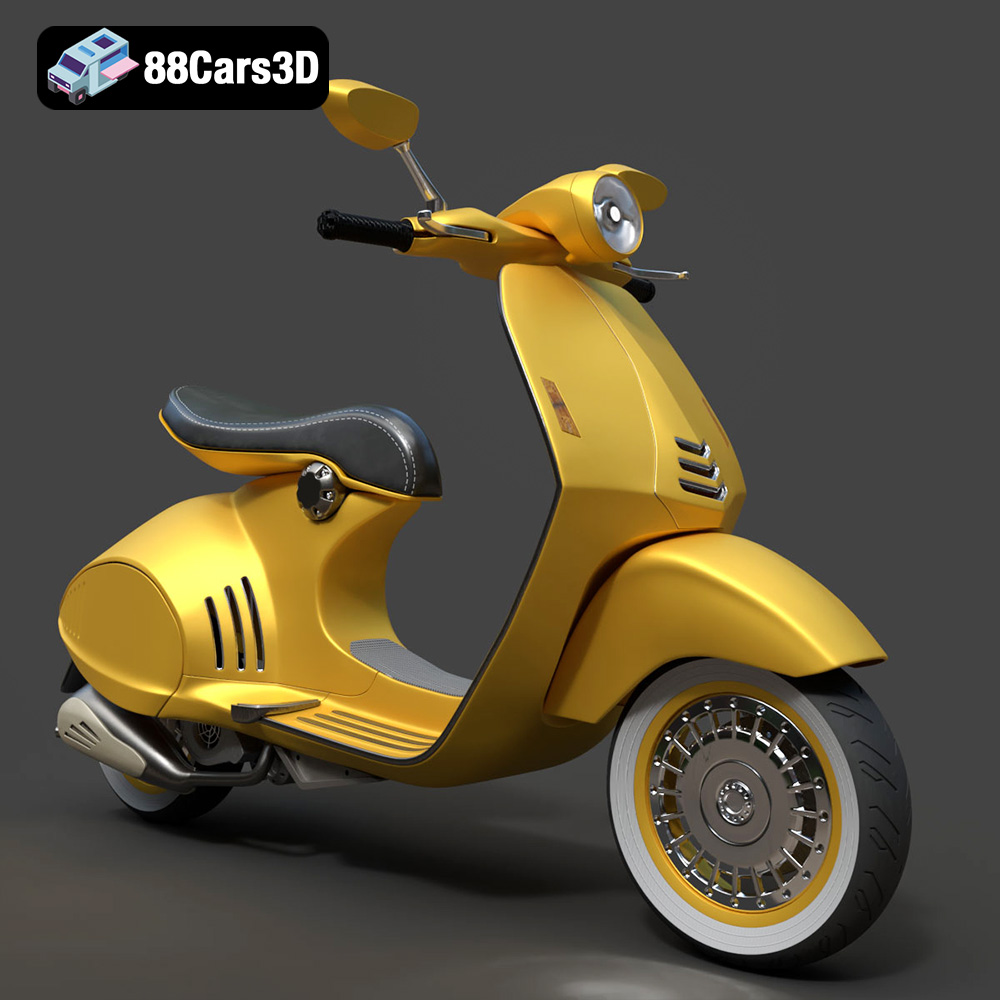
Authenticity in 3D modeling goes beyond just surface appearance; it delves into the precise replication of proportions, material responses, and subtle design nuances. A high-quality 3D model like the Vespa 946 ensures that when rendered under various lighting conditions, it reacts as its real-world counterpart would. This includes accurate reflections on polished chrome, the subtle sheen of paint, and the texture of the seat. For automotive rendering specialists, these details are paramount for producing convincing visuals that clients expect. The meticulous craftsmanship of the Vespa 946 3D model means it’s ready for close-up studio renders, showcasing its elegant form with breathtaking realism, making it a stellar example of why investing in premium 3D car models is a smart choice.
Precision in 3D modeling ensures versatility. A model built with clean geometry and optimal polygon counts, like the Vespa 946, can be seamlessly integrated into a myriad of applications without performance bottlenecks or visual artifacts. For game developers, this means a smooth-running asset that looks fantastic in-engine. For AR/VR creators, it translates to an immersive, lag-free experience. Architects use such models to populate their scenes with realistic vehicles, enhancing the perceived reality of their designs. This adaptability stems directly from the underlying quality of the model – its topology, UV mapping, and material setup are all optimized for professional use, ensuring it can be subdivided for extreme close-ups or optimized for real-time environments.
One of the most critical aspects of working with 3D car models and indeed any 3D asset, is understanding the various file formats and their specific applications. Each format serves a distinct purpose, offering different levels of compatibility, data integrity, and optimization for particular workflows. The Vespa 946 3D Model from 88cars3d.com thoughtfully includes a comprehensive suite of formats, ensuring maximum flexibility for any professional project.
The .blend format is native to Blender, a powerful open-source 3D creation suite. When you receive a .blend file, you’re getting a complete Blender scene, often including not just the model, but also its materials, textures, lighting setups, camera positions, and even animation data. This format is ideal for users deeply embedded in the Blender ecosystem, providing full editability. Artists can easily modify the mesh, adjust materials, re-rig, or extend the scene without any data loss or conversion issues. For the Vespa 946 3D model, the .blend file allows for unparalleled customization, from tweaking the metallic paint shader to adjusting studio lighting for specific render moods.
.fbx (Filmbox) is arguably the most widely adopted interchange format in the 3D industry. Developed by Autodesk, it’s designed to transfer a wide range of data, including geometry, materials, textures, animations, and skeletal data, between different 3D software applications and game engines. It is the go-to format for importing assets into Unreal Engine, Unity, and other real-time pipelines due to its robust support for complex scene data. The Vespa 946’s .fbx file ensures that its clean geometry, UVs, and PBR materials translate accurately, making it game-engine ready straight out of the box, a crucial feature for any serious game asset.
The .obj (Wavefront Object) format is a universal standard, known for its widespread compatibility across virtually all 3D software. It primarily stores geometric data (vertices, normals, texture coordinates, and faces) and can reference external material files (.mtl). While simpler than .fbx, it’s incredibly stable and reliable for transferring mesh data. For users needing a basic, clean mesh for sculpting, retopology, or import into less common software, the .obj version of the Vespa 946 offers a straightforward solution, ensuring cross-software interoperability without complex dependencies.
.glb (GL Transmission Format Binary) is a modern, optimized format specifically designed for efficient transmission and loading of 3D scenes and models in web and AR/VR applications. It’s a binary version of glTF, embedding all necessary assets (textures, animations) into a single file, which significantly reduces load times and simplifies deployment. This makes the Vespa 946 .glb model perfect for showcasing on product websites, integrating into augmented reality apps, or use in virtual reality environments, offering a lightweight yet visually rich experience.
.stl (Stereolithography) is the standard file format for 3D printing and rapid prototyping. It describes only the surface geometry of a 3D object using a mesh of triangles, without any color or texture information. For designers and engineers who wish to bring the digital Vespa 946 into the physical world – perhaps for scale models, design verification, or custom accessories – the .stl format provides the precise polygonal data needed by 3D printers. The quality of the model’s underlying geometry is critical here, as faulty meshes can lead to printing errors.
The .ply (Polygon File Format) is another popular format for storing 3D data, particularly useful for scanned data or precise mesh representations. It can store various properties for each vertex and face, including color, normals, and texture coordinates. While less common for general asset transfer than .fbx or .obj, it’s highly valued in fields requiring exact geometric data, such as scientific visualization, CAD, or analysis. The .ply version of the Vespa 946 provides a robust, detailed polygon mesh suitable for specific, high-fidelity visualization or analytical tasks.
The inclusion of an .unreal file (often a .uasset or a pre-configured export from an Unreal project) signifies that the Vespa 946 3D model is specifically tailored for Unreal Engine. This often means the asset has been properly scaled, had its materials set up with Unreal’s PBR workflow, and possibly includes LODs (Levels of Detail) or collision meshes, minimizing the setup time for developers. This level of pre-configuration is a huge time-saver for anyone working within the Unreal ecosystem, guaranteeing optimal performance and visual quality within the engine.
Finally, the .max format is the native file type for Autodesk 3ds Max, one of the most widely used 3D modeling, animation, and rendering software packages. Similar to .blend, a .max file contains the complete scene, including geometry, materials, textures, lighting, cameras, and animation. For 3ds Max users, this provides full creative control and access to all the original modeling data, modifiers, and rendering settings. The .max version of the Vespa 946 3D model is ideal for high-end automotive rendering, complex animations, or integrating into large architectural visualization projects where 3ds Max is the primary tool.
Behind the stunning visuals of any high-quality 3D car model lies a foundation of meticulous technical work. The Vespa 946 3D Model exemplifies this, designed not just to look good, but to perform flawlessly across demanding professional pipelines. This attention to detail is what separates generic models from production-ready assets.
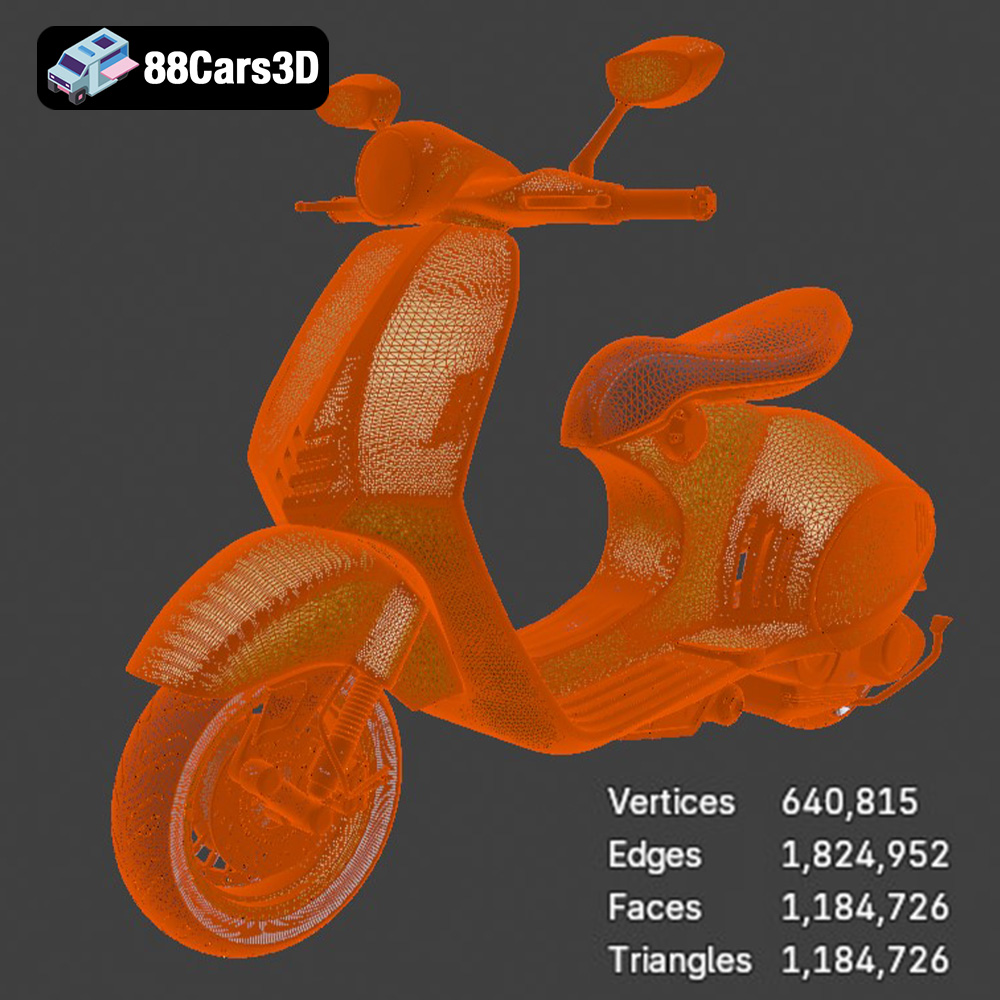
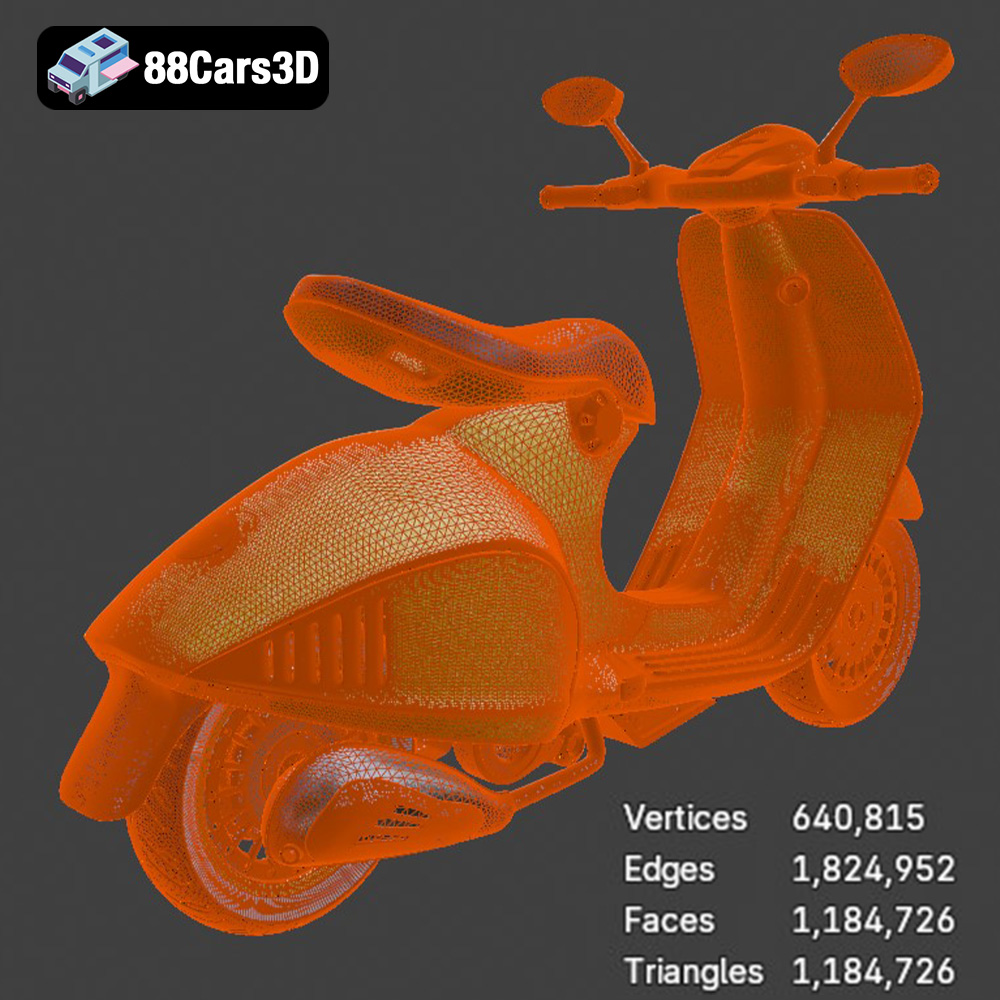
Clean topology is the backbone of any professional 3D model. It refers to the arrangement of polygons and edges that make up the mesh. For the Vespa 946, this means a quad-based mesh, ensuring smooth subdivisions and deformations without unsightly pinching or artifacts. The model is built with optimized polygon counts, striking a crucial balance: enough detail for close-up renders without being excessively heavy, which can bog down real-time engines or increase render times. This optimization is crucial for game assets, where performance is paramount, but also benefits high-end cinematic projects by reducing computational overhead for simulations or complex scene setups. The model’s professional-grade topology guarantees that it will hold up under scrutiny, whether viewed from a distance or in an extreme close-up.
Beyond geometry, the visual fidelity of a 3D model heavily relies on its materials and textures. The Vespa 946 3D model features realistic materials that accurately replicate the polished metal, vibrant paint, and various textures of its real-world counterpart. This is achieved through well-crafted PBR (Physically Based Rendering) materials, which respond correctly to light, providing authentic reflections, specularity, and roughness. Complementing this is precise UV unwrapping. Every surface of the Vespa 946 has been carefully unwrapped, ensuring that textures can be applied without stretching or distortion. This not only makes the model visually appealing but also allows artists to easily retexture or customize it, further enhancing its versatility for various project requirements.
A truly professional asset is built with scalability in mind. The Vespa 946 3D model is designed to integrate seamlessly into diverse scenes, from vast open worlds in games to intricate architectural visualizations. Its optimized structure allows for easy scaling and placement, maintaining visual integrity regardless of its size relative to other scene elements. Furthermore, the model’s clean hierarchy and naming conventions make it straightforward to manipulate within any 3D software. This ease of integration saves significant time for artists and developers, allowing them to focus on creative aspects rather than wrestling with complex or poorly structured models. This level of thoughtful engineering is a hallmark of the premium 3D car models you’ll find at 88cars3d.com.
The true value of a high-quality 3D model like the Vespa 946 lies in its ability to enhance and streamline a wide array of professional workflows. Its versatility makes it a go-to asset for different industries, proving that a well-crafted digital asset is an investment in efficiency and visual excellence.
In architectural visualization, vehicles are often used to add scale, context, and life to static building renders. The Vespa 946 3D Model, with its elegant design, is perfect for populating urban street scenes, parked outside a modern cafe, or positioned in a stylish garage render. Its realism elevates the overall quality of the visualization, making the scene feel more alive and believable. Similarly, for product showcases, particularly those in the luxury or design sector, the Vespa 946 can serve as a captivating focal point or an aesthetic accompaniment. Imagine a new smartphone or watch being showcased alongside the iconic scooter, instantly lending an air of sophistication and timeless style to the presentation. Its high fidelity ensures it holds up perfectly under close-up shots, which are common in product advertising.
For game developers, integrating realistic 3D car models as game assets is crucial for creating immersive open-world environments or detailed racing simulations. The Vespa 946 3D model, provided in game-engine ready formats like .fbx and .unreal, is optimized for real-time performance. Its clean geometry and efficient UVs mean it can be imported into Unreal Engine or Unity with minimal fuss, maintaining high visual quality without excessive draw calls or polygon counts. Developers can utilize its detailed structure for dynamic environments, character interactions, or even as a drivable asset in a game, enriching the player’s experience with a touch of classic Italian charm. This ready-to-use nature significantly speeds up development cycles, allowing teams to focus on gameplay mechanics rather than asset creation from scratch.
In the realms of animation, film, and virtual production, the demand for photorealistic 3D models is arguably at its highest. The Vespa 946 3D model is perfectly suited for cinematic sequences, adding background realism or even taking center stage in animated narratives. Its meticulous detailing and clean topology facilitate smooth animation, allowing animators to rig and articulate various components if needed. For virtual production, where real-time rendering is combined with physical sets, having an accurate 3D model that seamlessly integrates into the virtual world is indispensable. The ability to render the Vespa 946 with high-fidelity materials and accurate reflections within a physically correct lighting environment makes it an ideal choice for VFX artists and filmmakers striving for unparalleled realism.
The utility of a meticulously crafted 3D model extends far beyond static renders or even dynamic animations. A truly versatile asset, like the Vespa 946 3D model from 88cars3d.com, opens doors to innovative applications that are rapidly becoming industry standards, showcasing the multifaceted value of high-quality 3D car models.
Augmented Reality (AR) and Virtual Reality (VR) are transforming how we interact with digital content, and high-quality 3D assets are at the core of these immersive experiences. The Vespa 946 3D model, especially in its optimized .glb format, is perfectly poised for AR/VR applications. Imagine overlaying the Vespa 946 onto a real-world environment through an AR app on your phone, allowing prospective buyers to visualize the scooter in their driveway, or providing an interactive virtual showroom experience where users can explore the model from every angle. Its efficient geometry and realistic materials ensure a smooth, compelling experience, free from visual glitches or performance lags. This makes the model an invaluable tool for interactive marketing, product visualization, and even training simulations in a virtual space.
The bridge between the digital and physical world is increasingly crossed through 3D printing. With a clean and watertight mesh, the Vespa 946 3D model provided in the .stl format can be brought to life as a physical object. This capability is incredibly useful for a variety of purposes: creating scale models for enthusiasts, producing prototypes for custom accessories, or even generating miniature replicas for merchandise. Designers can use the .stl file to verify proportions, test design iterations, or simply appreciate the tangible form of this iconic scooter. The precision embedded in the digital model translates directly to the accuracy of the physical print, highlighting the importance of a well-constructed mesh from the outset.
Beyond commercial applications, high-fidelity 3D car models serve as powerful educational and simulation tools. For automotive design students, examining the Vespa 946 3D model in software like Blender or 3ds Max offers an unparalleled opportunity to study its form, construction, and design principles. They can dissect the model, analyze its topology, and understand how complex curves are translated into digital geometry. Furthermore, in simulation environments, these models can be used for virtual training, testing ergonomics, or even developing autonomous vehicle algorithms in a controlled digital space. The Vespa 946, with its detailed structure and accurate proportions, provides an excellent foundation for such academic and research-oriented applications, underscoring its broad utility.
In an industry driven by visual excellence and technical efficiency, the importance of high-quality 3D car models cannot be overstated. Assets like the Vespa 946 3D Model stand as a testament to meticulous craftsmanship, offering unparalleled realism, versatility, and ease of integration into any professional pipeline. From the critical understanding of file formats like .blend, .fbx, and .max, to the intricacies of clean topology and PBR materials, every aspect is engineered for optimal performance across architectural visualization, game development, film, AR/VR, and even 3D printing.
Choosing a professionally crafted 3D model saves invaluable time and resources, allowing creators to focus on their artistic vision and project goals rather than battling with substandard assets. The Vespa 946 3D model is a prime example of an asset that not only captures the iconic elegance of its real-world counterpart but also provides the robust technical foundation required for today’s demanding digital productions. For those seeking to elevate their projects with premium 3D models, exploring the extensive collection of high-quality assets at 88cars3d.com is a definitive step towards achieving stunning and efficient results.
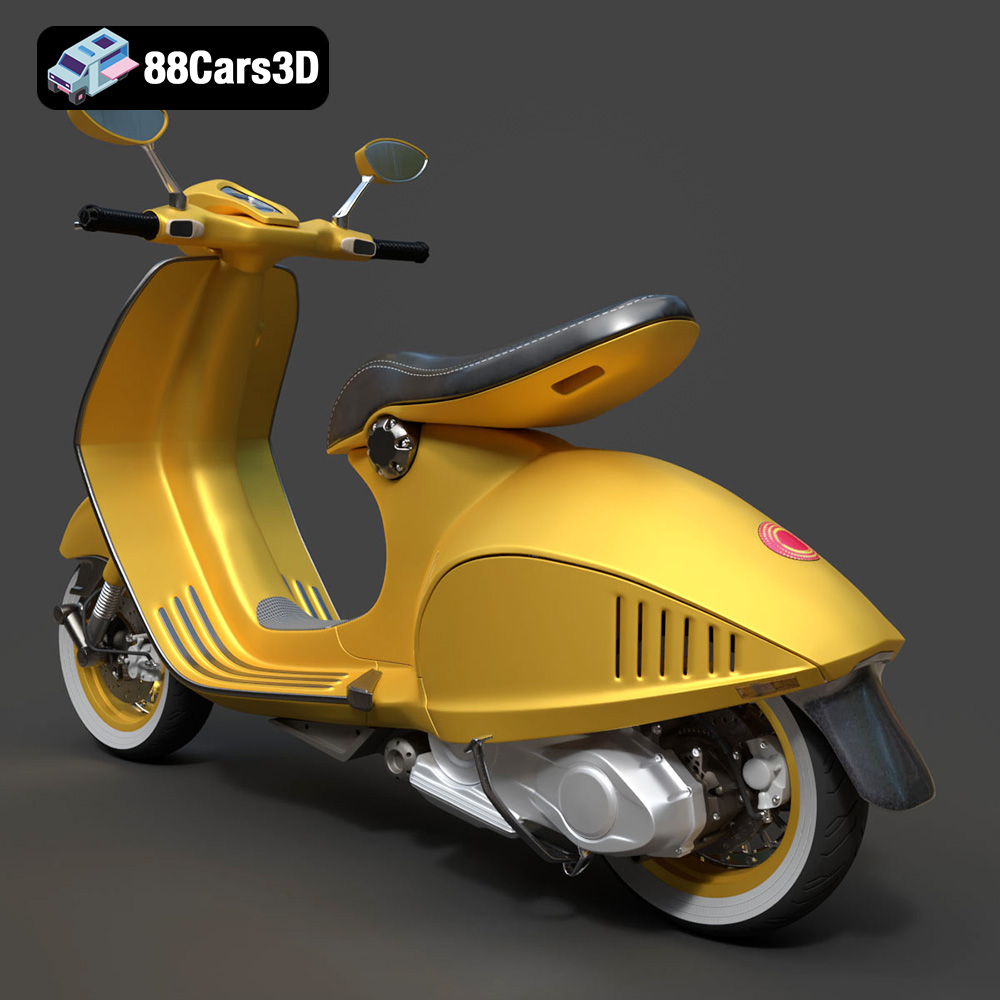
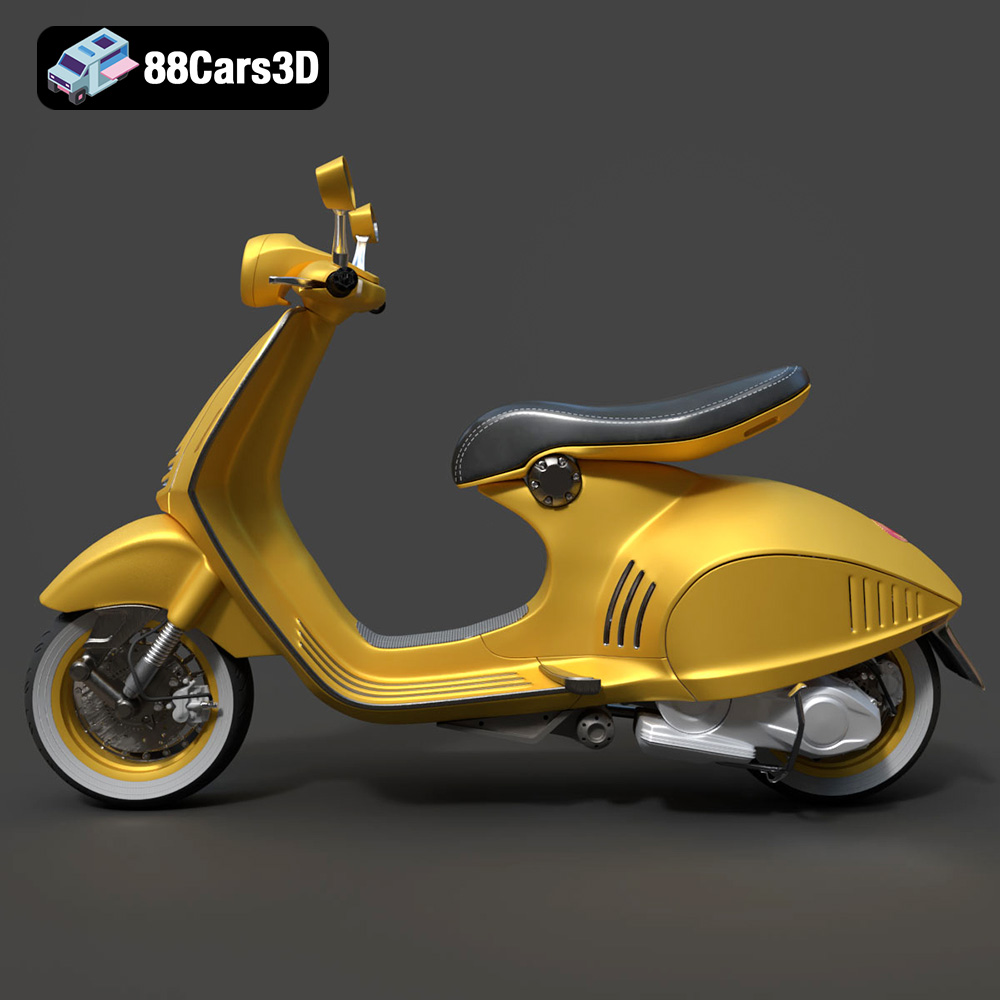
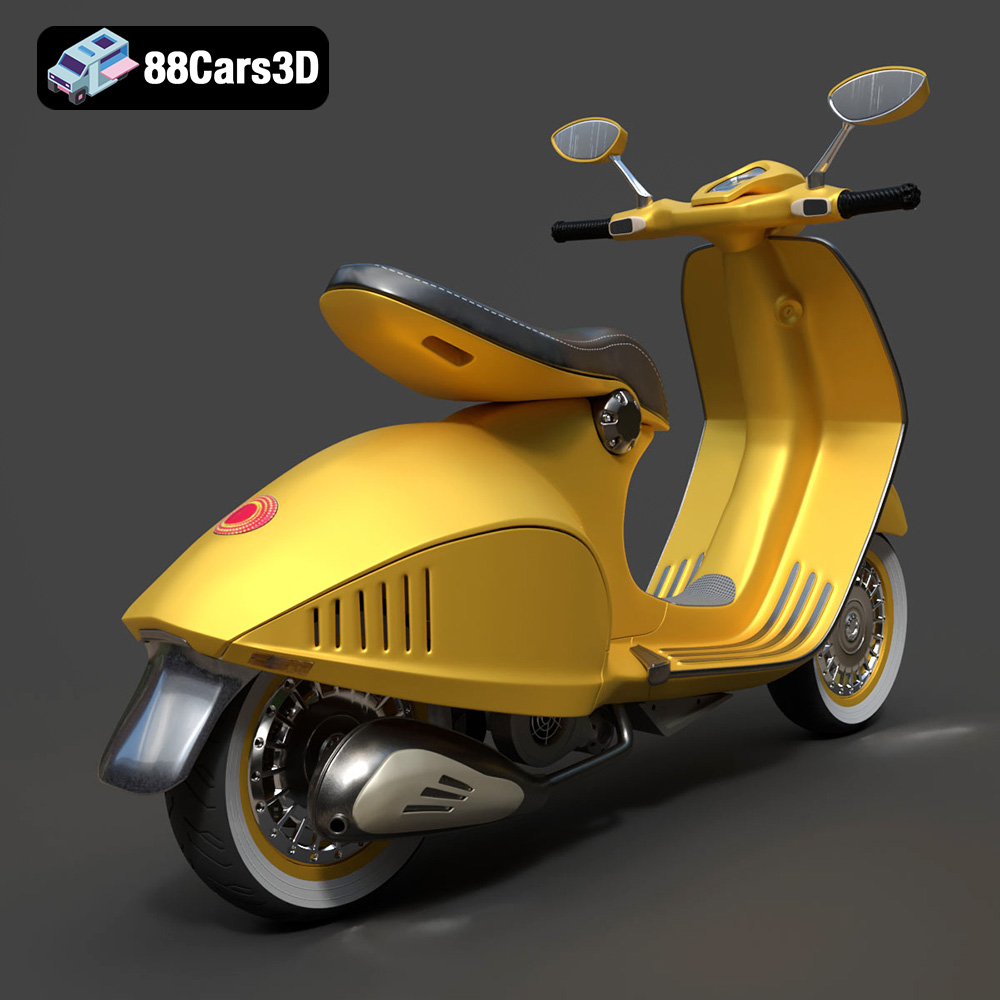
Experience the iconic elegance of the Vespa 946 with this meticulously crafted 3D model. Designed to replicate the authentic curves and refined aesthetics of the renowned scooter, this asset provides true-to-life realism for professional projects. Whether for close-up studio renders or dynamic environments, every detail from the distinct seating to the polished chassis has been modeled with precision.
Built with clean geometry and optimized polygon counts, this model ensures seamless integration into various pipelines. It features realistic materials, accurate texturing, and a highly detailed structure, making it a perfect choice for demanding digital creations. The professional-grade topology guarantees smooth subdivisions and optimal performance.
This Vespa 946 3D model is highly versatile and ideal for a wide range of applications, including game development, architectural visualization, AR/VR experiences, animation, and realistic rendering. It provides creators with a ready-to-use asset that elevates the visual fidelity of any scene.
Included file formats:
$19.99
.946
.arvr
.blend
.car3dmodel
.fbx
.gameasset
.glb
.max
.motorcycle
.obj
.ply
.rendering
.scooter
.simulation
.stl
.unreal
.vespa