In the dynamic world of 3D visualization, the demand for high-fidelity, meticulously crafted assets is ever-growing. From cinematic automotive advertisements to immersive virtual reality experiences and hyper-realistic architectural renderings, the quality of a 3D model can significantly impact the final output and the efficiency of a project. At the heart of this demand lies the need for models that are not only visually accurate but also technically robust and versatile.
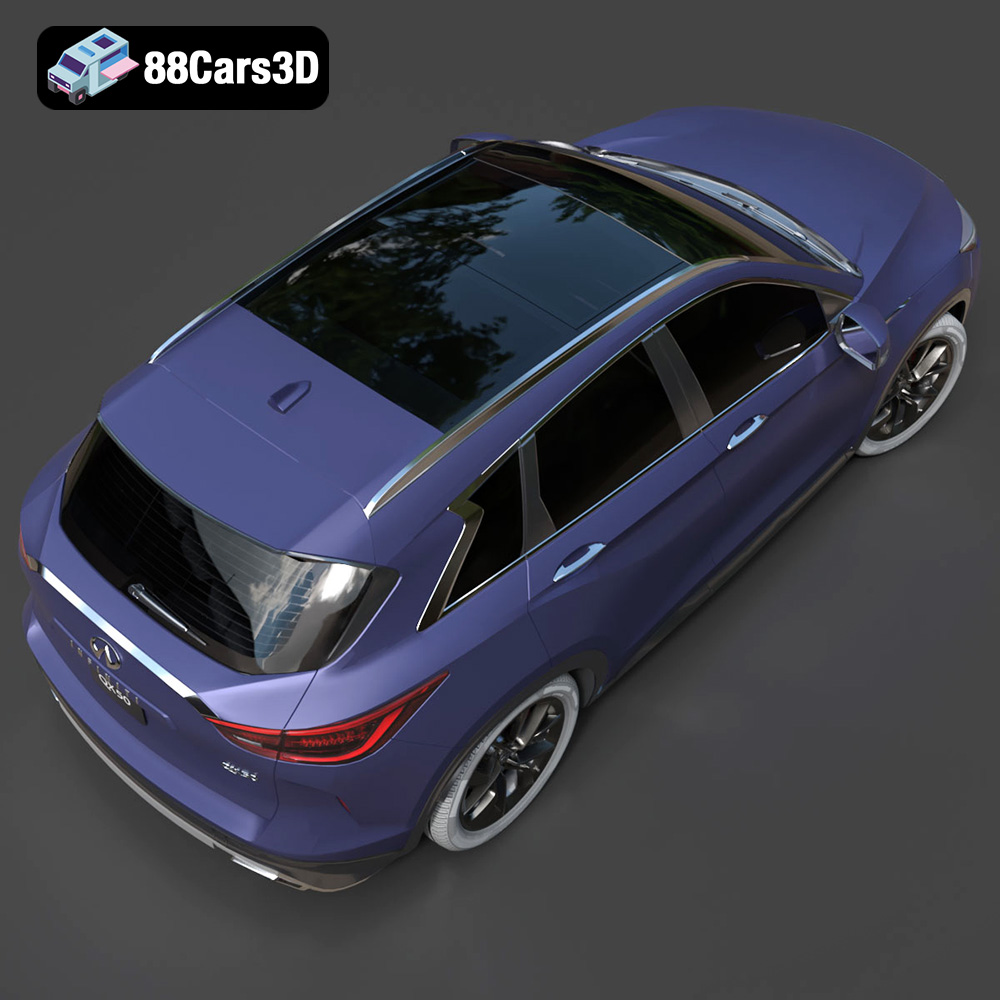
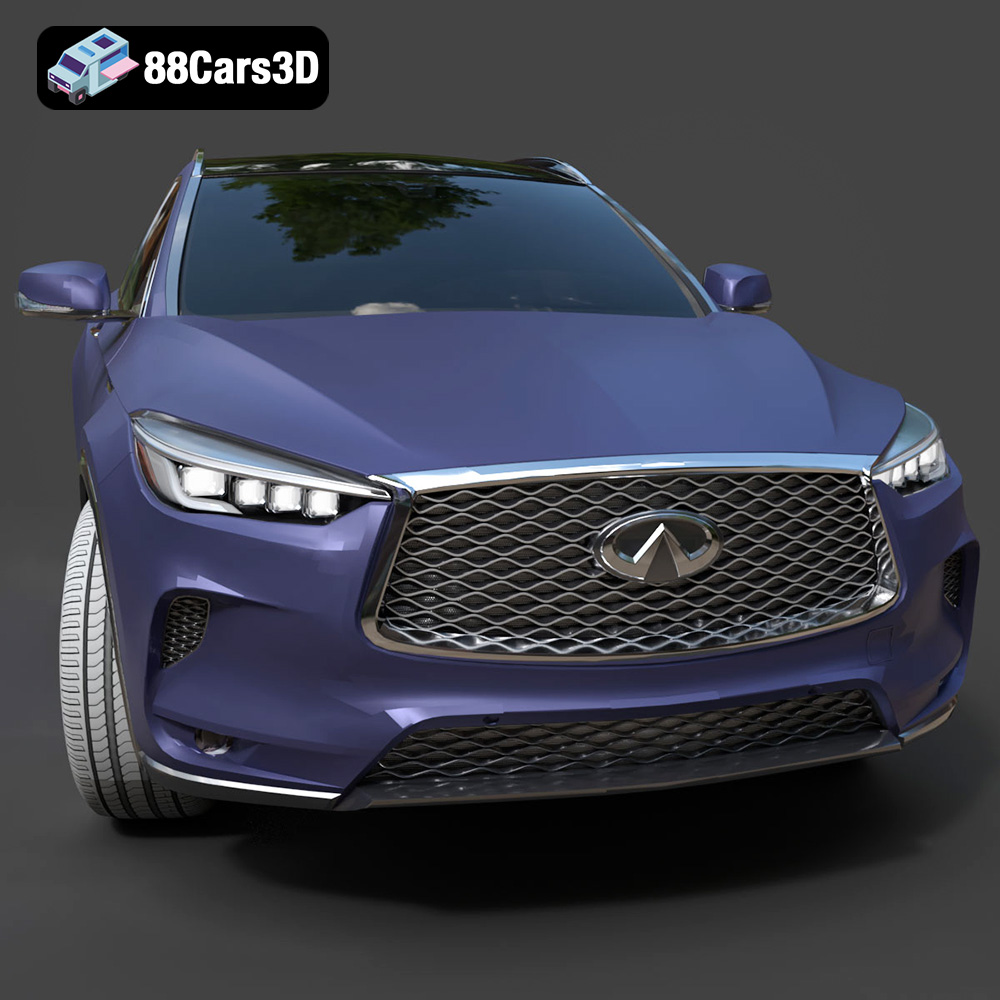
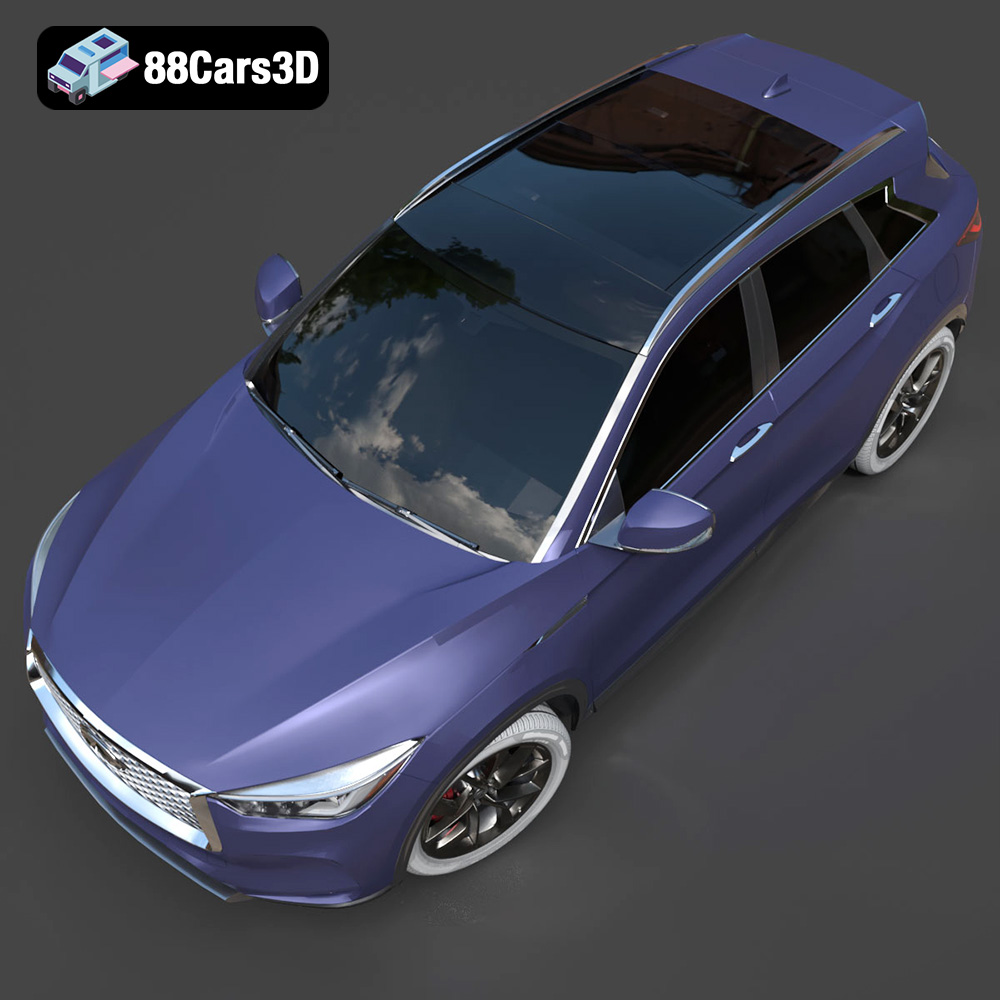
For professionals seeking a benchmark in digital automotive design, the Infiniti QX50 2019 3D Model stands out as a prime example of excellence. This premium digital asset, available on 88cars3d.com, encapsulates the sophisticated design and luxurious aesthetics of the renowned crossover SUV with exceptional realism and precision. It’s more than just a visual replica; it’s a foundation for complex simulations, engaging game environments, and stunning visual effects, built to meet the most stringent industry standards.
This comprehensive guide delves into the technical intricacies of utilizing high-quality 3D car models, exploring essential file formats, advanced rendering workflows, game development integration, and emerging applications like AR/VR and 3D printing. We’ll illustrate how a meticulously crafted asset, such as the Infiniti QX50 2019 3D Model, becomes an indispensable tool for designers, artists, and developers across various industries.
The Foundation of Digital Realism: Introducing the Infiniti QX50 2019 3D Model
Creating a truly convincing 3D representation of a real-world vehicle requires an acute understanding of both artistic detail and technical execution. The Infiniti QX50 2019 3D Model exemplifies this balance, providing a digital twin that goes beyond mere appearance.
Precision in Design: Capturing Automotive Aesthetics
The first impression of any vehicle, digital or physical, is its design. The Infiniti QX50 2019 is known for its elegant lines, muscular proportions, and distinctive grille. Reproducing these features in 3D demands precision at every curve and surface. This model captures those subtle nuances, ensuring that the character of the luxury crossover is preserved. From the signature double-arch grille to the crescent-cut D-pillar and the intricate headlight designs, every aesthetic detail has been painstakingly recreated. This level of accuracy is critical for branding, marketing materials, and any scenario where visual authenticity is paramount.
The Anatomy of a High-Quality 3D Model: Geometry and Topology
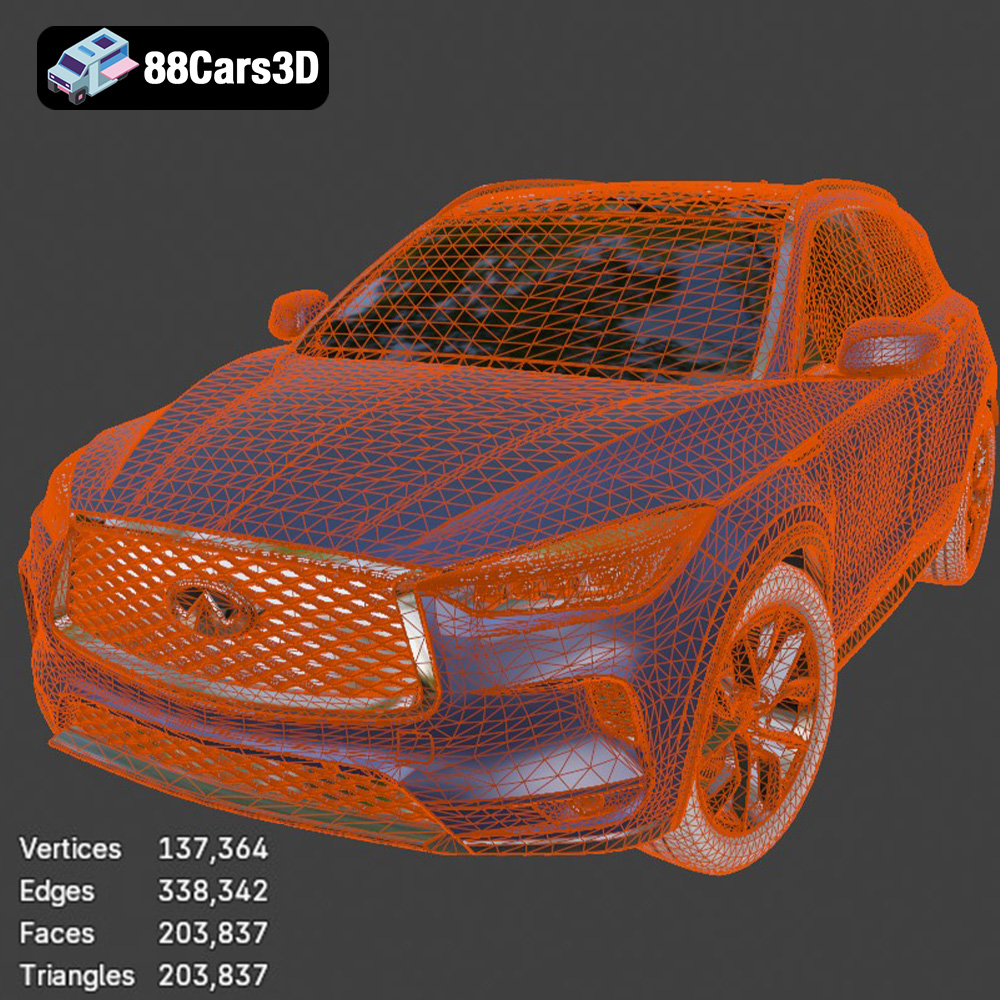
Beyond surface appearance, the underlying structure of a 3D model dictates its utility and performance. The Infiniti QX50 2019 3D Model boasts “exceptionally clean geometry” and “professional-grade topology.” What does this mean in practical terms?
- Clean Geometry: Refers to a mesh free of errors such as non-manifold edges, flipped normals, or overlapping faces. Clean geometry ensures predictable behavior during rendering, texturing, and deformation, preventing visual artifacts and simplifying workflow.
- Professional-Grade Topology: This is about the strategic arrangement of polygons (mostly quads for smoother deformation) to define the model’s surfaces. Good topology facilitates efficient UV mapping, allows for smooth subdivision surfacing, and is crucial for animation. For a car model, proper edge flow around wheel wells, door seams, and panel gaps ensures that reflections behave realistically and that the model can be animated or deformed without breaking. This attention to detail means the model is not just a static asset but a versatile tool for dynamic applications.
Realistic Materials for Outstanding Performance
The visual fidelity of a 3D model is heavily reliant on its materials. The Infiniti QX50 2019 3D Model comes equipped with “realistic materials that ensure outstanding performance under varied lighting conditions.” This implies physically-based rendering (PBR) materials, which accurately simulate how light interacts with surfaces in the real world. Metallic paints, reflective chrome accents, glass, tire rubber, and interior fabrics all need distinct material properties (color, roughness, metallicness, normal maps) to look convincing. These pre-configured materials save significant setup time for artists, allowing for immediate integration and impressive results in engines like Unreal, renderers like V-Ray or Corona, and real-time environments.
Understanding 3D Model File Formats
The digital world of 3D modeling relies on a variety of file formats, each with its strengths, limitations, and specific use cases. Understanding these formats is crucial for seamless workflow integration, especially when working with a versatile asset like the Infiniti QX50 2019 3D Model. The model thoughtfully includes a comprehensive suite of formats, ensuring compatibility across virtually any professional pipeline.
Native and Interchange Formats: .blend, .max, .fbx, .obj
These formats represent a blend of native application files and widely adopted interchange standards:
- .blend – Fully editable Blender scene with materials: This is Blender’s native file format. It’s incredibly powerful because it stores not just the mesh data but also all scene information: materials, textures, lighting, cameras, animation data, and even modifiers. For Blender users, having the Infiniti QX50 2019 in .blend format means instant access to a ready-to-render scene, complete with a lighting setup. This allows for full customization, from tweaking materials to re-sculpting parts of the mesh or integrating the car into complex animations directly within Blender. It preserves the full fidelity of the original artist’s work within its native environment.
- .max – Editable 3ds Max project for animation and rendering: Similar to .blend, the .max format is Autodesk 3ds Max’s native file. It stores all scene data, including geometry, materials, lighting, cameras, and animation. For professionals using 3ds Max for architectural visualization, product rendering, or automotive design, the .max file for the Infiniti QX50 2019 provides maximum flexibility. Users can easily integrate it into existing scenes, leverage 3ds Max’s powerful rendering capabilities (V-Ray, Corona Renderer), or create complex animations. Its editable nature means artists can make precise modifications to fit project-specific requirements without losing quality.
- .fbx – Ideal for Unreal, Unity, and real-time pipelines: Developed by Autodesk, FBX (Filmbox) is one of the most widely used 3D interchange formats, particularly for game development and real-time applications. It supports geometry, materials, textures, animation, and even rigging. The Infiniti QX50 2019 .fbx file is optimized for engines like Unreal Engine and Unity, offering a streamlined import process. Its strength lies in its ability to transfer complex scene data efficiently between different software packages while maintaining good compatibility for real-time performance. Game developers rely on .fbx for its robustness in handling animations and hierarchical object structures essential for interactive experiences.
- .obj – Universal format for cross-software compatibility: OBJ (Wavefront Object) is arguably the most universal 3D file format. It’s a simple, text-based format that primarily stores geometry (vertices, normals, UVs, faces) and can link to external material (.mtl) and texture files. While it doesn’t support animation or rigging, its widespread compatibility across virtually all 3D software makes it invaluable. For the Infiniti QX50 2019, the .obj file serves as a robust fallback for integration into any 3D application, ensuring that the core mesh data is always accessible, even if more specialized formats aren’t directly supported. It’s a workhorse for general 3D asset exchange.
Specialized Formats for Modern Applications: .glb, .stl, .ply, .unreal
These formats cater to specific, often cutting-edge, applications:
- .glb – Optimized for AR, VR, and browser-based display: GLB (GL Transmission Format Binary) is a relatively new, highly efficient, and compact format designed for transmitting 3D scenes and models. It bundles geometry, materials, textures, and animations into a single file, making it perfect for web-based 3D, augmented reality (AR), and virtual reality (VR) applications. For demonstrating the Infiniti QX50 2019 in an AR configurator on a smartphone or embedding it into a web viewer, the .glb format is ideal due to its small file size and quick loading times. It’s quickly becoming the standard for delivering immersive 3D experiences.
- .stl – Suitable for 3D printing output: STL (STereoLithography) is the de facto standard file format for 3D printing. It represents a 3D model as a series of connected triangles (a tessellation of the surface) without color, material, or texture information. When you need to physically manifest the Infiniti QX50 2019 model – perhaps for rapid prototyping, creating scale models, or even detailed collectibles – the .stl file is what your 3D printer will understand. Its simplicity makes it highly compatible with slicing software and manufacturing tools.
- .ply – Precision mesh format for CAD or analysis: PLY (Polygon File Format or Stanford Triangle Format) is a file format for storing 3D data, particularly from 3D scanners. It can store not only geometry but also properties like color, transparency, and range data. While less common for general 3D asset exchange than .obj or .fbx, it’s used in specific applications requiring precise mesh data, such as scientific visualization, CAD analysis, or when working with highly detailed point clouds and polygon meshes. For the Infiniti QX50 2019, the .ply file could be valuable for engineers or researchers needing a raw, high-precision mesh representation for simulations or structural analysis.
- .unreal – Engine-ready asset for real-time environments: This isn’t a universally recognized file extension but indicates that the asset is pre-configured specifically for Unreal Engine. It might be an asset package, a Uasset file, or a collection of files specifically structured for direct import and optimal performance within Unreal. Having the Infiniti QX50 2019 as an .unreal asset significantly reduces the setup time for game developers and real-time visualization artists, as materials, textures, and even collisions might already be configured, ensuring it’s “game-engine ready” out-of-the-box.
The provision of such a comprehensive array of formats with the Infiniti QX50 2019 3D Model underscores its versatility and value, allowing professionals to select the exact file format best suited for their specific software, pipeline, and end application.
Mastering Photorealistic Automotive Rendering Workflows
Photorealistic rendering is the cornerstone of automotive marketing, design visualization, and cinematic production. Achieving stunning visuals with a 3D car model like the Infiniti QX50 2019 involves a blend of technical mastery and artistic vision within a sophisticated workflow.
Setting the Scene: Lighting, Materials, and Textures in 3ds Max and Blender
The journey to photorealism begins with careful scene setup. Whether using 3ds Max with V-Ray/Corona Renderer or Blender with Cycles/Eevee, the principles remain consistent:
- Import and Scale: The first step is to import the Infiniti QX50 2019 3D Model into the chosen software. Thanks to included .max and .blend formats, this is a straightforward process. Ensuring correct real-world scale is vital for accurate lighting and material interaction.
- Materials and Textures: The model’s “realistic materials” are a huge head start. These PBR materials accurately define surfaces like metallic paint, glass, rubber, and chrome. Artists can fine-tune these, adjusting roughness, metallicness, and normal maps to achieve desired effects. Textures (color, normal, roughness maps) provide the granular detail that brings surfaces to life, from tire tread to interior stitching.
- Lighting: Automotive rendering thrives on sophisticated lighting. High Dynamic Range Images (HDRIs) are commonly used to simulate real-world environments, providing realistic reflections and ambient light. Additional studio lights (area lights, spotlights) are often placed to highlight specific contours, emphasizing the vehicle’s design and creating dramatic shadows. For the Infiniti QX50 2019, careful placement of key, fill, and rim lights can dramatically enhance its luxury appeal.
- Camera Setup: Choosing the right focal length, aperture (for depth of field), and camera angle is crucial for cinematic impact. Automotive renders often utilize long focal lengths to minimize distortion and create a sense of grandeur.
Post-Production Techniques for Cinematic Results
Raw renders, while technically accurate, often lack the final polish seen in professional marketing. Post-production in software like Adobe Photoshop or DaVinci Resolve elevates renders to cinematic quality:
- Color Grading: Adjusting hues, saturation, and contrast to establish a specific mood or brand aesthetic.
- Effects: Adding subtle glares, lens flares, motion blur, or atmospheric haze can dramatically enhance realism and visual interest.
- Compositing: Integrating the rendered vehicle into a real-world backplate image or video footage, ensuring seamless blending with environmental reflections and shadows.
- Refinement: Minor touch-ups, sharpening, and noise reduction contribute to a flawless final image or sequence.
Case Study: Architectural Visualization and Product Marketing
Imagine a high-end architectural visualization project depicting a luxury residential property. A realistic car model is essential to ground the scene in reality and convey a lifestyle. The Infiniti QX50 2019, with its high detail and realistic materials, would be perfectly placed in the driveway or garage of such a render. Its presence instantly adds a layer of realism and aspirational value, enhancing the overall presentation of the property. For automotive brands themselves, these renders are vital for brochures, online configurators, and advertising campaigns long before physical vehicles are available, demonstrating the power of a quality 3D asset to drive marketing efforts.
Integrating 3D Car Models into Game Development
Game development presents a unique set of challenges for 3D assets. While photorealism is desired, performance in real-time environments is paramount. The Infiniti QX50 2019 3D Model is described as “game-engine ready,” indicating its suitability for this demanding sector.
Optimization Strategies for Real-time Performance in Unreal Engine and Unity
Integrating a detailed car model into a game requires careful optimization to ensure smooth frame rates without sacrificing visual quality:
- Polygon Count Management: High-fidelity models, while great for rendering, often have excessive polygon counts for real-time applications. Game developers often create multiple Levels of Detail (LODs) for the Infiniti QX50 2019: a high-poly version for close-ups, and progressively lower-poly versions that swap in as the car moves further from the camera. The “clean geometry” of the base model makes creating these LODs much easier.
- Efficient UV Mapping and Textures: Well-laid-out UVs are crucial for efficient texture packing and avoiding seams. Game engines prefer optimized texture atlases to minimize draw calls. The realistic materials included with the model provide a strong starting point, but further optimization might involve combining textures or using baked-in lighting information.
- Collision Meshes: For physics and interaction, separate simplified collision meshes are created. These are often much simpler than the visual mesh, allowing for efficient physics calculations without visual glitches.
- Batching and Instancing: Modern game engines can efficiently render multiple instances of the same object (e.g., a car park full of Infiniti QX50s) if they are set up correctly for instancing, significantly improving performance.
Rigging and Animation Considerations for Interactive Experiences
In a game, a car isn’t just a static object; it moves, turns, and reacts to the environment. This requires rigging and animation:
- Wheel Rigging: The Infiniti QX50 2019 would be rigged with a robust skeletal system for its wheels, allowing them to spin and steer accurately. This often involves parenting the wheels to a root bone and setting up constraints for rotation.
- Suspension and Body Roll: More advanced rigs include suspension components that react to terrain and body roll during turns, adding realism to the driving experience.
- Interior Functionality: For more detailed games, parts like doors, hood, trunk, and even interior elements (steering wheel, dashboard dials) can be rigged for interactive opening and animation.
Leveraging the .fbx and .unreal Formats for Seamless Integration
The inclusion of .fbx and .unreal formats with the Infiniti QX50 2019 3D Model is a significant advantage for game developers. The .fbx format is the industry standard for importing complex animated models into Unreal Engine or Unity, preserving hierarchy, materials, and animations. The .unreal format, specifically pre-configured for Unreal Engine, means even less setup time, as it likely comes with optimized materials, collision meshes, and perhaps even some basic Blueprints for immediate use, allowing developers to drop the asset into their game world and begin prototyping instantly.
Beyond the Screen: AR/VR, Simulation, and 3D Printing
The utility of a high-quality 3D car model extends far beyond traditional rendering and game development. Emerging technologies like Augmented Reality (AR), Virtual Reality (VR), and advanced simulation, alongside physical manufacturing via 3D printing, are increasingly leveraging detailed digital assets.
Immersive Experiences with AR/VR: The Role of .glb and Optimized Assets
AR and VR are transforming how we interact with digital content, offering immersive ways to experience products. Imagine a potential customer viewing the Infiniti QX50 2019 in their driveway through an AR app on their phone or exploring its interior in a full VR showroom. For these applications, specific optimization and format choices are critical:
- Lightweight and Efficient: AR/VR experiences demand highly optimized models to run smoothly on mobile devices or VR headsets. The .glb format is specifically designed for this, bundling all necessary data (mesh, materials, textures) into a single, compact file that loads quickly and performs efficiently. The “optimized for AR/VR” aspect of the Infiniti QX50 2019 in .glb ensures a seamless, high-quality experience.
- Real-time Interaction: Users in AR/VR expect to interact with the vehicle, perhaps changing paint colors, opening doors, or exploring features. This requires the model to be well-structured and have appropriately set up materials to respond dynamically to user input and virtual lighting.
- Scalability: The clean geometry and topology of the Infiniti QX50 2019 3D Model make it ideal for scaling. It can be displayed at life-size in VR or scaled down to a toy car on a tabletop in AR without degradation of quality or performance.
Driving Innovation with Simulation and Digital Twins
High-fidelity 3D car models are pivotal in various simulation scenarios, contributing to safety, design validation, and research:
- Driving Simulators: Used for training, research, and entertainment, these simulators require highly accurate vehicle models that interact realistically with physics engines. The precise dimensions and detailed exterior/interior of the Infiniti QX50 2019 are essential for creating an authentic driving experience.
- Traffic and Urban Planning: Simulations often populate virtual environments with various vehicles to study traffic flow, urban development impact, or autonomous vehicle behavior. High-quality models contribute to the realism of these simulations.
- Digital Twins: In advanced engineering, a “digital twin” is a virtual replica of a physical product. Using the Infiniti QX50 2019 3D Model as a foundation, engineers can simulate performance under different conditions, test design modifications, or predict maintenance needs, bridging the gap between the physical and digital worlds. The precise mesh data offered by formats like .ply can be particularly useful here.
From Digital to Physical: Prototyping with .stl and .ply
The ability to transform a digital model into a physical object opens up new avenues for prototyping, education, and even collectible production:
- Rapid Prototyping: Automotive designers can use the .stl file of the Infiniti QX50 2019 to 3D print scaled models, allowing them to physically evaluate form, proportion, and design elements much earlier in the development cycle. This hands-on approach complements digital reviews.
- Educational Tools: Creating physical models can aid in teaching automotive design principles, aerodynamics, or engineering concepts.
- Customization and Aftermarket: Entrepreneurs or hobbyists might use the base model to design custom aftermarket parts or accessories, 3D printing them for testing or exhibition. The clean topology ensures that the model is watertight and ready for slicing, a crucial step for successful 3D prints. The .ply format, with its precision mesh, can also be used in conjunction with advanced manufacturing processes.
Strategic Asset Acquisition: Why Choose Premium 3D Models
In a saturated market of 3D assets, distinguishing between adequate and exceptional models is crucial for professionals. The Infiniti QX50 2019 3D Model, along with other offerings from 88cars3d.com, exemplifies the value of investing in premium assets.
The Value of Professional-Grade Topology and UVs
We’ve touched upon clean geometry and professional topology, but their impact on a project’s long-term viability cannot be overstated. A model with poor topology might look fine from a distance, but it will cause issues:
- Rendering Artifacts: Poorly optimized meshes can lead to shading errors, jagged edges, or flickering in animations.
- Rigging and Animation Problems: Complex deformations (like a car chassis twisting) become impossible without proper edge flow, leading to tearing or unnatural movement.
- UV Mapping Nightmares: Messy UVs mean difficult texturing, stretched textures, or visible seams, ultimately costing more time to fix than to start with a high-quality model. The Infiniti QX50 2019 3D Model alleviates these concerns by providing a solid, production-ready foundation.
Time and Cost Efficiency in Production Pipelines
While a premium model might have a higher initial cost, it almost always translates to significant savings down the line. A “ready to be integrated seamlessly” asset means:
- Reduced Setup Time: Pre-configured materials, optimized geometry, and included file formats mean artists spend less time cleaning up, re-texturing, or optimizing, and more time on creative tasks.
- Faster Iteration: A stable, well-built model allows for quicker changes and variations, accelerating the design and review process.
- Fewer Production Bottlenecks: When assets are reliable, they don’t become roadblocks in the pipeline, ensuring projects stay on schedule and within budget. This is particularly true for complex projects requiring consistent quality across multiple assets and departments.
Ensuring Consistency Across Projects with Standardized Assets
For studios and agencies working on multiple projects, maintaining a consistent level of quality and aesthetic is vital. Relying on premium assets from trusted sources like 88cars3d.com helps establish this consistency. When a model like the Infiniti QX50 2019 adheres to “strictest industry standards,” it means it’s designed to fit into professional workflows without needing custom tweaks for every new scene. This standardization streamlines asset libraries, reduces idiosyncratic issues, and promotes a more efficient and predictable production environment across all 3D car models in a collection.
Conclusion
The journey from concept to compelling visual reality in 3D production is intricate, demanding both artistic talent and technical precision. High-quality 3D car models serve as the indispensable backbone for this endeavor, enabling professionals across diverse sectors to achieve stunning results efficiently and effectively.
The Infiniti QX50 2019 3D Model stands as a testament to what a premium digital asset should be. Its meticulous design, professional-grade topology, realistic materials, and comprehensive suite of file formats (from .blend and .max for comprehensive editing to .fbx and .unreal for game engines, and .glb for AR/VR, alongside .stl and .ply for physical outputs) ensure unparalleled versatility. Whether your goal is a photorealistic automotive rendering, an immersive game asset, a groundbreaking AR/VR experience, or a precise 3D print, this model provides a robust and reliable foundation.
Investing in such a well-crafted asset is not merely a purchase; it’s a strategic decision that saves time, reduces costs, and elevates the overall quality of any project. For those committed to excellence in 3D visualization and seeking to streamline their workflows, exploring premium 3D car models like the Infiniti QX50 2019 from 88cars3d.com is a definitive step towards achieving industry-leading results.
Featured 3D Model
Infiniti QX50 2019 3D Model
Discover the exceptional realism and precision of the Infiniti QX50 2019 3D Model. Crafted with meticulous attention to detail, this premium digital asset accurately reflects the stunning aesthetics and sophisticated design of the renowned luxury crossover SUV. This model features exceptionally clean geometry, professional-grade topology, and realistic materials that ensure outstanding performance under varied lighting conditions. Every element, from its bold exterior curves to its fully modeled interior, has been constructed to meet the strictest industry standards for professional 3D design. Designed for unparalleled versatility, this 3D vehicle is ready to be integrated seamlessly into a wide range of professional applications. Whether you are working on advanced game development, creating photorealistic architectural renders, building immersive AR/VR experiences, or producing cinematic visual effects, this asset delivers reliable and visually striking results.
$19.99
View This Model
Related Tags
.2019
.arvr
.blend
.car3dmodel
.crossover
.fbx
.gameasset
.glb
.infiniti
.max
.obj
.ply
.qx50
.rendering
.simulation
.stl
.unreal
SUV