Get 20% OFF All Premium 3D & STL Models!

In the dynamic world of digital creation, the foundation of any truly immersive experience or stunning visualization lies in the quality of its 3D assets. From cutting-edge video games and realistic architectural walkthroughs to compelling product advertisements and virtual reality simulations, high-fidelity 3D models are the unsung heroes. They transform abstract concepts into tangible, visual realities, driving engagement and conveying intricate details with unparalleled clarity.
The demand for impeccably crafted digital assets, especially in the automotive sector, continues to surge. Artists, developers, and engineers alike seek models that not only look authentic but also perform flawlessly across diverse platforms and applications. This is where models like the extraordinary Honda RCV-213-001 3D Model stand out. Meticulously engineered for visual fidelity and versatility, this digital twin of the iconic racing motorcycle exemplifies the pinnacle of professional 3D asset development. It offers a powerful resource for anyone aiming to elevate their projects, from creating adrenaline-pumping racing simulations to generating hyper-realistic promotional renders. Understanding the intricate technical details behind such models and their suitable applications is crucial for leveraging their full potential in today’s demanding digital landscape.
The versatility of a 3D model is often defined by the file formats it supports. Each format is designed with specific use cases, software compatibility, and technical characteristics in mind. Choosing the right format is paramount for an efficient workflow, ensuring optimal performance, integrity of data, and seamless integration into various pipelines. For a high-quality asset like the Honda RCV-213-001 3D Model, having a comprehensive suite of formats available, as offered by 88cars3d.com, is a game-changer for professionals.
The .blend file format is the native file type for Blender, a powerful open-source 3D creation suite. When you receive a .blend file, you’re getting a fully editable scene, often including not just the model’s geometry and UVs, but also materials, textures, lighting setups, cameras, animations, and even physics simulations. This format is ideal for artists who primarily work in Blender and need to tweak every aspect of the model or integrate it into an existing Blender project. It preserves all native node-based materials (Cycles/Eevee), modifiers, and scene settings, providing maximum flexibility for customization and advanced rendering within the Blender environment. This is perfect for fine-tuning the Honda RCV-213-001’s materials or adding custom animations.
Autodesk’s .fbx (Filmbox) format is arguably the most widely adopted interchange format in the 3D industry, particularly for real-time applications like game development. It efficiently stores 3D model data, including geometry, materials, textures, animation, and rigging, in a compact binary format. .fbx is highly favored for importing assets into game engines like Unreal Engine and Unity due to its robust support for skeletal animation, morph targets, and efficient handling of PBR (Physically Based Rendering) materials. While it’s excellent for transferring data, it might not always preserve every proprietary software feature, making it a “bake-down” format for interoperability rather than full editability. For the Honda RCV-213-001, the .fbx ensures it’s game-engine ready with minimal setup.
The .obj (Wavefront Object) format is one of the oldest and most universally compatible 3D file formats. It’s a simple, text-based format that primarily stores geometry (vertices, normals, texture coordinates, and faces) and can reference an external Material Template Library (.mtl) file for basic material definitions. While it doesn’t support animation, rigging, or advanced PBR materials directly, its widespread support across virtually all 3D software makes it an excellent choice for straightforward mesh transfer when compatibility is the highest priority. It’s often used as a fallback or for simple static model sharing. The Honda RCV-213-001 in .obj ensures it can be opened and worked with in almost any 3D application.
.glb (GL Transmission Format Binary) is the binary version of .gltf, an open standard for 3D scenes and models. It’s specifically designed for efficient transmission and loading of 3D models in web applications, augmented reality (AR), and virtual reality (VR) environments. .glb files package geometry, materials, textures, and animations into a single compact file, making them ideal for quick loading and display in browsers or mobile AR apps. They inherently support PBR materials, ensuring consistent visual quality across different platforms. This format is crucial for showcasing the Honda RCV-213-001 in interactive web viewers or AR experiences.
.stl (Stereolithography) is the de facto standard file format for 3D printing and rapid prototyping. It describes only the surface geometry of a 3D object using a collection of interconnected triangles (facets). .stl files do not contain color, texture, or material information, focusing solely on the object’s shape. It’s a simple, robust format for manufacturing, but less suitable for rendering or animation. If the goal is to physically manifest a miniature replica of the Honda RCV-213-001, the .stl file provides the necessary data for a 3D printer.
The .ply (Polygon File Format, also known as Stanford Triangle Format) is another format used to store 3D data, particularly from 3D scanners. It supports both polygon meshes and point clouds, and can store a wider range of properties than .obj, including color, transparency, normals, texture coordinates, and confidence values per vertex. This makes .ply useful for scientific, CAD, or reverse engineering applications where precise geometry and additional data attributes are critical. For highly detailed analysis or specific manufacturing processes, the .ply version of the Honda RCV-213-001 can be invaluable.
While not a universal file format in the same vein as .fbx or .obj, the inclusion of an .unreal (or often, a pre-configured asset package ready for Unreal Engine import) signifies that the model has been specifically optimized and prepared for Unreal Engine. This typically means it includes properly set up materials, LOD (Level of Detail) meshes, collision geometry, and perhaps even basic blueprints or scene setups. This format is a massive time-saver for Unreal Engine developers, as it bypasses much of the manual import and configuration process. The Honda RCV-213-001 pre-configured for Unreal offers a streamlined path to integration into game projects or real-time architectural visualizations.
Similar to .blend, the .max file is the native project format for Autodesk 3ds Max, a leading software for 3D modeling, animation, and rendering. A .max file preserves all scene information, including the model’s geometry, modifiers, materials (V-Ray, Corona, Standard, etc.), lighting, cameras, rigging, and animation data. This format provides maximum flexibility for 3ds Max users to modify the model, create custom animations, or set up advanced rendering scenes. For professionals who use 3ds Max extensively for automotive rendering or advertising, the .max version of the Honda RCV-213-001 offers direct access to the expertly crafted scene.
The provision of such a comprehensive array of formats for the Honda RCV-213-001 3D Model underscores its professional-grade utility. It ensures that regardless of your software preference or project requirement, you have the right tool for the job, minimizing conversion headaches and maximizing creative potential.
Creating a 3D model that genuinely captures the essence of a real-world object, especially something as iconic and complex as a racing motorcycle, demands a blend of artistic vision and rigorous technical execution. The Honda RCV-213-001 3D Model is a testament to this delicate balance, demonstrating how meticulous attention to detail can result in a truly exceptional digital asset.
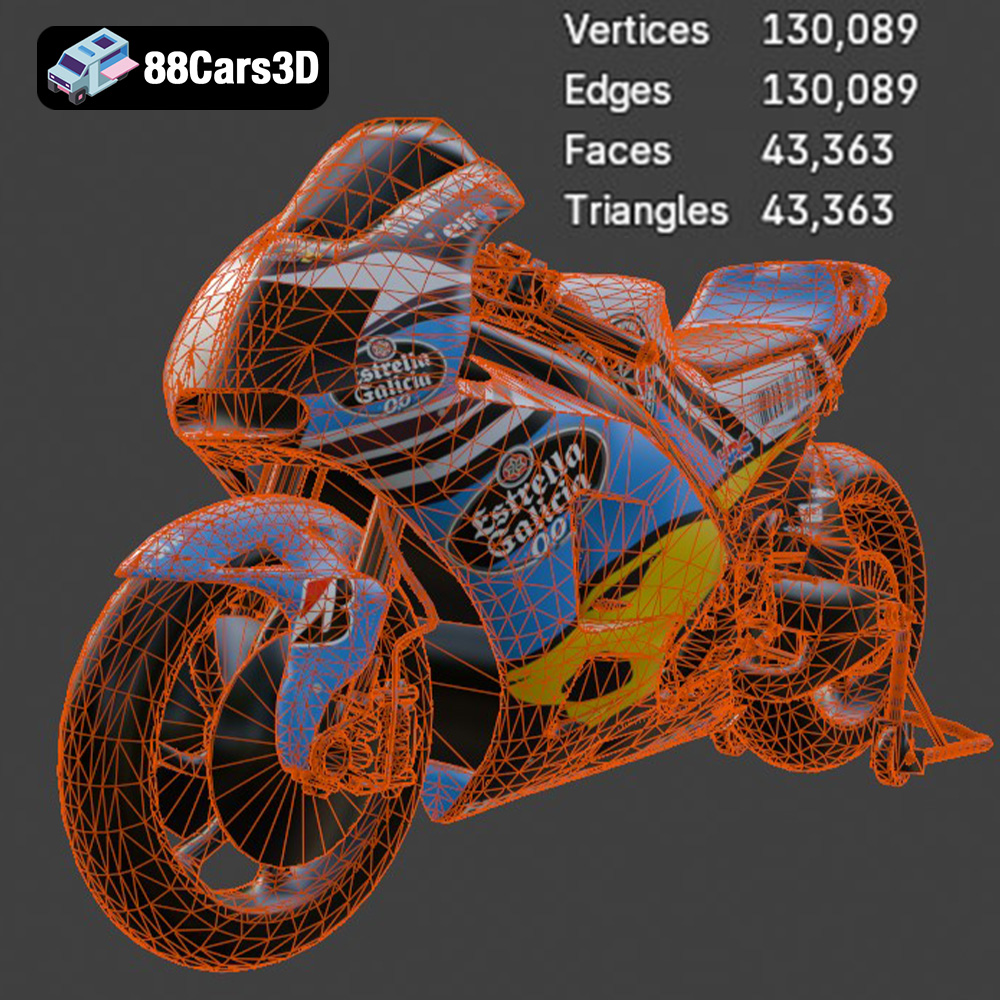
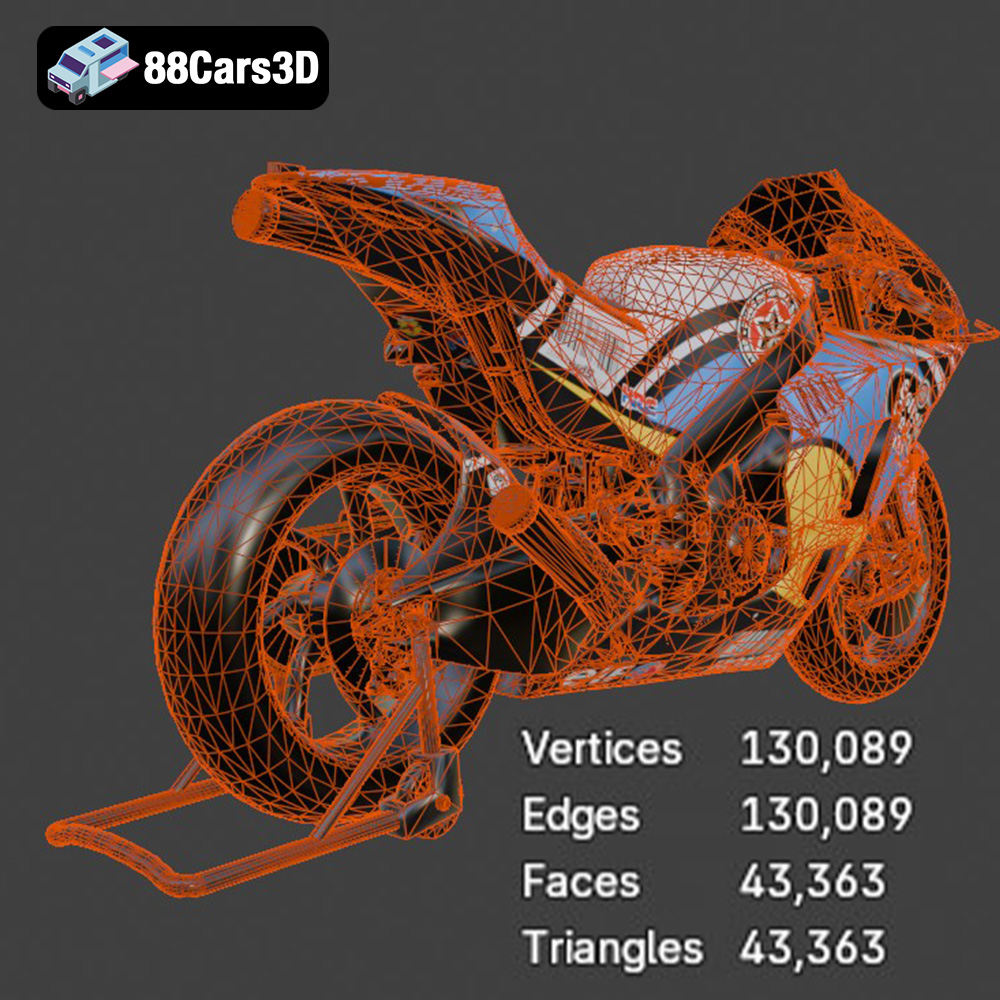
At the heart of any high-quality 3D model is its geometry and topology. The Honda RCV-213-001 boasts clean, efficient geometry, a critical factor for smooth deformation, accurate rendering, and optimal performance. This means the model is primarily constructed with quad-based polygons, which are easier to subdivide and deform compared to triangles (though triangles are inevitable in certain areas, particularly for game-ready assets). This meticulous approach to topology ensures that when the model is smoothed or subdivided for high-resolution renders, it maintains its intricate curves and sharp edges without pinching or artifacts.
Beyond the mesh itself, the materials and textures are what breathe life into a 3D model. The Honda RCV-213-001 3D Model features realistic PBR (Physically Based Rendering) materials, which accurately simulate how light interacts with different surfaces in the real world. This approach ensures consistent and believable lighting across various rendering environments and game engines.
The true measure of a high-quality automotive 3D model lies in its ability to capture the authentic, minute details that enthusiasts and professionals expect. The Honda RCV-213-001 3D Model excels in this regard, offering a comprehensive digital representation.
This dedication to authenticity ensures that whether used for a high-end visualization, an interactive experience, or a detailed engineering analysis, the Honda RCV-213-001 3D Model delivers unparalleled realism and technical integrity.
The true value of a versatile 3D asset like the Honda RCV-213-001 3D Model comes from its seamless integration into various professional pipelines. Thanks to the diverse range of included file formats, artists and developers can leverage this model across different software and engines to achieve specific project goals.
For those aiming for cinematic quality visuals, 3ds Max and Blender are prime choices, offering powerful rendering engines and extensive toolsets. The included .max and .blend files provide a ready-to-render foundation.
For game development, interactive applications, or real-time visualizations, the .fbx and .unreal files for the Honda RCV-213-001 3D Model are indispensable for rapid deployment in Unreal Engine and Unity.
.fbx or .unreal file typically ensures that PBR textures (Albedo, Normal, Roughness, Metallic) are correctly linked and interpreted by the game engine’s material system. This minimizes the need for manual setup, allowing developers to focus on gameplay mechanics or interactivity.The rise of augmented and virtual reality, coupled with increasingly powerful web browsers, has made the .glb format a cornerstone for delivering immersive experiences. The Honda RCV-213-001 in .glb format is perfectly suited for these emerging platforms.
.glb models are highly optimized for file size and render speed, which is critical for smooth AR experiences on mobile devices or high-frame-rate VR applications. The single-file nature simplifies asset management and loading times..glb models with full PBR materials, allowing for interactive 3D product viewers directly on a website without plugins. Imagine rotating the Honda RCV-213-001 3D Model directly in your browser or placing it in your living room via an AR app – all powered by the efficient .glb format.The thoughtful inclusion of multiple formats ensures that the Honda RCV-213-001 3D Model is not just a static renderable object but a dynamic asset ready for integration into virtually any professional 3D pipeline, saving invaluable time and resources.
High-quality 3D models like the Honda RCV-213-001 extend far beyond static renders or simple animations. Their technical accuracy and versatility open doors to a multitude of practical applications across diverse industries, transforming how we design, interact with, and market automotive products.
The immersive nature of modern video games and interactive simulations relies heavily on detailed, performance-optimized 3D models. The Honda RCV-213-001 3D Model, with its game-engine-ready formats, is a perfect fit for this sector.
For design and manufacturing, 3D models serve as crucial tools for evaluation, validation, and physical production. The provision of .stl and .ply formats for the Honda RCV-213-001 highlights its utility in these technical fields.
.stl file to 3D print physical scale models of the Honda RCV-213-001. This allows for tangible evaluation of design aesthetics, ergonomics, and even basic functional aspects before committing to expensive full-scale production..ply format, with its robust polygon mesh data, can be imported into CAD software for detailed surface analysis, reverse engineering workflows, or integration into larger engineering assemblies. This is especially useful for understanding complex surface geometries or ensuring fit and finish with other components.In the competitive automotive market, compelling visuals are paramount for capturing consumer attention. High-quality 3D models offer unparalleled flexibility and control for marketing and advertising campaigns.
From captivating audiences in a virtual world to assisting in the meticulous process of product development, the technical depth and comprehensive file format support of the Honda RCV-213-001 3D Model underscore its immense value as a professional asset. It truly is a versatile tool for any digital creator.
In the demanding realm of 3D production, time is a precious commodity, and quality is non-negotiable. This is precisely why professionals increasingly turn to specialized marketplaces like 88cars3d.com for their 3D car models and automotive assets. The decision to acquire pre-made, high-fidelity models, such as the Honda RCV-213-001 3D Model, is a strategic one that offers numerous tangible benefits.
Creating a detailed, production-ready 3D model from scratch, especially a complex vehicle like a racing motorcycle, can take hundreds of hours of an experienced artist’s time. This includes meticulous blueprint research, modeling, UV unwrapping, texturing, material setup, and optimization for various platforms. By acquiring a professional-grade model from 88cars3d.com, you bypass this intensive initial phase, allowing your team to focus on integration, scene development, and the unique creative aspects of your project. This efficiency translates directly into significant cost savings and faster project turnaround times.
Every project demands a consistent level of quality. Models sourced from reputable platforms guarantee that the asset adheres to industry best practices in terms of clean geometry, accurate scale, PBR material standards, and optimized topology. For instance, the Honda RCV-213-001 3D Model is described as having “clean geometry, realistic materials, and a professional quality build.” This assurance of quality means less time spent fixing issues and more time spent creating compelling visuals. You gain access to the expertise of seasoned 3D artists without the overhead.
As explored throughout this article, the modern digital landscape requires assets that perform equally well in a cinematic render, a real-time game, an AR/VR experience, or even for 3D printing. The comprehensive file format support offered by models from 88cars3d.com, including .blend, .fbx, .obj, .glb, .stl, .ply, .unreal, and .max, ensures maximum versatility. This multi-format approach makes the models truly adaptable to virtually any professional workflow, making them a future-proof investment for any creative studio or individual artist.
Choosing models from 88cars3d.com means investing in efficiency, quality, and flexibility. It empowers creators to deliver top-tier results without compromising on deadlines or technical integrity, turning complex digital visions into stunning realities.
The digital realm thrives on precision, detail, and seamless integration. As we’ve explored, the demand for high-quality 3D models, particularly in the automotive sector, continues to grow across rendering, game development, AR/VR, and even engineering applications. The featured Honda RCV-213-001 3D Model stands as a shining example of what truly professional digital asset creation entails: meticulous geometry, realistic PBR materials, and an unwavering commitment to authentic detail.
Its comprehensive suite of file formats – from native Blender and 3ds Max scenes to universally compatible FBX and OBJ, and specialized GLB, STL, PLY, and Unreal formats – ensures its versatility in virtually any professional workflow. This level of technical consideration empowers artists and developers to integrate, customize, and deploy the model with unparalleled efficiency, transforming complex visions into breathtaking digital realities.
For those seeking to elevate their projects and streamline their production pipelines, investing in expertly crafted 3D car models is a strategic advantage. Resources like 88cars3d.com provide a gateway to a curated collection of such assets, allowing creators to focus on innovation and storytelling rather than the arduous task of building from scratch. The Honda RCV-213-001 3D Model is more than just a digital object; it’s a testament to the enduring power of high-fidelity 3D assets to drive creativity, enhance realism, and push the boundaries of digital content creation.
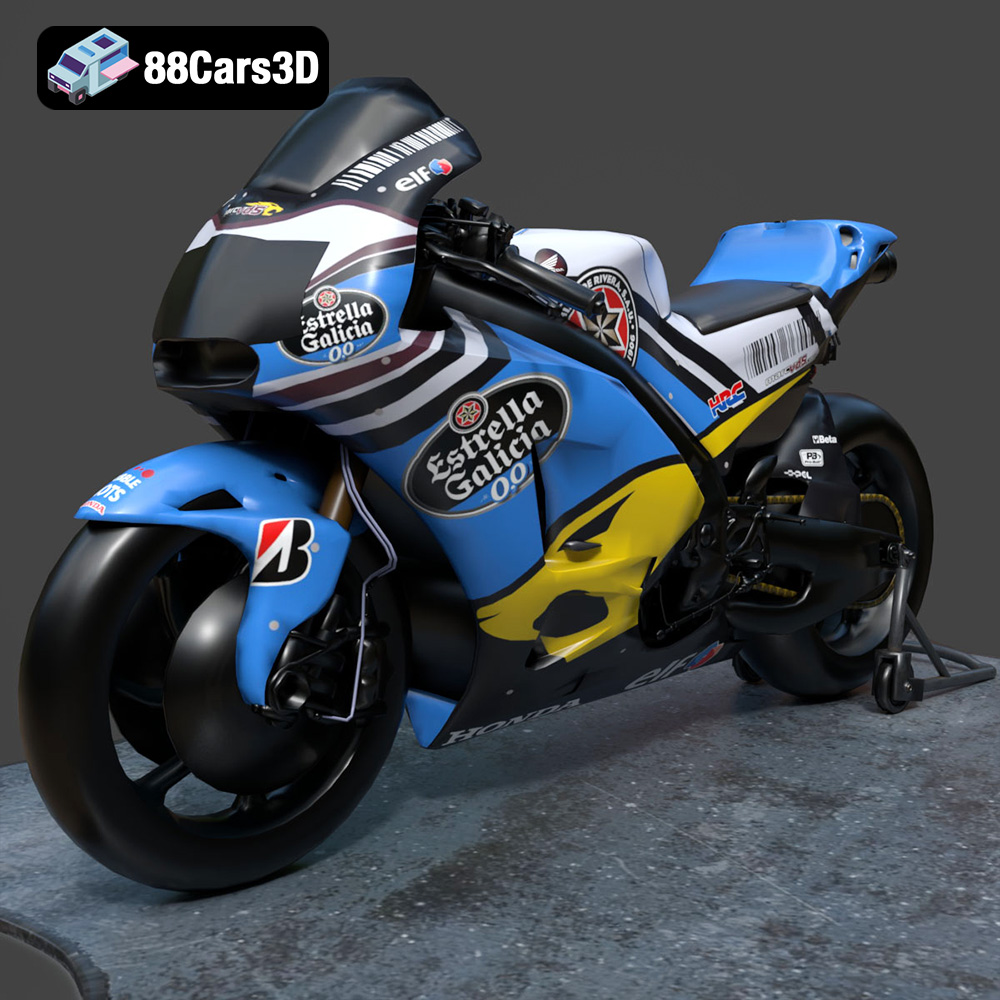
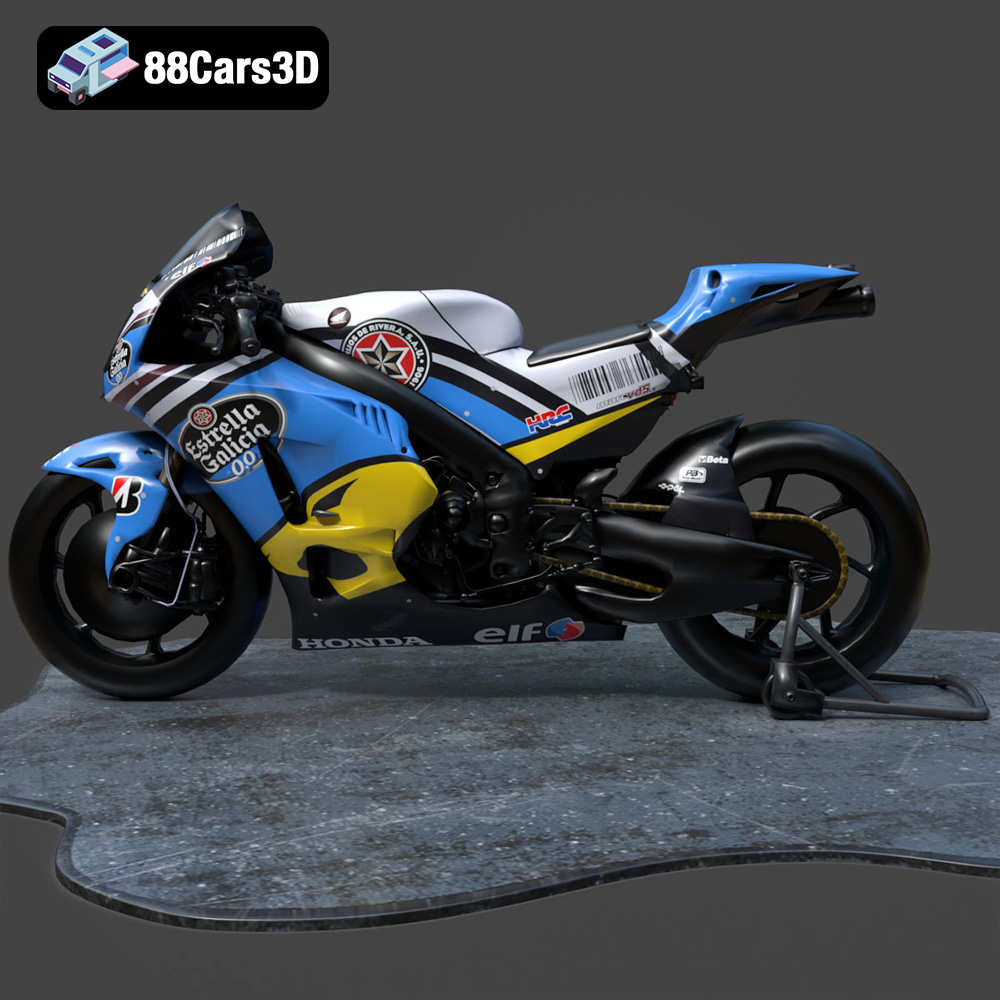
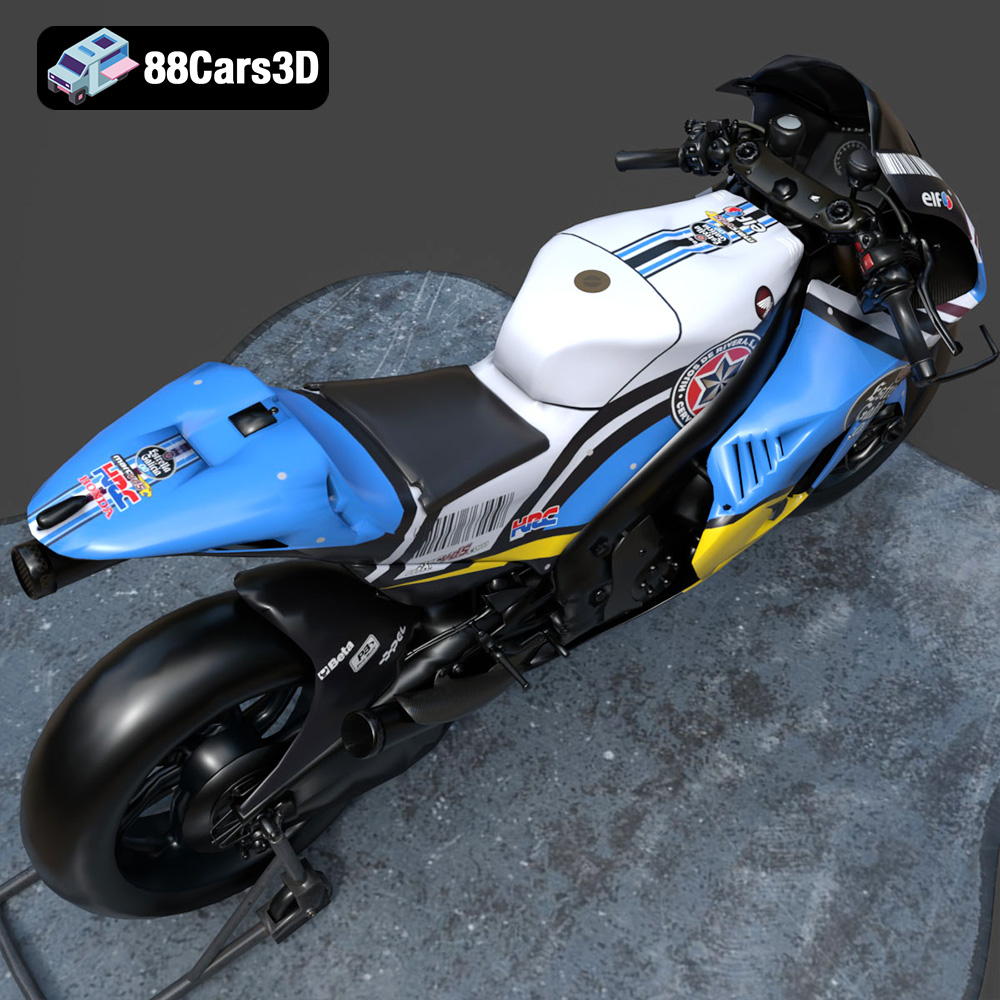
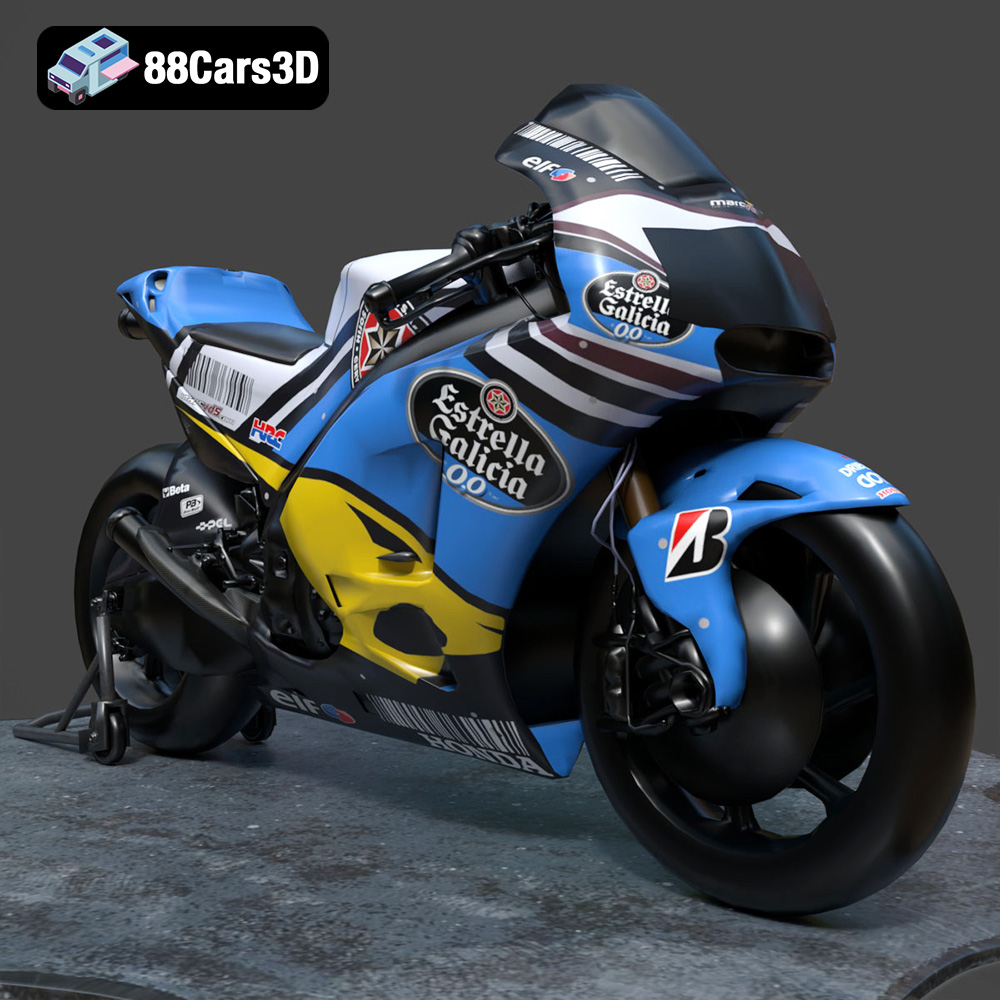
Experience true realism with the Honda RCV-213-001 3D Model, meticulously crafted to represent the iconic racing motorcycle. This model is engineered to provide stunning visual fidelity, making it an exceptional choice for automotive enthusiasts and digital creators.
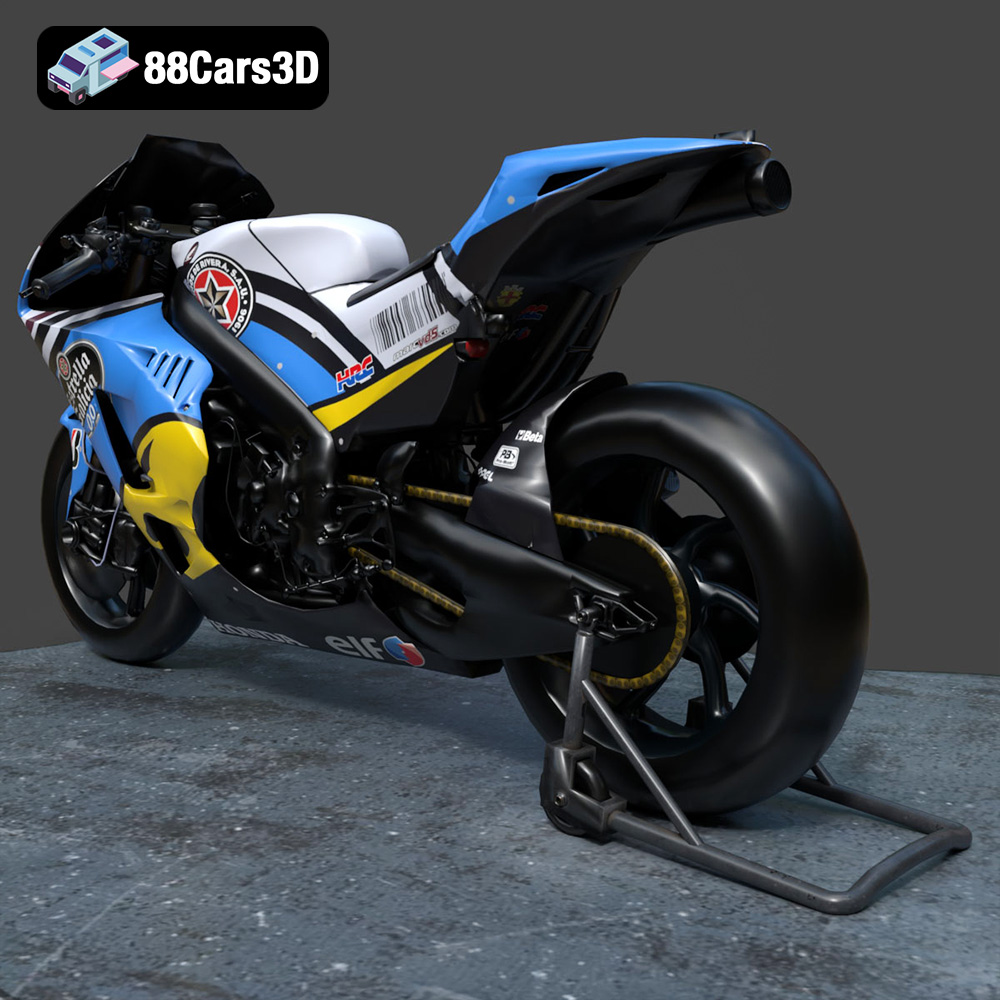
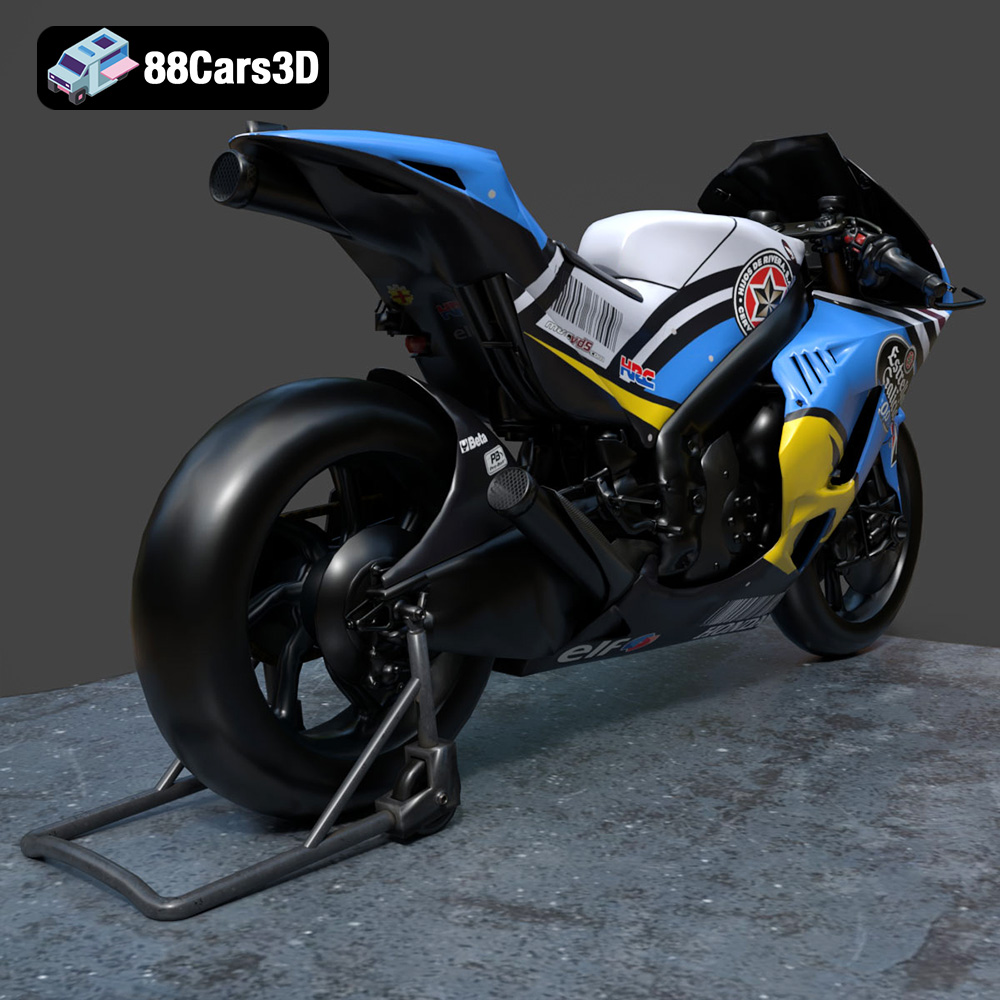
Key features of this 3D model include clean geometry, realistic materials, and a professional quality build. Every detail, from the aerodynamic fairings to the intricate mechanical components, has been modeled to deliver a highly accurate digital twin of the original vehicle.
This asset is highly versatile and perfect for a wide range of applications. Whether you are working on game development, rendering, AR/VR experiences, or professional visualization projects, this model provides the performance and aesthetic precision required for top-tier productions.
The following file formats are included with your download:
Tags: .honda, .rcv213001, .motorcycle, .racingbike, .car3dmodel, .rendering, .simulation, .gameasset, .arvr, .blend, .fbx, .obj, .glb, .stl, .ply, .unreal, .max
Tags:
.honda, .rcv213001, .motorcycle, .racingbike, .car3dmodel, .rendering, .simulation, .gameasset, .arvr, .blend, .fbx, .obj, .glb, .stl, .ply, .unreal, .maxMercedes Benz CLS 500 3D Model 3D Printable STL
$19.99
.arvr
.blend
.car3dmodel
.fbx
.gameasset
.glb
.honda
.max
.motorcycle
.obj
.ply
.racingbike
.rcv213001
.rendering
.simulation
.stl
.unreal