Get 20% OFF All Premium 3D & STL Models!

In the dynamic world of 3D visualization, game development, and simulation, the demand for exceptionally detailed and technically sound 3D models is ever-present. From photorealistic architectural renders to immersive open-world games, the quality of your assets directly dictates the impact and believability of your final output. While 88cars3d.com is renowned for its exquisite 3D car models, their curated collection extends to other complex vehicle assets that meet the same exacting standards of quality and optimization.
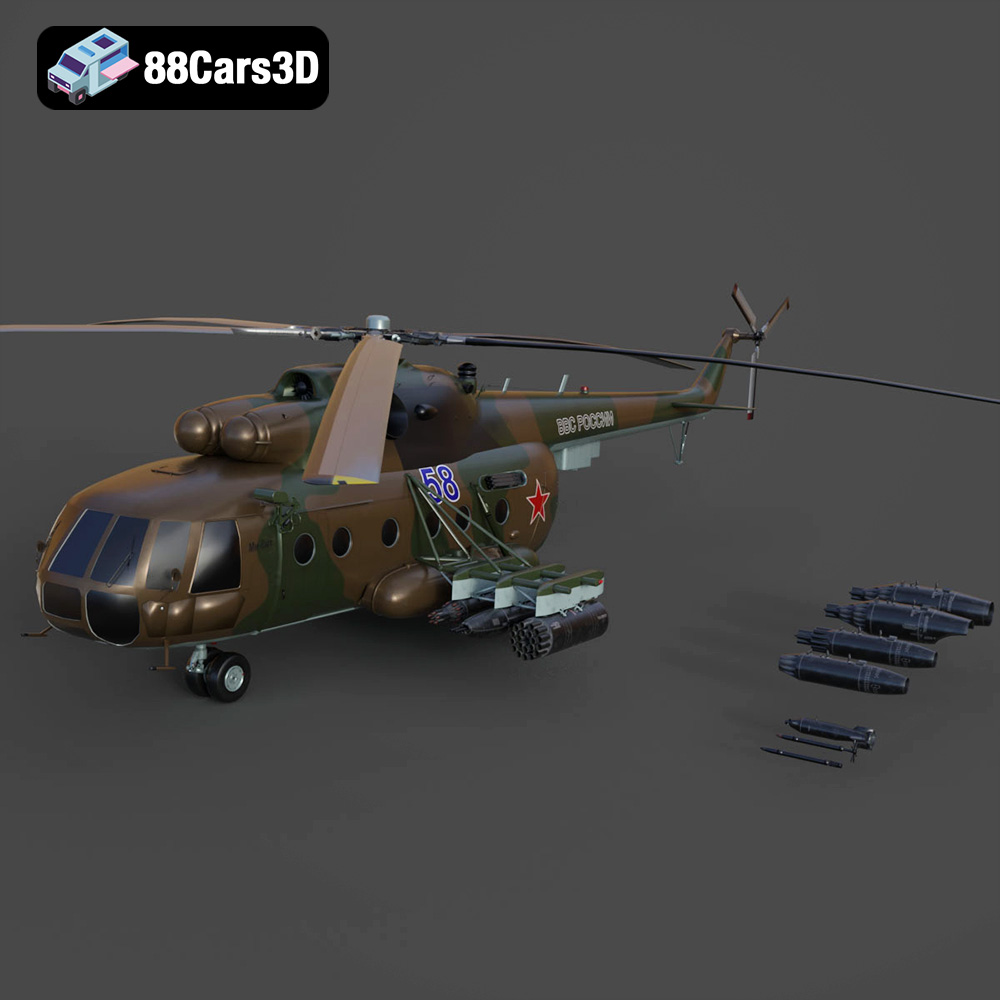
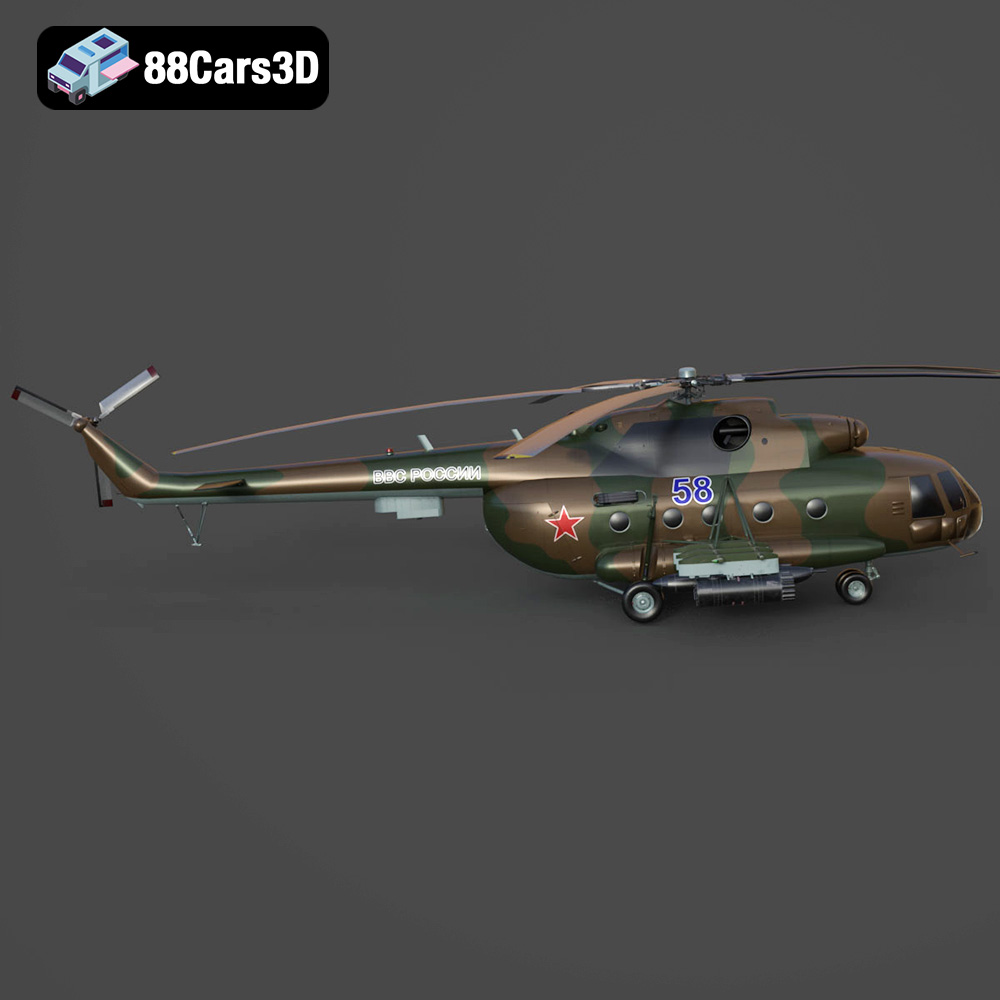
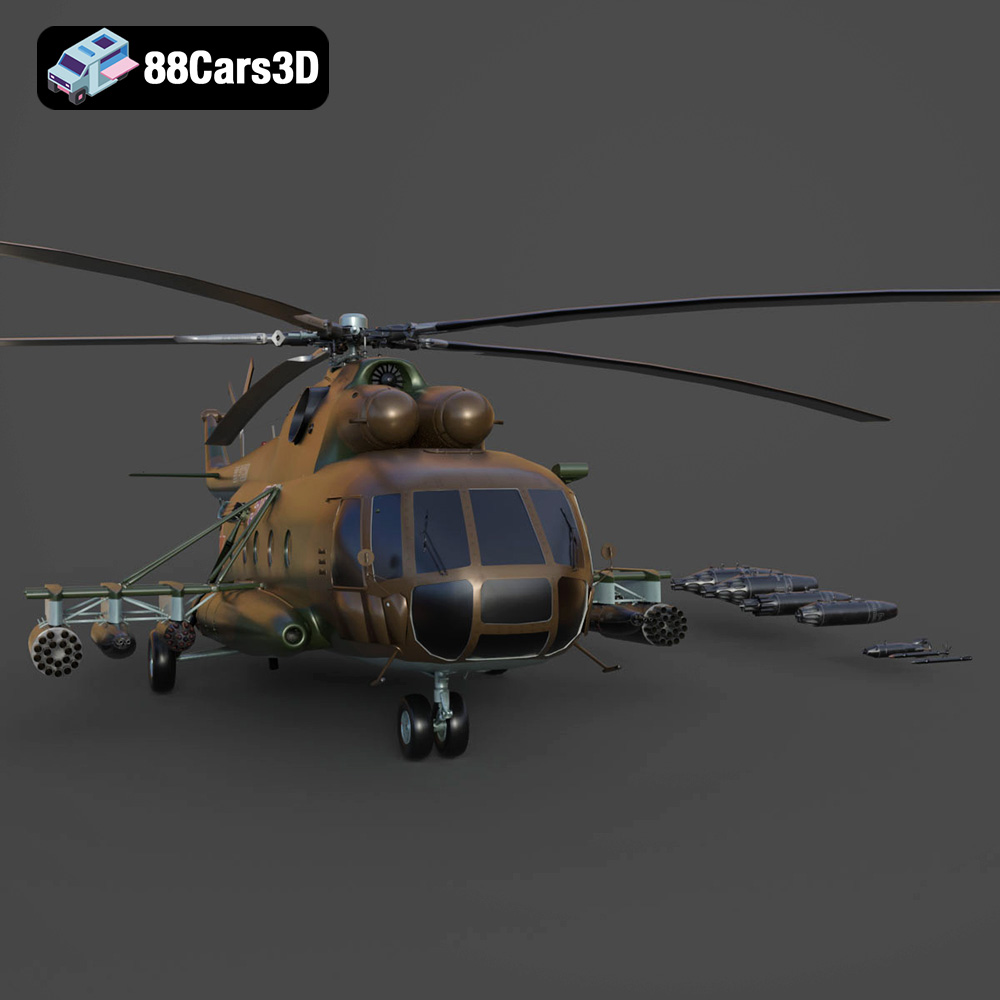
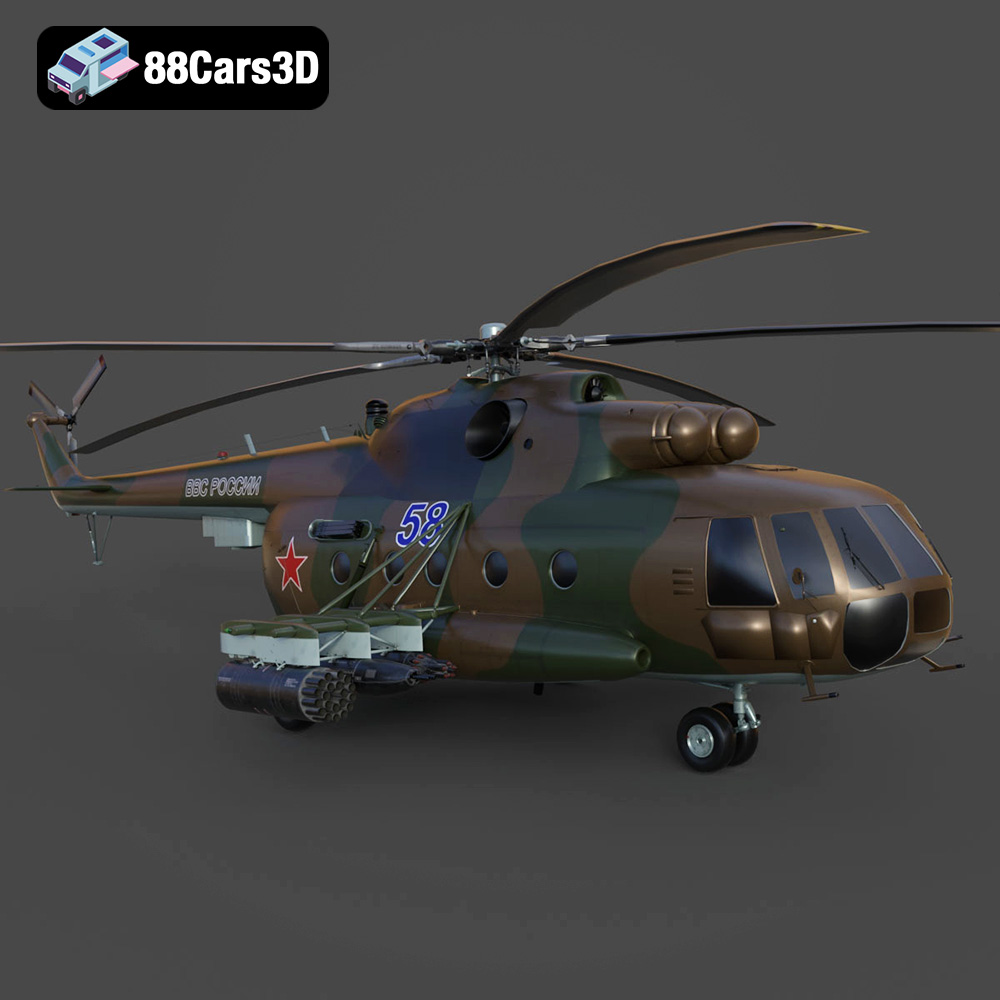
Today, we’re taking a closer look at one such magnificent creation: the Mil Mi-8MT Helicopter 3D Model. This legendary twin-turbine transport helicopter, a workhorse of both military and civilian operations worldwide, is brought to life in a digital format that is as robust and versatile as its real-world counterpart. This comprehensive model is not just a visual spectacle; it’s a meticulously engineered asset designed to integrate seamlessly into a multitude of professional workflows, offering unparalleled detail and optimization for everything from game engines to cinematic rendering pipelines. Let’s embark on a technical journey to understand what makes this model an indispensable addition to any professional’s toolkit.
Before diving into the specifics of the Mil Mi-8MT, it’s crucial to grasp the diverse array of 3D file formats available and when to employ each. The Mil Mi-8MT Helicopter 3D Model from 88cars3d.com comes equipped with an extensive suite of formats, ensuring maximum compatibility and utility across various applications. Understanding these formats is key to streamlining your production pipeline and achieving optimal results.
The .blend file format is Blender’s native project file. It encapsulates not just the 3D mesh data but also materials, textures, lighting setups, animations, cameras, and even custom scripts. For artists primarily working within Blender, this format offers the most flexibility. You gain full access to the original scene, allowing for comprehensive modifications, re-texturing, animation tweaks, and integration with Blender’s powerful rendering engines like Cycles and Eevee. Technical users appreciate its all-in-one nature, making it ideal for starting a project with all assets pre-configured and ready for iteration.
.fbx (Filmbox) is arguably the most widely adopted 3D file format for inter-application data exchange, especially prevalent in game development and real-time visualization. Developed by Autodesk, FBX can store complex scenes including models, animation, cameras, lights, and even blend shapes. Its strength lies in its ability to maintain scene hierarchy, pivot points, and animation data reliably across different software packages such as 3ds Max, Maya, Blender, Unity, and Unreal Engine. For the Mil Mi-8MT Helicopter 3D Model, the .fbx variant is your go-to for importing into game engines or for further processing in other major 3D suites due to its robust support for game-ready assets.
The .obj (Wavefront Object) format is a simple, universal standard primarily focused on geometry (vertices, normals, texture coordinates, and faces) and material references (.mtl file). While it doesn’t typically store animation or rigging data, its strength lies in its near-universal compatibility. Almost every 3D software application can import and export .obj files, making it an excellent choice for basic mesh transfer when complex scene data isn’t required. For the Mil Mi-8MT, the .obj provides a clean, raw mesh for detailed sculpting, retopology, or foundational asset creation.
.glb (GL Transmission Format Binary) is the binary version of glTF, a royalty-free specification for 3D scenes and models. Designed for efficient transmission and loading of 3D content, it’s highly optimized for web-based applications, augmented reality (AR), virtual reality (VR), and mobile experiences. A single .glb file can contain models, materials, textures, and animations, making it a self-contained and easily shareable asset. When deploying the Mil Mi-8MT into a web viewer, an AR app, or a lightweight VR experience, the .glb format is indispensable for its performance and ease of integration.
.stl (Stereolithography) is the de facto standard file format for 3D printing. It describes only the surface geometry of a 3D object using a collection of interconnected triangles. While it doesn’t carry color or texture information, its simplicity makes it universally understood by 3D printers and slicing software. The Mil Mi-8MT Helicopter 3D Model includes an .stl option, allowing enthusiasts and professionals to bring this digital marvel into the physical world, whether for scale models, prototypes, or educational aids. Preparing an .stl often involves ensuring watertight meshes and appropriate scaling for optimal print quality.
.ply (Polygon File Format or Stanford Triangle Format) is a format for storing three-dimensional data from 3D scanners. It supports properties such as color, transparency, texture coordinates, and even reliability information. While less common for general asset exchange than FBX or OBJ, it’s valued in applications requiring precise mesh data, such as CAD, scientific visualization, or detailed inspection of scanned objects. For the Mil Mi-8MT, the .ply variant offers an alternative precise mesh representation, particularly useful for specific engineering or analysis workflows where mesh integrity and data properties are critical.
The inclusion of a dedicated .unreal file (often a .uasset, the native asset format for Unreal Engine) signifies an asset that has been specifically prepared and configured for direct import and optimal performance within the Unreal Engine ecosystem. This usually means proper material setup, collision meshes, LODs (Levels of Detail), and potentially even basic blueprints for functionality. For game developers and simulation creators, this engine-ready format drastically reduces setup time and ensures the Mil Mi-8MT performs flawlessly within the high-fidelity real-time rendering capabilities of Unreal Engine.
The .max file is the native project format for Autodesk 3ds Max, a powerful 3D modeling, animation, and rendering software widely used in architectural visualization, game development, and film. Like .blend, it contains the entire scene, including models, materials, lighting, cameras, animation, and modifiers. For artists working in a 3ds Max-centric pipeline, the .max file for the Mil Mi-8MT Helicopter 3D Model offers complete editability. This is invaluable for high-end rendering, complex animation sequences, or customizing the model with 3ds Max’s extensive toolset, ensuring maximum control over every aspect of the asset.
The true value of a 3D model, especially one intended for professional use, lies in its meticulous construction and adherence to real-world accuracy. The Mil Mi-8MT Helicopter 3D Model exemplifies this philosophy, boasting a design that balances stunning visual fidelity with crucial technical optimization.
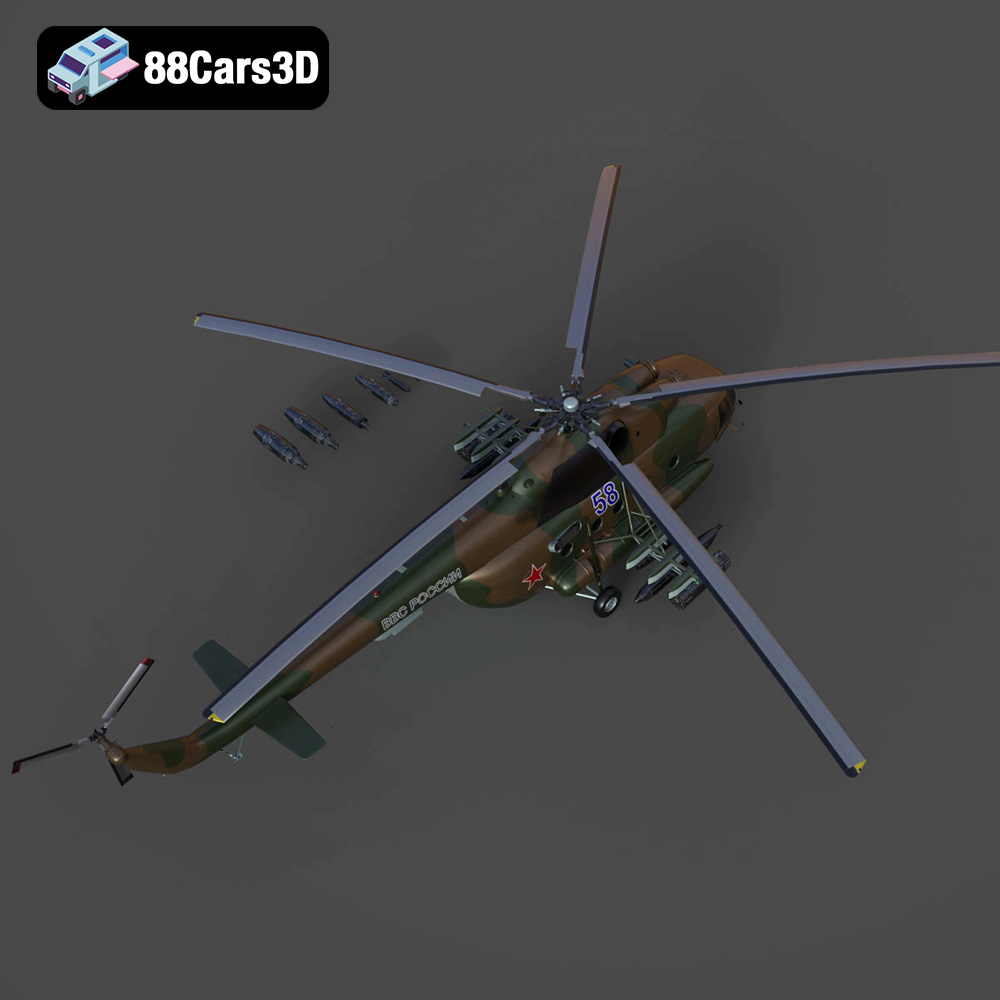
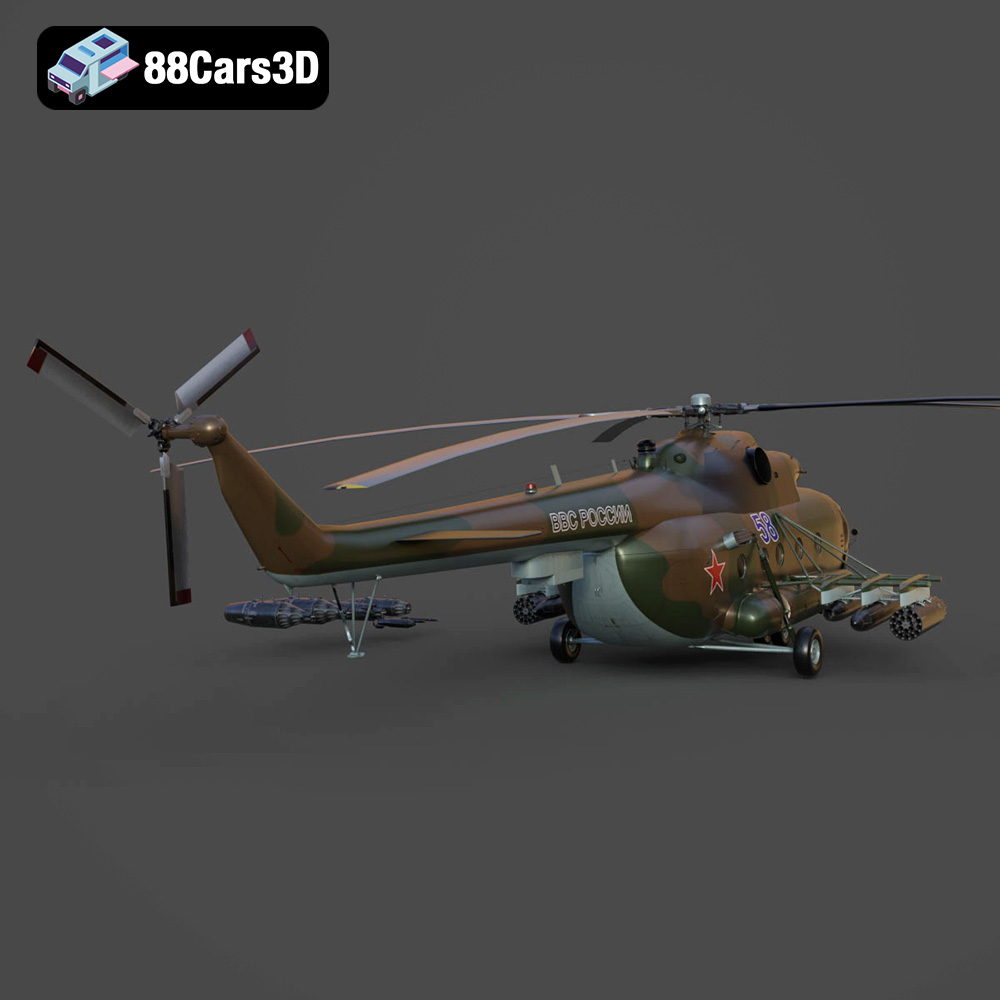
From the first glance, the exterior of this Mil Mi-8MT model impresses with its accurate geometry and proportions, directly reflecting the legendary aircraft’s robust presence. Details like the distinctive top-mounted TV3-117MT turboshaft engine housings are precisely replicated, complete with intricate exhaust deflectors and ventilation grids. The attention to authenticity extends to smaller yet critical elements, such as the navigation lights and exterior landing beacons, which add layers of realism essential for convincing renders and simulations. The landing gear features detailed tires and strut compression, indicating a design mindful of animation potential. The five-blade main rotor and three-blade tail rotor assemblies are accurately represented, with separate rotor heads, doors, and landing gear components that are set up for seamless animation, allowing for dynamic and lifelike motion.
Beyond its impressive exterior, the model offers a remarkably detailed interior, focusing on the pilot and co-pilot seating with authentic harnesses. The flight control systems—cyclic, collective, and anti-torque pedals—are all meticulously modeled, providing a solid foundation for interactive simulations or close-up cockpit views. The analog instrument cluster and overhead panels are accurately mapped, complete with detailed switches, levers, and avionics bays. This level of interior detail is specifically optimized for first-person POV in gaming, ensuring that players or users in AR/VR applications experience an immersive and believable environment, whether flying the helicopter or simply exploring its cabin.
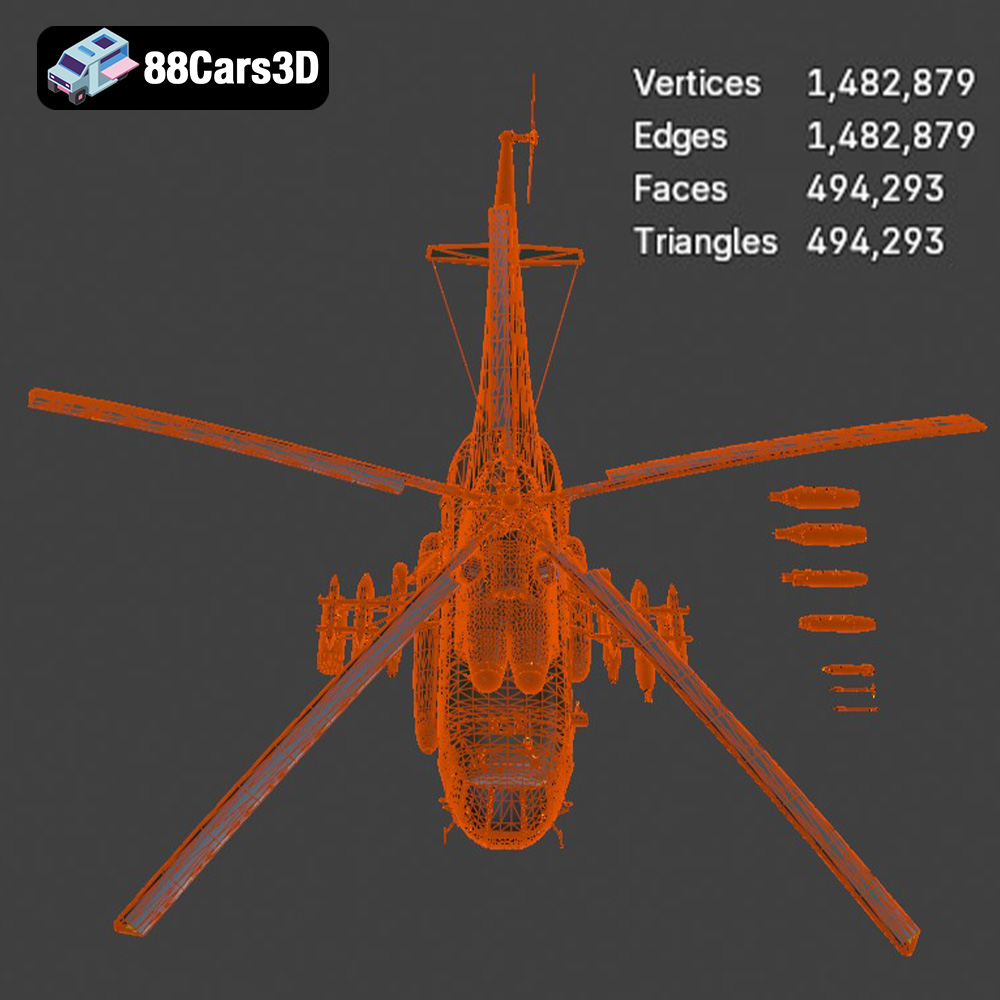
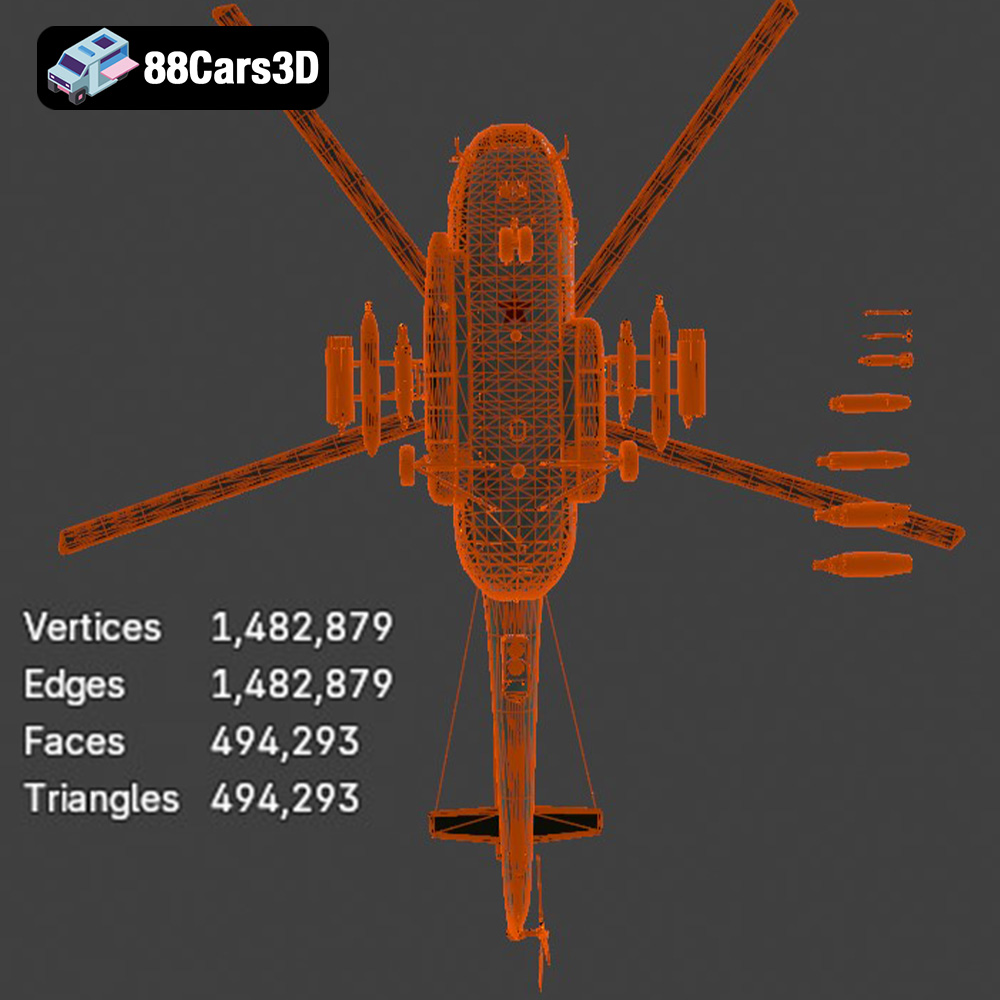
One of the standout features of the Mil Mi-8MT Helicopter 3D Model is its “game-ready” optimization. With a balanced ~120,000 triangle count, it strikes a perfect equilibrium between high-end visual realism and performance efficiency, making it ideal for real-time engines like Unreal and Unity. This careful polycount management prevents performance bottlenecks without sacrificing the visual depth required for modern game titles or demanding simulations. Furthermore, the model is built to real-world scale accuracy, based on actual airframe blueprints, ensuring precise representation. Crucially, it includes proper pivot setups for the main/tail rotor rotation, door hinges, and suspension travel, significantly reducing the rigging and animation workload for developers. This thoughtful engineering makes the model a powerful, ready-to-use asset, compatible with major 3D software platforms and real-time rendering engines right out of the box.
The versatility of the Mil Mi-8MT Helicopter 3D Model truly shines in its application across various digital frontiers, particularly in game development and augmented/virtual reality experiences. Its optimized nature ensures seamless integration and high performance.
For game developers, the Mil Mi-8MT is an ideal asset. Its ~120,000 triangle count is perfectly suited for modern game engines, allowing for dense environments without compromising frame rates. Leveraging the included .fbx or the dedicated .unreal format, developers can swiftly import the model into Unreal Engine. The pre-set pivot points for rotors and doors mean that basic animation sequences can be set up in minutes using Unreal’s Blueprint visual scripting system or traditional animation tools. Collision meshes can be automatically generated or custom-designed to ensure realistic interactions within the game world. Whether it’s for an open-world sandbox, a tactical shooter, or a dedicated combat flight simulator, this model provides a highly detailed, performant, and visually stunning centerpiece, enhancing the realism of any virtual battlefield.
The model’s optimization extends beautifully to AR/VR applications. In immersive virtual hangars or training simulations, the detailed cockpit and exterior geometry provide an unparalleled sense of presence. The .glb format is particularly beneficial here, offering a lightweight and efficient package for delivery on mobile AR platforms or standalone VR headsets. Imagine a training scenario where maintenance technicians can virtually walk around the Mil Mi-8MT, inspecting components or practicing pre-flight checks in a 1:1 scale environment. The accurate representation of elements like the TV3-117MT engines allows for realistic visual cues, making the training highly effective. For mobile AR experiences, the model’s optimized polycount ensures smooth rendering on less powerful devices, bringing sophisticated 3D content to a wider audience.
Consider a hypothetical scenario for a military training simulator. A development team needs a realistic Mil Mi-8MT for pilot familiarization and mission rehearsal. Using the model from 88cars3d.com, they can import the .fbx into their engine of choice. The pre-set pivots allow immediate rigging for flight controls, rotor spin, and door operations. The detailed interior, with its accurate instrument cluster, becomes the focal point for first-person pilot views, enhancing immersion for trainees. With custom texture work, the helicopter can be given various liveries – from standard military camouflage to UN white, matching diverse operational theaters. The ~120,000 triangle count ensures that multiple helicopters can be present in a scene without significant performance drop, crucial for large-scale tactical exercises. This model serves as a robust foundation, saving countless hours of modeling and optimization, allowing the development team to focus on simulator logic and scenario design.
Beyond real-time applications, the Mil Mi-8MT Helicopter 3D Model excels in pre-rendered cinematic visualization and high-end animation. Its robust construction provides a perfect canvas for creating breathtaking visuals.
For rendering still images or complex animations, the .max or .blend files offer the ultimate flexibility. In 3ds Max, artists can leverage V-Ray or Corona Renderer to achieve photorealistic results. By applying advanced PBR (Physically Based Rendering) materials, adding subtle surface imperfections, and setting up complex lighting environments (e.g., HDRI skydomes combined with targeted area lights), the Mil Mi-8MT can be rendered with stunning realism. The same applies to Blender, where Cycles or Eevee can produce equally compelling visuals. Artists can experiment with different material finishes—from matte military paint to subtle gloss or metallic sheens—to perfectly convey the helicopter’s age, environment, and operational history. For projects requiring the visual fidelity often associated with 3D car models in marketing materials, this helicopter model stands shoulder-to-shoulder, ready for high-resolution output.
The pre-defined pivot points are invaluable for animators. The main and tail rotors can be set to spin realistically with simple rotation animations. The doors, accurately hinged, can be animated to open and close, allowing for dynamic embarkation/disembarkation sequences. The landing gear, with its detailed strut compression, can be animated for takeoff and landing sequences, adding a critical layer of realism to any cinematic. Advanced animators can even introduce subtle vibrations and dynamic cloth simulations for tarpaulins or cargo nets within the cabin, further enhancing the immersion. These foundational rigging elements drastically cut down production time, allowing animators to focus on the performance and storytelling aspects.
Effective lighting is paramount for compelling renders. With the Mil Mi-8MT, artists can sculpt light to highlight its intricate details. Imagine a dawn patrol scene, with golden hour sunlight glinting off the rotor blades, or a dramatic night-ops scenario illuminated only by subtle navigation lights and a powerful searchlight. Material refinement plays an equally critical role. The base textures can be customized to show varying degrees of wear and tear—from factory-fresh sheen to battle-damaged grime—using advanced texture painting techniques and shader networks. This level of customization allows the model to adapt perfectly to any narrative or visual brief, demonstrating its versatility for diverse rendering projects, from historical documentaries to futuristic action sequences.
The digital world often inspires the physical, and for enthusiasts and model makers, the ability to 3D print the Mil Mi-8MT Helicopter 3D Model is an exciting prospect. The included .stl format makes this transition seamless.
Converting a game-ready or high-poly render model into a robust, printable .stl requires careful consideration. The Mil Mi-8MT’s geometry is designed to be convertible, but additional steps like ensuring manifold (watertight) meshes, scaling to the desired print size (1:35, 1:48, or 1:72 are recommended), and checking for minimum wall thickness are crucial. For hobbyists, breaking down the model into printable segments, such as separating the fuselage, rotors, and landing gear, can prevent printing failures and allow for easier post-processing and assembly. This preparatory phase is where the technical understanding of 3D modeling truly merges with the practicalities of physical fabrication.
For models like the Mil Mi-8MT, resin printing (SLA/DLP) is highly recommended over FDM for its ability to capture fine details, especially for delicate parts like antennas, rotor blades, and cockpit intricacies. A layer height of 0.04–0.12 mm will yield excellent resolution. For FDM printing, careful calibration and a smaller nozzle will be necessary. Wall thickness should ideally be between 1.2–2.0 mm to ensure structural integrity. Infill settings of 20–30% provide a good balance of strength and material efficiency. Supports are almost always required for complex overhangs and intricate components. Post-processing is where the model truly comes to life: sanding, priming, and applying authentic military camouflage or civilian livery finishes can transform a raw print into a museum-quality display piece. This meticulous attention to detail echoes the precision found in high-quality 3D car models designed for physical display.
Imagine a hobbyist who has always dreamed of owning a detailed scale model of the Mil Mi-8MT. With this 3D model, they can print it section by section, carefully assemble, paint, and weather it. This allows for a level of customization and personal involvement far beyond what’s possible with off-the-shelf kits. From choosing a specific military unit’s markings to replicating a civilian medical transport variant, the digital model empowers the creation of a unique, tangible representation. This bridge between digital asset creation and physical manufacturing highlights the incredible versatility and value of well-constructed 3D models from platforms like 88cars3d.com.
A truly professional 3D asset provides a solid foundation, but its ultimate utility often lies in its adaptability. The Mil Mi-8MT Helicopter 3D Model is designed for extensive customization, allowing artists and developers to tailor it to specific project requirements.
The ability to change fuselage livery is a fundamental aspect of customizing any vehicle model. Whether you need a standard military camouflage, a stark UN white for peacekeeping operations, or a vibrant civilian transport paint scheme, the model’s clean UV mapping makes texture modification straightforward. Artists can utilize software like Substance Painter or 3D Coat to create new PBR texture sets, applying realistic surface details, panel lines, and decals. Furthermore, modifying texture wear and tear—ranging from a factory-fresh appearance to a heavily weathered or battle-damaged state—adds character and narrative depth to the model. This level of granular control over surface aesthetics is crucial for matching the helicopter to diverse environmental conditions or storytelling needs.
Beyond livery, material finishes can be adjusted to suit different lighting conditions or atmospheric effects. A matte military paint might be appropriate for a dusty desert scene, while a glossier finish could enhance a model displayed in a clean hangar. The model’s compatibility allows for seamless adaptation of its materials within various rendering engines. For instance, in Unreal Engine, developers can easily swap out material instances or adjust parameters like roughness, metallic, and normal maps to create variations suitable for night-ops missions under moonlight, or a bright, sun-drenched daylight environment. This adaptability ensures that the Mil Mi-8MT can convincingly inhabit any digital world you create.
For advanced users in game development or simulation, the model serves as an excellent base for extending functionality through scripting. In Unreal Engine, Blueprints can be used to add interactive elements: animating specific controls in the cockpit when a player interacts with them, setting up dynamic rotor blur effects based on rotational speed, or even implementing basic flight physics. The separate components (rotors, doors, landing gear) are perfect for receiving dynamic input, allowing for a truly interactive and responsive asset. This open-ended approach to integration highlights the model’s design as a professional-grade asset, ready to be pushed to its limits by creative developers.
The quest for high-quality, technically sound 3D assets is ongoing for professionals across game development, architectural visualization, film, and product design. The Mil Mi-8MT Helicopter 3D Model stands out as a prime example of an asset that meets these rigorous demands. With its exceptional topological flow, balanced polycount, and meticulous attention to real-world detail – from the exterior engine housings to the immersive cockpit – it offers an unparalleled foundation for any project.
Its comprehensive file format support, including .blend, .fbx, .obj, .glb, .stl, .ply, .unreal, and .max, ensures compatibility with virtually any professional pipeline, whether you’re aiming for game-ready optimization, stunning cinematic renders, immersive AR/VR experiences, or even tangible 3D prints. The thoughtful inclusion of features like accurate real-world scale and proper pivot setups drastically reduces development time, empowering artists and developers to focus on creativity rather than foundational asset creation. This model embodies the same commitment to excellence found in the best 3D car models and automotive rendering assets available today.
For those seeking to elevate their projects with a highly detailed, optimized, and versatile vehicle asset, the Mil Mi-8MT Helicopter 3D Model from 88cars3d.com is an investment that delivers immense value. Explore this and other premium assets at 88cars3d.com to bring your most ambitious visions to life.
The Mil Mi-8MT is a legendary medium twin-turbine transport helicopter, renowned for its ruggedness, versatility, and widespread military and civilian use across the globe. This iconic rotorcraft features distinctive top-mounted TV3-117MT turboshaft engines, a robust airframe, an intricate exhaust system, and its recognizable five-blade main rotor. This high-quality 3D model boasts exceptional topological flow and a balanced ~120,000 triangle count, ensuring game-ready optimization without sacrificing visual fidelity. Engineered for diverse real-time and offline applications, it is built to deliver top-tier performance for game development, AR/VR simulations, animation, and high-end cinematic visualization. Perfect for military flight simulators, action-adventure game environments, cinematic rendering, and historical aviation visualizations.
$19.99
.blend
.fbx
.glb
.helicopter
.max
.obj
.ply
.rendering
.stl
.unreal
game asset
game-ready
helicopter-3d-model
low-poly
mi-8mt
mil
military-helicopter
optimized
transport-helicopter
VR/AR