Get 20% OFF All Premium 3D & STL Models!

In the rapidly evolving landscape of digital content creation, the demand for realistic, high-fidelity 3D assets has never been greater. From cinematic automotive renders that blur the line between virtual and reality, to immersive game worlds, cutting-edge AR/VR experiences, and precise engineering visualizations, the quality of your 3D models forms the bedrock of your project’s success. Crafting these assets from scratch is a time-intensive and highly specialized skill, often requiring extensive knowledge of modeling, texturing, rigging, and optimization.
This challenge is particularly pronounced when dealing with complex subjects like vehicles. Replicating the intricate curves, mechanical details, and material properties of an automobile or motorcycle demands a meticulous approach. This is where pre-made, professional-grade assets become invaluable, empowering creators to jumpstart their projects with confidence. An exemplary instance of such an asset is the Ural Solo sT 3D Model available on 88cars3d.com – a meticulously crafted digital representation that promises to elevate any scene it graces. It’s designed not just for visual appeal, but for seamless integration into a multitude of professional pipelines, offering true realism and authentic structural precision.
Before diving into specific applications, it’s crucial to understand what distinguishes a truly professional 3D model from a casual creation. The value of an asset like the Ural Solo sT 3D Model lies in its adherence to fundamental principles that ensure both visual fidelity and technical performance across diverse platforms.
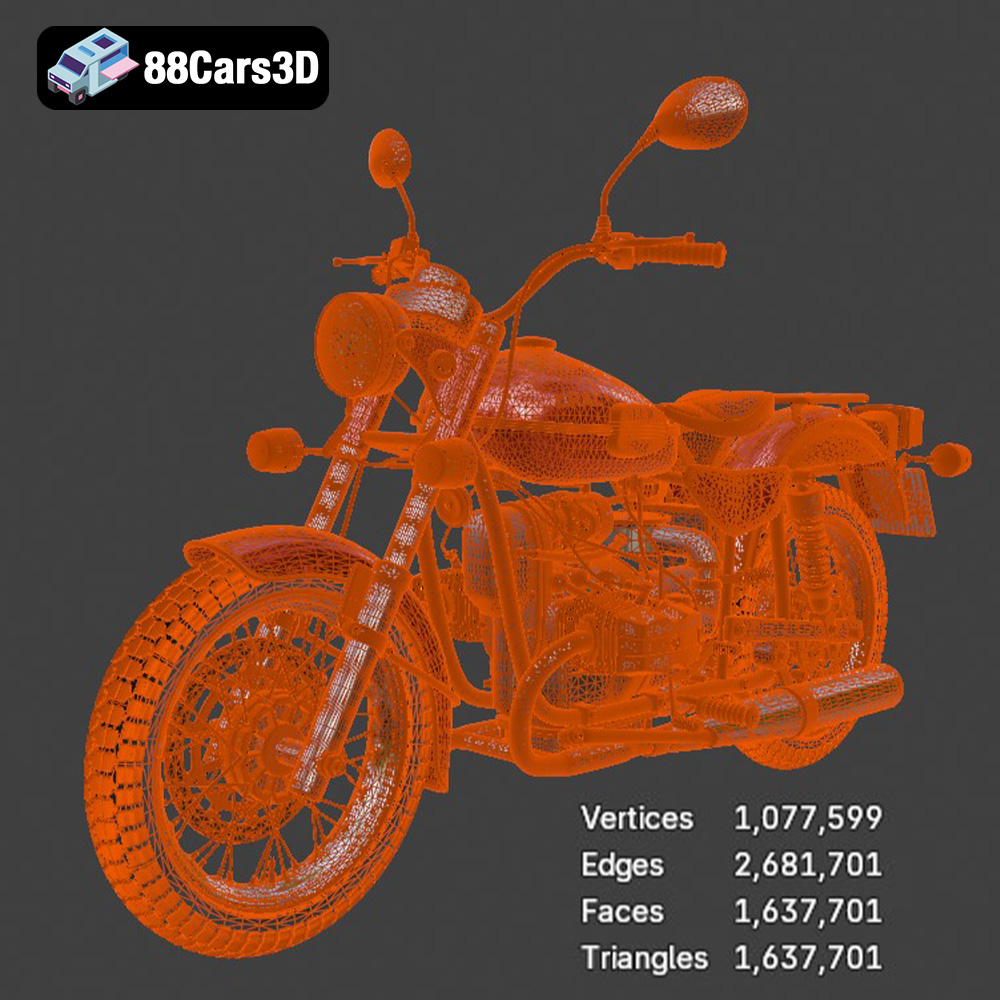
At the core of any high-quality 3D model is its geometry and topology. Clean geometry refers to a mesh free of issues like non-manifold edges, inverted normals, and overlapping faces. Optimized topology, on the other hand, means the polygons (typically quads) are arranged efficiently, allowing for smooth deformations during animation and consistent subdivision surfaces for close-up renders. For automotive rendering or game assets, this is paramount. The Ural Solo sT 3D Model boasts well-structured topology, ensuring smooth performance whether it’s viewed from a distance in a game engine or rendered up close with high-resolution details.
Beyond the raw mesh, accurate proportions are critical for believability. A model must precisely match its real-world counterpart’s dimensions and form. Furthermore, realistic materials and textures are what truly sell the illusion. This involves physically based rendering (PBR) workflows, utilizing maps like Albedo (Base Color), Normal, Roughness, Metallic, and Ambient Occlusion. These maps simulate how light interacts with different surfaces, from the metallic sheen of chrome to the matte finish of a tire or the subtle reflectivity of painted bodywork. The Ural Solo sT 3D Model, with its carefully crafted design and realistic materials, captures the rugged essence and iconic presence of the original vehicle, making it suitable for even the most demanding visualization tasks.
One of the most powerful aspects of professional 3D models, such as those found on 88cars3d.com, is their versatility, often facilitated by a wide array of compatible file formats. Each format serves specific purposes and offers unique advantages for different stages of the production pipeline. Understanding these distinctions is key to maximizing your workflow efficiency and ensuring project compatibility.
The .blend format is the native file type for Blender, the popular open-source 3D creation suite. When you acquire a .blend file, you’re getting a fully editable Blender scene, complete with the model’s geometry, materials, textures, lighting setups, camera positions, and potentially even animation data. This format is ideal for users who work primarily in Blender, offering the highest degree of flexibility for customization, tweaking materials, adjusting lighting, or even dissecting the model’s construction. For artists seeking to modify the Ural Solo sT 3D Model or integrate it into an existing Blender scene with specific rendering requirements, the .blend file provides an unparalleled starting point.
.fbx (Filmbox) is a proprietary file format developed by Autodesk, serving as an industry-standard for 3D asset interchange between various software applications. Its strength lies in its ability to store a wide range of data, including models, animations, cameras, and lighting, while maintaining hierarchical relationships. .fbx is particularly revered in game development, making it ideal for export to engines like Unreal Engine and Unity. Its robust nature ensures that the Ural Solo sT 3D Model can be seamlessly imported into these environments, retaining its structural integrity, UVs, and material assignments, ready for real-time pipelines.
The .obj (Wavefront OBJ) format is one of the oldest and most widely supported 3D file formats. It’s a universal standard, compatible with virtually all major 3D software packages. An .obj file primarily stores geometric data – vertices, faces, normals, and UV coordinates – and typically references an accompanying .mtl (material) file for basic material definitions. While it doesn’t support advanced features like animation or rigging, its widespread compatibility makes it a safe choice for cross-software transfers. If you need to bring the Ural Solo sT 3D Model into less common software or simply want a clean mesh for a new project, .obj is a reliable option.
.glb (GL Transmission Format Binary) is an increasingly important format, especially for modern applications. It’s a binary version of the glTF (GL Transmission Format), designed to be a compact, efficient, and runtime-ready format for 3D scenes and models. .glb files embed all necessary data – geometry, materials, textures, and animations – into a single file, making them highly optimized for web-based 3D, augmented reality (AR), virtual reality (VR), and other real-time experiences. For showcasing the Ural Solo sT 3D Model on the web or integrating it into an AR/VR app, the .glb format offers superior performance and ease of deployment.
.stl (STereoLithography) is the de facto standard file format for 3D printing. Unlike other formats that store material or animation data, .stl files exclusively describe the surface geometry of a 3D object using a collection of triangular facets. This simple, robust format is universally accepted by 3D printers and slicing software. If your project involves bringing the Ural Solo sT into the physical realm – perhaps for prototyping, scale models, or custom collectibles – the .stl variant ensures a smooth transition from digital design to tangible object.
.ply (Polygon File Format or Stanford Triangle Format) is a file format designed to store 3D data from 3D scanners or other sources. It can represent a wide range of properties, including color, transparency, surface normals, and texture coordinates, for each vertex and face. While less common for general creative asset exchange than .fbx or .obj, .ply is often used in scientific, engineering, and architectural visualization for its precision and ability to handle dense, detailed polygon meshes. For highly accurate analytical or visualization tasks involving the Ural Solo sT 3D Model, the .ply format offers a detailed representation.
The .unreal format signifies an asset specifically configured and optimized for Unreal Engine. This often means the model has already undergone crucial steps like LOD (Level of Detail) generation, collision mesh creation, material setup tailored for Unreal’s physically based renderer, and proper scaling. An .unreal file or a set of assets packaged for Unreal saves tremendous time in the import and setup process, allowing developers to drop the Ural Solo sT 3D Model directly into their real-time environments with minimal additional work, ensuring it looks and performs as intended.
Finally, the .max format is the native scene file for Autodesk 3ds Max, a powerful 3D modeling, animation, rendering, and compositing software. Similar to .blend, a .max file contains the entire scene data, including geometry, materials, textures, lighting, cameras, rigging, and animation. For users deeply entrenched in the 3ds Max ecosystem, having the Ural Solo sT 3D Model in .max format provides complete control for high-end automotive rendering, complex animations, or integrating it into large-scale architectural visualization projects with other detailed models.
The availability of the Ural Solo sT 3D Model in these diverse formats underscores its versatility and the commitment of 88cars3d.com to providing assets that truly fit professional workflows across the entire digital spectrum.
With a comprehensive understanding of file formats and the core attributes of a high-quality model, let’s explore how an asset like the Ural Solo sT 3D Model seamlessly integrates into various professional pipelines, serving different creative and technical demands.
Automotive rendering is an art form focused on creating stunning, photorealistic images and animations of vehicles. For this, tools like 3ds Max (often paired with V-Ray or Corona Renderer) or Blender (with Cycles or Eevee) are paramount. The Ural Solo sT 3D Model, provided in both .max and .blend formats, offers a perfect starting point. Artists can:
This streamlined process allows render artists to spend less time on asset creation and more time on artistic direction, resulting in breathtaking visualizations for marketing, design reviews, or portfolio pieces.
In game development, the balance between visual fidelity and performance is crucial. Game assets must be highly optimized to run smoothly in real-time engines like Unreal Engine or Unity. The Ural Solo sT 3D Model’s availability in .fbx and dedicated .unreal formats caters directly to these needs.
Integrating the Ural Solo sT into a racing game, an open-world adventure, or a simulation offers immediate visual appeal and ensures game-ready performance thanks to its optimized structure.
Augmented Reality (AR), Virtual Reality (VR), and web-based 3D visualizations are rapidly expanding fields that demand efficient, lightweight, yet visually rich assets. The .glb format of the Ural Solo sT 3D Model is specifically tailored for these applications.
The Ural Solo sT 3D Model brings an immediate sense of immersion and engagement to these cutting-edge platforms.
The utility of high-quality 3D car models extends beyond purely digital realms. The advent of affordable 3D printing technology has opened new avenues for physical prototyping, custom manufacturing, and collectible creation. The availability of the Ural Solo sT 3D Model in .stl format bridges the gap between the virtual and the tangible.
The .stl file format is specifically designed to convey the surface geometry of a 3D object to a 3D printer. It represents the model as a series of connected triangles, forming a watertight mesh essential for successful printing. With the .stl version of the Ural Solo sT 3D Model, users can:
This capability adds another layer of versatility to the Ural Solo sT 3D Model, making it a valuable asset for both digital and physical production pipelines.
In an industry where time is money and quality is paramount, the strategic acquisition of pre-made, professional-grade 3D assets offers significant advantages. 88cars3d.com stands as a premier online marketplace specializing in high-quality 3D car models, providing a curated selection that meets the rigorous demands of various creative and technical professionals.
Developing a complex 3D asset like a vehicle from scratch can consume hundreds, if not thousands, of hours. This involves not only modeling the intricate geometry but also meticulously unwrapping UVs, creating realistic textures, setting up materials, and optimizing the mesh for various uses. By sourcing assets like the Ural Solo sT 3D Model from 88cars3d.com, you are investing in:
Whether you’re a solo freelancer, a game studio, or an architectural visualization firm, the quality and accessibility of these 3D car models are a game-changer.
88cars3d.com ensures that its products, including the Ural Solo sT 3D Model, meet professional standards, providing clean geometry, accurate proportions, and realistic materials suitable for diverse applications. This means you can confidently use these assets for:
The versatility inherent in the Ural Solo sT 3D Model, evidenced by its wide range of available file formats, means it’s not just a beautiful asset, but a highly adaptable tool designed to integrate seamlessly into virtually any demanding digital pipeline.
The journey from concept to final product in the digital realm is paved with challenges, but the quality of your foundational assets can significantly smooth the path. High-quality 3D models are not merely visual elements; they are technical marvels engineered for performance, versatility, and aesthetic excellence across myriad applications. From the intricate demands of automotive rendering to the rigorous optimization required for game assets and the innovative potential of AR/VR, a professionally crafted model is an indispensable tool.
The Ural Solo sT 3D Model epitomizes these principles, offering true realism, authentic structural precision, and clean geometry across a comprehensive suite of file formats. Its readiness for diverse workflows, whether in 3ds Max, Blender, Unreal Engine, or for 3D printing, makes it an outstanding choice for creators seeking to elevate their projects. By leveraging expertly designed assets like this from platforms such as 88cars3d.com, artists and developers can unlock unparalleled creative potential, save invaluable time, and consistently deliver results that truly stand out in a competitive digital landscape. Invest in quality, and watch your visions come to life with remarkable fidelity and seamless integration.
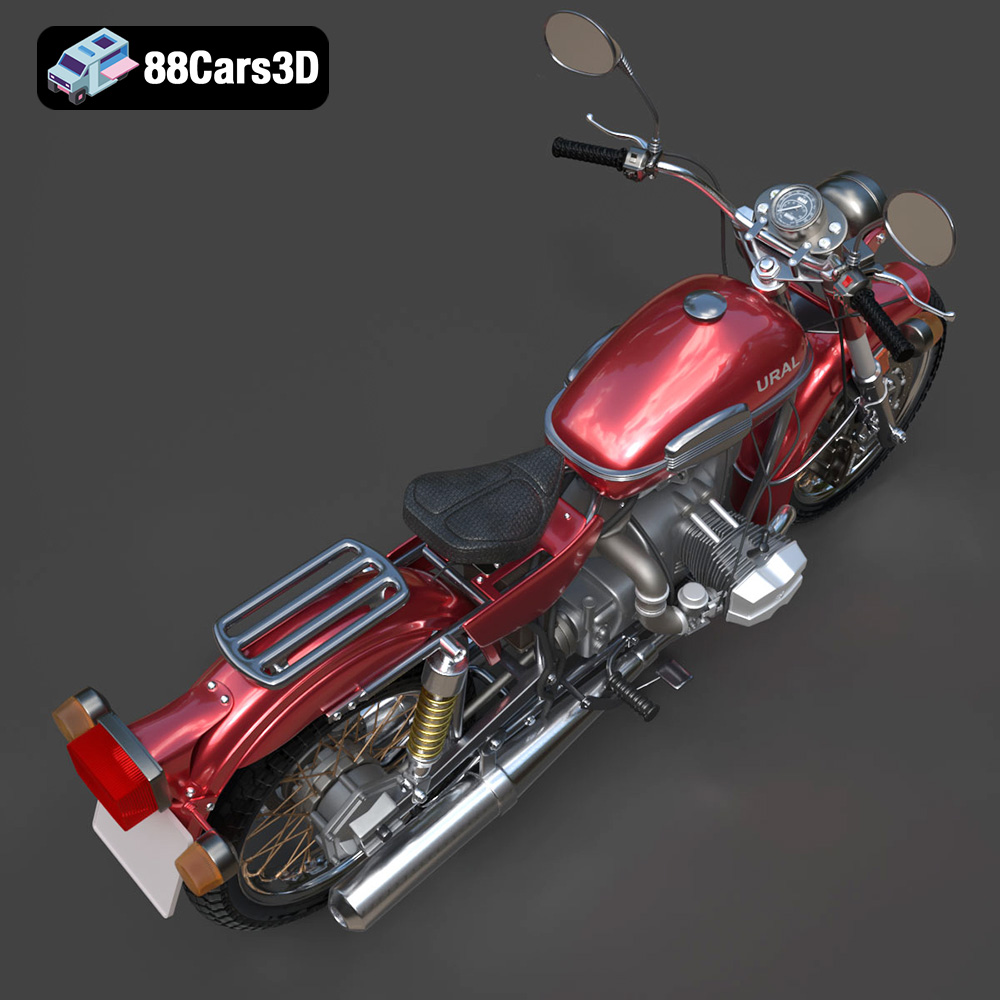
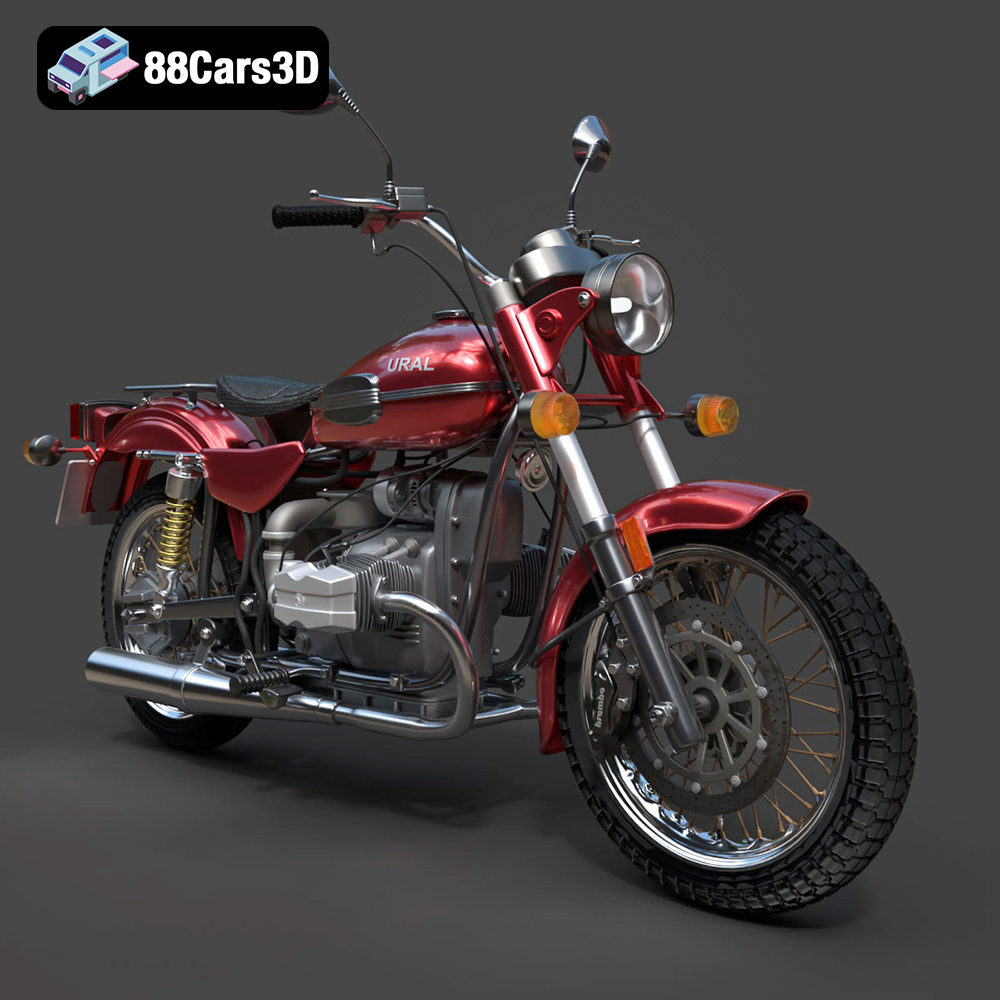
Experience true realism with the Ural Solo sT 3D Model. This carefully crafted digital asset captures the rugged design and iconic presence of the Ural Solo sT, delivering exceptional detail for your projects. Ideal for both close-up shots and expansive environments, this model brings authentic structural precision to any scene. Built with professional quality in mind, the model features clean geometry, accurate proportions, and realistic materials. The well-structured topology ensures smooth performance and flawless subdivision, making it an excellent choice for a variety of demanding digital pipelines and rendering setups. This versatile 3D model is perfect for diverse applications, including game development, automotive rendering, AR/VR experiences, and simulation visualization. It integrates seamlessly into your workflow, providing a ready-to-use solution for creators, designers, and developers alike.
$19.99
.arvr
.blend
.car3dmodel
.cruiser
.fbx
.gameasset
.glb
.max
.motorcycle
.obj
.ply
.rendering
.simulation
.solost
.stl
.unreal
.ural