Get 20% OFF All Premium 3D & STL Models!

In the dynamic realm of digital content creation, the demand for high-fidelity 3D assets continues to escalate. Whether you’re an automotive designer visualizing a new concept, a game developer crafting an immersive open world, or a marketing professional creating breathtaking commercials, the quality of your 3D models dictates the realism and impact of your final output. Achieving photorealism and optimal performance often hinges on starting with impeccably crafted 3D models. This is especially true for vehicles, which present unique challenges in terms of intricate detailing, complex reflections, and demanding performance requirements in real-time applications.
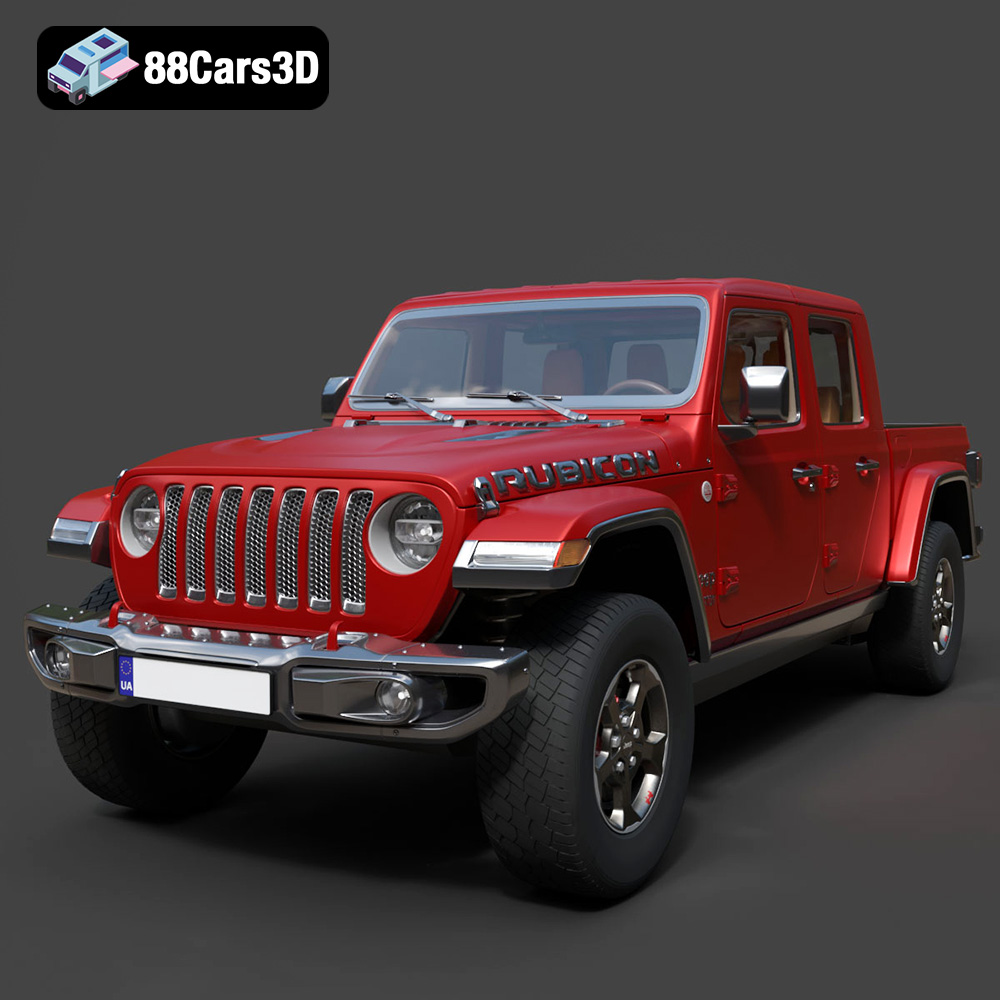
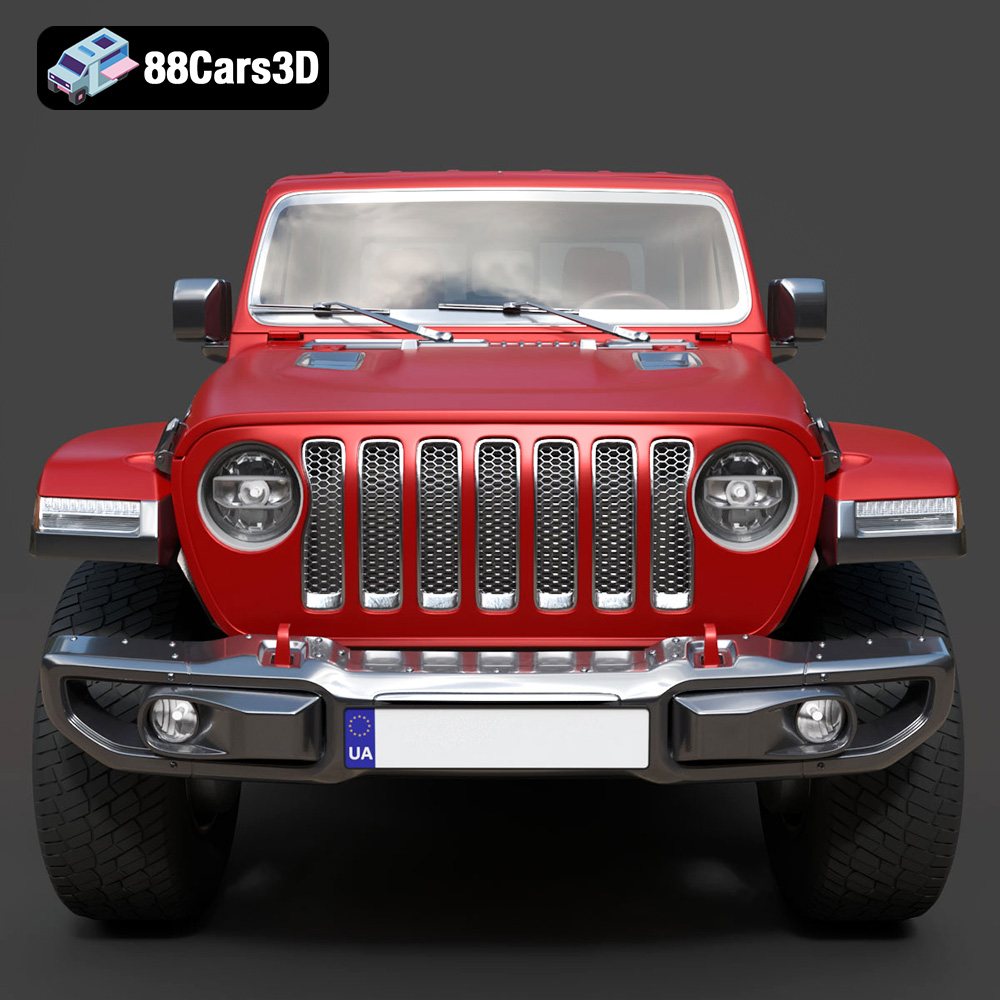
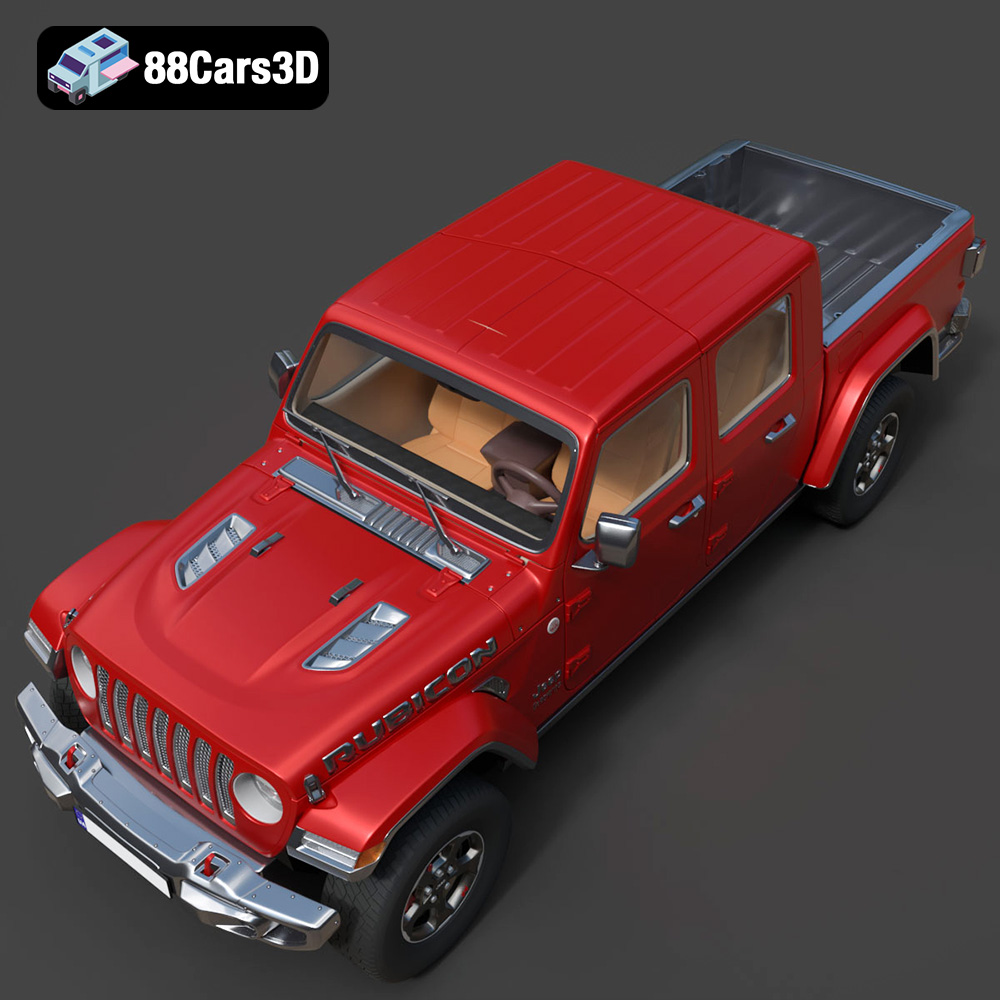
Today, we delve into the world of professional 3D car models, exploring the technical nuances, essential workflows, and diverse applications that transform raw geometry into stunning digital experiences. We’ll specifically highlight how meticulously prepared assets, such as the Jeep Gladiator Rubicon 2020 3D Model available on 88cars3d.com, empower artists and developers to elevate their projects without compromise. This particular model stands out for its realistic digital representation, capturing the iconic styling and structural details, and is an ideal asset for a wide range of professional digital projects, from game development to architectural rendering and AR/VR experiences.
The choice of file format is often as critical as the model itself, dictating compatibility, feature support, and optimization for specific pipelines. A professional 3D model, like the Jeep Gladiator Rubicon 2020 3D Model, offers a diverse array of formats to ensure maximum versatility across various software and platforms. Understanding each format’s strengths and weaknesses is fundamental for seamless integration and efficient workflow.
The .blend format is Blender’s native file type, offering a comprehensive package that includes not only the mesh data but also materials, textures, lighting setups, cameras, animations, and even scripts. This makes it an incredibly powerful format for Blender users, as it preserves the entire scene’s context. When you download a .blend file, you’re getting a fully editable project, allowing for deep customization. Artists can easily adjust materials, modify the mesh, re-rig, or tweak lighting without losing any original scene information. This is particularly valuable for detailed models like the Jeep Gladiator Rubicon 2020, where the included lighting and material setups provide an excellent starting point for rendering or further development within Blender’s Cycles or Eevee render engines.
.fbx (Filmbox) is arguably the most widely adopted interchange format in the 3D industry, especially favored for game development and animation pipelines. Developed by Autodesk, FBX excels at transferring complex scene data, including geometry, materials, textures, animation, skeletal rigs, and even blend shapes, between different 3D software applications such as 3ds Max, Maya, Blender, Unity, and Unreal Engine. Its robust support for animation curves and hierarchical structures makes it ideal for animated 3D car models or game assets requiring movement. For real-time applications, .fbx files can be highly optimized, often supporting LODs (Levels of Detail) and efficient material assignments. The Jeep Gladiator Rubicon 2020 3D Model’s .fbx version is perfectly tailored for game-engine ready deployment in environments like Unreal Engine and Unity.
The .obj (Wavefront OBJ) format is a classic and highly compatible 3D model format. It primarily stores geometric data – vertices, faces, normals, and UV coordinates – making it a universal choice for basic mesh transfer across virtually all 3D software. While it doesn’t typically embed animations or complex material nodes directly, it references external .mtl (material template library) files for color and texture information. Its simplicity makes it extremely stable and reliable for raw mesh data. For users needing a clean mesh to import into a less common software package or for specific CAD applications, the .obj version of a high-quality 3D car model is invaluable, providing a solid foundation for further work.
.glb (GLB Binary) is a compact, single-file version of the glTF (GL Transmission Format), designed for efficient transmission and loading of 3D scenes and models in web and real-time applications. It packages geometry, materials, textures, and animations into a single binary file, making it incredibly streamlined for AR (Augmented Reality), VR (Virtual Reality), and browser-based 3D viewers. Its focus on PBR (Physically Based Rendering) materials and optimized data structures ensures fast loading times and consistent visual quality across platforms. As AR/VR experiences become more prevalent, having a .glb version of the Jeep Gladiator Rubicon 2020 is crucial for showcasing the model interactively on websites or within mobile AR applications.
The .stl (Stereolithography) format is the de facto standard for 3D printing. It represents a 3D model as a collection of unconnected triangular facets, defining only the surface geometry without color, texture, or material information. For successful 3D printing, an .stl file must represent a “watertight” mesh, meaning it has no holes or inverted normals, ensuring the printer can correctly interpret the volume. While not suitable for rendering or animation, the .stl version of the Jeep Gladiator Rubicon 2020 allows for rapid prototyping, physical scale models, or even custom parts fabrication, bringing the digital asset into the physical world.
The .ply (Polygon File Format) is another format for storing 3D data, particularly useful for scanned data, CAD, and scientific applications. It can store various properties beyond just geometry, including color, transparency, normals, texture coordinates, and even reliability information for each vertex or face. It’s known for its precision and flexibility in representing complex polygonal meshes, making it suitable for detailed analysis or when integrating models into advanced engineering or simulation software. For applications demanding high accuracy and additional data points beyond simple geometry, the .ply version of the Gladiator provides a robust data structure.
The .unreal format, or more accurately, an asset package explicitly prepared for Unreal Engine, implies a highly optimized and pre-configured asset ready for direct import and use within the engine. This often includes carefully set up PBR materials, collision meshes, LODs (Levels of Detail), and sometimes even basic Blueprint configurations. Such a format significantly accelerates workflow for Unreal Engine developers, as it bypasses much of the manual setup typically required after importing a generic .fbx. The Jeep Gladiator Rubicon 2020 3D Model’s .unreal package ensures that developers can drop the model into their scenes with minimal effort, guaranteeing engine compatibility and performance straight out of the box.
The .max format is the native file type for Autodesk 3ds Max, one of the leading 3D modeling, animation, and rendering software packages. Similar to .blend, a .max file encapsulates the entire scene, including geometry, materials (especially V-Ray or Corona setups), lighting, cameras, animation, and modifiers. For professionals working within the 3ds Max ecosystem, this provides the highest level of editability and control. Artists can leverage 3ds Max’s powerful modeling tools, sophisticated rendering engines, and extensive plugin support to customize the Jeep Gladiator Rubicon 2020 3D Model, integrate it into complex architectural visualizations, or create cinematic automotive animations.
By offering such a comprehensive suite of file formats, the Jeep Gladiator Rubicon 2020 3D Model from 88cars3d.com ensures that it meets the diverse technical demands of virtually any professional pipeline, providing flexibility and efficiency.
Automotive rendering is a specialized field that combines artistic flair with technical precision. It’s about more than just making a car look good; it’s about conveying its character, material properties, and environmental interaction with absolute realism. High-quality 3D car models are the bedrock of this process, providing the accurate geometry and material definitions needed to achieve photorealistic results.
Modern rendering relies heavily on Physically Based Rendering (PBR) workflows. PBR materials accurately simulate how light interacts with surfaces in the real world, based on properties like albedo (base color), roughness, metallicness, and normal maps. A professionally built model, such as the Jeep Gladiator Rubicon 2020 3D Model, comes with meticulously crafted PBR materials. This means the digital paint reflects light like real car paint, the tires exhibit the correct rubber texture, and chrome elements gleam authentically. Artists using software like 3ds Max with V-Ray or Corona Renderer, or Blender with Cycles, can leverage these pre-configured materials to drastically reduce setup time and achieve consistent, realistic results across different lighting conditions.
Beyond materials, lighting is paramount. High Dynamic Range Imagery (HDRI) environments are often used to provide realistic, image-based lighting that mimics real-world scenarios – from bright sunny days to overcast twilight. Integrating a 3D car model into an HDRI environment requires careful consideration of scale, ground shadows, and reflections. The clean geometry and optimized polygon count of models like the Gladiator ensure that reflections are crisp and accurate, capturing the nuances of the surrounding environment on its bodywork. This level of detail is crucial for automotive visualization, where every reflection tells a story about the car’s interaction with its surroundings.
Game development demands a different set of optimizations and considerations compared to static rendering. Real-time performance is key, requiring models that are both visually impressive and incredibly efficient. The “game-engine ready” promise of assets like the Jeep Gladiator Rubicon 2020 3D Model is vital here.
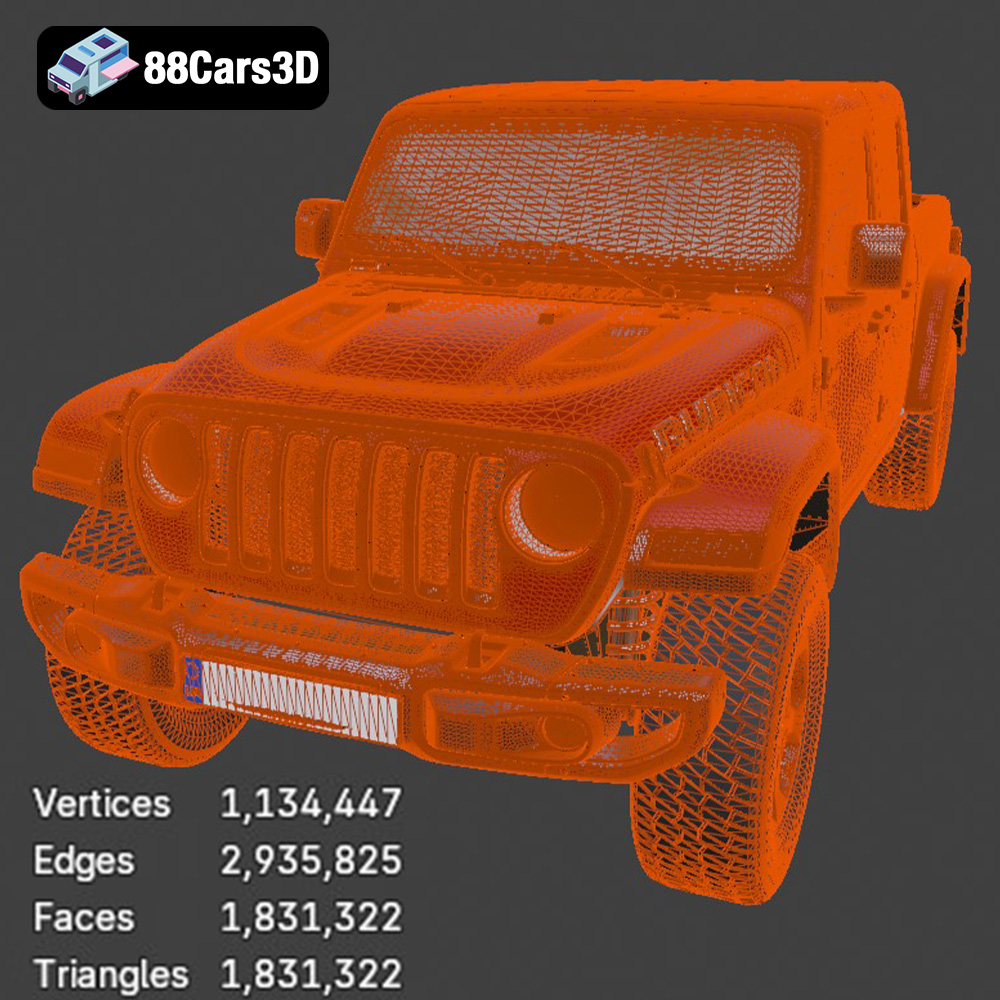
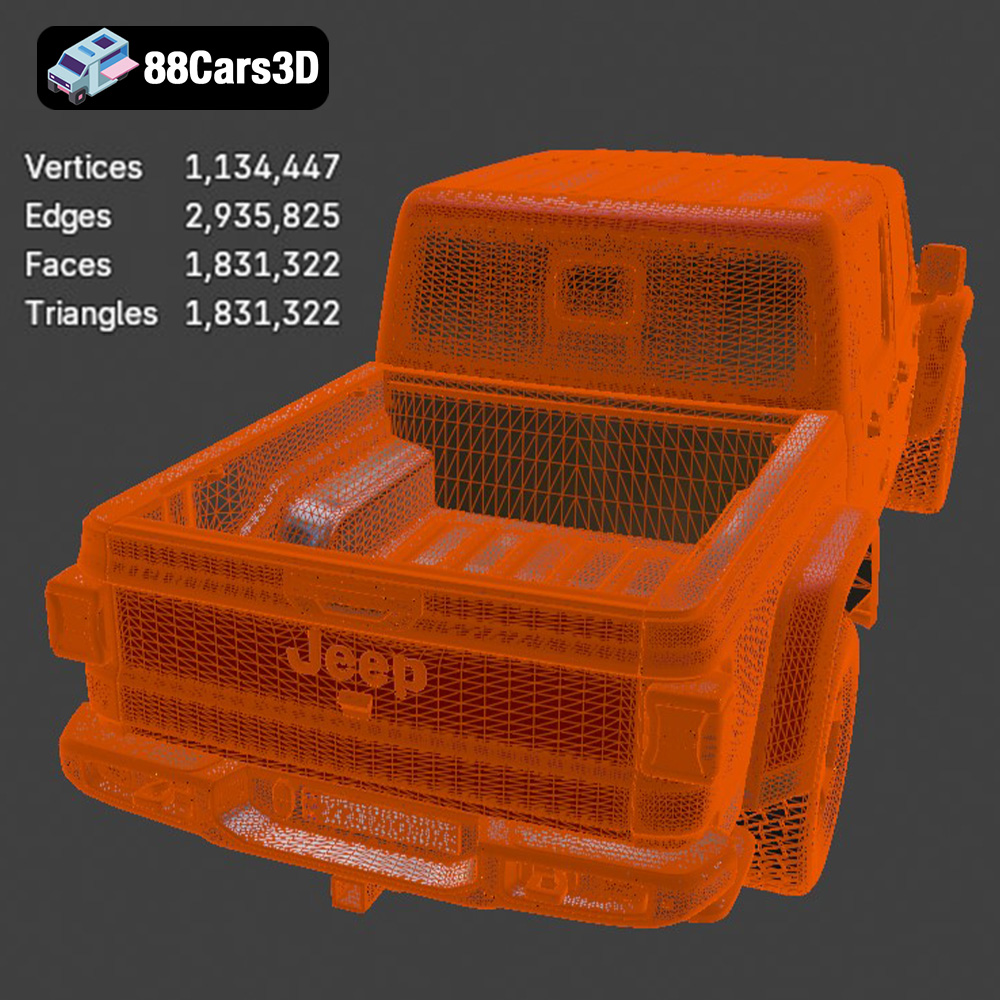
An optimized polygon count is a critical specification for game assets. While film and advertising can afford millions of polygons, game engines require models to be lean and efficient, often relying on Normal maps to bake high-detail information onto lower-polygon meshes. The Jeep Gladiator Rubicon 2020 3D Model is designed with this balance in mind, ensuring it looks great without bogging down frame rates. This optimization extends to clean UV layouts, which are essential for efficient texture mapping and preventing visual artifacts in-game. Additionally, game-ready assets typically come with pre-built LODs (Levels of Detail) that automatically swap out higher-poly versions for lower-poly ones as the player moves further away, maximizing performance without sacrificing perceived quality.
For engines like Unreal Engine and Unity, the included .fbx and .unreal formats of the Jeep Gladiator Rubicon 2020 3D Model are invaluable. Importing an .fbx into Unity allows developers to quickly set up materials using Unity’s PBR shaders, attach colliders for physics, and integrate the vehicle into gameplay systems. For Unreal Engine, the dedicated .unreal asset offers an even more streamlined experience. It often includes pre-configured material instances, physics assets, and sometimes even basic vehicle Blueprints, allowing developers to drag and drop a fully functional vehicle into their scene. This dramatically cuts down on development time, enabling studios to focus on unique gameplay mechanics rather than basic asset preparation.
The applications of high-quality 3D car models extend far beyond traditional screens. Augmented Reality (AR), Virtual Reality (VR), and 3D printing represent emerging frontiers where detailed and optimized 3D assets are transforming industries.
AR and VR environments demand highly optimized models that load quickly and maintain performance in real-time, often on mobile or standalone devices. The .glb format, included with the Jeep Gladiator Rubicon 2020 3D Model, is specifically designed for this purpose. Its compact, self-contained nature makes it ideal for web-based AR experiences (e.g., viewing a car model in your driveway through a smartphone) or integrating into VR training simulators. The optimized geometry and PBR materials ensure that even in an immersive headset, the model retains its visual fidelity, contributing to a believable and engaging user experience. Automotive configurators, virtual showrooms, and driving simulations all benefit immensely from such purpose-built assets.
While often overlooked, 3D printing provides a tangible bridge between the digital and physical worlds. The .stl format of the Jeep Gladiator Rubicon 2020 3D Model allows designers and enthusiasts to bring the digital vehicle to life as a physical prototype or collectible. For 3D printing, the model needs to be “watertight” – a continuous, enclosed surface without gaps or overlapping faces. Professional 3D models are typically constructed with this in mind or can be easily prepared for printing. This application is invaluable for automotive designers to create physical mock-ups, for marketing teams to produce unique promotional items, or for hobbyists to build detailed scale models, showcasing the versatility of high-quality 3D assets.
In any professional creative pipeline, time is a precious commodity. Sourcing high-quality, pre-made 3D assets is not just about convenience; it’s a strategic decision that can significantly optimize workflows, reduce production costs, and accelerate project timelines.
Building a complex 3D car model from scratch is an incredibly time-consuming and labor-intensive process, requiring specialized skills in modeling, UV unwrapping, texturing, and rigging. For a vehicle like the Jeep Gladiator Rubicon 2020, capturing its intricate details, from the iconic grille to the robust suspension, demands hundreds of hours of work. By acquiring a professionally crafted model from a reputable source like 88cars3d.com, studios and individual artists can bypass this extensive initial phase. This frees up valuable internal resources, allowing teams to focus on core tasks such as scene composition, animation, lighting, and interactive programming, ultimately leading to faster project completion and more efficient resource allocation.
Professional 3D asset marketplaces curate models that adhere to industry best practices. This means expecting clean topology, proper UV mapping, optimized poly counts, and realistic PBR materials. Such consistency in quality is crucial, especially in large-scale projects or when collaborating with multiple artists. A poorly constructed model can lead to endless headaches – rendering errors, performance bottlenecks in game engines, and difficulties in modification. The Jeep Gladiator Rubicon 2020 3D Model, with its “clean geometry” and “optimized polygon count,” exemplifies this commitment to quality, ensuring smooth integration and predictable results, project after project.
When the success of your project hinges on the realism and performance of your 3D car models, selecting the right source is paramount. 88cars3d.com stands as a dedicated marketplace committed to providing exceptional quality and versatility, ensuring artists and developers have access to the best tools for their creative endeavors.
88cars3d.com focuses specifically on high-quality 3D car models, understanding the intricate demands of automotive visualization, game development, and other professional applications. Each model, including the Jeep Gladiator Rubicon 2020 3D Model, is rigorously crafted to meet stringent industry standards. This means attention to detail in replicating exterior styling, structural components, and even subtle nuances that contribute to an authentic digital twin. The curation process ensures that every asset you purchase is built with precision, featuring clean geometry and realistic materials, ready for immediate use.
One of the standout features of models purchased from 88cars3d.com is the comprehensive range of included file formats. As we’ve explored, different workflows demand different file types, and the availability of .blend, .fbx, .obj, .glb, .stl, .ply, .unreal, and .max for the Jeep Gladiator Rubicon 2020 3D Model removes compatibility barriers entirely. This unparalleled versatility ensures that whether you’re working in Blender, 3ds Max, Unreal Engine, or preparing for AR/VR or 3D printing, you have the exact file format optimized for your specific needs. This flexibility not only streamlines your workflow but also expands the potential applications of the asset across diverse projects.
The journey from a blank canvas to a breathtaking automotive render or an immersive game world is paved with countless technical decisions and artistic challenges. At its core, the quality of your 3D car models can make or break a project’s realism, performance, and overall impact. By understanding the intricacies of file formats, optimizing for specific applications, and leveraging professionally crafted assets, artists and developers can significantly elevate their creative output.
The Jeep Gladiator Rubicon 2020 3D Model is a prime example of a meticulously designed asset that embodies these principles. Its clean geometry, optimized poly count, realistic PBR materials, and extensive range of included file formats (.blend, .fbx, .obj, .glb, .stl, .ply, .unreal, .max) make it an indispensable tool for anyone seeking to create stunning visuals or build engaging interactive experiences. Whether for high-end automotive rendering, robust game assets, cutting-edge AR/VR applications, or even physical 3D prints, this model provides a solid, versatile foundation.
Investing in high-quality 3D car models from trusted sources like 88cars3d.com is not just about acquiring an asset; it’s about investing in efficiency, quality, and the boundless potential of your digital projects. Elevate your automotive visualization and game development today by exploring the premium selection available.
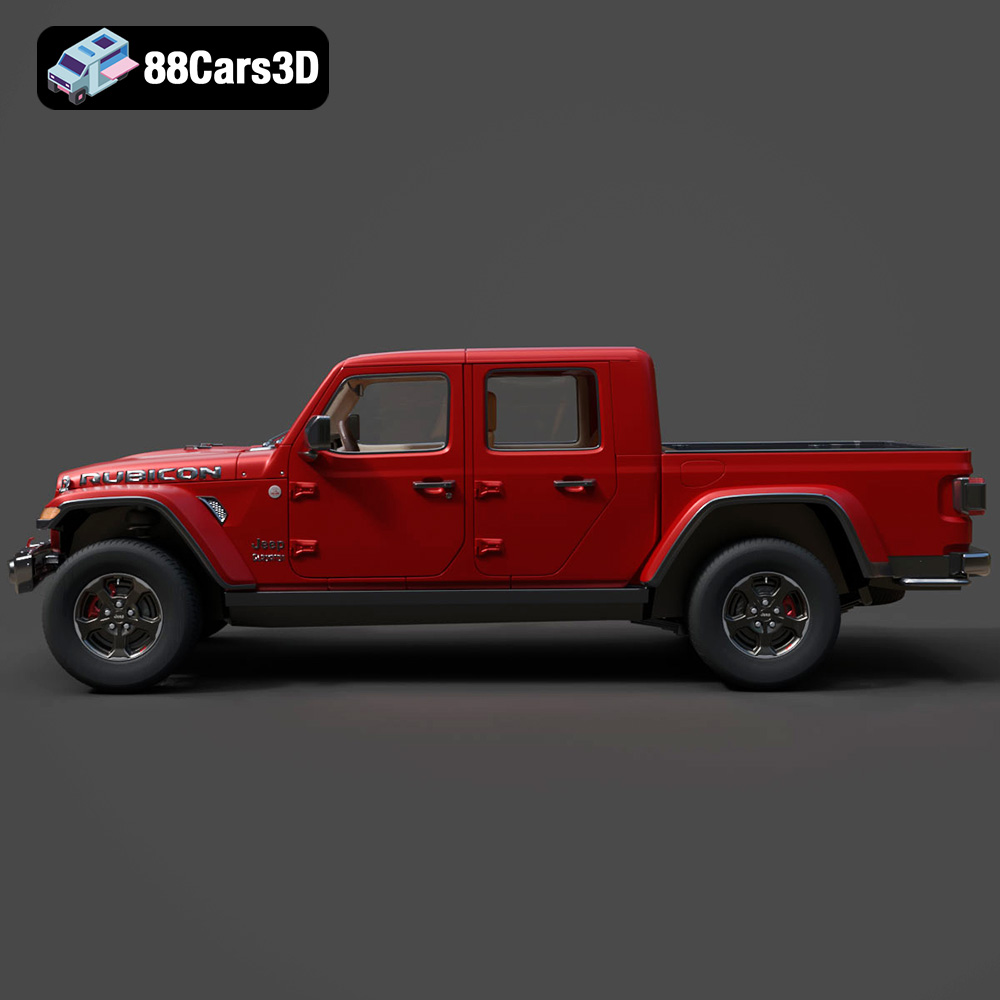
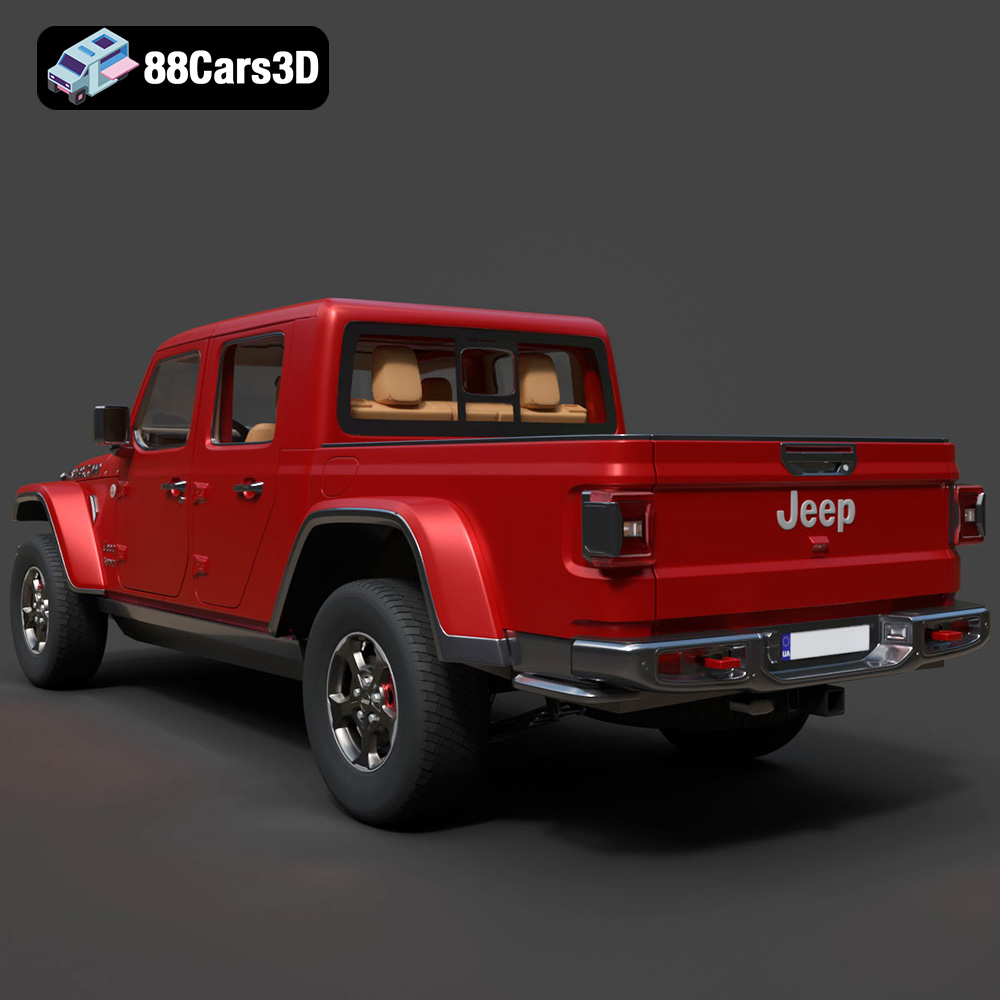
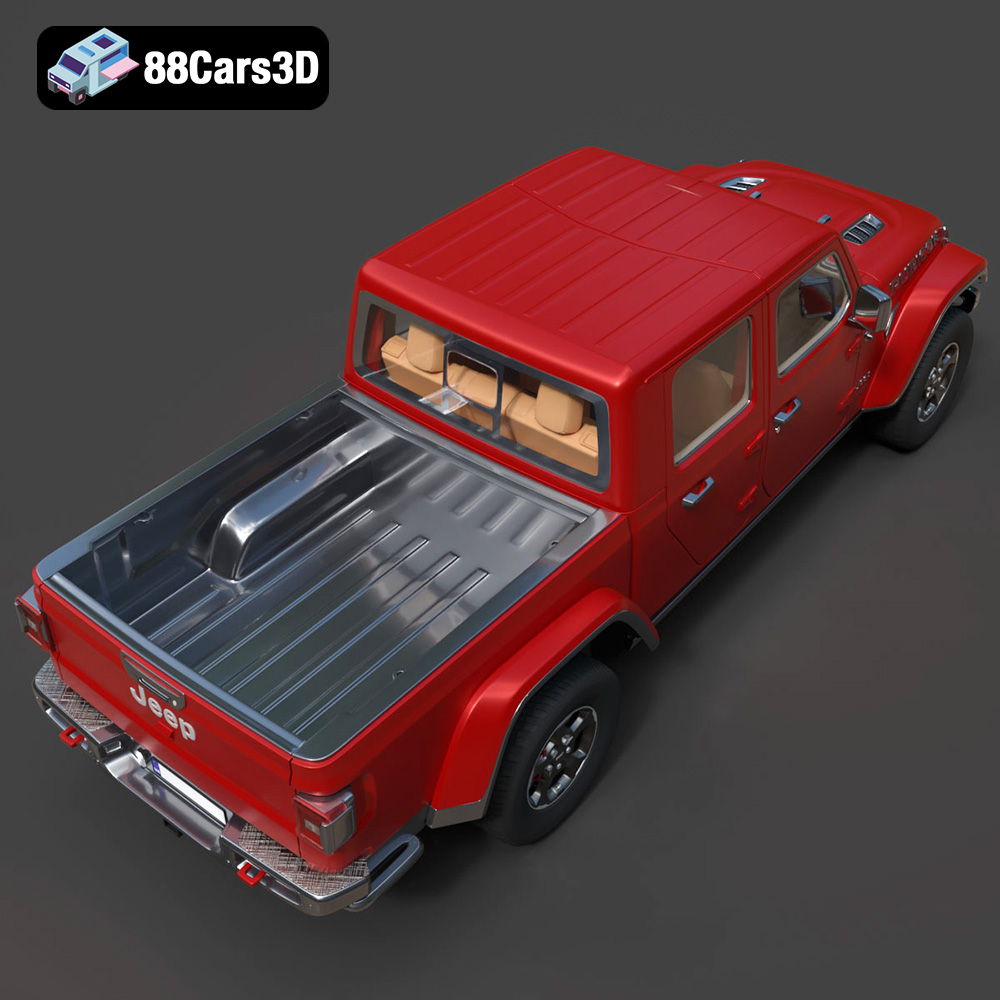
Discover the realistic digital representation of the Jeep Gladiator Rubicon 2020 3D Model, meticulously crafted to deliver an authentic digital twin of this rugged off-road vehicle. This model captures the iconic exterior styling and intricate structural details, making it an ideal asset for professional digital projects.
Built with precision, the model features clean geometry, an optimized polygon count, and realistic materials. Every element has been designed to meet professional standards, ensuring seamless integration into your scenes while maintaining excellent performance.
Perfect for a wide range of applications, this versatile 3D model excels in game development, architectural rendering, automotive visualization, AR/VR experiences, and animations.
$19.99
.4×4
.arvr
.blend
.car3dmodel
.fbx
.gameasset
.gladiator
.glb
.jeep
.jt
.max
.obj
.offroad
.pickup
.ply
.rendering
.rubicon
.simulation
.stl
.truck
.unreal