Get 20% OFF All Premium 3D & STL Models!

In the vibrant, fast-paced world of 3D content creation, the demand for high-quality, production-ready assets is ceaseless. Whether you’re crafting an immersive racing simulation, designing a captivating marketing campaign, or prototyping for a cutting-edge AR/VR experience, the underlying quality of your 3D models dictates the success and realism of your project. Automotive rendering, in particular, requires an unparalleled level of precision and detail, pushing the boundaries of what 3D artists and developers can achieve.
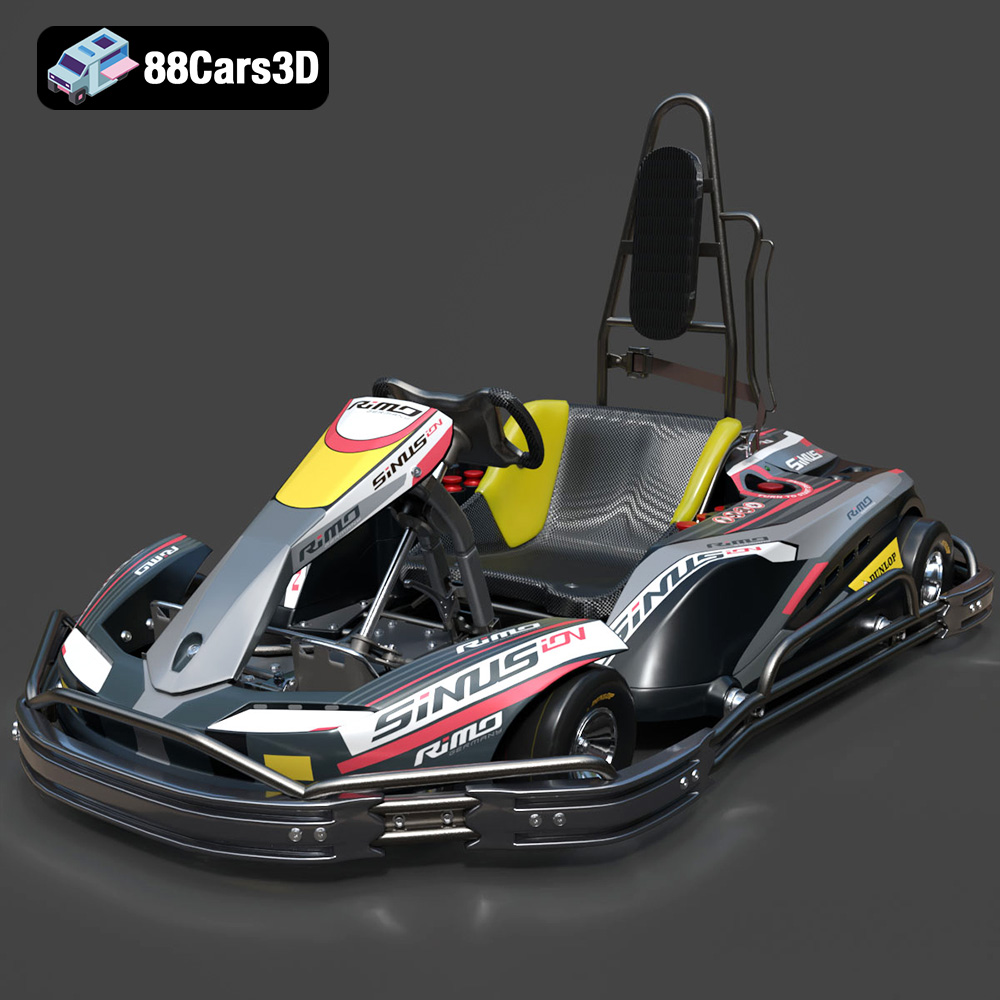
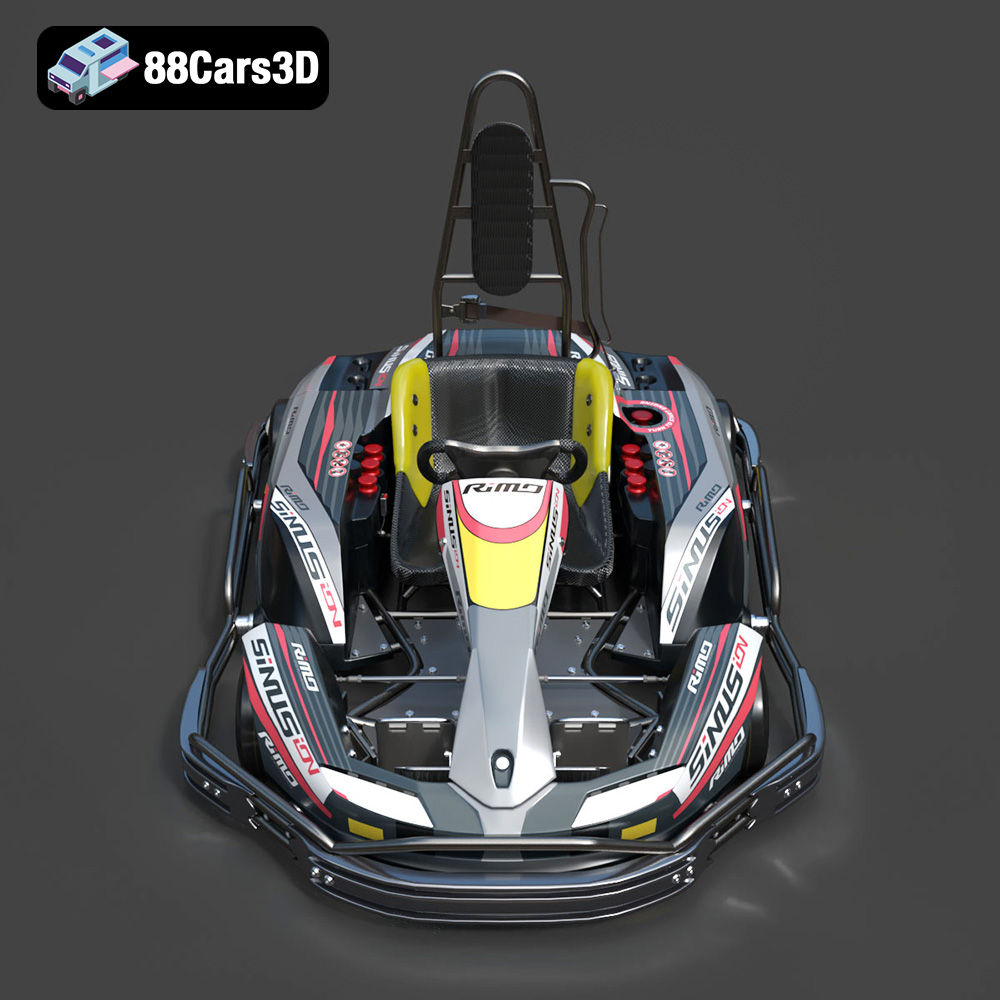
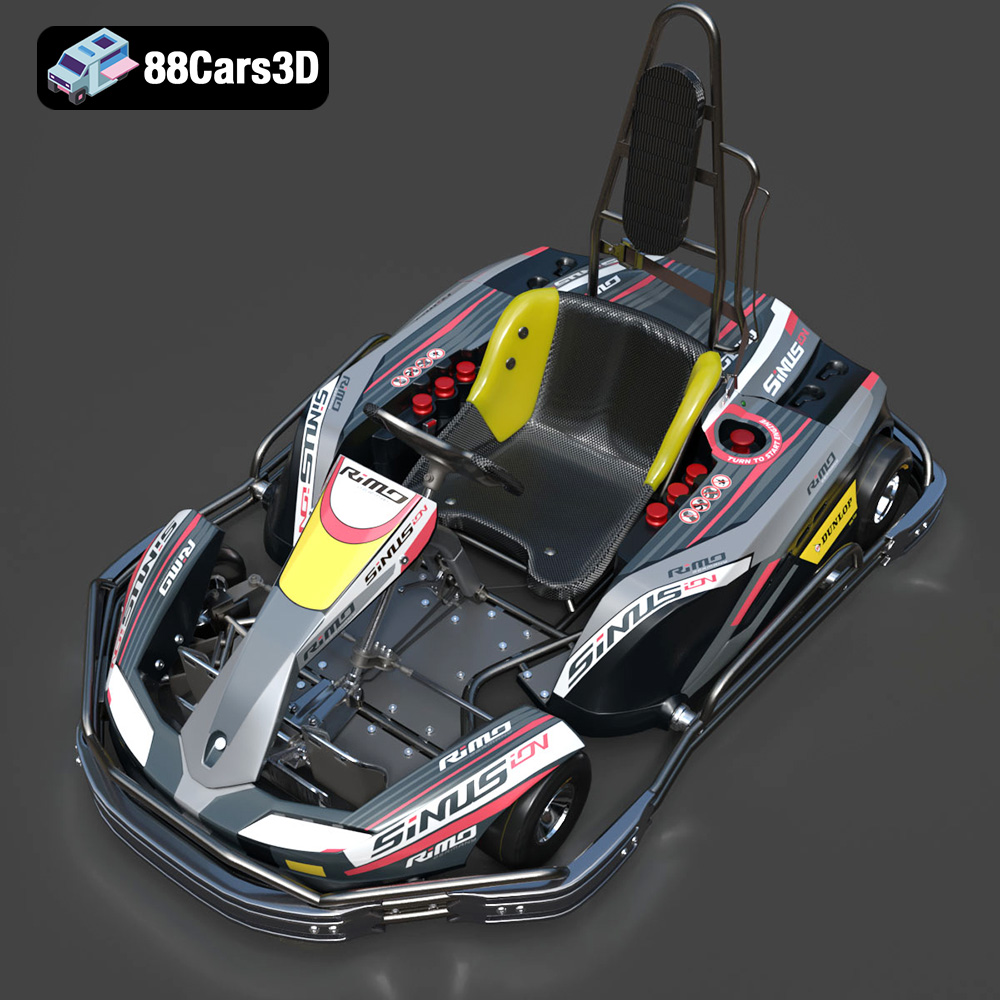
Creating photorealistic 3D car models from scratch is an immense undertaking, demanding hundreds, if not thousands, of hours from skilled artists. This challenge is precisely why online marketplaces like 88cars3d.com have become indispensable resources, offering a curated selection of premium 3D assets that are ready to integrate directly into professional workflows. Today, we’re diving deep into one such exceptional offering: the RiMO SiNUS iON-001 Kart 3D Model. This isn’t just a model; it’s a meticulously engineered digital replica designed to inject raw speed and agility into your projects, providing a robust foundation for everything from game development to advanced visualization.
From its clean geometry to its realistic materials, this kart model stands as a testament to the power of expertly crafted 3D assets. It’s an asset that not only looks stunning but is also technically sound, ensuring seamless integration and optimal performance across a multitude of platforms and applications. Let’s explore the intricate details that make this model an invaluable addition to any professional’s toolkit.
One of the most crucial aspects of working with 3D car models, or any 3D asset for that matter, is understanding the various file formats available. Each format serves a specific purpose, offering unique advantages in terms of compatibility, features, and optimization. The RiMO SiNUS iON-001 Kart 3D Model exemplifies versatility by being offered in a comprehensive suite of formats, ensuring it’s ready for any project or software environment. Knowing which format to use and when can significantly streamline your workflow and prevent compatibility headaches.
The .blend format is native to Blender, the popular open-source 3D creation suite. When you receive a .blend file, you’re getting a complete Blender scene, often including not just the model, but also its materials, textures, lighting setup, camera configurations, and even animation data. This format is ideal for artists who primarily work in Blender, offering maximum editability and flexibility. You can dissect every aspect of the RiMO SiNUS iON-001 Kart, modify its mesh, tweak its shaders, adjust the studio lighting, or even integrate it into a pre-existing Blender project with ease. It’s the ultimate starting point for those who want full control over the asset’s creation process within its native environment.
.fbx (Filmbox) is arguably the most widely adopted proprietary 3D file format for inter-application data exchange, especially within animation, visual effects, and game development pipelines. Developed by Autodesk, FBX can store comprehensive scene data, including geometry, materials, textures, animation, rigs, and even camera information. Its strength lies in its ability to facilitate seamless transfers between different 3D software packages (like 3ds Max, Maya, Blender, Cinema 4D) and game engines (Unreal Engine, Unity). For a game asset like the RiMO SiNUS iON-001 Kart, the .fbx format is critical for importing into game development environments, often pre-configured for optimal performance and ready for physics and collision setup.
The .obj (Wavefront OBJ) format is a widely supported, open-standard geometry definition file format. It’s a robust choice for transferring pure mesh data (vertices, faces, normals, UV coordinates) and basic material references (via an accompanying .mtl file). While it doesn’t support advanced features like animation, rigging, or complex shader networks, its universal compatibility makes it an excellent fallback or starting point for cross-software compatibility. If you need to import the RiMO SiNUS iON-001 Kart into a niche software or a very specific legacy pipeline, .obj will almost certainly be supported, providing a clean mesh to work with.
.glb is the binary form of the glTF (Graphics Library Transmission Format), an open-standard, royalty-free format designed for efficient transmission and loading of 3D scenes and models by applications. Optimized specifically for web-based 3D, augmented reality (AR), and virtual reality (VR) applications, .glb packages all necessary data (geometry, materials, textures, animations) into a single, compact file. This format is crucial for delivering the RiMO SiNUS iON-001 Kart into interactive browser experiences, AR apps on mobile devices, or lightweight VR environments, ensuring fast load times and excellent performance without compromising visual quality.
.stl (STereoLithography) is the de facto standard file format for 3D printing. It represents a 3D model as a raw, unstructured triangulated surface, essentially a collection of interconnected triangles that define the object’s outer geometry. For users looking to bring the RiMO SiNUS iON-001 Kart into the physical realm, perhaps for prototyping, creating collectible scale models, or educational purposes, the .stl format is indispensable. It’s critical that .stl models are “watertight” (i.e., have no holes or gaps in the mesh) to ensure a successful 3D print, a characteristic typically found in professionally prepared models like this one.
The .ply (Polygon File Format or Stanford Triangle Format) is another format primarily used for storing 3D data from 3D scanners, CAD software, and other technical applications. Similar to .obj, it defines geometry, but it can also store a wider range of properties for each vertex and face, such as color, normals, texture coordinates, transparency, and confidence values. For highly precise visualization or analysis, particularly in engineering or scientific contexts, the .ply version of the RiMO SiNUS iON-001 Kart offers a robust dataset.
While often distributed as .fbx, the inclusion of a dedicated .unreal file package implies a pre-configured, engine-ready asset specifically tailored for Unreal Engine. This often means the model comes with optimized materials, pre-set collision meshes, appropriate Level of Detail (LOD) groups, and perhaps even basic Blueprints for immediate integration into an Unreal project. This eliminates significant setup time for game developers, allowing them to drop the RiMO SiNUS iON-001 Kart directly into their racing game or simulation with minimal fuss, ensuring it adheres to Unreal Engine’s best practices for performance and visual fidelity.
The .max format is native to Autodesk 3ds Max, another industry-leading 3D modeling, animation, and rendering software. Like .blend, a .max file provides a complete scene, allowing full editability of the RiMO SiNUS iON-001 Kart within 3ds Max. This format is crucial for professionals who use 3ds Max for high-end rendering, complex animation sequences, or integration into architectural visualization (arch-viz) projects. It allows access to modifiers, sophisticated V-Ray or Corona Renderer material setups, and precise control over scene elements, offering the highest degree of flexibility for those deeply embedded in the 3ds Max ecosystem.
The availability of the RiMO SiNUS iON-001 Kart in such a comprehensive array of formats underscores its professional-grade nature and commitment to serving a diverse user base. This thoughtful provision ensures that artists and developers can pick the perfect file type for their specific needs, accelerating production and enhancing project outcomes.
Beyond merely existing in various file formats, the true value of the RiMO SiNUS iON-001 Kart 3D Model lies in the meticulous craftsmanship embedded within its digital structure. This isn’t just a basic representation; it’s a testament to professional 3D artistry focused on delivering both visual splendor and technical robustness.
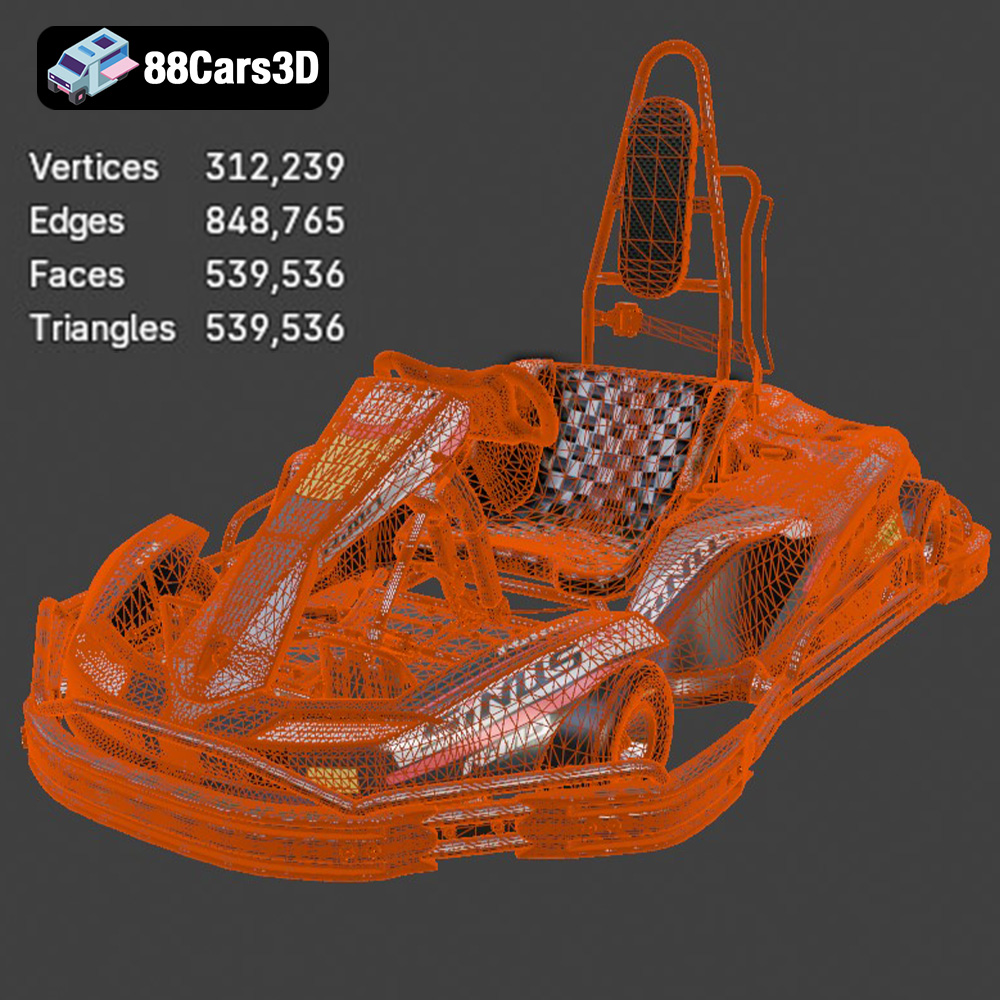
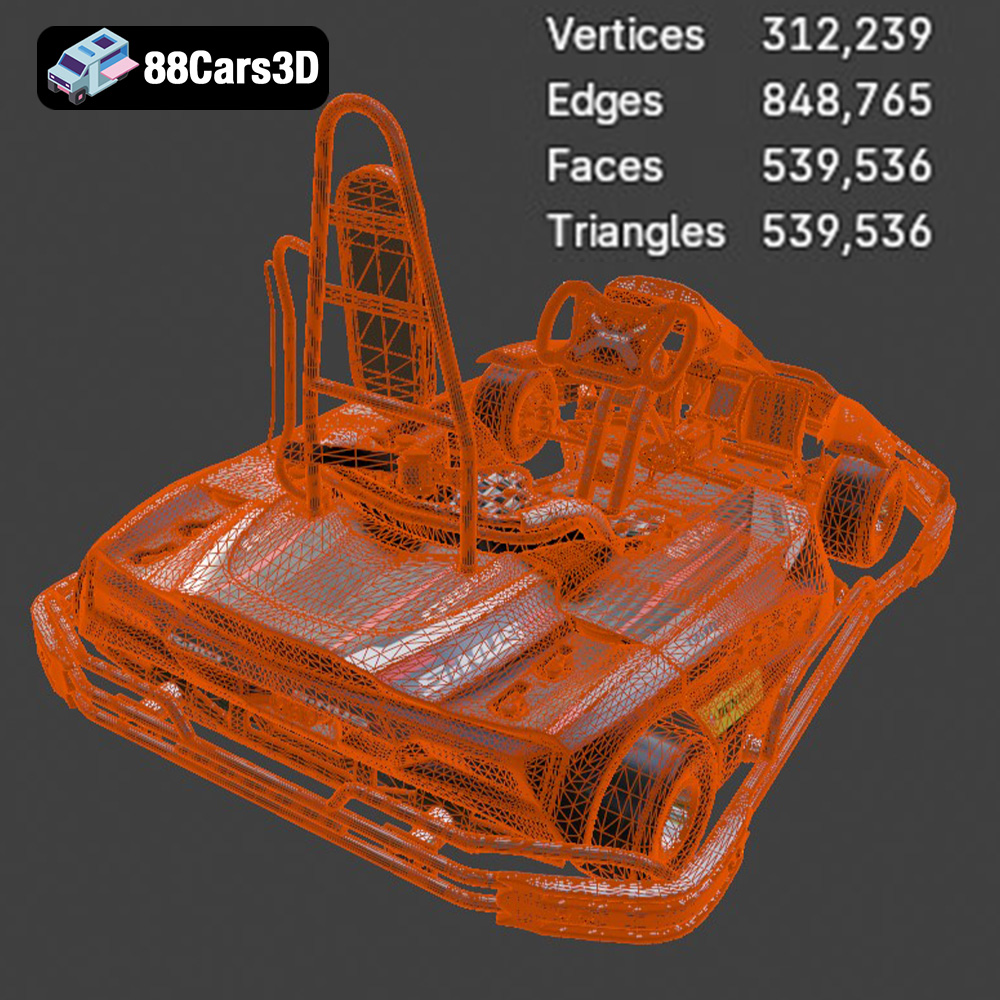
The product description highlights “clean geometry,” a critical feature for any professional 3D asset. Clean geometry typically means the model is built with an efficient polygon count, primarily using quads (four-sided polygons) rather than triangles or n-gons (polygons with more than four sides), especially in areas that will deform or require subdivision. This meticulous approach ensures several key benefits:
The precision evident in this model ensures that it looks fantastic from every angle, whether up close in a cinematic render or as part of a bustling racing scene in a game.
The “realistic materials” mentioned in the description are paramount for achieving photorealism. Modern 3D rendering heavily relies on Physically Based Rendering (PBR) workflows, which simulate how light interacts with surfaces in the real world. A PBR material typically comprises several texture maps:
For the RiMO SiNUS iON-001 Kart, these maps would be meticulously crafted to capture the specific sheen of its bodywork, the texture of its tires, the reflectivity of its chrome accents, and the subtle wear and tear expected from a high-performance racing vehicle. This attention to detail in the PBR setup ensures that the kart reacts accurately to various lighting conditions, making it look convincing in any environment, from a sun-drenched track to a dimly lit garage.
Flawless texturing is impossible without professional UV unwrapping. UVs (U and V being the coordinates on a 2D texture map) are essentially the flattened 2D representation of a 3D model’s surface, telling the software how to project textures onto it. The RiMO SiNUS iON-001 Kart, as a high-quality 3D car model, would feature:
Proper UVs mean that if you need to customize the kart’s livery with racing stripes, logos, or sponsor decals, you can do so easily and with predictable, high-quality results. This underlying technical precision is what elevates the RiMO SiNUS iON-001 Kart beyond a mere visual representation to a truly production-ready asset.
A premium 3D model like the RiMO SiNUS iON-001 Kart is designed to slot effortlessly into various professional workflows, saving countless hours of modeling, texturing, and optimization. Its versatility makes it a cornerstone asset for diverse projects.
For game developers, time is a precious commodity. Starting with a pre-built, optimized 3D car model drastically accelerates the development cycle. Using the provided .fbx or .unreal formats, integrating the RiMO SiNUS iON-001 Kart into engines like Unreal Engine or Unity is straightforward:
The RiMO SiNUS iON-001 Kart acts as a high-fidelity starting point, allowing developers to focus on gameplay mechanics, track design, and overall game polish, rather than spending months on asset creation.
For marketing, product showcases, or high-fidelity animations, the RiMO SiNUS iON-001 Kart shines. Utilizing the .max or .blend files, artists can leverage the full power of advanced renderers like V-Ray, Corona Renderer, or Cycles:
The model’s inherent quality ensures stunning visuals without extensive tweaking, making it perfect for rapid prototyping of concepts or producing final marketing assets.
The burgeoning fields of Augmented Reality and Virtual Reality demand highly optimized, yet visually compelling, 3D models. The .glb format of the RiMO SiNUS iON-001 Kart is specifically tailored for this:
The efficient nature of the .glb format, combined with the kart’s detailed design, allows for engaging and performant AR/VR applications that push the boundaries of immersive visualization.
While the RiMO SiNUS iON-001 Kart 3D Model is delivered in an already optimized state, understanding common optimization techniques allows artists and developers to further tailor it for their specific project needs, whether for extreme real-time performance or ultra-high-resolution rendering.
LODs are crucial for maintaining performance in real-time applications like games. They involve creating multiple versions of a 3D model, each with progressively fewer polygons. As the camera moves further away from the object, the engine switches to a lower-polygon version, reducing rendering load without a noticeable drop in visual quality. For the RiMO SiNUS iON-001 Kart:
The inherent clean geometry of the kart makes it an excellent candidate for smooth LOD generation, ensuring that its quality scales appropriately across various viewing distances.
To further optimize real-time assets, especially for mobile platforms or large scenes with many objects, texture baking and atlasing are invaluable:
These techniques, when applied to a well-structured 3D car model, ensure that the asset not only looks great but also runs efficiently, a hallmark of professionally developed game assets.
While often overlooked in purely visual rendering, a robust collision mesh is vital for interactive experiences. A collision mesh is a simplified, usually invisible, version of the model that the physics engine uses for calculations. It needs to be simple enough for performance but complex enough to accurately represent the object’s physical boundaries. For the RiMO SiNUS iON-001 Kart:
The “unreal” specific file or the .fbx version of the kart would typically come with a well-thought-out collision mesh, ready for integration into a physics system, demonstrating the comprehensive nature of assets found on 88cars3d.com.
The versatility and high quality of the RiMO SiNUS iON-001 Kart 3D Model open up a myriad of possibilities across various industries. Its ready-to-use nature transforms complex ideas into achievable projects.
The most obvious application for a kart model of this caliber is in racing simulations. Developers can create hyper-realistic racing games, leveraging the kart’s detailed geometry and PBR materials to craft a visually stunning and physically accurate driving experience. Beyond entertainment, such simulations can be used for professional driver training, allowing racers to practice on virtual tracks, experiment with setups, and learn racing lines in a safe, controlled environment. The fidelity of the kart directly contributes to the immersion and effectiveness of the training.
In the automotive industry, high-fidelity visualization is key for marketing and product launches. Before a physical product even exists, a 3D model like the RiMO SiNUS iON-001 Kart can be used to generate stunning promotional images, animated advertisements, and interactive configurators. Imagine a website where potential customers can customize the kart’s colors, decals, and components in real-time 3D, or a cinematic launch video showcasing its features. This approach saves on costly physical photography and videography, offering unparalleled flexibility and speed in content creation.
Beyond commercial applications, the RiMO SiNUS iON-001 Kart can serve as an invaluable tool for education. Engineering students could dissect the 3D model to understand chassis design, suspension geometry, or aerodynamic principles. Educators could use it to create interactive lessons on vehicle mechanics. Furthermore, the .stl format makes it perfect for rapid prototyping through 3D printing. Designers could print scale models to test physical forms, ergonomics, or simply create a tangible representation of their digital design, bridging the gap between the virtual and physical worlds.
In the competitive landscape of 3D production, efficiency and quality are paramount. The RiMO SiNUS iON-001 Kart 3D Model stands as a shining example of a high-quality, technically robust asset designed to meet the rigorous demands of professional workflows. From its meticulously crafted geometry and advanced PBR materials to its availability in a comprehensive array of file formats—including .blend, .fbx, .obj, .glb, .stl, .ply, .unreal, and .max—this kart model is built for versatility and performance.
Whether you’re a game developer looking for a race-ready asset, an automotive renderer striving for photorealism, or an AR/VR enthusiast creating immersive experiences, this 3D car model provides an exceptional foundation. It empowers artists and developers to bypass the time-consuming process of creating complex assets from scratch, allowing them to focus their energy on innovation and creative storytelling.
By investing in premium 3D models like the RiMO SiNUS iON-001 Kart available on 88cars3d.com, you’re not just purchasing a digital file; you’re acquiring a valuable production tool that accelerates your projects, enhances visual fidelity, and expands your creative potential. Experience the difference that professional-grade 3D car models can make in bringing your high-octane visions to life.
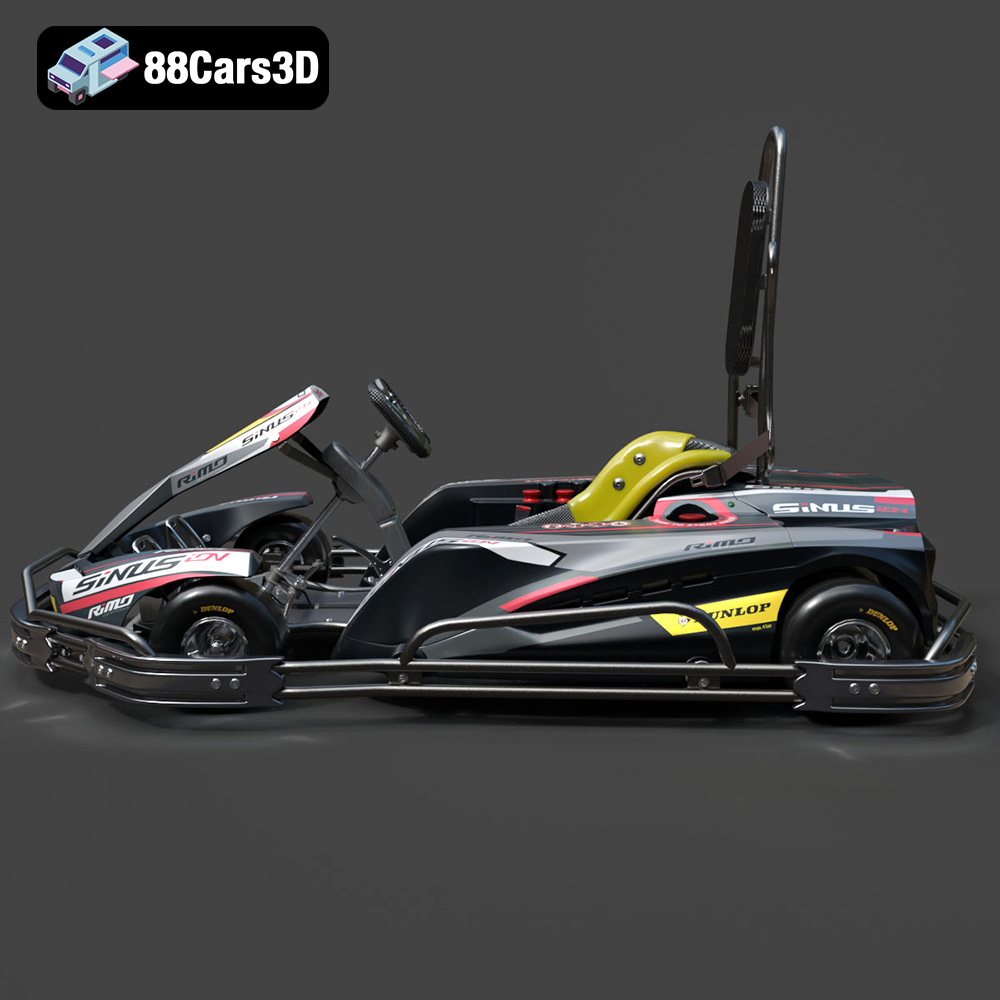
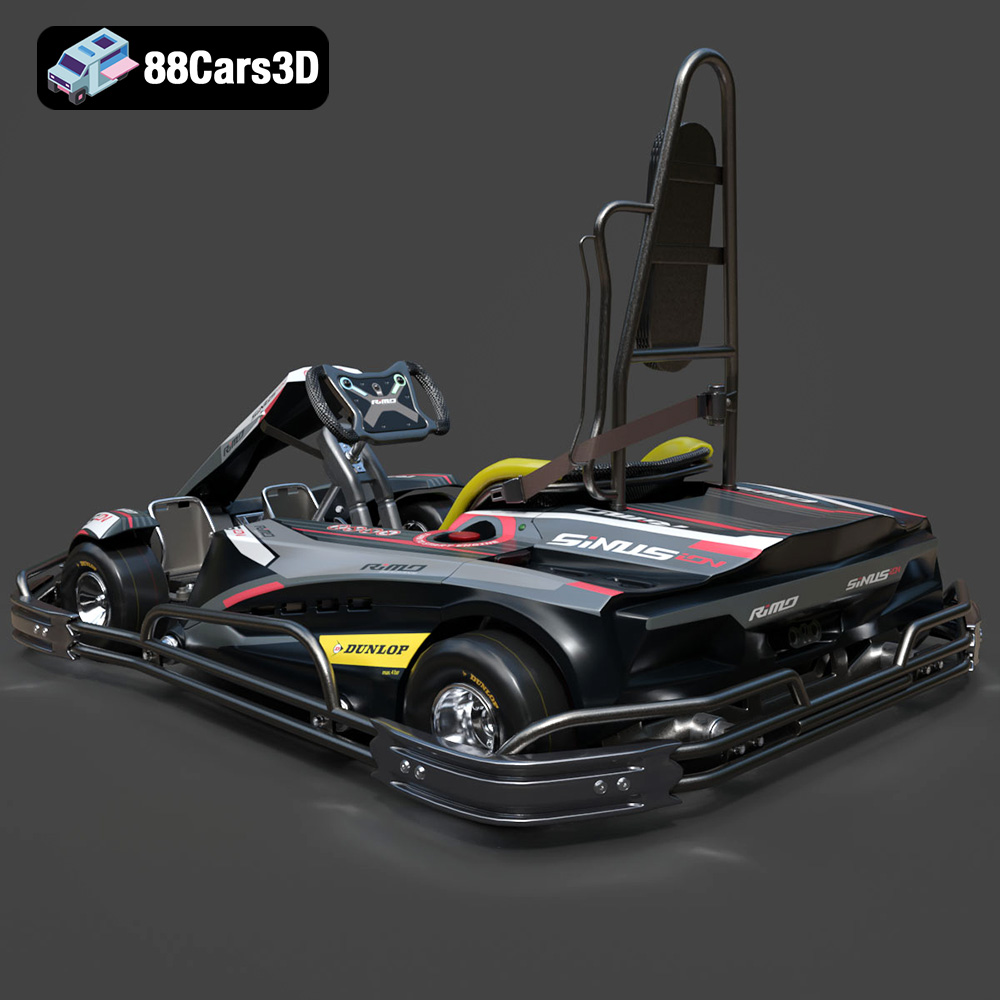
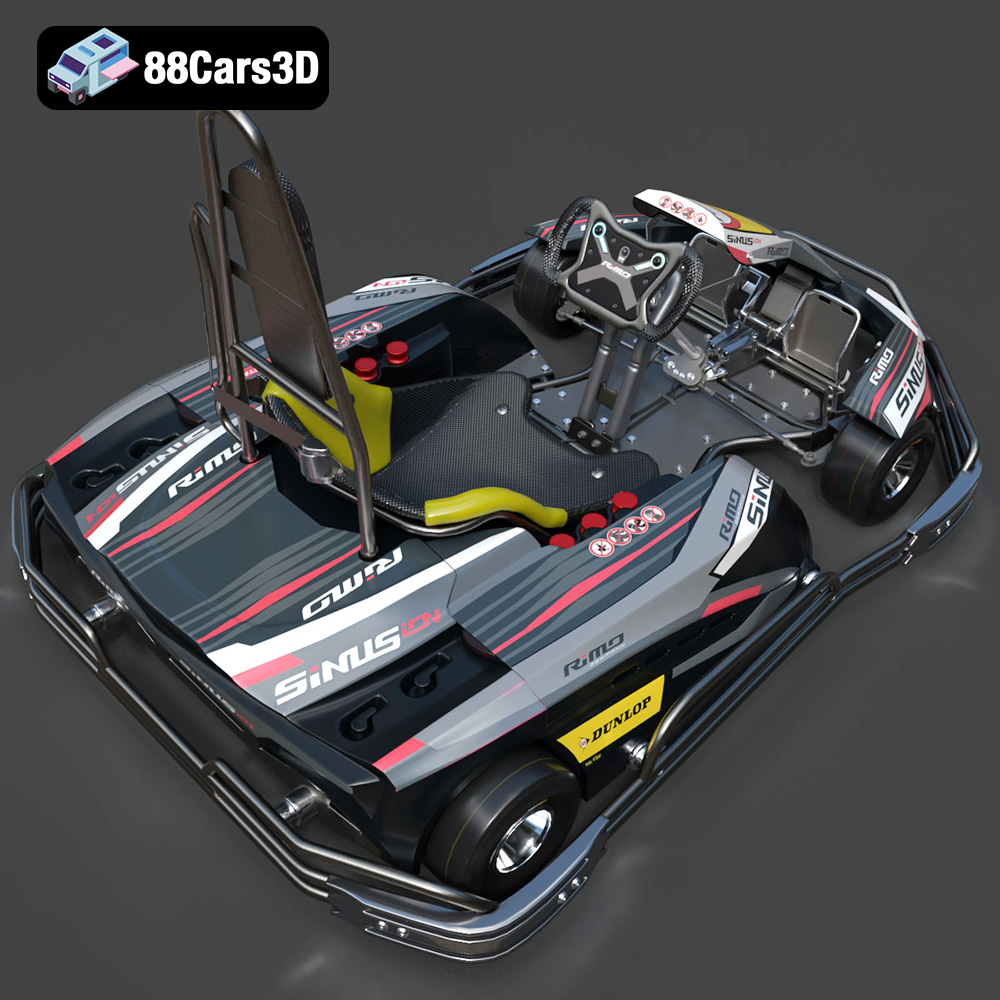
Experience the thrill of the race with this highly detailed 3D model of the RiMO SiNUS iON-001 Kart. Crafted with precision, this model captures the essence of speed and agility, making it perfect for a variety of applications.
This 3D model features clean geometry and realistic materials, ensuring a visually stunning representation. Every detail has been meticulously recreated to provide a professional-quality asset that stands out.
Ideal for game development, rendering projects, AR/VR experiences, and visualization, this RiMO SiNUS iON-001 Kart 3D model is versatile and ready to enhance your projects. Whether you’re creating a racing game, a simulation, or a presentation, this model delivers exceptional quality and realism.
Provided File Formats:
Tags:
.rimo, .sinusion001kart, .kart, .car3dmodel, .rendering, .simulation, .gameasset, .arvr, .blend, .fbx, .obj, .glb, .stl, .ply, .unreal, .max
Tags:
.rimo, .sinusion001kart, .kart, .car3dmodel, .rendering, .simulation, .gameasset, .arvr, .blend, .fbx, .obj, .glb, .stl, .ply, .unreal, .max Mercedes Benz CLS 500 3D Model 3D Printable STL
$19.99
.arvr
.blend
.car3dmodel
.fbx
.gameasset
.glb
.kart
.max
.obj
.ply
.rendering
.rimo
.simulation
.sinusion001kart
.stl
.unreal