Get 20% OFF All Premium 3D & STL Models!

In the vast landscape of automotive history, certain vehicles stand out not just for their engineering prowess, but for their unique stories and indelible mark on the world. The Volkswagen Schwimmwagen Typ 166 is undeniably one such icon. Born from the crucible of World War II, this amphibious marvel combined rugged off-road capability with a boat-like hull, a testament to ingenuity under pressure. Today, its legacy extends far beyond the battlefields, finding a new life in the digital domain, powering everything from immersive historical simulations to cutting-edge virtual reality experiences.
For 3D artists, game developers, automotive designers, and visualization specialists, the demand for highly accurate and optimized 3D car models is ceaseless. It’s not enough for a model to merely look good; it must be technically robust, pipeline-friendly, and capable of performing flawlessly across diverse platforms. This is where a meticulously crafted asset like the Volkswagen Schwimmwagen Typ 166 3D Model truly shines. Whether you’re aiming to recreate a historic military scene with breathtaking realism, design an engaging racing game featuring vintage vehicles, or simply explore the intricate mechanics of this amphibious legend, this model provides the perfect foundation. It’s a prime example of the high-quality 3D car models available at 88cars3d.com, tailored for professionals who demand excellence.
The versatility of a 3D model often hinges on the range and quality of its included file formats. Each format serves a specific purpose, offering unique advantages for different stages of a production pipeline, from initial modeling to final rendering, game integration, or even physical fabrication. The Volkswagen Schwimmwagen Typ 166 3D Model offers an extensive suite of formats, ensuring maximum compatibility and utility for any project.
The .blend format is the native file type for Blender, the popular open-source 3D creation suite. When you download a .blend file, you’re getting a fully editable Blender scene. This includes not just the mesh geometry, but also materials, textures, lighting setups, cameras, animations, modifiers, and even custom scripts. For artists deeply integrated into the Blender ecosystem, this format offers unparalleled flexibility for further customization, rigging, or integration into existing Blender projects. It’s ideal for those who wish to dissect the model’s construction, understand its material nodes, or make extensive modifications to suit their specific artistic vision.
.fbx (Filmbox) is a proprietary file format developed by Autodesk, widely regarded as the industry standard for exchanging 3D data between various software applications. Its strength lies in its ability to store not only geometry and materials but also complex data like animation, rigging, and even entire scenes. For game engines like Unreal Engine and Unity, .fbx is often the preferred format due to its robust support for skeletal animation, blend shapes, and efficient handling of real-time assets. It provides a reliable bridge between modeling software (like 3ds Max or Blender) and real-time pipelines, making it essential for any game-ready asset, including this Schwimmwagen model.
The .obj (Wavefront OBJ) format is one of the oldest and most universally supported 3D file formats. It’s a simple, text-based format primarily used for storing 3D geometry – vertices, UV coordinates, normals, and polygons. While it doesn’t typically store advanced data like rigging or animation, it’s incredibly robust for transferring static mesh data between almost any 3D software. Its widespread compatibility makes it an excellent choice for cross-software workflows or as a reliable fallback when more complex formats encounter issues. Paired with an accompanying .mtl (material) file, it can also carry basic material properties and texture references.
.glb (GL Transmission Format Binary) is the binary version of glTF, an open-standard format designed for efficient transmission and loading of 3D scenes and models by applications. Developed by the Khronos Group, .glb files encapsulate all necessary data (geometry, materials, textures, animations) into a single, compact file. This makes it incredibly efficient for web-based 3D viewers, augmented reality (AR) applications on mobile devices, and virtual reality (VR) experiences where performance and rapid loading are paramount. Its optimization for real-time engines and web platforms makes it a forward-looking choice for showcasing 3D car models in new interactive contexts.
The .stl (STereoLithography) format is the undisputed king of 3D printing. It represents 3D surfaces as a series of connected triangles (a tessellated mesh) and does not store color, texture, or other CAD attributes. Its simplicity and ubiquity make it the standard input format for almost all 3D printers and slicing software. For hobbyists, engineers, or artists looking to bring the Schwimmwagen into the physical world, the .stl file ensures a smooth transition from digital model to tangible replica, ready for prototyping or display-scale fabrication.
.ply (Polygon File Format, also Stanford Triangle Format) is a file format designed to store three-dimensional data from 3D scanners. It can store a variety of properties, including color, transparency, surface normals, texture coordinates, and data confidence values, for both points and polygons. While less common for general 3D model exchange than .fbx or .obj, it’s highly valued in applications requiring precision mesh data, such as CAD, scientific visualization, and reverse engineering. It offers a more detailed representation of mesh attributes than .obj for specific analytical or manufacturing workflows.
The inclusion of an .unreal specific asset indicates a model that has likely been pre-processed or packaged specifically for direct integration into Unreal Engine. This often means optimized meshes, material setups using Unreal’s physically based rendering (PBR) pipeline, collision meshes, and potentially even blueprint setups. This format significantly streamlines the workflow for Unreal Engine developers, saving considerable time on import and setup, and ensuring the model performs optimally within the engine’s demanding real-time environment.
Finally, the .max format is the native file type for Autodesk 3ds Max, a powerful 3D modeling, animation, and rendering software. Similar to .blend, a .max file contains the complete scene data, including all geometry, materials, textures, lighting, cameras, and animations created within 3ds Max. For users of 3ds Max, this provides full access to the original project files, allowing for comprehensive editing, animation setup, or advanced rendering configurations using its native toolset and renderers like V-Ray or Corona. It’s ideal for detailed scene assembly and high-fidelity rendering projects.
The provision of such a comprehensive array of file formats for the Volkswagen Schwimmwagen Typ 166 3D Model underscores its adaptability and value, ensuring that professionals across various disciplines can leverage this exceptional asset with minimal friction.
Creating a truly professional 3D vehicle model is an intricate dance between artistic fidelity and technical pragmatism. The Volkswagen Schwimmwagen Typ 166 3D Model exemplifies this balance, engineered for both stunning visual impact and efficient performance across diverse applications.
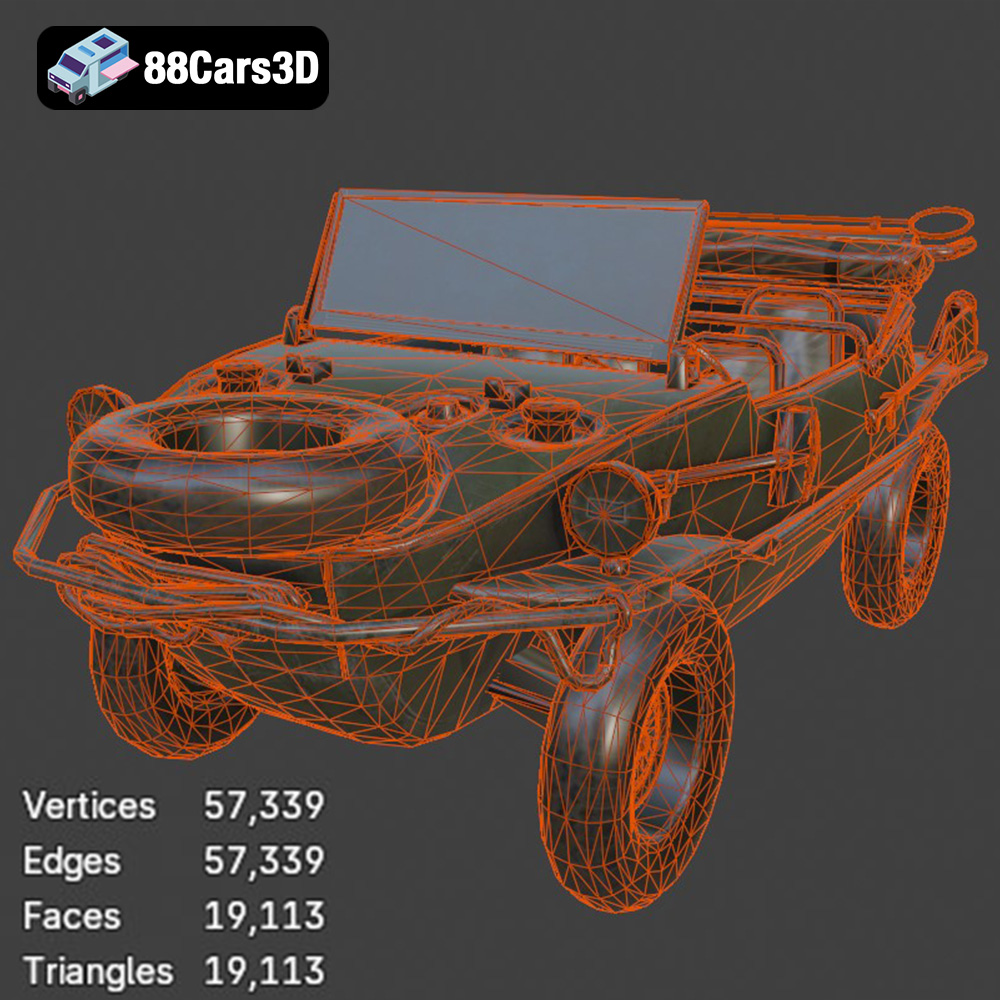
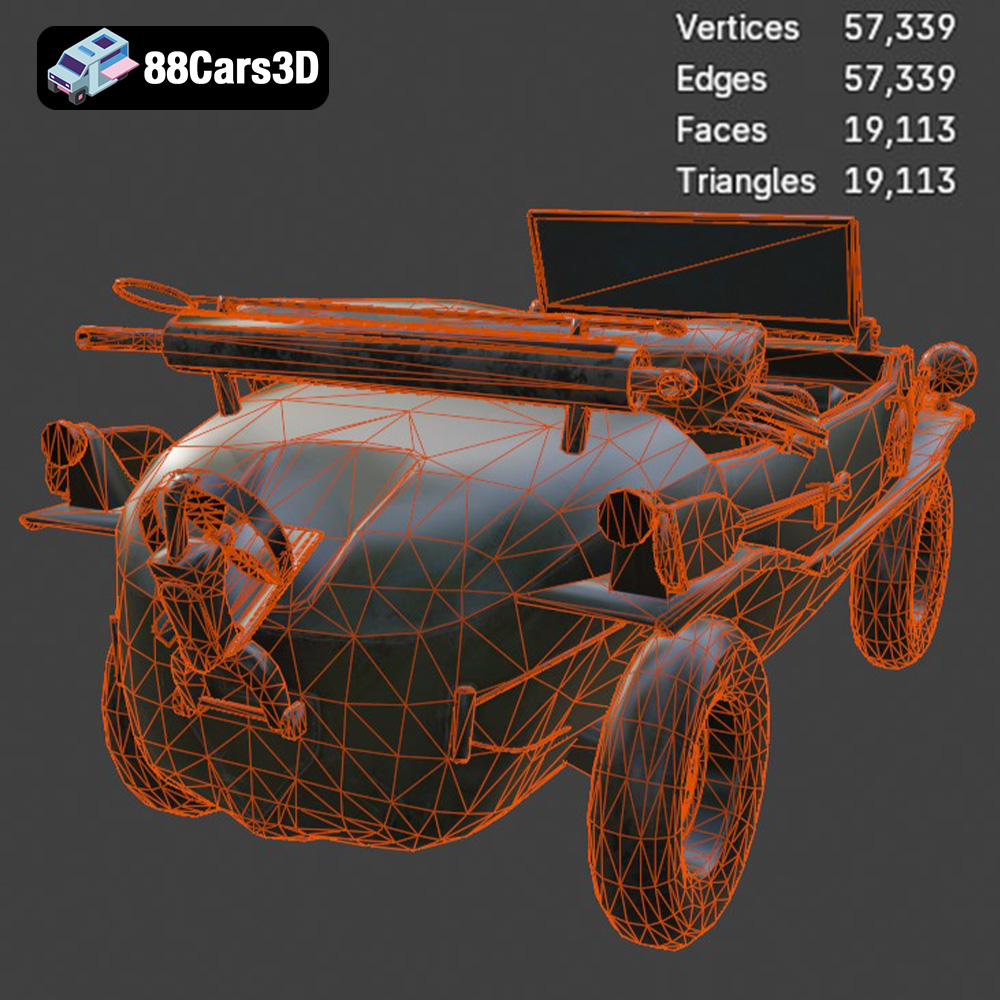
At the heart of any high-quality 3D asset is its topology – the arrangement of vertices, edges, and faces that define its shape. For a game-ready model like the Schwimmwagen, this means a careful balance. The product boasts approximately 150,000 triangles. This poly count is a sweet spot: it’s high enough to capture the authentic, rugged details of the Schwimmwagen’s watertight hull, its distinctive engine housing, and the intricate propeller mechanism without appearing overly simplified. Yet, it remains lean enough for real-time engines such as Unreal Engine and Unity, ensuring smooth frame rates even in complex scenes with multiple vehicles. This optimized topology not only benefits performance but also allows for clean UV unwrapping and seamless texture application, crucial for achieving realistic material finishes and weathering effects.
Accuracy extends beyond just visual appearance. The model is built to real-world scale, which is fundamental for any serious visualization or simulation project. Correct scaling ensures that the vehicle interacts realistically with environments and other assets. More critically for an amphibious vehicle, every functional component – from the separate wheels and suspension to the fold-down rear propeller and steering components – is set up with proper pivot points. This meticulous attention to articulation is invaluable for animators. It means the model is ready out-of-the-box for:
Such preparation drastically reduces setup time for animators, allowing them to focus on creating compelling motion rather than struggling with basic rigging.
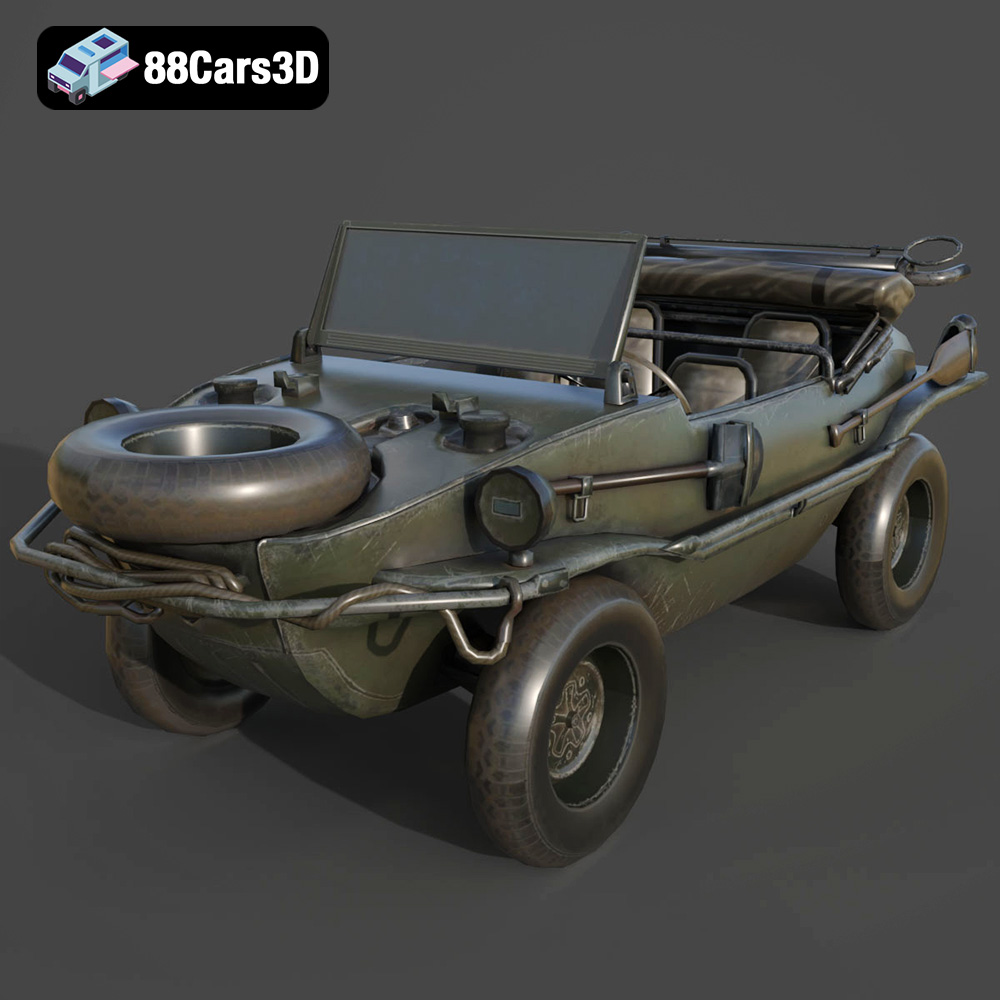
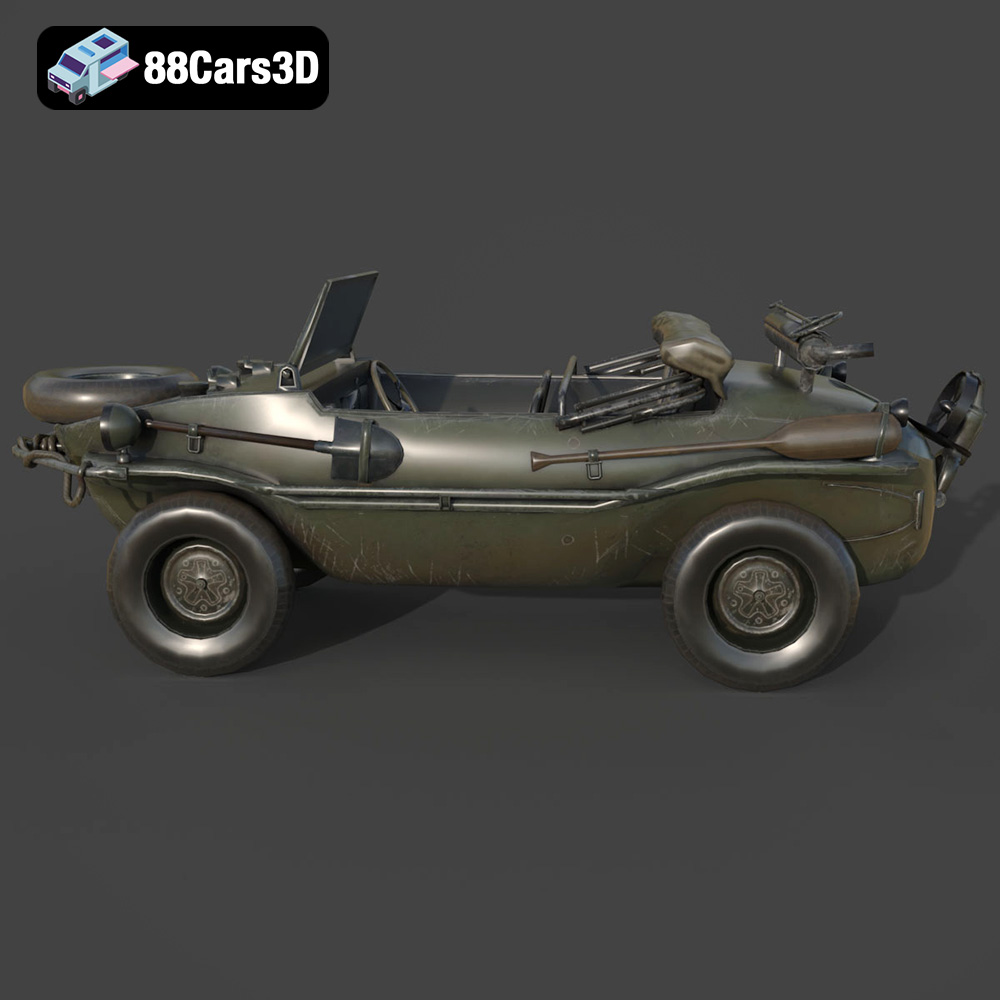
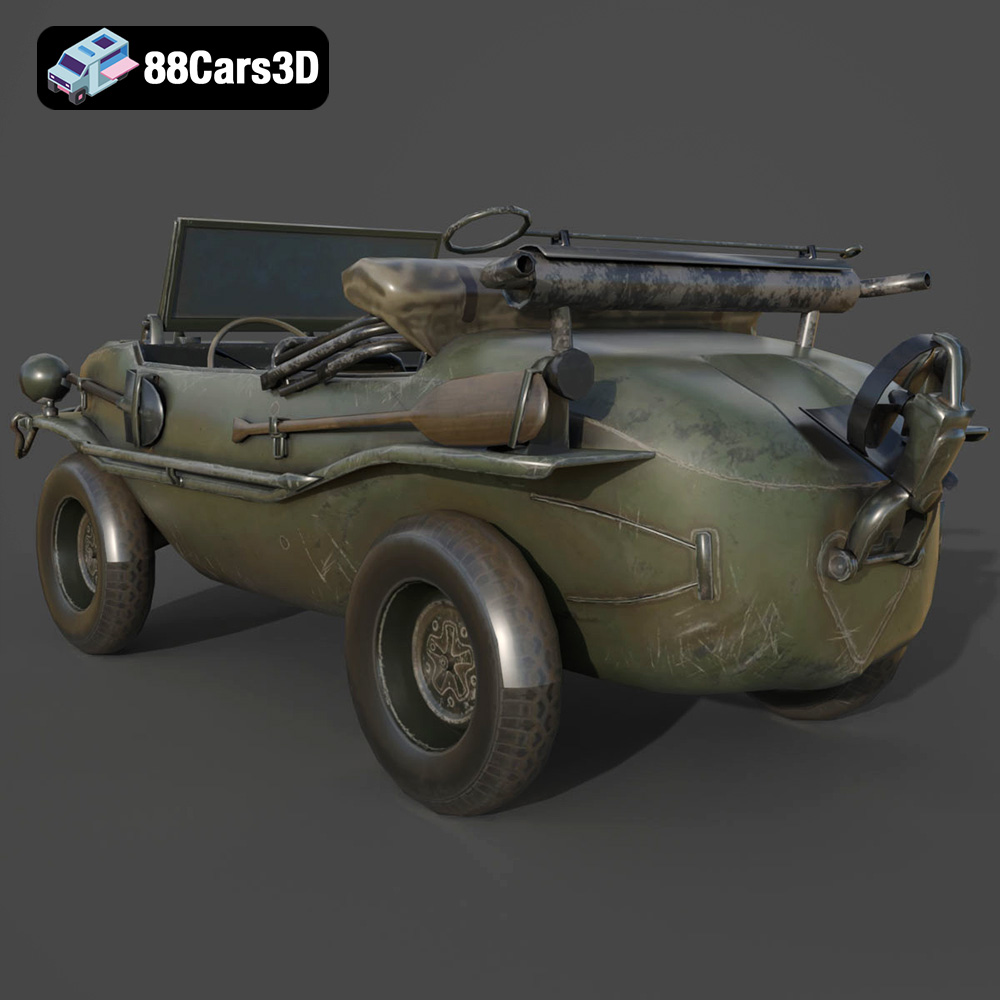
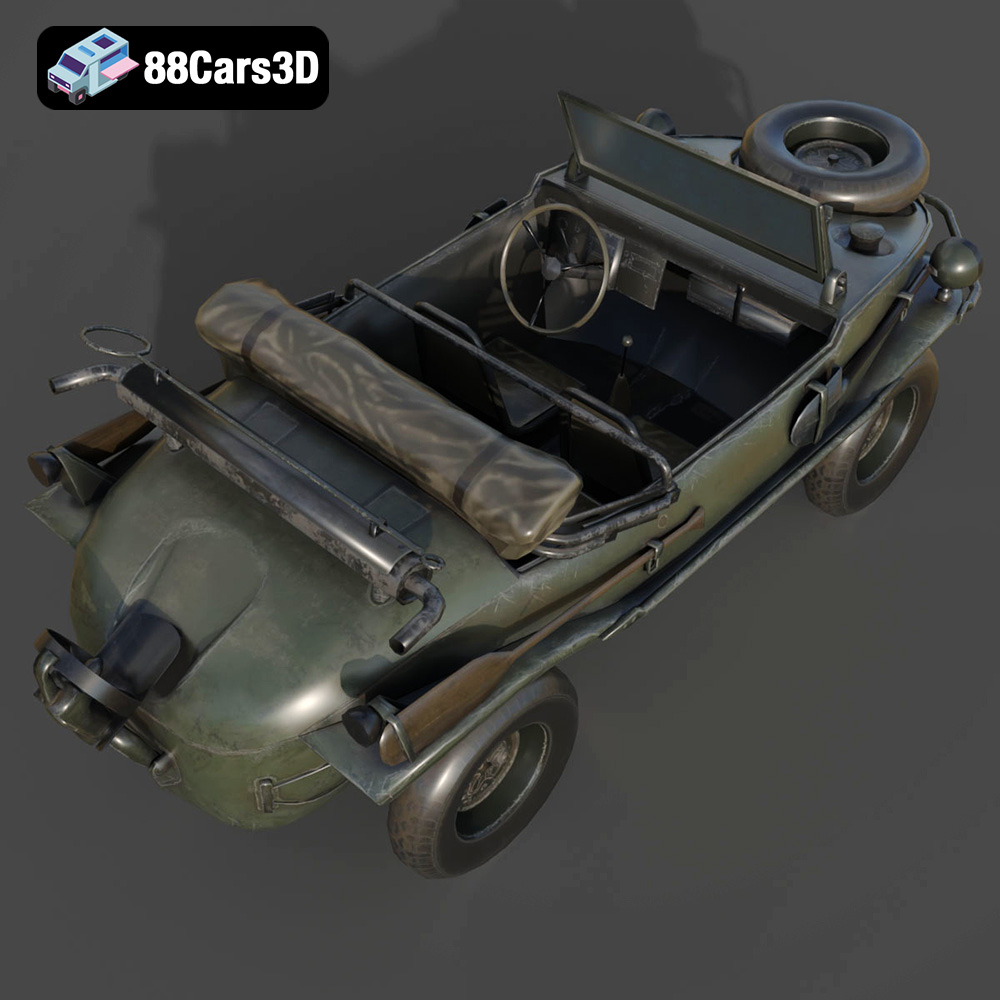
The Schwimmwagen’s charm lies in its utilitarian design, and this model captures every facet with exceptional detail. The exterior showcases the accurate hull geometry, period-specific military lighting (including blackout headlamps), high-tread off-road tires on stamped steel wheels, and visible leaf spring and torsion bar suspension. These details are not merely aesthetic; they provide critical visual cues for realism, especially in close-up shots or interactive walkthroughs. The interior, though minimalist, is equally well-represented, featuring military seating, a three-spoke steering wheel, an authentic instrument cluster, and detailed gear and 4WD engagement levers. This attention to both the visible and less-visible aspects ensures the model is suitable for first-person POV in gaming and delivers a comprehensive experience for rendering and visualization.
The true measure of a high-quality 3D asset lies in its utility across a spectrum of professional applications. The Volkswagen Schwimmwagen Typ 166 3D Model is a versatile tool designed to integrate seamlessly into diverse production pipelines, proving its worth for various creative and technical endeavors.
For game developers, the Schwimmwagen model is a ready-to-deploy asset perfectly suited for historical military simulations, open-world adventures, and even unique racing titles. Its optimized polycount (~150,000 triangles) is crucial for maintaining fluid frame rates, a non-negotiable requirement for an engaging player experience. The included .fbx and .unreal formats streamline integration into industry-leading engines like Unreal Engine and Unity. Imagine this:
The model’s proper pivot setup for wheels, steering, and the propeller significantly reduces the development overhead for animation, allowing teams to focus on gameplay mechanics and environmental storytelling.
Augmented Reality (AR) and Virtual Reality (VR) platforms are rapidly transforming how we interact with digital content. The Schwimmwagen model is an excellent candidate for these immersive technologies, particularly with its .glb format optimized for web and mobile AR/VR. Potential applications include:
Its optimized geometry and accurate real-world scale ensure a comfortable and believable experience within these demanding real-time environments.
For professional rendering and visualization artists, the Schwimmwagen model provides a superb base for creating high-impact visuals. Whether for film, advertising, or architectural visualization, the model’s high detail allows for stunning close-ups and cinematic sequences. With access to .blend and .max formats, artists can leverage the full power of advanced rendering software like Blender’s Cycles/Eevee, 3ds Max with V-Ray or Corona, to:
The model’s clean topology and accurate material zones simplify the process of assigning PBR (Physically Based Rendering) materials, achieving realistic reflections, refractions, and surface properties essential for top-tier visualization.
Seamless integration into existing production pipelines is a hallmark of a professional-grade 3D asset. The Volkswagen Schwimmwagen Typ 166 3D Model, with its array of file formats and optimized structure, is designed for smooth workflows across various industry-standard software.
For artists leveraging Blender, the included .blend file is a tremendous asset. It allows direct access to the native scene, including:
The Blender file serves as a comprehensive starting point for any creative endeavor within the open-source ecosystem.
The .max file caters directly to users of Autodesk 3ds Max, a cornerstone in many professional visualization and game development studios. Artists can:
The .max file ensures that 3ds Max users can immediately tap into their existing pipelines and expertise without conversion hurdles.
For developers working with Unreal Engine, the inclusion of a dedicated .unreal file (or a highly optimized .fbx) is a significant advantage. This means the model is likely structured and optimized for Unreal’s specific requirements, often including:
This level of preparation dramatically accelerates the asset integration phase, allowing game teams to focus on core development. The Volkswagen Schwimmwagen Typ 166 3D Model from 88cars3d.com is clearly designed to be a time-saving and performance-optimized solution for real-time applications.
The utility of a robust 3D model extends beyond digital environments. For enthusiasts, collectors, and model makers, the ability to translate a digital asset into a physical object through 3D printing offers an entirely new dimension of engagement. The Volkswagen Schwimmwagen Typ 166 3D Model is fully capable of this transformation, thanks to its clean geometry and inclusion of the .stl format.
The .stl file format is the universal language of 3D printing, making the Schwimmwagen model readily compatible with virtually any 3D printer and slicing software. While the digital model is optimized for screens, a few considerations are key for successful physical prints:
Successful 3D printing often involves strategic orientation and the use of supports:
Once printed, the physical model offers a new canvas for artistic expression:
This hands-on process allows artists and hobbyists to connect with the historical vehicle in a tangible way, creating museum-quality display pieces from the digital asset. This highlights the multi-faceted value of the 3D car models available at 88cars3d.com.
A truly professional 3D model doesn’t just provide a static representation; it offers a foundation for endless creative exploration. The Volkswagen Schwimmwagen Typ 166 3D Model is designed with customization in mind, empowering artists to adapt it to specific project needs and artistic visions.
The ability to modify visual attributes is paramount for integrating the model into varied contexts:
The interaction of the model with its surroundings is vital for immersion. Customization options extend to environmental integration:
This flexibility makes the Volkswagen Schwimmwagen Typ 166 3D Model an incredibly valuable asset, allowing it to seamlessly transition from a gritty war-torn asset to a pristine museum piece, all at the artist’s command. This broad adaptability is a key characteristic of the premium 3D car models found on 88cars3d.com.
The Volkswagen Schwimmwagen Typ 166 is more than just a piece of historical engineering; it’s a testament to audacious design and functional versatility. In the digital realm, this spirit of adaptability and robust performance lives on through the meticulously crafted Volkswagen Schwimmwagen Typ 166 3D Model. From its optimized topology and real-world scale to its comprehensive array of file formats, every aspect of this asset is designed to meet the rigorous demands of professional 3D production.
Whether your project involves creating a historically accurate military simulator in Unreal Engine, crafting stunning cinematic renders in 3ds Max, designing an immersive AR/VR educational experience, or even bringing this iconic vehicle to life as a physical 3D print, this model provides the ultimate foundation. Its game-ready optimization, precise articulation for animation, and extensive customization options ensure it’s not just a beautiful model, but a truly functional and invaluable resource for any creative pipeline.
As the digital landscape continues to evolve, the demand for high-quality, versatile 3D car models remains constant. The Volkswagen Schwimmwagen Typ 166 3D Model stands as a shining example of excellence, ready to drive your next project forward. Explore this exceptional model and many other premium 3D car models at 88cars3d.com, your trusted source for automotive digital assets.
The Volkswagen Schwimmwagen Typ 166 is an iconic World War II amphibious off-road vehicle, celebrated for its rugged durability and unique boat-like hull design. Serving as one of the most mass-produced amphibious cars in history, it features a distinctive rear-mounted air-cooled flat-four engine, a fold-down propeller system, and four-wheel drive capability. This highly accurate 3D model meticulously captures its utilitarian military aesthetics, from the riveted watertight chassis to the spare tire mounted on the sloping front hood.
Engineered with exceptional attention to detail, this 3D model boasts optimized topology and an efficient triangle count, ensuring it is fully game-ready without compromising on visual fidelity. Whether you are developing a historic military simulator, creating an immersive AR/VR educational experience, or producing high-end cinematic renders, this model delivers unparalleled realism and performance across all major real-time engines and 3D software.
Perfect for historical military simulations, World War II dioramas, rugged off-road racing games, and museum-quality interactive exhibits.
$19.99
.blend
.fbx
.glb
.max
.obj
.ply
.rendering
.stl
.unreal
.volkswagen
amphibious-vehicle
car-3d-model
classic-car
game asset
game-ready
low-poly
military-vehicle
off-road
optimized
schwimmwagen-typ-166
VR/AR
ww2-vehicle