Get 20% OFF All Premium 3D & STL Models!

In the fast-evolving world of digital visualization, the demand for exceptionally detailed and accurate 3D models is greater than ever. From blockbuster films and AAA video games to cutting-edge architectural walkthroughs and immersive AR/VR experiences, premium 3D assets form the bedrock of compelling visual narratives. Automotive design, in particular, thrives on this digital fidelity, requiring models that not only look stunning but are also technically robust and versatile across multiple platforms and pipelines.
Today, we delve into the intricate world of 3D car models, exploring the technical nuances, essential workflows, and diverse applications that define this specialized field. We’ll examine what makes a truly professional 3D car asset invaluable, touching upon everything from polygon optimization and UV mapping to real-time engine integration and photorealistic rendering techniques. Our journey will highlight the critical role such assets play in professional projects and how platforms like 88cars3d.com are empowering creators with ready-to-use, high-quality resources.
The automotive industry has long been at the forefront of adopting advanced visualization technologies. Designers use 3D models to prototype new vehicles, engineers simulate performance, and marketing teams create breathtaking campaigns. Beyond the industry itself, enthusiasts, game developers, and filmmakers leverage these digital replicas to bring their visions to life. The need for precision, authentic materials, and clean topology is paramount, as a poorly constructed model can introduce countless headaches downstream, from rendering artifacts to performance bottlenecks in real-time applications.
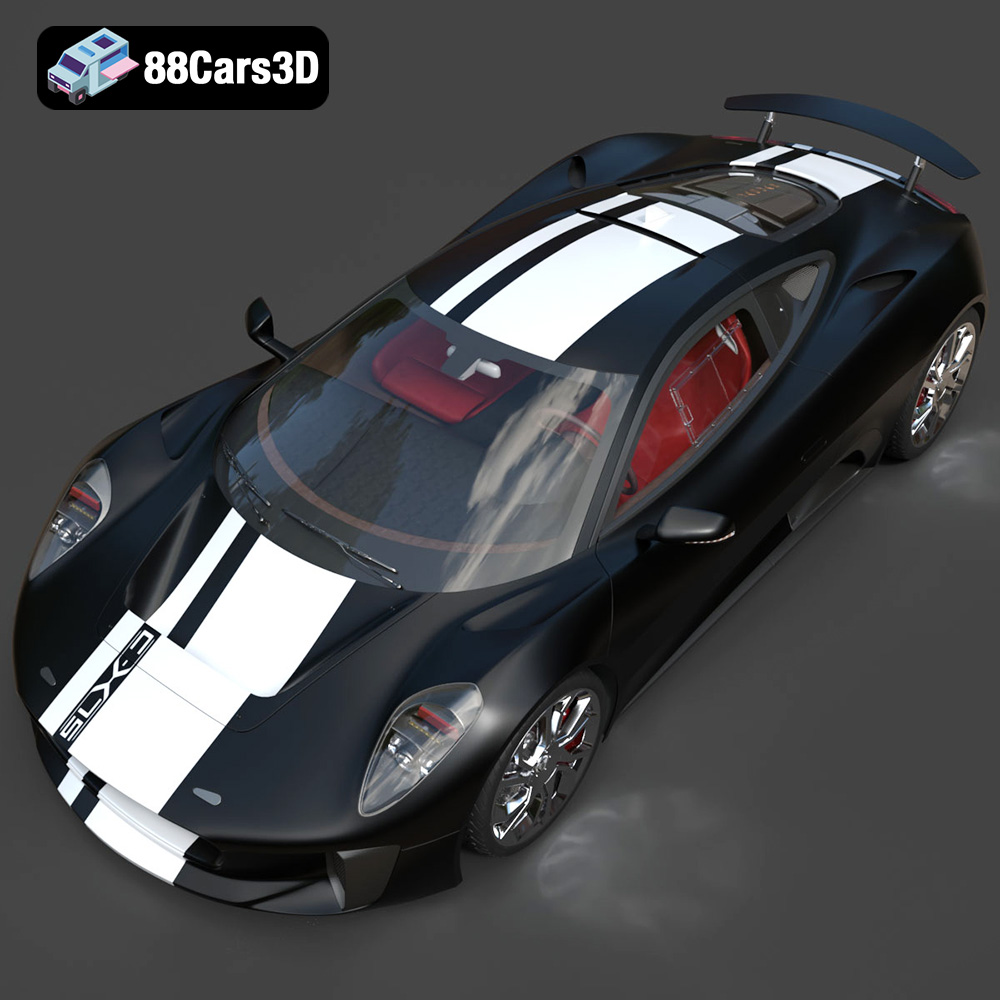
At the heart of today’s discussion is a remarkable example of digital automotive excellence: the Jaguar C-X75 2014 3D Model. This extraordinary asset transcends mere visual appeal, embodying a meticulous approach to 3D craftsmanship. It captures the stunning aerodynamics and aggressive styling of Jaguar’s renowned hybrid-electric concept car with unparalleled realism. With its clean geometry, realistic materials, and fully modeled interior, it’s a prime example of a professional-grade 3D car model designed to integrate seamlessly into diverse production pipelines, from photorealistic cinematic renderings to demanding next-generation racing games.
One of the most critical aspects of working with 3D models, especially in a professional pipeline, is understanding the various file formats available. Each format is designed for specific purposes, offering unique advantages in terms of compatibility, data retention, and optimization. Choosing the right format is essential for efficient workflow and successful project delivery. The Jaguar C-X75 2014 3D Model, for instance, is supplied in a comprehensive range of formats, ensuring maximum flexibility for any creative endeavor.
The Jaguar C-X75 2014 3D Model offers all these formats, providing unparalleled flexibility for any digital artist or developer, ensuring it can be integrated into virtually any workflow.
Photorealistic rendering is where a 3D model truly comes to life, blurring the lines between the digital and the real. For automotive rendering, this means meticulously recreating every curve, reflection, and material property to trick the eye into believing it’s a photograph of an actual vehicle. This demanding discipline requires both artistic vision and deep technical understanding, particularly when working with complex assets like premium 3D car models.
The foundation of photorealism lies in the materials. For a vehicle like the Jaguar C-X75, this involves much more than just applying a color. It means crafting sophisticated shaders that simulate the complex interplay of light with car paint (which often includes metallic flakes and clear coats), reflective chrome, intricate carbon fiber patterns, and various types of glass. Physically Based Rendering (PBR) workflows are standard here, utilizing maps for albedo (base color), metallic, roughness, normal, and sometimes even displacement or anisotropy to accurately represent how surfaces interact with light. The Jaguar C-X75 2014 3D Model provides such realistic materials, ensuring a head start in achieving breathtaking results.
Beyond materials, lighting is the ultimate sculptor of form. Professional automotive renders often rely on High Dynamic Range (HDR) images for environment lighting, which provide realistic reflections and global illumination. Careful placement of virtual lights (e.g., area lights, spotlights) is crucial to highlight body lines, create dramatic shadows, and emphasize design details. Reflections, especially on glossy car surfaces, play a vital role in conveying the vehicle’s shape and its interaction with the surrounding environment. An artful renderer uses these elements to tell a story, placing the car in a context that enhances its appeal, whether it’s bathed in the warm glow of a sunset or showcased under crisp studio lights.
Industry-standard software packages like Autodesk 3ds Max and Blender are powerhouses for automotive rendering. 3ds Max, often paired with renderers like V-Ray or Corona, offers robust modeling tools, advanced material editors, and unparalleled control over scene setup, making it a staple in professional visualization studios. Its integration with other Autodesk products further streamlines complex production pipelines. Blender, on the other hand, has rapidly evolved into a formidable competitor, offering a comprehensive suite of tools for modeling, sculpting, animation, and rendering (via Cycles or Eevee). Its open-source nature, coupled with powerful features and a thriving community, makes it an increasingly popular choice for artists seeking high-quality results without subscription costs. Both platforms are perfectly suited to harness the detailed geometry and material work present in models from 88cars3d.com, such as the Jaguar C-X75.
While photorealistic rendering focuses on visual fidelity with fewer performance constraints, real-time applications like video games and interactive simulations demand a delicate balance between visual quality and computational efficiency. Optimizing 3D car models for game engines like Unreal Engine and Unity is a specialized skill that ensures smooth frame rates without sacrificing too much visual detail.
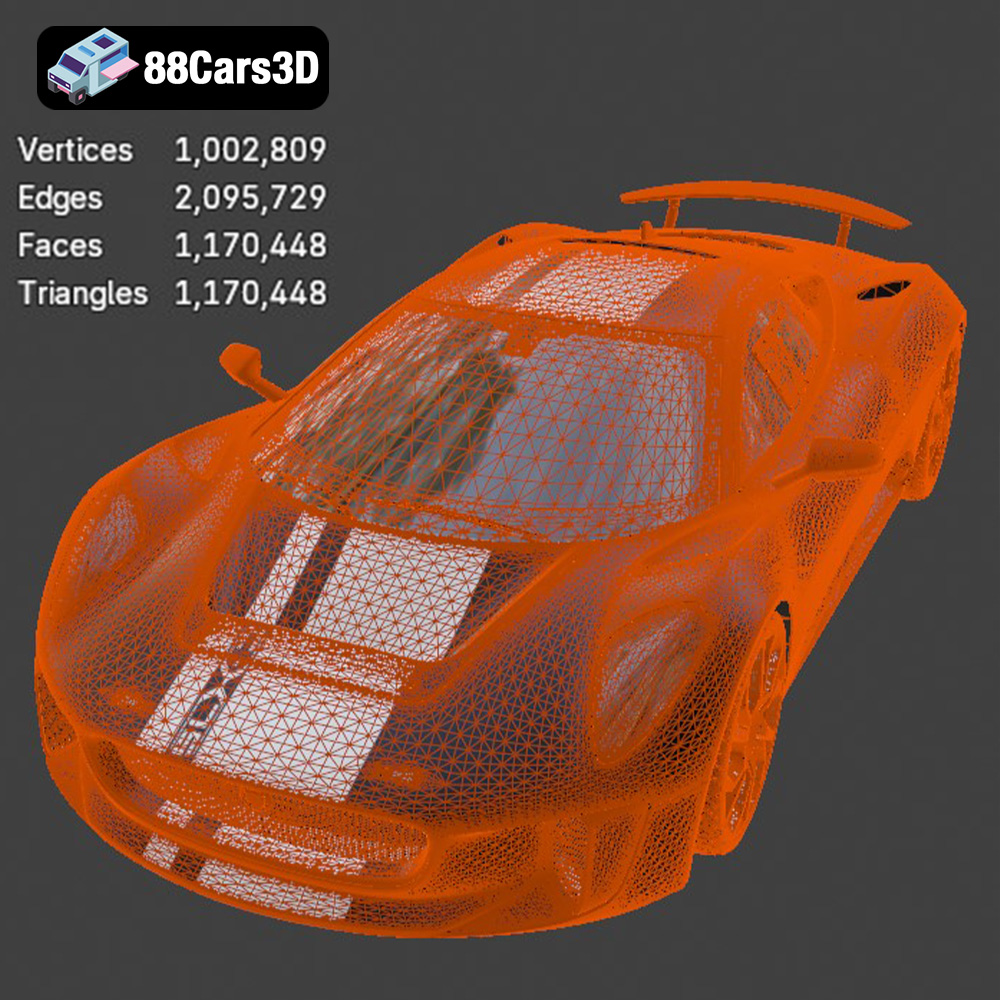
One of the primary considerations in game development is polygon count. A high-poly model suitable for cinematic rendering will cripple a game engine. Game-ready assets like the Jaguar C-X75 2014 3D Model are designed with optimized topology, featuring clean edge flow and an appropriate polygon count to perform well in real-time. This often involves creating multiple Levels of Detail (LODs) for a single asset. LODs are simplified versions of the model that automatically switch based on the camera’s distance, ensuring that distant objects consume fewer resources while close-up objects retain high detail. This intelligent optimization is critical for maintaining high frame rates in open-world games or racing simulations with many vehicles.
Integrating a 3D car model into a game engine like Unreal Engine or Unity requires specific preparation. This includes ensuring correct material assignments, appropriate UV mapping for textures and lightmaps, and setting up collision meshes. For the Jaguar C-X75, the availability of a specific .unreal format means much of this work is already done. When dealing with .fbx files, artists meticulously prepare the model:
Efficient UV mapping is paramount for game assets. It involves unwrapping the 3D model’s surfaces into a 2D plane, allowing textures to be painted or applied without distortion. A well-optimized UV layout maximizes texture resolution while minimizing wasted space, which is critical for visual quality and memory usage. Paired with high-quality PBR textures (albedo, normal, roughness, metallic, ambient occlusion), this ensures that even optimized models can achieve impressive visual fidelity within the constraints of real-time rendering. The clean geometry of professional models like those found on 88cars3d.com greatly simplifies this process, making them ideal for game development.
The versatility of high-quality 3D car models extends far beyond traditional screens, finding exciting applications in augmented reality (AR), virtual reality (VR), and even physical fabrication through 3D printing. These emerging fields demand specific considerations for 3D assets, and a well-prepared model like the Jaguar C-X75 can be a transformative tool.
AR and VR offer unprecedented levels of immersion, allowing users to interact with 3D models in their physical environment (AR) or within fully simulated digital worlds (VR). For automotive brands, this means virtual showrooms, interactive design reviews, or even test drives from the comfort of one’s home. The technical requirements for AR/VR models often parallel those for game engines: optimized polygon counts, efficient textures, and robust performance. Formats like .glb are particularly suited for web-based AR/VR applications due to their compact, single-file nature and efficient loading. Imagine placing the stunning Jaguar C-X75 2014 directly into your living room via an AR app, allowing you to walk around it and examine its details as if it were truly there – this is the power of AR/VR ready 3D models.
While digital visualization is powerful, sometimes a physical presence is required. 3D printing enables the transformation of a digital 3D model into a tangible object. This is invaluable for rapid prototyping in design, creating scaled models for displays, or even producing custom parts. The .stl format is the industry standard for 3D printing, representing the model’s surface as a triangulated mesh. For a successful 3D print, the model must have a watertight mesh (no holes or non-manifold geometry) and appropriate wall thickness. A high-quality source model, like the Jaguar C-X75, provides a solid foundation for generating a print-ready STL, allowing designers to hold a physical representation of their digital dream car.
As technology advances, the lines between real-time rendering, AR, and VR will continue to blur. High-quality 3D car models are at the forefront of this revolution. They enable car configurators where customers can customize their dream car in real-time, interactive training simulations for mechanics, and virtual experiences that bring concept cars to life long before they hit the assembly line. The Jaguar C-X75 2014 3D Model is not just an asset for today’s projects but an investment in the future of interactive automotive visualization, ready to power the next generation of digital experiences.
In professional studios, efficient workflow integration is paramount. Time is money, and the ability to seamlessly incorporate assets into various production stages can significantly impact project timelines and budgets. A high-quality, pre-made 3D model like the Jaguar C-X75 from 88cars3d.com can be a game-changer, accelerating development and freeing artists to focus on creative tasks rather than foundational modeling.
Modern production pipelines, whether for games, films, or architectural visualization, are complex systems involving multiple artists and departments. A “clean” 3D model, characterized by well-organized geometry, proper naming conventions, correctly applied materials, and optimized UVs, is crucial for smooth integration. When an asset like the Jaguar C-X75 2014 3D Model arrives in multiple formats with meticulous preparation, it drastically reduces the time spent on clean-up, retopology, or material conversion. This allows a texture artist to immediately start working on variations, an animator to quickly rig the wheels, or a lighting artist to jump straight into scene setup, maximizing productivity across the board.
Clean geometry is the bedrock of a usable 3D asset. It refers to a mesh that is free of errors such as non-manifold edges, overlapping vertices, or flipped normals. It also implies efficient topology – a mesh structured with logical edge loops that support deformations for animation, allow for easy subdivision for higher detail, and facilitate clean UV mapping. The Jaguar C-X75 model boasts “exceptionally clean geometry and pristine edge flow,” which translates directly to ease of use. This attention to detail means fewer hours debugging issues, easier modifications if needed, and higher quality renders or real-time performance. It’s the mark of a truly professional asset that is built for demanding production environments.
Consider a virtual studio tasked with creating a photorealistic commercial for a luxury car brand, featuring a competitive concept car. Instead of spending weeks modeling the Jaguar C-X75 from scratch, the studio could leverage the pre-existing 3D model from 88cars3d.com.
This streamlined workflow demonstrates how a high-quality, multi-format asset like the Jaguar C-X75 2014 3D Model significantly reduces production overhead and accelerates creative output.
The Jaguar C-X75 is more than just a concept car; it’s a testament to automotive innovation and stunning design. Its appearance in a major motion picture further cemented its status as a modern icon. As a 3D model, it offers a unique blend of aesthetic brilliance and technical precision, making it an indispensable asset for a wide range of digital creators.
The original Jaguar C-X75, with its striking aerodynamic profile, advanced hybrid powertrain, and aggressive stance, captivated enthusiasts worldwide. The 3D model meticulously recreates this allure, ensuring that every design element, from the intricate grille to the distinctive rear diffuser, is faithfully rendered. This attention to detail means that whether you’re recreating a specific scene, building a new racing game, or simply admiring its form, the digital replica truly honors the spirit of the original concept. It’s a piece of automotive history, digitally preserved and ready for your creative input.
The product description highlights its “exceptionally clean geometry and realistic materials” and its “dedication to accuracy ensures pristine edge flow and optimal polygon count.” These aren’t just buzzwords; they are critical technical attributes that directly impact the usability and performance of the model across various applications. Whether you need a low-poly version for mobile AR, a medium-poly for real-time games, or a high-poly for cinematic renders, the foundational quality of this model makes it adaptable. Its availability in formats like .blend, .fbx, .obj, .glb, .stl, .ply, .unreal, and .max underlines its commitment to broad compatibility and professional utility.
For individuals and studios seeking to elevate their projects, 88cars3d.com serves as a premier destination for high-quality 3D car models. The Jaguar C-X75 2014 3D Model is a prime example of the caliber of assets available, offering not just a model, but a professionally prepared foundation for boundless creativity. It saves invaluable time and resources, allowing artists to bypass the arduous modeling phase and jump straight into customization, rendering, and interaction. This strategic investment in a premium asset can unlock new possibilities, enhance visual quality, and streamline production workflows for any project involving automotive visualization.
The world of 3D modeling is a dynamic landscape, constantly pushing the boundaries of what’s possible in digital visualization. High-fidelity 3D car models are central to this evolution, enabling everything from cinematic masterpieces and immersive game experiences to practical prototyping and interactive AR/VR applications. The technical considerations, from file format selection and polygon optimization to material fidelity and workflow integration, are complex but crucial for achieving professional results.
The value of a meticulously crafted and professionally prepared 3D asset, such as the Jaguar C-X75 2014 3D Model, cannot be overstated. It represents hours of expert modeling, texturing, and optimization, distilled into a ready-to-use package. This empowers artists and developers to focus on their creative vision rather than getting bogged down in the technical minutiae of asset creation. Whether you’re a seasoned professional or an aspiring creator, having access to such a versatile and high-quality model can dramatically accelerate your projects and elevate their visual impact.
For those looking to integrate stunning automotive realism into their next endeavor, exploring the extensive collection of 3D car models at 88cars3d.com is a logical first step. With assets like the Jaguar C-X75, meticulously designed for diverse applications and supplied in multiple industry-standard formats, you gain a significant advantage. It’s more than just a digital replica; it’s a foundation for innovation, a tool for storytelling, and a pathway to unparalleled visual excellence in the ever-expanding digital realm.
Experience unparalleled realism with the Jaguar C-X75 2014 3D Model. This exceptionally detailed digital replica captures the essence of the renowned hybrid-electric concept car, offering automotive enthusiasts and professionals an immaculate asset for their digital projects. Engineered with precision, this model brings the stunning aerodynamics and aggressive styling of the C-X75 to your virtual environments.
Designed with professional standards in mind, the model features exceptionally clean geometry and realistic materials. Every exterior curve and aerodynamic element has been meticulously crafted to reflect the authentic vehicle, complemented by a fully modeled interior. This dedication to accuracy ensures pristine edge flow and optimal polygon count, making it a reliable asset for intense production pipelines.
Whether you are developing next-generation racing games, producing photorealistic cinematic renderings, creating interactive AR/VR experiences, or generating architectural visualizations, this Jaguar C-X75 model delivers outstanding performance. Its versatile build ensures seamless integration into major production software and real-time engines.
To provide maximum flexibility, the model is supplied in multiple industry-standard formats:
$19.99
.arvr
.blend
.c-x75
.car3dmodel
.conceptcar
.cx75
.fbx
.gameasset
.glb
.hybrid
.hypercar
.jaguar
.max
.obj
.ply
.rendering
.simulation
.sportsCar
.stl
.unreal