Get 20% OFF All Premium 3D & STL Models!

In the fast-evolving realms of game development, cinematic visualization, and interactive experiences, the demand for truly exceptional 3D assets has never been higher. Automotive models, in particular, stand at the forefront of this digital revolution, serving as crucial components that define the realism and immersion of a project. From the roar of an engine in a racing simulator to the gleaming reflections in an architectural visualization, the quality of a 3D car model can make or break the visual integrity of an entire production.
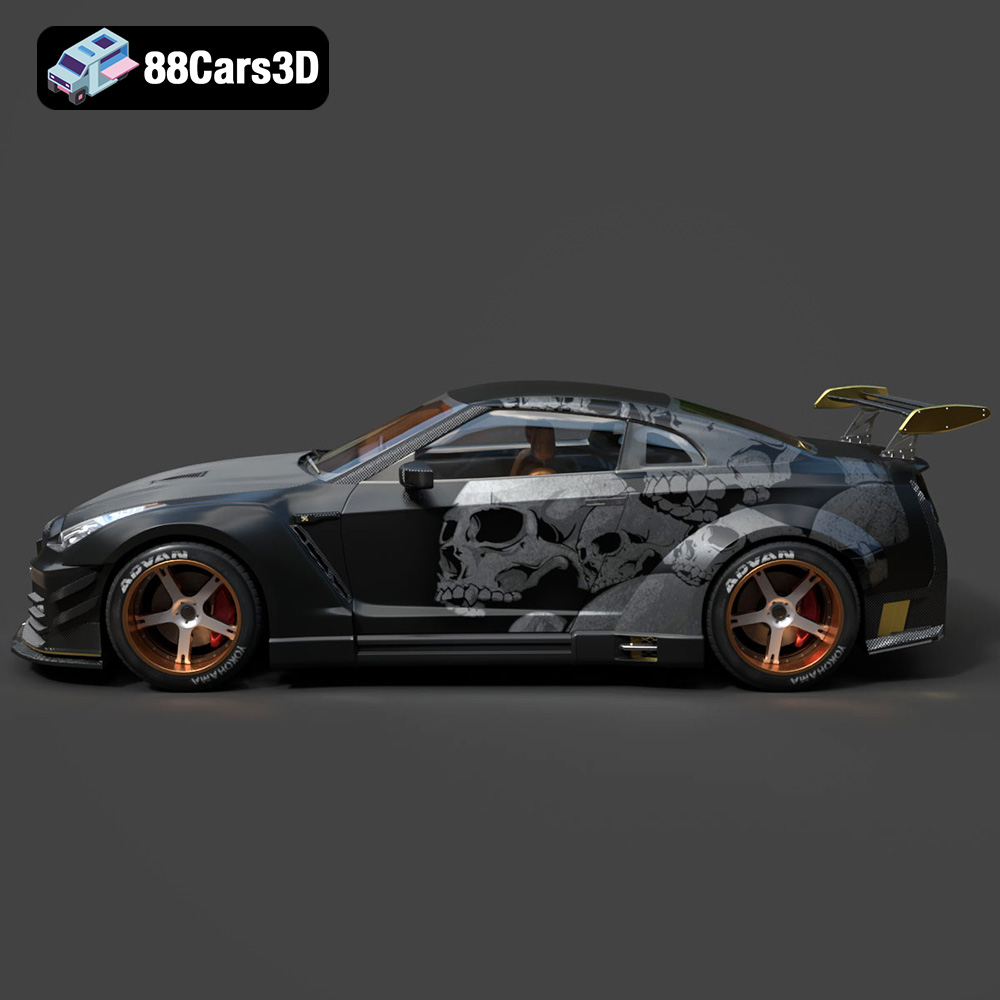
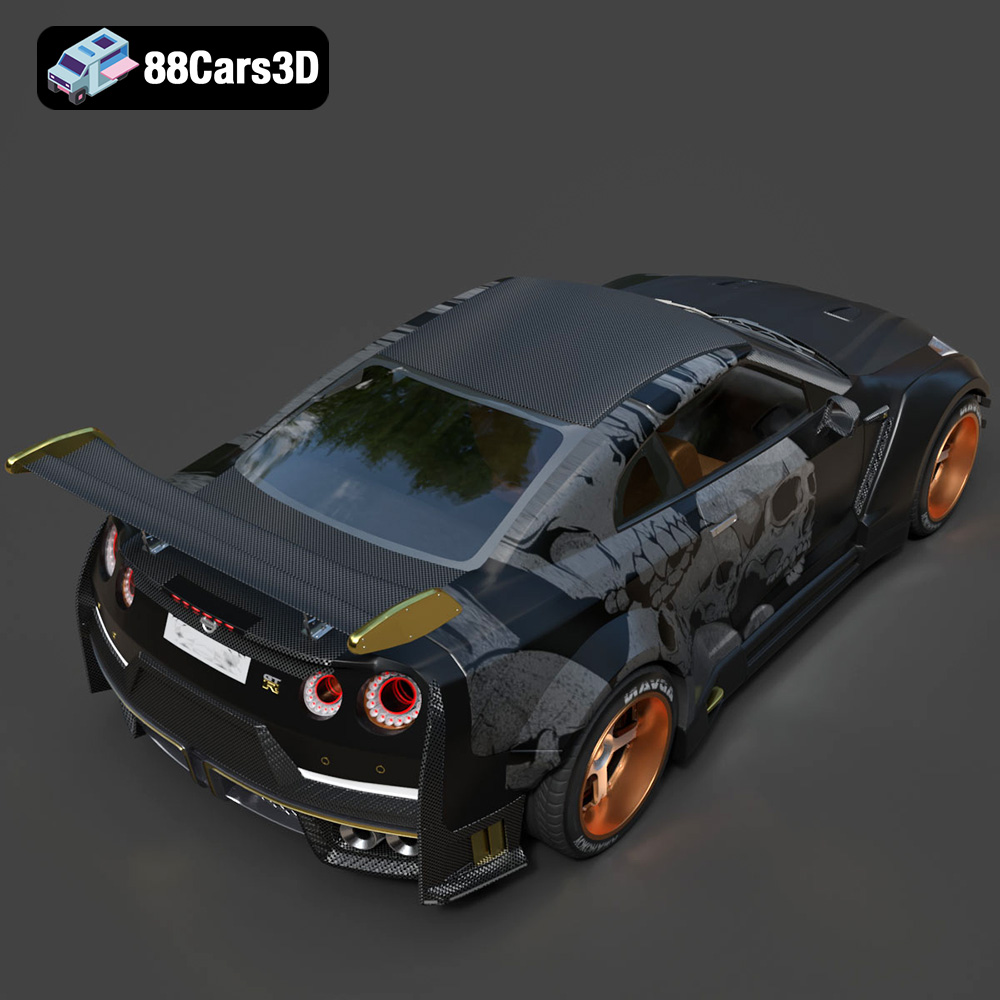
Today, we’re taking a closer look at what defines a professional-grade 3D vehicle asset, exemplified by a standout model that captures the essence of track-focused performance: the Nissan GTR R35 Nismo 3D Model. This meticulously crafted digital asset offers an unparalleled level of detail and optimization, making it an indispensable tool for designers, artists, and developers aiming for the highest standards of digital fidelity. As we navigate the technical landscape of modern 3D automotive design, we’ll explore the critical features, versatile applications, and essential file formats that empower creators to bring their visions to life.
Creating a compelling 3D car model goes far beyond simply mimicking its real-world counterpart. It requires a deep understanding of geometry, materials, and optimization techniques to ensure both visual stunningness and practical usability across diverse platforms. The Nissan GTR R35 Nismo 3D Model, available on 88cars3d.com, is a prime example of such an asset, meticulously engineered to meet professional demands.
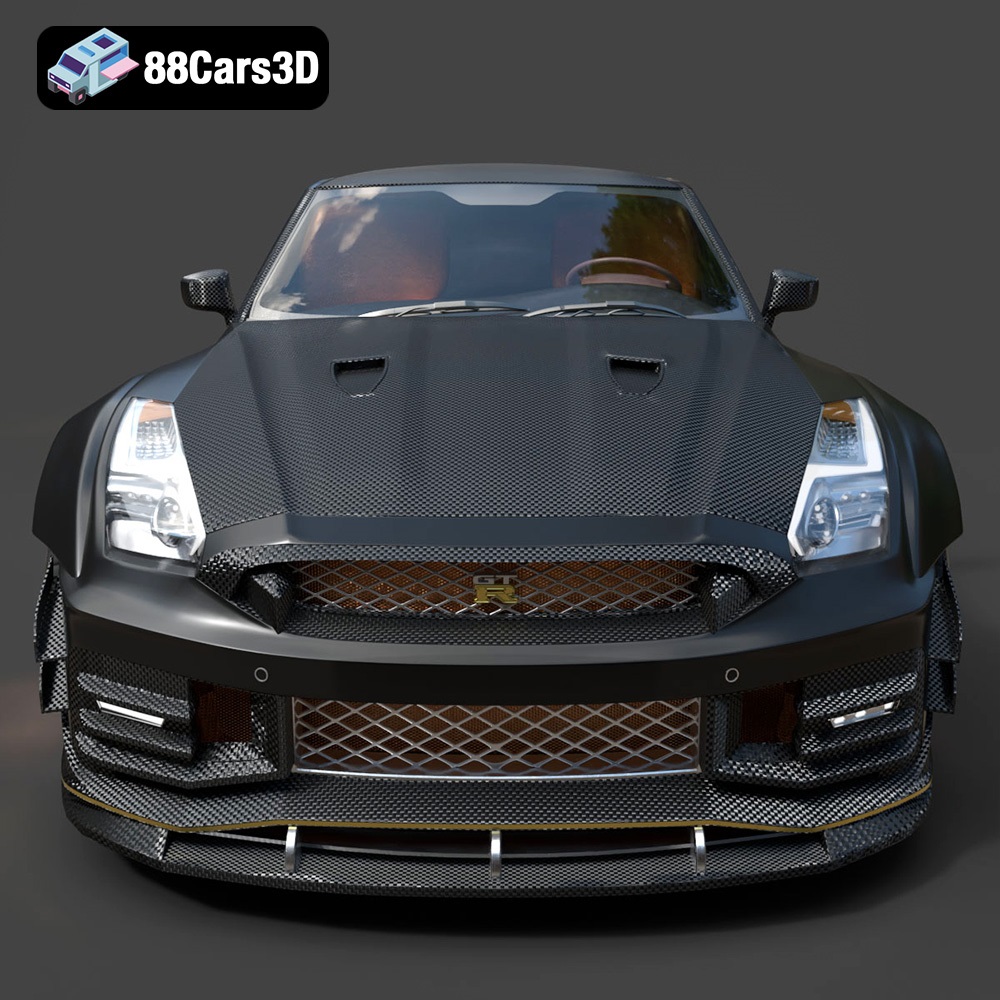
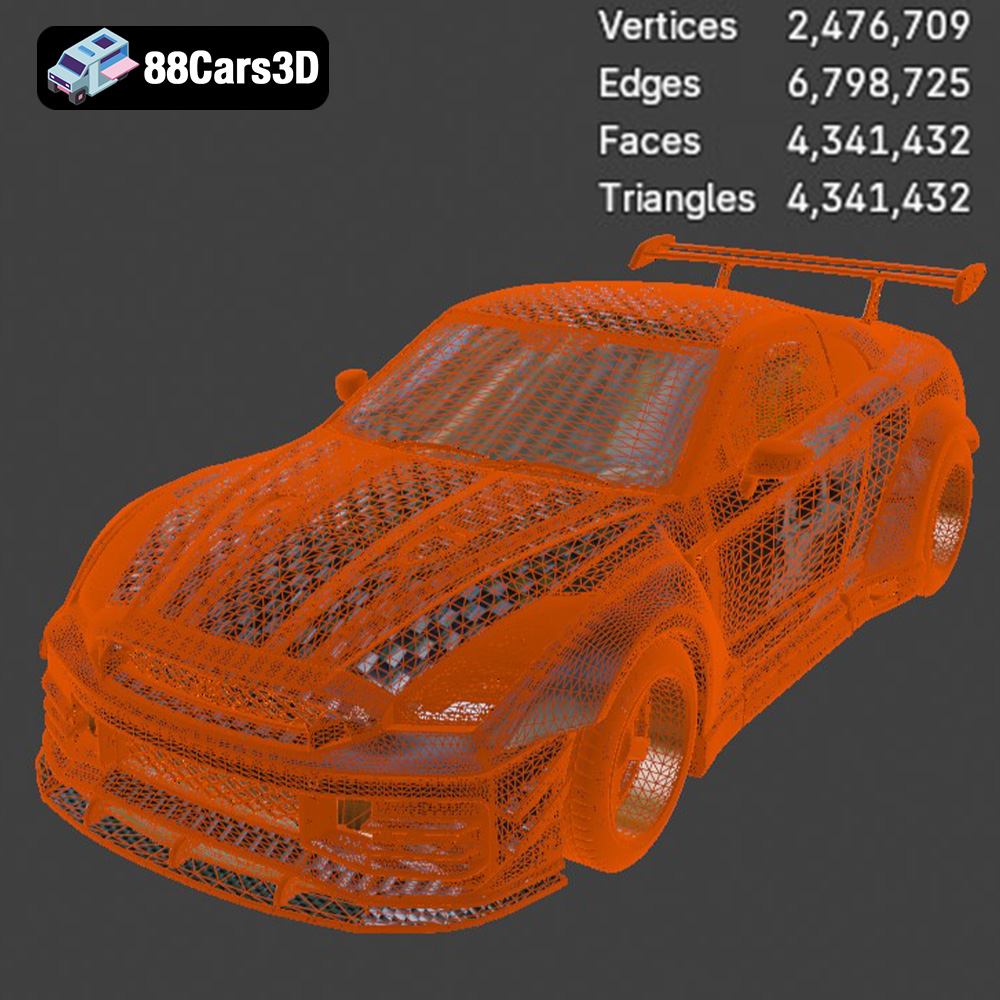
At the heart of any high-quality 3D car model is its geometry. For the Nissan GTR R35 Nismo, this means exceptionally clean mesh topology, ensuring smooth surfaces and accurate representation of its aggressive aerodynamics and widened stance. Precision in modeling ensures that every curve, vent, and panel line aligns perfectly, translating the iconic design language into a flawless digital form. This attention to detail extends to intricate components like the carbon fiber aero elements, which are not just textured but often modeled with subtle physical depth to enhance realism.
Complementing this robust geometry are the realistic materials. Modern rendering pipelines heavily rely on Physically Based Rendering (PBR) workflows, where materials are defined by properties like base color, metallic, roughness, normal maps, and ambient occlusion. The Nissan GTR R35 Nismo 3D Model is equipped with such materials, allowing it to react realistically to light in any environment. This ensures that the paint gleams convincingly, carbon fiber exhibits its characteristic weave and sheen, and glass refracts light as it should, providing an authentic visual experience right out of the box.
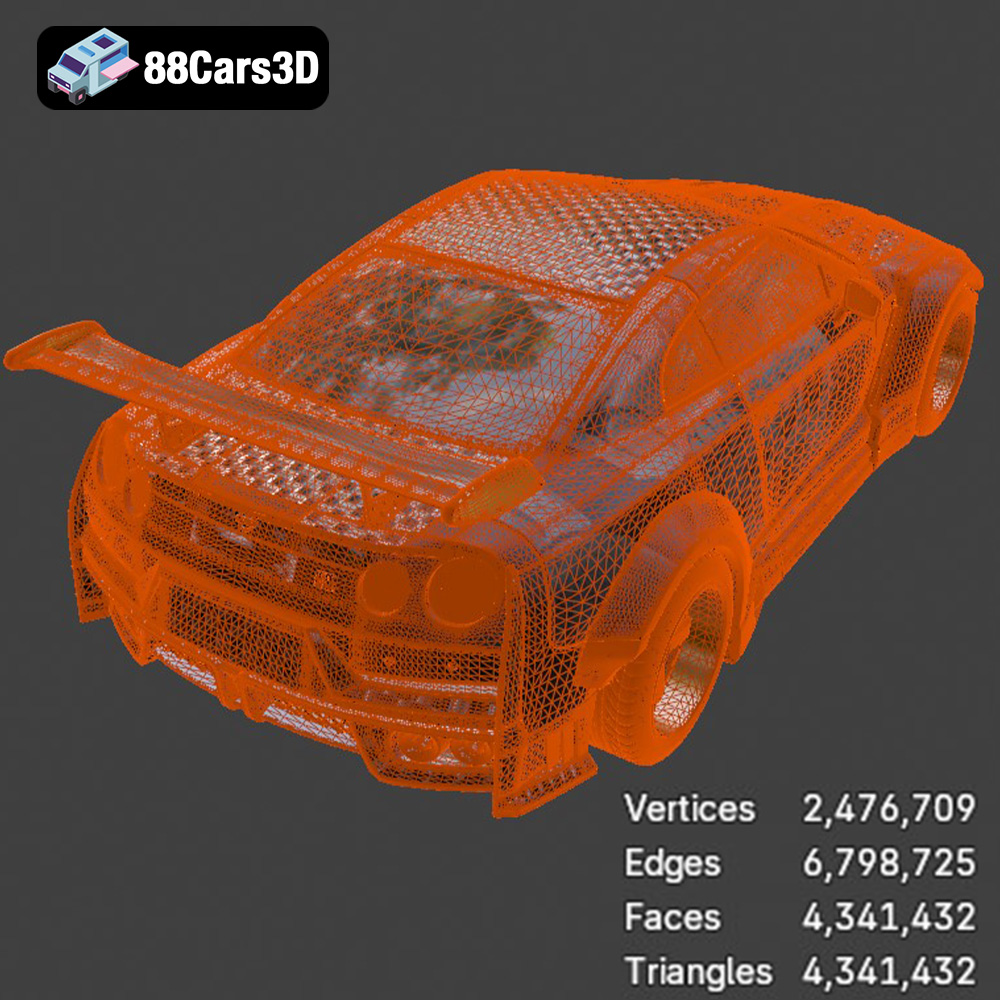
While visual fidelity is paramount, efficient performance is equally critical, especially for real-time applications like game development or AR/VR. This necessitates an optimized polygon structure. The Nissan GTR R35 Nismo 3D Model is built with a careful balance, ensuring high detail where needed without excessive polygon counts that could burden a game engine or slow down rendering times. This optimization often involves using a combination of high-poly details baked into normal maps for lower-poly meshes, striking a perfect equilibrium between visual quality and performance.
Furthermore, well-executed UV mapping is indispensable. UVs (texture coordinates) dictate how 2D textures are wrapped around the 3D model. Clean, organized UV layouts in the Nissan GTR R35 Nismo 3D Model ensure that textures display without stretching or distortion, and that artists can easily customize liveries or adjust material properties without hassle. Overlapping UVs are minimized where unique texture detail is required, and UV islands are efficiently packed to maximize texture resolution and minimize VRAM usage.
Accuracy in scaling and proportions is a non-negotiable aspect for professional 3D car models. Whether it’s integrating the vehicle into a game world, an architectural scene, or a physics simulation, having a model that is scaled to real-world measurements is vital. The Nissan GTR R35 Nismo 3D Model adheres to authentic proportions and accurate scaling, ensuring it functions flawlessly in any scenario. This precision not only enhances realism but also saves countless hours of adjustment for developers and artists, allowing for seamless integration and predictable interaction within a digital environment.
The versatility of a 3D model is often defined by the range of file formats it supports. Each format is designed with specific use cases and software environments in mind, offering unique advantages. The Nissan GTR R35 Nismo 3D Model package provides a comprehensive suite of file formats, ensuring maximum compatibility and flexibility for any creative pipeline.
The utility of a high-quality 3D car model extends across a multitude of industries, becoming a cornerstone for innovation and visual communication. The Nissan GTR R35 Nismo 3D Model, with its meticulous construction and diverse file format support, exemplifies this versatility.
For game developers, 3D car models are the lifeblood of racing titles, open-world environments, and simulation games. A model like the Nissan GTR R35 Nismo is crucial for delivering an authentic driving experience. Its optimized polygon structure ensures smooth framerates, while realistic materials bring the vehicle to life under dynamic lighting conditions. Developers can integrate the .fbx or .unreal files directly into engines like Unreal Engine or Unity, complete with LODs (Levels of Detail) for performance scaling and custom collision meshes for accurate physics. The ability to customize textures means developers can create unique liveries, enhancing player engagement and personalization within the game.
In the world of advertising, film, and animation, cinematic automotive rendering demands nothing short of perfection. High-fidelity 3D car models are essential for creating stunning visual effects, product showcases, and dynamic action sequences without the expense and logistical challenges of shooting with real vehicles. The Nissan GTR R35 Nismo 3D Model, with its clean geometry and PBR materials, shines in this domain. Artists can import the .max or .blend files into their preferred rendering software (e.g., V-Ray, Corona, Cycles) to produce hyper-realistic stills or animations. Imagine the GTR dramatically drifting through a digital cityscape or presented in a pristine virtual studio, reflecting every nuance of its aggressive design – all achievable with a professional asset.
Augmented Reality (AR) and Virtual Reality (VR) are transforming how we interact with digital content, offering immersive experiences that blur the lines between the real and virtual. High-quality 3D car models are vital for populating these interactive environments. The .glb format of the Nissan GTR R35 Nismo is particularly suited for AR/VR applications, offering efficient delivery and excellent visual fidelity for real-time interaction. From interactive showroom displays where customers can explore a car’s interior and exterior in a virtual space, to technical visualizations used for design reviews or training simulations, the model’s accurate scaling and realistic detailing ensure a convincing and engaging user experience. Its clean topology also aids in creating precise physics simulations, critical for engineering visualization or interactive demos.
A professional 3D asset should seamlessly integrate into various creative pipelines. The Nissan GTR R35 Nismo 3D Model is designed with this principle in mind, offering multiple paths for adoption, whether your tool of choice is Blender, Unreal Engine, or 3ds Max.
For artists and studios utilizing Blender, the provided .blend file is a powerful starting point. Upon opening, you’ll find the Nissan GTR R35 Nismo pre-configured with materials, textures, and potentially a basic lighting setup. This allows for immediate rendering or further customization. You can easily adjust the PBR material nodes to fine-tune reflections, add custom decals, or change paint colors. For animation, Blender’s non-linear animation editor and powerful rigging tools can be employed to create realistic vehicle movements. The clean geometry of the model also facilitates subdivision modeling for even higher detail renders or seamless integration with Blender’s physics simulations for dynamic crash tests or environmental interactions.
Unreal Engine developers benefit immensely from the .unreal and .fbx formats. The .unreal file, if it implies a pre-packaged asset, can often be directly imported or migrated into your project, bringing with it optimized meshes, PBR materials correctly set up for Unreal’s rendering pipeline, and potentially even blueprint-driven interactive elements. The .fbx file, being industry-standard for game engines, imports cleanly into Unreal, retaining mesh data, UVs, and basic material assignments. From there, artists can utilize Unreal’s powerful material editor to create complex car paint shaders, add emissive lights, or set up dynamic wear and tear. The model’s optimized nature ensures excellent performance, making it ready for in-game cinematics, playable vehicle systems, or interactive product configurators.
Studios relying on 3ds Max for high-fidelity rendering and animation will find the .max file an invaluable resource. This native file format ensures that all aspects of the Nissan GTR R35 Nismo are fully editable within 3ds Max. Artists can leverage powerful rendering engines like V-Ray or Corona Renderer to achieve photorealistic results, adjusting camera angles, depth of field, and global illumination settings to showcase the vehicle in its best light. The clean topology of the model allows for easy subdivision for close-up renders and seamless integration into complex scene compositions, whether it’s an architectural visualization project or a high-end automotive advertisement. The fully modeled interior also provides ample opportunities for creating intricate cabin shots or interactive virtual tours.
To truly appreciate the value of a high-quality 3D car model, it’s beneficial to envision it within practical, real-world scenarios. The Nissan GTR R35 Nismo 3D Model from 88cars3d.com offers such a versatile foundation.
Consider an indie game studio developing a next-generation racing simulator. The Nissan GTR R35 Nismo 3D Model becomes a core playable vehicle. Its optimized polygon structure and game-ready .fbx file mean it can be imported directly into Unreal Engine. The developers quickly set up physics assets and collision meshes based on the model’s precise geometry. They utilize the clean UVs to apply custom racing liveries and sponsor decals, ensuring high-resolution textures without stretching. The PBR materials react realistically to the game’s dynamic weather system – rain streaks, reflections on wet asphalt, and the glint of sunlight off the metallic paint all contribute to an immersive driving experience. The fully modeled interior allows for a realistic first-person cockpit view, enhancing player immersion significantly.
An automotive marketing agency is tasked with creating a compelling digital advertisement for a high-performance vehicle. Instead of costly physical shoots, they opt for a full CG production using the Nissan GTR R35 Nismo 3D Model. Working in 3ds Max, animators utilize the .max file to animate the GTR gracefully navigating a virtual, stylized landscape. The model’s intricate details, from the carbon fiber splitter to the custom Nismo wheels, are highlighted with sophisticated lighting and camera movements. Renderers use V-Ray to achieve breathtaking photorealism, capturing every reflection and shadow with precision. The authentic proportions and realistic exterior styling ensure the final cinematic renders are indistinguishable from real-world footage, delivering a powerful visual message to potential buyers.
A car dealership wants to offer a cutting-edge, interactive experience for potential buyers, allowing them to explore vehicles that aren’t physically on the lot. They choose the Nissan GTR R35 Nismo 3D Model for an AR/VR application. Using the .glb file, a developer creates a mobile AR app where customers can project the GTR into their driveway, walk around it, and even peek inside via their phone’s camera. The optimized .glb format ensures fast loading and smooth interaction on mobile devices. Concurrently, a VR experience is built where customers can virtually sit inside the fully modeled interior, change paint colors in real-time, and view performance specifications displayed on a virtual HUD. The model’s accurate scaling and realistic design provide an incredibly immersive and informative pre-purchase experience.
In the competitive digital landscape, the distinction between good and great often comes down to the quality of your assets. Investing in premium 3D car models is not merely an aesthetic choice; it’s a strategic decision that offers tangible benefits across all facets of production.
Developing a high-fidelity 3D car model from scratch is an incredibly time-consuming and resource-intensive endeavor. It requires specialized skills in modeling, UV mapping, texturing, and material creation, often taking weeks or even months for a single vehicle. By utilizing a professionally crafted asset like the Nissan GTR R35 Nismo 3D Model from 88cars3d.com, studios and individual artists can significantly cut down on production timelines. The model comes pre-built, optimized, and ready for integration, allowing teams to focus their valuable time and expertise on creative direction, animation, lighting, and other project-specific tasks rather than foundational asset creation.
The standard for visual realism continues to climb, driven by advancements in rendering technology and audience expectations. High-quality 3D car models are built to meet these rigorous standards. They feature clean topology, precise proportions, realistic PBR materials, and often include detailed interiors and undercarriage components that contribute to overall immersion. The Nissan GTR R35 Nismo 3D Model embodies this commitment to fidelity, ensuring that whether it’s viewed up close in a cinematic render or as part of a fast-paced game, it maintains its integrity and contributes to a believable digital world. This uncompromised visual quality elevates the entire project, lending it a professional and polished appearance.
A well-made 3D asset is an investment in the future. Assets with clean geometry, organized UVs, and standard PBR materials are inherently more adaptable and “future-proof.” They can be easily updated, re-textured, or re-purposed for new projects and evolving technologies. The comprehensive suite of file formats provided with the Nissan GTR R35 Nismo 3D Model ensures its compatibility with a wide array of current and future software and platforms, from game engines to AR/VR viewers. This longevity means that the initial investment continues to yield returns over multiple projects and years, building a robust and versatile digital asset library.
The world of 3D modeling for automotive design, game development, and visualization is driven by precision, performance, and artistic vision. As we’ve explored, a truly professional 3D car model like the Nissan GTR R35 Nismo goes beyond mere aesthetics, offering a robust foundation built on meticulous geometry, optimized structures, and versatile file format support. Such assets are not just models; they are powerful tools that accelerate workflows, elevate visual fidelity, and unlock new creative possibilities across a spectrum of digital applications.
Whether you’re crafting an immersive game, producing a cinematic advertisement, or designing an interactive AR experience, the quality of your 3D car models is paramount. By choosing premium assets like the Nissan GTR R35 Nismo 3D Model, available on 88cars3d.com, you are investing in excellence, efficiency, and the undeniable impact of digital realism. Take your projects to the next level with assets that truly capture the spirit of automotive design and performance.
Experience the precision and performance of a legendary track-focused vehicle with the Nissan GTR R35 Nismo 3D Model. Crafted with meticulous attention to detail, this digital asset perfectly captures the aggressive aerodynamics, widened stance, and iconic design language of the real-world counterpart. The authentic proportions and realistic exterior styling make it an essential addition to any professional digital automotive library.
This model boasts exceptionally clean geometry and is equipped with realistic materials to ensure a seamless integration into your projects. Built to professional standards, the optimized polygon structure guarantees efficient performance across various digital platforms without compromising visual fidelity. Every element, from the carbon fiber aero components to the intricate wheel designs and fully modeled interior, has been constructed with exacting precision.
Ideal for a multitude of applications, this vehicle asset is tailored for seamless use in game development, cinematic automotive rendering, immersive AR/VR experiences, and technical visualization. Its versatility and accurate scaling ensure it functions flawlessly in physics simulations and interactive showroom displays.
The package provides a comprehensive suite of file formats to guarantee full compatibility with your preferred creative software:
Tags: .nissan, .gtr, .r35, .nismo, .sportscar, .supercar, .coupe, .car3dmodel, .rendering, .simulation, .gameasset, .arvr, .blend, .fbx, .obj, .glb, .stl, .ply, .unreal, .max Mercedes Benz CLS 500 3D Model 3D Printable STL
$19.99
.arvr
.blend
.car3dmodel
.coupe
.fbx
.gameasset
.glb
.gtr
.max
.nismo
.nissan
.obj
.ply
.r35
.rendering
.simulation
.sportsCar
.stl
.supercar
.unreal