Get 20% OFF All Premium 3D & STL Models!

In the dynamic worlds of game development, automotive rendering, virtual reality, and scientific visualization, the quality of a 3D asset can make or break a project. Achieving photorealism, seamless integration, and optimal performance demands more than just a model; it requires a meticulously crafted digital twin that embodies technical excellence and artistic precision. Professionals across these industries understand that starting with a high-quality foundation is paramount to success, saving countless hours in production and elevating the final output.
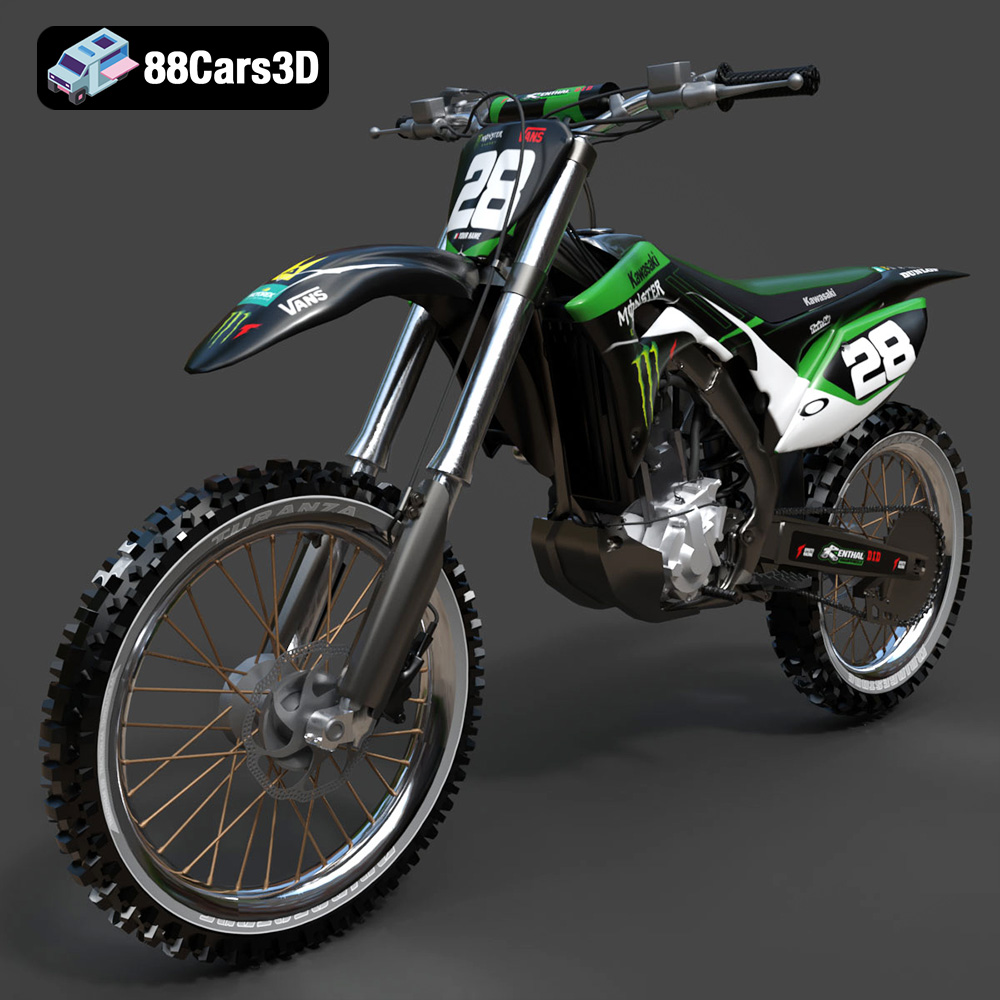
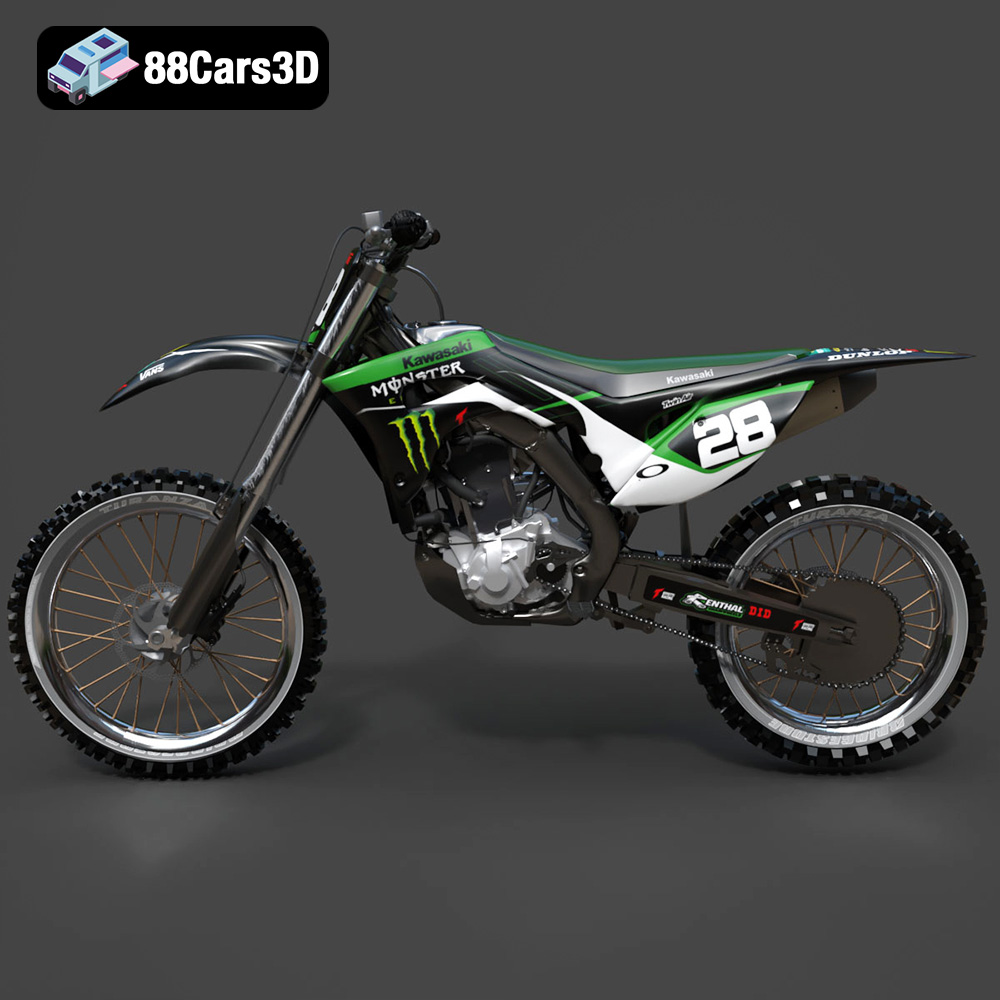
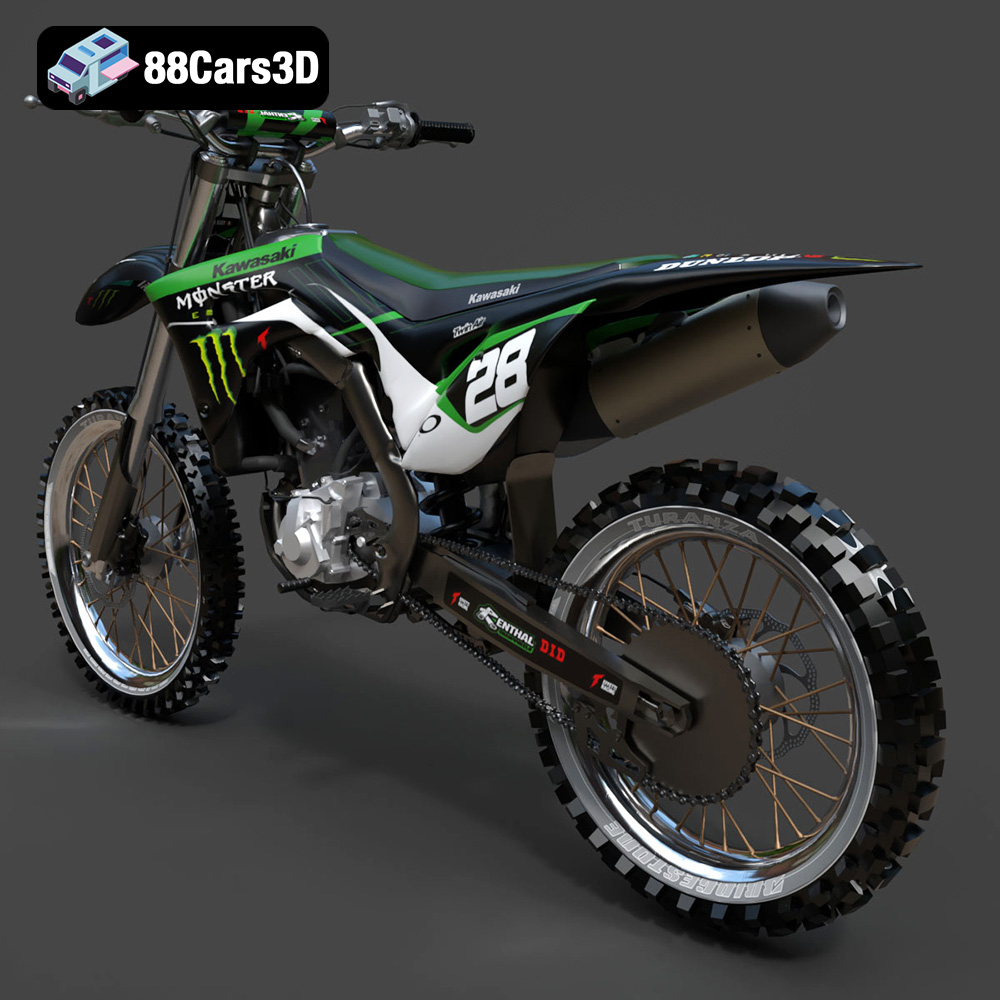
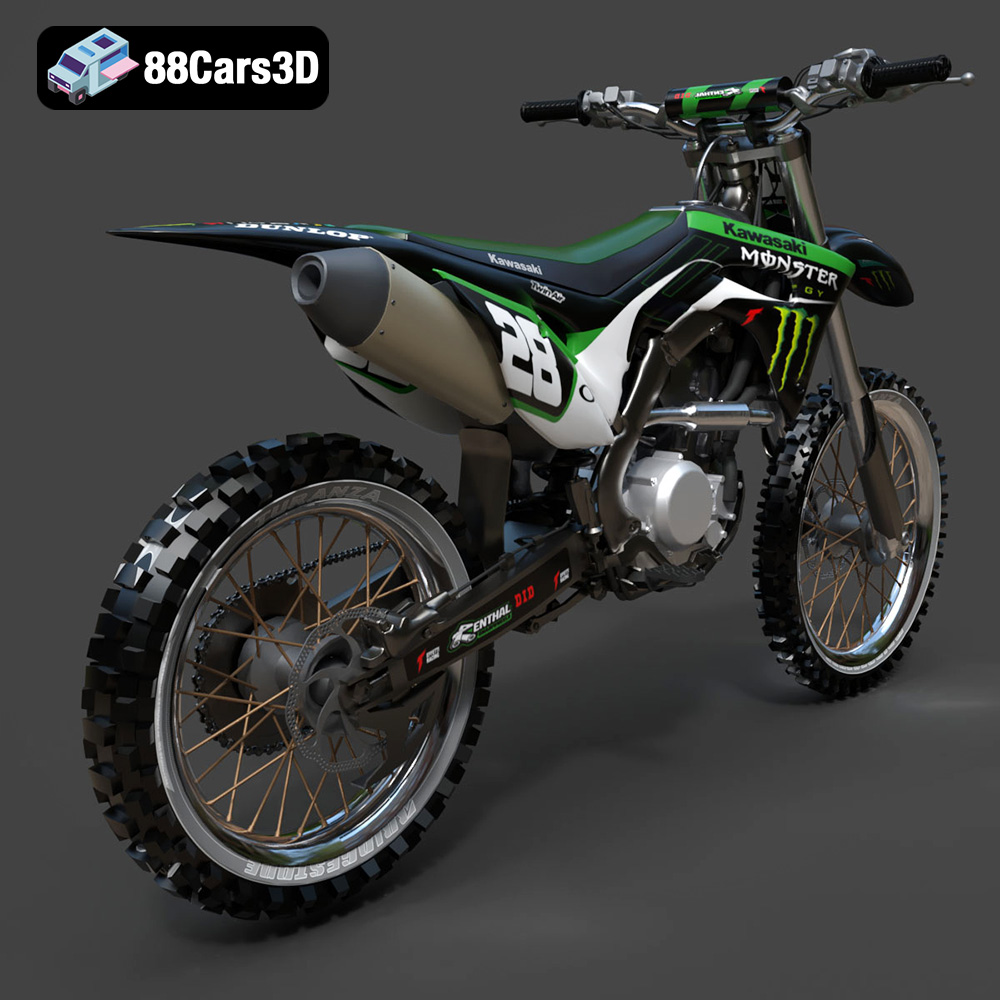
Today, we delve into the intricate details that define a superior 3D model, exploring its impact across diverse applications. As a prime example of such professional-grade quality, we’ll frequently reference the Kawasaki Motorcycle-001 3D Model available on 88cars3d.com. This asset is a testament to what’s achievable when precision, versatility, and efficiency are prioritized in 3D content creation, offering a comprehensive solution for a wide range of digital projects from compelling game assets to breathtaking automotive rendering scenes.
The choice of 3D model file format is a critical decision that influences compatibility, functionality, and the overall workflow efficiency across different software and platforms. A truly versatile 3D asset, like the Kawasaki Motorcycle-001 3D Model, provides a comprehensive suite of formats, ensuring it meets the specific requirements of any project. Understanding these formats is essential for any professional working with 3D content.
The .blend format is Blender’s native file type, offering a complete and editable scene. When you receive a .blend file, you’re not just getting the mesh; you’re getting the entire project with materials, textures, lighting setups, cameras, animations, and even physics simulations intact. This makes it incredibly powerful for artists who use Blender for modeling, rendering, or animation. For the Kawasaki Motorcycle-001, the .blend file provides an editable Blender scene, allowing users full control over every aspect of the model, from adjusting shaders to integrating it seamlessly into a larger Blender project without re-importing assets or re-configuring materials.
.fbx (Filmbox) stands as one of the most widely adopted proprietary file formats for 3D data interchange. Developed by Autodesk, it excels in transferring not only mesh data but also animations, rigs, skinning, lights, and cameras between various 3D applications and game engines like Unreal Engine and Unity. Its robust nature and widespread support make it an ideal choice for complex assets and animation pipelines. The Kawasaki Motorcycle-001’s .fbx inclusion means it’s game-engine ready, optimized for real-time environments, ensuring that all necessary data, such as UVs and material assignments, are preserved for a smooth import into your game development project.
.obj (Wavefront OBJ) is a universal 3D model format renowned for its simplicity and broad compatibility. It primarily stores geometry data – vertices, normals, UVs, and polygonal faces – and can reference external .mtl (material template library) files for material definitions. While it doesn’t support animation or rigging, its widespread support across virtually all 3D software makes it an excellent choice for static mesh interchange when maximum compatibility is required. The .obj version of the Kawasaki Motorcycle-001 ensures that any 3D artist, regardless of their preferred software, can import and work with the model’s core geometry.
.glb (GL Transmission Format Binary) is an increasingly important format, especially for modern applications. It’s a binary version of glTF (GL Transmission Format), which is designed for efficient transmission and loading of 3D scenes and models in web browsers, augmented reality (AR), and virtual reality (VR) experiences. A .glb file encapsulates everything into a single file: mesh data, materials, textures, and animations. This optimization for fast loading and rendering makes the .glb version of the Kawasaki Motorcycle-001 perfect for interactive web viewers, AR overlays on mobile devices, or lightweight VR applications.
.stl (Stereolithography) is the de facto standard format for 3D printing. It represents a 3D model as a collection of unconnected triangular facets, defining only the surface geometry without any color, texture, or material information. While simplistic, its ubiquity in additive manufacturing processes makes it indispensable for physical prototyping. The Kawasaki Motorcycle-001’s .stl file allows designers and engineers to quickly generate a physical prototype of the motorcycle, making it suitable for visualizing scale, ergonomics, or simply creating a tangible representation.
.ply (Polygon File Format or Stanford Triangle Format) is a versatile format for storing 3D data, particularly useful for scanned data or models with precise polygonal meshes. It can store various properties for each vertex (such as color, normals, transparency) and face (such as color), making it more comprehensive than .obj in some aspects, especially for scientific visualization or CAD applications where detailed attribute data is crucial. The .ply version of the Kawasaki Motorcycle-001 is excellent for detailed analysis, simulation, or workflows requiring high precision and additional per-vertex data.
The .unreal format signifies an asset that is pre-configured and optimized specifically for Unreal Engine. This isn’t a standard interchangeable format like .fbx, but rather indicates that the asset has undergone a pipeline to be directly compatible and efficient within the Unreal Engine ecosystem. This might involve specific material setups, LOD (Level of Detail) configurations, collision meshes, and blueprint integration. An .unreal file for the Kawasaki Motorcycle-001 ensures a drag-and-drop experience into Unreal Engine projects, minimizing setup time and maximizing performance for game development or real-time architectural visualization.
Similar to .blend for Blender, .max is the native file format for Autodesk 3ds Max, a powerful 3D modeling, animation, and rendering software widely used in architectural visualization, product design, and cinematic production. A .max file contains the complete 3ds Max scene, including all geometry, textures, materials, lighting, animation, and scene settings. Providing the Kawasaki Motorcycle-001 as a .max file means users of 3ds Max get a fully editable project, allowing for deep customization, complex scene integration, and high-fidelity rendering with V-Ray or Corona Renderer without any translation issues.
In every professional digital endeavor, from creating cinematic game trailers to developing interactive product configurators, the quality of the underlying 3D models dictates the project’s success. High-fidelity assets are not merely aesthetic preferences; they are foundational elements that ensure consistency, performance, and audience engagement.
A high-quality 3D model like the Kawasaki Motorcycle-001 isn’t just about looking good; it’s about accurate representation. Every curve, every bolt, every material finish is meticulously crafted to mirror its real-world counterpart. This precision is critical for automotive rendering where clients expect exact replicas, for game development where immersion relies on believable assets, and for AR/VR where digital objects must seamlessly blend with physical environments. This level of detail elevates a project from amateur to professional, ensuring that the visual experience is both stunning and true to life.
Using poorly optimized or low-resolution 3D car models or game assets can severely undermine a project’s credibility. Jagged edges, stretched textures, or unrealistic materials instantly break immersion and convey a lack of attention to detail. Conversely, an asset like the Kawasaki Motorcycle-001 3D Model, with its clean geometry and realistic materials, elevates the perceived value and professionalism of any project. This is particularly crucial in commercial applications where the model might represent a real product, influencing customer perception and purchasing decisions.
Beyond visual fidelity, professional 3D models are engineered for efficiency. Clean geometry, optimized poly counts, and well-organized UV maps are not just good practices; they are necessities for smooth workflows. In game development, optimized assets mean better frame rates and faster load times. In rendering, they mean quicker render times without sacrificing quality. The design principles behind the Kawasaki Motorcycle-001 ensure that it’s not only beautiful but also performant, enabling artists and developers to integrate it into complex scenes without bogging down their systems.
The versatility of the Kawasaki Motorcycle-001 3D Model, provided through 88cars3d.com, makes it an invaluable asset across a spectrum of professional applications. Its comprehensive file formats ensure seamless integration into diverse pipelines, from high-stakes game development to intricate architectural and product visualization.
For game developers, the Kawasaki Motorcycle-001 3D Model arrives ready to be deployed as a premium game asset. The included .fbx and .unreal formats are specifically tailored for real-time environments like Unreal Engine and Unity. Artists can quickly import the model, leveraging its optimized mesh and PBR (Physically Based Rendering) ready materials to populate open-world environments, create compelling racing sequences, or integrate into interactive simulations. The clean topology ensures that LODs (Levels of Detail) can be generated efficiently, maintaining performance across different hardware specifications, which is paramount for smooth gameplay. This model allows developers to focus on game mechanics and narrative, rather than spending crucial time on asset creation from scratch.
In the realm of automotive rendering, fidelity is king. Whether for advertisements, product showcases, or cinematic sequences, the demand for photorealistic vehicles is constant. The Kawasaki Motorcycle-001 excels here, with its .max and .blend files providing fully editable scenes in industry-standard software like 3ds Max and Blender. Artists can open the model, drop it into a studio lighting setup, and immediately begin rendering stunning visuals with engines like V-Ray, Corona, or Cycles. The meticulous detailing, from the reflection properties of chrome to the subtle imperfections on the tire rubber, ensures that every render captures the essence of a real Kawasaki motorcycle, delivering captivating results that meet the highest client expectations.
The burgeoning fields of Augmented Reality (AR) and Virtual Reality (VR) require 3D assets that are not only high-quality but also highly optimized for real-time, often mobile-constrained, rendering. The .glb format included with the Kawasaki Motorcycle-001 is perfectly suited for these applications. Its compact, single-file structure and efficiency make it ideal for web-based 3D viewers, AR applications on smartphones, or immersive VR environments. Imagine customers interacting with a virtual motorcycle in their living room via AR, or exploring its features in a VR showroom. The model’s optimized nature ensures a smooth, responsive experience, pushing the boundaries of interactive product visualization and engagement.
The true value of a professional 3D asset lies not just in its visual appeal but in the underlying technical craftsmanship. The Kawasaki Motorcycle-001 3D Model exemplifies this, boasting features that ensure both aesthetic superiority and operational efficiency for professionals across various digital disciplines.
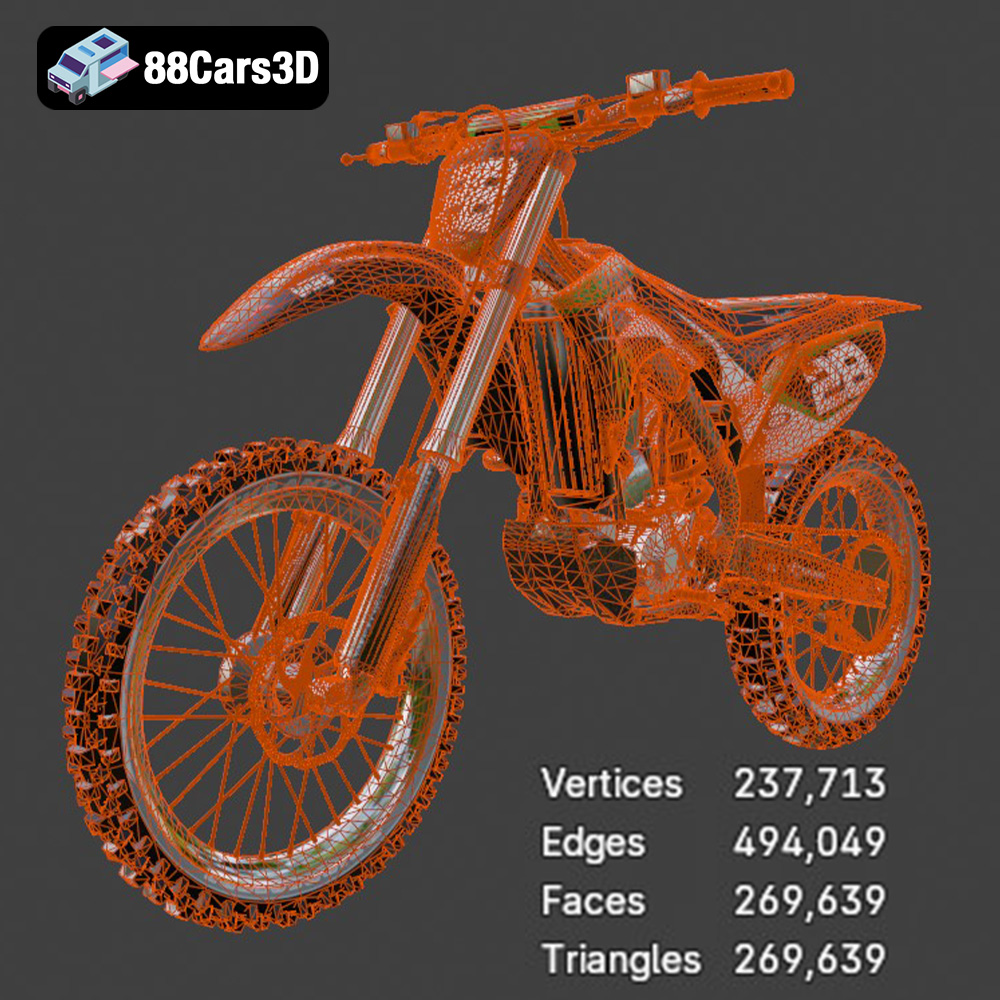
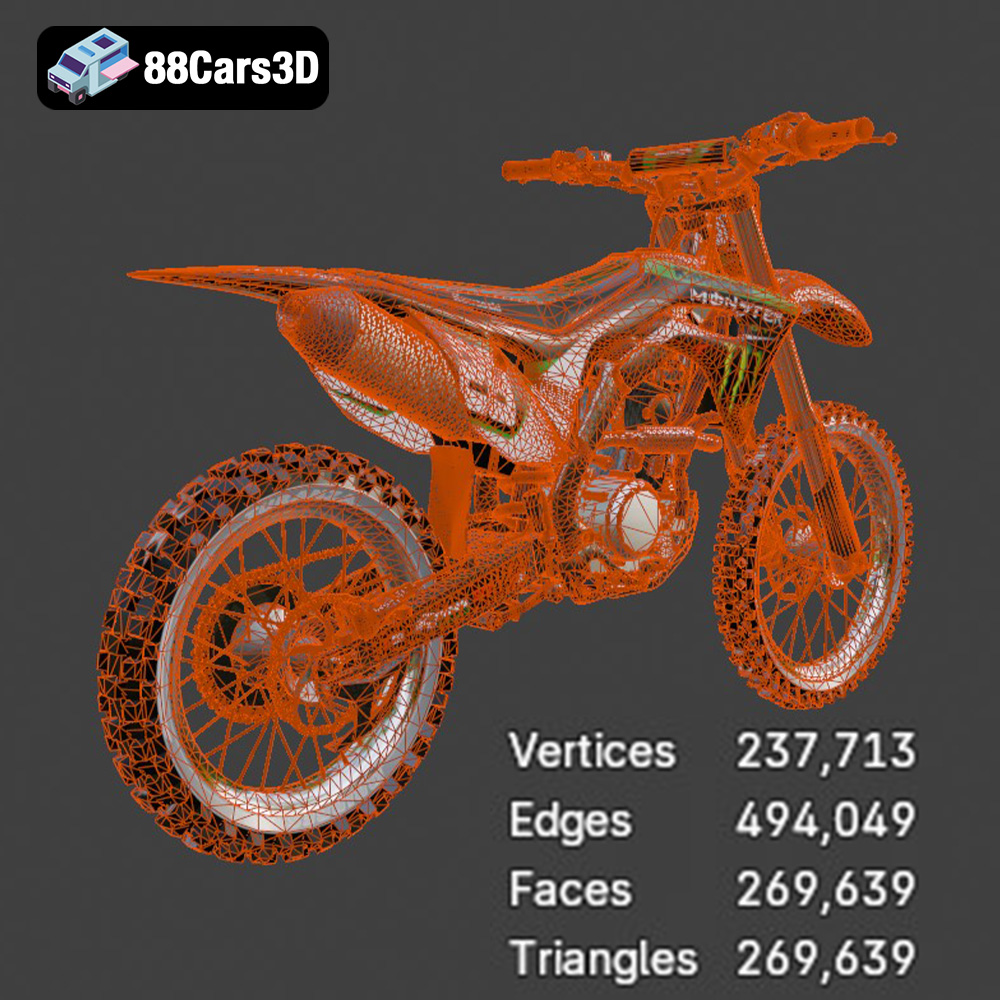
At the core of any high-quality 3D model is its geometry and topology. The Kawasaki Motorcycle-001 is built with clean, quad-based geometry, which is crucial for predictable subdivision, smooth deformations, and efficient performance. This means that the model can be easily modified, unwrapped, or animated without encountering problematic artifacts or rendering issues. For game developers, a clean mesh translates directly to optimized poly counts and easier creation of LODs (Levels of Detail), ensuring the model runs smoothly in real-time engines. For rendering artists, it guarantees flawless surfaces and reflections, even at extreme close-ups, making it an ideal asset for detailed automotive rendering.
Visual fidelity largely depends on the quality of materials and texturing. The Kawasaki Motorcycle-001 comes with realistic materials that accurately represent various surfaces: the metallic sheen of the frame, the matte finish of plastic components, the intricate tread patterns of tires, and the reflective properties of chrome. These materials are often set up using PBR (Physically Based Rendering) workflows, which ensures they react realistically to light in any rendering environment, whether it’s V-Ray, Corona, Cycles, or a game engine like Unreal. The textures are high-resolution and seamlessly applied, providing depth and authenticity without visible tiling or stretching.
Proper UV mapping is an unsung hero of 3D modeling, enabling textures to be applied accurately and efficiently. The Kawasaki Motorcycle-001 features professional-grade UV mapping, ensuring that textures wrap perfectly around complex surfaces. This is vital for maintaining visual integrity and for allowing artists to easily apply custom decals, weathering effects, or alternative material sets without distortion. Well-organized UVs also contribute to render efficiency and simplify the texturing pipeline, making the model highly adaptable for diverse artistic requirements and ensuring a polished final look in any automotive rendering or game asset context.
While often associated with screen-based applications, the utility of a meticulously crafted 3D model extends into tangible and analytical realms. The Kawasaki Motorcycle-001 3D Model offers functionalities that bridge the gap between digital design and physical reality, as well as scientific inquiry.
The inclusion of the .stl format makes the Kawasaki Motorcycle-001 a prime candidate for 3D printing and rapid prototyping. Engineers and designers can leverage this file to create physical models of the motorcycle, allowing for tangible assessment of scale, form, and ergonomics. This is invaluable in product design cycles, educational contexts, or even for creating bespoke collectibles. The clean geometry of the base model ensures that the .stl conversion is accurate and produces a manifold mesh, crucial for successful 3D printing without errors or missing surfaces. It transforms a digital asset into a physical object, offering a unique perspective and application beyond traditional automotive rendering.
The .ply format elevates the Kawasaki Motorcycle-001’s utility into scientific visualization and detailed data analysis. This format is capable of storing not just mesh data but also various properties for each vertex and face, such as color, normals, and even scalar fields. While the provided model might not explicitly include complex scientific data, its precise polygonal mesh in .ply format makes it suitable for integration into simulation environments or for generating analytical visualizations. For instance, in an academic or industrial setting, this could involve fluid dynamics simulations around the motorcycle’s aerodynamics, or structural analysis of its components. The high precision and robustness of the .ply file allow researchers and engineers to utilize the model as a foundation for rigorous technical analysis, extending its use far beyond mere visual representation.
For any professional working in 3D, time is a precious commodity. Creating every asset from scratch is often impractical and economically unfeasible. This is where specialized marketplaces like 88cars3d.com become indispensable resources, offering access to high-quality, pre-made 3D models that accelerate production and elevate project quality.
Investing in pre-built 3D car models or game assets, such as the Kawasaki Motorcycle-001 3D Model, provides an immediate and significant return. Instead of dedicating hundreds of hours to modeling, texturing, and optimizing a complex vehicle, artists and developers can acquire a professional-grade asset ready for integration. This not only dramatically cuts down production timelines but also ensures a consistent level of quality across projects. The models on 88cars3d.com are developed by experienced artists, ensuring clean topology, realistic materials, and cross-software compatibility, which are critical for any professional workflow. This efficiency allows teams to allocate resources to other critical areas, such as animation, lighting, or interactive elements.
A comprehensive library of high-quality 3D assets is a cornerstone for any versatile studio or freelance artist. 88cars3d.com specializes in providing top-tier 3D car models, motorcycles, and related vehicles, offering a rich selection to populate various scenes and scenarios. Whether your next project demands a sleek sports car for an automotive rendering campaign, a robust truck for a simulation, or a highly detailed motorcycle like the Kawasaki Motorcycle-001 for a cutting-edge game, having these assets readily available enhances creative flexibility. It allows artists to quickly prototype ideas, respond to diverse client requests, and deliver stunning results within tight deadlines, solidifying their reputation for efficiency and quality.
The journey through the intricacies of high-quality 3D models reveals their foundational importance in modern digital production. From the nuanced choice of file formats to the meticulous craftsmanship of geometry and materials, every detail contributes to the overall success of a project, whether it’s for game development, high-resolution automotive rendering, AR/VR experiences, or even 3D printing and scientific analysis.
The Kawasaki Motorcycle-001 3D Model stands as a prime example of what professional-grade 3D assets should embody: precision, versatility, and technical excellence. Its comprehensive package of file formats, clean geometry, and realistic materials empowers artists and developers to integrate it seamlessly into virtually any workflow, saving invaluable time and significantly elevating the visual fidelity of their creations. By choosing such optimized assets, available through trusted platforms like 88cars3d.com, professionals can confidently tackle ambitious projects, deliver outstanding results, and stay at the forefront of digital innovation.
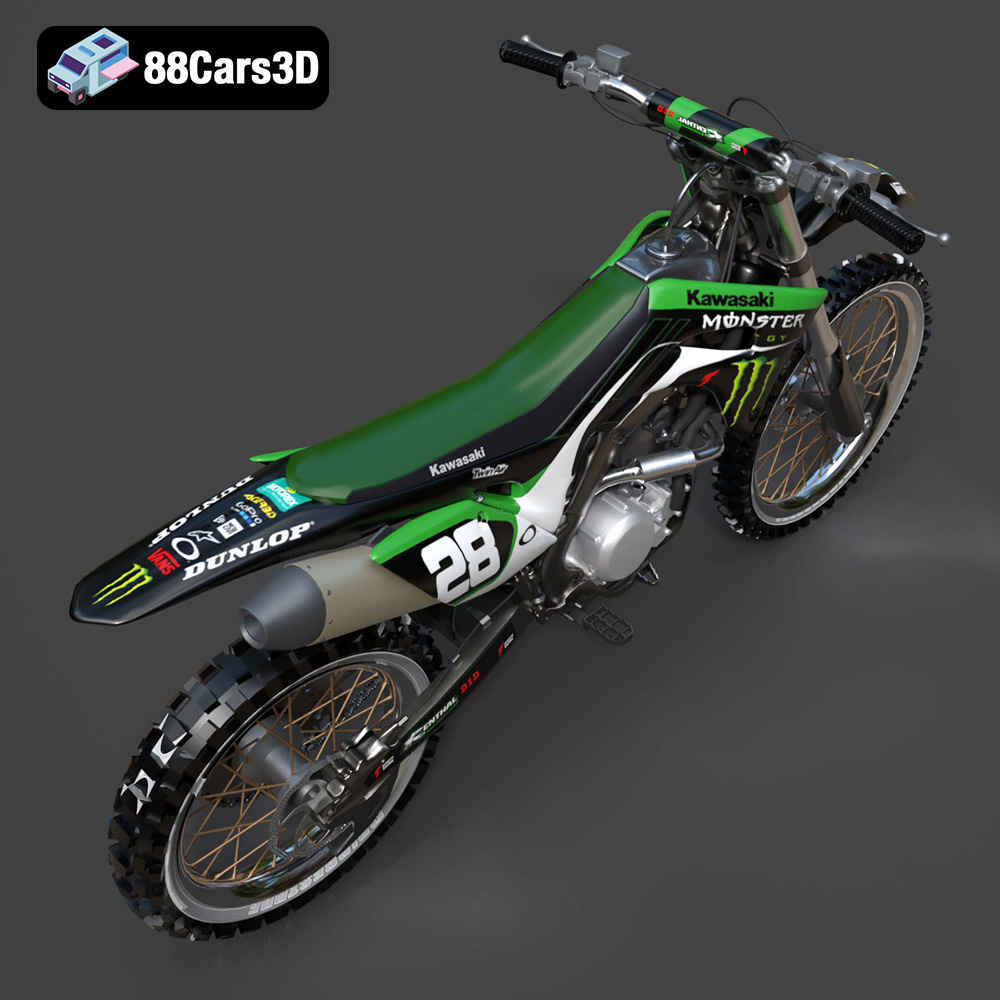
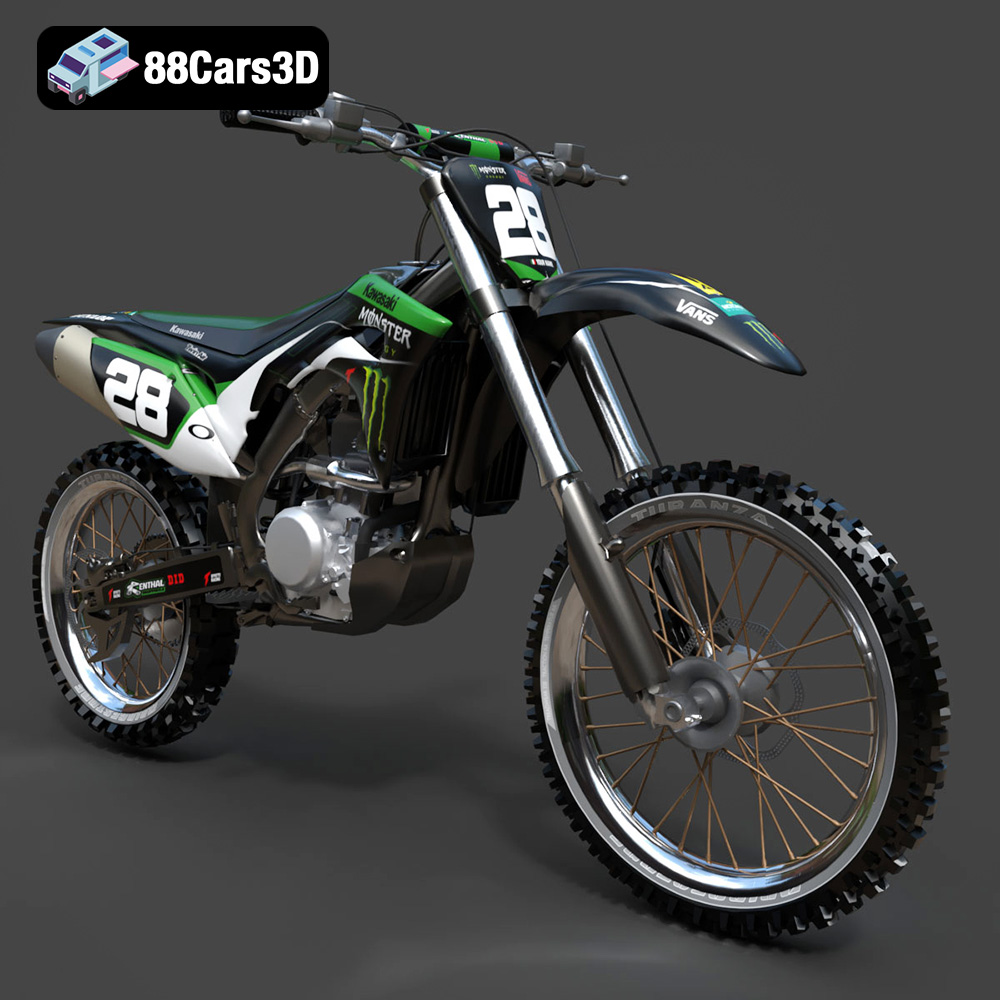
This meticulously crafted 3D model captures the essence of the Kawasaki Motorcycle-001, delivering a high level of realism and detail. Every component is modeled with precision to mirror the actual motorcycle, making it ideal for a variety of applications. Key features of this 3D model include clean geometry for efficient rendering, realistic materials that accurately represent the textures and finishes of the motorcycle, and professional-grade quality suitable for commercial projects. Whether you’re creating a video game, producing a high-resolution rendering, or developing an augmented reality application, this model is designed to meet your needs.
$19.99
.arvr
.blend
.car3dmodel
.fbx
.gameasset
.glb
.kawasaki
.max
.motorcycle
.motorcycle001
.obj
.ply
.rendering
.simulation
.stl
.unreal