Get 20% OFF All Premium 3D & STL Models!

In the rapidly evolving landscape of 3D visualization, game development, and immersive technologies, the demand for exceptionally detailed yet optimized 3D car models has never been higher. From breathtaking cinematic renders to hyper-realistic gaming environments and interactive AR/VR experiences, automotive assets form the backbone of countless digital projects. The challenge lies in finding models that not only capture the intricate aesthetics of real-world vehicles but are also technically robust and versatile enough to integrate seamlessly into diverse professional workflows.
Today’s artists, developers, and designers require more than just a pretty mesh; they need meticulously crafted digital assets that adhere to industry standards for topology, scale, and material integrity. These models must be ready for various applications, whether it’s a precision-engineered piece for a virtual engineering review or a lightweight asset for a mobile AR configurator. The cornerstone of such versatility is a foundation of clean geometry, accurate proportions, and intelligent file structuring. It’s about empowering creators to push boundaries without getting bogged down by fundamental asset creation.
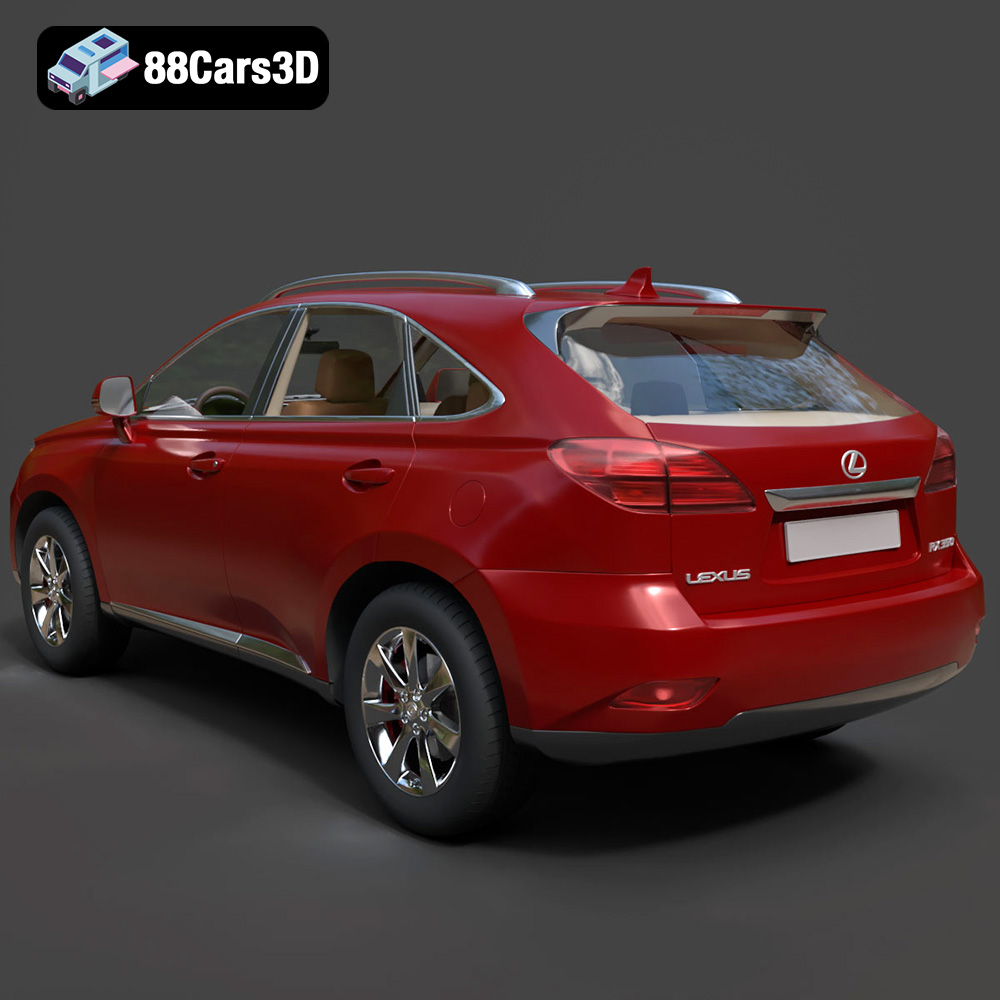
This pursuit of excellence leads us to models like the Lexus RX350 2010 3D Model, a superb example of how detailed craftsmanship meets practical optimization. Representing a quintessential luxury crossover SUV, this model is designed to cater to a broad spectrum of professional needs, offering a blend of visual fidelity and technical readiness that exemplifies the ideal 3D automotive asset.
The choice of a 3D model file format is far more than a simple preference; it dictates compatibility, functionality, and performance across different software platforms and applications. For professionals working with 3D car models, understanding these formats is crucial for efficient workflows, ensuring assets are pipeline-ready for everything from game engines to high-end rendering suites and even 3D printing.
The .blend format is native to Blender, an incredibly powerful and increasingly popular open-source 3D creation suite. A .blend file is a complete scene package, containing not just the mesh data but also materials, textures, lighting setups, cameras, animation data, and even custom scripts. This makes it ideal for Blender users who require full editability, allowing them to dissect every aspect of the model, from adjusting shaders to modifying topology and setting up complex animations. For the Lexus RX350 2010 3D Model, a .blend file offers maximum flexibility for artists immersed in the Blender workflow, providing a comprehensive starting point for any project.
Autodesk’s .fbx (Filmbox) format has long been the gold standard for interoperability between various 3D applications, particularly in game development. It efficiently stores not only mesh data but also animation, rigging, skinning, camera, and light information. Its robust support for skeletal animation makes it indispensable for exporting complex animated assets to game engines like Unreal Engine and Unity. When working with the Lexus RX350 2010 3D Model, the .fbx variant ensures that separate components like wheels, suspension, and steering maintain their pivot points and hierarchical relationships, facilitating realistic vehicle physics and animation in real-time environments.
The .obj (Wavefront OBJ) format is one of the oldest and most widely supported 3D file formats, renowned for its universality. It primarily stores geometric data – vertices, normals, UV coordinates, and faces – and can reference external material files (.mtl). While it lacks support for animation or rigging, its simplicity and widespread compatibility make it an excellent choice for basic mesh interchange between virtually any 3D software. For tasks requiring only the raw geometry of the Lexus RX350, such as sculpting or creating new UVs from scratch, the .obj provides a clean, unencumbered starting point.
.glb (GLB format, derived from glTF) is quickly becoming the standard for 3D web delivery and AR/VR applications. It’s a single-file format that bundles geometry, materials, textures, and animation into a compact, self-contained package. Optimized for quick loading and efficient rendering in browser-based viewers, mobile AR apps, and immersive VR experiences, .glb offers an excellent balance of visual quality and performance. The Lexus RX350 2010 3D Model in .glb format is perfect for virtual showrooms, interactive product displays on websites, or mobile AR car configurators, ensuring a smooth user experience.
The .stl (Standard Tessellation Language or Stereolithography) format is the dominant file type for 3D printing. It represents a 3D model as a collection of unconnected triangular facets, defining only the surface geometry without color, texture, or material information. For designers and hobbyists looking to bring the Lexus RX350 2010 3D Model into the physical world, the .stl file is indispensable. It’s processed directly by slicing software to generate toolpaths for 3D printers, requiring careful consideration of scale, wall thickness, and support structures to ensure a successful print.
The .ply (Polygon File Format or Stanford Triangle Format) is similar to .obj but often used in scientific and engineering applications, especially for storing data from 3D scanners. It can store a wider range of properties, including color, transparency, confidence values, and normal vectors for each vertex and face, making it valuable for precision CAD work, reverse engineering, and analyzing complex geometries. While less common for general animation, the .ply version of the Lexus RX350 model could be utilized in specialized visualization or analysis software where detailed mesh properties are crucial.
The .unreal format, often referring to a pre-packaged asset optimized specifically for Unreal Engine, implies an asset that has undergone a rigorous preparation process. This typically means optimized meshes, PBR materials, collision setups, and potentially LOD (Level of Detail) variations directly integrated and configured within an Unreal project structure. While not a standalone file extension in the same way as .fbx, providing an “.unreal” file means the Lexus RX350 2010 3D Model is essentially a drag-and-drop solution, saving countless hours of manual import, material setup, and optimization within the engine.
Autodesk’s .max format is the native file type for 3ds Max, a powerhouse in architectural visualization, animation, and game development. Like .blend, it saves the entire scene, including geometry, materials, lighting, cameras, animation, and modifiers. For professionals deeply integrated into the 3ds Max ecosystem, the .max file for the Lexus RX350 offers full control and access to all its construction parameters, allowing for intricate scene setups, advanced rendering techniques, and seamless integration with existing Max projects.
Each of these formats serves a distinct purpose, and the availability of multiple options, such as those provided by 88cars3d.com, empowers designers to select the precise tool for their specific needs, ensuring maximum efficiency and compatibility across their varied project requirements.
The Lexus RX350 2010 represents a blend of luxury and functionality, a philosophy meticulously carried over into its 3D model counterpart. This particular asset from 88cars3d.com is a testament to the fact that high-quality 3D car models are not just about visual appeal but also about underlying technical excellence. Designed to be a definitive representation of the luxury crossover SUV segment, it combines refined elegance with robust versatility in its digital form.
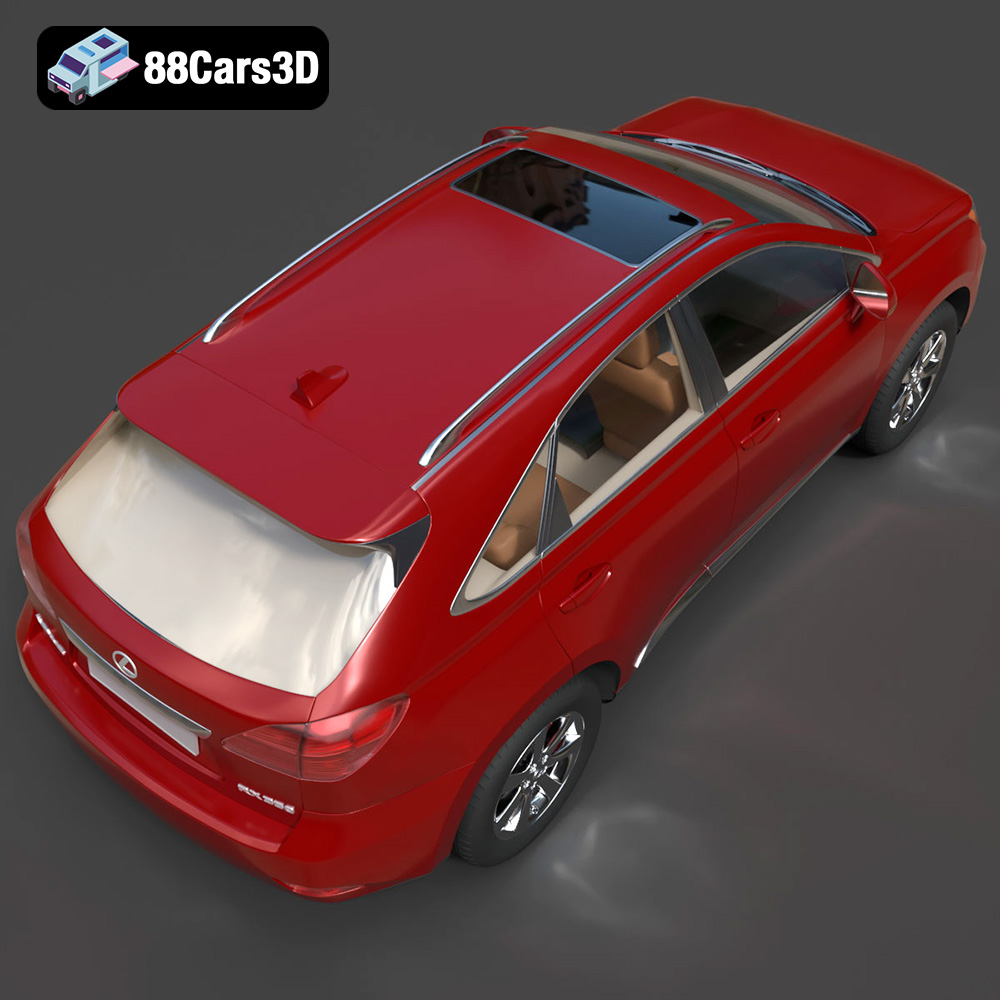
The exterior of the Lexus RX350 2010 3D Model showcases an accurate representation of Lexus’s signature L-finesse design philosophy. Sweeping lines, a distinctive front grille, and an aerodynamic profile are all captured with precision. Technical details include accurate frame geometry and elegant crossover proportions, ensuring the model’s silhouette is instantly recognizable and faithful to the real vehicle. The inclusion of a detailed V6 engine bay representation, integrated dual exhaust outlets with realistic chrome finishing, and accurately modeled projector-beam headlamps alongside clear-lens LED taillights elevates the realism for close-up renders and detailed inspections. Furthermore, the detailed alloy wheels with high-resolution tire tread patterns and an accurate independent suspension layout highlight the attention to mechanical authenticity, crucial for realistic simulations and animations. Critically, separate components for wheels, suspension, and steering are provided, enabling complex and believable vehicle animations.
Beyond the exterior, the interior of the Lexus RX350 2010 3D Model is equally impressive. Crafting a convincing virtual cockpit is essential for immersive experiences, especially in game development and AR/VR. This model features plush leather-appointed seating details and luxury upholstery, creating an inviting digital space. A multifunction steering wheel, precise steering column setup, and a detailed driver instrument cluster with realistic gauge placement contribute to a high level of fidelity. The accurate center console, complete with an infotainment screen, shifter, and control knobs, provides rich visual information for first-person perspectives. This optimized geometry ensures that the interior is not only visually appealing but also performs efficiently in demanding real-time environments, offering a seamless and engaging user experience.
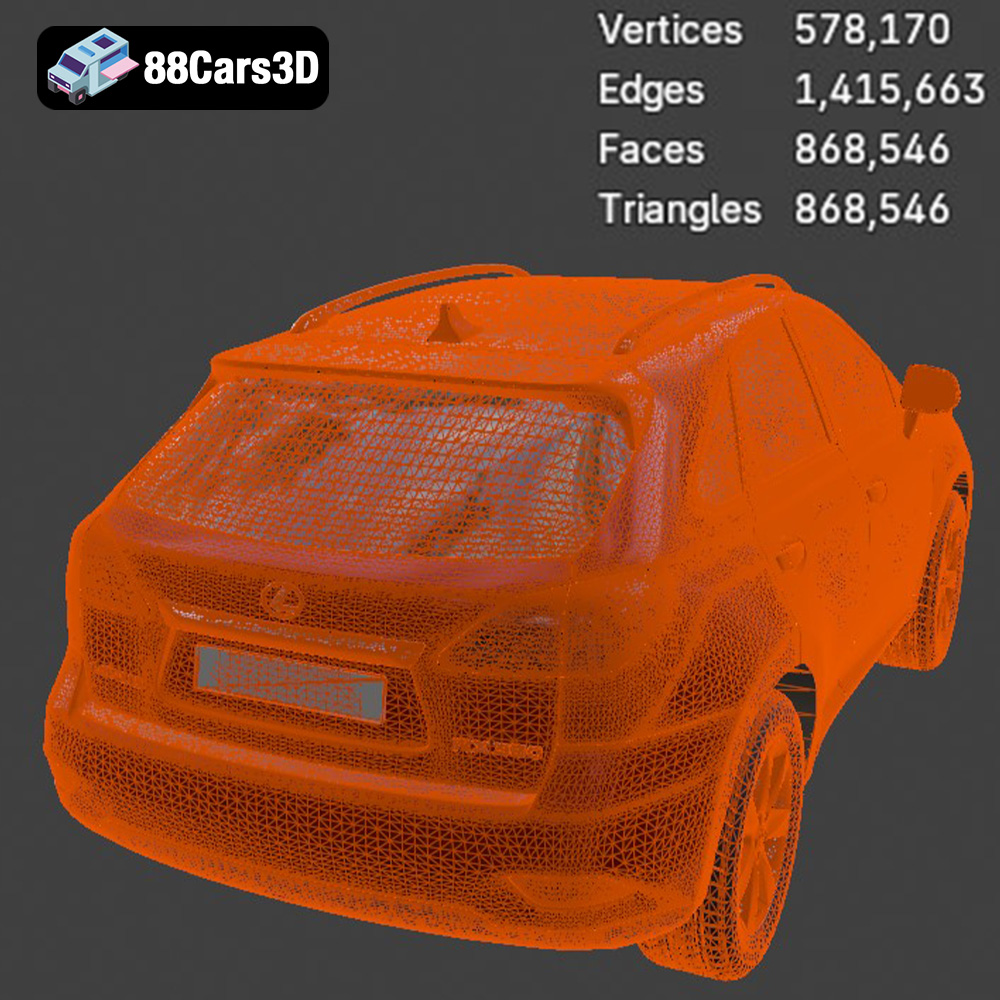
The core strength of this 3D model lies in its technical specifications and advantages. It is explicitly “Game-Ready & Optimized,” boasting approximately 200k triangles. This polycount strikes an exceptional balance for real-time engines like Unreal and Unity, maintaining high-end visual realism without compromising frame rates or rendering speeds. Achieving this balance is a significant technical feat, requiring careful polygon budgeting and intelligent mesh subdivision. The model also adheres to real-world scale accuracy, based on actual vehicle chassis dimensions, which is paramount for architectural visualization, virtual automotive showrooms, and accurate simulations. Proper pivot setups for steering, wheel rotation, and suspension travel are included, which are essential for realistic vehicle dynamics and animation. This comprehensive technical foundation ensures compatibility with major 3D software platforms and real-time rendering engines, making it a truly versatile asset.
The transition from high-polygon concept models to production-ready game assets or AR/VR experiences demands a rigorous optimization process. The Lexus RX350 2010 3D Model is explicitly engineered with this in mind, making it an invaluable asset for real-time applications where performance is paramount.
For game developers, the Lexus RX350 2010 3D Model is a prime example of an asset built for purpose. Its optimized polycount of around 200k triangles is a sweet spot for modern game engines. This allows for rich detail without overwhelming the GPU, ensuring smooth frame rates even with multiple vehicles on screen. In open-world games, racing titles, or simulators, this balance is crucial. The model’s real-world scale and properly set up pivots for steering, wheel rotation, and suspension travel mean that vehicle physics and animation can be implemented with high fidelity. Developers can easily integrate this model into their physics engines, knowing that the underlying geometry and hierarchical structure support realistic movement and interaction. Furthermore, the “game-ready” designation implies clean UV mapping for efficient texture application and likely pre-setup PBR materials that respond correctly to dynamic lighting, enhancing realism in any virtual environment.
Augmented Reality (AR) and Virtual Reality (VR) experiences require extremely efficient assets due to the computational demands of rendering in real-time, often on mobile devices. The Lexus RX350 2010 3D Model, particularly in .glb format, is perfectly suited for immersive virtual showrooms, configurators, and mobile AR experiences. Its optimized geometry minimizes draw calls and memory footprint, essential for maintaining high frame rates and preventing motion sickness in VR, or ensuring smooth performance on smartphones for AR. Imagine a virtual dealership where potential buyers can walk around the Lexus RX350, open its doors, and explore its interior details in VR, or place it in their driveway via AR. The model’s plush interior details and accurate cockpit geometry are specifically optimized for first-person POV, making it ideal for these interactive and highly engaging applications, allowing users to feel truly present with the vehicle.
While optimized for real-time, the inherent quality of the Lexus RX350 2010 3D Model also makes it an excellent foundation for high-fidelity rendering and professional visualization. The meticulous detailing and accurate proportions shine when subjected to advanced rendering techniques, allowing artists to create stunning photorealistic imagery for various professional contexts.
For automotive brand campaigns, advertising, or cinematic sequences, visual perfection is non-negotiable. The Lexus RX350 2010 3D Model provides the necessary detail and accuracy to stand up to extreme close-ups and intricate lighting setups. Artists using renderers like V-Ray, Corona Renderer, Arnold, or Redshift in 3ds Max or Blender can leverage the model’s clean topology and detailed features—from the realistic chrome finishing of the exhaust outlets to the subtle reflections on the projector-beam headlamps—to craft compelling visuals. Customization options, such as changing body colors (e.g., Starfire Pearl, Obsidian, or custom wraps), modifying tire textures, and adjusting material finishes (matte, gloss, metallic), allow for endless creative possibilities to match specific brand aesthetics or campaign requirements. This flexibility ensures the model can be adapted to any visual narrative, be it a sleek urban drive or a rugged off-road adventure.
The integration of high-quality 3D car models is crucial in architectural visualization (ArchViz) to inject realism and scale into environments. A parked Lexus RX350 2010 outside a modern luxury home instantly elevates the scene’s authenticity and appeal. Its real-world scale accuracy ensures it blends seamlessly with architectural designs. In the realm of virtual dealerships, models like the RX350 become interactive display pieces. Beyond simple renders, these models can be animated for product showcases, allowing viewers to see the vehicle from all angles, explore its features, and even customize options in a dynamic virtual environment. The model’s detailed V6 engine bay representation and plush interior can be highlighted in interactive tours, offering a level of engagement far beyond static images. The consistency and quality of assets from 88cars3d.com make them reliable choices for these demanding visualization projects.
The versatility of a well-constructed 3D model extends beyond digital screens, reaching into the physical realm through 3D printing. The Lexus RX350 2010 3D Model, with its .stl format inclusion, offers an exciting opportunity for hobbyists and professionals alike to create tangible replicas of this luxury SUV.
Transforming a digital 3D car model into a physical print requires specific considerations. The .stl format provided is specifically designed for this purpose, representing the model’s surface geometry as a series of triangles. While the digital model is optimized for visual fidelity and real-time performance, preparing it for 3D printing involves a different set of optimizations. The product description for the Lexus RX350 2010 3D Model offers valuable guidelines, recommending scales like 1:12, 1:18, or 1:24 for display-scale hobbyists. These scales balance detail retention with printability. Resin printing is specifically recommended for fine details, such as those found in the vehicle’s grille, headlamps, and interior components, due to its higher resolution capabilities compared to FDM (fused deposition modeling) printers. Adhering to suggested layer heights (0.04–0.12 mm) and wall thicknesses (1.2–2.0 mm) is crucial for structural integrity and preventing print failures.
Successful 3D printing of complex automotive models necessitates careful attention to settings. Supports are almost always required for detailed parts like mirrors, exhaust tips, and intricate undercarriage components to prevent sagging and ensure accurate geometry during the printing process. The recommended print orientation, with the frame printed angled for structural integrity and wheels printed separately, is a common technique to optimize print quality and minimize support material. Once printed, post-processing is key to achieving a professional finish. This typically involves sanding to smooth layer lines, applying primer to prepare the surface, and finally, painting with authentic factory colors and metallic finishes to truly bring the Lexus RX350 replica to life. This hands-on process allows enthusiasts to connect with the digital model in a new, tactile way, making the 3D asset even more valuable. The availability of such print-ready formats from resources like 88cars3d.com significantly broadens the appeal and utility of their 3D car models.
In the fast-paced world of digital content creation, efficiency is paramount. Developing every asset from scratch is often a time-consuming and resource-intensive endeavor that few projects can afford. This is where pre-made, high-quality 3D car models, such as those found on 88cars3d.com, become indispensable tools for professionals.
The primary advantage of utilizing professionally crafted 3D car models like the Lexus RX350 2010 is the significant reduction in production time and cost. Instead of spending countless hours on modeling, UV unwrapping, texturing, and basic rigging for a vehicle, artists can acquire a production-ready asset. This allows teams to allocate their valuable time and expertise to more creative and project-specific tasks, such as scene composition, bespoke animations, advanced lighting setups, or unique gameplay mechanics. For example, a game studio can instantly populate an urban environment with realistic traffic, or an ArchViz artist can quickly integrate vehicles into their renders, elevating the realism without a major time investment. The models come with proper pivot setups and optimized geometry, meaning less time spent fixing fundamental issues and more time on polishing the final output.
When sourcing 3D assets, quality and consistency are critical. Models acquired from reputable marketplaces like 88cars3d.com adhere to professional standards, ensuring clean topology, accurate real-world scale, and optimized performance across various applications. This consistency is vital for maintaining a cohesive visual style across a project, especially when multiple artists are involved. The Lexus RX350 2010 3D Model, with its detailed exterior and interior features, game-ready optimization, and compatibility with major 3D software platforms, guarantees a level of quality that integrates seamlessly into professional pipelines. The availability of multiple file formats further streamlines workflows, enabling artists to choose the exact format best suited for their specific software and intended application, from Blender and 3ds Max to Unreal Engine and AR/VR platforms, without compromising on quality or functionality.
The journey through the intricate world of 3D car models reveals a clear truth: the success of modern digital projects hinges on the quality and versatility of their underlying assets. From the nuanced demands of real-time game engines to the meticulous requirements of photorealistic rendering and the exciting possibilities of 3D printing, a well-crafted 3D model serves as a foundational element.
The Lexus RX350 2010 3D Model stands out as a prime example of this philosophy. Its optimized topology, detailed features, and extensive file format support make it an exceptionally adaptable tool for professionals across various industries. Whether you are developing an immersive open-world game, creating a compelling automotive advertisement, designing an interactive virtual showroom, or even bringing a digital car to life through 3D printing, this model provides the technical robustness and visual fidelity required to achieve outstanding results. By choosing meticulously developed 3D car models from trusted sources like 88cars3d.com, creators are empowered to innovate, accelerate their production pipelines, and ultimately deliver breathtaking digital experiences that captivate and engage audiences worldwide.
The Lexus RX350 2010 is a definitive representation of the luxury crossover SUV segment, bringing together refined elegance, advanced comfort, and robust versatility. Showcasing Lexus’s signature L-finesse design philosophy, this model features sweeping lines, a distinctive front grille, and an aerodynamic profile that masterfully blends the ruggedness of an SUV with the smooth styling of a premium sedan. This 3D model is meticulously crafted to deliver exceptional visual fidelity while maintaining an optimized topology of approximately 200k triangles. Engineered for game-ready performance, it is perfectly suited for real-time applications such as game development, AR/VR experiences, and high-end automotive visualization without compromising on frame rates or rendering speeds. Perfect for urban driving simulations, luxury lifestyle architectural visualizations, virtual dealership showrooms, and cinematic renders.
$19.99
.2010
.blend
.crossover
.fbx
.glb
.lexus
.luxury suv
.max
.obj
.ply
.rendering
.stl
.unreal
car-3d-model
game asset
game-ready
low-poly
optimized
rx350
SUV
vehicle-3d-model
VR/AR