Get 20% OFF All Premium 3D & STL Models!

In the fast-evolving landscape of digital content creation, the demand for high-quality 3D assets is insatiable. From photorealistic cinematic sequences to immersive game worlds and compelling architectural visualizations, precise and production-ready models are the backbone of any successful project. For automotive enthusiasts and professionals, this often means acquiring meticulously crafted 3D car models that not only look stunning but also integrate seamlessly into complex workflows.
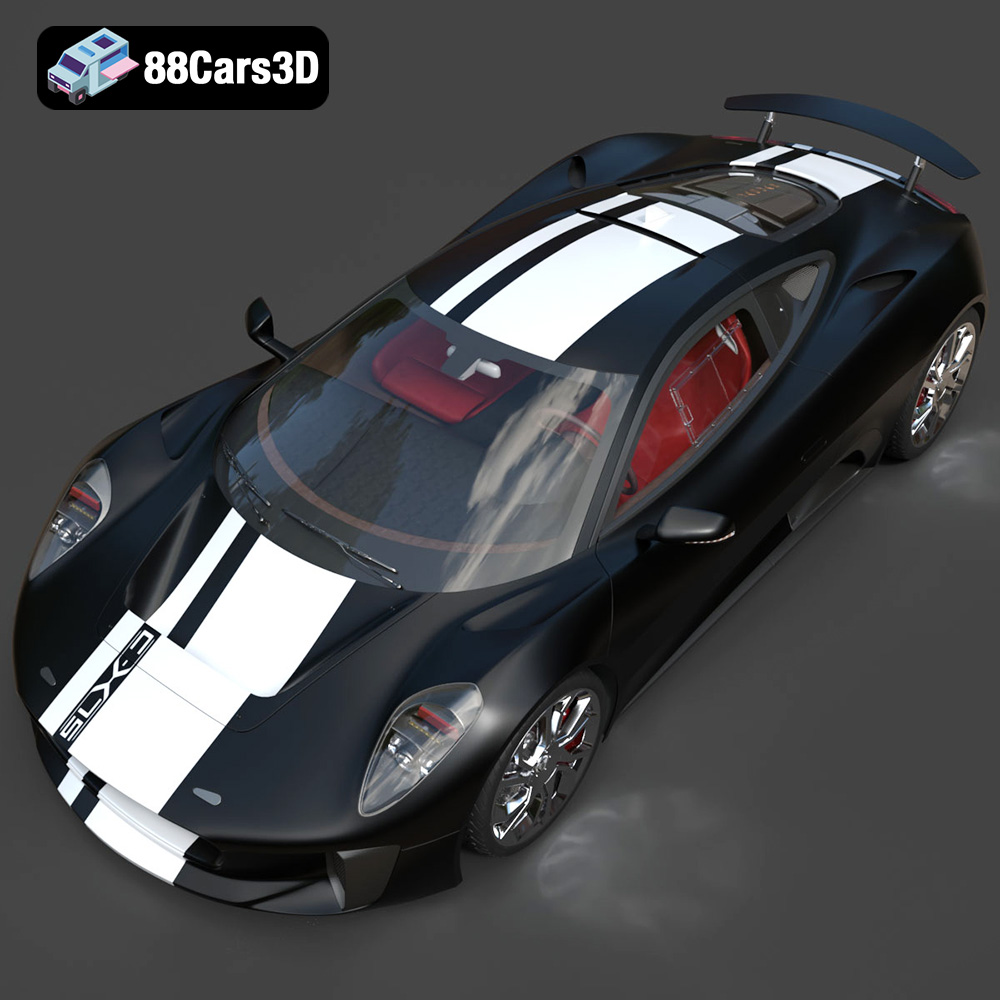
Imagine harnessing the raw power and futuristic elegance of a concept car, not just as a static image, but as a fully manipulable digital entity. This is precisely what a premium asset like the Jaguar C-X75 2014 3D Model offers. This exceptional digital replica captures the very essence of the renowned hybrid-electric concept car, providing an immaculate asset for a diverse range of digital projects. Its stunning aerodynamics and aggressive styling are not merely depicted but engineered for virtual environments, ready to be driven, rendered, or explored. Such high-fidelity assets, like those found on 88cars3d.com, eliminate the time-consuming process of modeling from scratch, allowing artists and developers to focus on creativity and innovation.
Creating a truly high-fidelity 3D car model is a complex blend of artistic vision and technical precision. It’s about more than just replicating shapes; it’s about capturing the soul of the vehicle in a digital form that performs optimally across various applications.
The foundation of any exceptional 3D car model lies in its geometry. For a vehicle like the Jaguar C-X75, known for its intricate surfacing and aerodynamic forms, precision modeling is paramount. This involves meticulous attention to detail, ensuring that every panel gap, every vent, and every curve accurately reflects the real-world design. Professional 3D artists employ advanced techniques like NURBS modeling or subdivision surface modeling to achieve smooth, clean topology that holds up even under extreme close-ups. This clean geometry is critical for deformation, animation, and realistic rendering, preventing artifacts and maintaining visual integrity. The goal is to produce a mesh that is both visually faithful and technically sound, minimizing unnecessary polygons while preserving crucial details.
Once the geometry is perfect, materials and textures breathe life into the model. Photorealistic automotive rendering relies heavily on physically based rendering (PBR) materials, which simulate how light interacts with surfaces in the real world. This means meticulously crafting textures for paint, glass, rubber, carbon fiber, chrome, and interior fabrics. Metallic paints, for instance, require careful calibration of metallic and roughness maps to achieve the characteristic flake effect and reflective qualities. Interior details demand an equally high level of attention, with textures for leather, stitching, dashboard elements, and infotainment screens contributing to an immersive experience. The Jaguar C-X75 2014 3D Model, with its “exceptionally clean geometry and realistic materials,” exemplifies this standard, offering an out-of-the-box solution for stunning visuals.
Beyond visual fidelity, technical optimization is crucial, especially for game assets and real-time applications. Optimal polygon count ensures smooth performance without sacrificing detail, a delicate balance that requires expert understanding of mesh density. UV mapping, the process of unwrapping the 3D model’s surfaces into a 2D plane for texturing, must be clean and efficient. Well-laid-out UVs prevent texture stretching, optimize texture resolution, and simplify material creation. This dedication to “pristine edge flow and optimal polygon count” ensures that models like the Jaguar C-X75 are not just beautiful, but also robust and reliable assets for intense production pipelines, allowing for efficient texture baking and consistent visual quality.
The versatility of a 3D model often hinges on the range of file formats it supports. Each format is designed with specific use cases and software environments in mind, offering unique advantages for different stages of a production pipeline. The Jaguar C-X75 2014 3D Model is supplied in multiple industry-standard formats, providing maximum flexibility for professionals.
The .blend format is Blender’s native file type, storing a complete Blender scene. This includes not just the mesh data, but also materials, textures, lighting setups, cameras, animations, physics simulations, and even custom scripts. When a model is provided in .blend format, it means the entire working environment used by the artist is accessible. This is ideal for Blender users who want full editability, to dissect the original artist’s material setups, or to use the pre-configured lighting to quickly render out high-quality images. It offers unparalleled flexibility for customization and further development within the Blender ecosystem, making it a powerful starting point for any project.
The .fbx (Filmbox) format is an Autodesk creation and has become one of the most widely used interchange formats in the 3D industry. It supports a vast array of data, including geometry, materials, textures, animations, bones, and even camera data. Its strength lies in its ability to transfer complex scenes between different 3D software packages like 3ds Max, Maya, and Blender, and crucially, into game engines such as Unreal Engine and Unity. When a model is labeled “game-engine ready format for Unreal Engine and Unity,” .fbx is often the go-to choice due to its robust support for animation and hierarchy, making it perfect for dynamic assets and interactive experiences.
The .obj (Wavefront OBJ) format is one of the oldest and most universally compatible 3D file formats. It primarily stores geometric data – vertices, normals, UV coordinates, and faces – and can reference external .mtl (Material Template Library) files for basic material properties. While it doesn’t support animation or rigging, its simplicity and widespread adoption make it an excellent choice for static mesh transfer between virtually any 3D software. If you need a foundational mesh that you plan to texture and rig yourself in a specific application, .obj provides a clean, compatible base.
The .glb (GLB Transmission Format) is the binary version of glTF (GL Transmission Format). It’s an open-standard, royalty-free format designed for efficient transmission and loading of 3D scenes and models by applications. .glb files contain everything needed for a 3D model – geometry, materials, textures, and animation – bundled into a single file, making it extremely efficient for web-based 3D applications, augmented reality (AR), and virtual reality (VR) experiences. Its optimization for rapid loading and display on various platforms makes it ideal for showcasing 3D car models in interactive browser viewers or mobile AR apps.
.stl (Stereolithography) is perhaps the most common file format for 3D printing. It represents a 3D model as a collection of triangular facets, defining only the surface geometry without color, texture, or other properties. It’s a robust and simple format that most 3D printers and slicing software can read directly. The .ply (Polygon File Format or Stanford Triangle Format) is another format for storing 3D data from 3D scanners, often including not just geometry but also color, normals, and even confidence values. While less common for general distribution, it’s a precision mesh format valuable for CAD, scientific visualization, or detailed analysis where mesh integrity and additional data are crucial.
The .unreal format implies a file or asset package specifically configured and optimized for direct import into Unreal Engine, potentially including pre-set materials, collision meshes, and LODs (Levels of Detail). This format significantly streamlines the workflow for Unreal Engine developers, saving considerable setup time. Similarly, .max is the native file format for Autodesk 3ds Max, one of the leading software packages for 3D modeling, animation, and rendering. An .max file contains the complete scene, including all models, lights, cameras, modifiers, and animations, offering full editability for 3ds Max users. Having the Jaguar C-X75 2014 3D Model in .max format ensures that those working in a 3ds Max pipeline can dive straight into their projects with native compatibility.
The true value of a premium 3D car model lies in its seamless integration into diverse professional workflows. Whether it’s for breathtaking visual effects, high-octane gaming, or interactive marketing, the Jaguar C-X75 2014 3D Model offers unparalleled versatility.
For automotive designers, advertisers, and visualization artists, photorealistic rendering is paramount. Using software like 3ds Max with renderers such as V-Ray or Corona, the .max file of the Jaguar C-X75 provides a powerful starting point. Artists can leverage the model’s clean geometry and PBR materials to create stunning hero shots, dynamic animations, or virtual studio setups. The ability to manipulate every aspect of the scene – from lighting environments to camera angles and material tweaks – allows for complete creative control. Imagine showcasing the C-X75 gleaming under a studio spotlight or speeding through a futuristic cityscape, all rendered with breathtaking fidelity that blurs the line between digital and reality. Such high-quality 3D car models accelerate the automotive rendering pipeline dramatically.
In the competitive world of game development, performance and visual quality must go hand-in-hand. The .fbx and .unreal formats of the Jaguar C-X75 2014 3D Model are specifically tailored for integration into game engines like Unreal Engine. Developers can import the optimized mesh, complete with PBR textures and potentially LODs, directly into their projects. This model can serve as a primary vehicle for a racing simulator, a background asset for an open-world game, or even a detailed object for a vehicle configurator. Its “optimal polygon count” and clean UVs ensure that it runs smoothly at high frame rates, while its detailed design maintains visual immersion. This allows game studios to quickly populate their worlds with incredible detail without incurring significant development overhead.
Beyond traditional rendering and gaming, the Jaguar C-X75 3D Model is perfectly suited for the burgeoning fields of Augmented Reality (AR) and Virtual Reality (VR). The .glb format, optimized for web and mobile platforms, enables developers to create interactive experiences where users can explore the car in a fully immersive 3D space. Picture a prospective buyer using their smartphone to place a virtual C-X75 in their driveway via AR, or a designer using a VR headset to walk around and inspect every detail of the car’s interior and exterior. These interactive applications leverage real-time rendering capabilities, and an optimized, high-quality asset like this is essential for a smooth and convincing user experience. The versatility of models from 88cars3d.com facilitates these cutting-edge applications.
The “Jaguar C-X75 2014 3D Model” is described with specific technical attributes that underscore its professional-grade quality. Understanding these details helps appreciate its value in demanding production environments.
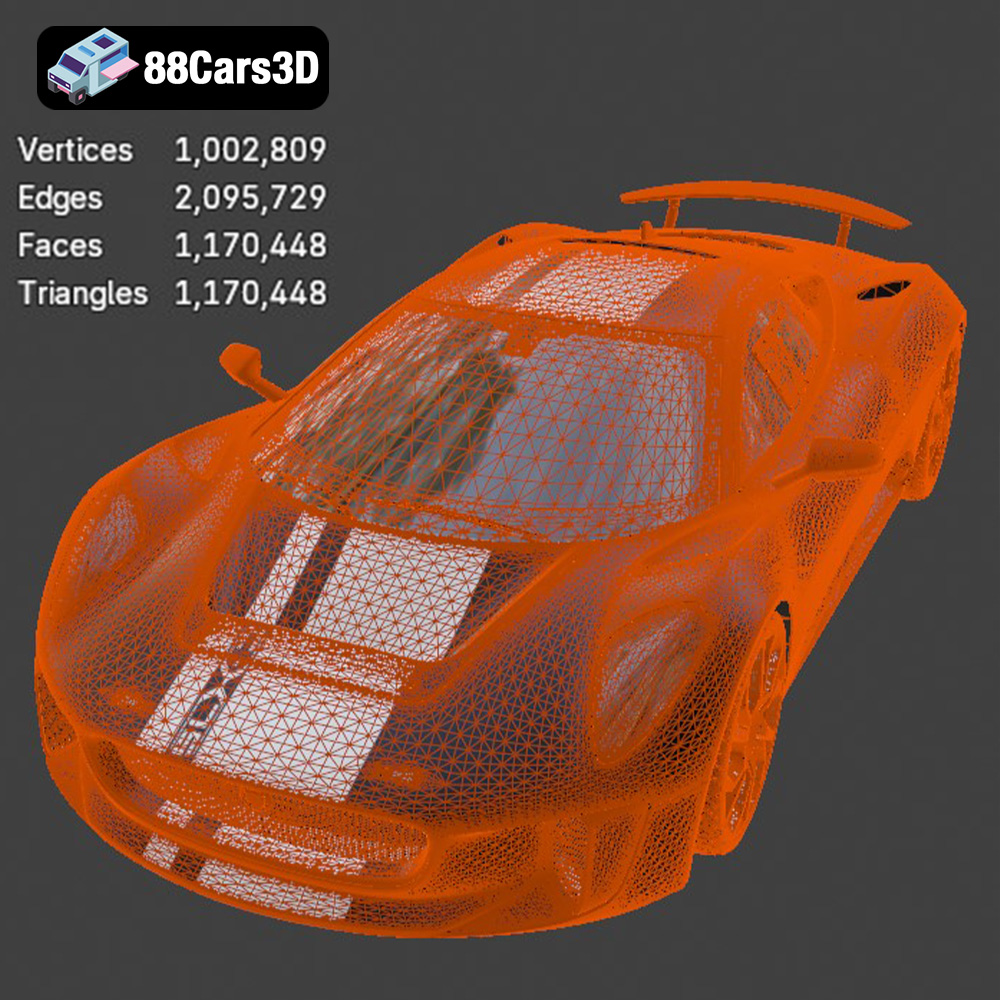
The product description highlights “exceptionally clean geometry” and “optimal polygon count.” This means the model is built with careful consideration for mesh density, striking a balance between visual detail and performance efficiency. For a high-detail vehicle, this typically translates to a mid-to-high poly count (e.g., 100,000 to 500,000 triangles for the complete vehicle, including interior), but critically, these polygons are distributed intelligently. Areas requiring fine detail, like headlights or intricate vents, will have higher density, while flatter surfaces will be optimized. “Pristine edge flow” ensures that the mesh follows the natural contours of the car, which is vital for smooth deformations if the model is animated and for seamless subdivision surface modifiers in rendering packages. This meticulous approach prevents visual artifacts like pinching or faceting, even under close scrutiny.
The promise of “realistic materials” heavily relies on expert UV mapping and comprehensive texture sets. A professional-grade model like the C-X75 would feature carefully unwrapped UVs across all its components – exterior body, wheels, tires, interior panels, seats, dashboard, and glass. These UVs are typically organized into multiple UDIM tiles or separate texture atlases to maximize texture resolution for specific parts. The texture sets themselves would likely include base color (Albedo), Metallic, Roughness, Normal, and possibly Ambient Occlusion and Height maps, all following a PBR workflow. This allows for hyper-realistic surface responses to light, from the subtle metallic flakes in the paint to the intricate patterns on the carbon fiber and the soft sheen of interior leather.
The “realistic materials” of this Jaguar C-X75 3D Model are designed for a Physically Based Rendering (PBR) pipeline. This is the industry standard for achieving consistent, predictable, and lifelike materials across various rendering engines and lighting conditions. PBR materials use maps that correspond to real-world physical properties of surfaces, such as how much light they reflect (metallic) or scatter (roughness). The model’s materials would be pre-configured to utilize these PBR texture maps, ensuring that when imported into Blender, 3ds Max, Unreal Engine, or Unity, they respond correctly to environmental lighting, creating accurate reflections, refractions, and diffuse shading. This significantly reduces setup time for artists and guarantees high-quality results from the outset, a hallmark of premium 3D car models available on platforms like 88cars3d.com.
High-quality 3D car models like the Jaguar C-X75 2014 3D Model are not just static assets; they are powerful tools that drive innovation across various industries. Here are some real-world applications where such models prove indispensable.
In the realm of film, television commercials, and online advertising, creating breathtaking visuals is paramount. Imagine a commercial for a new luxury product where the Jaguar C-X75 makes a dramatic entrance, impeccably rendered with dynamic lighting and atmospheric effects. Visual effects studios utilize such detailed 3D car models to produce sequences that are indistinguishable from live-action footage. Whether it’s for a product reveal, a chase scene, or a futuristic setting, a meticulously crafted model saves countless hours of modeling, allowing artists to focus on animation, scene composition, and rendering optimization. The C-X75’s aggressive styling and concept car status make it an ideal choice for conveying innovation and prestige in any cinematic context.
Beyond entertainment, professional 3D car models play a critical role in simulation and training. Automotive manufacturers might use highly accurate digital replicas for virtual driving simulators to test vehicle dynamics in various conditions long before a physical prototype is built. Training academies for emergency services could integrate realistic car models into VR simulations for rescue scenarios, allowing trainees to practice cutting tools or extraction techniques in a safe, controlled environment. The Jaguar C-X75, with its fully modeled interior and detailed exterior, provides an excellent foundation for such simulations, offering a high degree of fidelity for immersive and effective training programs.
For automotive brands and dealerships, interactive product visualization is a powerful sales tool. A premium 3D car model can be integrated into a real-time configurator on a website or showroom kiosk, allowing potential customers to customize the vehicle in real-time – changing paint colors, wheel options, interior trims, and even viewing it in different environments. This interactive experience offers a level of engagement far beyond static images or videos. The Jaguar C-X75 2014 3D Model, with its multiple file formats including .glb for web optimization, is perfectly suited for creating these dynamic, user-driven product showcases, enhancing the customer journey and driving engagement.
The landscape of digital content creation demands assets that are not only visually stunning but also technically robust and versatile. High-quality 3D car models, exemplified by the detailed and production-ready Jaguar C-X75 2014 3D Model, are indispensable tools for professionals across various industries. From crafting photorealistic automotive rendering and developing engaging game assets to building immersive AR/VR experiences and sophisticated simulations, the foundation of excellence lies in the quality of the 3D models themselves.
By providing clean geometry, realistic PBR materials, optimized topology, and a comprehensive suite of industry-standard file formats – including .blend, .fbx, .obj, .glb, .stl, .ply, .unreal, and .max – this model from 88cars3d.com empowers artists and developers to streamline their workflows and focus on innovation. It dramatically cuts down on development time, allowing creative professionals to accelerate their projects and bring their visions to life with unparalleled realism. Investing in such a premium asset is not just acquiring a model; it’s investing in efficiency, quality, and the boundless potential of your digital creations.
Experience unparalleled realism with the Jaguar C-X75 2014 3D Model. This exceptionally detailed digital replica captures the essence of the renowned hybrid-electric concept car, offering automotive enthusiasts and professionals an immaculate asset for their digital projects. Engineered with precision, this model brings the stunning aerodynamics and aggressive styling of the C-X75 to your virtual environments. Designed with professional standards in mind, the model features exceptionally clean geometry and realistic materials. Every exterior curve and aerodynamic element has been meticulously crafted to reflect the authentic vehicle, complemented by a fully modeled interior. This dedication to accuracy ensures pristine edge flow and optimal polygon count, making it a reliable asset for intense production pipelines. Whether you are developing next-generation racing games, producing photorealistic cinematic renderings, creating interactive AR/VR experiences, or generating architectural visualizations, this Jaguar C-X75 model delivers outstanding performance. Its versatile build ensures seamless integration into major production software and real-time engines. To provide maximum flexibility, the model is supplied in multiple industry-standard formats: .blend – Editable Blender file with materials and lighting setup; .fbx – Game-engine ready format for Unreal Engine and Unity; .obj – Standard 3D model format compatible with all major software; .glb – Optimized for AR/VR and web-based visualization; .stl – Suitable for 3D printing and prototyping; .ply – Detailed polygon mesh for analysis and visualization; .unreal – Pre-configured for Unreal Engine use; .max – Editable 3ds Max file for rendering and animation.
$19.99
.arvr
.blend
.c-x75
.car3dmodel
.conceptcar
.cx75
.fbx
.gameasset
.glb
.hybrid
.hypercar
.jaguar
.max
.obj
.ply
.rendering
.simulation
.sportsCar
.stl
.unreal