Get 20% OFF All Premium 3D & STL Models!

In the expansive realm of 3D visualization, few subjects captivate the imagination quite like automotive design. From sleek modern supercars to rugged off-roaders and timeless classics, vehicles represent a unique blend of engineering prowess and aesthetic artistry. For 3D artists, game developers, architects, and product visualizers, access to high-quality 3D car models is not just a convenience; it’s a fundamental necessity for creating compelling, realistic, and immersive digital experiences. The complexity of automotive geometry, the intricate interplay of reflections on polished surfaces, and the demand for absolute accuracy make creating these assets from scratch a monumental task.
This is where specialized marketplaces like 88cars3d.com become invaluable. They offer a curated selection of meticulously crafted 3D car models, ready to be dropped into any project. Today, we’ll take a deep dive into one such exemplary asset: the Plymouth Volare Coupe 1977 3D Model. This model isn’t just a digital representation; it’s a meticulously engineered piece of digital art designed to meet the rigorous demands of professional workflows across gaming, rendering, AR/VR, and even 3D printing. Understanding its features, technical specifications, and the versatile file formats it comes in reveals a masterclass in efficient and effective 3D asset integration.
The choice of a 3D model’s file format is paramount, dictating everything from compatibility and editability to performance and specific application use. High-quality 3D car models, such as the Plymouth Volare Coupe 1977, often come bundled with a variety of formats to ensure maximum versatility. Let’s explore the technical nuances and common use cases for the critical formats provided with this model and many others available on 88cars3d.com.
The .blend file format is native to Blender, the open-source 3D creation suite. It’s a comprehensive project file that encapsulates an entire Blender scene, including all mesh data, materials (with node setups), textures, lighting, cameras, animation data, rigging, modifiers, and even scene settings. For artists working primarily in Blender, this format offers full editability and preserves all the intricate details and setup from the original artist. It allows for advanced customization, tweaks to topology, material adjustments, and animation refinements without any data loss inherent in conversion. When you download the Plymouth Volare Coupe 1977 in .blend format, you’re getting the complete, fully editable scene, ready for any modification within Blender.
Autodesk’s .fbx (Filmbox) format has become the undisputed industry standard for exchanging 3D data between different Digital Content Creation (DCC) software and game engines like Unreal Engine and Unity. It’s incredibly robust, supporting not just geometry but also materials, textures, animations, cameras, lights, and skeletal rigs. FBX files are often optimized for real-time applications, making them ideal for game asset pipelines. When importing the Volare as an FBX, you can expect its optimized geometry, UVs, and PBR material assignments to transfer cleanly, making it production-ready for various environments without extensive re-setup.
The .obj (Wavefront Object) format is one of the oldest and most universally supported 3D file types. It primarily stores geometric data—vertices, normals, UV coordinates, and faces—and references an external .mtl (Material Template Library) file for basic material properties and texture assignments. While it lacks support for complex features like animation, rigging, or advanced material nodes, its simplicity makes it an excellent choice for straightforward mesh transfer between virtually any 3D software. For static renders or base meshes where you plan to build materials from scratch, the .obj version of the Plymouth Volare Coupe 1977 offers reliable cross-software compatibility.
.glb (GL Transmission Format Binary) is a relatively newer format gaining significant traction, especially in web-based 3D, augmented reality (AR), and virtual reality (VR) applications. It’s a compact, self-contained single file that bundles geometry, materials, textures, and even animations, making it incredibly efficient for delivery over the internet. Its optimization for real-time rendering on various devices means that the .glb version of the Volare is perfect for interactive virtual showrooms, mobile AR experiences, or quick browser-based previews, ensuring fast loading times and smooth performance.
The .stl (Stereolithography) format is the standard for 3D printing. It represents 3D surfaces as a collection of unconnected triangles, essentially defining the outer shell of an object. Crucially, STL files do not contain color, texture, or material data; they are purely geometric. For the Plymouth Volare Coupe 1977 3D Model, the .stl version would be a watertight mesh, ready to be sliced for a physical 3D printer. This allows hobbyists and professionals to bring the classic design into the physical world, creating display models or functional components.
The .ply (Polygon File Format) is often used for storing 3D data obtained from 3D scanners, featuring precise mesh information. It can store not only geometry but also additional properties such as color per vertex, normal information, and other data crucial for high-fidelity representations of scanned objects or for applications requiring extreme precision, like CAD or scientific visualization. While less common for general DCC interchange than FBX or OBJ, its inclusion for the Volare ensures compatibility for specialized tasks where detailed mesh data is critical.
The .unreal file (or more accurately, a collection of UAsset files within an Unreal Engine project structure) signifies an asset specifically prepared and optimized for direct integration into Unreal Engine. This isn’t a standalone file format in the traditional sense but rather an asset package designed for Unreal’s proprietary ecosystem. It typically includes optimized static meshes, PBR materials, textures, and potentially animation blueprints, all configured for the engine’s rendering pipeline. This means the Plymouth Volare Coupe 1977 3D Model, when provided in this “unreal” format, is essentially plug-and-play for Unreal Engine developers, saving immense time on import, scaling, and material setup, ensuring immediate real-time performance.
Similar to .blend for Blender, the .max file format is the native project file for Autodesk 3ds Max. It contains all scene data, including geometry, modifiers, materials, textures, lighting, cameras, animation, and scene organization. For 3ds Max users, this format offers the highest level of detail and editability, preserving all the parametric data and setup from the original scene. Professionals using 3ds Max for architectural visualization, product rendering, or animation can leverage the .max version of the Volare for full creative control within their preferred environment.
The availability of such a diverse range of formats for the Plymouth Volare Coupe 1977 highlights its adaptability and makes it a truly versatile asset for any professional workflow. This strategic approach ensures that irrespective of your chosen software or end-use application, you have the right version of the model at your fingertips.
The beauty of a high-quality 3D car model lies in its ability to transport viewers to a different time or place. The Plymouth Volare Coupe 1977 3D Model does exactly this, meticulously recreating a slice of late 70s American automotive history. Its appeal is not just in its visual fidelity but in the thoughtful technical decisions that make it adaptable for a myriad of professional applications.
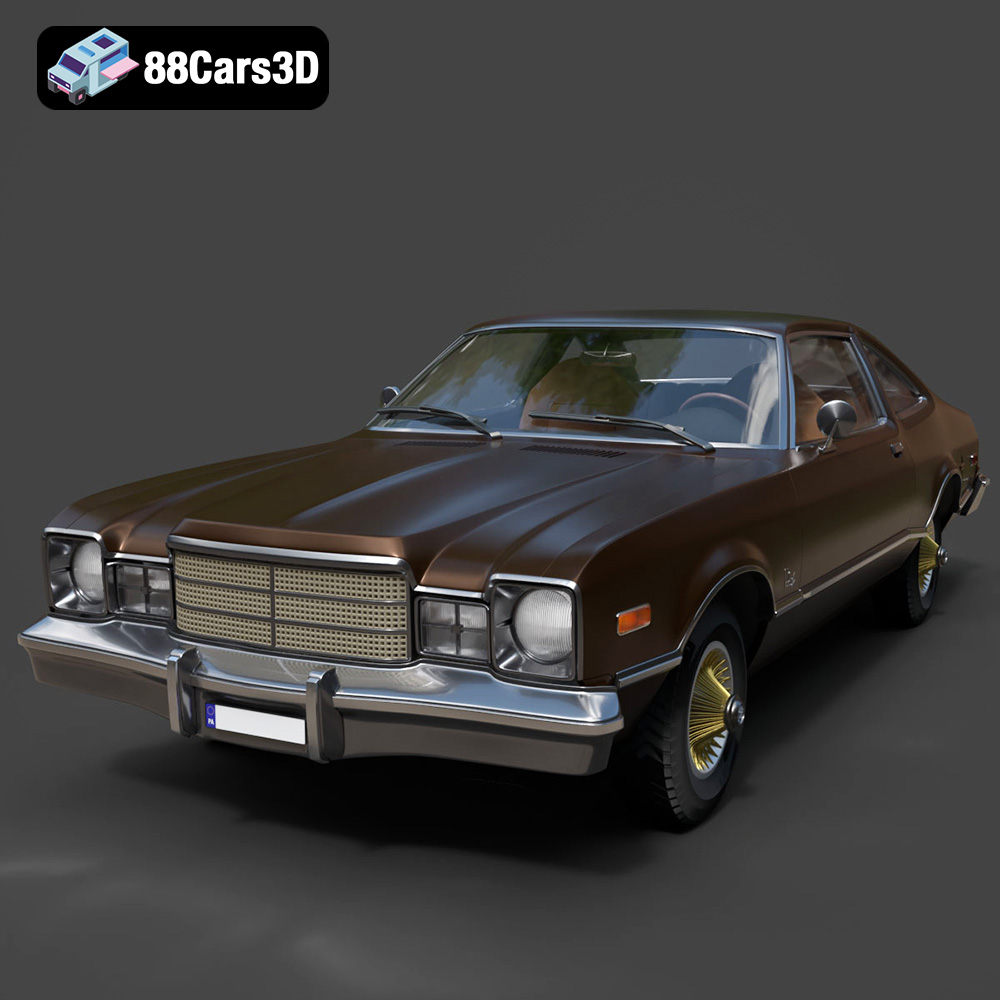
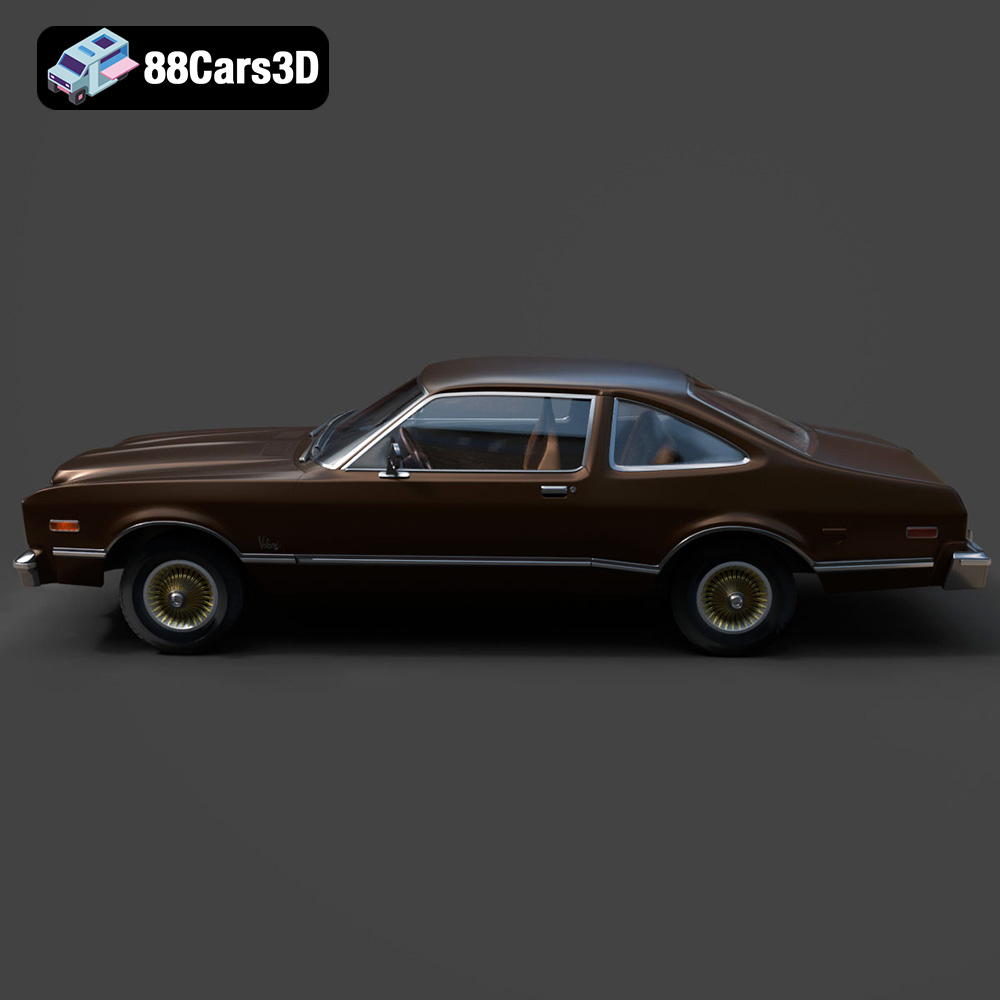
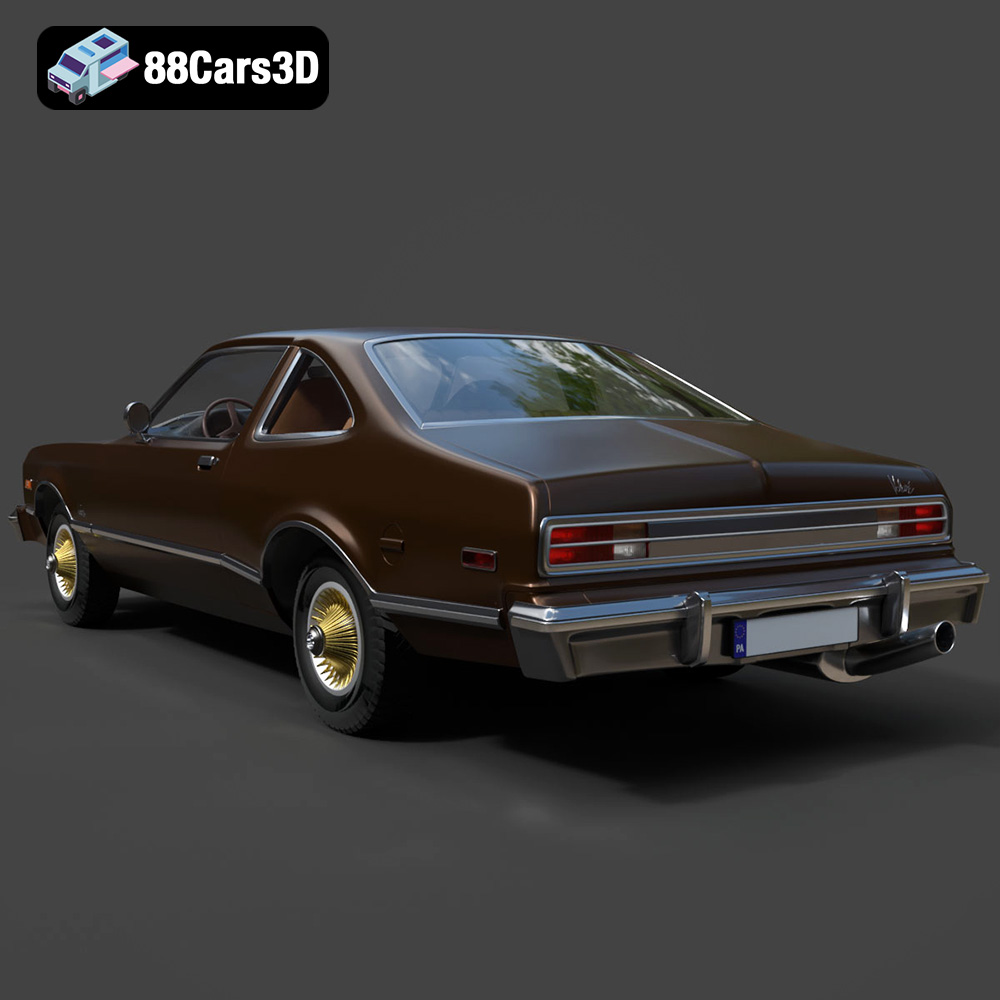
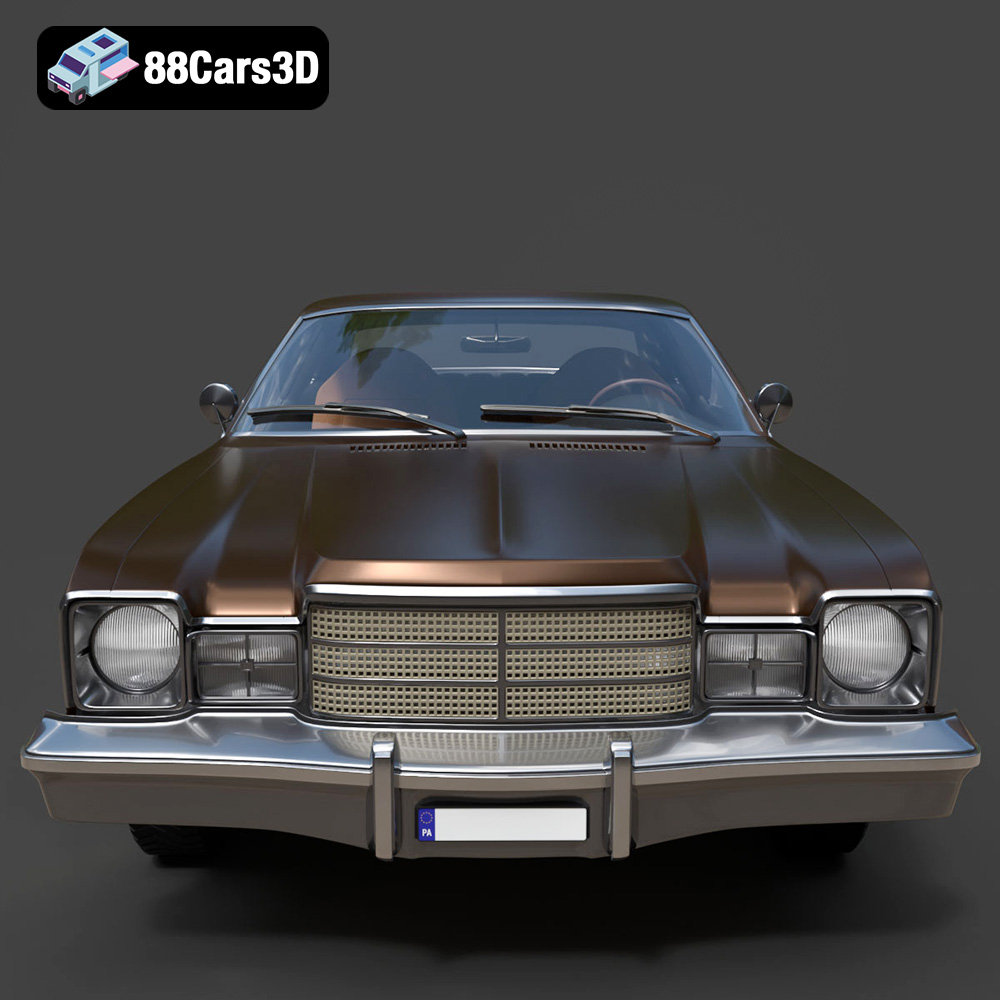
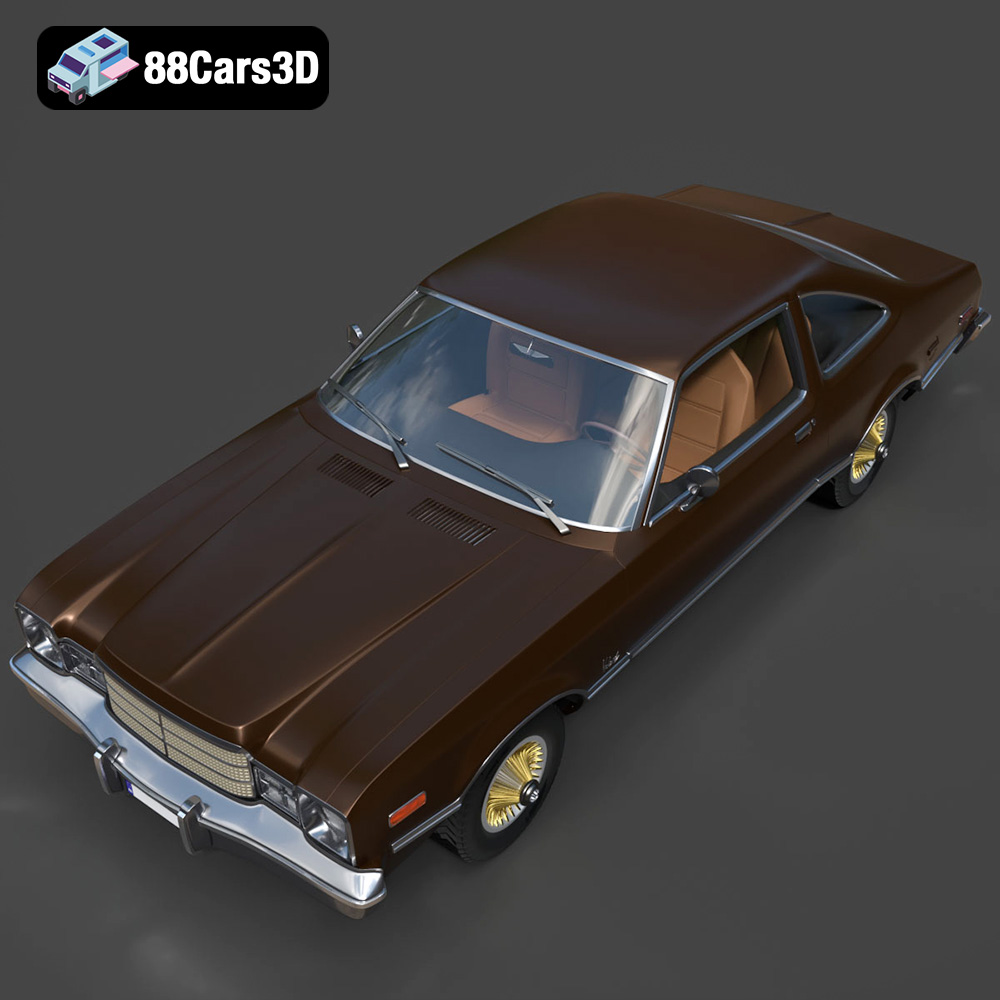
The exterior of this digital Volare is a masterclass in detail. From the distinct F-body platform proportions to the iconic square headlights and intricately detailed vintage taillights, every curve and contour has been faithfully reproduced. The model boasts a detailed grille, authentic chrome bumpers, and classic wheel covers with options for detailed tire treads and whitewall variants. But the attention to detail extends beyond the visible surfaces. Under the hood, a detailed engine block representation hints at the mechanical heart, while a period-correct single exhaust system and realistic suspension geometry, complete with undercarriage details, add to its realism. Crucially, elements like wheels, suspension, and steering components are separated, enabling precise animation for driving sequences or detailed technical demonstrations.
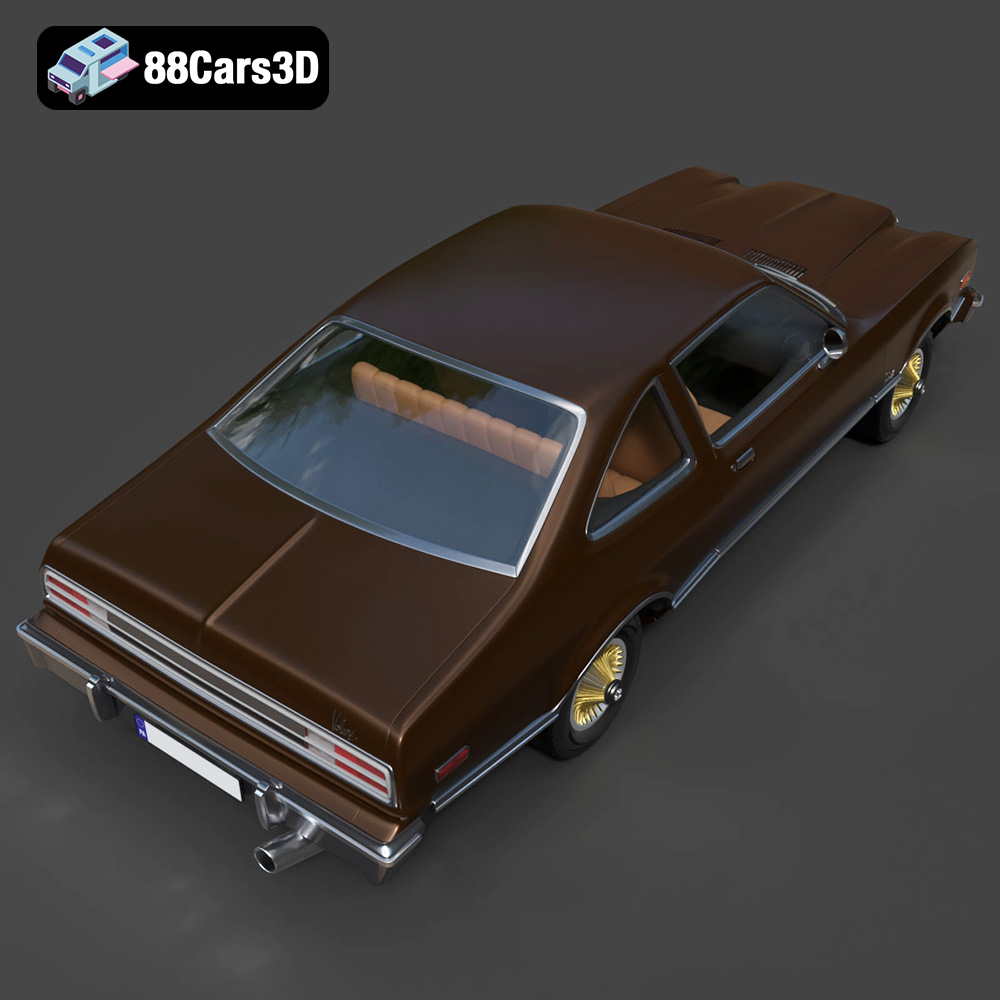
For projects requiring first-person perspectives or interior shots, the cockpit’s authenticity is paramount. The Volare model delivers with classic 70s plush seating, detailed upholstery, and a vintage two-spoke steering wheel with an accurate column layout. The period-accurate analog instrument cluster and dashboard layout evoke genuine nostalgia, complemented by detailed foot pedals, a gear shifter, and interior door panels. This meticulous interior work ensures that whether the model is viewed from afar or explored up close in a VR environment, the illusion of reality remains unbroken, enhancing immersion for game players or visualization clients.
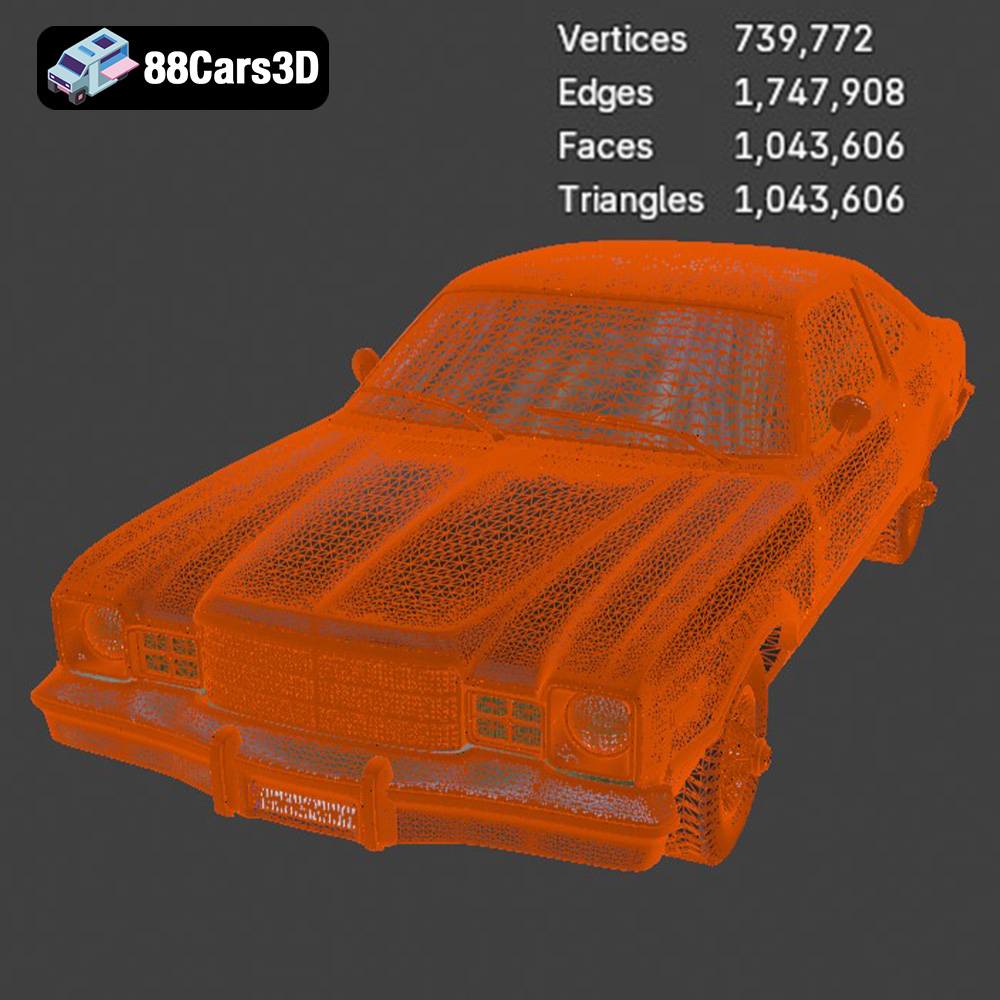
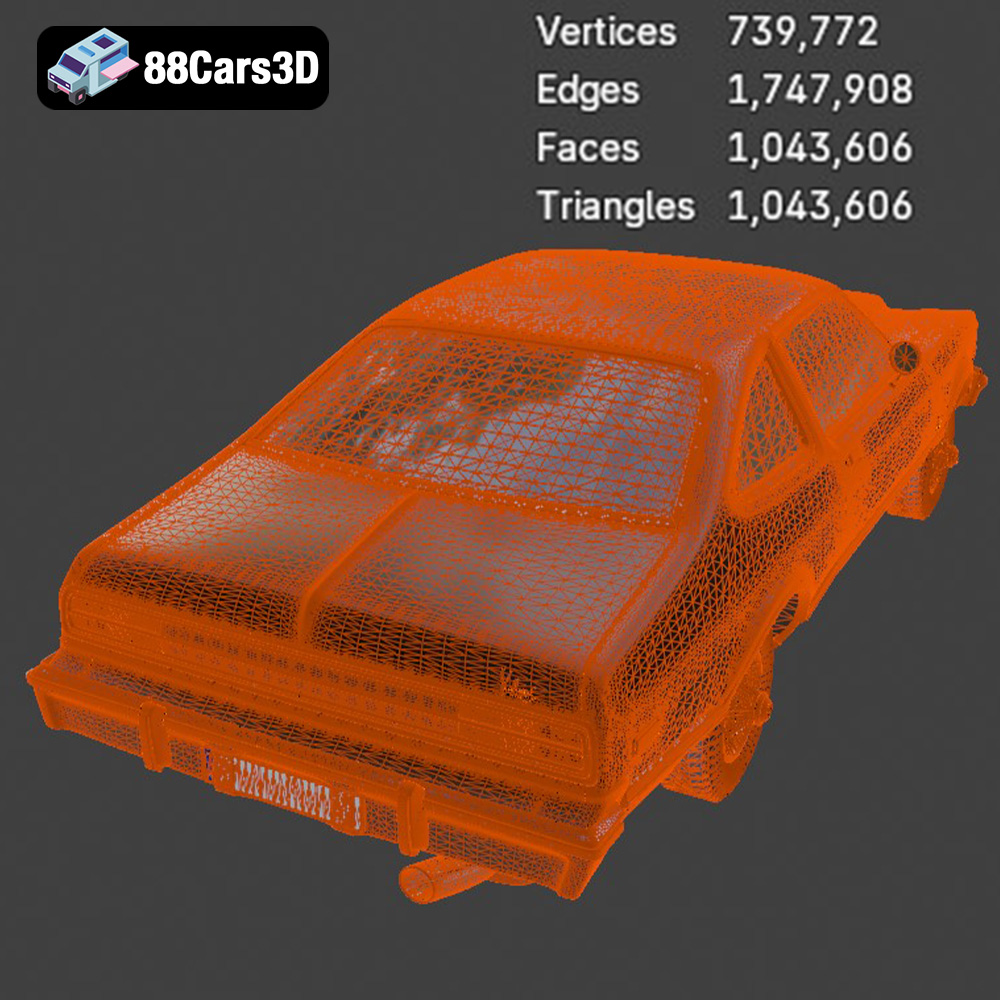
Beyond its visual appeal, the Plymouth Volare Coupe 1977 3D Model is a technical marvel. It features an optimized topology of approximately 120,000 triangles. This polycount strikes a perfect balance, offering high-end visual realism without burdening real-time engines like Unreal and Unity, making it genuinely “game-ready.” Its real-world scale accuracy, based on actual vehicle chassis data, ensures seamless integration into scenes without manual scaling adjustments. Furthermore, proper pivot setups for steering, wheel rotation, and suspension travel mean that animators can immediately begin rigging and animating complex driving mechanics, significantly reducing setup time and enhancing workflow efficiency. This dedication to technical excellence is why models from 88cars3d.com are trusted by professionals.
The true value of a versatile 3D asset lies in its seamless integration into various professional pipelines. The Plymouth Volare Coupe 1977 3D Model, with its multiple file formats and optimized structure, is designed precisely for this purpose across game development, high-end rendering, and immersive AR/VR experiences.
For game developers, the Volare model is an ideal candidate for racing titles, driving simulators, and period-accurate open-world games. Its optimized polycount (~120,000 triangles) ensures excellent performance in real-time engines, allowing for multiple instances of the car on screen without significant frame rate drops. In Unreal Engine, utilizing the provided .unreal or .fbx formats, developers can quickly import the model, apply its PBR (Physically Based Rendering) materials, and integrate it into game physics systems. The separated components for wheels, suspension, and steering are crucial for creating realistic driving mechanics and customizable vehicle systems, allowing players to experience the classic feel of the 1977 Volare authentically. This level of preparation saves countless hours of optimization and rigging, letting developers focus on gameplay and storytelling.
For automotive rendering, advertising, or visualization projects, visual fidelity is paramount. Using the .blend or .max files, artists can leverage the full power of renderers like Cycles, V-Ray, or Corona. The detailed geometry, combined with expertly crafted materials, allows for stunning studio lighting setups, brand campaigns, and lifestyle scenes. Artists can experiment with authentic Malaise-era factory colors, custom metallic finishes, and dynamic lighting to showcase the Volare in various environments. The accurate proportions and detailed interior make it perfect for creating realistic virtual photography, allowing clients to visualize the car in exquisite detail before any physical prototypes are even considered.
The rise of AR and VR demands highly optimized assets that can perform smoothly on a range of devices, from high-end VR headsets to mobile phones. The .glb format of the Plymouth Volare Coupe 1977 is specifically tailored for these applications. Its compact nature and efficiency enable rapid loading in virtual showrooms, immersive configurators, or mobile AR apps where users can place the classic car in their real-world environment. The optimized geometry ensures fluid interaction and rendering even on less powerful hardware, making the Volare an excellent choice for creating engaging, interactive experiences that bridge the digital and physical worlds.
The utility of high-quality 3D car models extends beyond digital screens. For hobbyists, collectors, or even designers needing a physical prototype, 3D printing offers an exciting avenue. The Plymouth Volare Coupe 1977 3D Model is perfectly suited for this, thanks to its inclusion of the .stl format and careful consideration for physical output.
The .stl file provided ensures that the model is a watertight, manifold mesh, critical for successful 3D printing. This means there are no gaps or holes in the geometry that could cause errors during the slicing process. While the digital model is highly detailed, converting it to an optimal scale for printing is crucial. The product description suggests recommended scales like 1:12, 1:18, or 1:24, offering a good balance between retaining detail and managing print time and material usage. For intricate details, like the exhaust system or chrome elements, preparing the model might involve separating parts further or adding structural supports during the slicing phase, which is standard practice in 3D printing.
Achieving a high-quality physical model requires careful attention to print settings. A layer height between 0.04–0.12 mm is recommended, with resin printing often suggested for its ability to capture finer details more accurately than FDM. Adequate wall thickness (1.2–2.0 mm) ensures structural integrity, while an infill of 20–30% provides strength without excessive material use. Supports are essential for overhangs and delicate features, and strategic print orientation (e.g., printing the frame angled, wheels separately) can minimize support structures and improve surface finish. After printing, post-processing such as sanding, priming, and painting with authentic factory colors – perhaps with a metallic finish to mimic the original – will bring the 1977 Volare to life, transforming a digital asset into a tangible masterpiece.
One of the most powerful advantages of working with professional-grade 3D car models like the Plymouth Volare Coupe 1977 is the inherent flexibility for customization. This asset isn’t a static image; it’s a dynamic foundation for endless creative exploration.
The Volare model comes with robust material setups that allow for extensive modification. Artists can easily change body colors, experimenting with authentic Malaise-era factory colors or inventing entirely custom finishes that blend modern aesthetics with retro charm. Beyond the paint, tire textures can be modified, offering options between standard street variants and classic whitewall designs to suit specific era portrayals or stylistic choices. Material finishes can be adjusted from matte to gloss, metallic, or classic chrome, enabling artists to dial in the perfect look for any rendering or real-time application. This flexibility ensures the Volare can adapt to any artistic vision, from gritty realism to stylized representations.
The thoughtful separation of key components—wheels, suspension, and steering—is a game-changer for animators. This structure allows for realistic physics simulations and complex animation sequences without needing to perform time-consuming manual cuts or rigging from scratch. Imagine animating the Volare cruising down a virtual highway, its suspension reacting to bumps, wheels turning, and steering responding precisely. For interactive experiences, these separate elements facilitate dynamic responses to user input, crucial for driving simulators or virtual configurators. The model’s optimized topology and proper pivot setups mean that these animations will not only look great but also perform efficiently, maintaining fluid framerates in real-time environments. This level of detail empowers creators to bring the Volare to life in ways that are both visually stunning and technically sound.
The world of 3D modeling and visualization is continuously evolving, with the demand for high-quality, technically sound assets growing exponentially. The Plymouth Volare Coupe 1977 3D Model stands as a testament to what meticulous digital craftsmanship can achieve. From its faithful recreation of classic American automotive design to its optimized topology and extensive range of file formats, it represents a versatile and invaluable asset for professionals across game development, architectural visualization, automotive rendering, AR/VR experiences, and even 3D printing.
By offering formats like .blend, .fbx, .obj, .glb, .stl, .ply, .unreal, and .max, this model ensures that users have the right tools for any project, making integration seamless and workflow efficient. Its balanced polycount, accurate scale, detailed exterior and interior, and animatable components underscore its utility as a production-ready asset. Whether you are aiming to evoke nostalgia in a game, create stunning renders for a client, or bring a piece of history to life through 3D printing, the Plymouth Volare Coupe 1977 3D Model provides the foundation for success.
Assets of this caliber, found on marketplaces like 88cars3d.com, empower artists and developers to elevate their projects, save valuable production time, and focus their creative energy on bringing their visions to life. Investing in high-quality 3D car models like the Volare is an investment in efficiency, fidelity, and ultimate creative freedom.
The 1977 Plymouth Volare Coupe is an iconic representation of late 70s American automotive design. Known for its distinct F-body platform, classic long-hood/short-deck proportions, and unmistakable square headlights, this vehicle captures the true essence of classic American cruisers. From its detailed grille and chrome bumpers to the authentic vintage styling cues, this model brings retro nostalgia and classic craftsmanship to life in stunning detail. This highly detailed 3D model boasts an optimized topology of approximately 120,000 triangles, perfectly balancing high-end visual fidelity with game-ready performance. It is expertly crafted for real-time engines, rendering, and visual effects, ensuring seamless integration into modern workflows whether you are developing a game, rendering a film, or designing an immersive VR environment. Perfect for classic car driving simulators, period-accurate film previz, retro-themed open-world games, and high-end automotive visualization.
$19.99
.blend
.fbx
.glb
.max
.obj
.ply
.plymouth
.rendering
.stl
.unreal
.volare
american-muscle
car-3d-model
classic-car
game asset
game-ready
low-poly
optimized
retro-car
vintage-car
volare-coupe
VR/AR