Get 20% OFF All Premium 3D & STL Models!

In the rapidly evolving landscape of digital content creation, the demand for high-fidelity 3D assets is insatiable. From photorealistic automotive rendering to immersive game environments and groundbreaking AR/VR experiences, the quality of a 3D model can significantly impact a project’s success. Automotive models, in particular, stand as a cornerstone for many industries, requiring a blend of artistic precision and technical optimization. A meticulously crafted 3D car model isn’t just a visual representation; it’s a foundational asset that drives creativity, efficiency, and realism across diverse pipelines.
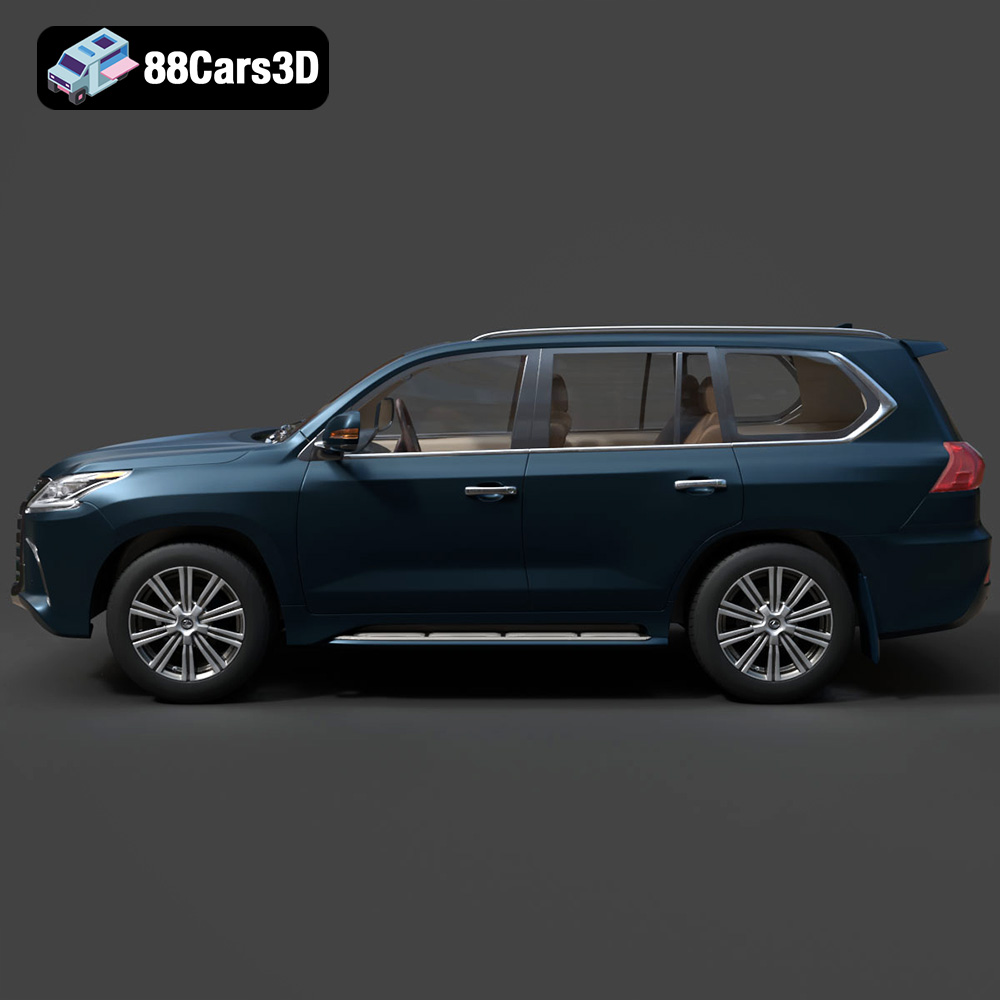
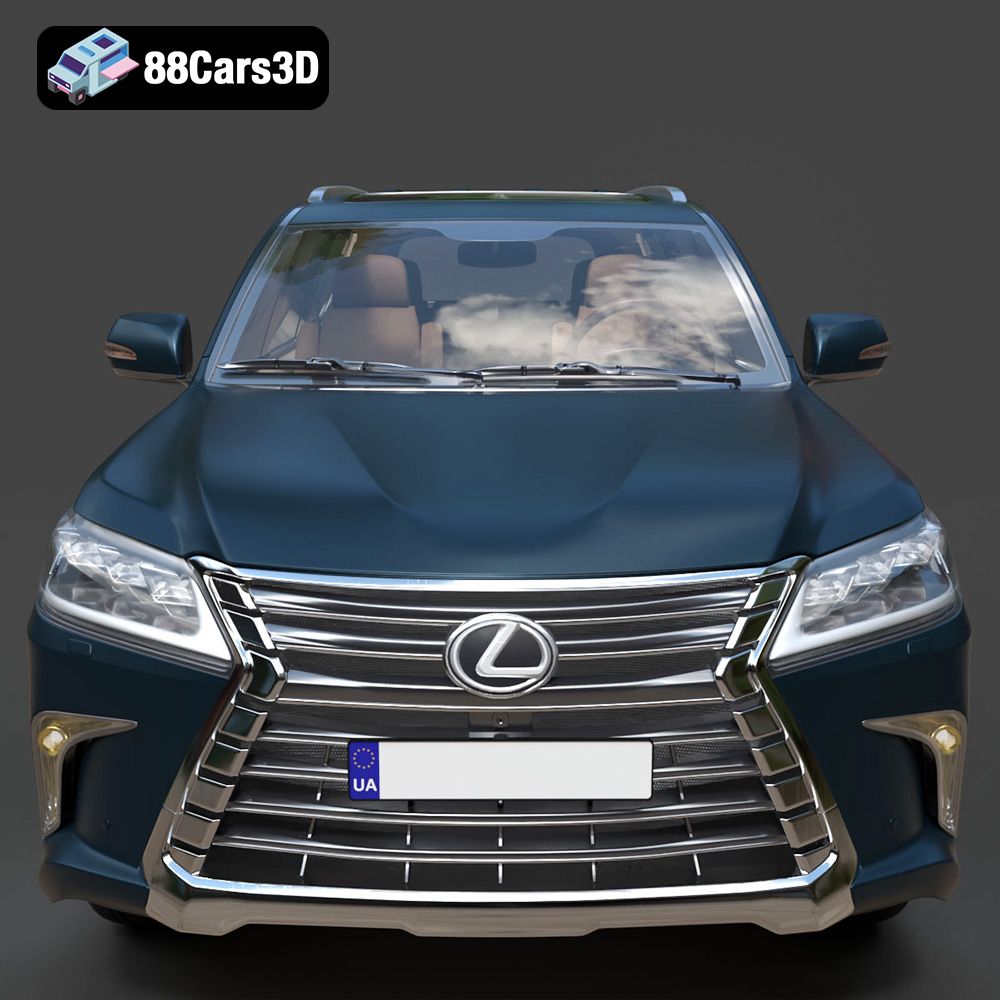
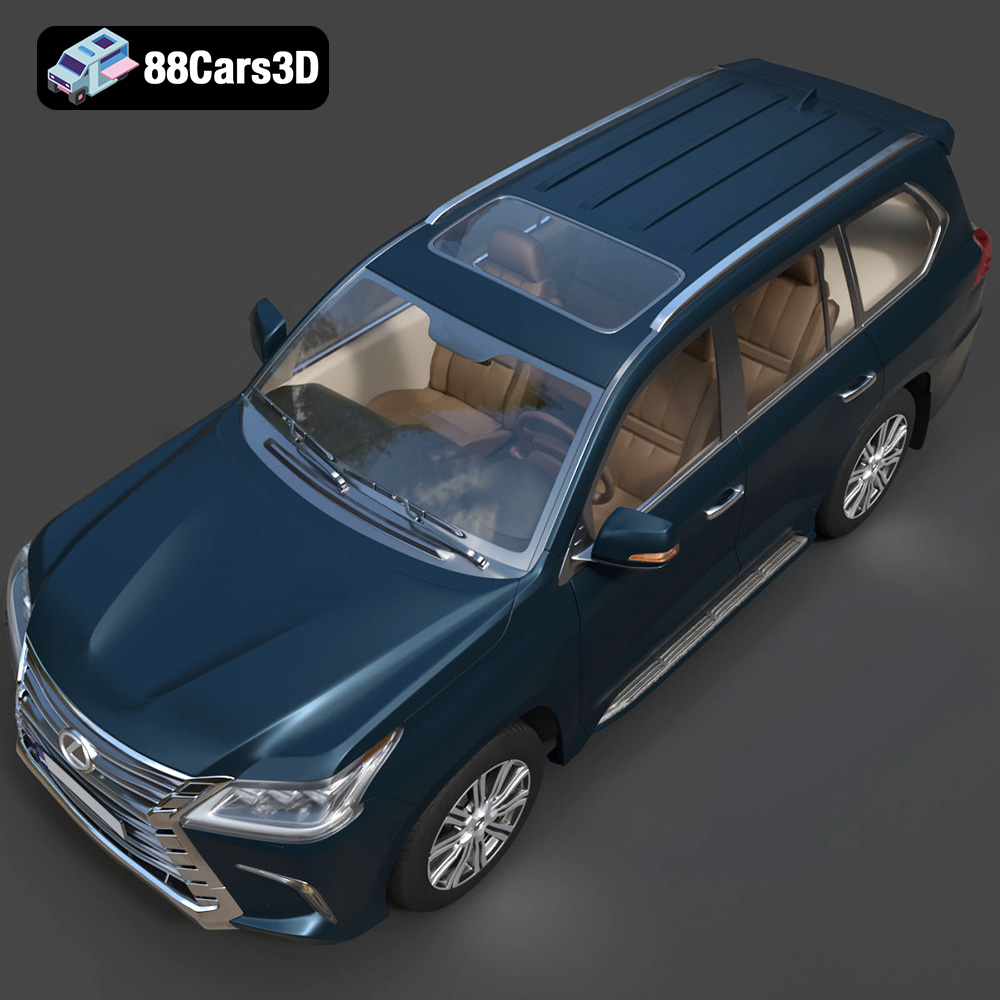
The journey from concept to a compelling digital scene often begins with selecting the right assets. For professionals and enthusiasts alike, having access to pre-built, production-ready models saves countless hours of development time and ensures a consistent level of quality. This is where platforms like 88cars3d.com shine, offering a curated selection of premium 3D car models designed to integrate seamlessly into any workflow. Take, for instance, the Lexus LX Mk3f J200 2016 3D Model. This highly detailed digital replica of the iconic full-size luxury SUV exemplifies the kind of asset that empowers designers, game developers, and visualization artists to achieve stunning results without compromising on performance or accuracy. Its balanced triangle count, precise geometry, and versatile file formats make it an ideal choice for projects demanding both visual fidelity and real-time efficiency, truly bringing the flagship Lexus SUV to life in stunning detail.
Navigating the world of 3D assets requires a solid understanding of the various file formats available, each tailored for specific uses, software, and performance requirements. The Lexus LX Mk3f J200 2016 3D Model, for example, comes in an impressive array of formats, ensuring maximum compatibility and utility across different professional pipelines. Choosing the correct format is crucial for maintaining data integrity, optimizing performance, and achieving the desired outcome for your project.
The .blend format is native to Blender, a powerful open-source 3D creation suite. When you receive a model in .blend format, you’re getting a fully editable Blender scene. This means it includes not just the mesh data, but also materials, textures, lighting, camera setups, animations, and even modifiers, all contained within a single file. For users who primarily work in Blender, this format offers the most flexibility for customization and iteration. It’s ideal for deep dives into the model’s structure, modifying topology, adjusting PBR materials, or preparing it for rendering with Cycles or Eevee. The .blend file for the Lexus LX Mk3f J200 would provide a complete, ready-to-render scene out of the box within Blender.
Autodesk’s .fbx (Filmbox) format is arguably the most widely adopted interchange format in the 3D industry. It’s designed to transfer 3D data between different software applications and is particularly robust for conveying complex scene information, including meshes, materials, textures, animations, skinning, and camera data. For game development, .fbx is the go-to format for importing assets into game engines like Unreal Engine and Unity due to its excellent support for animation and scene hierarchy. Its efficiency and widespread compatibility make it an ideal choice for the optimized Lexus LX model when moving it into real-time pipelines or other professional DCC (Digital Content Creation) software.
The .obj (Wavefront Object) format is a universal standard for 3D geometry. It’s a simple, human-readable text file that stores vertex positions, UV coordinates, normals, and material group information. While it doesn’t store animations or advanced scene data like .fbx, its simplicity and near-universal compatibility make it an excellent choice for basic mesh transfer between virtually any 3D software. For the Lexus LX Mk3f J200, an .obj file would contain the core mesh geometry, which can then be easily imported into any program and have materials re-applied, making it a reliable fallback or primary choice for static rendering and visualization.
.glb (GLB format, a binary form of glTF) is an increasingly popular format, especially optimized for the web, augmented reality (AR), and virtual reality (VR) applications. It’s designed to be a “transmission format,” efficiently delivering 3D models with all their associated data (geometry, materials, textures, animations) in a single, compact file. Its small file size and direct support in browsers and mobile AR/VR platforms make it perfect for interactive web experiences, virtual showrooms, or mobile-first applications using the Lexus LX model.
The .stl (STereoLithography) format is the absolute standard for 3D printing. It represents a 3D model as a series of connected triangles, essentially describing the surface geometry without any color, texture, or material information. When you want to bring the Lexus LX Mk3f J200 into the physical world, converting it to .stl is the first step. This format is directly read by 3D slicer software to generate print paths. The precision of the original digital model is critical here to ensure a clean, manifold mesh suitable for successful physical replication.
The .ply (Polygon File Format, or Stanford Triangle Format) is another common format for storing 3D data, particularly useful for scanned data, point clouds, and mesh data with additional properties like color per vertex, transparency, or confidence values. While less common for everyday artistic interchange than .fbx or .obj, its robust structure for complex geometry makes it valuable for applications requiring precise data integrity, such as scientific visualization, CAD, or detailed analysis of the Lexus LX model’s intricate components.
The inclusion of a .unreal file format (or typically, a pre-packaged Unreal Engine asset, often leveraging .fbx internally but configured for the engine) indicates an asset that is specifically prepared and optimized for direct import and use within Unreal Engine. This often means the model has already been set up with proper materials, UVs, collision meshes, LODs (Levels of Detail), and pivot points configured to Unreal’s specifications. For game developers or real-time configurator creators, this “engine-ready” format of the Lexus LX Mk3f J200 significantly streamlines the integration process, cutting down on import and setup time.
Finally, the .max format is the native file type for Autodesk 3ds Max, a leading software in architectural visualization, game development, and animation. Similar to .blend for Blender, a .max file contains the complete scene, including geometry, materials, lighting, cameras, animation, and any applied modifiers or plugins. For users working within the 3ds Max ecosystem, this file offers full editing capabilities and access to all the model’s construction details. It allows for in-depth scene composition and high-end rendering with renderers like V-Ray or Corona, making the Lexus LX model immediately usable in a professional studio environment.
Creating a truly exceptional 3D car model is a labor-intensive process that marries artistic talent with technical prowess. It goes far beyond simply “drawing” a car in 3D; it involves meticulous research, precise measurement, and an understanding of material science and real-time rendering constraints. High-quality 3D car models, such as those found on 88cars3d.com, represent hours of dedicated work to achieve a level of realism and optimization suitable for professional use.
The foundation of any great 3D vehicle model is accuracy. This begins with extensive blueprint research, photographic references, and, ideally, real-world vehicle inspections. For a model like the Lexus LX Mk3f J200 2016, capturing the bold spindle grille, the sharp L-shaped LED lighting signatures, and the overall robust, imposing stance requires an unwavering commitment to detail. Every curve, panel gap, and design element must be faithfully recreated. This extends to the interior, where premium quilted leather seating, wood-grain accents, and the intricate center console layout are carefully modeled to deliver an authentic luxury experience. Proportions are critical; even a slight deviation can make the model look “off” to the discerning eye.
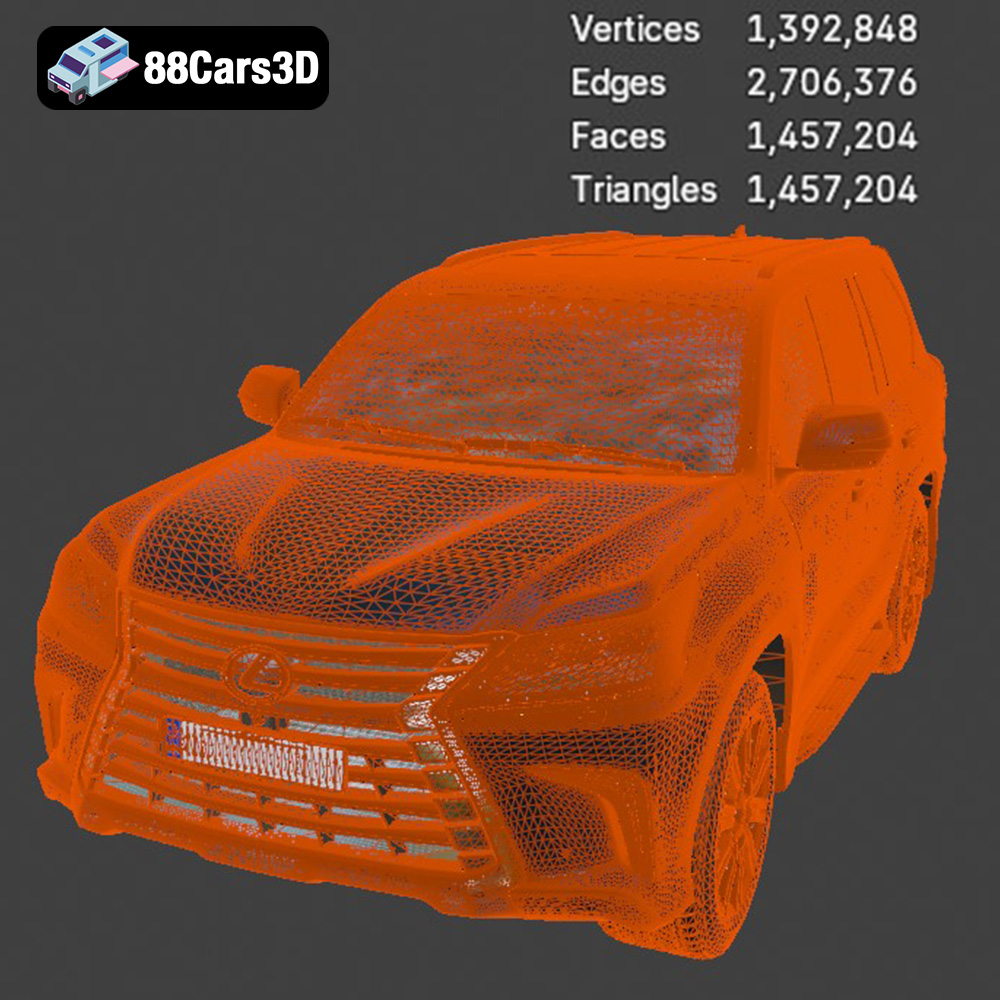
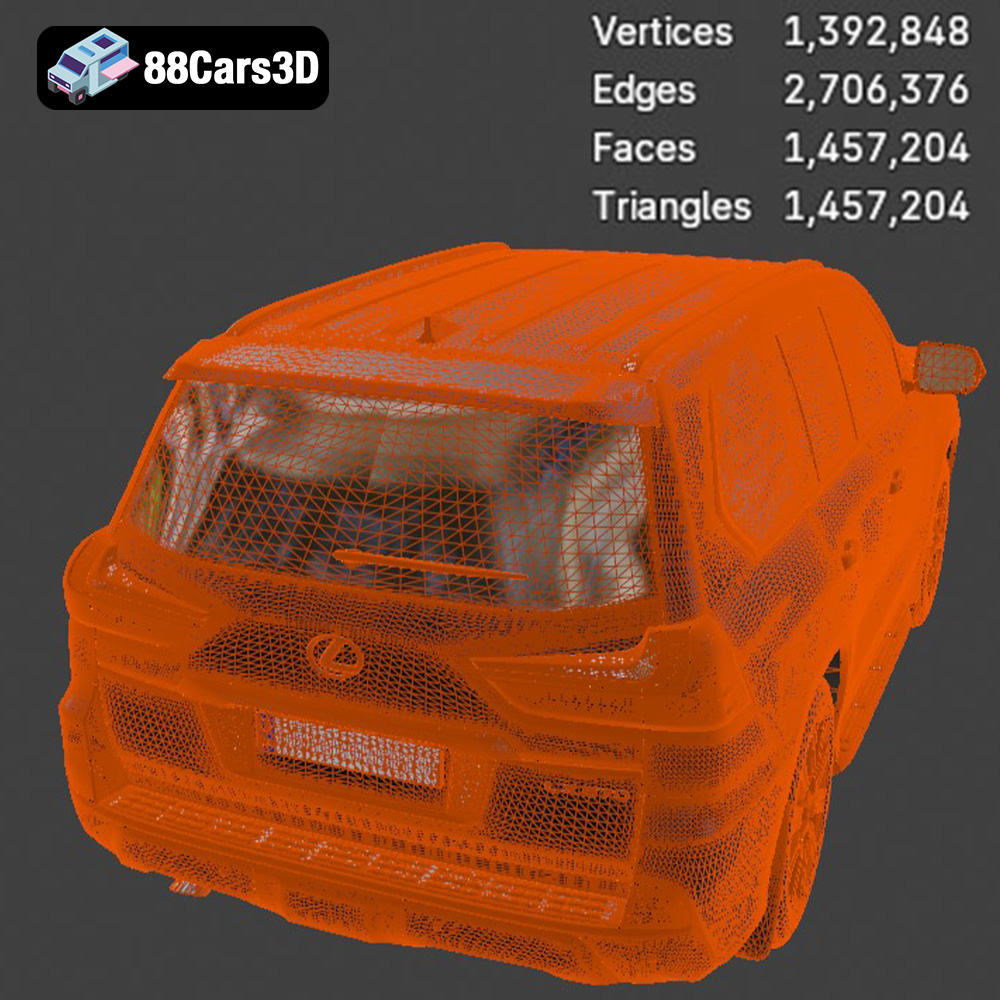
While accuracy is paramount, a high-quality 3D model must also be optimized for its intended use. This is where the “science” part comes in. For game development and AR/VR, an excessive poly count can cripple performance. The Lexus LX Mk3f J200 2016 3D Model achieves an impressive balance with approximately 500k triangles. This “game-ready” optimization ensures superior performance in real-time engines like Unreal and Unity while maintaining incredible visual fidelity. This balance is achieved through careful topology management, ensuring clean edge flow, efficient UV mapping for texture application, and the creation of appropriate Levels of Detail (LODs) that swap out higher-poly meshes for lower-poly versions as the camera moves further away. Furthermore, proper pivot setups for wheels, steering, and suspension are essential for animation and interactive experiences.
The versatility of a well-made 3D car model is one of its greatest assets. The Lexus LX Mk3f J200 2016 3D Model is designed to be a multifaceted tool, ready for deployment across a spectrum of professional applications, from high-octane game engines to serene architectural visualizations.
For game developers, the Lexus LX Mk3f J200 model is an invaluable asset. Its “game-ready” optimization and balanced triangle count (~500k) mean it can be dropped into open-world games, racing titles, or simulators without significant performance overhead. The inclusion of separate wheels, suspension, and steering components, along with proper pivot setups, makes it animation-ready for dynamic gameplay. Developers can simulate realistic vehicle physics, custom damage models, and interactive features. In Unreal Engine, for example, the .fbx or pre-packaged .unreal format allows for quick integration. Artists can then set up PBR (Physically Based Rendering) materials, add collision meshes, integrate it into a vehicle blueprint, and even create interactive showrooms within the engine. Its detailed cockpit geometry also makes it perfect for first-person POV in gaming, enhancing player immersion.
Beyond interactive environments, the Lexus LX model excels in high-end static and animated rendering. Architectural visualization (ArchViz) studios can place this luxury SUV into driveway scenes, urban landscapes, or rural retreats to add a touch of realism and aspiration to their projects. Its detailed exterior and interior make it ideal for close-up shots and cinematic sequences. In 3ds Max (using the .max format) or Blender (using the .blend format), artists have full control over lighting, camera angles, and material properties. They can leverage powerful renderers like V-Ray, Corona, Cycles, or Octane to produce photorealistic images and animations that showcase the vehicle’s design and luxury, perfect for marketing campaigns or showcasing property development concepts.
The rising demand for immersive experiences makes models like the Lexus LX Mk3f J200 critical for AR/VR applications. Whether it’s a virtual automotive showroom where customers can explore the car in 360 degrees, a mobile AR configurator that projects the vehicle into a real-world environment, or a training simulation, the optimized geometry and texture fidelity are key. The .glb format, specifically designed for AR/VR and web-based displays, ensures efficient loading and smooth interaction across various devices. This allows users to virtually step inside the Lexus LX, interact with its features, and even customize its appearance in real-time, offering a truly engaging and interactive product exploration.
The utility of a high-quality 3D model extends beyond digital displays into the tangible world through 3D printing. The Lexus LX Mk3f J200 2016 3D Model, with its robust geometry and attention to detail, offers an excellent foundation for creating physical replicas, catering to hobbyists, collectors, or designers looking for a physical prototype.
Converting a complex digital model into a printable format requires careful consideration. The inclusion of the .stl format for the Lexus LX model simplifies this process. This format describes the surface of the 3D model using a series of triangles, which 3D printers understand. For successful printing, the mesh must be “manifold” – watertight, without gaps or inverted normals – a characteristic of professionally crafted assets. The provided recommended scales (1:12, 1:18, 1:24) ensure that critical details remain discernible even at smaller sizes, leveraging the original model’s intricate components like the exhaust, mirrors, and steering wheel which are separated for optimal print orientation.
3D printing is often just the first step in creating a high-quality physical model. The provided guidance for the Lexus LX emphasizes key post-processing techniques. Resin printing is recommended for achieving fine details and smooth surfaces, which is crucial for capturing the luxury finish of a Lexus. After printing, steps like sanding, priming, and painting are essential. Applying authentic factory colors with metallic finishes can elevate the printed model to a display-worthy piece, mirroring the digital model’s realism. This detailed guidance transforms a raw 3D print into a miniature collectible, showcasing the versatility inherent in a well-designed 3D model.
One of the most powerful advantages of working with professional-grade 3D car models is the inherent flexibility they offer for customization. The Lexus LX Mk3f J200 2016 3D Model is built to be a canvas for creative expression, allowing users to adapt it precisely to their project’s unique requirements.
The ability to change body colors is a fundamental customization, allowing designers to switch between authentic factory colors, apply custom finishes, or experiment with matte, gloss, or metallic looks. This is typically achieved by adjusting material parameters within the 3D software or game engine. Beyond color, modifying tire textures—swapping between off-road variants for a rugged look or street versions for urban elegance—can dramatically alter the vehicle’s character. High-quality UV mapping on the original model ensures that custom textures wrap cleanly and realistically. Artists can also experiment with different material types for interior components, perhaps changing wood-grain accents or leather finishes to match specific design aesthetics or brand guidelines.
Beyond the vehicle itself, its interaction with the environment is crucial. The Lexus LX model’s adaptability extends to how it responds to different lighting conditions. Whether rendering it under a harsh desert sun, a soft studio light, or a dramatic twilight sky, the model’s PBR materials will react realistically, reflecting and absorbing light accurately. This allows for seamless integration into diverse scenes, from open-world game levels to sophisticated product visualizations. Changing the environment not only affects the lighting but also the reflections on the car’s paintwork, offering endless possibilities for dynamic and visually engaging presentations.
In the demanding world of 3D content creation, the difference between good and great often lies in the quality of the assets used. High-fidelity 3D car models are more than just digital objects; they are catalysts for innovation, enabling breathtaking visualizations, immersive interactive experiences, and efficient production pipelines across various industries. The Lexus LX Mk3f J200 2016 3D Model stands as a testament to this, embodying precision, optimization, and versatility.
From its meticulously crafted exterior and interior details to its game-ready performance and comprehensive file format support, this model empowers professionals in game development, architectural visualization, AR/VR, and even 3D printing. Its ability to seamlessly integrate into diverse workflows, coupled with extensive customization options, makes it an invaluable asset for anyone seeking to elevate their digital projects. By leveraging assets like the Lexus LX Mk3f J200 2016 3D Model from trusted sources like 88cars3d.com, creators can save precious time, ensure unparalleled quality, and focus on pushing the boundaries of their creative vision. Invest in quality, and watch your projects accelerate.
Experience luxury and capability with the highly detailed Lexus LX Mk3f J200 2016 3D model. Representing the iconic third facelift of the acclaimed J200 generation, this full-size luxury SUV perfectly captures the bold spindle grille, sharp L-shaped LED lighting signatures, and robust, imposing stance. Renowned for its legendary 5.7-liter V8 engine and unmatched off-road prowess combined with premium refinement, this digital replica brings the flagship Lexus SUV to life in stunning detail.
$19.99
.2016
.blend
.fbx
.glb
.lexus
.luxury suv
.lx
.max
.obj
.ply
.rendering
.stl
.unreal
car-3d-model
game asset
game-ready
j200
low-poly
mk3f
optimized
SUV
VR/AR