Get 20% OFF All Premium 3D & STL Models!

In the rapidly evolving landscape of digital content creation, the demand for exceptionally detailed and versatile 3D assets has never been higher. From the immersive worlds of video games to stunning photorealistic architectural visualizations and groundbreaking AR/VR experiences, high-quality 3D models form the bedrock of compelling visual narratives. Automotive design, in particular, stands at the forefront of this digital revolution, relying heavily on precise 3D representations to prototype, render, simulate, and present vehicles with unparalleled realism.
For professionals seeking to elevate their projects, acquiring pre-made, expertly crafted 3D car models offers a significant advantage. It saves invaluable time and resources, allowing artists and developers to focus on creativity and innovation rather than starting from scratch. Today, we’re diving deep into the technical prowess and multifaceted applications of such an asset, showcasing the incredible potential that a model like the Smart 1 Brabus 3D Model brings to the table. This particular model exemplifies the blend of aesthetic fidelity and technical robustness required in today’s demanding production pipelines, serving as an exceptional digital twin ready for immediate integration into any professional workflow.
The versatility of a 3D model often hinges on the file formats it supports, each tailored for specific uses, software environments, and performance requirements. The Smart 1 Brabus 3D Model, for instance, offers a comprehensive suite of formats, ensuring its adaptability across various professional pipelines. Understanding these formats is crucial for optimizing workflows and achieving the desired outcome.
The Smart 1 Brabus 3D Model includes a .blend file, which is the native file format for Blender, a powerful open-source 3D creation suite. This format is ideal for users deeply integrated into the Blender ecosystem, offering the most comprehensive and editable version of the model. It typically contains not just the geometry, but also materials, textures, lighting setups, camera positions, animations, and even rigging information. For the Smart 1 Brabus, the .blend file provides a fully editable scene, allowing artists to fine-tune every aspect, from shader properties to scene composition, making it perfect for custom renders, animations, or further modifications within Blender itself. Its non-destructive nature means all modifiers and procedural effects are preserved, offering maximum flexibility.
.fbx (Filmbox) is one of the most widely adopted 3D file formats, primarily developed by Autodesk for interoperability between various 3D applications, especially for game development. The .fbx format included with the Smart 1 Brabus 3D Model is game-engine ready for platforms like Unreal Engine and Unity. It efficiently encapsulates 3D models, textures, animations, skinning, and even camera data in a single file. Its strength lies in its ability to transfer complex scene data accurately across different software. For real-time applications, .fbx is often preferred due to its optimization for performance and its robust support for skeletal animations and blend shapes, making it a go-to for character and vehicle rigging.
.obj (Wavefront OBJ) is a universal 3D model format that defines the geometry of 3D objects. It’s renowned for its simplicity and wide compatibility, making it a standard choice when cross-software exchange is paramount. The Smart 1 Brabus .obj file is compatible with virtually all major 3D software packages, from 3ds Max and Maya to Cinema 4D and ZBrush. While it efficiently stores vertex positions, UV coordinates, normals, and material group information (often referenced by an accompanying .mtl file), it typically does not store animation or rigging data. It’s excellent for static model transfers, sculpting, or when you need a clean mesh to start building materials and setups in a new environment.
.glb (GL Transmission Format Binary) is an increasingly important format optimized for WebGL, augmented reality (AR), and virtual reality (VR) applications. It’s a binary version of the .gltf format, consolidating the 3D model, textures, and animations into a single, self-contained file. This consolidation makes .glb incredibly efficient for web-based delivery, ensuring fast loading times and seamless integration into AR/VR viewers or browser-based configurators. For the Smart 1 Brabus 3D Model, the .glb format provides an ideal solution for interactive product showcases on websites, AR apps that let users “place” the car in their environment, or lightweight VR experiences.
.stl (STereoLithography) is the de facto standard file format for 3D printing and rapid prototyping. It describes only the surface geometry of a 3D object using a collection of interconnected triangles. While it doesn’t carry color, texture, or material information, its simplicity makes it universally compatible with 3D printers and slicing software. The .stl version of the Smart 1 Brabus 3D Model allows designers to physically manifest their digital creation, whether for concept validation, small-scale models, or custom parts. Accuracy in this format is critical, as any mesh errors can lead to printing failures, highlighting the importance of clean geometry.
.ply (Polygon File Format or Stanford Triangle Format) is a versatile format for storing 3D data, particularly useful for scanned data, CAD, and scientific visualization. It can store a wide range of properties beyond just geometry, including color, transparency, normals, texture coordinates, and even reliability information for each vertex and face. The .ply file for the Smart 1 Brabus provides a precision mesh that can be highly beneficial for detailed analysis, reverse engineering workflows, or when integrating the model into specialized engineering or simulation software that requires richer per-vertex data than .obj or .stl. It’s a robust format for scenarios where data integrity and additional attribute storage are paramount.
Specifically tailored for Epic Games’ Unreal Engine, the .unreal format (often manifested as a native Unreal asset package) provides a pre-configured, engine-ready asset. This means the Smart 1 Brabus 3D Model, in this format, has likely undergone specific optimizations, material setups using Unreal’s physically based rendering (PBR) system, and potentially even blueprint integrations or collision meshes. This significantly accelerates workflow for game developers and real-time visualization artists using Unreal Engine, minimizing the import and setup time. It ensures the model behaves and renders as intended within the engine’s environment without additional tweaking.
.max is the native file format for Autodesk 3ds Max, one of the industry-leading software packages for 3D modeling, animation, and rendering. The .max file included with the Smart 1 Brabus 3D Model offers an editable 3ds Max project, containing the full scene, including all modifiers, materials (V-Ray, Corona, or standard PBR), lighting setups, and camera views. This format is indispensable for professional render farms, architectural visualization studios, and animation houses that rely on 3ds Max for high-end cinematic output. It provides the highest level of control and fidelity for bespoke rendering projects and complex animations.
The inclusion of such a comprehensive array of formats with the Smart 1 Brabus 3D Model underscores its adaptability and value, ensuring that professionals across various disciplines can seamlessly integrate this high-quality asset into their specific tools and pipelines.
Automotive rendering is an art form that demands meticulous attention to detail, realistic materials, and sophisticated lighting setups to truly capture the essence of a vehicle. The Smart 1 Brabus 3D Model is an exemplary asset for this domain, built with the necessary precision to achieve photorealistic results in leading render engines.
Whether you prefer the industry-standard capabilities of 3ds Max or the flexibility of Blender, the Smart 1 Brabus 3D Model provides an excellent foundation. In 3ds Max, the included .max file comes with an editable project, likely pre-configured with materials suitable for renderers like V-Ray or Corona Renderer. Artists can leverage its clean geometry and meticulously mapped textures to set up advanced car paint shaders, realistic glass, and intricate interior fabrics. By applying physically based rendering (PBR) principles, such as accurate metallic/roughness or specular/gloss workflows, every reflection and highlight on the Brabus’s sleek bodywork can be precisely controlled. Blender users benefit from the .blend file, which often includes a ready-to-render setup, allowing for immediate experimentation with Cycles or Eevee, fine-tuning lighting, and creating stunning studio shots or environmental renders.
Achieving truly impactful renders goes beyond just a great model; it involves mastering lighting, material definition, and composition. The Smart 1 Brabus’s realistic materials and textures mean less time spent on fundamental material creation and more on refinement. Artists can experiment with various HDRi environments for natural outdoor lighting, or construct complex studio lighting rigs to emphasize its dynamic stance and signature design elements. Attention to reflection maps, normal maps for subtle surface imperfections, and subsurface scattering for materials like headlights can push realism further. Compositionally, the model’s precise detailing allows for dramatic close-ups of its distinctive grille, wheel designs, or the luxurious interior, making it a perfect subject for high-end marketing visuals or design showcases.
The demands of game development are unique, balancing visual fidelity with real-time performance. Game assets, especially vehicles, must be highly optimized without sacrificing aesthetic quality. The Smart 1 Brabus 3D Model is designed with this balance in mind, making it an excellent candidate for various game genres, from racing simulators to open-world adventures.
The inclusion of both .fbx and .unreal file formats for the Smart 1 Brabus 3D Model directly addresses the needs of game developers. The .fbx is a versatile format for import into both Unreal Engine and Unity. Once imported, developers can leverage the model’s optimized polygon structure, which ensures smooth performance even with multiple instances. For Unreal Engine users, the dedicated .unreal asset provides a pre-configured package, potentially including optimized materials using Unreal’s PBR workflow, LOD (Level of Detail) meshes for performance scaling, and basic collision meshes. This streamlines the integration process significantly, allowing teams to quickly drop the model into their game world and begin implementation of vehicle physics, interactive elements, and gameplay mechanics.
Achieving fluid frame rates is paramount in game development. The Smart 1 Brabus 3D Model’s “optimized polygon structure” is key here. Professional game assets often utilize a tiered LOD system, where simpler versions of the model are swapped in when the car is further from the camera. The clean geometry of this model makes it easier to generate these LODs, ensuring scalability across different platforms and hardware specifications. Furthermore, efficient UV mapping and texture atlasing (if applicable) contribute to reducing draw calls, enhancing real-time rendering performance. The realistic materials provided are often PBR-compliant, allowing for consistent visual quality across various lighting conditions within the game engine, from bright daylight to moody night scenes.
Beyond traditional rendering and game development, high-quality 3D car models like the Smart 1 Brabus are opening doors to innovative applications across various industries. Its versatility extends into augmented reality, virtual reality, sophisticated simulation environments, and even physical prototyping through 3D printing.
The rise of AR/VR technologies demands 3D assets that are both visually rich and highly optimized for real-time interaction. The .glb file format, provided with the Smart 1 Brabus 3D Model, is specifically engineered for this purpose. Imagine an AR app where a potential customer can “place” the Smart 1 Brabus in their driveway, viewing it from all angles and even peeking inside the detailed interior. For VR, the model can be integrated into virtual showrooms, driving simulators, or interactive product configurators, offering an unparalleled sense of presence. The model’s optimized geometry and textures are crucial here, ensuring smooth performance and preventing motion sickness in immersive environments while maintaining high visual fidelity.
Simulation environments, whether for autonomous driving research, virtual testing, or driver training, require highly accurate and consistent 3D models. The Smart 1 Brabus 3D Model’s “clean geometry” and “meticulously mapped textures” make it an ideal candidate. For complex physics simulations, having a precise mesh ensures accurate collision detection and dynamic behavior. Furthermore, the inclusion of .stl and .ply formats caters directly to 3D printing and prototyping needs. Automotive designers can use the .stl file to print scale models for physical review, validate ergonomic concepts, or even prototype custom accessories. The .ply format, with its capacity for detailed polygon meshes, can be invaluable for engineering analysis, reverse engineering workflows, or integration into CAD pipelines for further design iterations. This allows for a seamless transition from digital concept to tangible product, bridging the gap between virtual design and physical realization.
The distinction between a casual 3D model and a professional-grade asset lies in its underlying technical quality. The Smart 1 Brabus 3D Model from 88cars3d.com embodies these professional standards, ensuring it performs flawlessly across diverse applications.
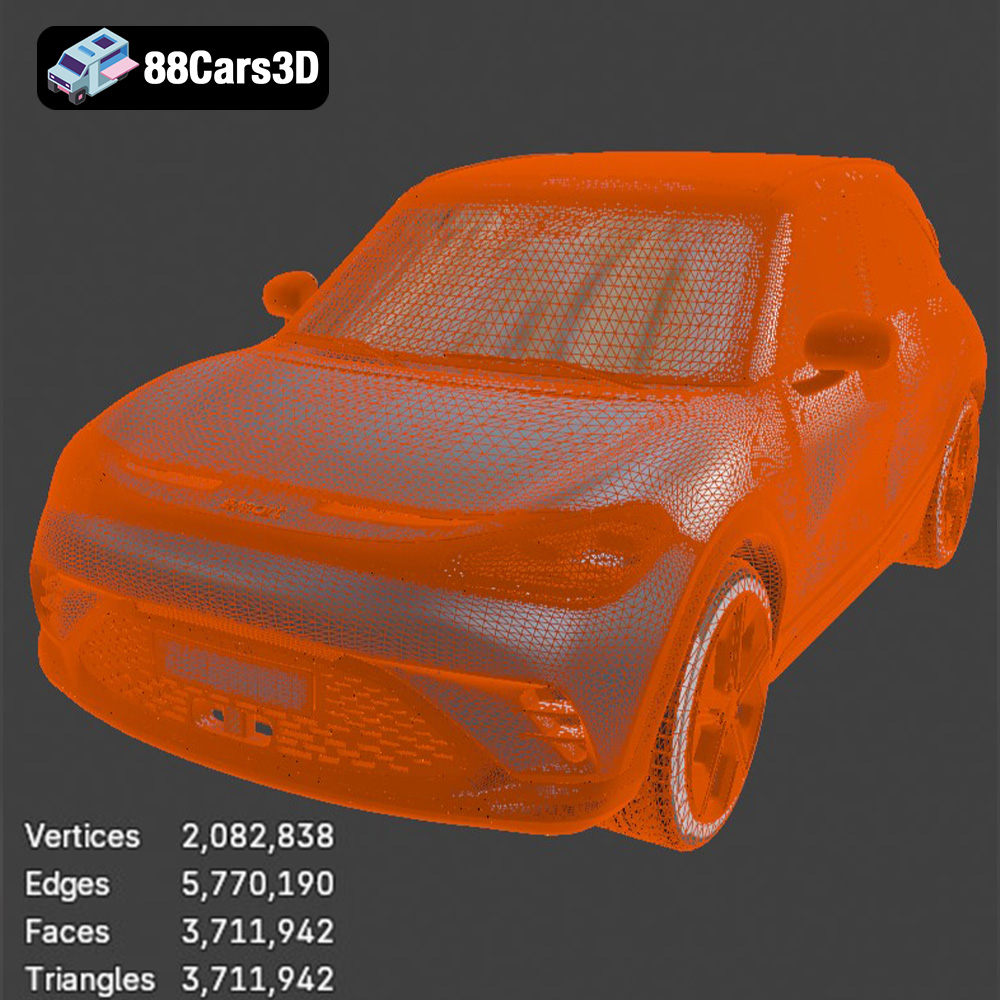
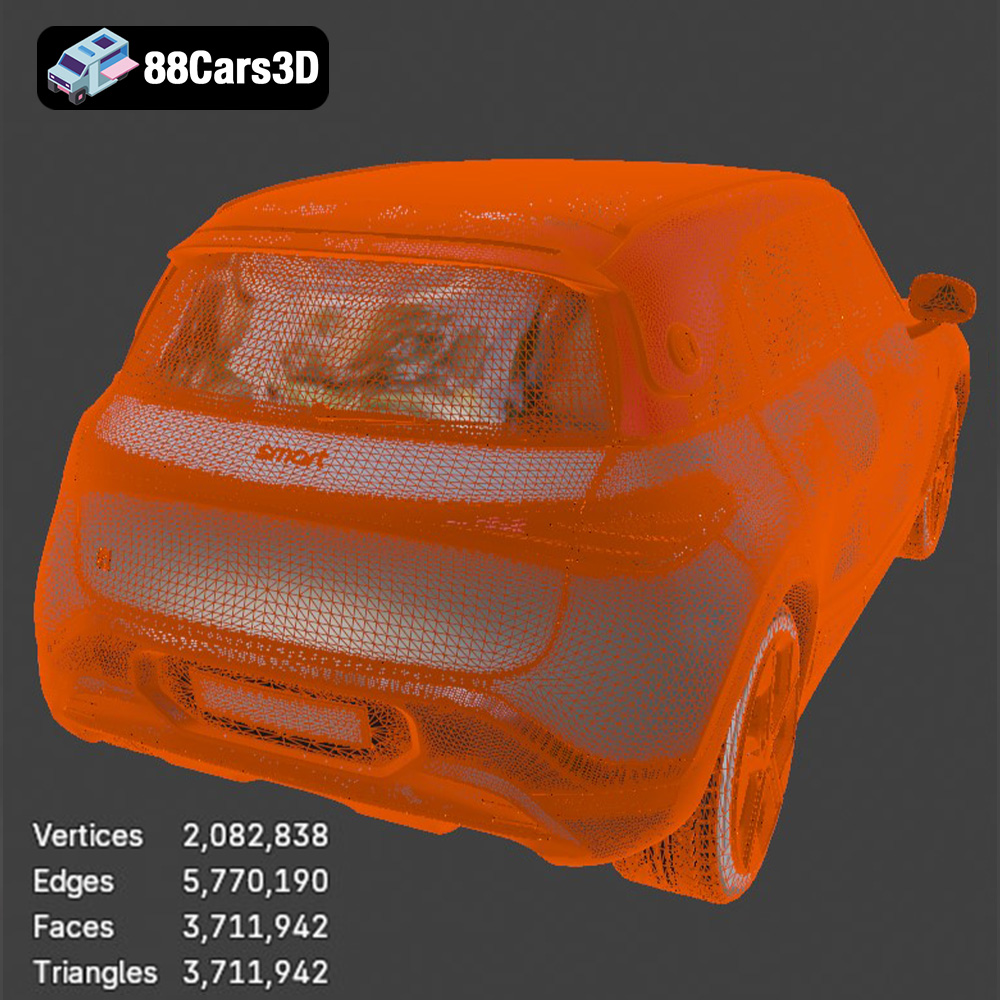
At the heart of any high-quality 3D model is its geometry. “Clean geometry” refers to a mesh free of common issues like non-manifold edges, flipped normals, overlapping vertices, or overly complex topology that can cause rendering artifacts or slow down performance. The Smart 1 Brabus boasts such geometry, built with a keen eye for efficiency and accuracy. Its “optimized polygon structure” means that while the model is highly detailed, polygons are distributed intelligently, placing more detail where it’s visually critical (e.g., body lines, interior elements) and simplifying less visible areas. This balance ensures excellent visual fidelity without bogging down real-time engines or increasing render times unnecessarily. It also facilitates easy unwrapping for UVs and smooth deformation if the model were to be animated or damaged.
Textures and materials are what breathe life into a 3D model. The Smart 1 Brabus 3D Model features “realistic materials” and “meticulously mapped textures.” This implies the use of a PBR (Physically Based Rendering) workflow, where material properties like albedo (base color), roughness, metallic, normal, and ambient occlusion maps are created to accurately simulate how light interacts with different surfaces. Meticulous UV mapping ensures that these textures are applied without stretching or distortion, appearing crisp and accurate on every part of the vehicle, from the body paint to tire treads and dashboard details. High-resolution textures mean that even in close-up shots, details remain sharp and convincing, crucial for automotive visualization where every seam and stitch counts.
A truly professional automotive 3D model goes beyond just the exterior. The Smart 1 Brabus 3D Model is described as having a “fully realized exterior and interior.” This means the cabin is not merely a placeholder but a detailed environment with accurately modeled seats, dashboard, steering wheel, infotainment system, and door panels. Such interior fidelity is vital for immersive experiences in VR, detailed cinematic renders, or interactive walkthroughs where users can explore the vehicle from the inside. This comprehensive detailing enhances the model’s value, making it suitable for a wider array of professional projects that demand complete realism.
To illustrate the practical value of a high-quality asset like the Smart 1 Brabus 3D Model, let’s consider a few hypothetical, yet realistic, professional scenarios.
A major automotive brand is launching a new electric crossover and needs to create a series of high-impact digital advertisements. Instead of manufacturing a physical prototype for every shot, they license the Smart 1 Brabus 3D Model from 88cars3d.com. Their rendering team uses the provided .max file in 3ds Max with V-Ray. They leverage the detailed geometry and realistic materials to create photorealistic renders of the vehicle in various environments – urban landscapes, scenic routes, and studio settings. They animate it for a short commercial, showcasing its dynamic lines and tech features. The clean topology allows for easy camera cuts and close-ups, revealing the luxurious interior and unique Brabus accents, all without a single physical car being present on set. This saves millions in production costs and offers unparalleled flexibility.
A leading game studio is developing a new realistic racing simulator. They require a diverse fleet of vehicles that are visually stunning yet optimized for real-time performance. The Smart 1 Brabus 3D Model, with its .fbx and .unreal formats, is an ideal fit. Their environment artists import the .unreal asset directly into Unreal Engine, where the pre-configured materials and optimized mesh instantly integrate into the game’s PBR pipeline. The technical art team generates LODs from the clean geometry to ensure smooth frame rates on various platforms. Vehicle engineers then apply their custom physics system, utilizing the model’s accurate proportions and collision meshes for realistic driving dynamics. The detailed interior allows for an immersive first-person cockpit view, enhancing player engagement.
An innovative car dealership wants to offer a cutting-edge interactive configurator on its website and in its showrooms, allowing customers to customize the Smart 1 Brabus in real-time. They use the .glb version of the 3D model. The optimized nature of the .glb file ensures fast loading times directly in a web browser or a dedicated AR/VR application on a tablet or kiosk. Customers can change paint colors, wheel designs, interior trims, and even open doors to explore the cabin, all rendered smoothly and interactively. This immersive experience not only boosts customer engagement but also provides a powerful sales tool, helping customers visualize their dream car before purchase without needing a full inventory of physical vehicles.
In the dynamic world of 3D content creation, the difference between a project that merely exists and one that truly captivates often lies in the quality of its foundational assets. The Smart 1 Brabus 3D Model stands as a testament to this principle, offering a meticulously crafted digital twin designed to meet the rigorous demands of professional workflows across automotive rendering, game development, AR/VR experiences, and even 3D printing.
Its comprehensive set of file formats – from the editable .blend and .max files to the game-ready .fbx and .unreal, the universal .obj, web-optimized .glb, and physical prototyping formats like .stl and .ply – ensures maximum compatibility and flexibility. This versatility, combined with its clean geometry, optimized polygon structure, realistic materials, and fully realized exterior and interior, makes it an invaluable asset for any artist, designer, or developer.
For those seeking to elevate their projects with premium 3D car models that deliver both visual fidelity and technical robustness, resources like 88cars3d.com are indispensable. The Smart 1 Brabus 3D Model isn’t just a collection of polygons and textures; it’s a gateway to accelerating your creative process and achieving unparalleled results. Investing in such a high-quality asset is an investment in efficiency, quality, and the limitless possibilities of digital visualization.
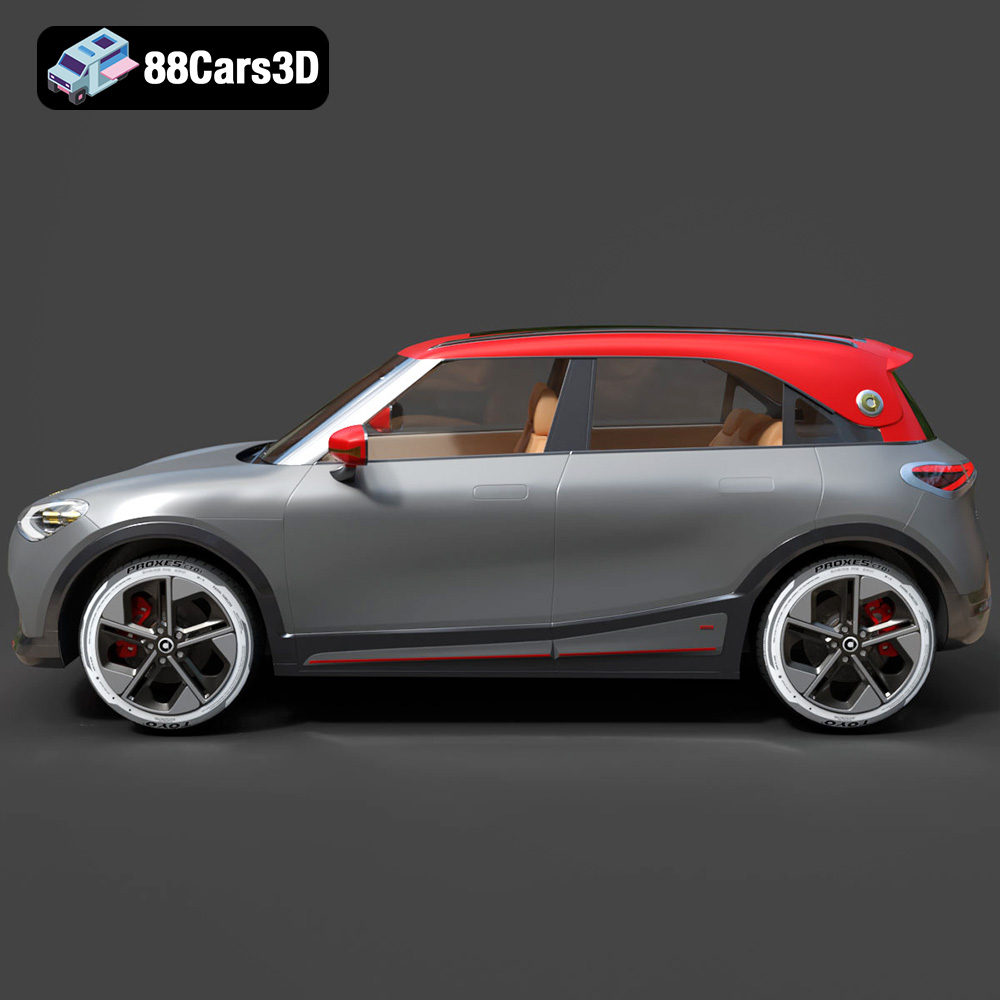
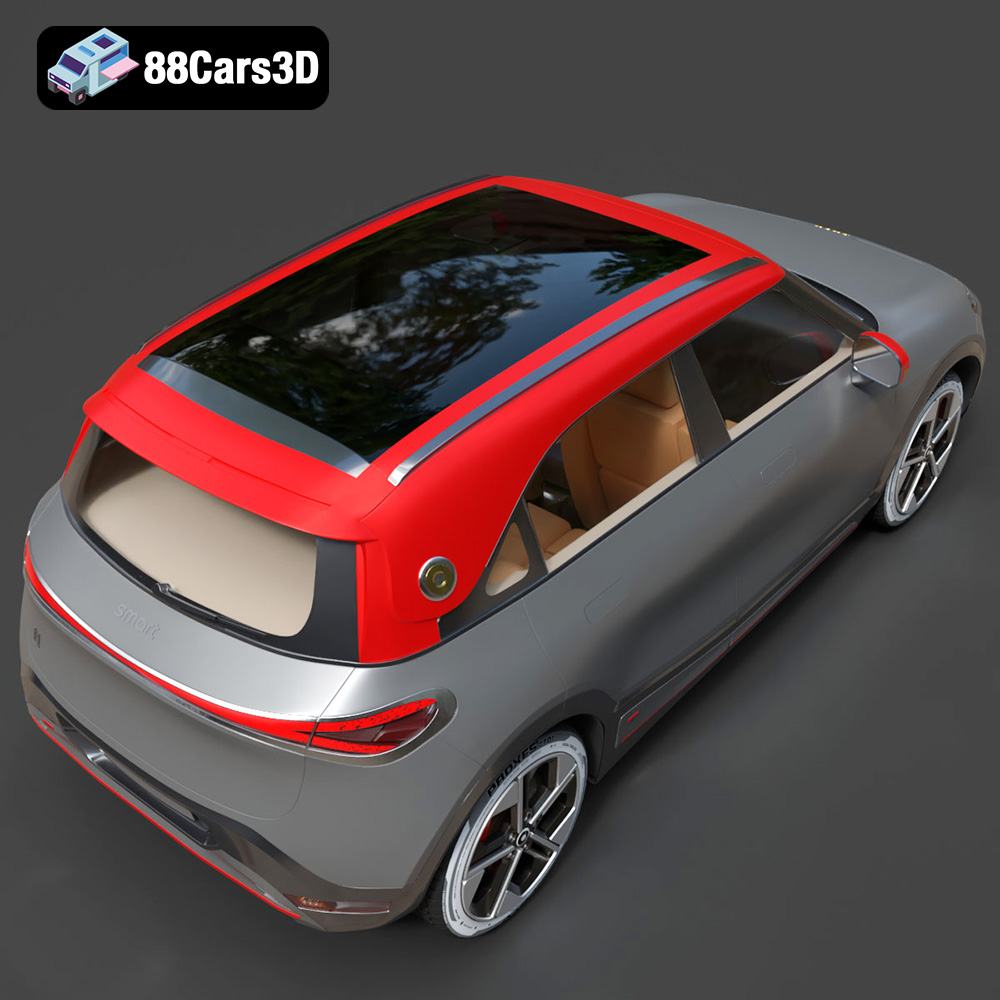
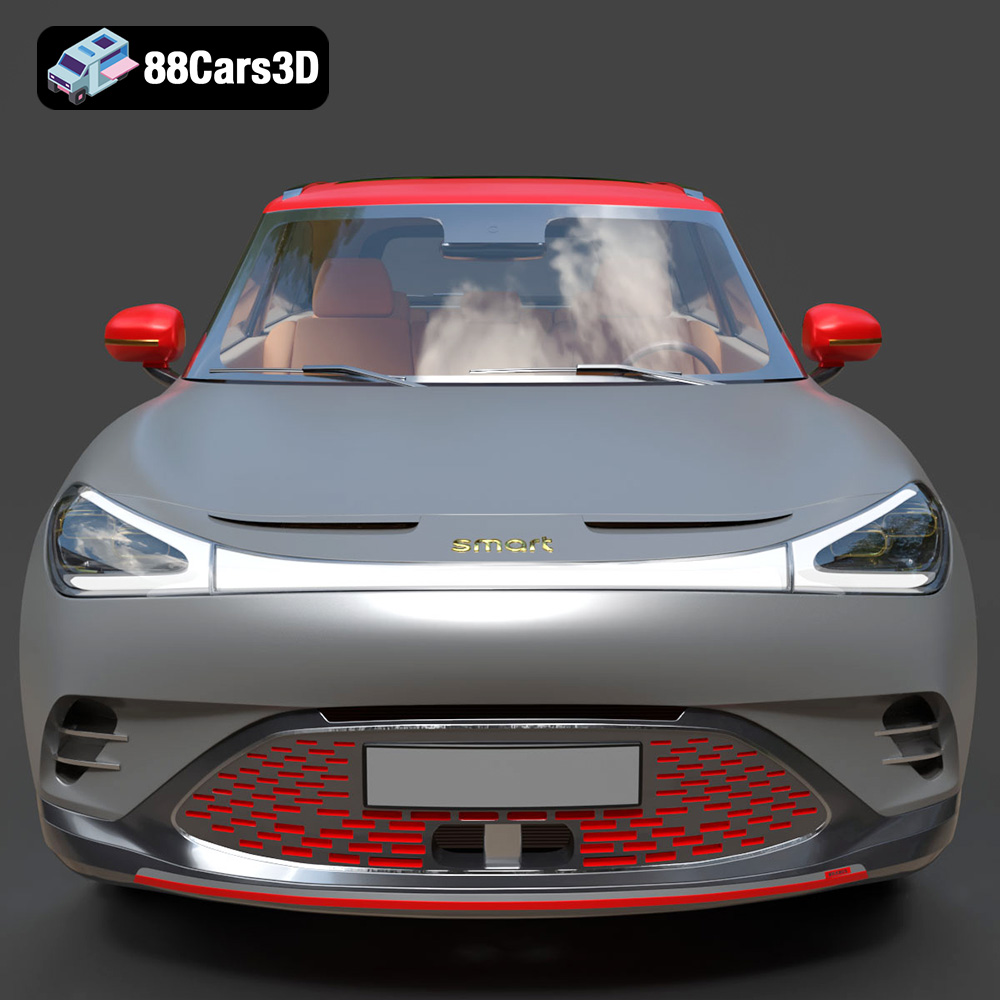
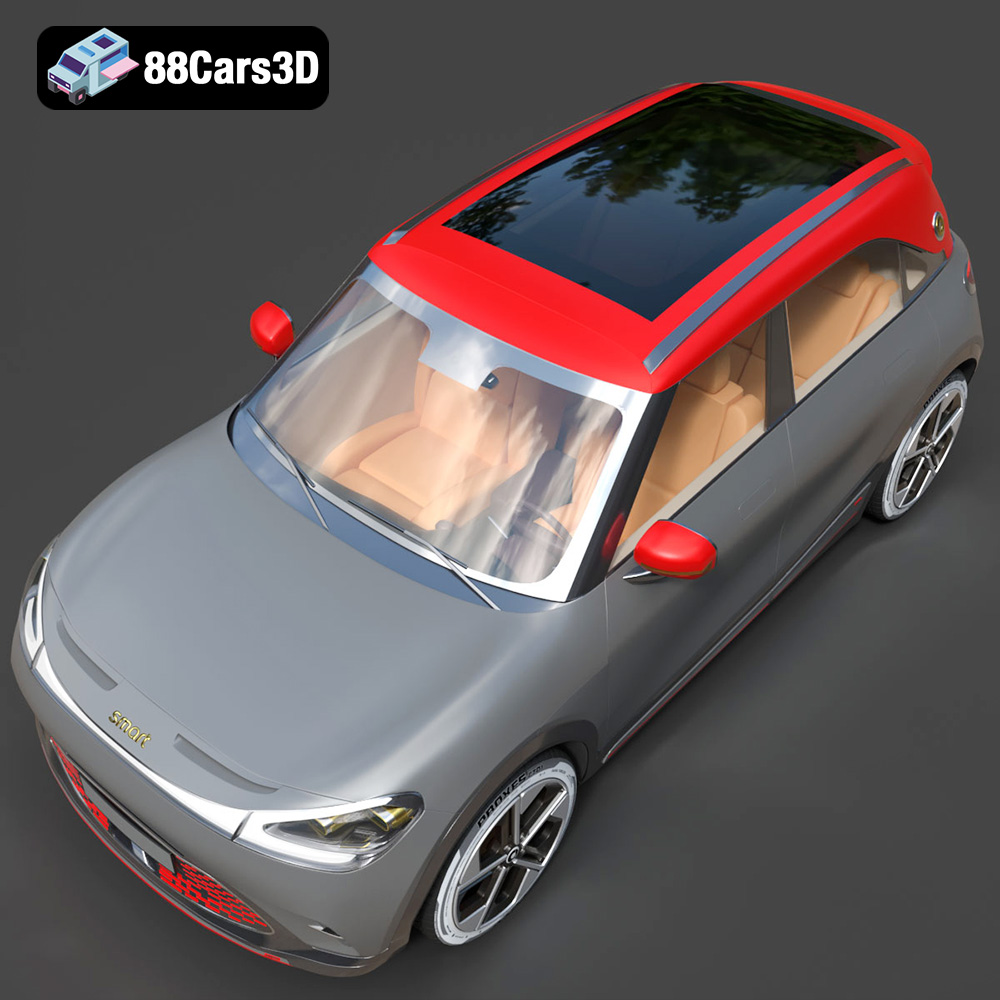
Experience the impressive realism of the Smart 1 Brabus 3D Model. Carefully crafted with precision, this model captures the dynamic stance, signature design elements, and detailed interior of the original vehicle. Built to meet professional standards, it serves as an exceptional digital twin for any demanding project.
Key features include clean geometry, realistic materials, meticulously mapped textures, and a fully realized exterior and interior. Its optimized polygon structure ensures a perfect balance between visual fidelity and performance, making it adaptable for various pipelines.
This versatile asset is ideal for multiple applications, including rendering, game development, simulation environments, AR/VR experiences, and automotive visualization.
$19.99
.1brabus
.arvr
.blend
.car3dmodel
.crossover
.electricvehicle
.fbx
.gameasset
.glb
.max
.obj
.ply
.rendering
.simulation
.smart
.stl
.unreal
SUV