Get 20% OFF All Premium 3D & STL Models!

In the fast-evolving landscape of digital content creation, the demand for hyper-realistic and technically robust 3D assets is paramount. From breathtaking cinematic sequences to immersive game worlds and cutting-edge visualization projects, the essence of a compelling digital experience often lies in the quality of its foundational elements. Few subjects capture the imagination quite like high-performance automobiles, and among them, the Nissan GTR R35 Nismo stands as a titan – a machine engineered for precision and raw power on the track. Recreating such an icon in the digital realm requires an extraordinary level of detail and technical mastery.
Enter the Nissan GTR R35 Nismo 3D Model, a meticulously crafted digital asset available at 88cars3d.com. This model isn’t just a representation; it’s a digital twin designed to bring the aggressive aerodynamics, iconic styling, and track-focused spirit of the real car to your projects. For professionals in automotive rendering, game development, AR/VR, and technical visualization, having access to such a high-fidelity 3D car model is a game-changer. This article will delve deep into the technical intricacies, practical applications, and diverse workflows that make this particular Nissan GTR R35 Nismo 3D Model an indispensable tool for elevating your digital automotive endeavors.
The versatility of a 3D model is often defined by the range and quality of its available file formats. A single, high-fidelity mesh can be packaged in numerous ways, each optimized for specific software, engines, or end-use applications. The Nissan GTR R35 Nismo 3D Model exemplifies this flexibility by providing a comprehensive suite of formats, ensuring seamless integration into virtually any professional pipeline. Understanding these formats is crucial for maximizing efficiency and achieving optimal results.
The .blend format is the native file type for Blender, an incredibly powerful and popular open-source 3D creation suite. When you acquire a .blend file for the Nissan GTR R35 Nismo, you’re not just getting the geometry; you’re gaining access to a fully editable Blender scene. This typically includes the model’s mesh, all associated PBR (Physically Based Rendering) materials, textures, lighting setups, and potentially even camera angles or basic animation rigs. This format is ideal for artists who primarily work in Blender, allowing for deep customization, scene composition, and direct rendering within the software. It provides the highest level of editability and preserves all of Blender’s non-destructive workflows, modifiers, and node-based material graphs.
.fbx (Filmbox) is arguably the most widely adopted 3D exchange format, particularly within the game development and animation industries. Developed by Autodesk, it’s designed to carry a vast amount of data, including geometry, materials, textures, animations, skinning information, and even cameras and lights. Its strength lies in its excellent compatibility with popular 3D software like 3ds Max, Maya, Cinema 4D, and critically, game engines such as Unreal Engine and Unity. For the Nissan GTR R35 Nismo, the .fbx variant is typically optimized for real-time applications, ensuring a clean mesh, proper UV unwrapping, and material definitions that translate well into engine-specific PBR workflows. It’s the go-to format for bringing complex animated models into interactive environments.
The .obj (Wavefront OBJ) format is a universal, open standard that has been around for decades. It’s highly compatible with virtually every 3D application, making it a robust choice for cross-software workflows. An .obj file primarily stores geometric data (vertices, normals, texture coordinates, and faces) and can reference external .mtl (material) files for basic material properties and texture paths. While it doesn’t support complex scene data like animations or rigging, its simplicity and widespread support make it an excellent fallback or starting point for any project. For the Nissan GTR R35 Nismo, the .obj version ensures that the core mesh and UVs are accessible to any artist, regardless of their primary software.
.glb (GL Transmission Format Binary) is an increasingly vital format for modern immersive experiences. It’s the binary version of glTF, specifically designed for efficient transmission and loading of 3D scenes and models in web browsers, AR (Augmented Reality), and VR (Virtual Reality) applications. A single .glb file contains the 3D model, textures, materials, and animations, making it a self-contained and highly optimized package. This format is crucial for showcasing the Nissan GTR R35 Nismo in interactive web viewers, AR apps on mobile devices, or lightweight VR experiences, where performance and quick loading times are paramount.
.stl (STereoLithography) is the de facto standard for 3D printing. It represents a 3D model as a collection of unconnected triangular facets, without any color, texture, or material information. The key characteristic of an STL file is that it must describe a watertight, manifold mesh – meaning it must be a completely enclosed volume without holes or overlapping geometry. For physical prototyping or creating scale models of the Nissan GTR R35 Nismo, the .stl file ensures that the digital design is correctly interpreted by 3D slicer software, ready for fabrication.
.ply (Polygon File Format) is another format that describes geometric objects as a list of polygons, similar to .obj. However, .ply is often used in scientific and engineering fields because it can store a wider range of properties per vertex or face, such as color, transparency, and even normal vectors. It’s particularly useful for precision applications like CAD, reverse engineering, or detailed mesh analysis, where specific attributes beyond basic geometry are important. For the Nissan GTR R35 Nismo, a .ply file might be used for advanced visualization or analysis of its complex surface contours.
The .unreal designation often refers to assets that are specifically pre-configured or packaged for direct import and optimal performance within the Unreal Engine. While .fbx is the common import format, an .unreal asset might come with pre-set materials, collision meshes, LODs, and even Blueprints for quick integration. This saves significant time and effort for game developers, ensuring that the Nissan GTR R35 Nismo is ready to drop into an Unreal project with minimal setup, adhering to engine-specific best practices for PBR materials and optimization.
Finally, the .max format is the native project file for Autodesk 3ds Max, a leading software for 3D modeling, animation, and rendering in architectural visualization, design, and game development. A .max file contains the complete 3ds Max scene, including geometry, complex material networks (such as those for V-Ray or Corona Renderer), lighting setups, cameras, animation data, and modifiers. For artists who rely on 3ds Max, this format offers the highest degree of flexibility and control for advanced rendering, animation sequences, or bespoke modifications to the Nissan GTR R35 Nismo model.
By offering this comprehensive suite of formats, the Nissan GTR R35 Nismo 3D Model from 88cars3d.com demonstrates a commitment to professional utility, catering to diverse workflows and ensuring that every user can harness its full potential, regardless of their preferred software or project requirements.
Automotive rendering is an intricate discipline, blending technical precision with artistic vision to create images that are indistinguishable from photographs. The Nissan GTR R35 Nismo, with its aggressive lines and iconic presence, is a perfect subject for high-end rendering projects. A premium 3D car model like the one found at 88cars3d.com provides the essential foundation, drastically reducing production time and enabling artists to focus on the nuances of lighting, materials, and composition.
The core of realistic rendering lies in Physically Based Rendering (PBR) materials. The Nissan GTR R35 Nismo 3D Model is equipped with realistic materials, designed to accurately simulate how light interacts with different surfaces. This means careful calibration of parameters like albedo (base color), roughness, metallic, normal, and displacement maps. For instance, the model’s carbon fiber aero components require intricate normal and roughness maps to convey their unique weave and light reflection properties. The car’s paintwork demands a multi-layered material with clear coat reflections, subtle metallic flakes, and accurate Fresnel effects. Clean geometry, as boasted by this model, is crucial here, as shading artifacts can quickly break immersion if the underlying mesh is poor. Artists can load these pre-configured PBR materials into renderers like V-Ray, Corona, or Octane, knowing that the foundation is solid.
Beyond materials, lighting is the single most critical factor in photographic realism. Professional automotive renders often utilize High Dynamic Range Imaging (HDRI) environments to provide realistic global illumination, reflections, and ambient light. An HDRI can simulate anything from an overcast sky to a bustling city street or a pristine studio. For studio shots of the Nissan GTR R35 Nismo, artists might combine an HDRI with a traditional three-point lighting setup (key, fill, back lights) using area lights to highlight specific contours and generate dramatic reflections on the car’s body. The model’s authentic proportions and accurate scaling ensure it responds correctly to these lighting schemes, preventing any visual distortions. Attention to subtle details like brake caliper paint finishes, intricate wheel designs, and the fully modeled interior further enhances the realism when viewed under various lighting conditions, allowing for close-up detail shots that truly shine.
In game development, the challenge is to strike a delicate balance between visual fidelity and real-time performance. Game assets, especially highly detailed vehicle models like the Nissan GTR R35 Nismo, must be meticulously optimized to run smoothly on diverse hardware while still looking stunning. The 88cars3d.com model is specifically engineered to meet these rigorous demands.
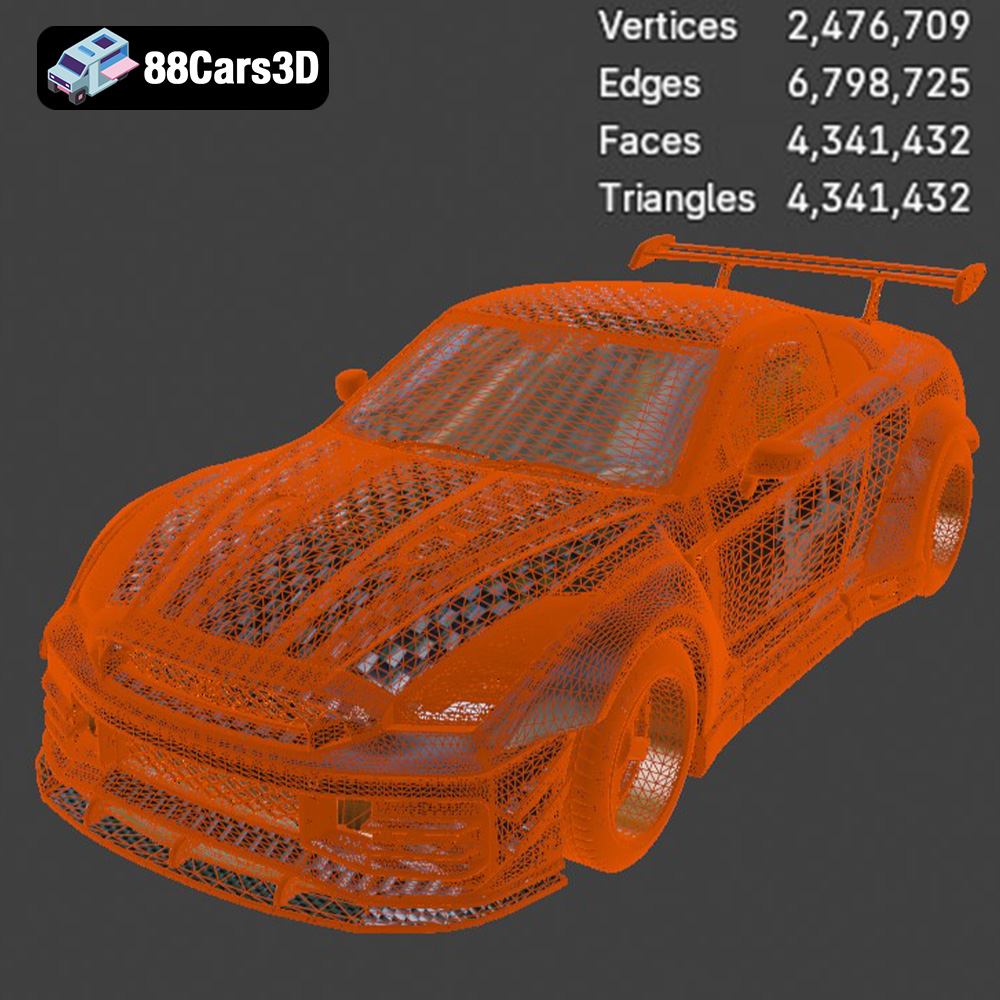
A “game-engine ready” 3D car model, such as the .fbx or .unreal version of the Nissan GTR R35 Nismo, implies a range of optimizations. The primary concern is polygon count. While high-poly models are great for cinematic renders, real-time engines require an optimized polygon structure to maintain high frame rates. This involves intelligent mesh reduction without losing critical visual detail. Furthermore, efficient UV mapping is crucial not just for texture application but also for lightmap generation, which significantly impacts how light behaves on surfaces in a game engine. Collision meshes, often simplified versions of the visual mesh, are vital for accurate physics simulations and interactions within the game world. Finally, Level of Detail (LOD) models are indispensable. These are progressively simpler versions of the car’s mesh that swap in at increasing distances from the camera, dramatically reducing the processing load when the car is far away, without noticeable visual degradation.
Both Unreal Engine and Unity are powerhouse game development platforms, and the Nissan GTR R35 Nismo 3D Model is designed for seamless integration. When importing the .fbx or .unreal files into these engines, developers typically follow specific workflows. This includes setting up PBR materials within the engine’s node-based material editor, configuring textures (albedo, normal, roughness, metallic, ambient occlusion), and ensuring correct UV channels for both textures and lightmaps. For a vehicle, setting up physics assets is critical for realistic driving mechanics, including wheel colliders, suspension parameters, and center of mass. The fully modeled interior allows for first-person camera perspectives, enhancing player immersion. Developers can leverage the pre-configured nature of the “unreal” format to save significant setup time, focusing instead on gameplay and custom scripting to bring the Nissan GTR R35 Nismo to life in their virtual worlds.
The utility of a high-quality 3D car model extends far beyond traditional rendering and game development. With the rise of immersive technologies and additive manufacturing, assets like the Nissan GTR R35 Nismo 3D Model are finding new and exciting applications in AR/VR experiences and 3D printing.
Augmented Reality (AR) and Virtual Reality (VR) offer unparalleled opportunities for interactive visualization. Imagine placing the Nissan GTR R35 Nismo in your driveway via an AR app, or exploring its interior in a full-scale VR showroom. The .glb format, included with the model, is specifically optimized for these applications. Its compact size and self-contained nature ensure fast loading times and efficient rendering on AR/VR devices, which often have more constrained computational resources than a high-end desktop. These experiences are invaluable for automotive marketing, virtual test drives, educational tools, and interactive showroom displays, allowing users to inspect the vehicle from every angle and even customize features in real-time. The model’s accurate scaling ensures it appears true-to-life in these immersive environments, enhancing the sense of presence and realism.
The ability to transform a digital 3D model into a physical object via 3D printing opens up a world of possibilities for designers, engineers, and enthusiasts. The inclusion of .stl and .ply formats with the Nissan GTR R35 Nismo 3D Model caters directly to this. The .stl format, being the standard for additive manufacturing, allows users to accurately reproduce the car’s intricate exterior styling as a scale model, a prototype part, or even a custom collectible. Preparing a model for 3D printing involves ensuring it is a “manifold” mesh (watertight, without internal intersections or open edges) and checking for appropriate wall thickness, especially for delicate components. The detailed polygon mesh of the .ply format can also be useful for generating highly accurate prototypes, particularly when precision and surface accuracy are paramount for engineering analysis or reverse engineering tasks. This bridge from the digital to the physical realm showcases the incredible versatility of a professionally crafted 3D asset.
For studios and individual professionals, time is money, and quality is non-negotiable. The Nissan GTR R35 Nismo 3D Model is more than just a digital file; it’s a strategic asset designed to streamline workflows and deliver exceptional results across a spectrum of professional projects.
Modeling a complex vehicle like the Nissan GTR R35 Nismo from scratch can take hundreds of hours, demanding specialized skills in hard-surface modeling, UV unwrapping, and material creation. By leveraging a pre-optimized, high-quality 3D car model from a reputable source like 88cars3d.com, studios can drastically reduce their production timelines. This means artists can bypass the arduous initial modeling phase and jump straight into rendering, animation, or integration. This approach not only saves significant resources but also ensures a consistent level of quality, as the model has already been vetted for clean geometry, accurate proportions, and realistic materials. For commercial projects where deadlines are tight and fidelity is paramount, such ready-to-use solutions are invaluable.
While the Nissan GTR R35 Nismo 3D Model is ready to use out-of-the-box, its included .blend and .max files offer unparalleled opportunities for deep customization. Imagine a client needing a specific livery, a custom widebody kit, or even a modified interior for a game or animation. Artists can easily modify the mesh, apply new textures, or rig the model for complex animations like opening doors, rotating wheels with realistic suspension compression, or simulating damage. This flexibility makes the model suitable for a wide array of projects, from highly detailed product configurators that allow customers to choose paint colors and wheel designs, to dynamic action sequences in cinematics, or even technical visualizations showcasing internal components. The robust and clean construction of the base model ensures that any modifications can be integrated seamlessly without introducing undesirable artifacts or compromising performance.
The digital automotive landscape is continually pushing the boundaries of realism and interactivity. At the heart of this evolution lies the demand for exquisitely detailed and technically sound 3D car models. The Nissan GTR R35 Nismo 3D Model offered on 88cars3d.com stands as a testament to this pursuit of excellence.
From its meticulously crafted exterior and fully modeled interior to its optimized polygon structure and realistic materials, this asset is designed to meet the rigorous demands of professional workflows. Whether you’re aiming for cinematic-quality automotive rendering, developing cutting-edge game assets for Unreal Engine or Unity, creating immersive AR/VR experiences, or fabricating physical prototypes through 3D printing, the versatility provided by its comprehensive suite of file formats ensures seamless integration into your project pipeline. It’s more than just a model; it’s a foundation for innovation, offering both the visual fidelity needed for stunning results and the technical robustness required for efficient production.
For creators who refuse to compromise on quality and efficiency, incorporating such a high-caliber 3D car model is not just a choice, but a strategic advantage. Explore the possibilities and elevate your digital automotive projects with the Nissan GTR R35 Nismo 3D Model.
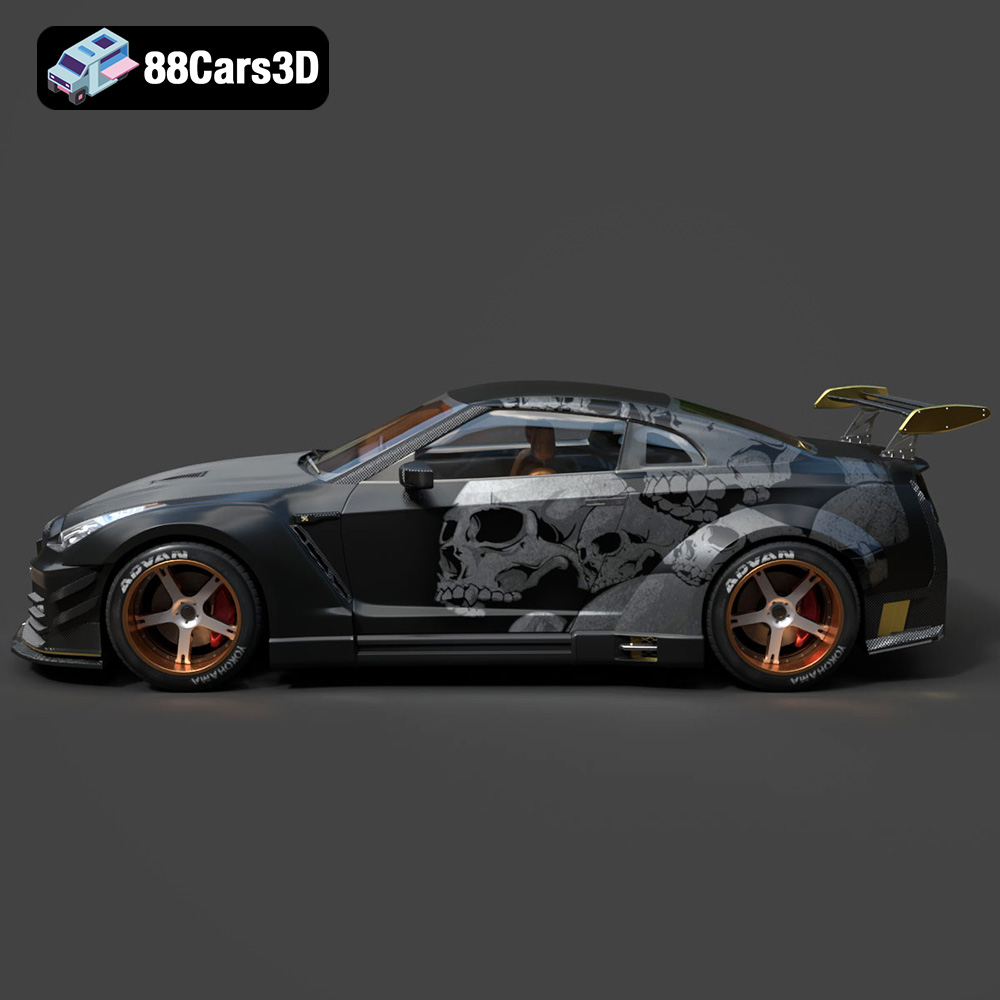
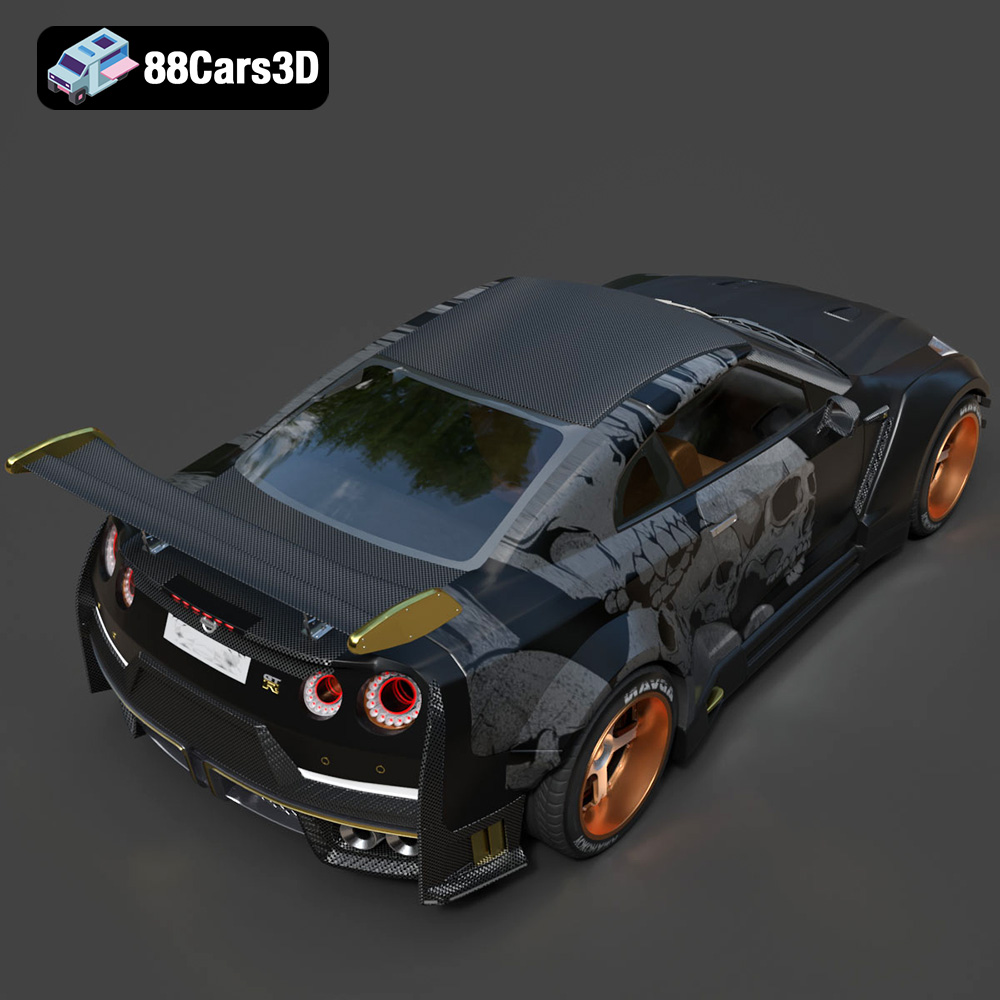
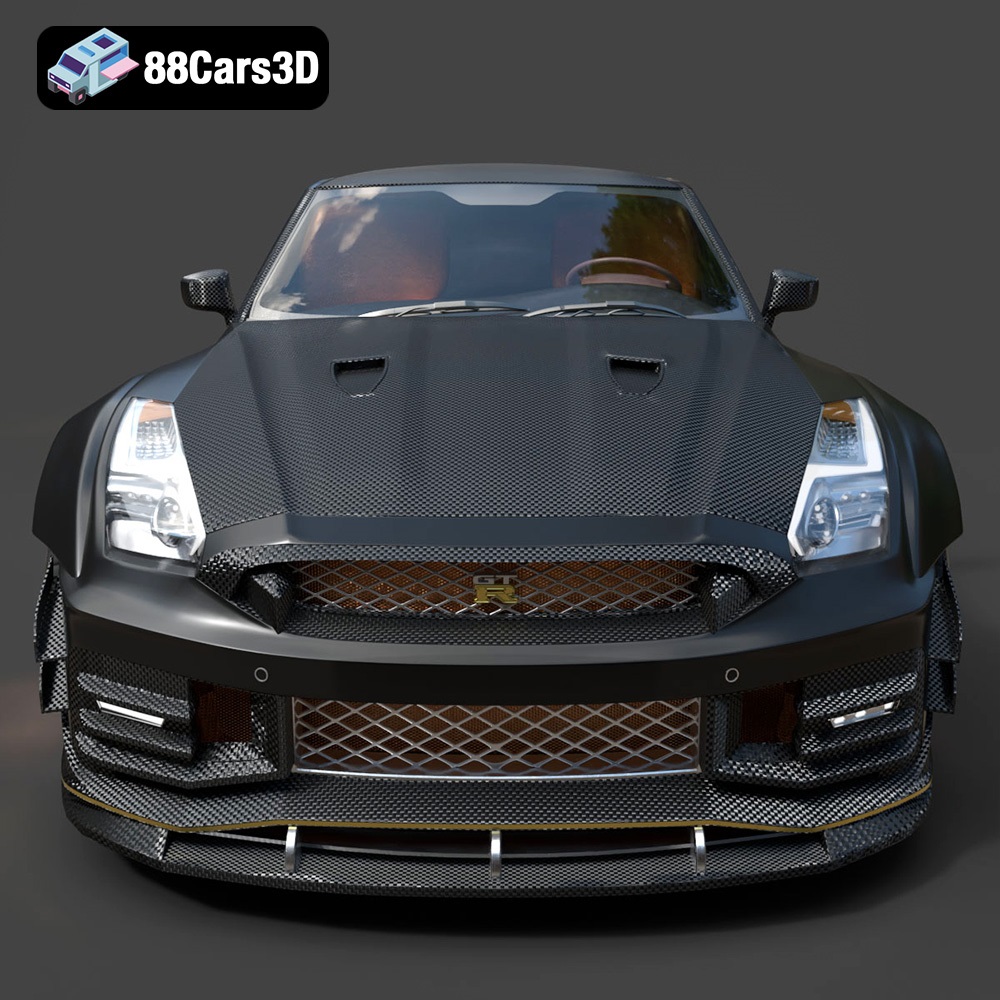
Experience the precision and performance of a legendary track-focused vehicle with the Nissan GTR R35 Nismo 3D Model. Crafted with meticulous attention to detail, this digital asset perfectly captures the aggressive aerodynamics, widened stance, and iconic design language of the real-world counterpart. The authentic proportions and realistic exterior styling make it an essential addition to any professional digital automotive library. This model boasts exceptionally clean geometry and is equipped with realistic materials to ensure a seamless integration into your projects. Built to professional standards, the optimized polygon structure guarantees efficient performance across various digital platforms without compromising visual fidelity. Every element, from the carbon fiber aero components to the intricate wheel designs and fully modeled interior, has been constructed with exacting precision. Ideal for a multitude of applications, this vehicle asset is tailored for seamless use in game development, cinematic automotive rendering, immersive AR/VR experiences, and technical visualization. Its versatility and accurate scaling ensure it functions flawlessly in physics simulations and interactive showroom displays. The package provides a comprehensive suite of file formats to guarantee full compatibility with your preferred creative software: .blend – Editable Blender file with materials and lighting setup; .fbx – Game-engine ready format for Unreal Engine and Unity; .obj – Standard 3D model format compatible with all major software; .glb – Optimized for AR/VR and web-based visualization; .stl – Suitable for 3D printing and prototyping; .ply – Detailed polygon mesh for analysis and visualization; .unreal – Pre-configured for Unreal Engine use; .max – Editable 3ds Max file for rendering and animation.
$19.99
.arvr
.blend
.car3dmodel
.coupe
.fbx
.gameasset
.glb
.gtr
.max
.nismo
.nissan
.obj
.ply
.r35
.rendering
.simulation
.sportsCar
.stl
.supercar
.unreal