Get 20% OFF All Premium 3D & STL Models!

In the rapidly evolving landscape of digital visualization, automotive design, and interactive experiences, the quality of 3D assets forms the bedrock of any successful project. From cinematic renders that captivate audiences to immersive game environments and precise engineering simulations, the demand for highly detailed and technically robust 3D car models has never been greater. Professional artists, developers, and designers understand that shortcuts in asset quality inevitably lead to compromised final results, affecting everything from visual fidelity to performance.
At the heart of this pursuit of digital excellence lies the commitment to intricate craftsmanship and technical precision. A truly exceptional 3D car model goes beyond mere aesthetic appeal; it embodies clean topology, accurate scale, meticulously crafted materials, and thoughtful optimization for diverse applications. This dedication to quality ensures seamless integration into complex workflows and delivers stunning visual outcomes.
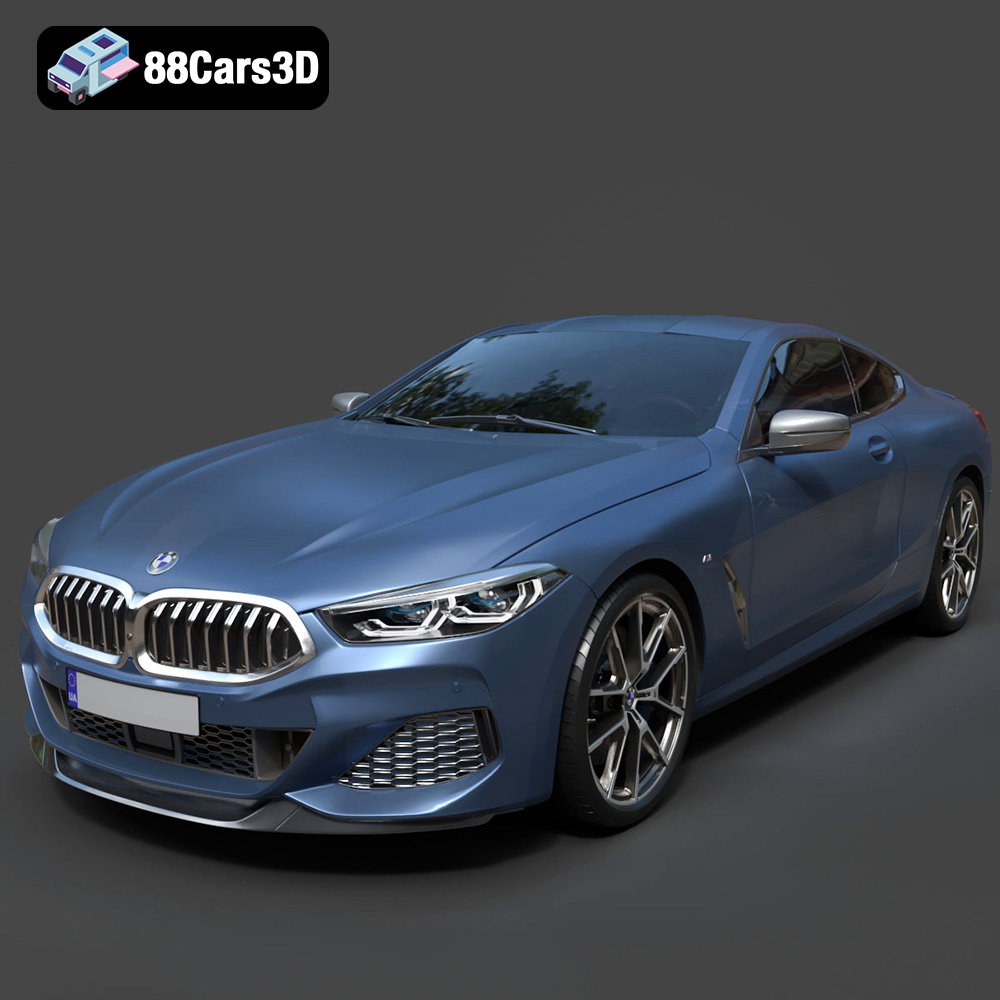
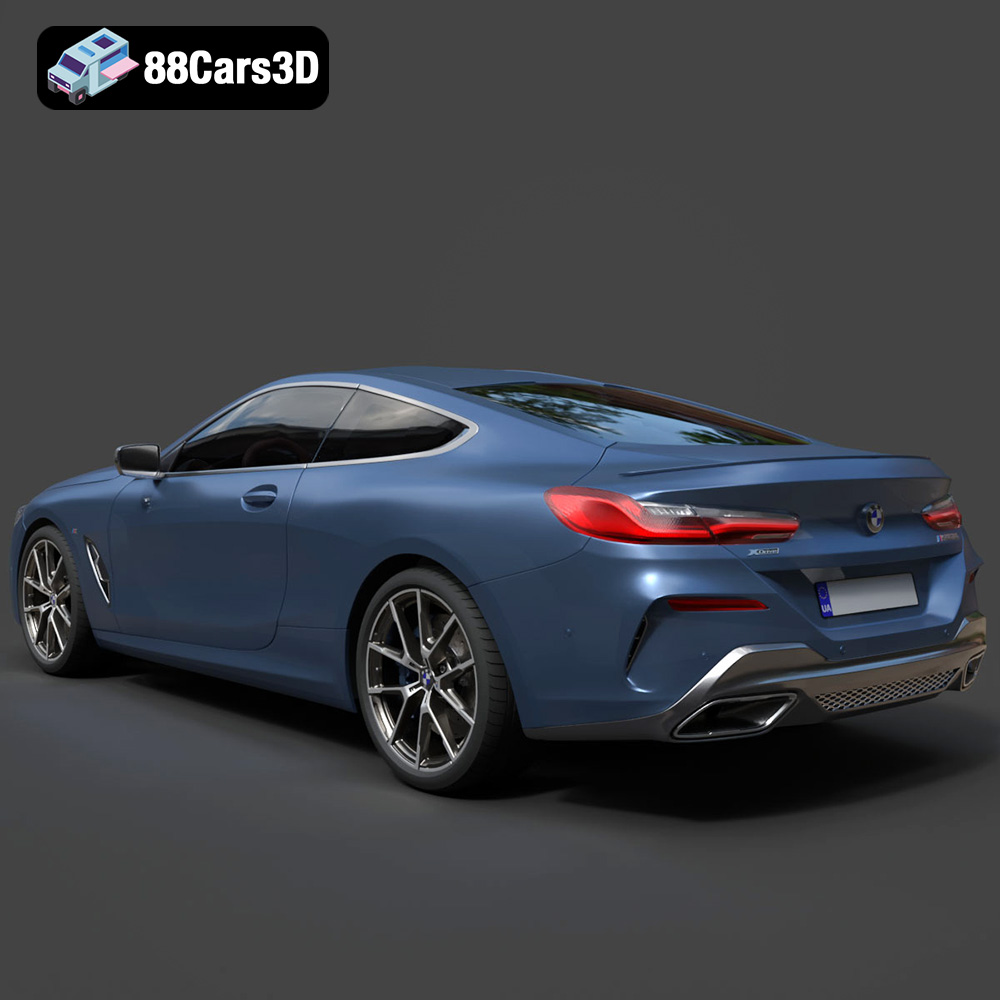
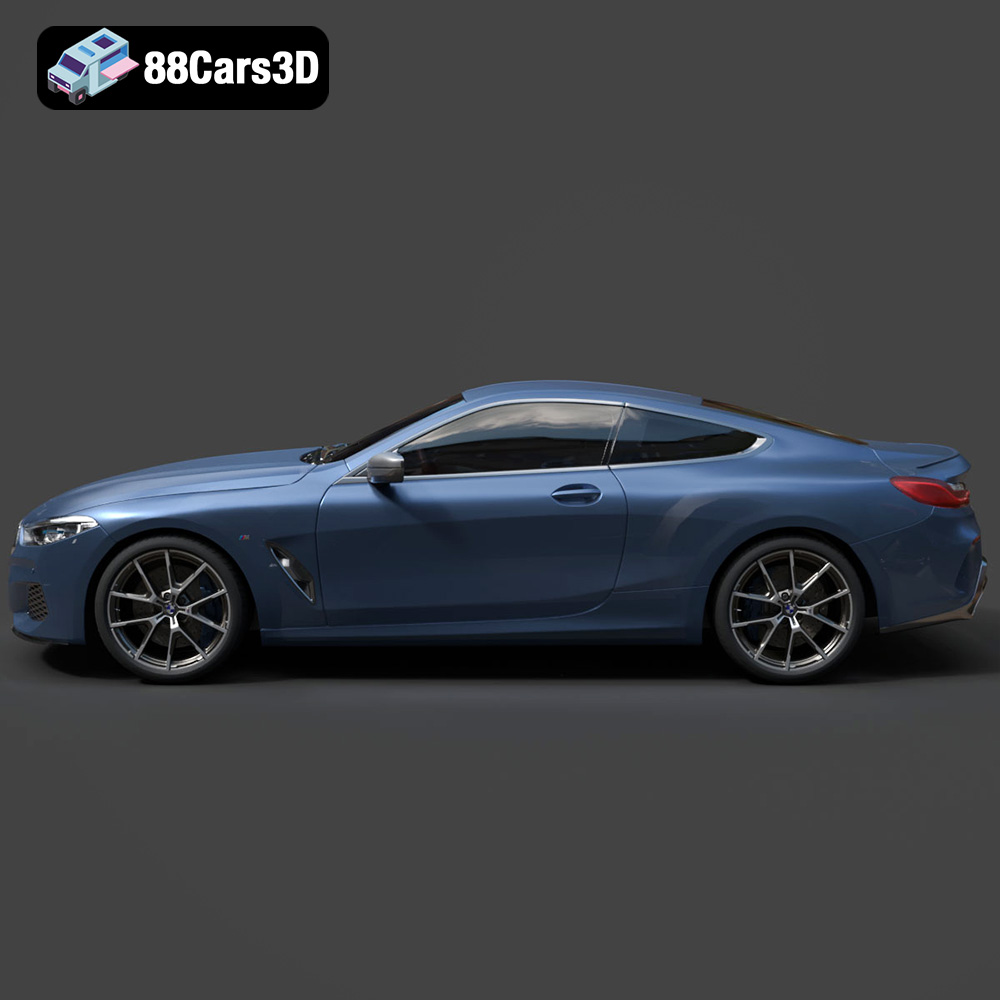
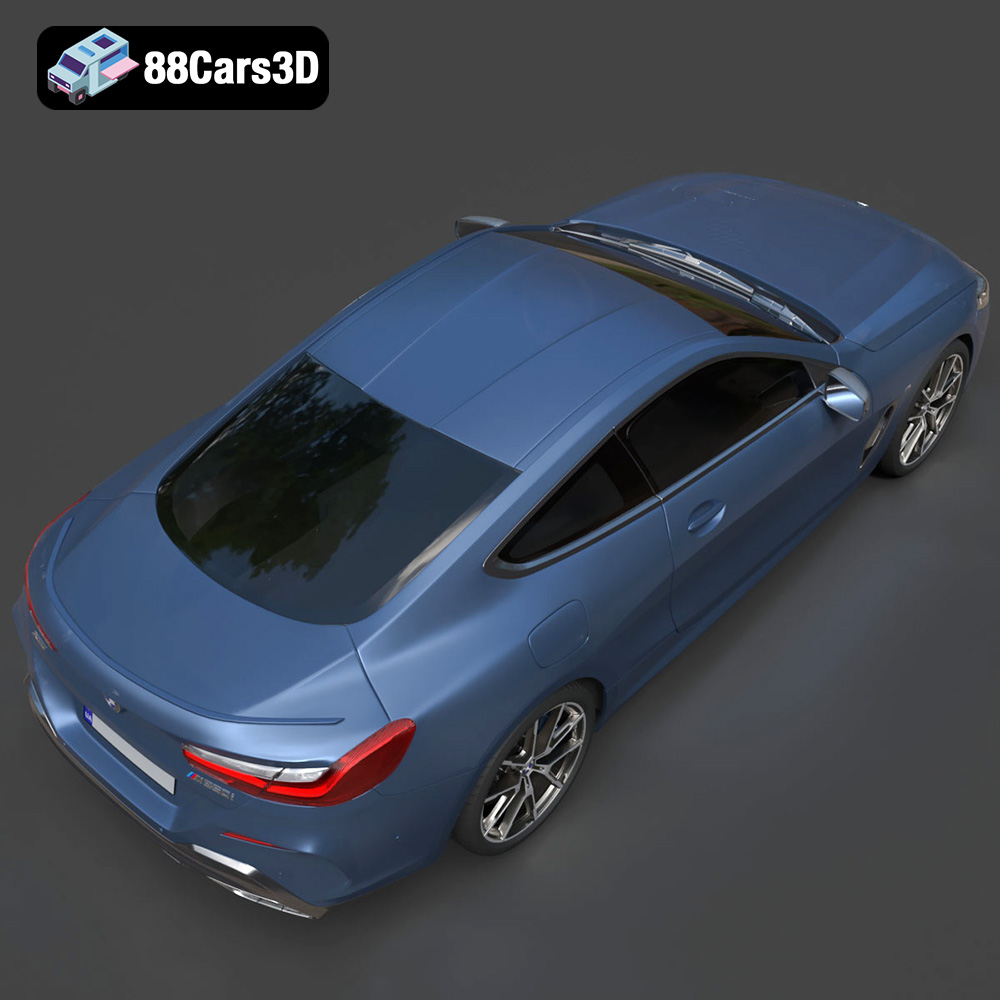
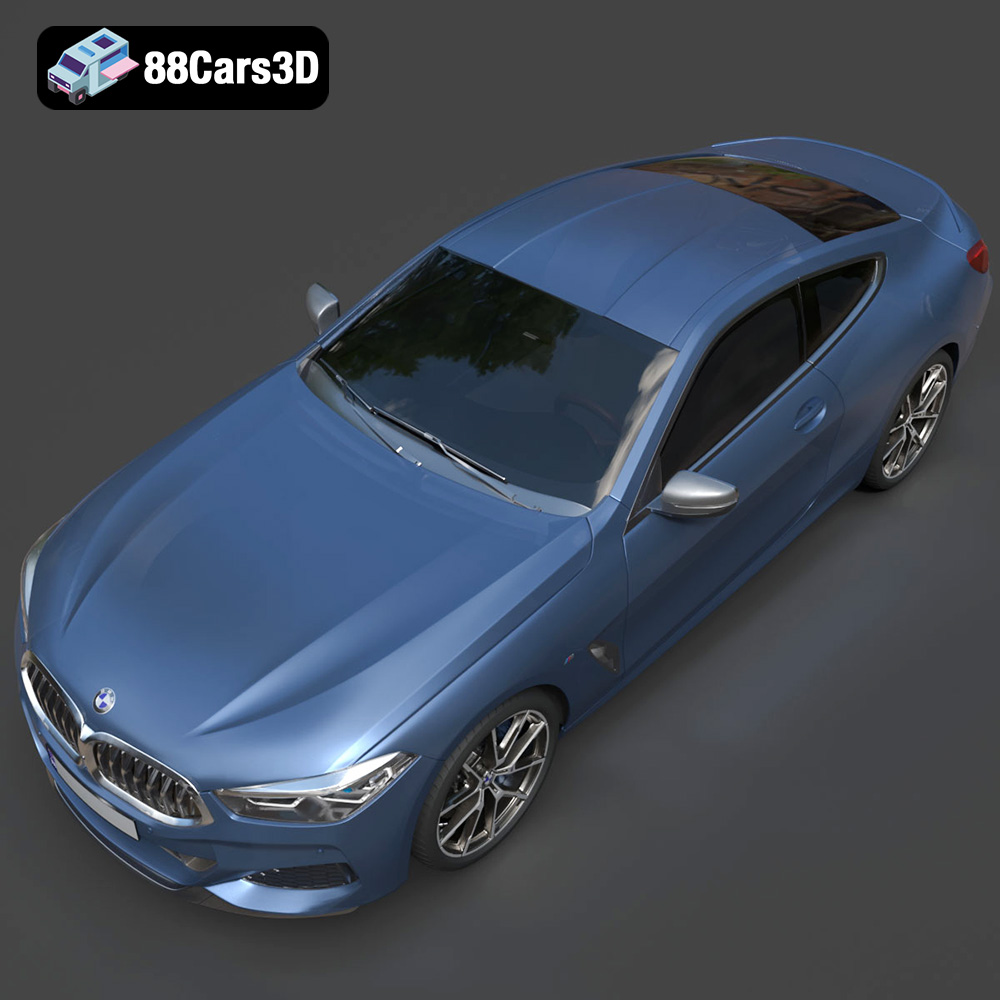
It is in this spirit that the BMW 8-Series M850i G15 Coupe 2019 3D Model stands out as a prime example of professional-grade automotive artistry. Available on 88cars3d.com, this model encapsulates the sleek proportions and aggressive styling of the iconic luxury sports coupe with unparalleled realism. It’s designed not just to look good, but to perform flawlessly across a spectrum of professional uses, from high-end automotive rendering to cutting-edge game development and AR/VR experiences. Understanding the technical depth behind such an asset is crucial for anyone looking to push the boundaries of their digital projects.
The versatility of a professional 3D car model is significantly amplified by its availability in multiple, industry-standard file formats. Each format serves a specific purpose, offering unique advantages for different stages of a production pipeline, software environments, and end-use applications. For an asset like the BMW 8-Series M850i G15 Coupe 2019 3D Model, having a comprehensive suite of formats ensures maximum compatibility and utility, streamlining workflows for artists and developers.
The .blend format is Blender’s native file type, offering a complete and editable scene with materials, textures, lighting setups, and even animation data. For Blender users, this is the most flexible format, allowing full access to the model’s construction, modifiers, and shading nodes. Artists can easily inspect the topology, modify UV maps, adjust material properties, or re-rig the model for custom animations. It’s ideal for deep customization, learning from expert setups, or integrating the model into existing Blender projects without conversion overheads. The included materials and lighting setup mean you can literally open and render almost instantly, making it perfect for rapid prototyping or initial visualization passes.
.fbx (Filmbox) is a proprietary file format developed by Autodesk, widely recognized as the most robust format for transferring 3D data between different software applications and game engines. It supports geometry, materials (with some limitations in transfer fidelity), animations, cameras, and lights. For real-time pipelines like Unreal Engine and Unity, .fbx is often the go-to choice due to its optimization for game-engine readiness. When acquiring the BMW 8-Series M850i G15 Coupe 2019 3D Model in .fbx, developers can expect a largely pre-configured asset, ready for import, allowing them to focus on game logic and environment design rather than laborious model preparation.
.obj (Wavefront OBJ) is one of the oldest and most universally supported 3D file formats. It primarily stores geometric data (vertices, faces, normals, UVs) and can reference external material (.mtl) files for basic color and texture information. While it lacks support for advanced features like animation or complex PBR materials, its widespread compatibility makes it an excellent choice for cross-software transfers when basic geometry is the priority. If you’re working in a less common 3D application or need a clean mesh to start a new project, the .obj version of the BMW M850i G15 Coupe 2019 3D Model provides a reliable foundation.
.glb (GL Transmission Format Binary) is a modern, open-standard, and highly efficient format for 3D scenes and models. It’s designed for quick loading and rendering in web browsers, AR (Augmented Reality), and VR (Virtual Reality) applications. A single .glb file can contain geometry, materials, textures, animations, and skeletal data, all bundled into a compact binary package. This optimization makes it perfect for interactive 3D viewers on websites or for deploying models like the BMW 8-Series M850i G15 Coupe 2019 into AR apps on mobile devices, offering a seamless and performant experience.
.stl (STereoLithography) is the most common file format for 3D printing and rapid prototyping. It describes only the surface geometry of a 3D object using a collection of triangular facets. It doesn’t store color, texture, or material information. For designers and engineers looking to physicalize the BMW M850i G15 Coupe 2019, the .stl format provides a watertight mesh ready for slicing and printing. While the original model would need to be adapted for optimal printability (e.g., solidifying thin walls, scaling), its availability in .stl ensures this pathway is readily accessible.
.ply (Polygon File Format, or Stanford Triangle Format) is a versatile format for storing 3D data, particularly from 3D scanners. It can store various properties beyond just geometry, including color, transparency, surface normals, and even data quality measures. While less common for general 3D asset exchange, it’s highly valued in scientific, engineering, and CAD applications where precise mesh data for analysis or reverse engineering is required. The .ply version of the BMW 8-Series M850i G15 Coupe 2019 3D Model would serve professionals needing a highly accurate mesh representation for detailed inspection or integration into specialized simulation software.
The .unreal designation typically implies an asset that has been specifically prepared and configured for Unreal Engine. This often means it’s not just the raw .fbx file, but a package that might include pre-configured materials using Unreal’s physically based rendering (PBR) system, skeletal meshes, LODs (Levels of Detail), collision meshes, and even Blueprint setups. For Unreal Engine developers, this format is a massive time-saver, eliminating much of the import and setup process, allowing for immediate integration of the BMW M850i G15 Coupe 2019 into game levels or architectural visualizations.
Finally, the .max format is the native file type for Autodesk 3ds Max, a cornerstone software in architectural visualization, product design, and cinematic rendering. Like .blend for Blender, a .max file contains the complete scene, including geometry, modifiers, intricate material networks (V-Ray, Corona, Arnold), lighting setups, and animation data. For professionals relying on 3ds Max for high-fidelity automotive rendering or complex animation projects, the .max version of the BMW 8-Series M850i G15 Coupe 2019 offers the highest degree of flexibility and control, allowing artists to leverage all the powerful features of 3ds Max without any data loss from conversion.
This extensive range of file formats available for the BMW 8-Series M850i G15 Coupe 2019 3D Model highlights its adaptability and professional utility. Whether your pipeline involves rendering in 3ds Max, developing games in Unreal Engine, or creating interactive AR experiences, 88cars3d.com ensures you have the right version of this stunning automotive asset.
Achieving “unparalleled realism” in a 3D model is not merely a marketing claim; it’s a testament to rigorous technical execution. The BMW 8-Series M850i G15 Coupe 2019 3D Model exemplifies this through its meticulous construction, designed from the ground up to meet and exceed professional industry standards. This level of detail and optimization is what separates a truly usable asset from a simple visual placeholder.
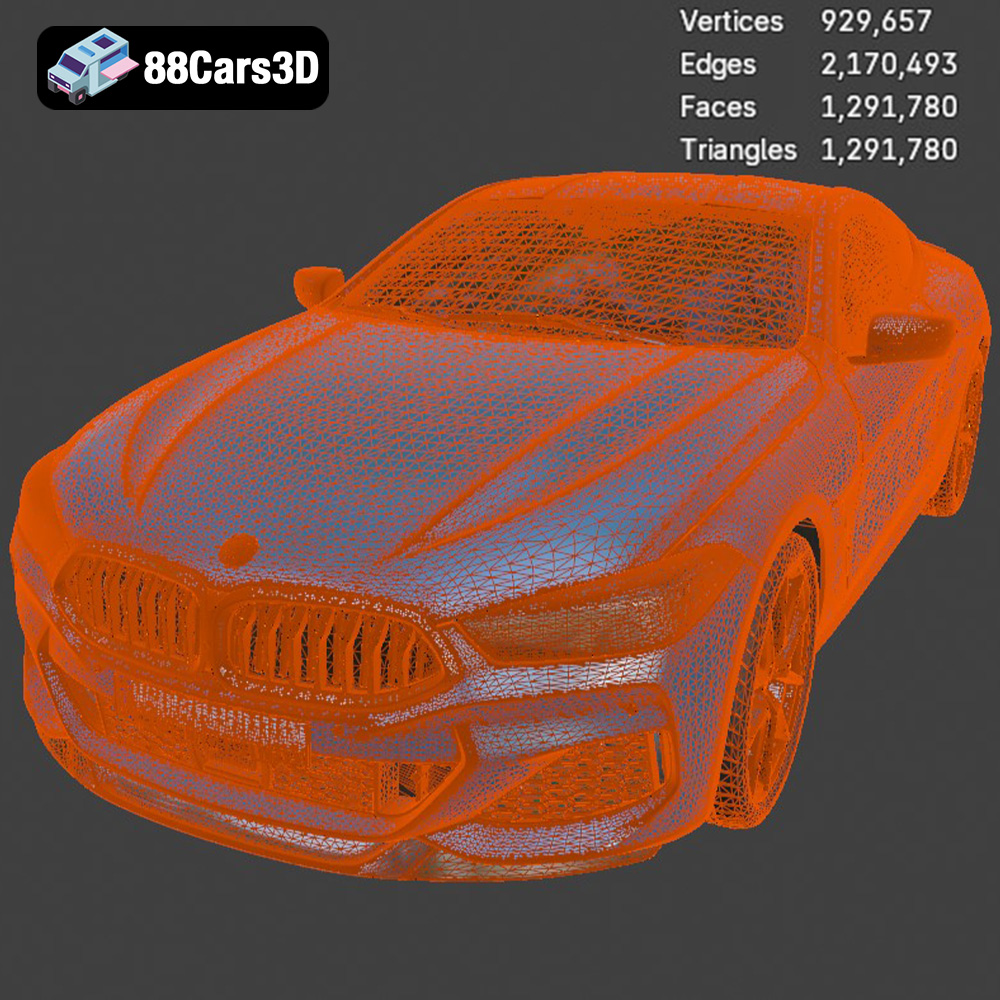
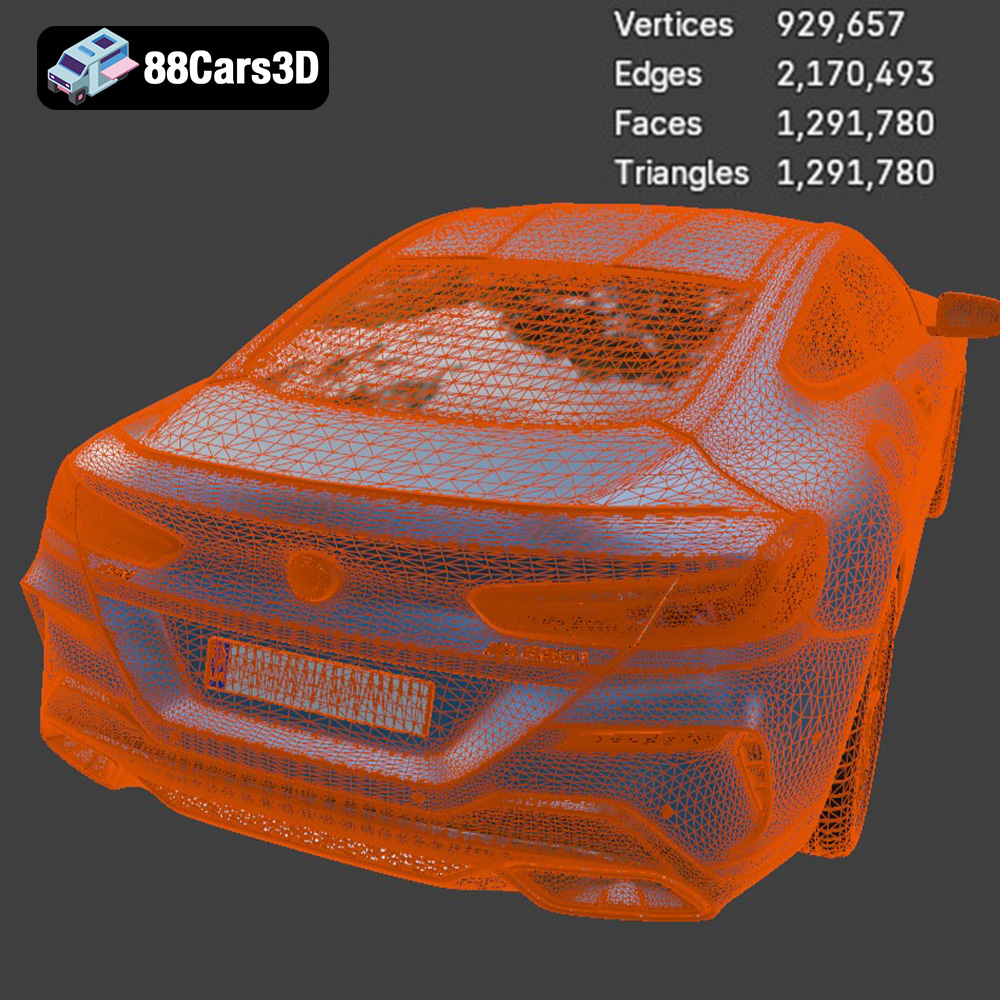
The foundation of any high-quality 3D model is its geometry and topology. The BMW M850i G15 Coupe 2019 3D Model boasts clean, quad-based geometry, ensuring smooth subdivision surfaces and distortion-free deformation. Typical poly counts for such detailed automotive models can range from 200,000 to 500,000 polygons for the base mesh, depending on the level of interior and undercarriage detail. This careful polygon distribution means that whether you’re rendering close-up shots of the car’s grille or animating a sweeping camera path along its contours, the surfaces remain perfectly smooth without artifacts. Crucially, clean edge loops around panel gaps, headlights, and body lines are established, facilitating precise selections, modifications, and UV mapping. This thoughtful construction is vital for professional automotive rendering and game development, where performance and visual integrity are paramount.
Visual fidelity extends beyond geometry to the material properties and textures that bring the model to life. The BMW 8-Series M850i G15 Coupe 2019 3D Model utilizes realistic materials, often employing Physically Based Rendering (PBR) workflows. This means that materials like automotive paint, polished chrome, glass, rubber, and leather react to light in a physically accurate manner, resulting in stunning realism under any lighting condition. High-resolution texture maps (e.g., 4K or 8K) are typically used for intricate details such as tire treads, brake calipers, interior stitching, and dashboard elements. Proper UV mapping ensures that these textures are applied without stretching or distortion, and that artists can easily modify or replace them if specific customization is required for a project.
A true professional 3D car model doesn’t just capture the macro form; it meticulously recreates the micro details that contribute to a convincing illusion. For the BMW M850i G15 Coupe 2019 3D Model, this includes accurately modeled headlights and taillights with internal reflectors, realistic tire sidewall lettering, detailed brake disc calipers, and intricate grille patterns. Inside, the dashboard, steering wheel, seats, door panels, and center console are modeled with attention to ergonomic and aesthetic accuracy. Even subtle elements like stitching on leather seats, carbon fiber weaves, and instrument cluster displays are often replicated, making the model suitable for both exterior beauty shots and interior walkthroughs or virtual showroom experiences. This comprehensive detailing ensures the model holds up under the closest scrutiny in any demanding environment.
The true value of a high-quality 3D asset lies in its seamless integration into various professional pipelines. The BMW 8-Series M850i G15 Coupe 2019 3D Model, with its robust construction and multiple file formats, is engineered for efficiency and performance across diverse industry applications, allowing creative teams to accelerate their projects without compromising on quality.
For automotive studios and marketing agencies, photorealistic visualization is crucial. Using software like Autodesk 3ds Max coupled with rendering engines such as V-Ray or Corona Renderer, artists can create stunning imagery and animations. The .max file provided with the BMW M850i G15 Coupe 2019 3D Model is ideal here. Artists can import the model into a virtual studio environment, set up sophisticated lighting rigs – from HDRi domes to complex studio lights – and apply advanced material shaders to achieve unparalleled realism. This workflow is essential for:
The model’s clean topology and PBR materials ensure that every reflection, every highlight, and every shadow is rendered with stunning accuracy, faithfully representing the luxury and performance of the actual vehicle.
The gaming industry and real-time visualization platforms demand highly optimized assets that maintain visual quality while ensuring smooth frame rates. The BMW 8-Series M850i G15 Coupe 2019 3D Model is perfectly suited for this, especially with its .fbx and .unreal formats. Game developers can import the model into engines like Unreal Engine or Unity, where it can be integrated into racing simulators, open-world environments, or interactive experiences. Key aspects of this workflow include:
Such a detailed and optimized asset from 88cars3d.com allows game studios to bring authentic automotive experiences to their players without the extensive modeling work from scratch.
Augmented Reality (AR) and Virtual Reality (VR) are transforming how we interact with digital content, especially in sectors like automotive sales and training. The .glb format of the BMW M850i G15 Coupe 2019 3D Model is specifically optimized for these immersive applications. Imagine a customer using an AR app on their phone to place a virtual M850i in their driveway, rotating it, changing colors, and even peeking inside, all in real-time and with photorealistic quality. In VR, the model could populate a virtual showroom, allowing potential buyers to walk around, open doors, and experience the car’s interior in a fully immersive environment. The compact and efficient nature of .glb ensures smooth performance on a variety of devices, making it an indispensable format for creating cutting-edge interactive automotive experiences.
A truly professional 3D asset provides more than just a static visual; it offers a foundation for endless creative exploration and technical adaptation. The BMW 8-Series M850i G15 Coupe 2019 3D Model, with its editable source files and diverse format options, empowers artists and engineers to push the boundaries of their projects well beyond standard rendering and game integration.
While primarily designed for digital rendering, the availability of the BMW M850i G15 Coupe 2019 3D Model in formats like .stl and .ply opens doors to physical prototyping. Engineers and hobbyists can adapt the digital mesh for 3D printing, creating tangible scale models of the vehicle. This process often involves:
This capability allows for everything from creating marketing prototypes to producing intricate collector’s items, bridging the gap between the virtual and physical realms. The precision of the original digital model ensures that even after adaptation, the iconic lines and proportions of the BMW M850i are faithfully preserved in its physical form.
For cinematic productions, advertising spots, or short films, the BMW 8-Series M850i G15 Coupe 2019 3D Model serves as an excellent base for dynamic animation. With its clean topology, the model can be easily rigged for realistic wheel rotations, suspension compression, and door opening animations. In software like Blender or 3ds Max (using the .blend or .max files), artists can:
This level of control allows for the creation of compelling narratives and visually stunning sequences that highlight the performance and elegance of the BMW M850i.
One of the most significant advantages of purchasing a professional 3D asset from a trusted source like 88cars3d.com is the potential for customization. The editable .blend and .max files of the BMW 8-Series M850i G15 Coupe 2019 3D Model provide artists with complete control to modify the asset to suit very specific project requirements. This could involve:
This flexibility not only saves countless hours of modeling from scratch but also allows for iterative design and rapid prototyping, ensuring the final asset perfectly aligns with the creative vision and technical demands of any project.
In the competitive digital landscape, the difference between a good project and an exceptional one often hinges on the quality of its foundational assets. For automotive visualization, game development, AR/VR experiences, and beyond, meticulously crafted 3D car models are not just a luxury; they are an absolute necessity. They provide the visual fidelity, technical robustness, and workflow efficiency that professional artists and developers require to bring their most ambitious visions to life.
The BMW 8-Series M850i G15 Coupe 2019 3D Model exemplifies this commitment to excellence. Its clean geometry, optimized topology, photorealistic materials, and availability across a comprehensive suite of industry-standard file formats (.blend, .fbx, .obj, .glb, .stl, .ply, .unreal, .max) ensure its versatility and utility across virtually any professional pipeline. Whether you are aiming for breathtaking cinematic renders in 3ds Max, an immersive real-time experience in Unreal Engine, or a tangible prototype via 3D printing, this model provides the reliable, high-quality foundation needed for success.
Investing in such a high-caliber asset streamlines production, reduces development time, and ultimately elevates the quality of your final output. For those seeking to integrate unparalleled realism and technical precision into their automotive projects, look no further than the meticulously crafted 3D car models available at 88cars3d.com. They are an indispensable resource for any professional striving for digital perfection.
Experience unparalleled realism with the BMW 8-Series M850i G15 Coupe 2019 3D Model. Designed to meet professional standards, this model captures the sleek proportions and aggressive styling of the iconic luxury sports coupe, ensuring exceptional visual fidelity for any digital project. Built with clean geometry and optimized polygon distribution, the model guarantees smooth subdivisions and excellent performance. It features realistic materials and intricate detailing, making it ideal for close-up shots and demanding environments. This versatile 3D asset is perfectly suited for a wide range of applications, including game development, cinematic rendering, AR/VR experiences, and automotive visualization.
$19.99
.8series
.arvr
.blend
.bmw
.car3dmodel
.coupe
.fbx
.g15
.gameasset
.glb
.luxurycar
.m850i
.max
.obj
.ply
.rendering
.simulation
.sportsCar
.stl
.unreal