Get 20% OFF All Premium 3D & STL Models!

In today’s visually-driven digital landscape, the demand for hyper-realistic and functionally robust 3D assets has never been higher. From blockbuster game titles and cinematic sequences to sophisticated architectural visualizations and immersive AR/VR experiences, the quality of a 3D model directly impacts the final output’s integrity and believability. Crafting these assets from scratch is a time-consuming and skill-intensive endeavor, often requiring specialized expertise in modeling, texturing, rigging, and optimization.
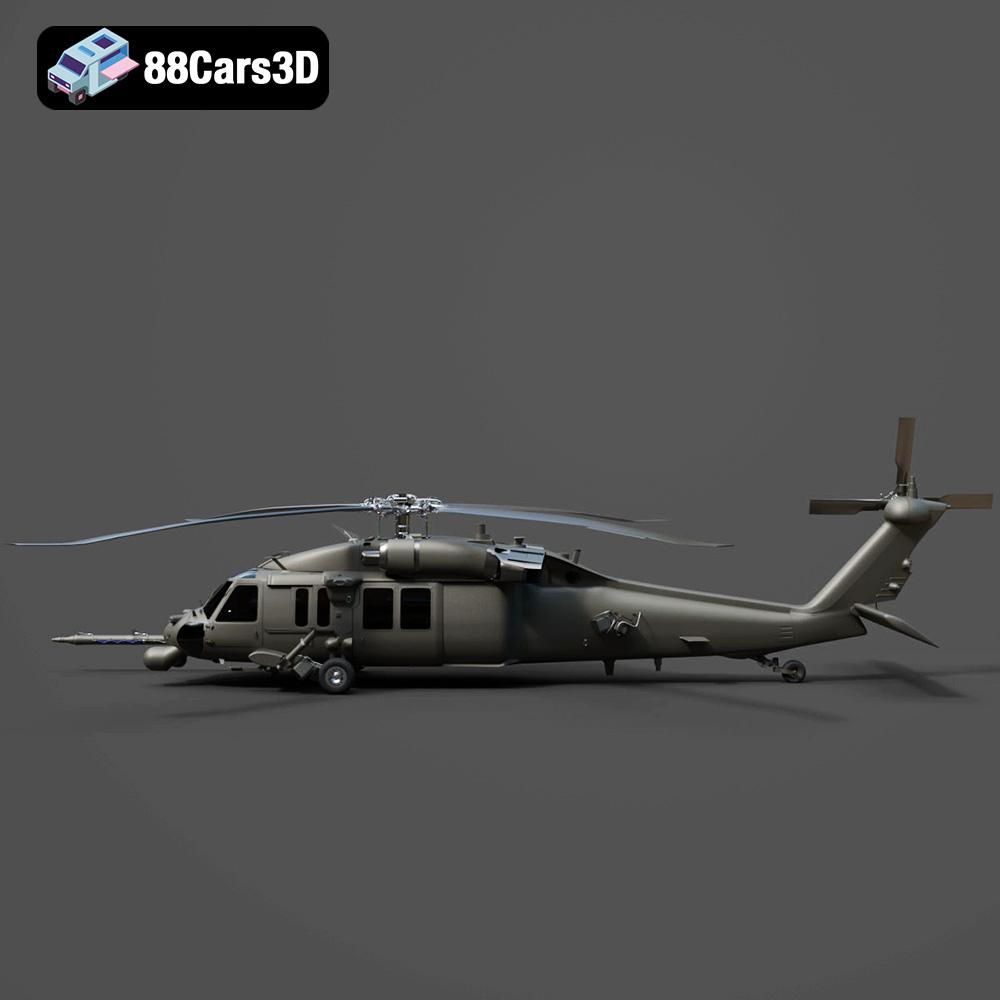
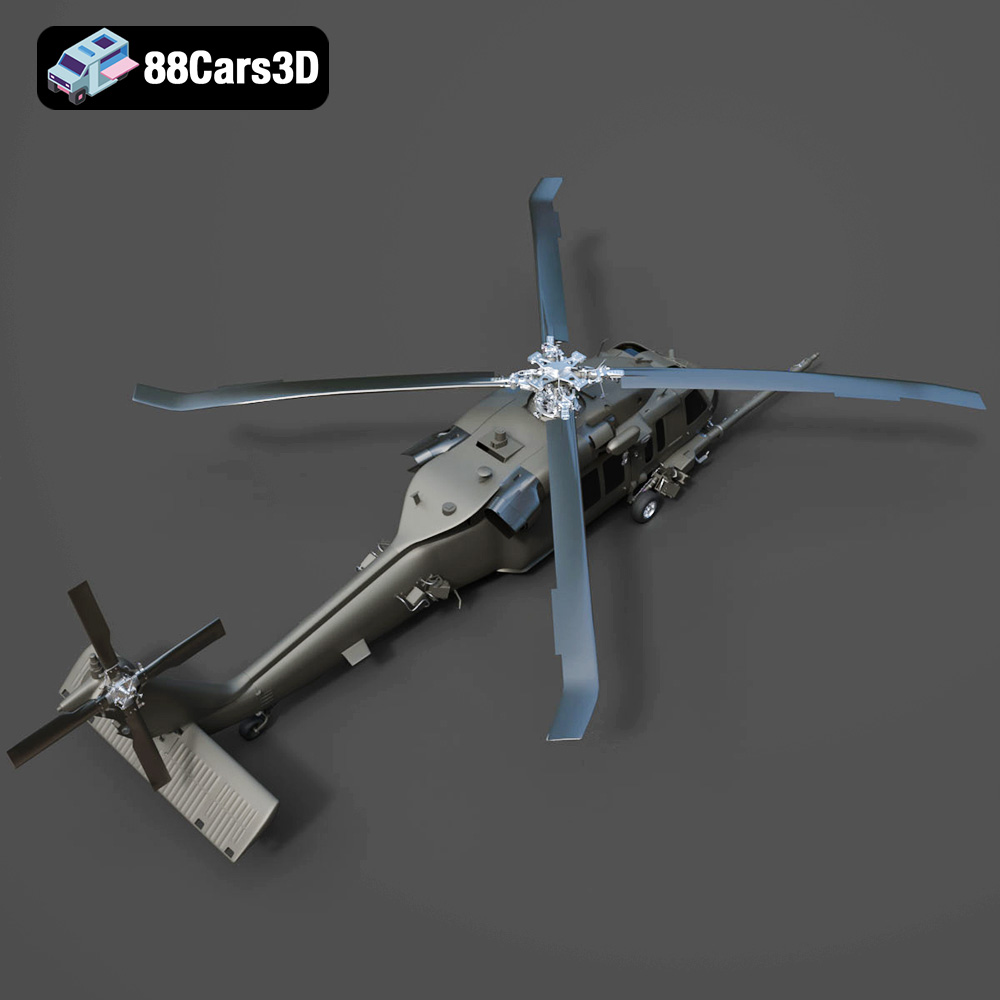
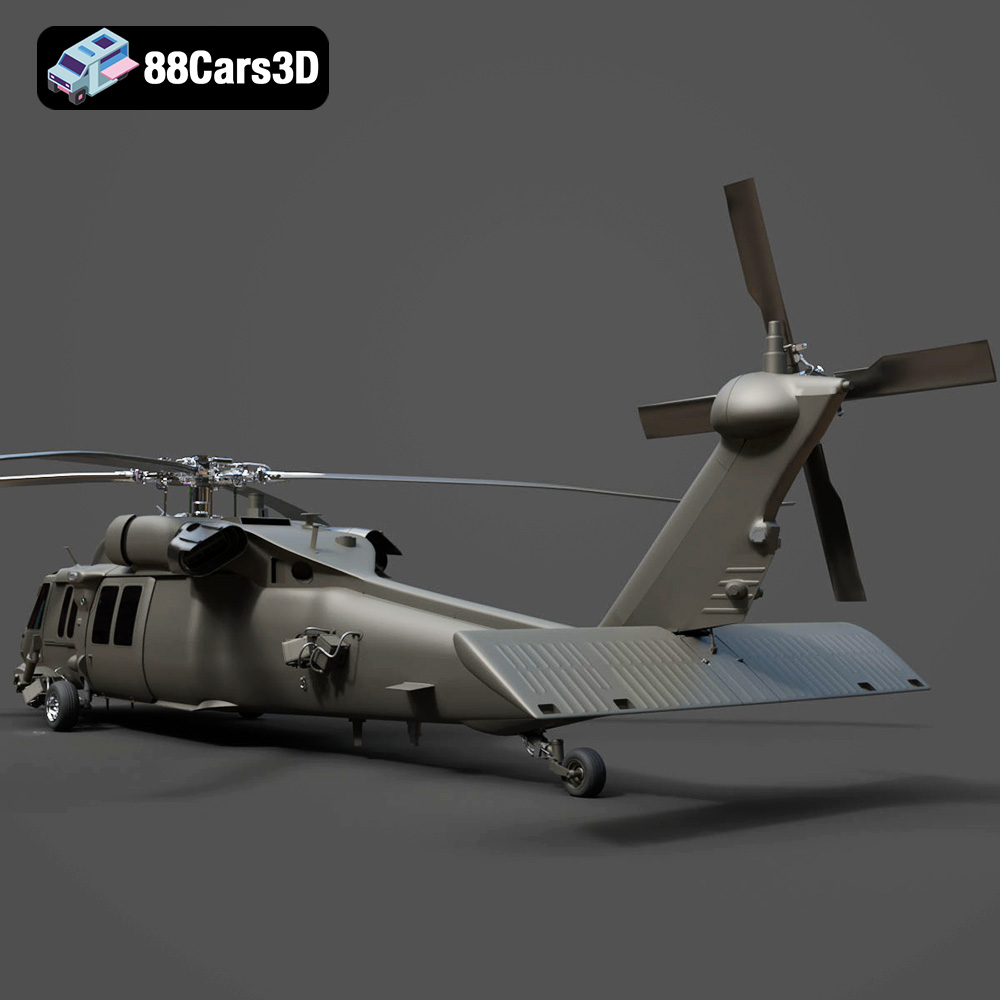
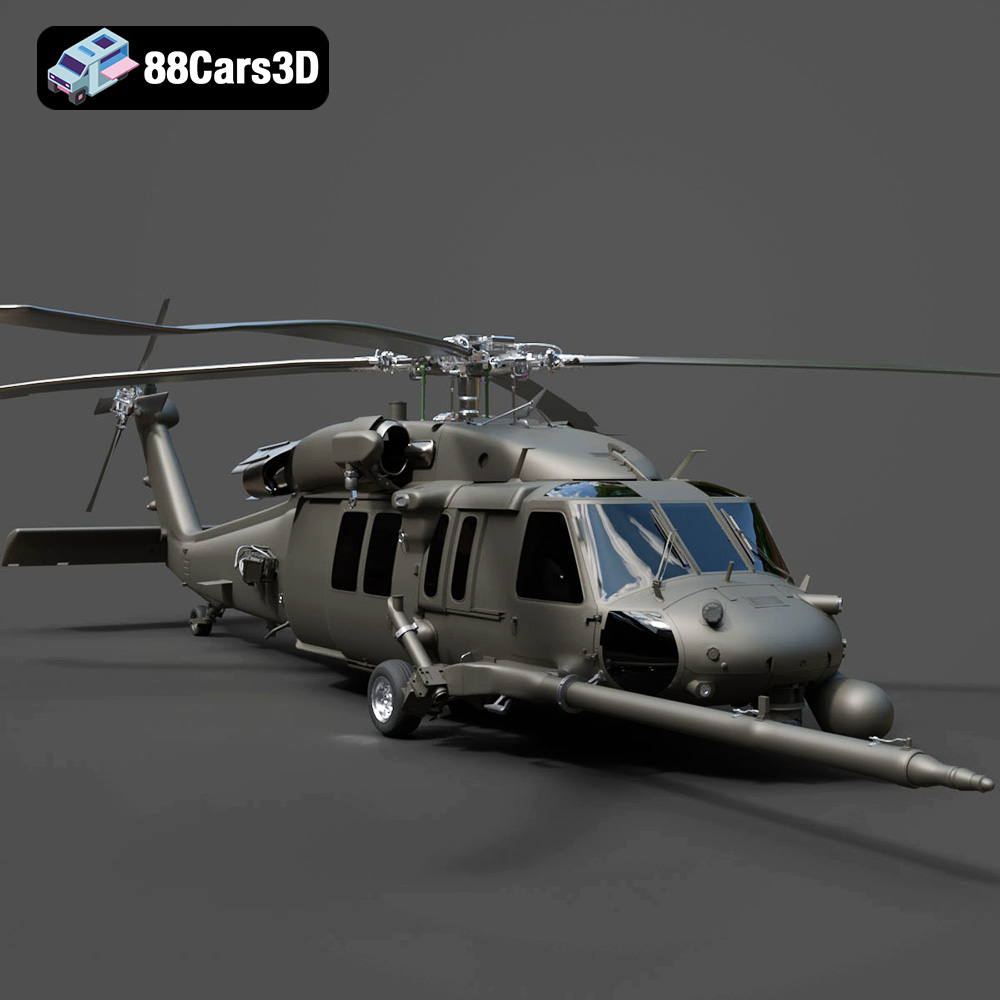
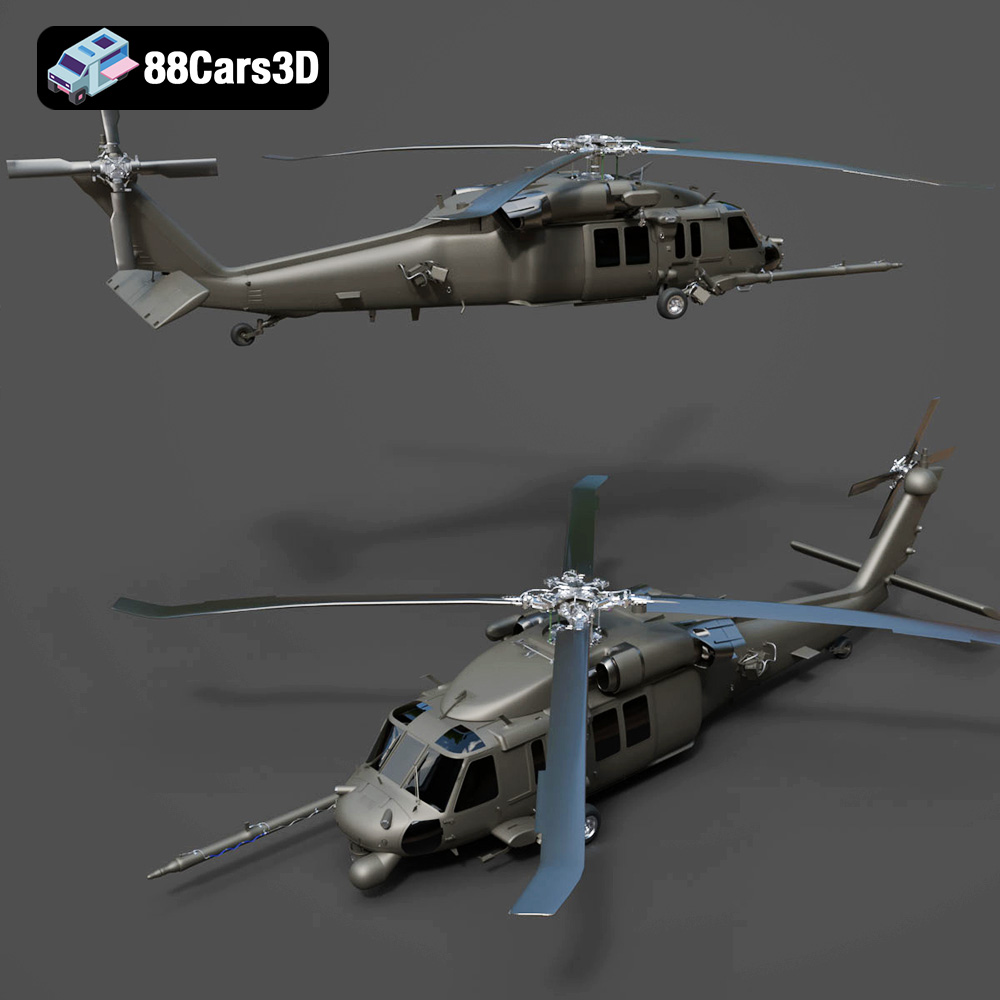
For professionals across industries, the ability to source pre-made, high-quality models can be a game-changer, accelerating project timelines and allowing artists and developers to focus on creative direction and scene assembly rather than foundational asset creation. This is particularly true for complex subjects like vehicles and machinery, where intricate details and accurate proportions are paramount. Consider, for example, the detailed engineering required for an aircraft. A model like the Helicopter UH-40 3D Model, available on platforms such as 88cars3d.com, exemplifies how a meticulously crafted asset can serve as a cornerstone for diverse digital projects. Its robust aerodynamics and fully modeled interior provide a level of detail that elevates any scene, from military simulations to civilian visualizations, proving that a well-designed 3D model is not just a visual element, but a technical marvel that drives professional-grade results.
The versatility and utility of a 3D model are often defined by the file formats it supports. Each format is designed with specific use cases in mind, offering different advantages in terms of compatibility, data retention, and optimization. Understanding these distinctions is critical for any professional working with 3D assets, especially when integrating complex models like the Helicopter UH-40 3D Model into diverse pipelines. A comprehensive package, such as that provided with the UH-40, ensures maximum flexibility across various software and platforms.
The .blend format is native to Blender, the popular open-source 3D creation suite. It’s a comprehensive file type that stores an entire Blender scene, including the 3D mesh data, materials (with all their nodes and textures), lighting setups, animation data, camera positions, physics simulations, and even scene properties. This makes it an ideal format for artists who primarily work in Blender, offering full editability and the ability to dissect and modify every aspect of the model and its scene environment. For the Helicopter UH-40, having a .blend file means users gain access to the complete creative process, allowing for deep customization and fine-tuning.
.fbx (Filmbox) is a proprietary file format developed by Autodesk, widely regarded as the industry standard for exchanging 3D data between different software applications. Its strength lies in its ability to store a broad range of 3D information, including model geometry, materials (often simplified PBR setups), textures, animations, and rigs. It’s particularly ideal for game development, making it a go-to for integration into engines like Unreal Engine and Unity. When a model like the UH-40 is provided as .fbx, it signifies its readiness for real-time pipelines, ensuring smooth transitions and performance-optimized integration.
The .obj (Wavefront OBJ) format is one of the most widely supported and universal 3D file formats. It primarily stores geometric data – vertices, normals, UV coordinates, and faces – and can reference external material (.mtl) and texture files. While it doesn’t store animations or rigging information, its simplicity and widespread compatibility make it an excellent choice for cross-software model sharing and basic mesh export. For situations requiring only the core mesh and material definitions across virtually any 3D software, .obj is a reliable foundation.
.glb (GL Transmission Format Binary) is a relatively newer format designed for the efficient transmission and loading of 3D scenes and models in web and AR/VR applications. It’s a binary format that bundles the 3D model data, textures, and animations into a single file, making it highly optimized for performance and ease of use in browser-based viewers, augmented reality experiences, and virtual reality environments. The Helicopter UH-40 in .glb format ensures it’s instantly ready for immersive, interactive web experiences or mobile AR applications without complex setups.
.stl (Stereolithography) is the most common file format used for 3D printing and rapid prototyping. It describes only the surface geometry of a 3D object using a collection of interconnected triangles. While it doesn’t carry color, texture, or material information, its simplicity makes it universally compatible with 3D printers and slicing software. Having the UH-40 in .stl format means it can be physically reproduced, whether for scale models, educational tools, or custom prototypes, bridging the gap between digital design and tangible reality.
.ply (Polygon File Format) is a flexible format that stores 3D data, typically from 3D scanners. It can store not only the geometry but also properties like color, transparency, normals, texture coordinates, and even reliability information for each vertex and face. This makes it suitable for applications requiring precise mesh data, such as CAD, scientific visualization, and 3D reconstruction. For detailed analysis or high-precision rendering of the UH-40’s exterior, the .ply format offers a robust data set.
The .unreal format, or more accurately, assets pre-configured for Unreal Engine, implies that the model has been specifically prepared and possibly imported into an Unreal project, with materials, textures, and perhaps even basic collision and LODs already set up. This dramatically reduces the time and effort required for integration into an Unreal Engine project. For game developers or simulation creators, an Unreal-ready Helicopter UH-40 asset means immediate plug-and-play functionality, allowing quick iteration and deployment within their real-time environments.
Lastly, the .max format is the native scene file for Autodesk 3ds Max. Similar to .blend for Blender, a .max file contains all scene information, including geometry, modifiers, materials, lights, cameras, animations, and render settings. It provides full editability within 3ds Max, a powerhouse software for architectural visualization, high-end rendering, and complex animation. For those whose pipelines are centered around 3ds Max, the .max file for the UH-40 offers complete control over the asset for detailed rendering and animation sequences.
The inclusion of such a comprehensive suite of file formats for the Helicopter UH-40 3D Model highlights its professional-grade utility, catering to a vast spectrum of creative and technical demands.
In the pursuit of digital realism, every element within a scene contributes to the overall immersion. Vehicle models, whether they are 3D car models traversing a city street or an aircraft soaring through virtual skies, are often focal points that demand impeccable detail. A high-quality asset like the Helicopter UH-40 3D Model is not merely an object; it’s a critical component for grounding a scene in reality, providing visual anchors that captivate the viewer.
Photorealism in rendering relies heavily on the quality of materials and textures. A truly professional 3D model comes equipped with expertly crafted PBR (Physically Based Rendering) materials that accurately simulate how light interacts with surfaces. This means careful attention to albedo (base color), roughness, metallic, normal, and ambient occlusion maps. For the Helicopter UH-40, its “realistic materials” are crucial. Imagine the interplay of light on its metallic fuselage, the subtle wear and tear on its rotors, or the reflections on its cockpit glass. These details, driven by high-resolution textures and intelligently configured PBR shaders, transform a mesh into a believable, tangible object, elevating automotive rendering and environmental scenes alike.
These advanced material setups ensure that the model looks correct under various lighting conditions, from bright daylight to moody twilight, providing consistency and depth regardless of the scene’s ambiance. This level of material sophistication is what distinguishes premium assets from basic ones and is a hallmark of models found on marketplaces like 88cars3d.com.
Beyond cinematic sequences, detailed vehicle models play a vital role in architectural and environmental visualizations. An architectural render of a sprawling complex gains immediate credibility with the inclusion of context-appropriate vehicles. A finely detailed helicopter, for instance, can enhance the realism of a rooftop helipad design, a military base layout, or even a disaster relief scenario. The Helicopter UH-40, with its “precise structural accuracy,” can be seamlessly integrated into such visualizations, adding dynamic scale and a sense of activity. Its robust appearance makes it perfect for conveying a sense of infrastructure and operational readiness in urban planning, industrial site renders, or even concept art for large-scale environmental projects. The model’s versatility allows visualizers to quickly populate and enrich their scenes, bringing static designs to life.
The interactive nature of game development and simulation demands 3D assets that are not only visually impressive but also technically optimized for real-time performance. Aircraft, in particular, are complex subjects that require a delicate balance between fidelity and efficiency. The Helicopter UH-40 3D Model is engineered to meet these rigorous demands, making it an invaluable asset for developers creating immersive virtual worlds.
Game engines like Unreal Engine and Unity rely on meticulously optimized assets to maintain high frame rates and a smooth user experience. This optimization encompasses several key areas: polygon count, UV mapping, texture resolution, and efficient material setups. While the Helicopter UH-40 boasts a “fully modeled interior” and “detailed structural accuracy,” its “optimized topology” ensures it remains performant. This means that while the model appears highly detailed, its underlying mesh is clean and efficient, avoiding unnecessary polygons where they won’t be seen. Effective UV mapping is crucial for applying textures without distortion and for creating texture atlases that minimize draw calls. Furthermore, the model’s game-engine-ready formats, particularly .fbx and the pre-configured .unreal files, simplify the import process, ensuring materials and textures are correctly applied and ready for use in a real-time environment. This allows developers to focus on gameplay mechanics and environmental storytelling, knowing their vehicle assets are technically sound.
Augmented Reality (AR) and Virtual Reality (VR) represent the frontier of immersive experiences, and high-quality 3D assets are the bedrock of these technologies. In AR, a virtual helicopter could hover realistically over a real-world landscape, while in VR, players could pilot the UH-40 through a detailed simulated environment. The demands for AR/VR are similar to game development in terms of optimization, but with an even greater emphasis on stable frame rates to prevent motion sickness. The .glb format, included with the UH-40, is specifically optimized for these applications, offering a lightweight, self-contained package that loads quickly and performs efficiently across various devices, from high-end VR headsets to mobile AR platforms. Whether it’s for military training simulations, interactive educational content, or even a virtual showroom experience, the UH-40 model provides the visual depth and performance required to create truly compelling AR/VR interactions.
Beyond surface-level aesthetics, the true quality of a 3D model lies in its underlying technical craftsmanship. Professional-grade assets are built with an understanding of various production pipelines, ensuring they are not only visually appealing but also versatile, performant, and easy to integrate. The Helicopter UH-40 3D Model from 88cars3d.com exemplifies this dedication to technical excellence.
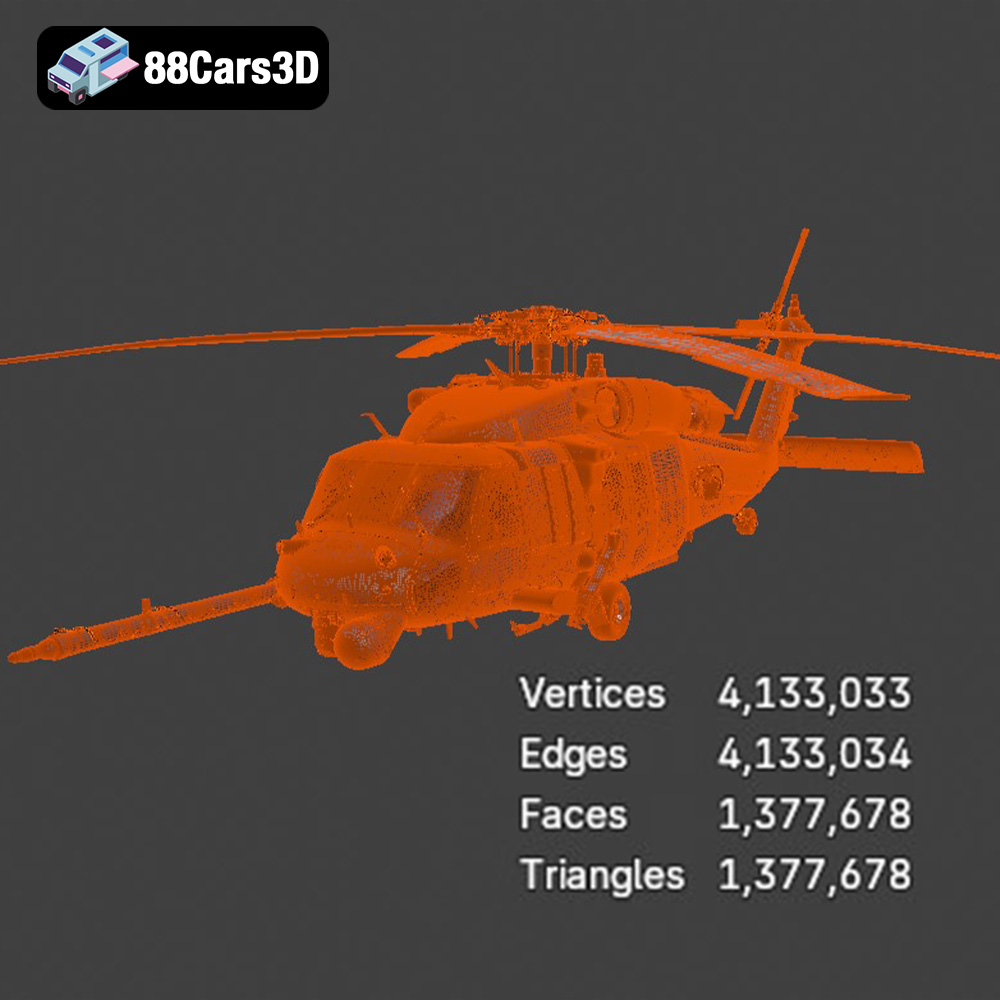
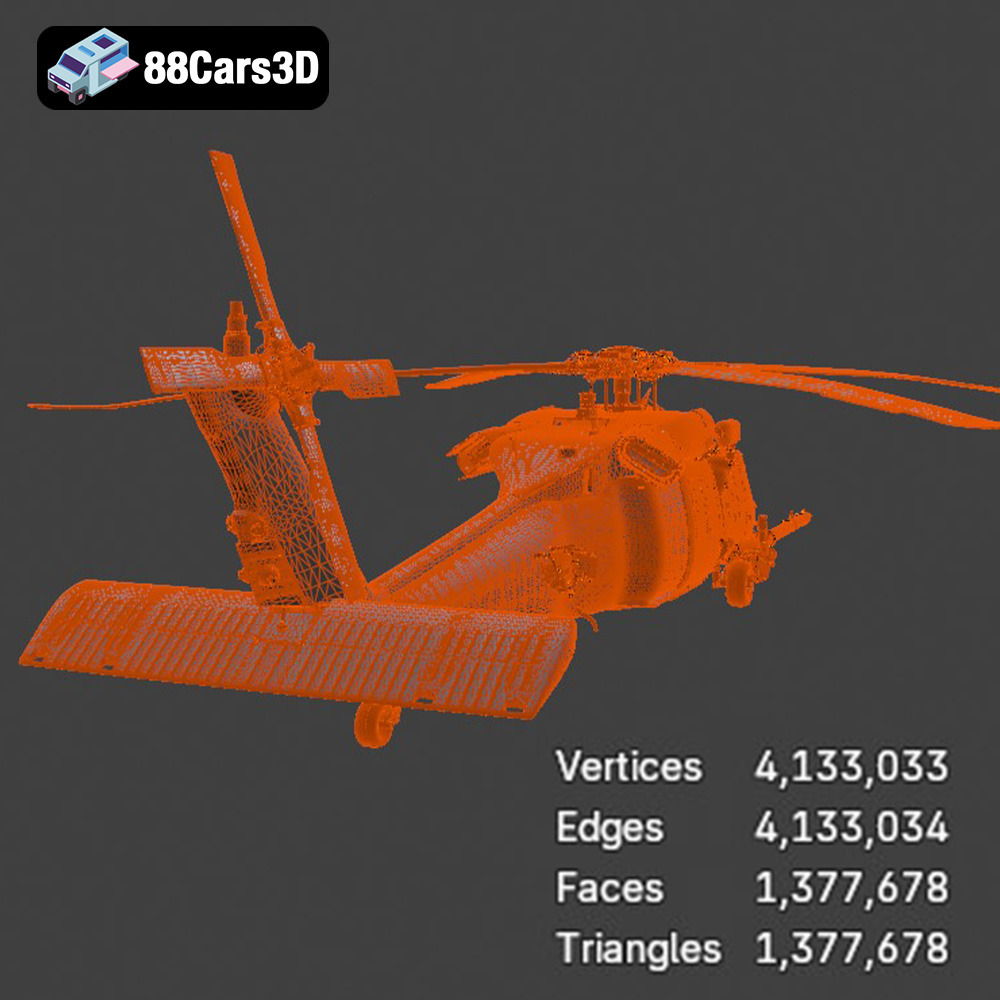
At the core of any great 3D model is its geometry and topology. “Clean geometry” means the mesh is free of errors such as non-manifold edges, flipped normals, and overlapping faces. These issues can cause rendering artifacts, problems with rigging, and difficulties during animation or export. “Optimized topology” refers to the efficient arrangement of polygons (quads and triangles) to accurately represent the model’s form while minimizing polygon count. For a complex object like a helicopter, this means carefully constructing hard-surface details with appropriate edge loops for smooth deformations and clean subdivisions, if needed. The UH-40’s design ensures that its mesh is structurally sound and ready for various uses, from high-resolution renders where mesh smoothness is critical to real-time applications where every polygon counts towards performance budgets. This attention to detail in its foundational structure prevents headaches down the line for animators, texture artists, and game developers.
Many 3D models only offer a high-detail exterior, leaving the interior as a simplified shell. However, the Helicopter UH-40 3D Model distinguishes itself with a “fully modeled interior.” This level of comprehensive detailing is vital for projects that require close-up shots, virtual cockpit experiences, or interactive walk-throughs. From the intricate dashboard controls and seats to internal structural components, every element is designed to stand up to scrutiny. This extends the model’s utility significantly, making it suitable for training simulations where cockpit familiarity is essential, or for cinematic sequences that might include internal shots. Combined with the “robust aerodynamics” of its exterior, this dual focus on internal and external accuracy ensures the model delivers visual depth from every conceivable angle, making it a truly versatile and valuable asset for serious professionals.
In the fast-paced world of digital content creation, efficiency is paramount. While custom asset creation offers unparalleled control, it often comes at a significant cost in terms of time and resources. This is where high-quality, pre-made 3D assets become invaluable, providing a strategic advantage for studios and individual artists alike. 88cars3d.com specializes in offering such assets, empowering creators to bring their visions to life faster and more effectively.
The most immediate benefit of utilizing professional ready-made assets is the dramatic reduction in project timelines. Developing a complex model like a helicopter from scratch can take hundreds of hours, encompassing modeling, UV unwrapping, texturing, material creation, and optimization for various platforms. By acquiring a pre-built Helicopter UH-40 3D Model, artists and developers can bypass these time-consuming initial stages, moving directly into scene assembly, animation, lighting, and rendering. This accelerated workflow allows teams to meet tighter deadlines, take on more projects, and allocate their skilled personnel to more specialized and unique tasks. It’s a strategic decision that translates directly into increased productivity and profitability, whether the project involves detailed automotive rendering or creating expansive game worlds.
The power of a truly well-designed 3D model lies in its versatility. The Helicopter UH-40 3D Model, with its comprehensive suite of file formats and optimized design, is a prime example. Its ability to integrate seamlessly into diverse workflows, from 3ds Max for high-end rendering and animation to Unreal Engine for real-time game development, and even .stl for 3D printing, means it can serve multiple purposes across various industries. A single purchase can contribute to a military simulation, an architectural fly-through, an AR training application, or even a static promotional image. This cross-platform, multi-purpose utility makes such assets an incredibly cost-effective investment for professionals who operate across different creative domains or for studios that need flexibility in their output formats. The focus on “seamless integration into your workflow” is a testament to its broad applicability and enduring value.
The landscape of 3D content creation is constantly evolving, with increasing demands for realism, performance, and efficiency. Whether you’re a seasoned professional in architectural visualization, a game developer pushing the boundaries of interactive experiences, or an artist crafting compelling cinematics, the foundation of your success often lies in the quality of your core assets. The challenges of creating detailed models from the ground up are significant, making platforms like 88cars3d.com an indispensable resource for obtaining ready-to-use, professional-grade 3D car models and other complex vehicles.
The Helicopter UH-40 3D Model stands as a prime example of what a high-quality asset should offer: precise structural accuracy, a fully modeled interior, optimized topology, and a comprehensive suite of industry-standard file formats. This level of detail and versatility ensures that it not only elevates the visual fidelity of any project but also streamlines the production workflow, saving invaluable time and resources. By leveraging such meticulously crafted assets, creators can focus their expertise on innovation and artistic direction, confidently delivering stunning results across rendering, game development, AR/VR, and technical visualization. Investing in premium 3D assets is not just about acquiring models; it’s about empowering your creative process and securing a competitive edge in the dynamic world of digital production.
Enhance your digital hangar with the detailed Helicopter UH-40 3D Model. Designed to meet the demands of visualizers and developers, this model delivers precise structural accuracy. The exterior captures the robust aerodynamics of the UH-40 aircraft, while the internal layout provides a fully modeled interior, ensuring it stands up to close-up renders and immersive experiences.
Built with optimized topology, this model features clean geometry and realistic materials that integrate seamlessly into your workflow. Whether you are crafting cinematic sequences, producing military simulations, or developing interactive applications, this versatile asset elevates the visual fidelity of your projects.
Ideal for game development, rendering, AR/VR experiences, and detailed technical visualization, the Helicopter UH-40 3D Model is optimized for performance without sacrificing visual depth. It includes a comprehensive suite of industry-standard file formats.
Tags: .helicopter, .uh40, .aviation, .military, .aircraft, .car3dmodel, .rendering, .simulation, .gameasset, .arvr, .blend, .fbx, .obj, .glb, .stl, .ply, .unreal, .max
Tags:
.helicopter, .uh40, .aviation, .military, .aircraft, .car3dmodel, .rendering, .simulation, .gameasset, .arvr, .blend, .fbx, .obj, .glb, .stl, .ply, .unreal, .maxMercedes Benz CLS 500 3D Model 3D Printable STL
$19.99
.aircraft
.arvr
.aviation
.blend
.car3dmodel
.fbx
.gameasset
.glb
.helicopter
.max
.military
.obj
.ply
.rendering
.simulation
.stl
.uh40
.unreal