Get 20% OFF All Premium 3D & STL Models!

In the rapidly evolving world of digital visualization, the demand for exceptionally realistic and technically robust 3D models has never been higher. From blockbuster game titles and cinematic automotive commercials to cutting-edge AR/VR experiences and detailed engineering simulations, the foundation of any successful project lies in the quality of its digital assets. High-quality 3D car models are not just static representations; they are dynamic tools that drive innovation, accelerate design cycles, and create deeply immersive user experiences.
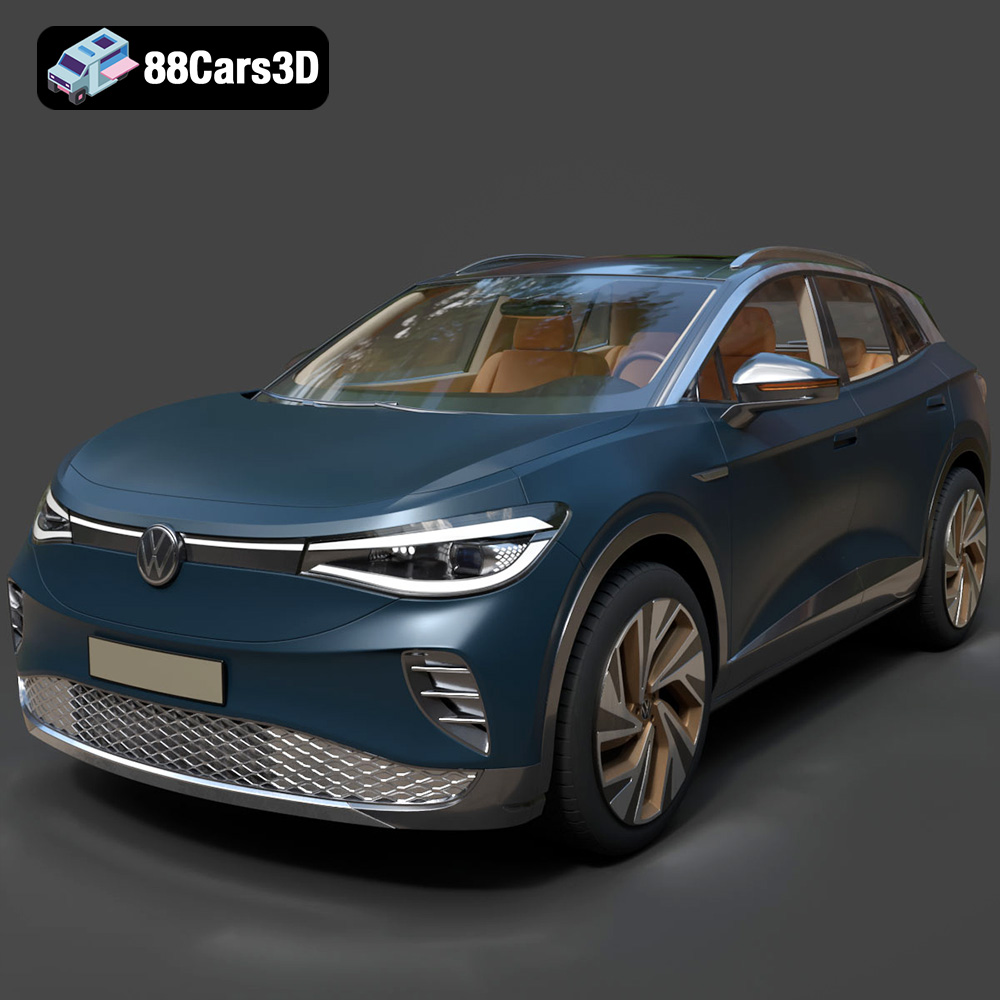
The complexity of modern vehicle design, with its intricate curves, sophisticated materials, and precise engineering, necessitates 3D models that capture every nuance. Generic or poorly optimized models can quickly derail a project, leading to compromised visuals, inefficient workflows, and a lack of believability. This is where premium assets, like the Volkswagen ID4 2021 3D Model available on 88cars3d.com, prove invaluable. This meticulously crafted model embodies the convergence of art and engineering, offering unparalleled detail and flexibility for a myriad of professional applications. It’s a perfect example of how a well-prepared 3D car model can elevate any digital project, making it ideal for everything from stunning automotive rendering to interactive game environments and immersive virtual tours.
The choice of file format for a 3D model is often as crucial as the model’s geometry itself. Each format serves specific purposes, catering to different software ecosystems, project requirements, and delivery platforms. Understanding their strengths and limitations is key to a streamlined and efficient workflow, especially when dealing with complex assets like high-fidelity 3D car models.
The .blend format is Blender’s native file type, offering a comprehensive package for 3D artists. When you acquire a .blend file, you’re not just getting the mesh; you’re receiving an entire scene. This typically includes the 3D model with all its modifiers, rigging (if applicable), animation data, PBR (Physically Based Rendering) materials, textures, lighting setups, and even camera configurations. For users deeply integrated into the Blender ecosystem, a .blend file offers maximum editability and immediate usability, allowing for quick adjustments to materials, geometry, or scene lighting without complex import/export steps. The Volkswagen ID4 2021 3D Model, for instance, comes with an editable .blend file, ensuring artists can dive straight into customization.
Autodesk’s .fbx (Filmbox) format is a cornerstone of the 3D industry, particularly for game development and real-time applications. It’s designed to facilitate data exchange between different 3D software packages (like 3ds Max, Maya, Cinema 4D) and game engines such as Unreal Engine and Unity. FBX files can store a vast array of 3D data, including mesh geometry, materials, textures, animations, bones, and even camera data. Its robust support for animation and skeletal data makes it the go-to format for animated game assets. While it aims for universality, ensuring material consistency across different software can sometimes require manual adjustment post-import, as rendering engines interpret PBR properties differently. However, its efficiency and widespread adoption make it an indispensable format for professional pipelines.
The .obj (Wavefront OBJ) format is one of the oldest and most widely supported 3D file formats. It’s known for its simplicity and cross-software compatibility, making it a truly universal choice. An OBJ file primarily stores geometry data (vertices, normals, texture coordinates, and faces) and can reference external material libraries (.mtl files) for basic color, diffuse, and specular properties. While it doesn’t support advanced features like animation, rigging, or PBR materials directly within the file, its reliability for mesh exchange is unparalleled. For artists needing to transfer a pure geometric model between disparate 3D applications, .obj remains a solid, dependable option.
The .glb (GL Transmission Format Binary) is quickly becoming the standard for 3D models in web, AR, and VR applications. It’s a binary version of the glTF format, which is designed for efficient transmission and loading of 3D scenes and models. GLB files bundle all necessary data – geometry, PBR materials, textures, and animations – into a single, self-contained file. This self-contained nature, combined with its optimization for real-time rendering, makes it ideal for browser-based 3D viewers, augmented reality apps, and virtual reality experiences where rapid loading and performance are paramount. The Volkswagen ID4 2021 3D Model’s inclusion of a .glb file highlights its readiness for these emerging digital landscapes.
The .stl (Stereolithography) format is the industry standard for 3D printing. It represents a 3D model as a series of connected triangles, describing only the surface geometry without color, texture, or material information. Its simplicity makes it universally compatible with 3D printing software and hardware. For conceptual prototyping or creating physical models of the Volkswagen ID4, an .stl file is essential. In contrast, .ply (Polygon File Format) offers a more comprehensive representation, capable of storing not just geometry but also color, transparency, and sometimes even texture information on a per-vertex or per-face basis. This makes .ply suitable for applications requiring high-precision mesh data, such as scientific visualization, 3D scanning, and CAD/CAM analysis, where detailed geometric accuracy is critical.
Some marketplaces offer highly optimized, engine-specific formats for maximum efficiency. The .unreal format refers to assets specifically prepared and configured for direct import and use within Unreal Engine, often including pre-set materials, collision meshes, and LODs (Levels of Detail). This dramatically reduces setup time for game developers. Similarly, .max is the native file format for Autodesk 3ds Max, a powerhouse for architectural visualization, animation, and rendering. A .max file provides full access to the original scene, including complex hierarchies, modifiers, V-Ray or Corona Renderer setups, and advanced animation rigs. For those operating within a 3ds Max-centric workflow, it offers complete control and flexibility. The Volkswagen ID4 2021 3D Model offers both .unreal and .max files, showcasing its commitment to professional-grade versatility.
Creating a 3D car model that achieves professional-grade realism is a meticulous process that blends artistic vision with technical precision. It involves an understanding of real-world physics, material properties, and design aesthetics. The Volkswagen ID4 2021 3D Model exemplifies this synergy, delivering an asset that meets the rigorous demands of various industries.
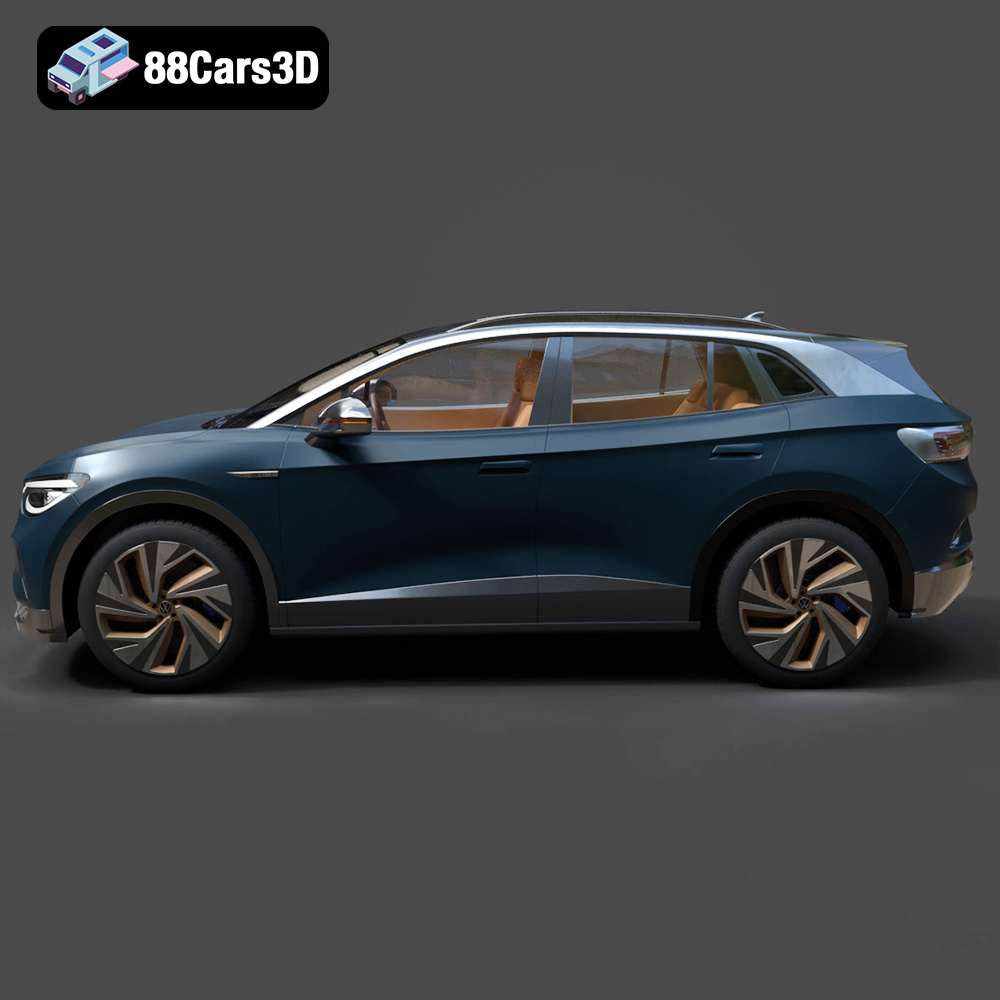
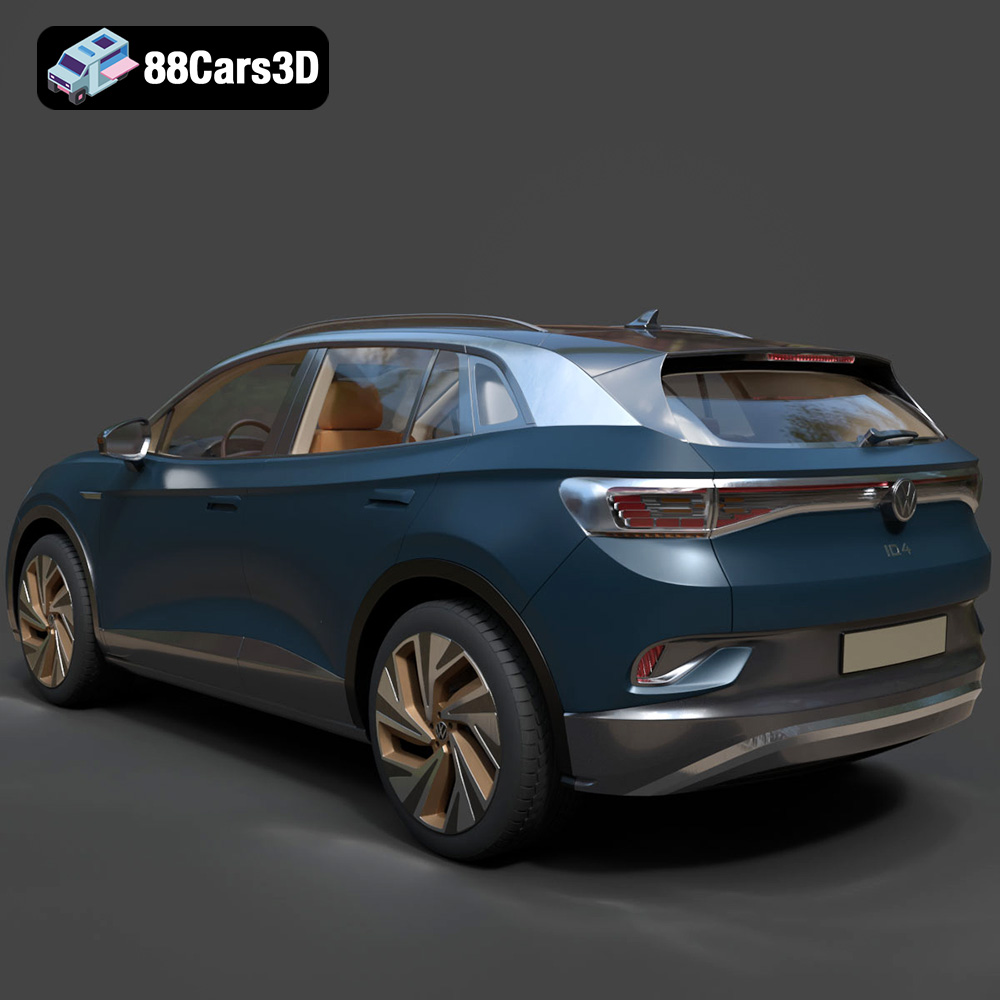
The exterior of any modern vehicle is a triumph of design and engineering, often featuring complex curves and aerodynamic elements that contribute to both aesthetics and performance. Replicating this in 3D requires an acute eye for detail and mastery of modeling tools. For the Volkswagen ID4, a vehicle known for its sleek, futuristic profile, capturing the subtle interplay of light and shadow across its surfaces is paramount. The model accurately translates the ID4’s distinctive headlights, flowing body lines, and integrated door handles, ensuring that its digital counterpart conveys the same sense of modern sophistication. Clean edge flow and precise vertex placement are critical for achieving smooth, subdivision-ready geometry that renders flawlessly from every angle.
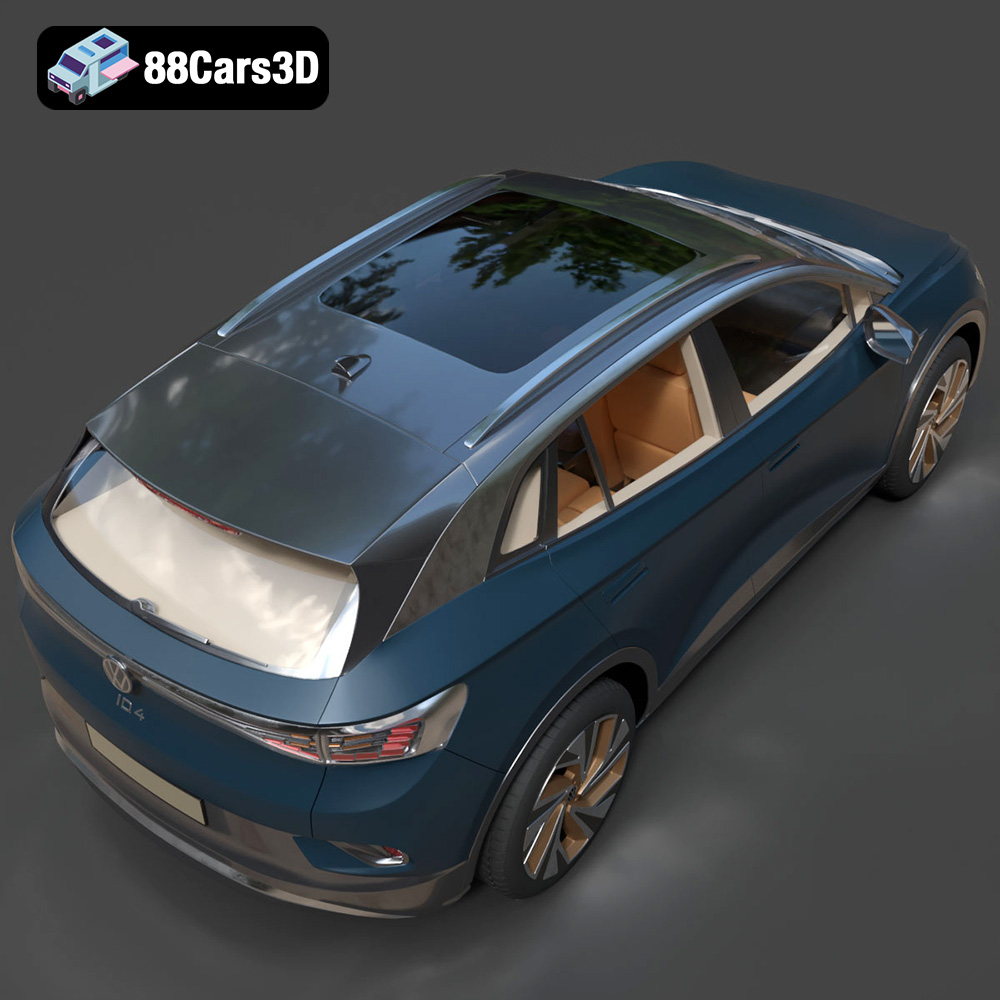
While the exterior often grabs initial attention, the interior is where much of the user experience unfolds, especially in AR/VR applications and interactive simulations. A truly professional 3D car model includes a highly detailed interior, complete with accurate dashboard layouts, seating upholstery, steering wheel controls, and even intricate stitching patterns. For the Volkswagen ID4 2021 3D Model, this means meticulously recreating its minimalist yet functional cabin, including the digital cockpit, infotainment screen, and ergonomic seating. Such detail is crucial for close-up renders and virtual walk-throughs, providing an immersive experience that feels authentic and believable.
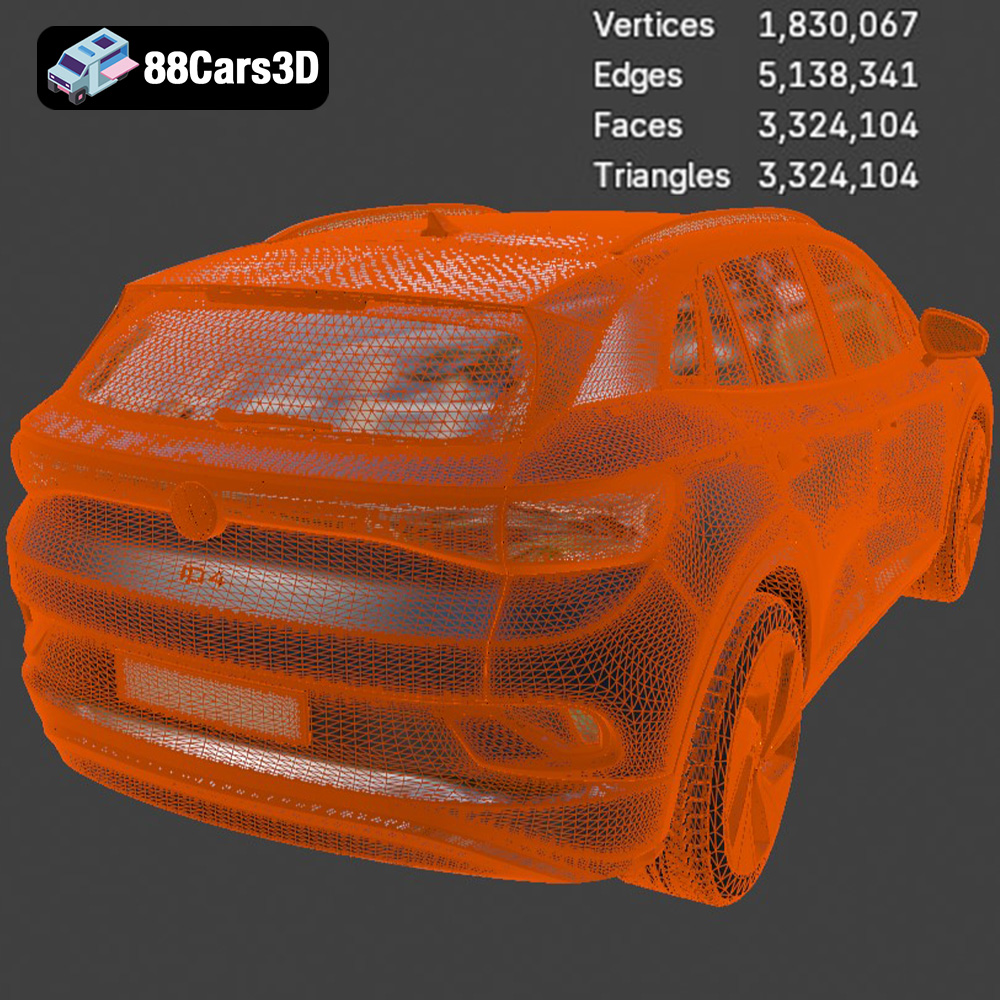
At the heart of any high-quality 3D model is its geometry and topology. A “clean mesh” refers to a model built with optimal polygon distribution, using quads (four-sided polygons) predominantly, and avoiding issues like N-gons (polygons with more than four sides), non-manifold geometry, or overlapping vertices. The Volkswagen ID4 2021 3D Model is engineered with precision, featuring clean geometry that ensures smooth deformation, efficient UV mapping, and predictable rendering results. This attention to detail in the underlying mesh is what differentiates a professional asset from a hobbyist one, leading to easier integration, fewer artifacts, and better performance across different software and engines.
The true value of a versatile 3D asset like the Volkswagen ID4 2021 3D Model lies in its seamless integration into various professional pipelines. From advertising agencies to game studios, the demand for adaptable 3D car models is constant.
For automotive manufacturers and marketing agencies, high-fidelity 3D car models are indispensable. They enable the creation of stunning photorealistic renders for brochures, websites, and advertising campaigns, often long before a physical prototype is available. Using software like 3ds Max or Blender, artists can place the ID4 model into virtual environments, experiment with different paint finishes, lighting conditions, and camera angles. This allows for dynamic product configurators, virtual showrooms, and animated sequences that highlight the vehicle’s features without the logistical complexities and costs associated with traditional photography or film shoots. The clean geometry and realistic materials of the Volkswagen ID4 2021 3D Model ensure it stands up to the scrutiny of high-resolution stills and animations.
In the realm of game development, balancing visual fidelity with performance is a constant challenge. High-quality 3D car models like the ID4 serve as excellent base assets for creating vehicles in racing games, open-world simulations, or driving mechanics. The availability of game-engine-ready formats like .fbx and pre-configured .unreal files significantly streamlines the development process. Developers can quickly integrate the model, apply collision meshes, set up wheel physics, and create LODs (Levels of Detail) to optimize performance across different platforms. The meticulous UV mapping and material setup in such models ensure that textures load efficiently and the car looks fantastic whether it’s a primary player vehicle or a background prop.
The rise of Augmented Reality (AR) and Virtual Reality (VR) has opened new frontiers for automotive experiences. AR apps can place a virtual Volkswagen ID4 on your driveway, allowing potential buyers to explore it in real-time, while VR experiences can offer fully immersive test drives or factory tours. Accurate 3D models are fundamental to creating these compelling interactive environments. Formats like .glb, optimized for web and real-time display, are crucial here. Beyond marketing, professional 3D car models are vital for driver training simulations, autonomous vehicle development, and engineering analysis, where precise physical representations are paramount. The Volkswagen ID4 2021 3D Model, with its detailed geometry and range of formats, is perfectly positioned for these cutting-edge applications.
Rendering is the process where a 3D model transforms from a wireframe into a photorealistic image or animation. For automotive rendering, achieving believability demands an expert understanding of lighting, materials, and post-production techniques. The Volkswagen ID4 2021 3D Model provides an exceptional foundation for these artistic endeavors.
Effective lighting is the soul of any render. For a car model like the ID4, soft, diffused lighting often works best to highlight its curves and reflections, mimicking natural daylight or studio conditions. Techniques like Image-Based Lighting (IBL) using HDRIs (High Dynamic Range Images) are critical for capturing realistic environmental reflections and ambient illumination. Strategically placed area lights can emphasize specific design elements, while carefully managed shadows add depth and realism. The way light interacts with the car’s surface, reflecting and refracting, is what ultimately sells the illusion of a physical object in a virtual space.
The materials applied to a 3D car model are just as important as its geometry. Modern rendering relies on Physically Based Rendering (PBR) workflows, which accurately simulate how light interacts with different surfaces. For automotive rendering, this means meticulously crafting materials for:
The Volkswagen ID4 2021 3D Model comes with pre-configured realistic materials, allowing artists to achieve stunning renders with minimal setup, focusing instead on creative direction.
Even with impeccable modeling and rendering, a touch of post-production can elevate an image from good to extraordinary. Tools like Adobe Photoshop or equivalent software are used to add subtle effects that enhance realism. This can include color grading to set the mood, adding depth of field for cinematic focus, incorporating lens flares for dynamic lighting, or subtle atmospheric effects like haze or dust motes. Fine-tuning reflections, adding chromatic aberration, or even compositing the rendered car into a real-world backplate are common practices. These final touches are what often bridge the gap between a digital image and a photograph, providing the polish expected in high-end automotive visualization.
While maximum detail is desirable for high-end rendering, many applications require optimized versions of 3D car models. Striking the right balance between visual fidelity and performance is crucial, especially for real-time engines and mobile platforms.
Polygon count directly impacts performance. A model with millions of polygons might look stunning in a static render, but it would cripple a game engine or AR application. Professional 3D car models, like those found on 88cars3d.com, are often provided with optimized geometry or are built with a clean topology that allows for easy creation of multiple Levels of Detail (LODs). LODs are progressively simpler versions of the same model that are swapped in by the engine based on the object’s distance from the camera. A high-poly version is used up close, while lower-poly versions are displayed further away, maintaining visual quality while significantly reducing rendering overhead. This strategy ensures the Volkswagen ID4 2021 3D Model looks great without sacrificing performance.
UV mapping is the process of flattening a 3D model’s surface into a 2D space, allowing textures to be applied accurately. Well-executed UVs are critical for texture fidelity and efficiency. They should minimize distortion, avoid overlapping regions where possible, and make efficient use of texture space. For optimized models, textures are often packed into a single “atlas” image, reducing draw calls in game engines and improving rendering performance. This meticulous approach to UVs and texture management is a hallmark of professional assets and is inherent in models like the Volkswagen ID4 2021 3D Model, ensuring that its realistic materials and decals are rendered flawlessly and efficiently.
Integrating 3D car models into real-time engines like Unreal Engine or Unity involves specific preparatory steps. Beyond LODs and optimized textures, it includes:
The availability of engine-ready formats and detailed product descriptions from providers like 88cars3d.com greatly assists developers in these crucial integration steps, allowing them to leverage the quality of the Volkswagen ID4 2021 3D Model without extensive re-work.
The world of 3D modeling is an intricate dance between artistic vision and technical prowess. As industries like automotive design, game development, and immersive media continue to push boundaries, the demand for high-quality, versatile 3D car models will only grow. These digital assets are more than just virtual objects; they are vital tools that enable creation, foster innovation, and deliver unforgettable experiences.
From the foundational understanding of diverse file formats like .blend, .fbx, and .unreal, to the meticulous process of modeling every aerodynamic curve and interior detail, precision is paramount. Professional workflows demand assets that are not only visually stunning but also technically robust, optimized for performance, and ready for integration into complex pipelines. The Volkswagen ID4 2021 3D Model stands as a prime example of such an asset, embodying the highest standards of realism, clean geometry, and multi-format compatibility. Whether you are an automotive rendering specialist crafting a marketing campaign, a game developer building a new virtual world, or an AR/VR innovator creating interactive experiences, investing in premium 3D models from trusted sources like 88cars3d.com is a foundational step towards achieving excellence in your digital endeavors. The future of visualization is built on detailed, adaptable, and expertly crafted 3D assets.
Experience exceptional realism with the Volkswagen ID4 2021 3D Model. This extensively detailed model perfectly captures the aerodynamic curves and modern design of the popular electric vehicle, providing an accurate representation suitable for professional digital environments.
Engineered with precision, this model features clean geometry, accurate proportions, and realistic materials. The intricately modeled interior and exterior elements ensure seamless integration into close-up shots and demanding digital scenes.
Ideal for a wide range of professional applications, this model is perfect for automotive visualization, game development, rendering, AR/VR experiences, and interactive simulations.
$19.99
.arvr
.blend
.car3dmodel
.crossover
.electricvehicle
.ev
.fbx
.gameasset
.glb
.id4
.max
.obj
.ply
.rendering
.simulation
.stl
.unreal
.volkswagen
SUV