Get 20% OFF All Premium 3D & STL Models!

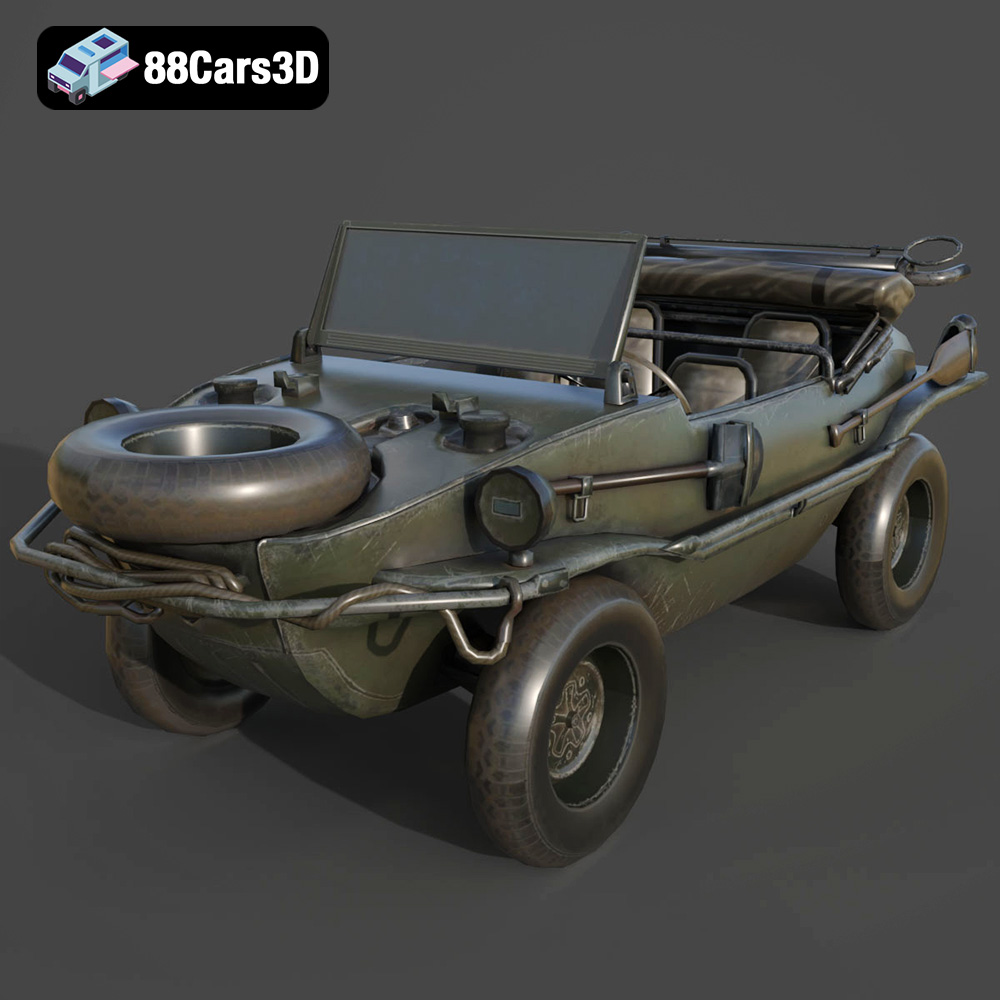
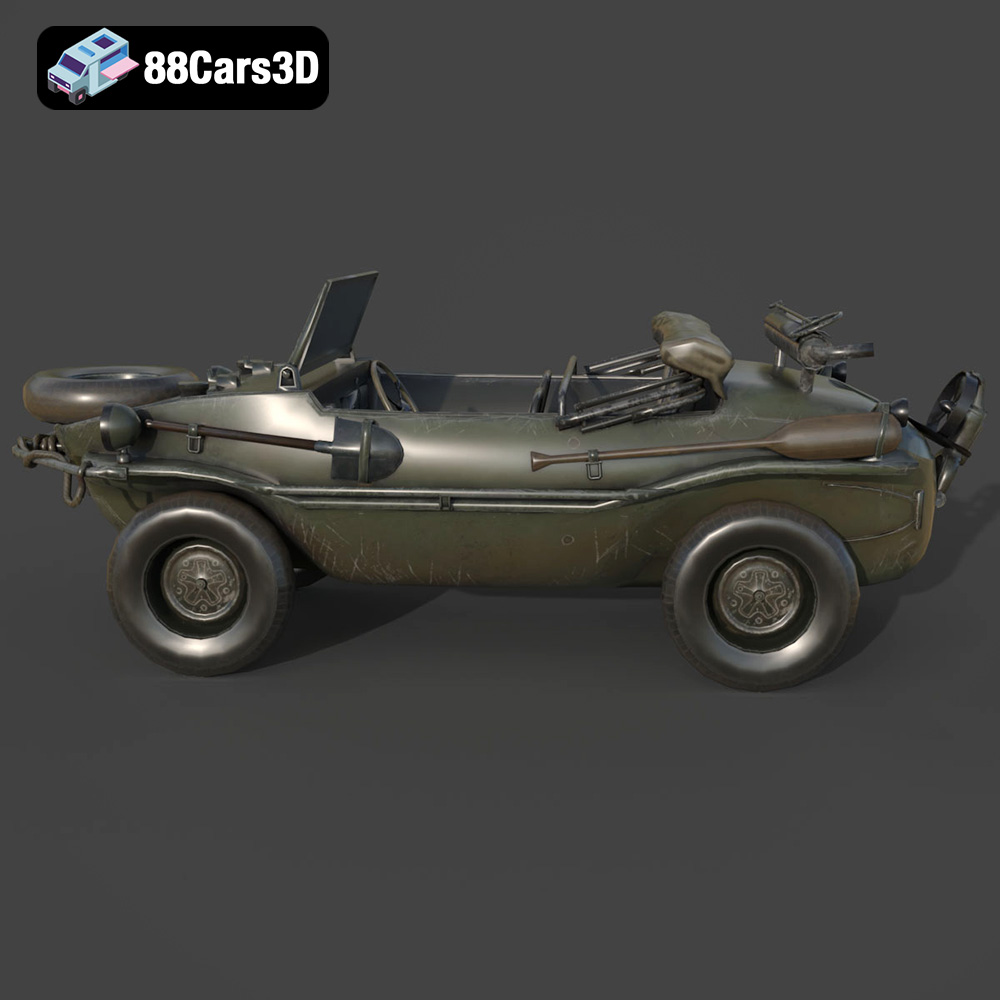
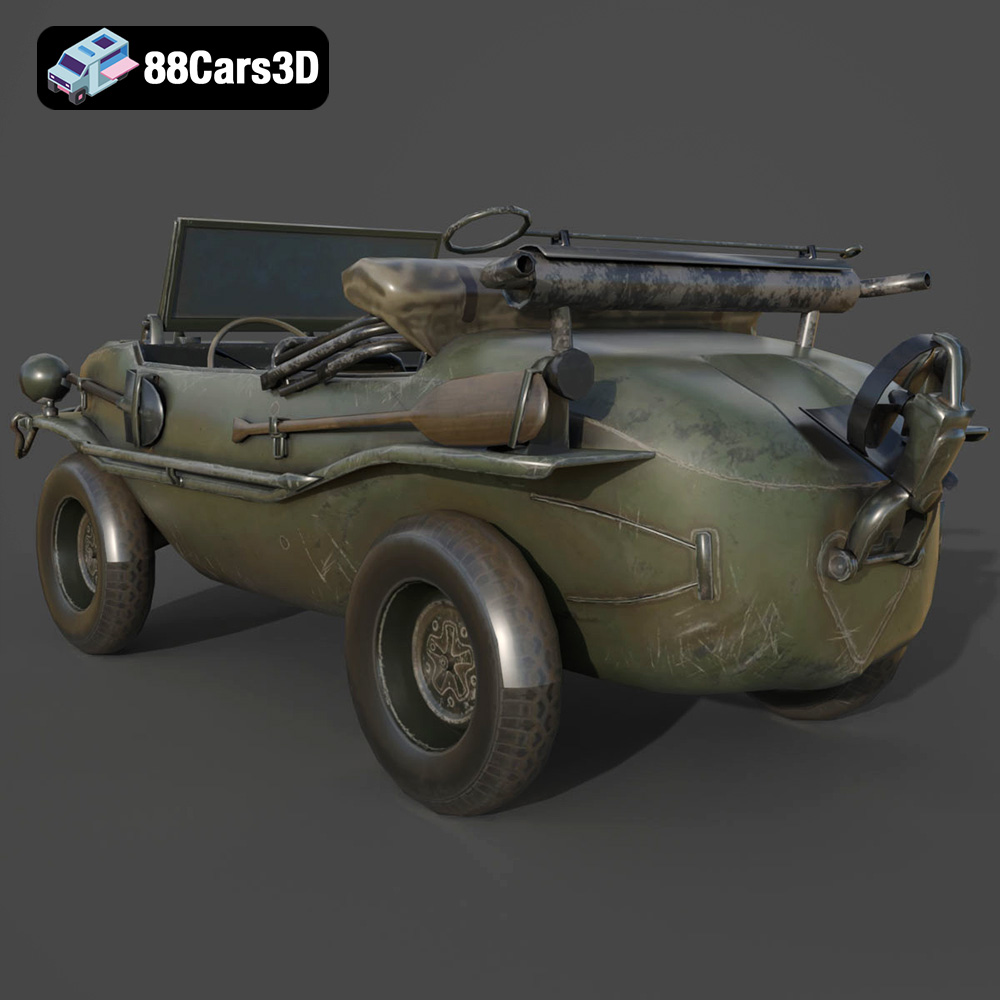
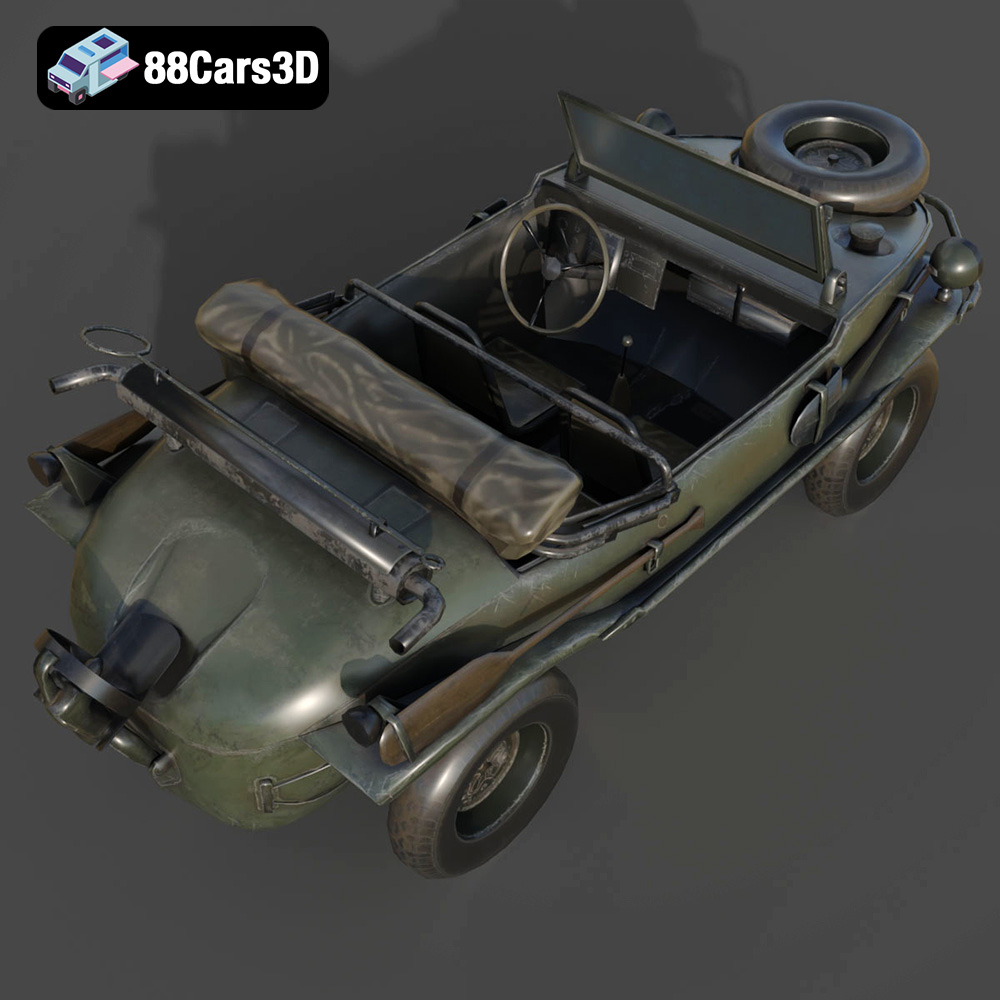
The Volkswagen Schwimmwagen Typ 166, a symbol of ingenuity and resilience, can now grace your desk or become a centerpiece in your historical diorama thanks to the magic of 3D printing. This amphibious marvel, renowned for its role in World War II, is faithfully captured in a detailed 3D model available for download. This blog post serves as your comprehensive guide to successfully 3D printing this iconic vehicle, covering everything from initial model preparation to the final touches that will bring your Schwimmwagen to life. Let’s dive into the world of additive manufacturing and explore how to transform digital designs into tangible reality. The Volkswagen Schwimmwagen Typ 166 3D model from 88cars3d.com provides a fantastic starting point.
Selecting the right file format is paramount to a successful 3D printing experience. The Schwimmwagen Typ 166 model is available in several formats, but some are better suited for 3D printing than others. Understanding the nuances of each format will save you time and frustration.
The .stl (Stereolithography) format is the workhorse of 3D printing. It represents the surface geometry of a 3D object as a collection of triangles. It’s a simple and widely supported format, making it compatible with virtually all slicing software and 3D printers. However, STL files only contain information about the shape of the object, not its color, texture, or material properties. For the Schwimmwagen, the STL format will define the car’s form.
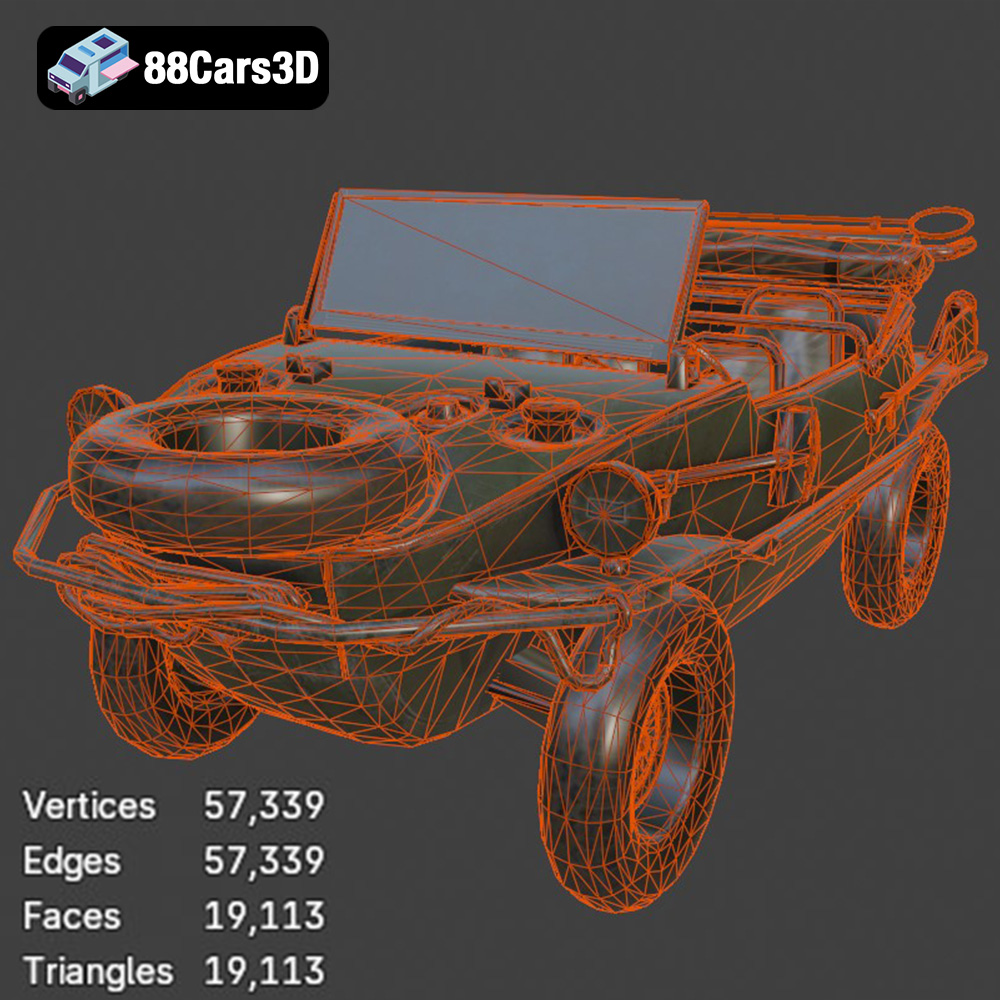
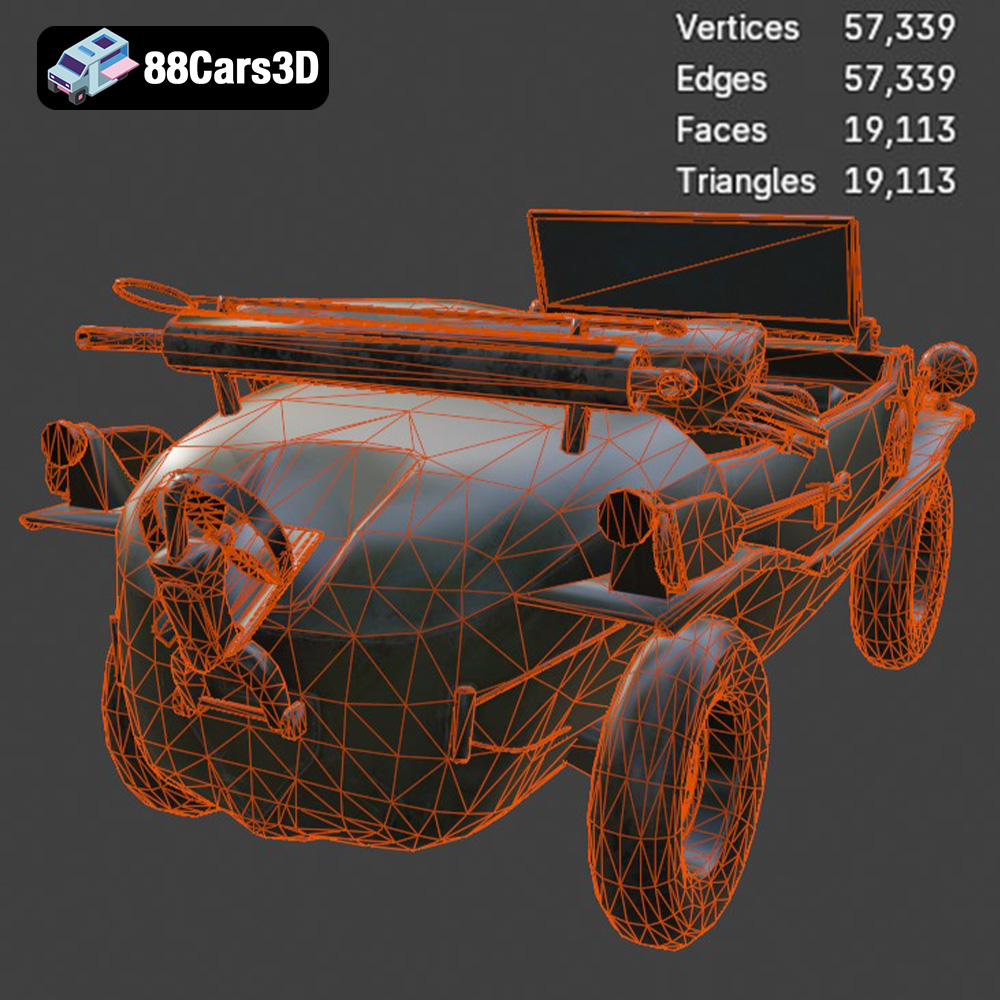
Mesh quality within an STL file is crucial. A higher triangle count results in a smoother surface, but also a larger file size and potentially longer processing times. A lower triangle count can lead to a faceted appearance, particularly on curved surfaces. The Schwimmwagen model’s description mentions an optimized triangle count (~150,000 triangles), which strikes a good balance between visual fidelity and performance. Ensure your slicing software can handle this triangle count without significant performance issues. Also, when importing the STL, verify that there are no gaps or holes in the mesh. These imperfections can lead to printing errors. Repair tools within your slicing software (or dedicated mesh repair software) can usually address these issues.
The .obj (Wavefront Object) format is another common 3D model format. Unlike STL, OBJ files can store color and texture information, along with the geometry. This is useful if you intend to paint or apply textures to your 3D printed Schwimmwagen. However, most 3D printers cannot directly print in multiple colors, so the color information is primarily useful for rendering and visualization after printing.
The .ply (Polygon File Format) is designed to store 3D data acquired from 3D scanners. It can handle complex geometries and store additional data like color and normals. It is also a good choice for printing high-detail models. It may not be as universally supported as STL, so you may need to convert it before importing into your slicing software.
.blend files are native to Blender, a popular open-source 3D modeling software. This format allows you to directly edit the Schwimmwagen model, modify its design, or prepare it for printing within Blender before exporting to STL. This is beneficial for advanced users who wish to customize the model before printing.
The .fbx (Filmbox) format is widely used for exchanging 3D data between different software applications. It supports geometry, textures, materials, and animation. If your slicing software supports FBX import, it might be useful for preserving some material information. It is not generally needed for straight forward 3D printing.
.glb (GL Transmission Format Binary) is designed for efficient transmission and loading of 3D models, particularly in web and AR/VR applications. It can be used to preview the Schwimmwagen model in augmented reality before printing to get a sense of its size and appearance.
Similar to .blend, .max files are native to 3ds Max, a professional 3D modeling and animation software. This format is suitable for users who prefer 3ds Max for modifying or preparing the Schwimmwagen model before 3D printing.
In conclusion, for 3D printing the Volkswagen Schwimmwagen Typ 166, the .stl format is the most practical and widely supported option. Ensure the mesh quality is adequate for your desired level of detail, and use mesh repair tools if necessary. If you plan to add color or texture later, you may want to consider OBJ.
The success of your Schwimmwagen print hinges on selecting the appropriate 3D printing technology and material. The level of detail in the model, the desired strength, and the intended use of the finished product should all factor into your decision.
FDM is a popular and affordable 3D printing technology that uses a heated nozzle to extrude thermoplastic filaments layer by layer. This is a good choice for printing the Volkswagen Schwimmwagen.
* Material Recommendations: PLA is a biodegradable and easy-to-print material, making it a good choice for beginners. PETG offers higher strength and heat resistance than PLA. ABS is another option, known for its durability, but requires a heated bed and proper ventilation due to fumes.
* Considerations: FDM prints can exhibit visible layer lines, especially on curved surfaces. The orientation of the model can influence the strength and appearance of the print. FDM printers excel at printing large, functional parts, but may struggle with very fine details. The wheels, for example, should be printed separately, as the product description suggests.
SLA and DLP printers use light to cure liquid resin, resulting in highly detailed prints with smooth surfaces.
* Material Recommendations: Standard resin is suitable for most applications, while tough resin offers increased durability. Flexible resin can be used for parts that require some give, such as tires.
* Considerations: Resin printing typically requires more post-processing than FDM, including washing and curing the printed parts. Resin printers have a smaller build volume than FDM printers, which may require you to split the Schwimmwagen model into multiple parts. Resin fumes can be hazardous, so proper ventilation is essential. The fine details of the Schwimmwagen, like the exhaust and propeller, will benefit from resin printing.
Given the Schwimmwagen’s intricate details and recommended scale, resin printing is arguably the better choice for achieving a high-quality, display-worthy model. However, FDM printing with a small nozzle and fine layer height can still produce acceptable results, especially for larger scales. For FDM, PETG offers a good balance of strength and ease of printing.
Once you’ve chosen your 3D printing technology and material, the next step is to prepare the model for printing using slicing software. This software converts the 3D model into a series of instructions that the 3D printer can understand.
Popular slicing software options include Cura, Simplify3D, PrusaSlicer, and Chitubox (for resin printing). Choose a slicer that is compatible with your printer and offers the features you need.
* Importing and Scaling: Import the STL file of the Schwimmwagen into your chosen slicing software. The product description suggests scales of 1:16, 1:24, or 1:35. Choose the scale that best suits your needs and printer’s build volume.
* Orientation: The orientation of the model on the build plate significantly affects print quality, strength, and the amount of support material required. For the Schwimmwagen frame, printing it at an angle (as the description suggests) will enhance its structural integrity. Printing the wheels separately, as well as smaller elements like the propeller, will allow for optimal orientation.
Support structures are essential for printing overhangs and complex geometries. The Schwimmwagen model will likely require supports for the exhaust, propeller, steering wheel, and other protruding features.
* Support Settings: Experiment with different support settings to find the optimal balance between support strength and ease of removal. Consider using tree supports or light supports to minimize the amount of material used and the impact on surface finish.
* Manual Support Placement: In some cases, manually placing supports can be more effective than relying solely on automatic support generation. This allows you to target specific areas that need support while avoiding areas where supports might be difficult to remove.
Infill refers to the internal structure of the 3D print. A higher infill percentage increases strength but also increases print time and material consumption. Layer height affects the resolution and surface finish of the print.
* Infill Recommendations: The product description suggests an infill of 20-30%. This is a good starting point for most parts of the Schwimmwagen. You may want to increase the infill for parts that require higher strength, such as the axles.
* Layer Height Recommendations: The product description recommends a layer height of 0.04-0.12mm for resin printing. For FDM printing, a layer height of 0.1-0.2mm is generally recommended, although finer layer heights can be used for improved detail.
With your model prepared and sliced, it’s time to start printing. Here are some specific settings and considerations for printing the Volkswagen Schwimmwagen Typ 166.
* FDM Printing:
* Nozzle Temperature: Based on the filament manufacturer’s recommendations (typically 200-220°C for PLA, 230-250°C for PETG, and 235-245°C for ABS).
* Bed Temperature: 60°C for PLA, 70-80°C for PETG, and 100-110°C for ABS.
* Print Speed: 40-60mm/s for outer walls, 60-80mm/s for infill.
* Retraction: Adjust retraction settings to minimize stringing.
* Resin Printing:
* Exposure Time: Based on the resin manufacturer’s recommendations (typically 6-12 seconds per layer).
* Lift Speed: Adjust lift speed to prevent layer separation.
* Bottom Layer Count and Exposure: Use a higher exposure time for the bottom layers to ensure good adhesion to the build plate.
* Warping: Warping can occur with FDM printing, especially with ABS. To prevent warping, use a heated bed, ensure good bed adhesion, and avoid drafts. An enclosure can also help to maintain a stable temperature.
* Stringing: Stringing can occur with FDM printing when the filament oozes from the nozzle during travel moves. Adjust retraction settings and reduce print temperature to minimize stringing.
* Support Removal: Removing supports can be challenging, especially in tight spaces. Use sharp tools, such as hobby knives and pliers, to carefully remove the supports. Soaking the print in warm water can soften the supports and make them easier to remove.
* Layer Separation: Layer separation can occur with resin printing due to insufficient exposure time or improper bed adhesion. Increase exposure time and ensure the build plate is level and clean.
The print time and material cost will vary depending on the size of the print, the chosen material, and the printer settings. A full-scale Schwimmwagen model printed at a scale of 1:16 could take anywhere from 20 to 50 hours and consume several hundred grams of filament or resin.
Once the printing is complete, the final step is post-processing. This involves cleaning up the print, removing supports, sanding, and painting.
Carefully remove the support structures using appropriate tools. For resin prints, wash the print in isopropyl alcohol (IPA) to remove any uncured resin.
Sand the print to smooth out any imperfections and layer lines. Start with coarse sandpaper and gradually move to finer grits. Use filler primer to fill in any gaps or imperfections.
Apply primer to the print to create a smooth surface for painting. Use high-quality paints to replicate the Schwimmwagen’s authentic factory colors or create custom finishes. Consider adding weathering effects to simulate wear and tear. The product description suggests authentic factory colors with metallic finishes, which can be achieved with appropriate paints and techniques.
3D printing the Volkswagen Schwimmwagen Typ 166 is a rewarding project that combines technical skill with historical appreciation. By carefully selecting the right materials, preparing the model properly, and mastering the post-processing techniques, you can create a stunning replica of this iconic vehicle. Remember to consult online resources and communities for tips and inspiration, and don’t be afraid to experiment with different settings and techniques to achieve the best possible results. The 3D model from 88cars3d.com offers a solid foundation for your additive manufacturing journey.
The Volkswagen Schwimmwagen Typ 166 is an iconic World War II amphibious off-road vehicle, celebrated for its rugged durability and unique boat-like hull design. Serving as one of the most mass-produced amphibious cars in history, it features a distinctive rear-mounted air-cooled flat-four engine, a fold-down propeller system, and four-wheel drive capability. This highly accurate 3D model meticulously captures its utilitarian military aesthetics, from the riveted watertight chassis to the spare tire mounted on the sloping front hood.
$19.99
.blend
.fbx
.glb
.max
.obj
.ply
.rendering
.stl
.unreal
.volkswagen
amphibious-vehicle
car-3d-model
classic-car
game asset
game-ready
low-poly
military-vehicle
off-road
optimized
schwimmwagen-typ-166
VR/AR
ww2-vehicle