Get 20% OFF All Premium 3D & STL Models!

In the dynamic realm of 3D content creation, the demand for highly detailed, functionally accurate, and performant 3D car models is constant. From groundbreaking architectural visualizations to immersive game environments and cutting-edge AR/VR experiences, the quality of a digital asset can significantly impact a project’s realism and overall success. While sleek sports cars often capture the spotlight, the backbone of many industrial simulations, construction visualizations, and open-world games lies in the robust utility of commercial vehicles. These powerful machines bring an indispensable layer of authenticity and functionality to any digital scene.
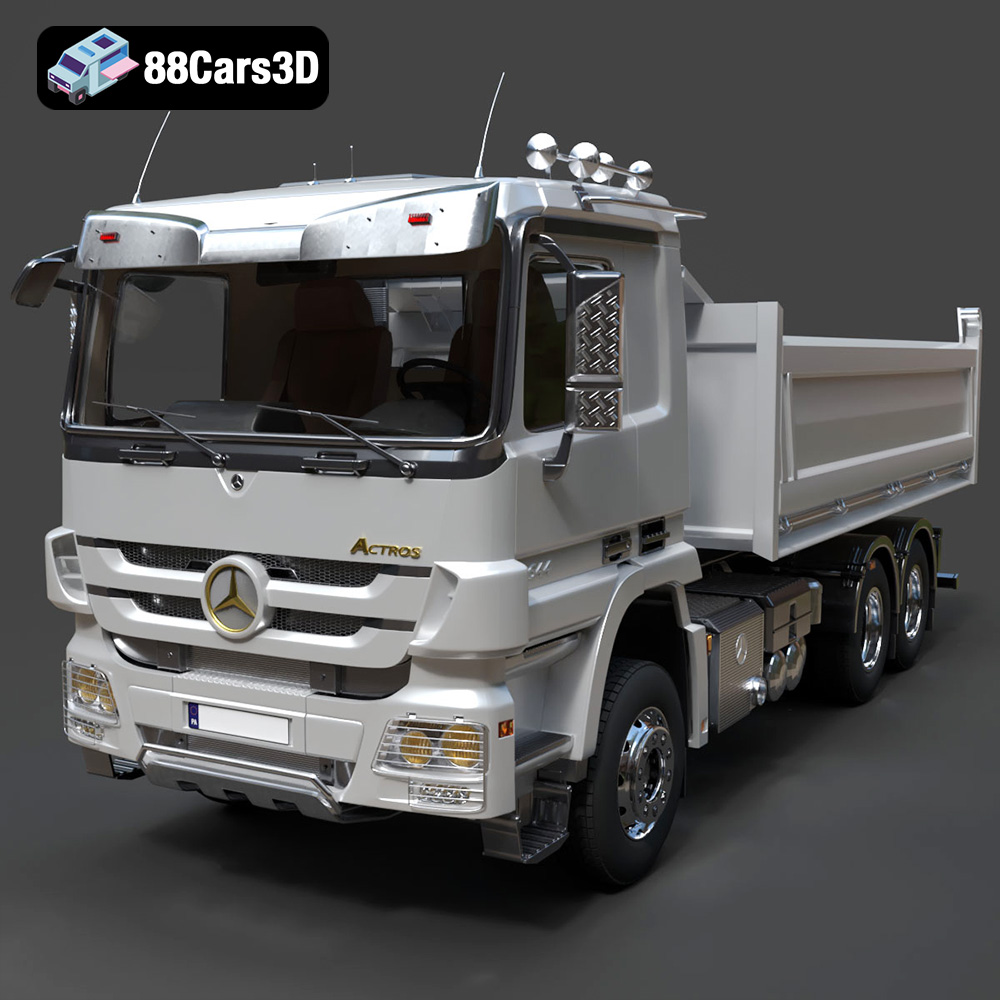
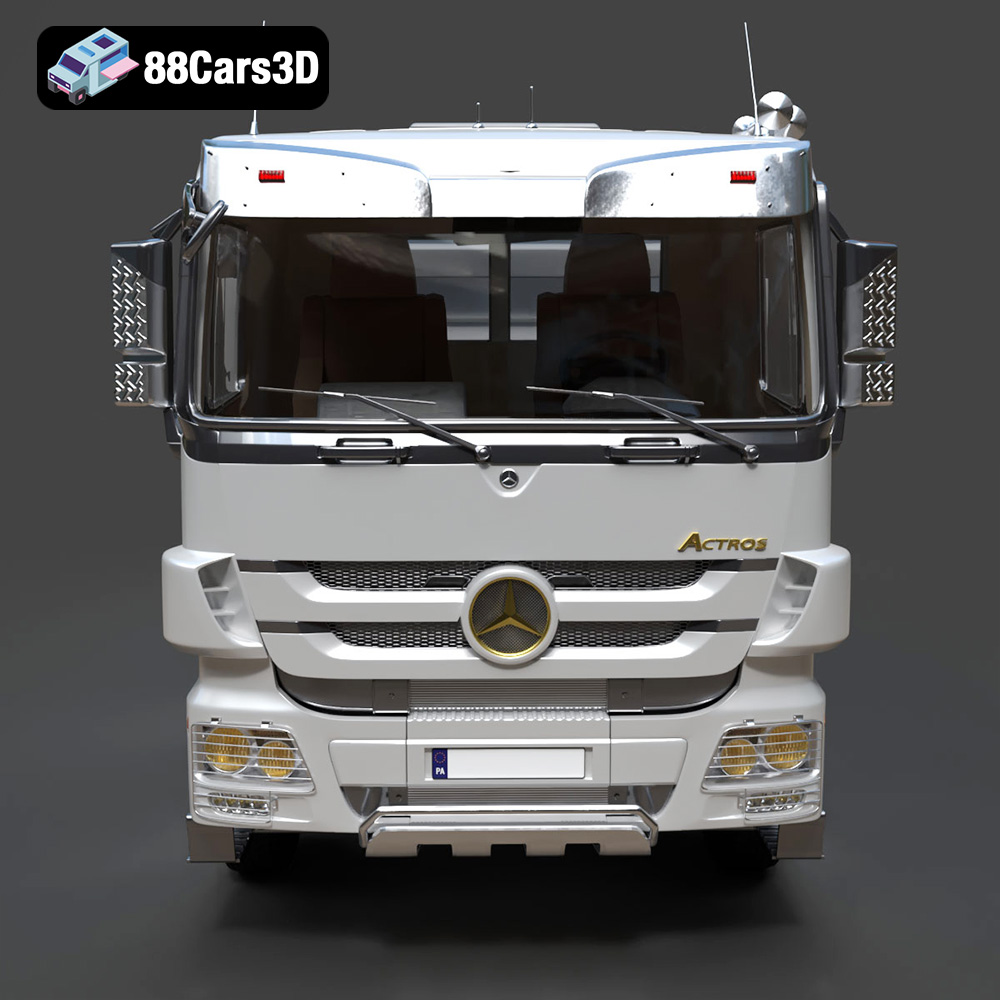
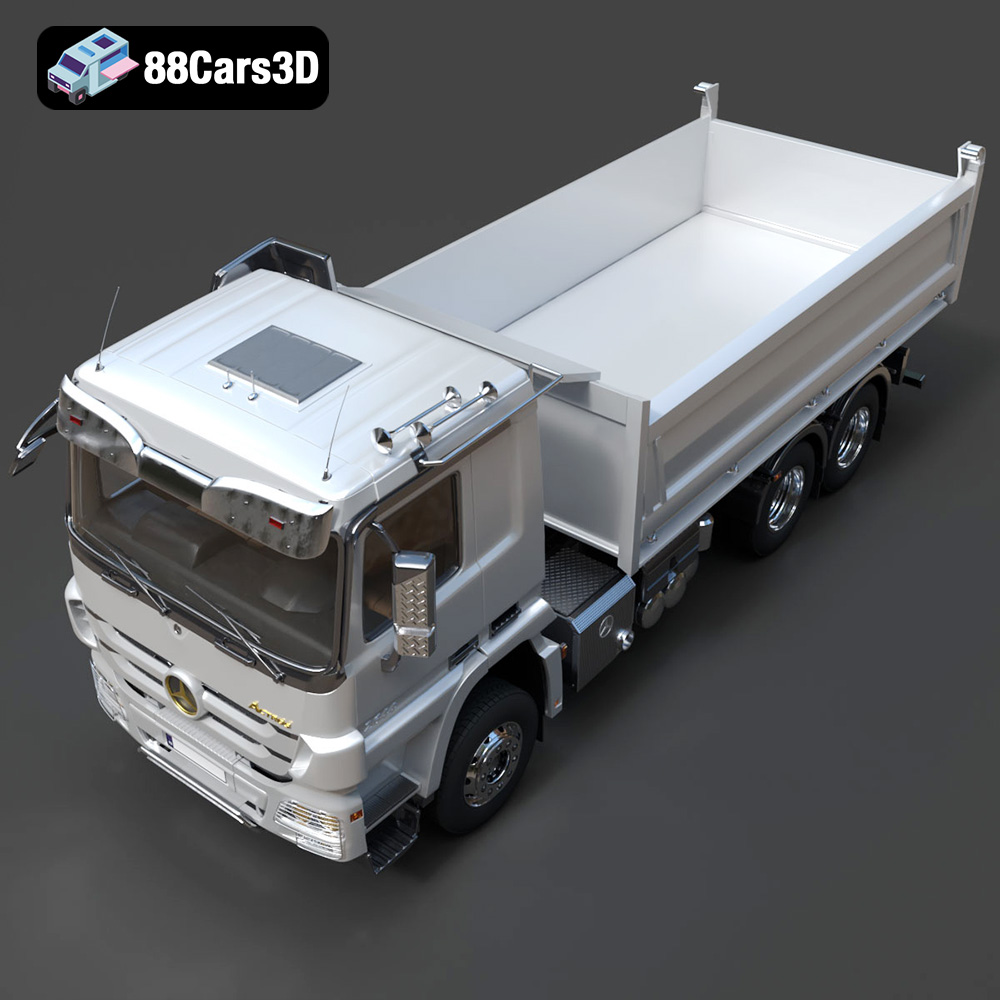
Consider the mighty tipper truck – a ubiquitous workhorse on construction sites, in mining operations, and logistics hubs worldwide. Replicating such a vehicle in 3D demands meticulous attention to detail, not just in its exterior shell, but in its underlying mechanics, its interior, and its suitability for various technical pipelines. This is precisely where a model like the Mercedes-Benz Actros Tipper 3-Axle 2011 3D model distinguishes itself. A testament to robust engineering, this heavy-duty powerhouse, renowned globally for its exceptional payload capacity and reliability, translates into an equally robust and versatile digital asset. Available on 88cars3d.com, this model offers a perfect blend of visual fidelity and technical optimization, making it an invaluable addition to any professional’s toolkit.
The success of any 3D project often hinges on selecting the correct file format. Each format serves specific purposes, catering to different software ecosystems, project requirements, and optimization needs. Understanding these distinctions is critical for efficient workflow and ensuring compatibility.
The .blend format is the native file type for Blender, the popular open-source 3D creation suite. A .blend file is a complete scene package, containing not just mesh data, but also materials, textures (often packed internally), animations, camera setups, lighting, physics simulations, and even custom scripts. For artists working primarily within Blender, this is the go-to format for collaborative projects or archiving. The Mercedes-Benz Actros Tipper model in .blend format means you get a fully editable scene, ready for immediate modification, rigging, or rendering using Blender’s powerful Cycles or Eevee engines.
Developed by Autodesk, the .fbx (Filmbox) format has become the de facto industry standard for exchanging 3D data between various applications. Its strength lies in its ability to encapsulate complex scene information, including geometry, materials, textures, animations (skeletal and blend shapes), cameras, and lights. This makes .fbx ideal for interoperability, especially when moving assets between modeling software (like 3ds Max or Maya) and real-time engines such as Unreal Engine and Unity. For the Actros Tipper, an .fbx file ensures that the model, its pivot points, and potentially its separated animated parts, can be seamlessly imported into your game development pipeline with minimal setup.
The .obj (Wavefront Object) format is one of the oldest and most universally supported 3D file formats. It primarily stores geometric data – vertices, normals, UV coordinates, and faces – along with references to external material files (.mtl). While it lacks support for animations, rigging, or scene information, its simplicity and widespread compatibility make it excellent for static mesh exchange across virtually any 3D software. The Actros Tipper as an .obj is perfect for those who need a clean mesh for sculpting, retopology, or importing into applications that might not support newer formats, providing a foundational mesh without complex scene data.
.glb is the binary version of the GL Transmission Format (glTF), a royalty-free specification for the efficient transmission and loading of 3D scenes and models by applications. GLB files package the model, textures, and animations into a single binary file, making them incredibly efficient and compact. This format is highly optimized for AR/VR applications, web-based 3D viewers, and mobile platforms, where file size and loading speed are paramount. Having the Actros Tipper available in .glb means it’s primed for interactive product showcases on websites, AR configurators, or lightweight VR training simulations, offering excellent performance without sacrificing visual quality.
The .stl (Stereolithography) format represents a 3D model as a series of connected triangles (a triangulated surface). It’s the standard file format for 3D printing, defining only the surface geometry of a 3D object without any color, texture, or material information. When preparing the Actros Tipper for physical fabrication, the .stl file will be the critical link, ensuring your model translates accurately into a printable object, though often requiring further software preparation for slicing and support generation.
The .ply (Polygon File Format) is often used for storing 3D data from 3D scanners, CAD systems, or point clouds. It can store a wider range of properties than .obj or .stl, including color, transparency, surface normals, and confidence values, making it suitable for more precise or analytical applications. While less common for general asset exchange, its inclusion for the Actros Tipper signifies its potential for detailed analysis, reverse engineering, or integration into specialized industrial simulation tools where exact mesh data is paramount.
The .unreal format represents an asset specifically prepared and optimized for Unreal Engine. This might involve proprietary internal data structures, pre-compiled shaders, collision meshes, and level of detail (LOD) setups that make it truly plug-and-play within the engine environment. While .fbx is generally used for importing into Unreal, an explicit .unreal file often implies that the asset has already undergone the engine-specific optimization process, saving developers significant time. For a complex asset like the Actros Tipper, having an .unreal file means the heavy lifting of engine integration is already done, making it immediately usable for game development and architectural visualization.
Similar to .blend for Blender, .max is the native file format for Autodesk 3ds Max, a leading software for 3D modeling, animation, and rendering. A .max file contains a complete scene, including models, textures, materials, lighting, cameras, animation data, and various modifiers. This format is essential for any project involving 3ds Max users, providing full editability and access to all scene components for advanced rendering with V-Ray or Corona, or complex animation sequences. The Actros Tipper in .max format ensures a professional workflow for users of this powerful software.
The availability of the Mercedes-Benz Actros Tipper 3-Axle 2011 3D model in such a comprehensive array of formats on 88cars3d.com demonstrates a deep understanding of diverse professional requirements, enabling users to seamlessly integrate this high-quality asset into virtually any pipeline.
The Mercedes-Benz Actros Tipper 3-Axle 2011 is not just a truck; it’s a statement of industrial strength and efficiency. Translating this real-world presence into a compelling 3D car model requires a meticulous approach to geometry, materials, and functional design. This specific 3D model excels by capturing the essence of its real-world counterpart while optimizing it for digital performance.
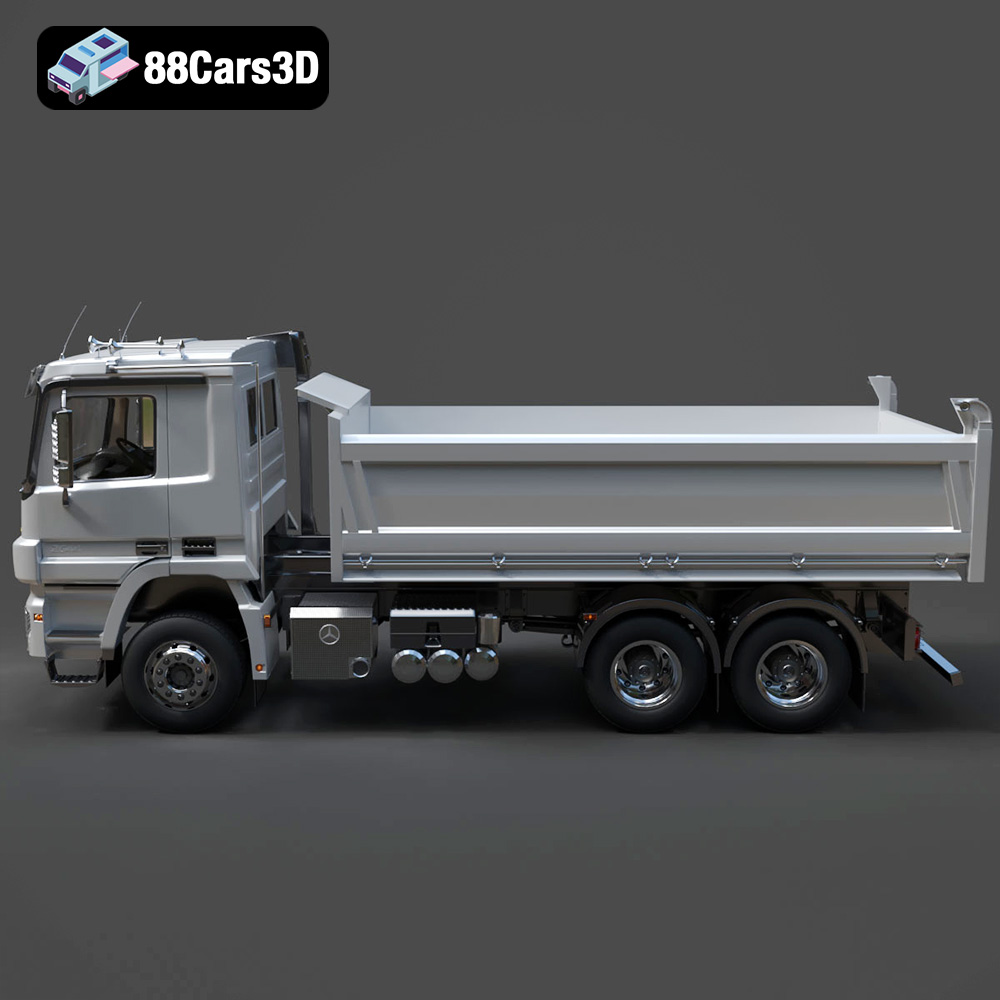
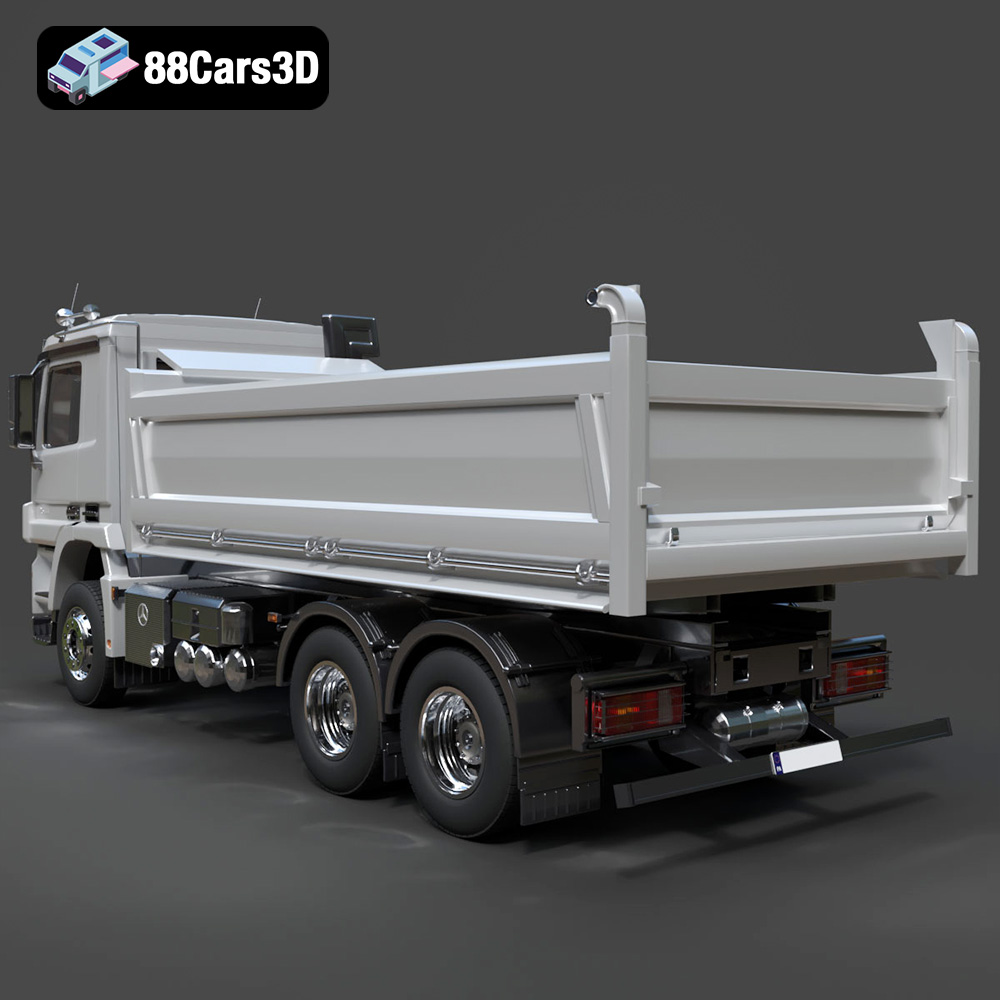
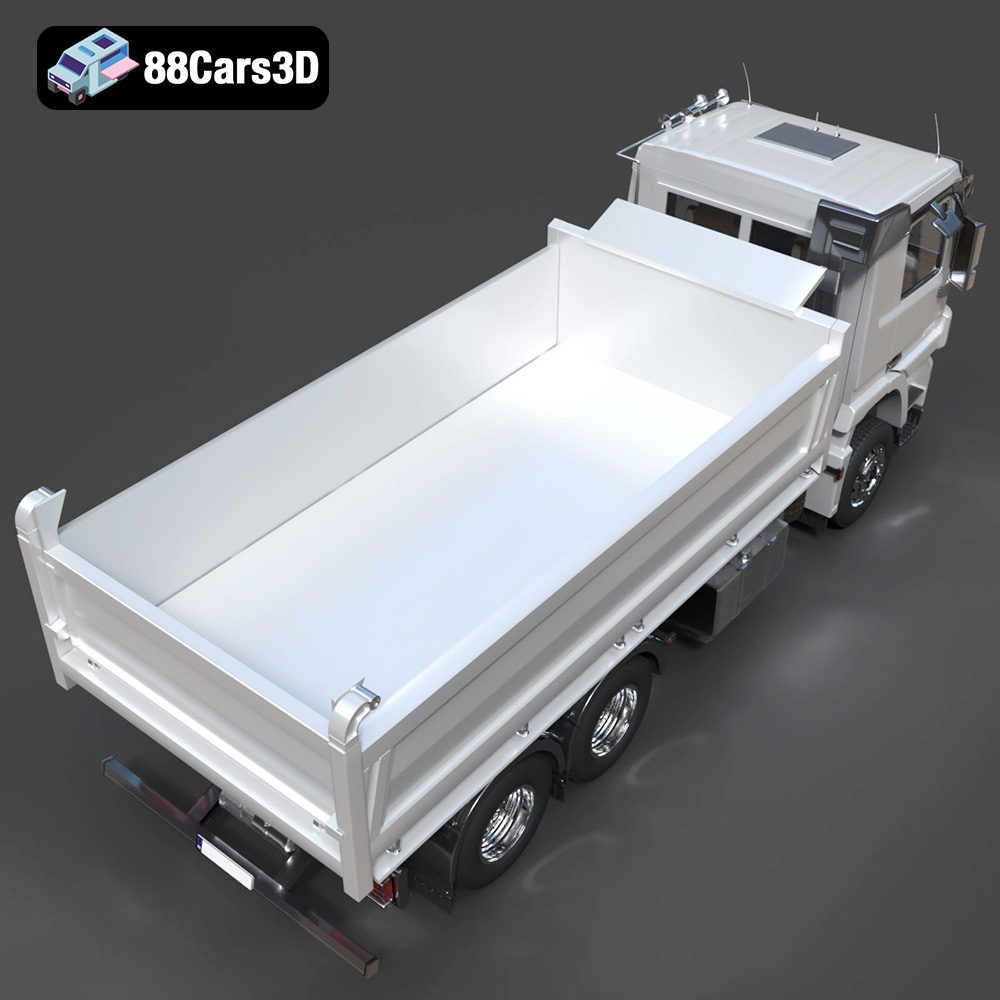
The model boasts accurate Mercedes-Benz Actros Tipper 3-Axle 2011 frame geometry and proportions, ensuring that its digital representation is immediately recognizable and structurally sound. Every critical component has been carefully modeled, from the muscular front grille and towering aerodynamic cab to the durable multi-axle chassis and the heavy-duty hydraulic tipper body. This isn’t merely a superficial shell; it includes detailed heavy-duty diesel engine block and powertrain components, authentic commercial exhaust, and high-capacity air intake systems. Such attention to mechanical detail elevates the model beyond a simple visual asset, making it suitable for technical simulations and detailed visual breakdowns.
The exterior features extend to high-fidelity lighting, including cab roof lights, primary headlamps, and heavy-duty taillights, all positioned correctly for realistic illumination in any scene. The dual-wheel rear axles and rugged commercial off-road tires, complete with realistic tread patterns, convey its capability in challenging terrains. Underneath, the multi-leaf spring suspension and hydraulic tipper bed mechanisms are not just static elements; they are designed with proper pivot setups for realistic animation. Inside the cab, the detail continues with an ergonomic commercial driver air-suspension seat, an accurately scaled heavy-duty steering wheel, a detailed dashboard, and an authentic commercial instrument cluster. The control layout, including pedals, shifters, and hydraulic bed levers, is modeled with precision, making it perfectly optimized for first-person POV in trucking simulators, enhancing immersion for the virtual driver.
In the world of real-time rendering, optimization is paramount. Every polygon, every texture, and every shader contributes to the computational load. The Mercedes-Benz Actros Tipper 3-Axle 2011 3D model is explicitly designed with this in mind, making it an exemplary game asset.
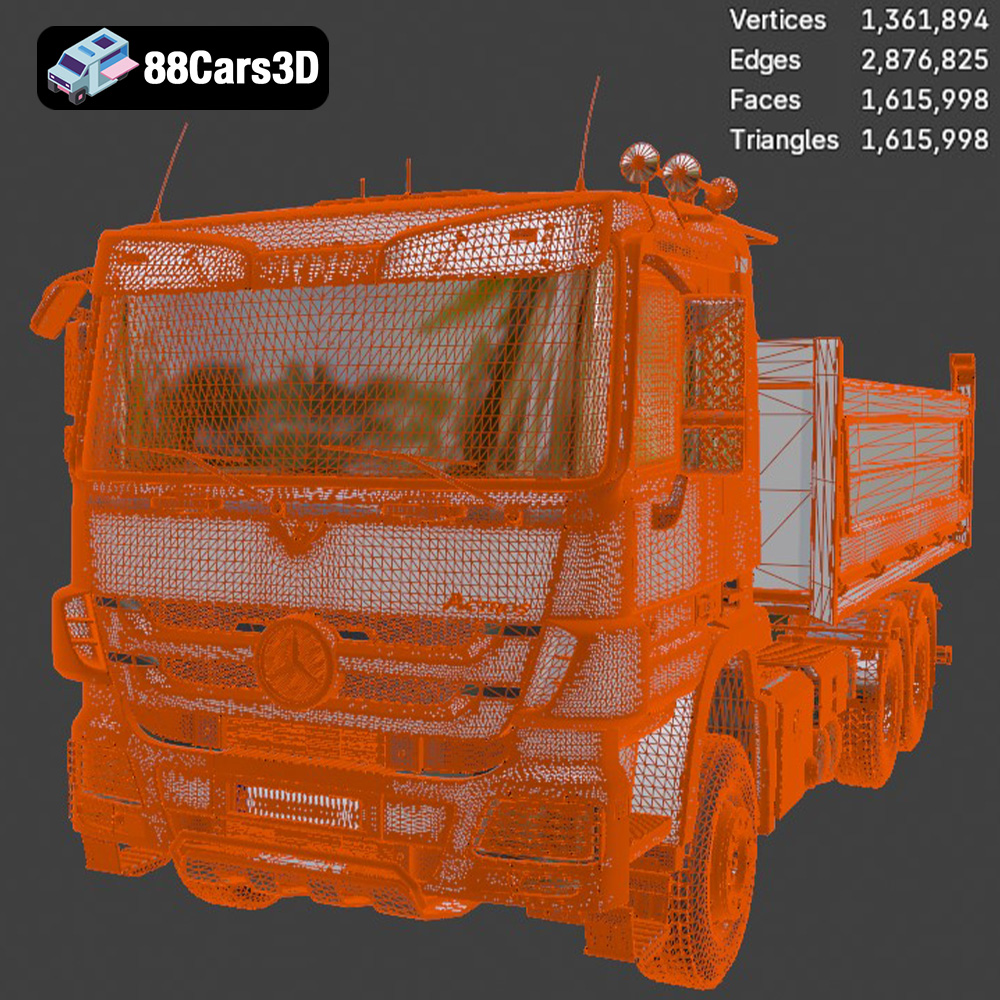
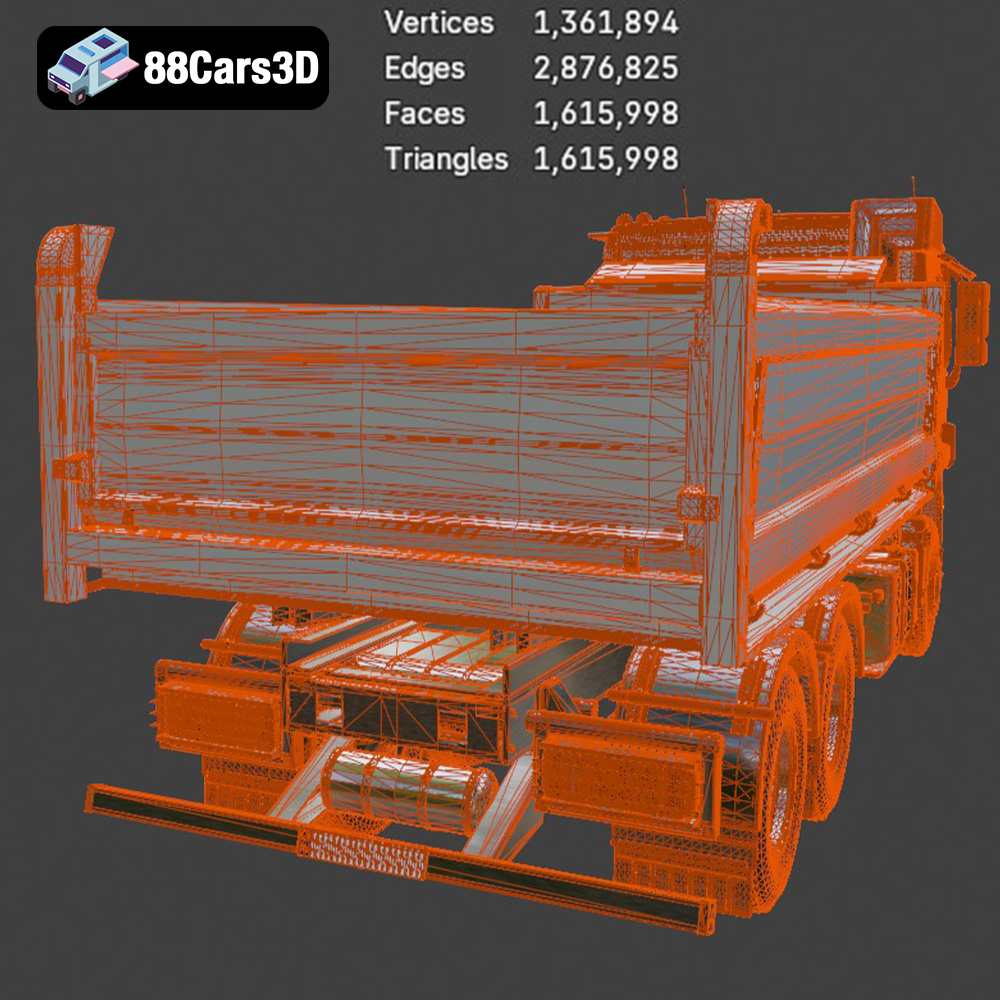
With approximately 150,000 triangles, this model strikes a perfect balance for real-time engines like Unreal Engine and Unity. This polycount is sufficiently detailed to maintain high-end visual realism from various distances, yet efficient enough to integrate into large open-world environments without causing significant performance bottlenecks. Clean, optimized topology ensures efficient rendering and straightforward UV mapping for texturing. The careful distribution of polygons means that critical areas like the cab, wheels, and tipper bed retain their shape and detail, while less visible areas are optimized for efficiency.
The inclusion of .fbx and .unreal file formats is a game-changer for developers. The .fbx format, with its robust support for mesh data, materials, and pivot information, allows for easy import into both Unreal and Unity. For Unreal Engine users, the dedicated .unreal file signifies that the asset is likely pre-optimized with appropriate collision meshes, LODs (Levels of Detail), and potentially even basic material setups, streamlining the integration process. This means developers can spend less time on asset preparation and more time on gameplay mechanics or scene construction. Proper pivot setups for steering, wheel rotation, hydraulic bed lift, and suspension travel are already configured, enabling immediate implementation of realistic vehicle physics and animations.
Imagine a construction simulator where players operate the Actros Tipper to transport materials across a virtual site. The optimized geometry ensures smooth frame rates, even with multiple vehicles and complex environments. The detailed cockpit allows for an immersive first-person experience, crucial for realism in simulators. In AR/VR, this model becomes invaluable for training. Operators can virtually walk around, inspect, or even “drive” the Actros in a simulated environment, learning its controls and procedures without risk. Its optimized nature ensures a fluid experience on varied hardware, from high-end VR headsets to mobile AR devices, making it perfect for immersive virtual showrooms, configurators, and mobile AR training experiences.
While optimized for real-time, the Mercedes-Benz Actros Tipper 3-Axle 2011 3D model also shines in high-fidelity rendering and professional visualization contexts, where photorealism is the ultimate goal. Its inherent detail and structural accuracy make it a superb foundation for stunning static renders and complex animations.
For commercial campaigns, the model’s detailed features, from the engine block to the tipper mechanism, can be highlighted with professional lighting and materials to create eye-catching advertisements. Imagine a close-up render showcasing the rugged commercial off-road tires, emphasizing durability, or an animation demonstrating the smooth operation of the hydraulic tipper bed. In architectural visualization, integrating this Actros model into construction site scenes adds an unparalleled level of realism. Architects and developers can present their projects with dynamic, lifelike elements, showcasing not just the buildings, but the entire ecosystem of a functioning site. The accurate real-world scale ensures that it fits perfectly into any scene, maintaining visual harmony and believability.
The model’s clean UV mapping and optimized topology are essential for applying high-resolution textures and sophisticated PBR (Physically Based Rendering) materials. Users can easily change cab/tipper colors to match factory specifications or custom fleet finishes, modify tire textures for off-road mud or street variants, and adjust material finishes from matte to gloss or metallic, even adding weathered effects for a gritty, used look. This level of customization is crucial for achieving photorealistic results that can be indistinguishable from actual photography. With powerful renderers like V-Ray, Corona, or Cycles, artists can adapt lighting for different environments – from bright sunny days on a construction site to dramatic studio setups – leveraging the model’s detailed geometry to cast accurate shadows and reflections.
The versatility of a high-quality 3D model extends beyond digital screens into the physical world through 3D printing. The Mercedes-Benz Actros Tipper 3-Axle 2011 3D model is designed with this capability in mind, offering hobbyists and professionals the chance to bring this powerful vehicle into tangible existence.
The inclusion of the .stl format is key for 3D printing, as it’s the universal language for additive manufacturing. However, successful 3D printing requires careful consideration of scaling, layer height, wall thickness, and support structures. The recommended scales (1:24, 1:32, 1:50) provide options for different display sizes and levels of detail. For fine details inherent in the Actros Tipper – such as the exhaust, mirrors, hydraulic rams, and intricate chassis components – resin printing (SLA/DLP) is highly recommended over FDM, allowing for much finer layer heights (0.04–0.12 mm) and smoother finishes. Adequate wall thickness (1.2–2.0 mm) ensures structural integrity for the printed parts, preventing brittleness.
Printing the Actros Tipper isn’t a single-piece job for optimal results. The model is structured with separate components like wheels, suspension, cab, and tipper bed, which is ideal for printing. This allows for specific print orientations: the frame can be printed angled for better structural integrity and fewer supports, while wheels and the tipper can be printed separately to capture their unique geometries without excessive support material. Post-processing is a crucial step to achieve a professional finish. Sanding, applying primer, and then painting with authentic factory or fleet colors, potentially with metallic finishes, will transform the raw print into a detailed scale model. This functionality truly showcases the comprehensive utility of 3D car models from 88cars3d.com, extending their value beyond purely digital applications.
A static 3D model is valuable, but an animatable one unlocks a wealth of possibilities for dynamic content creation. The Mercedes-Benz Actros Tipper 3-Axle 2011 3D model is engineered to facilitate complex animation and extensive customization, essential for professional workflows.
A critical advantage of this 3D car model is its inherent animation readiness. The components like wheels, suspension, cab, tipper bed, and steering are separated and come with proper pivot setups. This means animators don’t have to spend valuable time breaking apart the model or guessing pivot points. Instead, they can immediately begin animating realistic steering maneuvers, wheel rotation, the compression and rebound of the multi-leaf spring suspension, and the impressive lift and lower cycles of the hydraulic tipper bed. This pre-configured setup dramatically accelerates the animation pipeline for cinematics, product demonstrations, or interactive simulations, making it an ideal game asset for dynamic environments.
Beyond animation, the model offers extensive customization options that empower artists to tailor the Actros Tipper to specific project needs. Imagine adapting the truck for different scenarios:
This flexibility ensures that the Mercedes-Benz Actros Tipper 3-Axle 2011 3D model can be repurposed across numerous projects, offering long-term value and creative freedom for designers and developers alike.
The digital landscape for 3D content creation is constantly evolving, demanding assets that are not only visually impressive but also technically robust and versatile. The Mercedes-Benz Actros Tipper 3-Axle 2011 3D model stands as a prime example of such an asset, meticulously crafted to meet the rigorous demands of modern 3D workflows. Its optimized geometry, detailed construction, and comprehensive file format support make it an indispensable tool for a wide array of applications, from cutting-edge automotive rendering and immersive game development to realistic AR/VR experiences and even precise 3D printing projects.
From its game-ready polycount of ~150,000 triangles ensuring smooth performance in Unreal Engine and Unity, to its detailed interior perfect for first-person simulators, every aspect of this model has been engineered for professional utility. The availability across multiple formats – .blend, .fbx, .obj, .glb, .stl, .ply, .unreal, and .max – signifies its readiness for any pipeline, empowering artists and developers with unparalleled flexibility. Whether you are building an expansive open-world game, creating a compelling commercial visualization, or fabricating a scale model, this Actros Tipper provides a solid foundation.
Investing in high-quality 3D car models like the Mercedes-Benz Actros Tipper 3-Axle 2011 streamlines production, enhances realism, and ultimately elevates the quality of your final output. Explore this exceptional asset and many others at 88cars3d.com, your trusted source for premium 3D content that drives innovation and creativity in the digital automotive world.
This high-quality 3D model of the Mercedes-Benz Actros Tipper 3-Axle 2011 boasts optimized topology (~150,000 triangles) for game-ready performance while maintaining incredible visual fidelity. Perfect for game development, AR/VR, commercial animations, and industrial visualization, it includes detailed exterior, interior, and animatable components like the hydraulic tipper and suspension, available in multiple professional file formats.
$19.99
.2011
.actros
.blend
.fbx
.glb
.max
.obj
.ply
.rendering
.stl
.truck
.unreal
3-axle
actros-tipper
commercial-vehicle
construction-equipment
dump-truck
game asset
game-ready
heavy-duty
low-poly
mercedes-benz
optimized
tipper-truck
truck-3d-model
VR/AR