Get 20% OFF All Premium 3D & STL Models!

In the dynamic realm of 3D content creation, where realism and efficiency are paramount, the demand for meticulously crafted digital assets is ever-increasing. From blockbuster cinematic sequences to hyper-realistic military simulations and immersive gaming experiences, the quality of a 3D model can define the success of an entire project. Nowhere is this more apparent than with specialized vehicles, where complex engineering and rugged aesthetics must be captured with absolute precision. This is where a truly professional asset, such as the Armoured Vehicle 001 3D Model, proves its invaluable worth, offering creators a robust foundation for their most ambitious visions.
The journey from concept to a fully realized digital environment is paved with countless decisions, but one of the most critical is the choice of your core assets. A high-fidelity 3D model doesn’t just look good; it’s built with an understanding of performance, flexibility, and compatibility across various industry-standard tools and pipelines. Whether you’re a game developer seeking unparalleled visual fidelity for a combat simulator, an architectural visualization artist adding realism to a scene, or a film producer needing a tactical vehicle for a crucial shot, the underlying quality of the 3D model dictates the possibilities. The Armoured Vehicle 001 3D Model, available on 88cars3d.com, exemplifies this commitment to excellence, providing a digital asset engineered to exact standards for a multitude of applications.
In any 3D production, from the grandest cinematic vista to the most intricate interactive scene, the quality of the core assets forms the bedrock of believability. A high-quality 3D model isn’t merely about aesthetics; it embodies a meticulous blend of artistic vision and technical prowess that allows for unparalleled versatility and performance. When it comes to specialized assets like an armored vehicle, the stakes are even higher, demanding authenticity that stands up to scrutiny in diverse digital environments.
An exceptional 3D model like the Armoured Vehicle 001 3D Model begins with an unwavering commitment to precision. Every curve, every panel line, and every mechanical component must accurately represent its real-world counterpart. This level of detail extends beyond mere visual accuracy to encompass functional design. For an armoured vehicle, this means correctly representing the thickness of armor plating, the articulation of heavy-duty suspension, the strategic placement of observation ports, and the intricate mechanisms of its operational systems. Such fidelity is crucial for simulations where accurate dimensions and weight distribution might impact physics, or for cinematic renderings where close-up shots demand absolute believability. The model’s adherence to these standards ensures it can be deployed authentically in scenarios ranging from urban patrols to rugged off-road terrains.
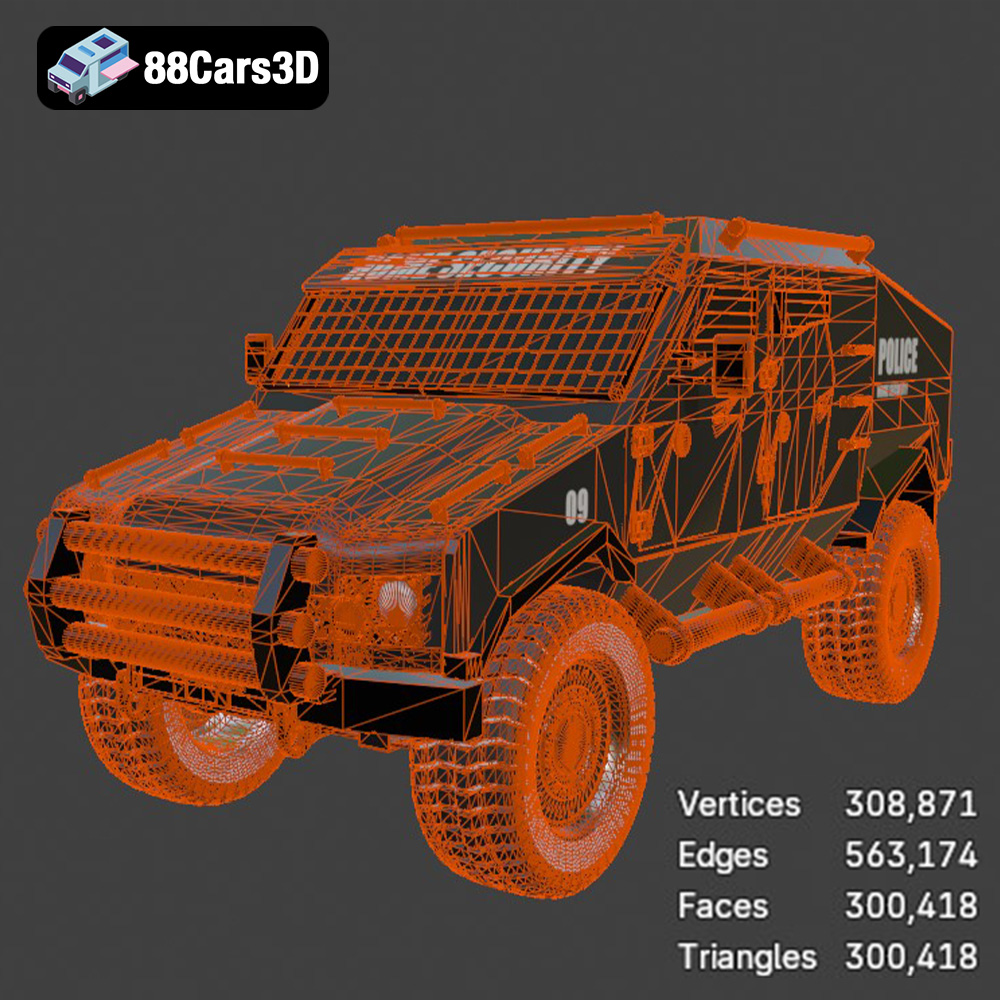
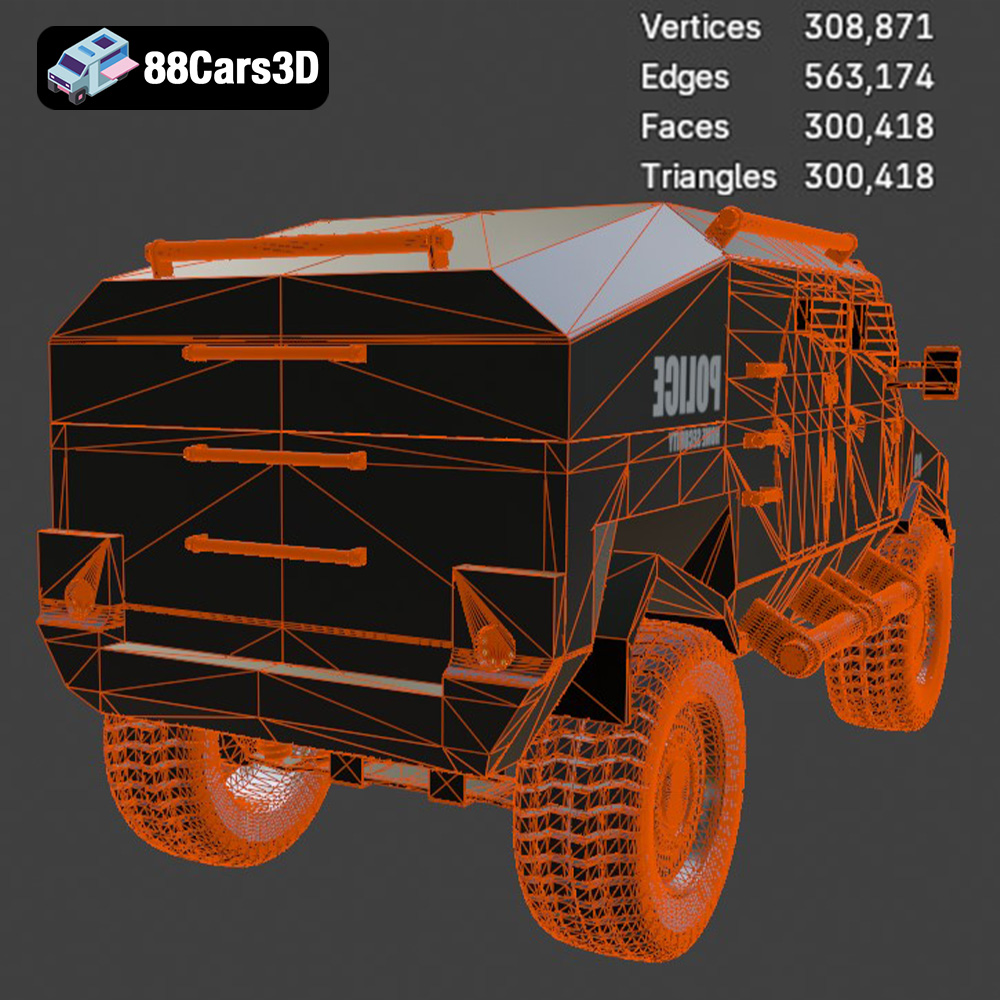
Beyond visual accuracy, the technical integrity of a 3D model is paramount. Professional-grade assets feature clean geometry and meticulously organized meshes. This means the model’s polygon count is optimized – high enough to capture intricate details without being overly dense, which can bog down real-time performance or increase rendering times. Clean topology, often achieved through quad-based geometry, ensures smooth deformation during animation and predictable subdivision for higher detail levels. Equally vital are well-laid-out UV maps, which are the 2D representations of the 3D model’s surface. Proper UV mapping is essential for applying textures without stretching or distortion, allowing for realistic materials, decals, and weathering effects to be rendered perfectly. An organized mesh and optimized UVs make the Armoured Vehicle 001 3D Model not only look superb but also perform efficiently across various applications and rendering engines.
Ultimately, the goal of any 3D asset is to contribute to compelling visual storytelling. A high-quality model provides the narrative fidelity necessary for immersive experiences. For example, in a military simulation, the authentic representation of an armoured vehicle enhances player immersion and tactical awareness. In a cinematic, the rugged textures and precise details of the vehicle’s exterior, coupled with a detailed interior, allow for dynamic camera angles and engaging character interactions. The inclusion of realistic materials and textures, carefully crafted to reflect wear, tear, and environmental interaction, brings the model to life, making it feel like a tangible object rather than a digital construct. This attention to detail elevates the overall visual experience, turning a simple asset into a powerful storytelling tool.
The versatility of a professional 3D model is often defined by its compatibility with various software and pipelines, and this largely hinges on the file formats it supports. Each format is designed with specific use cases in mind, offering unique advantages for different stages of production and different types of output. Understanding these distinctions is critical for any 3D professional, ensuring seamless integration and optimal performance. The Armoured Vehicle 001 3D Model is provided in multiple industry-standard formats, ensuring it fits into virtually any workflow.
The .blend format is the native file type for Blender, an incredibly powerful and increasingly popular open-source 3D creation suite. A .blend file typically contains not just the raw 3D mesh but also the entire Blender scene, including materials, textures, lighting setups, cameras, animations, physics simulations, and even custom scripts. This makes it an ideal choice for users working directly within Blender, as it provides a fully editable and self-contained project. For assets like the Armoured Vehicle 001 3D Model, receiving a .blend file means you get the original creation context, allowing for deep customization, tweaking materials, adjusting lighting, or even dissecting the topology to understand its construction. It’s the go-to format for maintaining full creative control and leveraging Blender’s extensive toolset.
.fbx (Filmbox) is an Autodesk-developed proprietary file format widely recognized as the industry standard for exchanging 3D data between different software applications and game engines. It excels at transferring not just geometry but also animation, cameras, lights, and skeletal rigging, making it incredibly versatile. For game development (e.g., Unreal Engine, Unity) and real-time pipelines, .fbx is often the preferred choice due to its robust support for skeletal animations and efficient data handling. When the Armoured Vehicle 001 3D Model is provided as an .fbx, it’s typically optimized for direct import into game engines, preserving its professional-grade topology and materials.
The .unreal format, while not a universal file type like .fbx, refers to assets specifically configured and packaged for direct import or use within Unreal Engine. This often means the model has already been processed with appropriate materials (Unreal’s Material Editor), textures, collision meshes, and sometimes even basic blueprints or animations, ready for immediate deployment in an Unreal project. For a complex asset like our armoured vehicle, an .unreal file dramatically streamlines the workflow, reducing the time spent on engine-specific setup and allowing developers to focus on scene building and interaction. It embodies the concept of an “engine-ready asset” for real-time environments.
The .obj (Wavefront OBJ) format is one of the oldest and most universal 3D file formats. It’s a text-based format that primarily stores geometric data (vertices, normals, texture coordinates, and faces) and can reference external material files (.mtl). Its strength lies in its widespread compatibility; almost every 3D software application can import and export .obj files. While it doesn’t support animation or rigging directly, it’s excellent for transferring static meshes and is often used as a foundational format for cross-software compatibility. For a detailed static model like the Armoured Vehicle 001 3D Model, an .obj ensures that users of virtually any 3D package can access the core geometry.
.max is the native file format for Autodesk 3ds Max, a leading software for 3D modeling, animation, rendering, and visualization. Similar to .blend files, a .max file contains the entire scene data, including geometry, lights, cameras, materials, animations, and modifier stacks. This format offers maximum flexibility for professionals working within the 3ds Max ecosystem, allowing full access to editable elements, robust rendering features (like V-Ray or Corona), and extensive animation tools. For users who rely on 3ds Max for high-fidelity rendering or complex animations, the .max version of the Armoured Vehicle 001 3D Model provides unparalleled control over the asset.
.glb (GLB-Binary) is a binary file format for 3D models saved in the GL Transmission Format (glTF). It’s highly optimized for the web, AR (Augmented Reality), and VR (Virtual Reality) applications, making it ideal for displaying 3D models efficiently in browser-based viewers or mobile AR experiences. A .glb file packages geometry, materials, textures, and animations into a single, compact file, reducing load times and simplifying integration into lightweight interactive environments. For showcasing the Armoured Vehicle 001 3D Model in an AR experience or on a website, .glb is the format of choice.
The .stl (STereoLithography) format is the de facto standard for 3D printing. It represents a 3D model as a series of connected triangles, defining only the surface geometry of an object without color, texture, or other attributes. Its simplicity makes it universally compatible with 3D printing slicer software. While the Armoured Vehicle 001 3D Model is designed for digital rendering, its .stl export enables physical prototyping or creating miniature replicas, opening up unique possibilities for tangible applications.
Finally, .ply (Polygon File Format or Stanford Triangle Format) is a versatile format for storing 3D data, particularly useful for scanned data from 3D scanners. It can store various properties beyond just geometry, such as color, transparency, and even confidence values for each vertex or face. While not as common for general asset exchange, it’s a precision mesh format often used in scientific, medical, and CAD applications for detailed analysis or specific visualization needs. The inclusion of .ply for the Armoured Vehicle 001 3D Model indicates a high level of geometric detail suitable for such specialized analytical workflows.
The advent of powerful real-time engines has revolutionized how we interact with digital content. For game developers and simulation engineers, the seamless integration of high-quality assets like the Armoured Vehicle 001 3D Model is crucial for creating truly immersive and engaging experiences. Efficiency, optimization, and visual fidelity must go hand-in-hand.
When incorporating a complex model into a game engine, the workflow needs to be streamlined. Assets from 88cars3d.com, such as the Armoured Vehicle 001 3D Model, are built with game development in mind, often provided in formats like .fbx or even pre-configured .unreal files. In Unreal Engine, this typically involves importing the .fbx asset, which brings in the mesh, basic materials, and potentially LODs (Levels of Detail). Textures are then imported separately and linked to materials within Unreal’s Material Editor, where PBR (Physically Based Rendering) principles are applied for realistic surface properties. Collision meshes are generated or imported to ensure proper physical interaction within the game world. Similarly, in Unity, the .fbx import handles the geometry, and materials are set up using Unity’s Standard Shader or URP/HDRP specific shaders. The clean geometry and organized mesh of the Armoured Vehicle 001 3D Model ensure a smooth transition, minimizing cleanup and rework once inside the engine.
Optimization is paramount for real-time applications. Even with today’s powerful hardware, a single highly detailed model can impact frame rates if not managed correctly. The Armoured Vehicle 001 3D Model is designed with professional-grade topology, meaning its polygon count is balanced for visual fidelity without being excessively heavy. Further optimization techniques often applied in game development include creating multiple Levels of Detail (LODs), where simpler versions of the model are swapped in at greater distances from the camera. Draw call optimization, texture atlasing, and efficient material setups are also vital. The model’s inherent optimization from its source ensures a solid foundation for these further steps, allowing developers to achieve smooth performance even in demanding scenes with multiple vehicles and complex environments.
Consider the application of a model like the Armoured Vehicle 001 3D Model in military training simulations. These simulations demand extreme realism and accuracy to provide effective training scenarios. The model’s detailed exterior and interior are critical here. Trainees can interact with an accurate representation of the vehicle, understanding its dimensions, entry points, and internal layouts. The realistic materials and textures contribute to environmental believability, whether the vehicle is operating in a desert, urban, or forested environment. Furthermore, the model’s clean geometry and game-engine readiness allow for precise physics interactions, realistic damage modeling, and seamless integration with complex AI systems. This enables the creation of dynamic, high-fidelity tactical training modules that accurately reflect real-world operational challenges, providing invaluable experience to personnel before they step into actual vehicles.
Beyond real-time applications, high-fidelity 3D car models like the Armoured Vehicle 001 are indispensable for generating stunning, photorealistic images and cinematic sequences. This field demands an even higher level of detail, material accuracy, and lighting finesse to blur the line between digital and reality.
When aiming for cinematic quality, software like Autodesk 3ds Max and Blender, often paired with powerful rendering engines like V-Ray, Corona Renderer, or Cycles, come into their own. The Armoured Vehicle 001 3D Model, provided in .max and .blend formats, offers full editability for these high-end rendering workflows. In 3ds Max, artists can leverage its robust modeling tools to add additional micro-details, if needed, and its powerful scene management features for complex environments. Blender’s Cycles renderer, known for its physically accurate light transport, can bring the rugged textures and metallic sheen of the vehicle to life with stunning realism. The model’s clean geometry ensures that subdivision surfaces will render flawlessly, and its meticulously organized mesh prevents any artifacts during the rendering process, resulting in crisp, detailed outputs perfect for advertising, film, or architectural visualization projects.
Photorealism is heavily reliant on superior texturing and sophisticated lighting. The Armoured Vehicle 001 3D Model comes equipped with realistic materials and textures, but artists often take this further. PBR (Physically Based Rendering) workflows are standard, utilizing maps for Albedo/Base Color, Roughness, Metallic, Normal, and Ambient Occlusion. These maps, applied judiciously, can simulate everything from scratched paint and mud splatters to glinting metallic surfaces and worn-down tires. Lighting is equally critical; using HDRI (High Dynamic Range Image) environment maps can provide realistic global illumination and reflections, mimicking real-world lighting conditions. Furthermore, strategic placement of area lights and spot lights can highlight specific features of the armoured vehicle, emphasizing its powerful stance and rugged details, creating dramatic and engaging compositions.
For cinematic sequences, the Armoured Vehicle 001 3D Model serves as an excellent foundation for dynamic animation. With its detailed interior and exterior, animators can create compelling shots from various perspectives. Imagine a tactical sequence where the vehicle navigates challenging terrain, its heavy-duty suspension realistically articulating over obstacles, or a close-up revealing intricate details of its interior as a digital character interacts with the controls. The model’s well-structured mesh allows for easy rigging of moving parts—wheels, doors, hatches, turrets—enabling realistic mechanical motion. These animations can then be integrated into storyboards, pre-visualizations, or final cinematic renders, adding unparalleled authenticity and visual impact to any narrative that features tactical transport.
The utility of a high-quality 3D model extends far beyond traditional rendering and game development. With advancements in augmented reality, virtual reality, and 3D printing technologies, assets like the Armoured Vehicle 001 3D Model are finding exciting new applications that blend the digital and physical worlds.
Augmented Reality (AR) and Virtual Reality (VR) thrive on immersive, interactive 3D content. The Armoured Vehicle 001 3D Model, optimized for real-time engines and available in .glb format, is perfectly suited for these emerging platforms. In an AR experience, users could place a virtual armoured vehicle in their real-world environment, viewing it from all angles, scaling it, and even walking around it as if it were truly present. This has significant potential for product visualization, interactive marketing, or even simplified tactical planning. In VR, the model could be integrated into fully immersive training environments or interactive museum exhibits, allowing users to “step inside” the vehicle and explore its detailed interior, gaining a deeper understanding of its design and function. The efficient file size of .glb, coupled with the model’s inherent optimization, ensures smooth performance even on mobile AR devices or less powerful VR headsets.
While primarily a digital asset, the Armoured Vehicle 001 3D Model’s availability in .stl format opens up a fascinating avenue for physical prototyping and tangible outputs. An .stl file provides the triangulated surface geometry necessary for 3D printers to construct a physical replica. This could range from creating small-scale models for tabletop wargaming or collectible display pieces, to more functional prototypes for design review or educational purposes. The ability to bridge the gap between digital design and physical manifestation adds another layer of versatility to the model, offering creators the option to bring their digital assets into the tangible world.
The inclusion of the .ply format for the Armoured Vehicle 001 3D Model speaks to its utility in specialized data analysis and visualization contexts. The Polygon File Format can store additional data beyond just geometry, such as per-vertex or per-face color, normal information, or even custom attributes. This makes it valuable in scientific, engineering, or research applications where a highly detailed and potentially annotated mesh is required. For instance, engineers might use the .ply version of the model to analyze stress points, simulate airflow patterns, or conduct precise measurements that go beyond visual representation, leveraging the model’s inherent precision for quantitative analysis. This demonstrates the profound depth of application for a truly professional-grade 3D asset.
In the fast-paced world of 3D production, time is money. Relying on high-quality, pre-made assets can dramatically reduce development cycles and elevate the final product’s quality. This is precisely the advantage offered by marketplaces like 88cars3d.com, which curates a selection of professional-grade 3D car models and specialized vehicles like the Armoured Vehicle 001 3D Model.
One of the biggest challenges in sourcing 3D assets is ensuring their quality and compatibility across various software and engines. Low-quality models can lead to endless hours of cleanup, retopology, or re-texturing, ultimately negating any perceived cost savings. 88cars3d.com addresses this by providing models engineered to exact standards, featuring clean geometry, organized meshes, and realistic materials. The Armoured Vehicle 001 3D Model, for instance, explicitly states its professional-grade topology and optimization for real-time engines and offline renderers, assuring creators of its readiness for integration into demanding pipelines. The availability of multiple industry-standard file formats further guarantees seamless compatibility, reducing friction in diverse production environments.
For studios and individual artists alike, efficiency is key. Creating a complex model like an armoured vehicle from scratch is an incredibly time-consuming and resource-intensive endeavor. By acquiring a pre-built, high-quality asset from 88cars3d.com, teams can drastically cut down on modeling, texturing, and initial optimization phases. This allows artists to focus their valuable time and expertise on more creative tasks, such as scene composition, animation, lighting, and developing unique project-specific features. The immediate availability of a production-ready model like the Armoured Vehicle 001 3D Model translates directly into accelerated timelines and increased productivity.
88cars3d.com serves as a valuable resource for creators seeking a diverse range of high-quality 3D car models and vehicles. Whether it’s civilian cars, futuristic concepts, or specialized assets like the Armoured Vehicle 001, the marketplace provides a curated selection that meets professional standards. This empowers creators by giving them immediate access to assets that would otherwise require significant investment in time and skill to produce. The availability of such robust models allows for greater creative freedom and the ability to undertake projects that might otherwise be beyond immediate reach, knowing that the foundational assets are of the highest caliber.
The landscape of 3D content creation is constantly evolving, demanding not just artistic vision but also technical mastery and efficient workflows. High-quality 3D models are no longer a luxury but a fundamental necessity for achieving digital realism across industries, from game development and cinematic rendering to AR/VR experiences and even 3D printing. The Armoured Vehicle 001 3D Model stands as a testament to this principle, offering precision, versatility, and professional-grade construction that empowers creators.
Its meticulously engineered exterior and detailed interior, coupled with clean geometry and optimized performance, make it an invaluable asset for a myriad of applications. Whether you’re integrating it into Unreal Engine for a tactical simulation, rendering a photorealistic scene in 3ds Max, or exploring its potential in an AR/VR environment, its multi-format compatibility ensures seamless integration into your existing pipeline. This type of ready-to-use, high-fidelity asset fundamentally transforms production efficiency and elevates the visual quality of any project.
For professionals seeking to enrich their digital worlds with robust, realistic, and highly functional vehicles, exploring resources like 88cars3d.com is a crucial step. The Armoured Vehicle 001 3D Model exemplifies the kind of quality and versatility that can unlock new creative possibilities and streamline your production process. Invest in quality assets, and watch your digital visions come to life with unparalleled realism and efficiency.
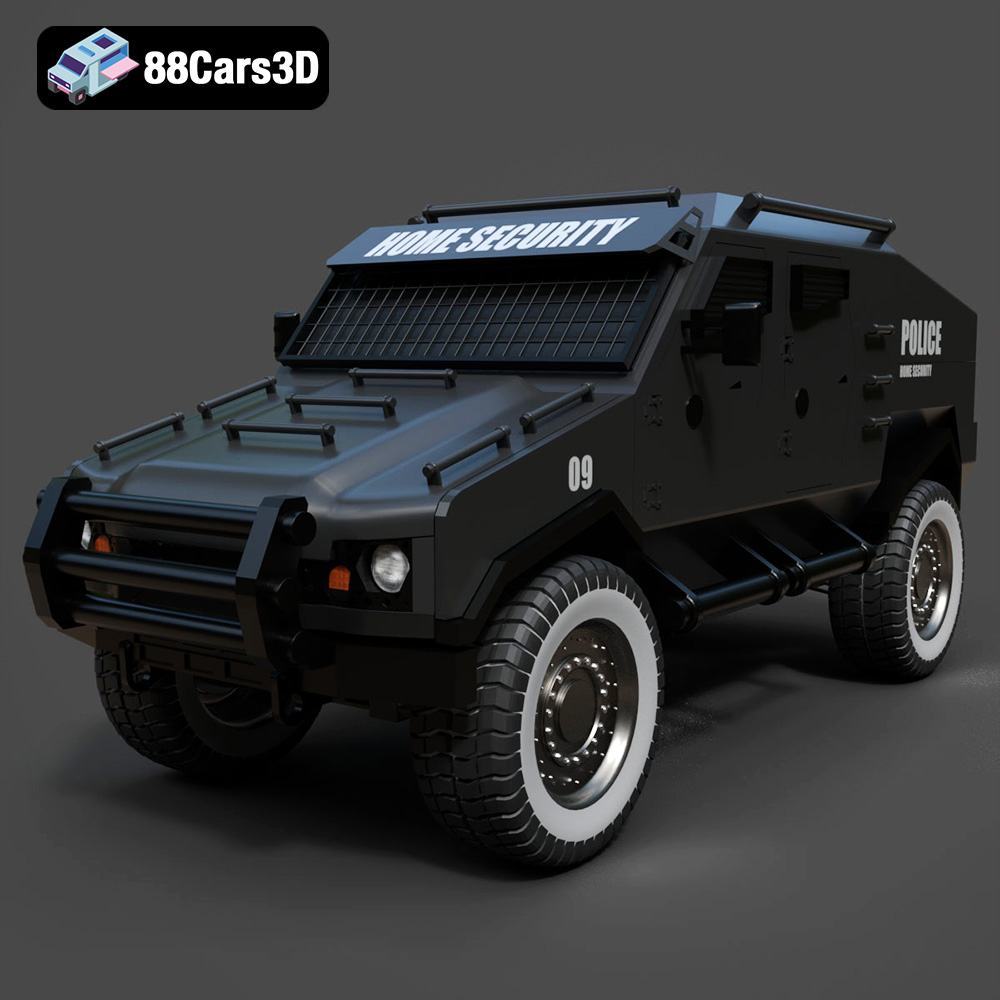
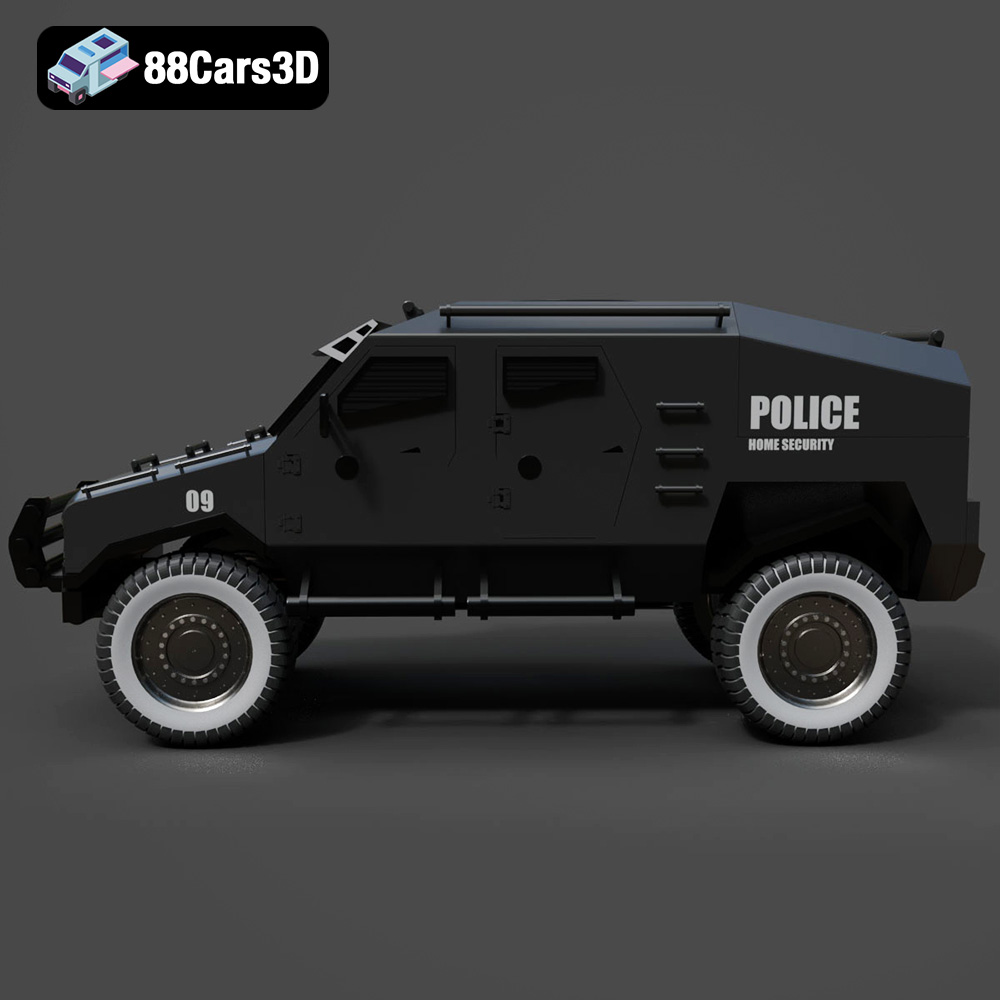
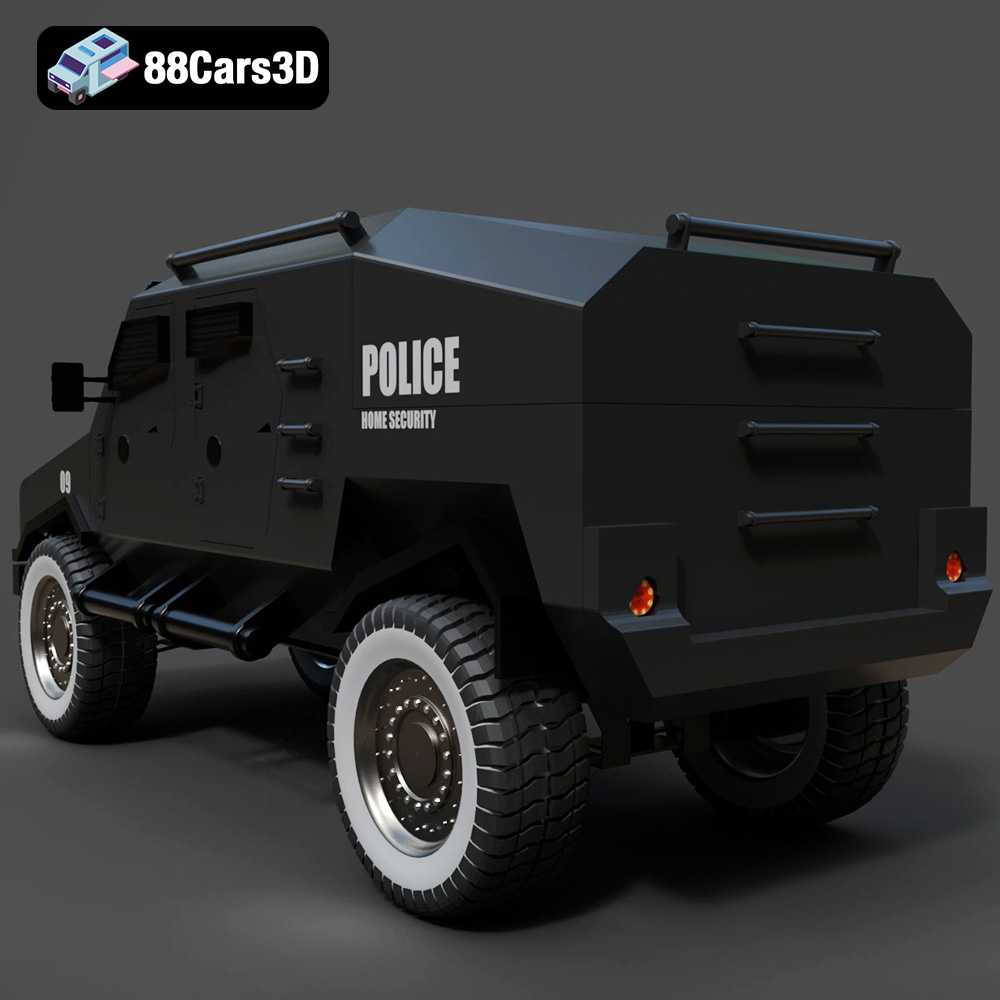
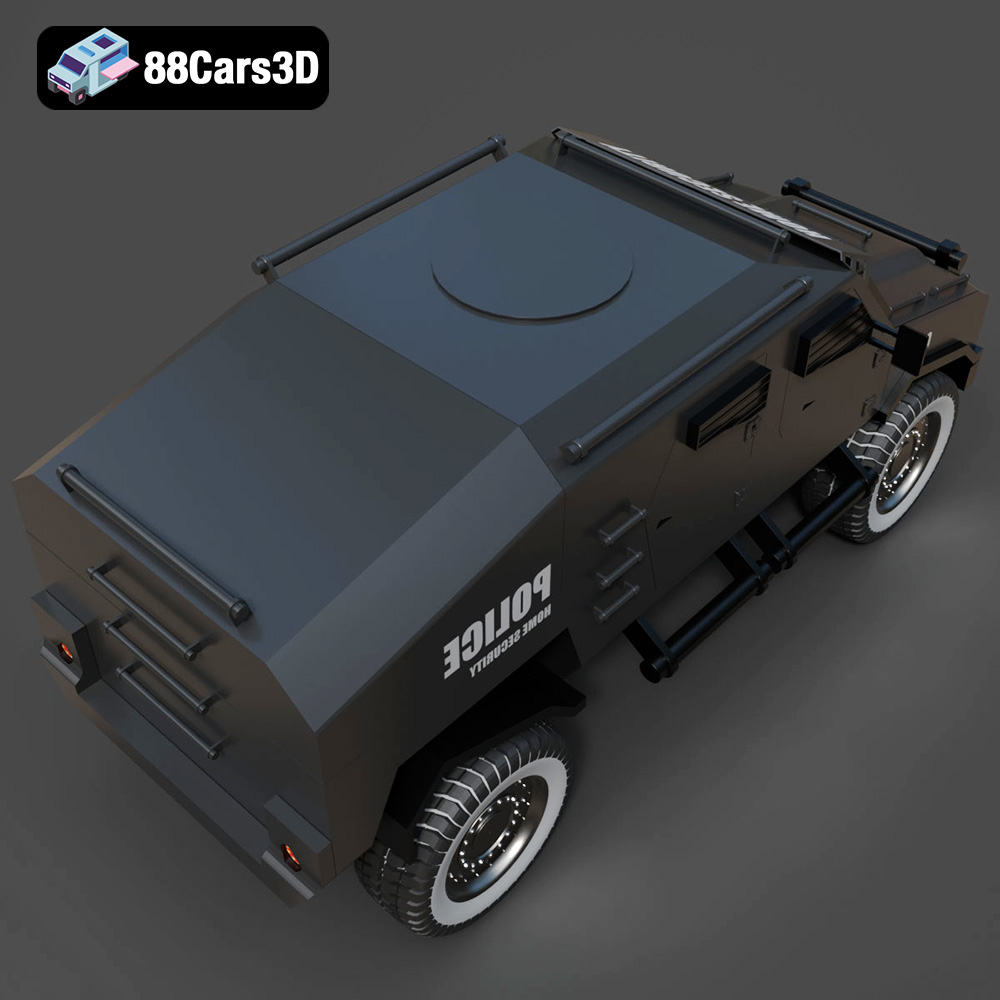
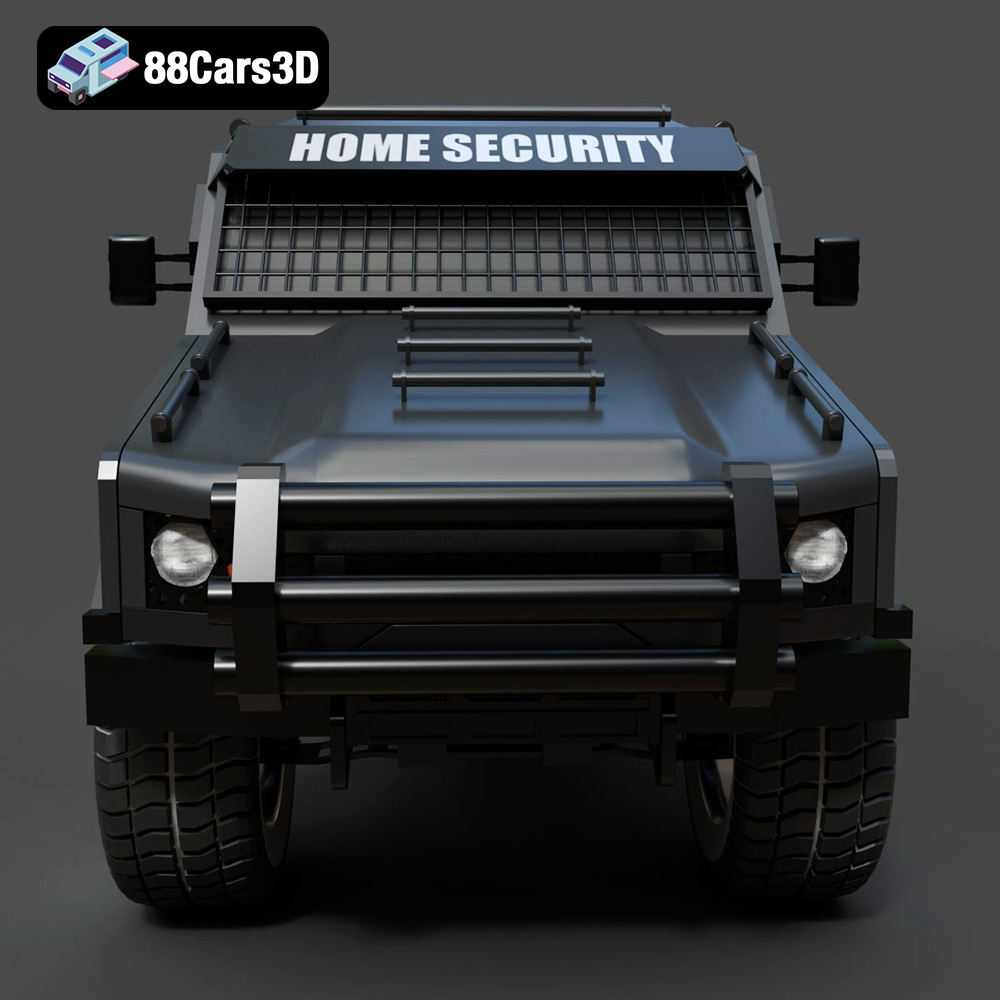
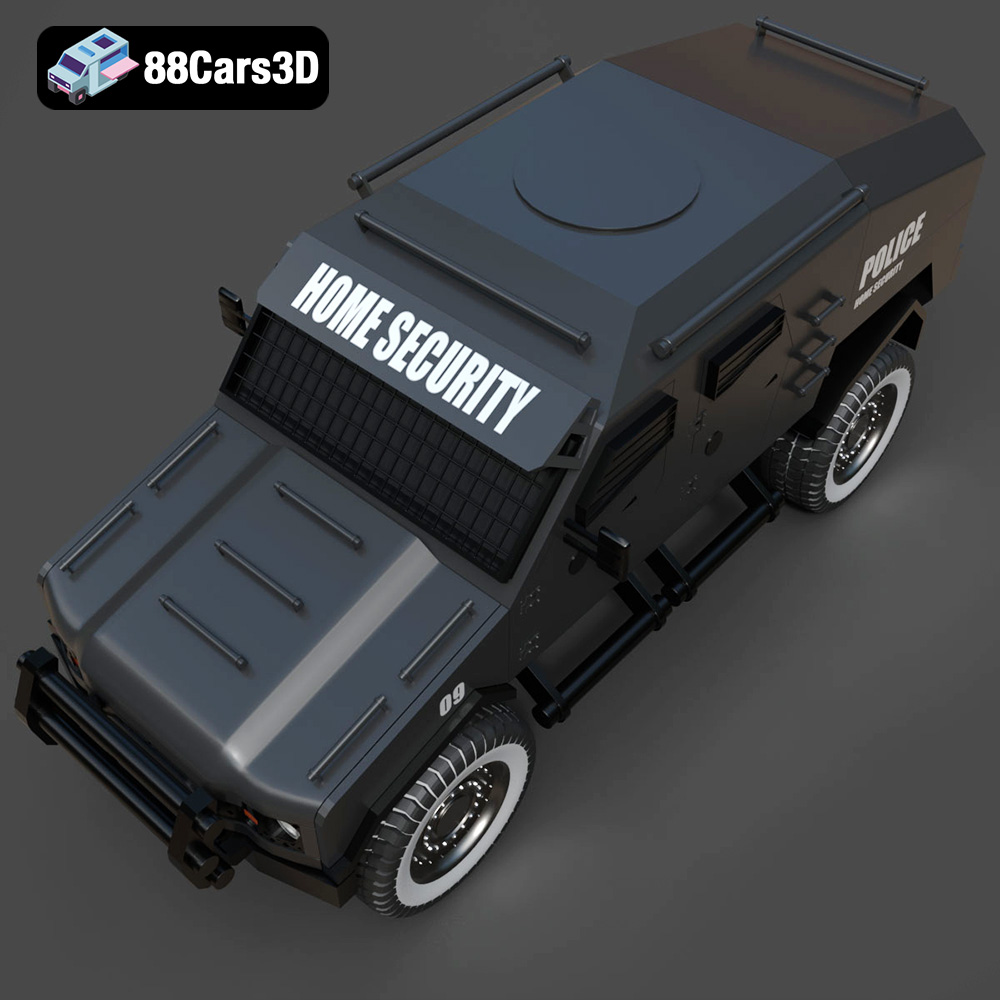
Discover the realism and precision of the Armoured Vehicle 001 3D Model. Engineered to exact standards, this digital asset accurately represents the rugged exterior and functional design inherent in modern tactical transport vehicles. Whether deployed in urban environments or off-road terrains, the attention to detail in the armor plating, heavy-duty suspension, and strategic window placements ensures an authentic visual experience.
Built with clean geometry and a meticulously organized mesh, this 3D model features realistic materials and textures that elevate any digital scene. The professional-grade topology guarantees smooth performance without sacrificing visual fidelity. The model includes a fully crafted exterior and a detailed interior, giving creators the flexibility needed for close-up shots, dynamic animations, and interactive applications.
This versatile asset is perfect for a wide range of applications, including game development, cinematic rendering, architectural visualization, and AR/VR experiences. It is fully optimized for real-time engines and offline renderers, ensuring seamless integration into your existing pipeline for military simulations, tactical training modules, or action-packed cinematic sequences.
The Armoured Vehicle 001 3D Model is provided in multiple industry-standard file formats to suit any workflow:
$19.99
.armoredcar
.armoured
.arvr
.blend
.car3dmodel
.fbx
.gameasset
.glb
.max
.military
.obj
.ply
.rendering
.simulation
.stl
.tactical
.unreal
.vehicle001