Get 20% OFF All Premium 3D & STL Models!

In the dynamic world of 3D visualization, automotive design, and real-time graphics, the demand for photorealistic and meticulously crafted 3D car models has never been higher. From breathtaking marketing renders that showcase every curve and reflection, to immersive game environments that transport players, and even critical simulations for engineering and urban planning, high-fidelity vehicle assets are the bedrock of compelling digital experiences. The complexity of modern vehicles, especially electric vehicles (EVs) with their unique design language and technological nuances, requires 3D models that capture not just the exterior aesthetics but also the intricate interior details and underlying engineering precision.
At the heart of this evolving landscape lies the need for assets that are not only visually stunning but also technically robust, optimized for diverse pipelines, and ready for immediate deployment. This is where models like the Volvo C40 Recharge 3D Model stand out. As a prime example of a contemporary electric crossover, the C40 Recharge represents a blend of innovative design and sustainable technology. Translating this into a digital asset demands careful attention to accurate proportions, sleek styling, and realistic textures, making it an ideal candidate for professional projects across various industries. Whether you’re a seasoned visualization artist, a game developer, or an AR/VR innovator, understanding the power and versatility of such a meticulously crafted 3D car model is crucial for elevating your work to the next level.
The journey of 3D car models has moved from simple, low-polygon representations to incredibly detailed, physically accurate assets. Early models were often constrained by hardware limitations, focusing on exterior silhouettes for distance shots. Today, with advancements in rendering technology and real-time engines, the expectation is for models that can withstand extreme close-ups, interactive exploration, and precise lighting scenarios. This evolution directly impacts design reviews, marketing campaigns, and even the user experience in interactive applications.
For a vehicle like the Volvo C40 Recharge, which embodies a particular design philosophy and a commitment to electric mobility, a high-fidelity 3D model is indispensable. It allows designers to explore variations, marketing teams to create captivating campaigns long before physical prototypes are available, and game developers to integrate a recognizable, modern EV into their virtual worlds. The model’s clean, optimized geometry and intelligently organized structure ensures seamless integration into diverse professional workflows, providing a solid foundation for any digital endeavor.
The versatility of a high-quality 3D car model, such as the Volvo C40 Recharge 3D Model, is significantly enhanced by its availability in a comprehensive range of industry-standard file formats. Each format serves specific purposes, catering to different software, pipelines, and end-use cases. Understanding these formats is critical for any professional working with 3D assets, ensuring compatibility, optimal performance, and preserving the integrity of the model from creation to deployment. The 88cars3d.com marketplace excels in providing such flexibility, offering models prepped for various scenarios.
The .blend format is the native file format for Blender, a powerful open-source 3D creation suite. When you receive a .blend file, you’re getting a fully editable Blender scene. This includes not only the raw mesh data but also materials, textures, lighting setups, camera positions, animations (if any), and even modifiers. It’s ideal for artists who primarily work within Blender and require full control over the asset. Technical users can dive into the modifiers stack, adjust UV maps, refine material nodes, or modify the geometry directly. Its comprehensive nature makes it perfect for deep customization and iterative design processes within the Blender environment.
.fbx (Filmbox) is a proprietary file format developed by Autodesk, widely recognized as one of the most interoperable 3D exchange formats. It excels at transferring 3D models, animation data, cameras, and lights between various 3D applications and game engines. For assets like the Volvo C40 Recharge, .fbx is game-engine ready, making it ideal for integration into Unreal Engine, Unity, and other real-time pipelines. It efficiently stores mesh data, UVs, normal maps, and material assignments, often linking to external texture files. Its robustness and widespread support make it a go-to for complex scene transfers and a cornerstone of many professional workflows, particularly in game development and animation studios.
.obj (Wavefront OBJ) is a simple, universal 3D model format known for its excellent compatibility across virtually all major 3D software. It primarily stores geometric data like vertex positions, normals, UV coordinates, and faces. Material definitions are typically stored in a companion .mtl (material template library) file. While it doesn’t support animation or complex scene data, its simplicity makes it incredibly reliable for cross-software model exchange. If you need a clean, unadulterated mesh for sculpting, retopology, or basic rendering in an obscure application, .obj is a dependable choice. Its lightweight nature is advantageous for simple asset transfers.
.glb (GL Transmission Format Binary) is the binary version of glTF, a royalty-free specification for the efficient transmission and loading of 3D scenes and models by applications. Think of it as the “JPEG for 3D.” A single .glb file can embed all textures, materials, and animations directly within it, making it incredibly optimized for AR/VR applications, web-based visualization, and mobile platforms. For models like the C40 Recharge, .glb ensures fast loading times and efficient rendering in browser-based configurators or interactive AR experiences, offering a seamless user experience without external dependencies.
.stl (Stereolithography) is the de facto standard file format for 3D printing. It represents a 3D model as a series of connected triangles (a triangulated surface mesh) without color, texture, or other CAD attributes. While basic, its universal acceptance by 3D printers and slicing software makes it indispensable for rapid prototyping and manufacturing. For the Volvo C40 Recharge, an .stl variant allows for the creation of physical scale models, design prototypes, or even custom aftermarket parts, bridging the gap between digital design and tangible output. Ensuring the mesh is watertight and manifold is crucial for successful .stl export.
.ply (Polygon File Format) is another format for storing 3D data, particularly useful for high-resolution scan data and precise mesh representations. It can store various properties beyond just geometry, including color, transparency, and even normal vectors per vertex or face. Unlike .stl, it can support more complex data and is often used in scientific visualization, CAD workflows, and for models derived from 3D scanning. For highly detailed automotive components or for analyses requiring precise mesh information, .ply offers a robust solution for preserving rich mesh attributes.
The .unreal format, or more accurately, assets pre-configured for Unreal Engine, signifies a model that has undergone specific optimization and setup within the Unreal Editor. This typically means it includes correctly imported meshes, PBR materials, collision meshes, LODs (Levels of Detail), and potentially even basic blueprints or animations, all ready to be dropped into an Unreal Engine project. This saves developers countless hours of preparation, ensuring the Volvo C40 Recharge 3D Model seamlessly integrates into a cutting-edge real-time environment with correct shaders and optimal performance. It’s a testament to a production-ready asset.
Similar to .blend for Blender, .max is the native file format for Autodesk 3ds Max, a leading software for 3D modeling, animation, and rendering. A .max file contains the complete scene, including geometry, materials (especially V-Ray or Corona setups), lighting, cameras, animation timelines, and all associated scene elements. It offers full editability within 3ds Max, making it the preferred choice for professional rendering studios that utilize 3ds Max for high-end automotive visualizations, broadcast animations, or complex architectural walkthroughs. Artists can tweak every aspect of the model, from spline details to material parameters, ensuring maximum creative control.
The availability of the Volvo C40 Recharge 3D Model in such a wide array of formats from 88cars3d.com underscores its utility and adaptability across the entire spectrum of 3D production pipelines, from initial design concepts to final rendered output and interactive experiences.
The true value of a premium 3D car model, such as the Volvo C40 Recharge, lies in its ability to streamline and enhance professional workflows across various industries. From concept development to final product deployment, these assets serve as versatile tools, significantly reducing production time and costs while elevating visual quality.
Before any physical prototype is built, 3D models allow designers to visualize and iterate on concepts with unparalleled speed and flexibility. With the Volvo C40 Recharge 3D Model, automotive designers can explore different color schemes, material finishes, wheel designs, or even aerodynamic modifications in a virtual environment. This rapid prototyping cycle, without the expense of physical mock-ups, is invaluable for design studios looking to innovate quickly and cost-effectively.
Modern architectural visualizations are incomplete without realistic environmental elements, and cars play a significant role in conveying scale, realism, and a sense of life within a scene. A detailed 3D car model like the Volvo C40 Recharge allows architects and urban planners to accurately populate their digital environments.
The realm of real-time applications – encompassing video games, augmented reality (AR), and virtual reality (VR) – places unique demands on 3D assets. Performance is paramount, requiring models to be meticulously optimized while retaining visual fidelity. The Volvo C40 Recharge 3D Model, available through 88cars3d.com, is engineered to meet these stringent requirements, offering significant advantages for real-time developers.
In game development, a car model needs to be more than just pretty; it needs to be efficient. The “game-engine ready” .fbx and pre-configured .unreal formats of the C40 Recharge model are critical for seamless integration into engines like Unreal Engine and Unity.
AR and VR environments demand even greater optimization due to the need for high frame rates to prevent motion sickness and ensure user comfort. The .glb format, specifically designed for web-based and mobile AR/VR applications, is a game-changer for models like the Volvo C40 Recharge.
High-end automotive rendering is an art form, blending technical precision with artistic vision to create images that are often indistinguishable from photographs. For product showcases, marketing materials, and advertising campaigns, a top-tier 3D car model like the Volvo C40 Recharge is an absolute necessity. Its meticulous crafting ensures that every reflection, every curve, and every material surface contributes to a hyper-realistic final image.
Achieving photorealism involves more than just a good model; it requires a deep understanding of lighting, materials, and camera optics. However, without a perfectly proportioned and detailed base model, even the best rendering artist will struggle.
For marketing teams, the ability to generate stunning visuals of a product before it’s even physically produced is a game-changer. The Volvo C40 Recharge 3D Model empowers brands to create compelling advertising campaigns with unprecedented flexibility.
The “exceptional realism” and “seamless integration” touted for the Volvo C40 Recharge 3D Model aren’t accidental. They are the result of meticulous technical preparation, focusing on clean geometry, efficient UV mapping, and high-quality texture work. These foundational elements dictate a model’s performance, visual fidelity, and versatility across different applications.
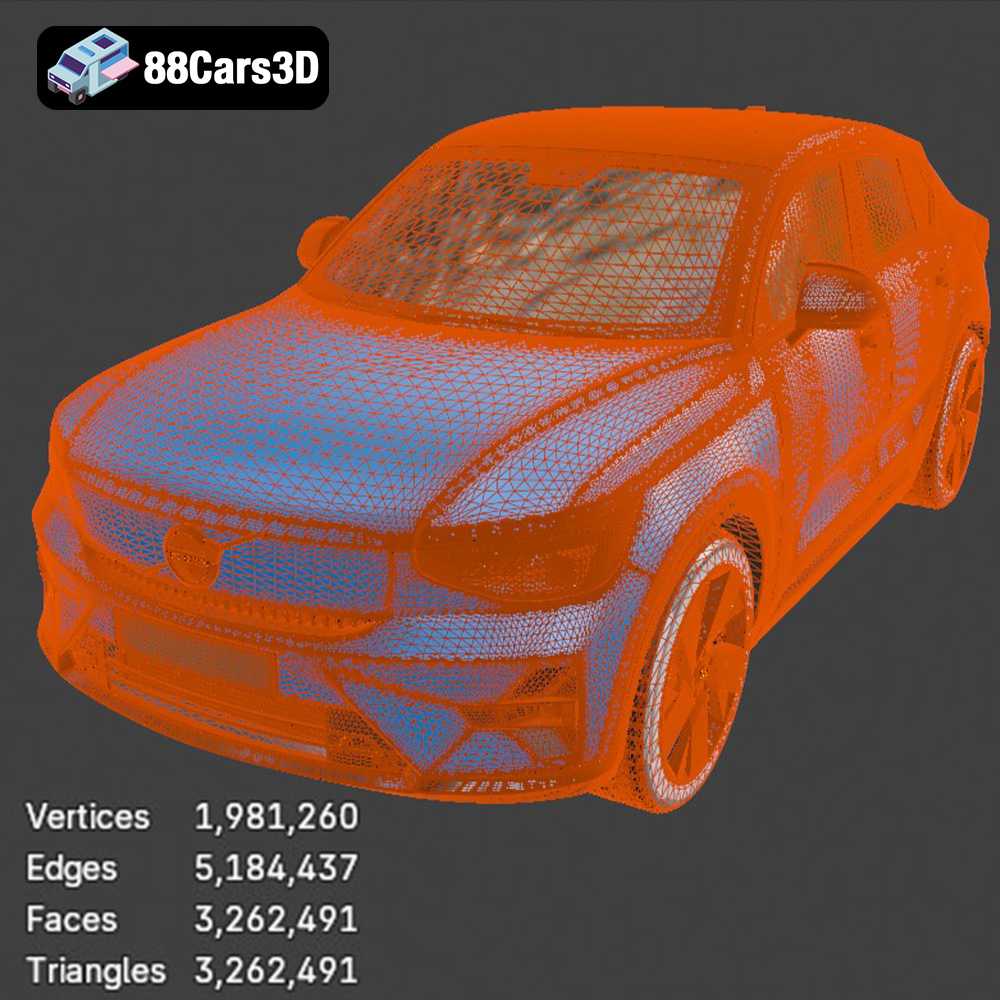
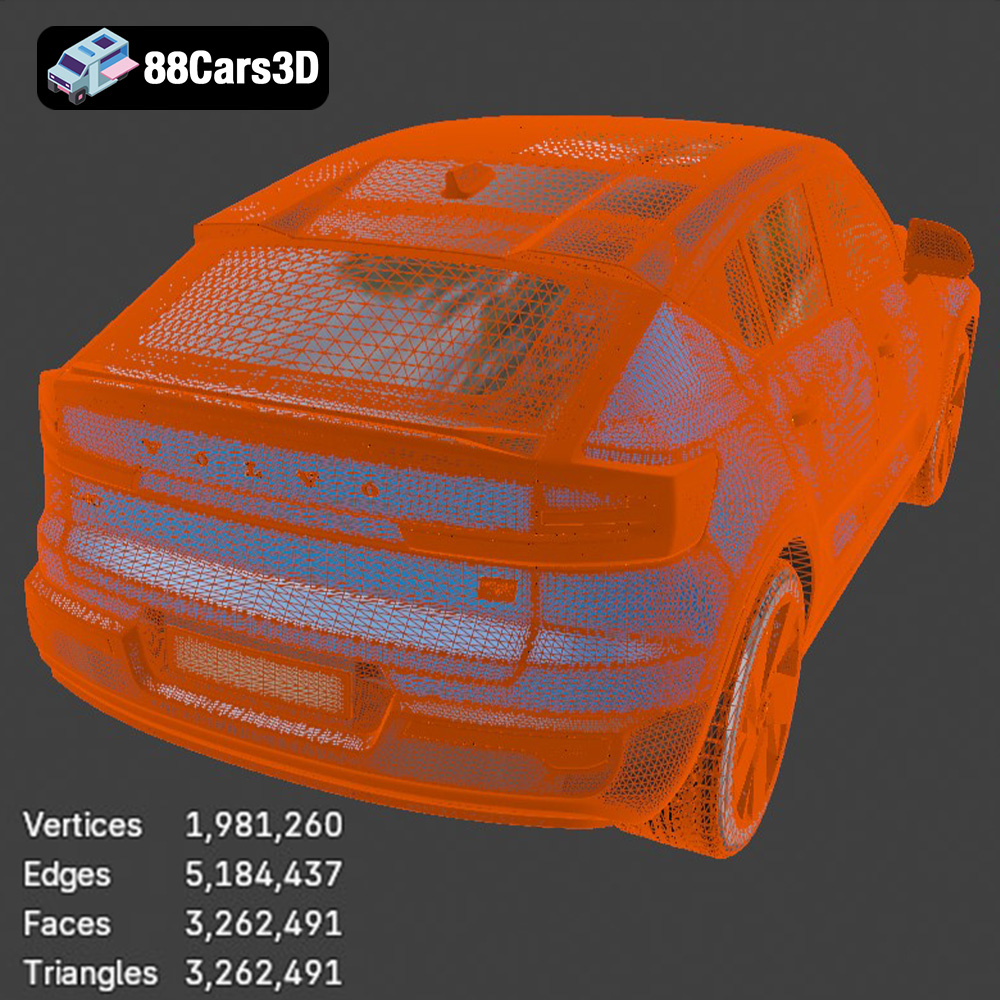
The underlying mesh structure is arguably the most critical aspect of any 3D model. “Clean, optimized geometry” implies a model built with an efficient polygon count and well-structured topology, typically favoring quads (four-sided polygons) for smooth deformations and subdivisions. This is crucial for rendering smooth surfaces, especially on reflective car bodies, and for enabling easy modification.
UV mapping is the process of flattening the 3D surface of a model onto a 2D plane, allowing textures to be applied accurately. “Realistic textures” combined with “intelligently organized structure” suggests a model that’s not only visually appealing but also technically sound for texture application.
To truly illustrate the power and versatility of a high-quality 3D car model, it’s helpful to consider specific real-world scenarios where the Volvo C40 Recharge 3D Model would be an invaluable asset.
Scenario: Volvo is preparing to launch a new variant or feature for the C40 Recharge, but physical prototypes are still months away. Their marketing agency needs to create a series of high-impact visuals and an interactive online configurator for the upcoming campaign.
Solution using the Volvo C40 Recharge 3D Model: The agency acquires the Volvo C40 Recharge 3D Model from 88cars3d.com. Using the provided .max file, their visualization artists set up studio lighting rigs in 3ds Max and render a suite of photorealistic images showcasing the vehicle from various angles. They experiment with new paint finishes and wheel designs directly on the 3D model. Simultaneously, their web development team utilizes the .glb format to integrate the model into an online configurator, allowing prospective buyers to explore the car’s exterior and detailed interior, change colors, and view it in 360 degrees. The accuracy of the model ensures that the digital representations perfectly match the eventual physical product, building strong consumer confidence even before the official release.
Scenario: A leading game development studio is creating an open-world racing game set in a futuristic urban environment. They need a diverse fleet of modern, recognizable electric vehicles, including the Volvo C40 Recharge, to populate their world and for player customization.
Solution using the Volvo C40 Recharge 3D Model: The studio integrates the Volvo C40 Recharge 3D Model using its .fbx and pre-configured .unreal formats into their Unreal Engine pipeline. The optimized geometry and clean UVs mean it performs well within the game’s strict frame rate requirements. LODs are easily generated or already included, ensuring smooth transitions between different levels of detail. The fully modeled interior is crucial for implementing a first-person driving view, allowing players to experience the detailed dashboard and seating. The PBR textures are seamlessly integrated with the game’s lighting system, providing realistic reflections and material responses under dynamic day-night cycles and weather conditions. This high-quality asset significantly reduces development time compared to modeling the car from scratch, allowing the studio to focus on core gameplay.
Scenario: An architecture firm is presenting a proposal for a new mixed-use development in a rapidly growing city. They need to create a compelling visualization that not only highlights the buildings but also conveys the vibrancy and functionality of the surrounding urban environment, including realistic traffic and parking scenarios.
Solution using the Volvo C40 Recharge 3D Model: The firm imports the Volvo C40 Recharge 3D Model (using the .obj or .blend format for flexibility) into their architectural visualization software. They populate the streets and parking lots with multiple instances of the C40 Recharge, varying colors and orientations to add realism. The accurate proportions of the model help establish a realistic sense of scale for the buildings and streetscapes. For a more dynamic presentation, they might animate several C40s driving along designated routes within the scene using the .max file’s animation capabilities, demonstrating traffic flow and pedestrian interaction. The detailed exterior and realistic textures add a touch of modern luxury and sustainability to the overall presentation, aligning with contemporary urban design trends.
The landscape of 3D visualization is constantly pushing the boundaries of realism and interactivity. At the core of this advancement are high-quality 3D assets that are not only visually stunning but also technically optimized and versatile. The Volvo C40 Recharge 3D Model exemplifies these qualities, offering an incredibly accurate, detailed, and efficiently structured asset ready for deployment across a multitude of professional applications.
From producing hyper-realistic automotive renderings and developing cutting-edge video games to building immersive AR/VR applications and conducting crucial simulations, the model’s comprehensive range of industry-standard file formats – including .blend, .fbx, .obj, .glb, .stl, .ply, .unreal, and .max – ensures seamless integration into virtually any pipeline. This adaptability, combined with its clean geometry, detailed interior, and realistic textures, makes it an indispensable tool for designers, artists, and developers.
Investing in such meticulously crafted 3D car models from trusted sources like 88cars3d.com not only saves invaluable time and resources but also elevates the quality and impact of your digital projects. Whether your goal is to captivate an audience with breathtaking visuals or to create engaging interactive experiences, the right 3D asset forms the foundation of your success. The Volvo C40 Recharge 3D Model stands as a testament to the power of professional-grade 3D assets in shaping the future of digital design and visualization.
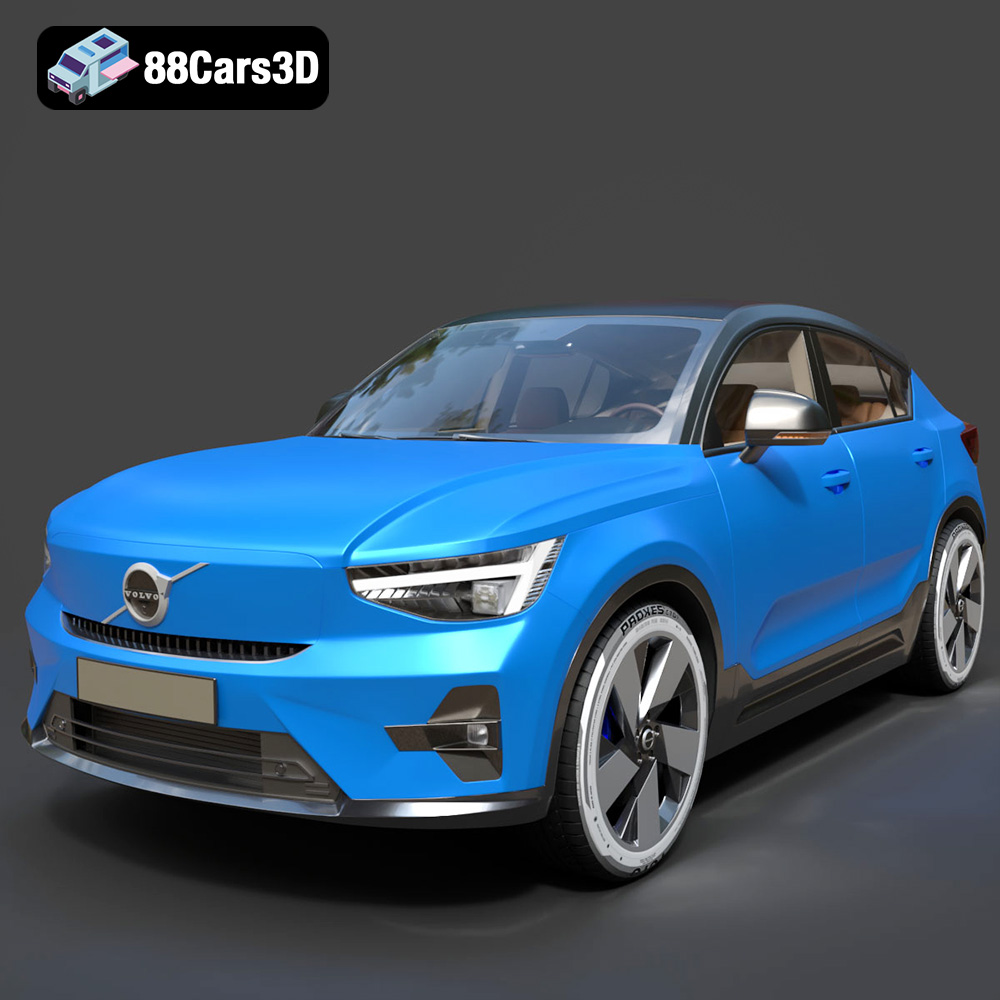
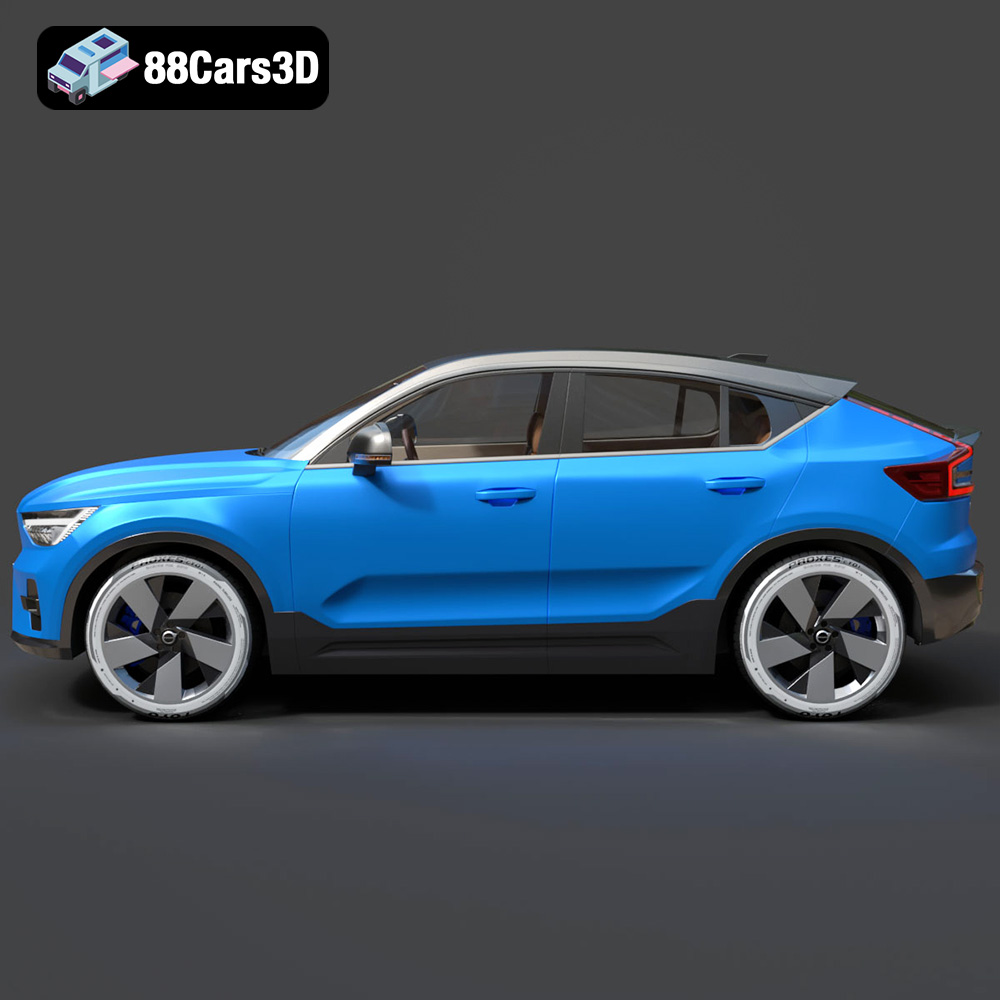
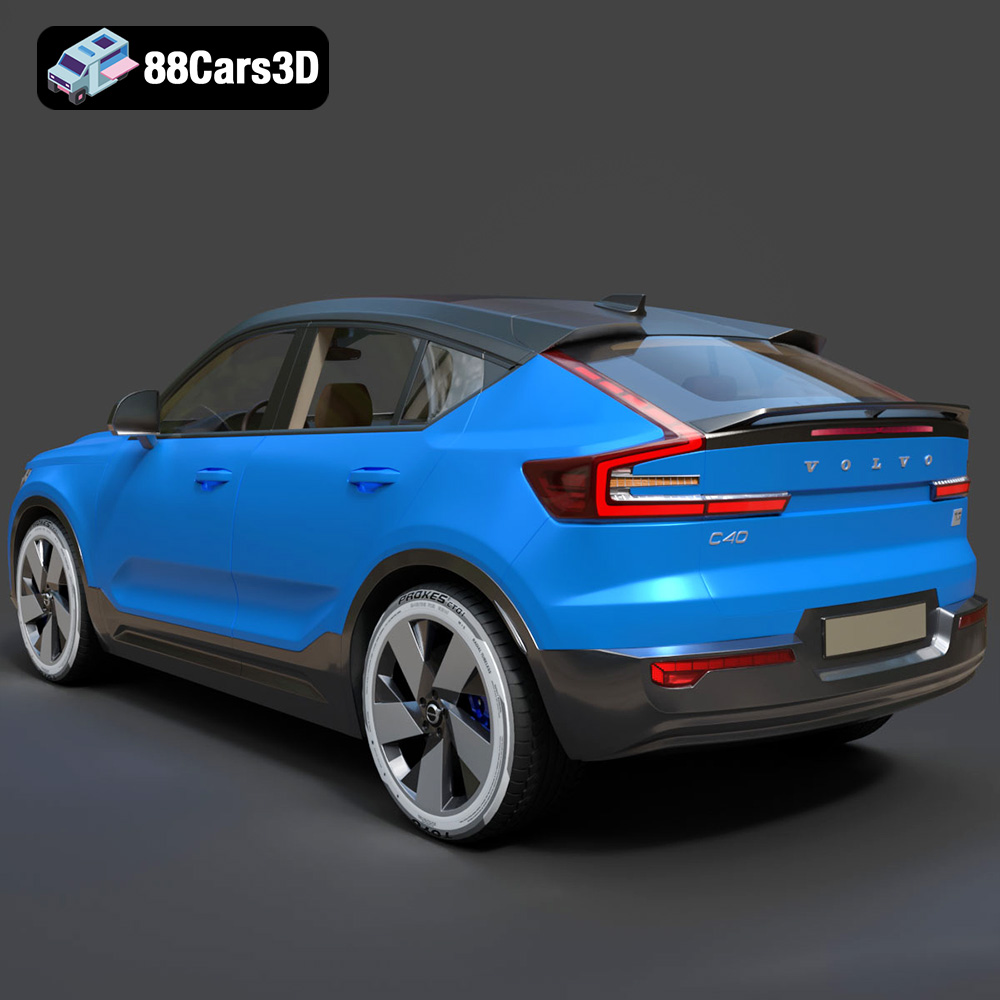
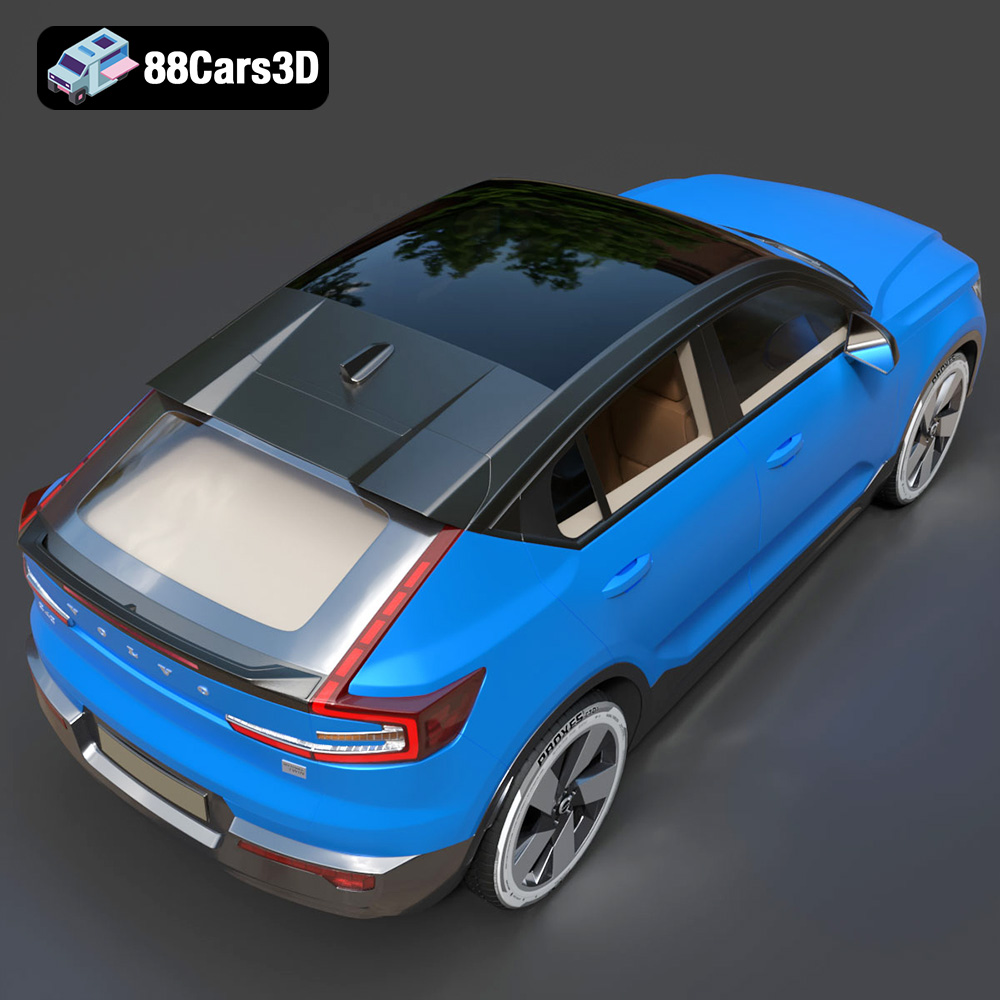
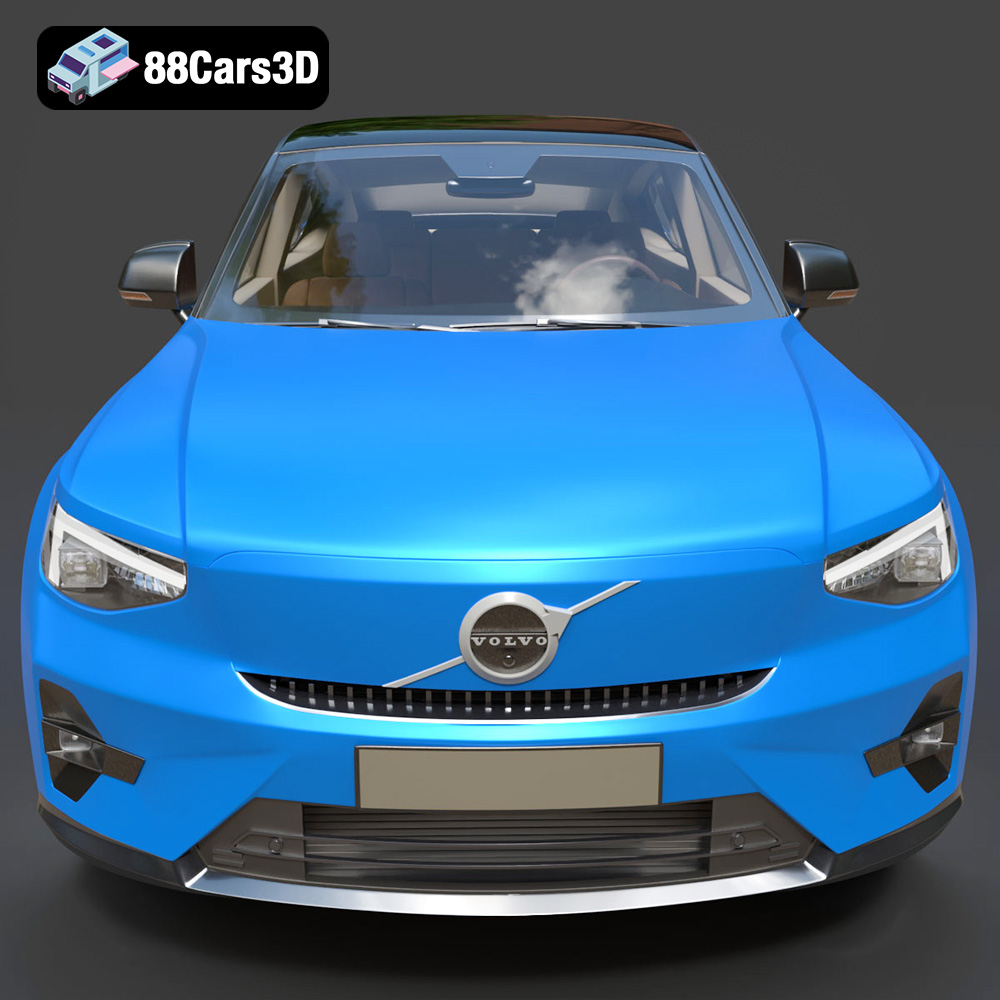
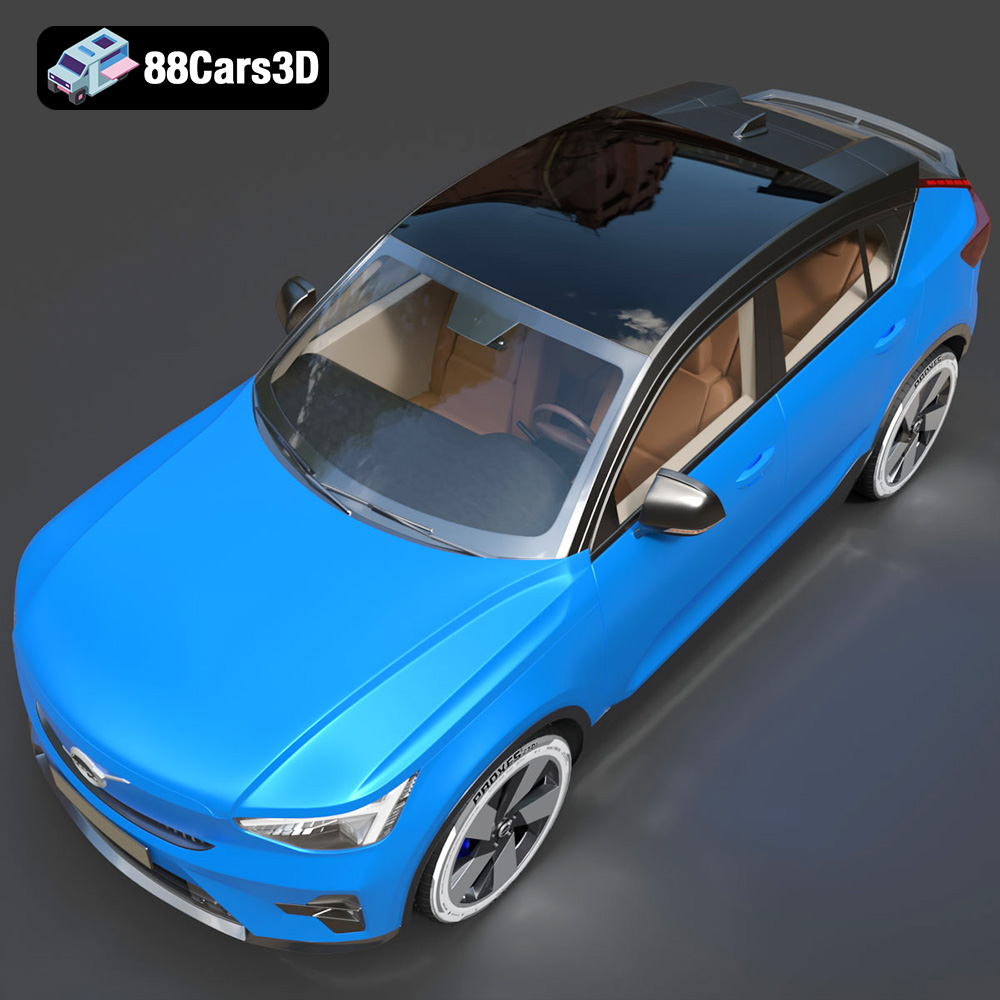
Discover the exceptional realism of the Volvo C40 Recharge 3D Model. Carefully crafted to mirror the actual vehicle, this 3D asset provides incredibly accurate proportions, sleek styling, and realistic textures ideal for any digital environment.
Featuring clean, optimized geometry and an intelligently organized structure, this model ensures seamless integration into your workflow. The exterior perfectly captures the distinctive aesthetic of the modern electric crossover, while the fully modeled interior presents detailed dashboard components and seating, enhancing its suitability for close-up shots and immersive experiences.
Whether you are developing cutting-edge video games, producing hyper-realistic automotive renderings, building interactive AR/VR applications, or conducting simulations, this versatile 3D model delivers outstanding performance and visual fidelity.
Available in a comprehensive range of industry-standard file formats to suit any pipeline:
$19.99
.arvr
.blend
.c40
.car3dmodel
.crossover
.electriccar
.ev
.fbx
.gameasset
.glb
.max
.obj
.ply
.recharge
.rendering
.simulation
.stl
.unreal
.volvo
SUV