Get 20% OFF All Premium 3D & STL Models!

In the vast and dynamic world of digital content creation, the demand for authentic, high-fidelity 3D car models and vehicle assets is perpetually on the rise. From the hyper-realistic virtual showrooms of leading automotive brands to the sprawling open worlds of blockbuster video games, intricately detailed vehicles form the bedrock of immersive visual experiences. These models are not merely static representations; they are complex digital sculptures, engineered for specific pipelines, and capable of conveying narratives, performance, and aesthetic beauty.
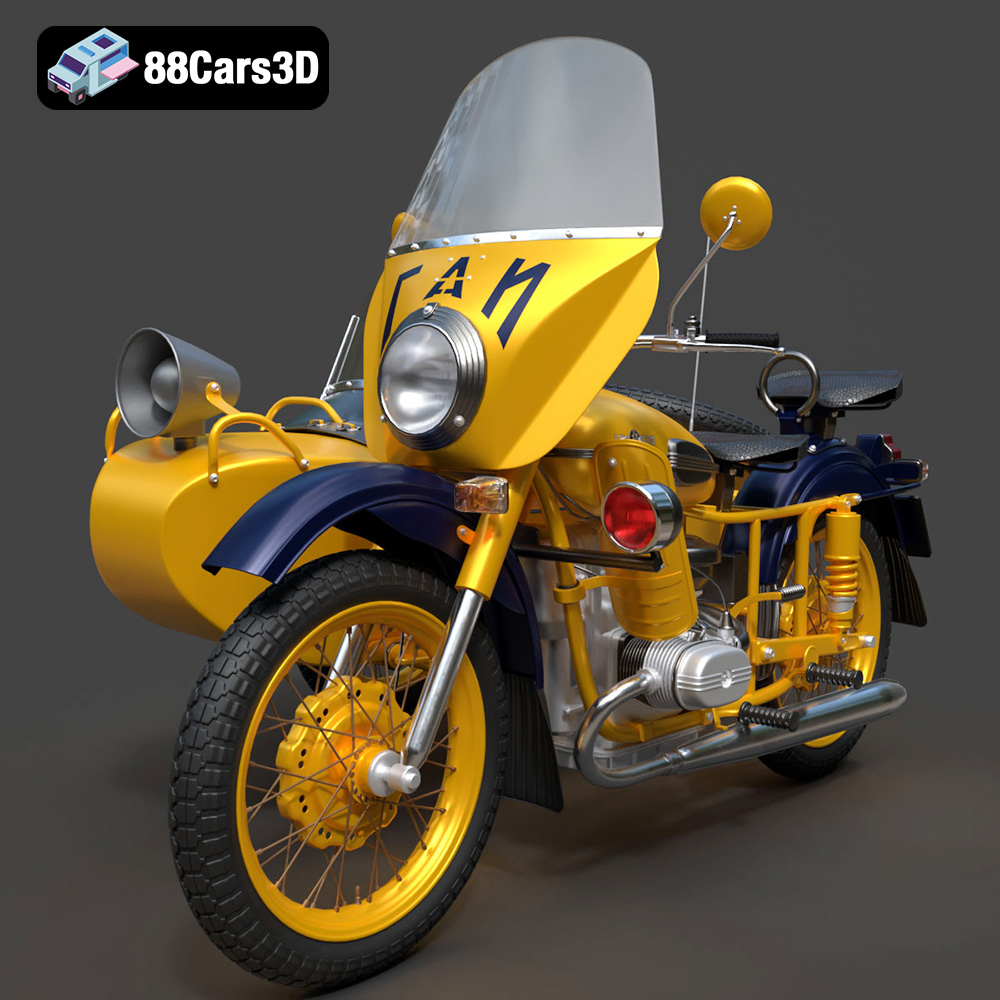
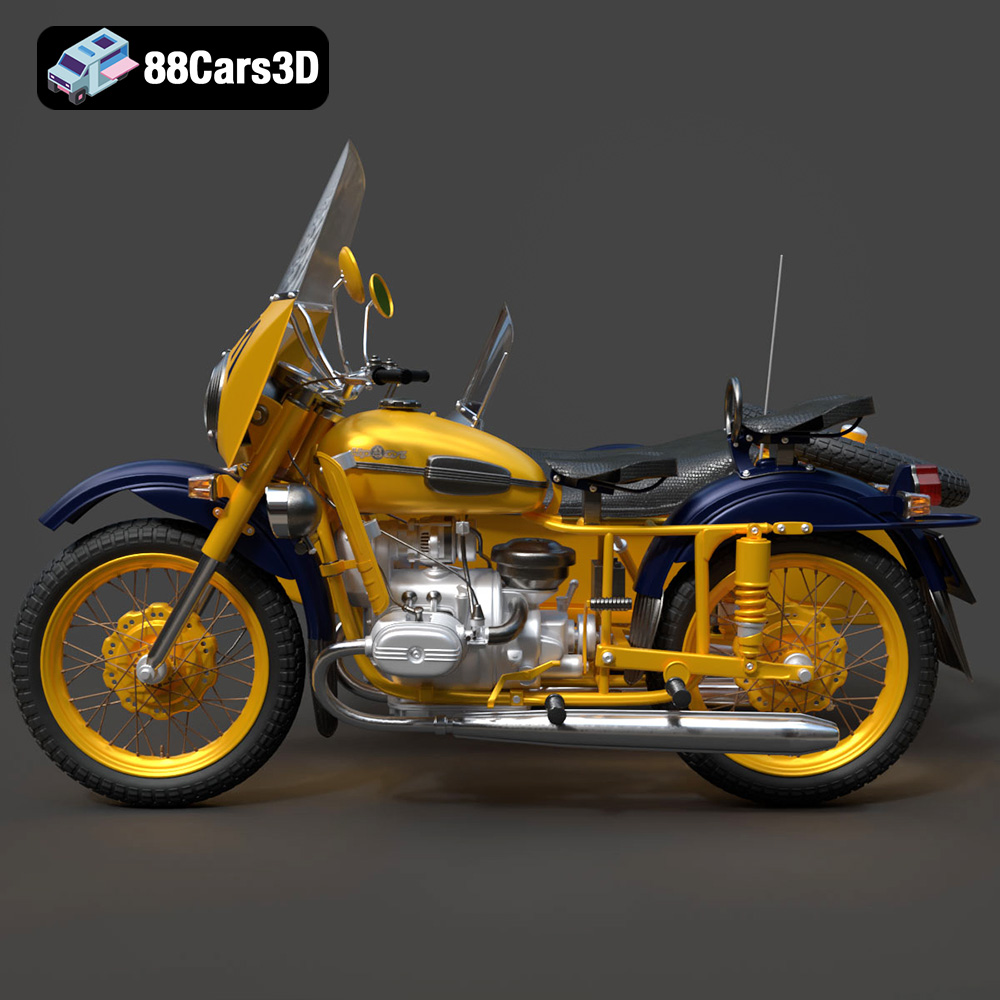
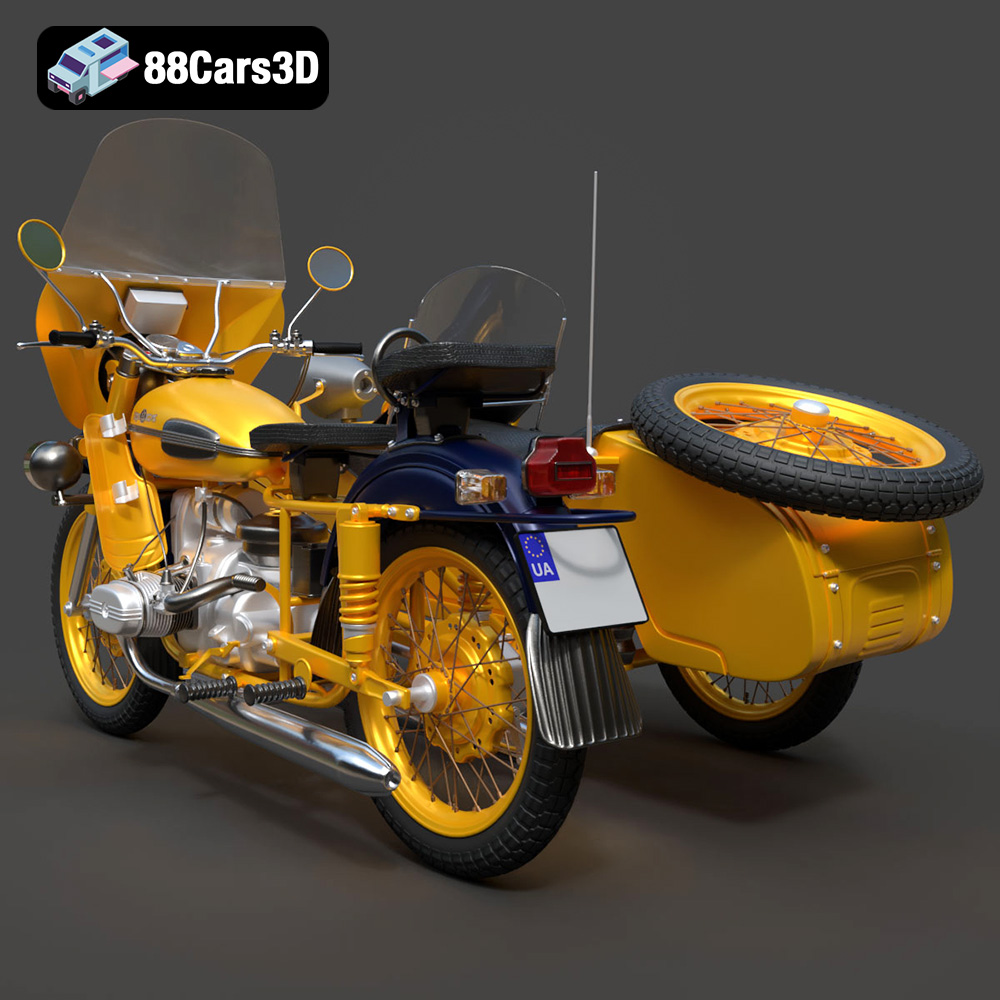
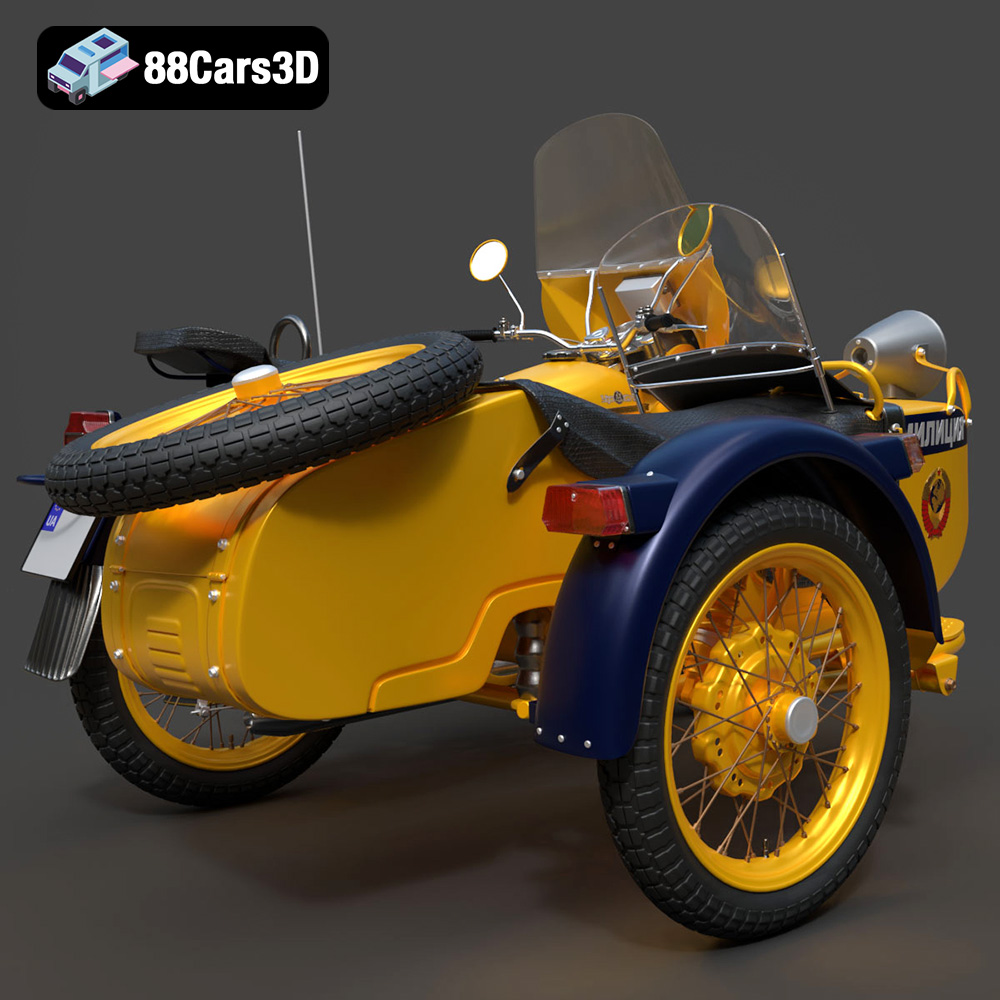
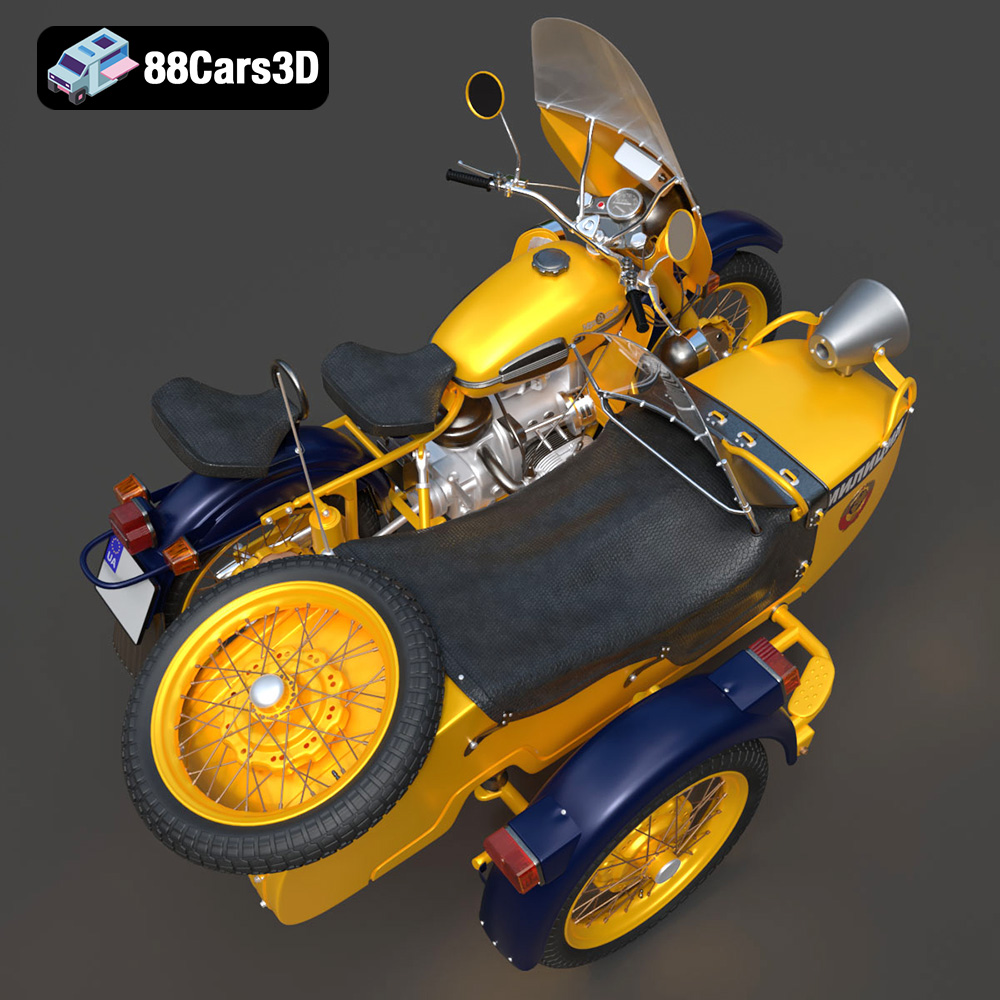
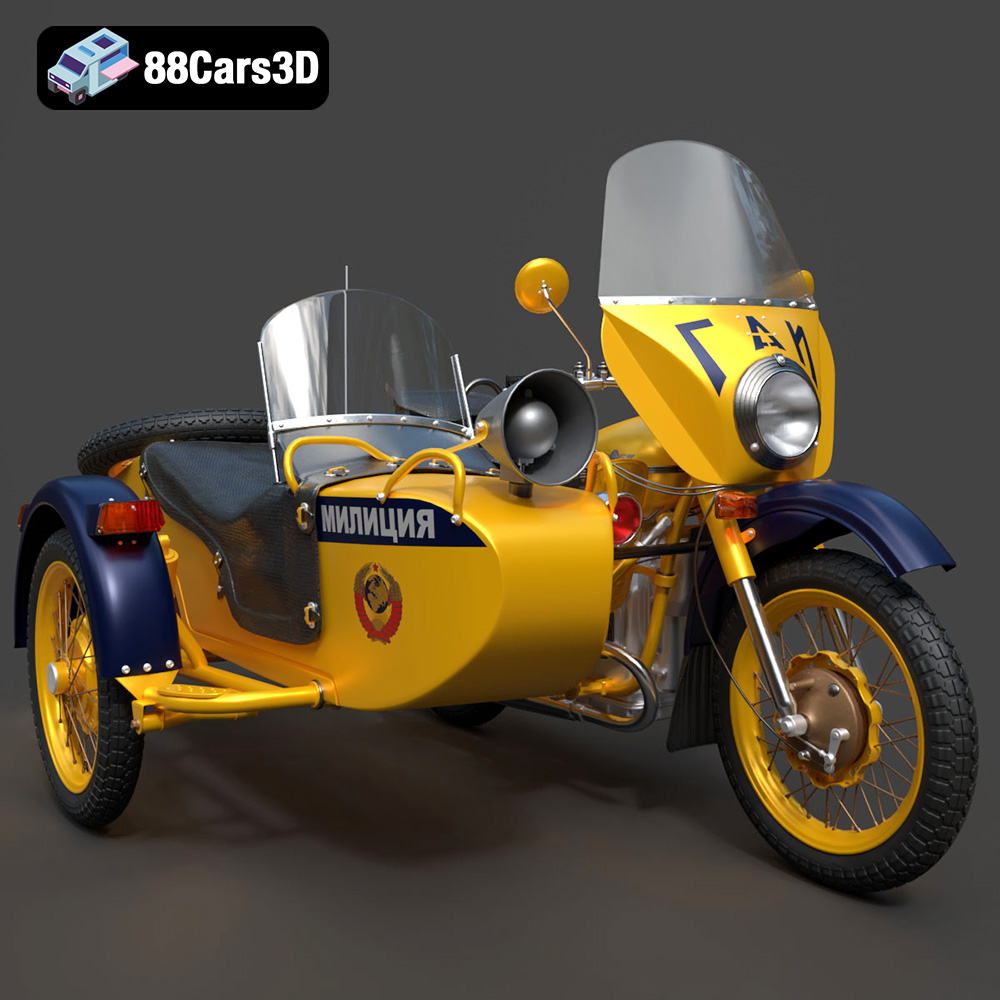
Among the countless vehicles that have left their mark on history, certain machines possess an undeniable character that transcends mere utility. The 1976 Ural M67-36-P motorcycle is one such icon. Renowned for its rugged durability, distinctive utilitarian styling, and a heritage deeply rooted in Soviet-era patrol duty, the Ural M67-36-P embodies a bygone era of engineering. Its iconic opposed-twin (boxer) engine, robust dual exhaust system, and sturdy frame design evoke a sense of unyielding reliability and classic industrial charm. Capturing such a vehicle in 3D is a testament to the blend of artistic skill and technical precision required in modern digital asset creation.
For designers, game developers, architects, and visual artists, having access to such a meticulously crafted asset can be a game-changer. The Ural M67-36-P 1976 3D model, available from marketplaces like 88cars3d.com, is more than just a model; it’s a ready-to-integrate piece of history, optimized for a myriad of contemporary digital applications. It stands as an excellent example of how a detailed 3D car model can bridge the gap between historical accuracy and cutting-edge digital performance.
The versatility of a 3D car model often hinges on the file formats it supports. Different formats are optimized for different stages of the digital pipeline, from initial modeling and animation to real-time rendering and even physical fabrication. Understanding these formats is crucial for any professional working with 3D assets, as selecting the correct format can significantly impact workflow efficiency, compatibility, and final output quality. The Ural M67-36-P 1976 3D model, for instance, comes with an impressive array of formats, ensuring maximum utility across various platforms and use cases.
The .blend format is the native file type for Blender, a powerful and increasingly popular open-source 3D creation suite. A .blend file typically encapsulates the entire Blender scene, including mesh data, materials, textures, lighting, cameras, animations, physics simulations, and even custom scripts. This makes it an ideal choice for users who wish to fully edit, customize, or further develop the model within Blender. For the Ural M67-36-P, having a .blend file means artists can easily tweak its materials, adjust its topology, or integrate it into a larger Blender-based project with all its original settings preserved.
.fbx (Filmbox) is a proprietary file format owned by Autodesk and is widely considered an industry standard for 3D data exchange, particularly between different software applications and game engines. It supports geometry, materials, textures, animations, and skeletal data. Its robust support for complex scene data makes it invaluable for transferring animated automotive rendering projects or game assets from DCC tools like 3ds Max or Maya into real-time engines such as Unreal Engine and Unity. The Ural M67-36-P in .fbx format is primed for integration into virtually any modern game development or visualization pipeline.
The .obj (Wavefront OBJ) format is one of the most widely supported 3D file formats, making it a universal choice for cross-software compatibility. It primarily stores geometric data (vertices, normals, texture coordinates, and faces) and can reference external material files (.mtl) for appearance data. While it doesn’t support animation, its simplicity and widespread adoption ensure that the Ural M67-36-P can be opened and worked on in almost any 3D application, making it a safe bet for basic geometry transfer and static renders.
.glb (GL Transmission Format Binary) is the binary version of glTF, a royalty-free specification for the efficient transmission and loading of 3D scenes and models by applications. It packages all model data (geometry, materials, textures, animations) into a single, self-contained binary file, making it exceptionally efficient for web-based 3D, augmented reality (AR), and virtual reality (VR) applications. For presenting the Ural M67-36-P in an interactive web viewer or an AR experience, the .glb format is ideal due to its optimized loading times and broad browser support.
.stl (Stereolithography) is the de facto standard file format for 3D printing. It represents a 3D model as a series of connected triangles, describing only the surface geometry without color, texture, or other CAD attributes. While simple, its universal acceptance in additive manufacturing ensures that the Ural M67-36-P can be translated from a digital asset into a tangible, physical model. Hobbyists and professionals alike use .stl to bring digital designs to life, perfect for collectors or creating scale models of classic vehicles.
.ply (Polygon File Format) is another format for storing 3D data, often used for scanned 3D objects. It can store a variety of properties, including color, transparency, texture coordinates, and even properties specific to point clouds. While less common for everyday artistic exchange than .fbx or .obj, it’s valuable in scientific visualization, reverse engineering, and applications requiring precise mesh data for CAD or analysis. For the Ural M67-36-P, it offers an alternative for precise geometric data transfer.
While not a traditional open file format like .fbx or .obj, the inclusion of a dedicated .unreal or Unreal Engine-ready asset package implies a highly optimized, pre-configured asset specifically tailored for Epic Games’ Unreal Engine. This often means the model has already been imported, scaled, had its materials and textures set up, and potentially collision meshes generated within the engine’s environment. For game developers, this significantly accelerates the workflow, offering immediate drag-and-drop functionality for the Ural M67-36-P into a real-time scene.
Similar to .blend for Blender, the .max format is the native file type for Autodesk 3ds Max, a leading software for 3D modeling, animation, rendering, and visualization. A .max file contains all scene information, including geometry, lights, cameras, materials, textures, animations, and render settings. For those who primarily work within 3ds Max for high-end automotive rendering or animation, having the Ural M67-36-P as a .max file offers maximum flexibility for further manipulation and integration into their projects.
The availability of these diverse formats ensures that the Ural M67-36-P 1976 3D model is not just a high-quality asset but also an incredibly versatile one, ready to meet the demands of almost any digital project or workflow.
Developing game assets for modern titles requires a delicate balance between visual fidelity and performance optimization. A model that looks stunning but cripples frame rates is ultimately unusable. The Ural M67-36-P 1976 3D model exemplifies this crucial balance, designed from the ground up to be “game-ready” without sacrificing its detailed historical accuracy.
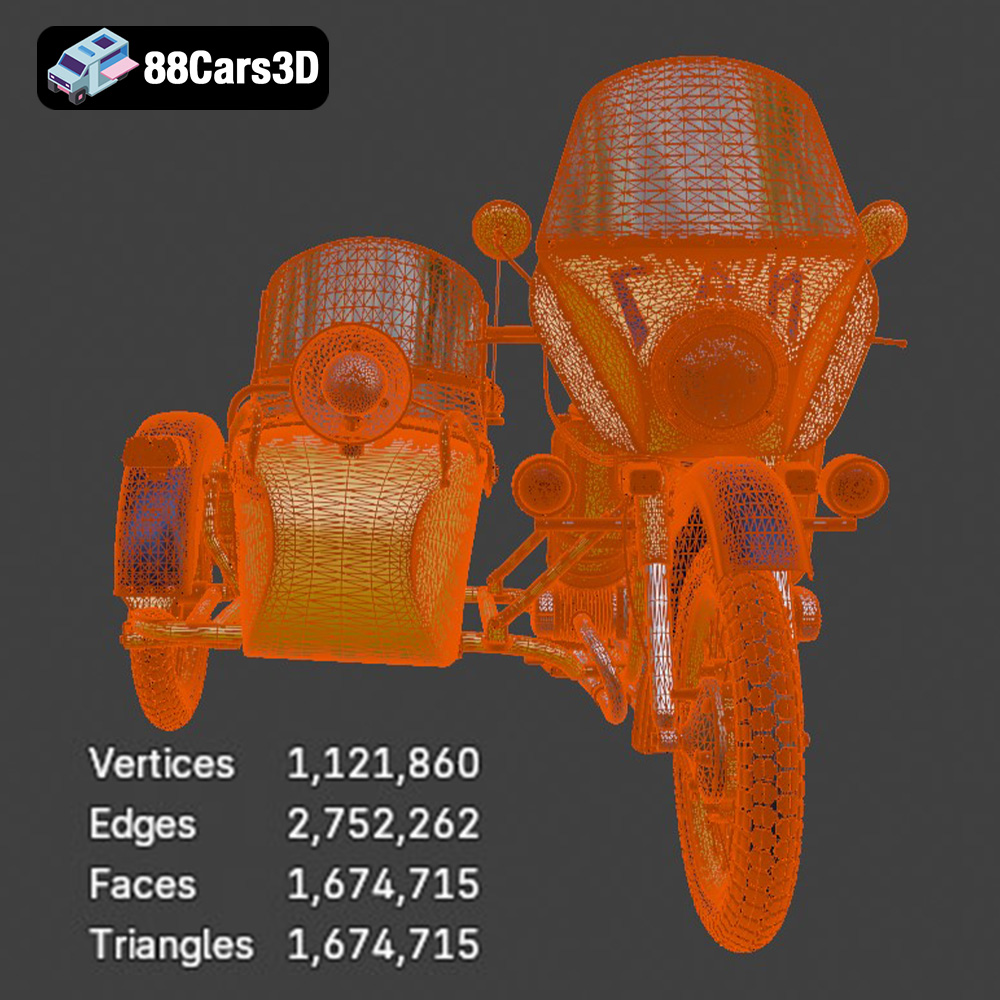
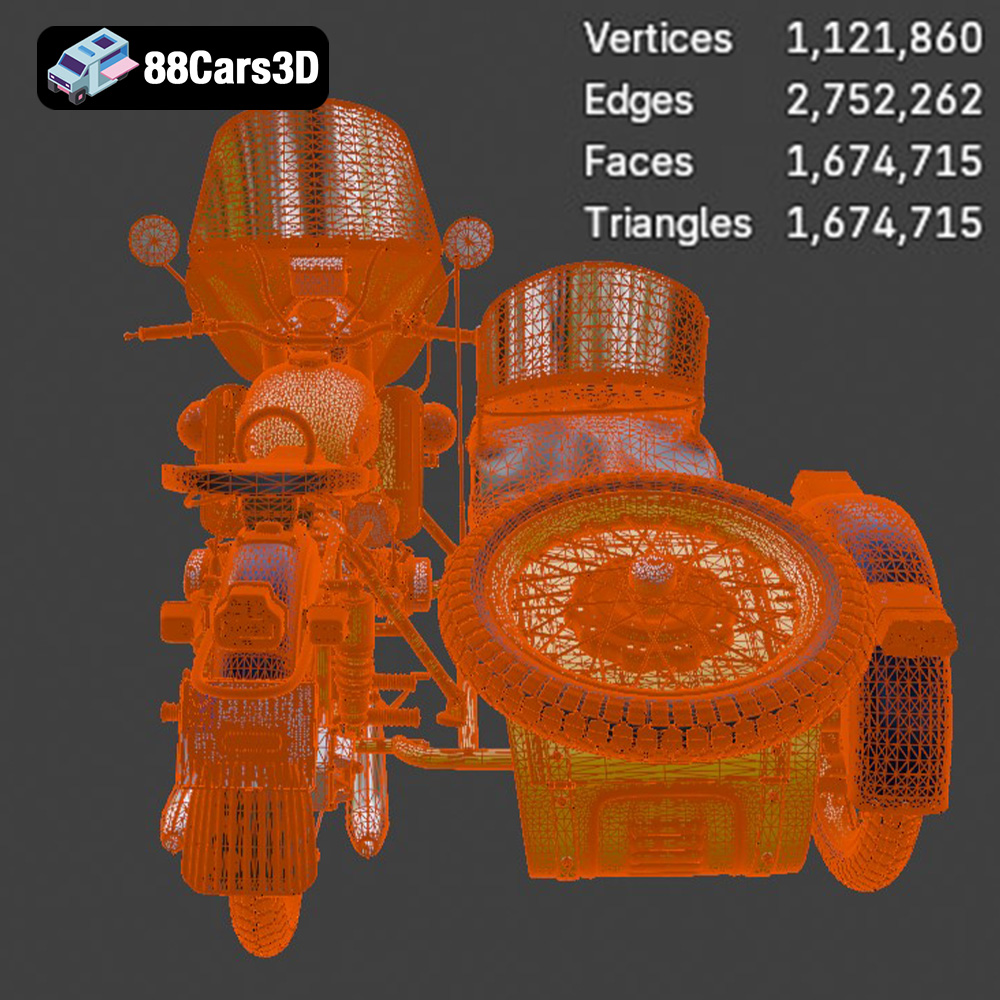
At approximately 85,000 triangles, the Ural M67-36-P strikes an optimal balance for real-time engines like Unreal Engine and Unity. This poly count is sufficient to capture the motorcycle’s intricate details – from the cooling fins on its boxer engine to the spokes on its wheels – while remaining lean enough to prevent performance bottlenecks. In game development, every triangle counts, especially for vehicles that might appear frequently or in large numbers. This careful optimization ensures that the motorcycle performs flawlessly in various game environments, whether it’s a close-up cinematic or part of a bustling open-world scene.
Beyond raw poly count, the quality of a game asset is defined by its geometry and material setup. The Ural model boasts highly accurate geometry, mirroring the real-world proportions and design of the M67-36-P. This extends to subtle details like the curvature of the fuel tank, the precise angles of the frame, and the mechanical components of the engine and suspension. Paired with excellent material setup, which implies carefully crafted PBR (Physically Based Rendering) materials, the model reacts realistically to various lighting conditions, making it look authentic whether bathed in harsh desert sun or the dim light of a garage. This level of detail is vital for achieving believable automotive rendering in games and simulations.
A static model has limited utility in interactive environments. The Ural M67-36-P 3D model addresses this by featuring separate components for animation, including wheels, suspension, and steering. This allows developers to easily rig and animate the motorcycle for driving sequences, turning, and suspension compression, adding dynamic realism to any game or simulation. Furthermore, its real-world scale accuracy ensures that the motorcycle fits seamlessly into environments built to scale, preventing visual discrepancies that can break immersion. Proper pivot setup for steering, wheel rotation, and suspension travel is a subtle but critical technical detail that ensures smooth, believable animation right out of the box.
While often associated with gaming, high-quality 3D car models like the Ural M67-36-P extend their utility far beyond interactive entertainment. Their detailed realism and technical robustness make them invaluable assets across a spectrum of professional fields, enabling innovative visualization, immersive experiences, and even tangible creations.
Augmented Reality (AR) and Virtual Reality (VR) are transforming how we interact with digital content. The Ural M67-36-P 3D model is perfectly suited for these emerging platforms. Imagine a virtual showroom where prospective buyers can inspect every angle of a classic motorcycle, or a VR museum where visitors can ‘walk around’ and explore historical vehicles up close. The model’s optimized topology makes it ideal for these performance-sensitive applications, ensuring smooth, fluid experiences without lag. Businesses can leverage such models for interactive configurators, allowing customers to customize colors, accessories, and finishes in real-time AR environments before making a purchase.
For marketing campaigns, product showcases, and cinematic sequences, the visual fidelity of a 3D model is paramount. The Ural M67-36-P shines in high-end automotive rendering and visualization. Its accurate geometry and excellent material setup enable artists to create stunning photorealistic images and animations. From lifestyle scenes portraying a rugged adventurer to studio lighting setups highlighting its classic lines, the model can be positioned and rendered in virtually any environment. This capability is invaluable for brand campaigns, architectural visualizations that require realistic vehicle props, or even creating concept art for film and television productions.
The ability to convert the Ural M67-36-P 3D model to .stl format opens up an entirely different realm of application: 3D printing. Hobbyists and professional model makers can download the digital file and bring the classic motorcycle into the physical world. The product description provides detailed recommendations for 3D print settings, including scale (1:12 / 1:18 / 1:24), layer height, wall thickness, infill, and support requirements. This transforms a digital asset into a tangible collectible, allowing enthusiasts to admire the M67-36-P’s engineering in their own hands, paint it, and customize it as a display piece. The detailed guidance on print orientation and post-processing ensures a high-quality physical output, replicating the model’s digital fidelity.
The true value of a professional-grade 3D car model lies in its seamless integration into established industry workflows. The Ural M67-36-P 1976 3D model has been meticulously prepared to facilitate this, offering features and format options that cater to diverse software ecosystems and production methodologies.
For users of Blender, the native .blend file provides a complete scene. This means artists can immediately dive into advanced material authoring using Blender’s powerful node-based shader editor, apply complex modifiers for scene specific needs, or integrate the motorcycle into larger animations. The detailed geometry of the Ural M67-36-P can be further enhanced with procedural textures, custom decals, or even minor topological adjustments if a project demands a unique variant or a higher level of wear and tear for a specific narrative. Its optimized base mesh ensures a smooth experience even when adding layers of complexity.
Architectural visualization (ArchViz) and high-end product rendering frequently rely on Autodesk 3ds Max. With the .max file included, professionals can directly import the Ural M67-36-P into their 3ds Max scenes, instantly benefiting from its well-structured geometry and materials. Artists can then apply V-Ray, Corona, or Arnold renderers to achieve photorealistic results, positioning the motorcycle within an interior design project or creating striking studio shots for advertising. The ability to easily adjust material finishes (matte, gloss, metallic) and tank colors mentioned in the product details allows for rapid iteration and customization to match client specifications or artistic vision, crucial for efficient automotive rendering.
Game developers and real-time visualization specialists will appreciate the “game-ready” nature of the Ural M67-36-P. For Unreal Engine, the .fbx format is the go-to for importing geometry, animations, and skeletal meshes. The model’s optimized polycount and proper pivot setup for components like wheels and suspension make it straightforward to set up physics assets and vehicle blueprints. In Unity, a similar process applies, leveraging the .fbx file for importing and configuring the motorcycle within the engine’s physics and animation systems. These ready-made properties significantly reduce the setup time, allowing developers to focus on gameplay and interactive elements, rather than laborious asset preparation. The mentioned .unreal package further streamlines this, potentially offering a pre-configured asset that drops directly into an Unreal project.
The quality of a 3D car model truly shines when put through its paces in real-time environments and cinematic renders. The Ural M67-36-P 1976 model is built to excel in both scenarios, providing the visual fidelity and technical flexibility necessary for demanding visual projects.
Real-time engines like Unreal Engine have become incredibly powerful, capable of producing near-photorealistic visuals. For the Ural M67-36-P, this means leveraging its PBR-ready materials and detailed geometry to respond accurately to global illumination, reflections, and post-processing effects. Artists can place the motorcycle in diverse virtual environments – a dusty, post-apocalyptic wasteland, a pristine garage, or a bustling city street – and expect it to integrate seamlessly. The optimized mesh ensures that even with complex lighting and shadows, the scene maintains high frame rates, which is crucial for interactive walkthroughs, virtual production, and high-fidelity simulations.
When it comes to cinematic renders, the Ural M67-36-P offers a rich canvas for storytelling. Its historical context and rugged aesthetic make it a compelling subject. Animators can utilize its separate, animatable components to create dynamic shots, from the suspension compressing over rough terrain to the detailed engine block subtly vibrating. The model’s high visual fidelity allows for extreme close-ups without breaking immersion, revealing the texture of the seat, the glint of chrome on the exhaust, or the subtle wear on the tires. This level of detail is critical for creating compelling visual narratives in advertisements, short films, or even digital art installations. The ability to modify tire textures (off-road vs. street variants) further enhances its cinematic potential, adapting its look to different environments and story beats.
A great game asset or visualization model should also provide ample room for customization. The Ural M67-36-P 3D model allows artists to change body and tank colors, applying factory-correct hues or imaginative custom finishes. Adjusting material finishes provides control over how light interacts with surfaces – from a dull matte military green to a polished, showroom-ready gloss. These customization options empower artists to adapt the model to specific project needs, ensuring it always fits the desired aesthetic and narrative context. This flexibility is what truly makes a digital asset indispensable in a professional workflow.
The journey of a 3D car model from concept to digital execution is one thing, but translating it into a physical object offers an entirely different form of appreciation. The Ural M67-36-P 1976 3D model’s inclusion of the .stl format, alongside detailed printing recommendations, makes this transition straightforward and rewarding for hobbyists and professionals alike.
For enthusiasts of classic vehicles, the ability to 3D print a highly accurate model of the Ural M67-36-P is a significant advantage. This allows for the creation of display-scale models, collector’s items, or even prototypes for custom modifications. The model’s inherent detail, captured digitally, translates effectively to the physical realm when printed with precision. This tangible output bridges the gap between digital art and physical craftsmanship, allowing for a deeper engagement with the historical vehicle.
The provided 3D print settings are invaluable for achieving the best possible results. Recommending a scale like 1:12, 1:18, or 1:24 helps users choose an appropriate size that balances detail retention with printability. Resin printing (SLA/DLP) is specifically recommended for its ability to capture fine details, such as the engine fins, spokes, and exhaust pipes, which might be lost on FDM printers. Layer height, wall thickness, and infill percentages are critical parameters that directly influence the strength, weight, and visual quality of the final print. The guidance on supports and print orientation – particularly suggesting printing the frame angled for structural integrity and wheels separately – is crucial for minimizing print failures and optimizing overall print quality. These thoughtful considerations demonstrate a comprehensive understanding of the 3D printing process, ensuring users can successfully bring their digital asset to life.
The journey doesn’t end with a raw 3D print. Post-processing, including sanding, priming, and painting, is essential for achieving a polished, display-worthy model. The recommendation for “authentic factory colors with metallic finishes” guides modelers towards historically accurate and visually appealing results. This process allows for further customization, enabling individuals to create unique versions of the Ural M67-36-P, perhaps weathering it for a diorama or giving it a pristine, showroom finish. The ability to physically hold and admire a digital creation, thanks to comprehensive design and thoughtful print settings, adds significant value to the 3D car model.
The world of 3D car models is a testament to the intersection of artistry and engineering, where historical accuracy meets cutting-edge digital technology. The Ural M67-36-P 1976 3D model stands as an exceptional example of this synergy, offering a meticulously crafted asset that is both a faithful reproduction of a classic Soviet-era motorcycle and a versatile tool for contemporary digital pipelines.
From its optimized topology ideal for game assets and immersive AR/VR experiences, to its extensive range of file formats catering to diverse software environments like Blender, 3ds Max, and Unreal Engine, this model is designed for professional utility. Its ability to facilitate high-end automotive rendering for cinematic visuals, alongside detailed guidance for 3D printing physical collectibles, underscores its adaptability and comprehensive design.
Whether you’re developing the next big game, creating stunning visualizations, or simply wish to bring a piece of automotive history to life through 3D printing, the Ural M67-36-P 1976 3D model from 88cars3d.com offers an unparalleled foundation. It embodies the precision, versatility, and historical charm that today’s digital artists and developers demand, proving that classic design can truly thrive in the digital age.
The 1976 Ural M67-36-P is a legendary Soviet-era motorcycle, renowned for its rugged durability, classic utilitarian styling, and historic patrol heritage. Featuring its iconic opposed-twin (boxer) engine, robust dual exhaust system, and sturdy frame design, this classic workhorse captures the absolute essence of 1970s Eastern Bloc engineering and heavy-duty performance. This highly detailed, game-ready 3D model boasts optimized topology (approximately 85,000 triangles) to deliver maximum visual fidelity without compromising real-time performance. Designed for seamless integration into modern digital pipelines, the model ensures highly accurate geometry and excellent material setup, making it an outstanding asset for high-end automotive visualization, game development, and AR/VR applications. Perfect for historic period games, classic motorcycle configurators, VR museums, and cinematic renders.
$19.99
.blend
.fbx
.glb
.max
.obj
.ply
.rendering
.stl
.unreal
.ural
1976
classic-motorcycle
game asset
game-ready
low-poly
m67-36-p
motorcycle-3d-model
optimized
soviet-motorcycle
vintage-bike
VR/AR