Driving Digital Excellence: The Indispensable Role of High-Fidelity 3D Car Models in Modern Visualization
In the rapidly evolving landscape of digital content creation, the demand for hyper-realistic and technically robust 3D assets has never been higher. From blockbuster video games to cutting-edge automotive marketing campaigns, the fidelity of a 3D model can significantly impact the final output’s quality and the project’s overall success. Nowhere is this more apparent than in the realm of 3D car models, where intricate details, accurate proportions, and flawless surface finishes are paramount.
Today, professionals across industries require assets that aren’t just visually appealing but also optimized for diverse applications – be it real-time rendering in a game engine, photorealistic visualization for an advertisement, or even physical prototyping through 3D printing. The versatility and technical precision of a model determine its true value.
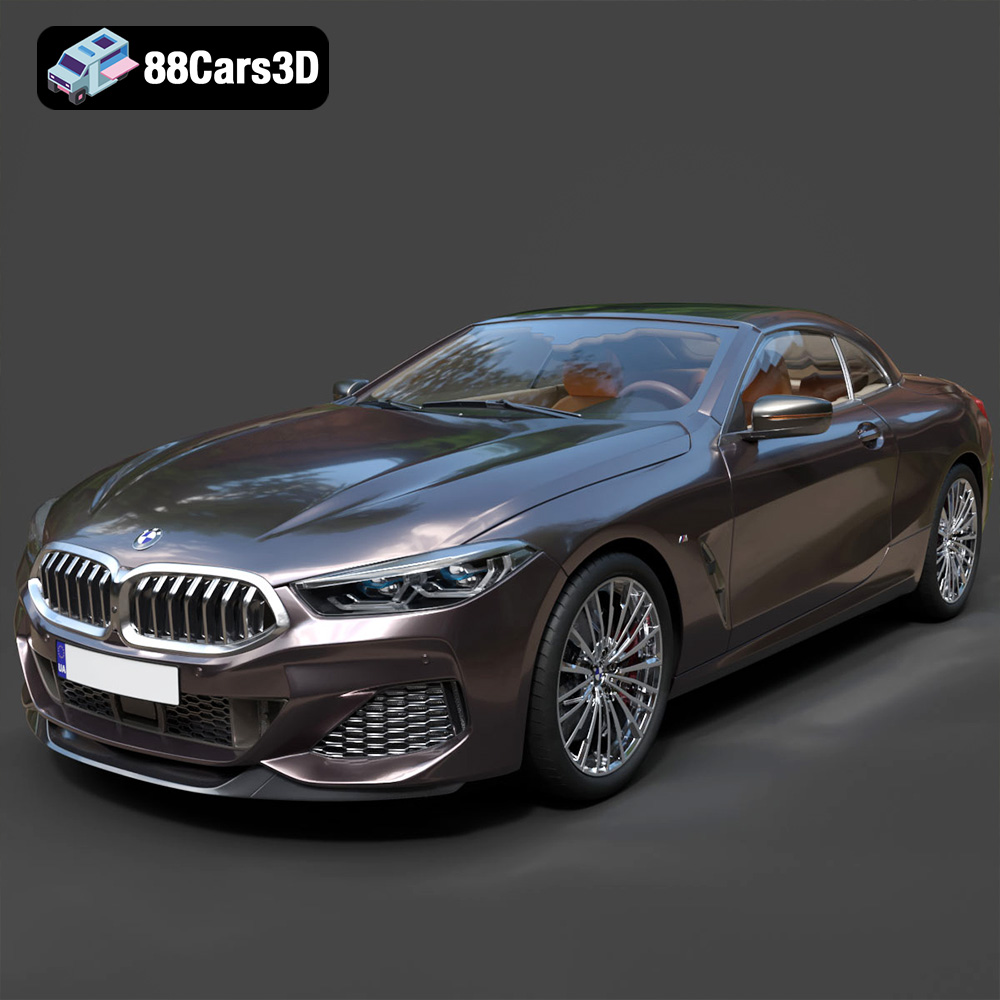
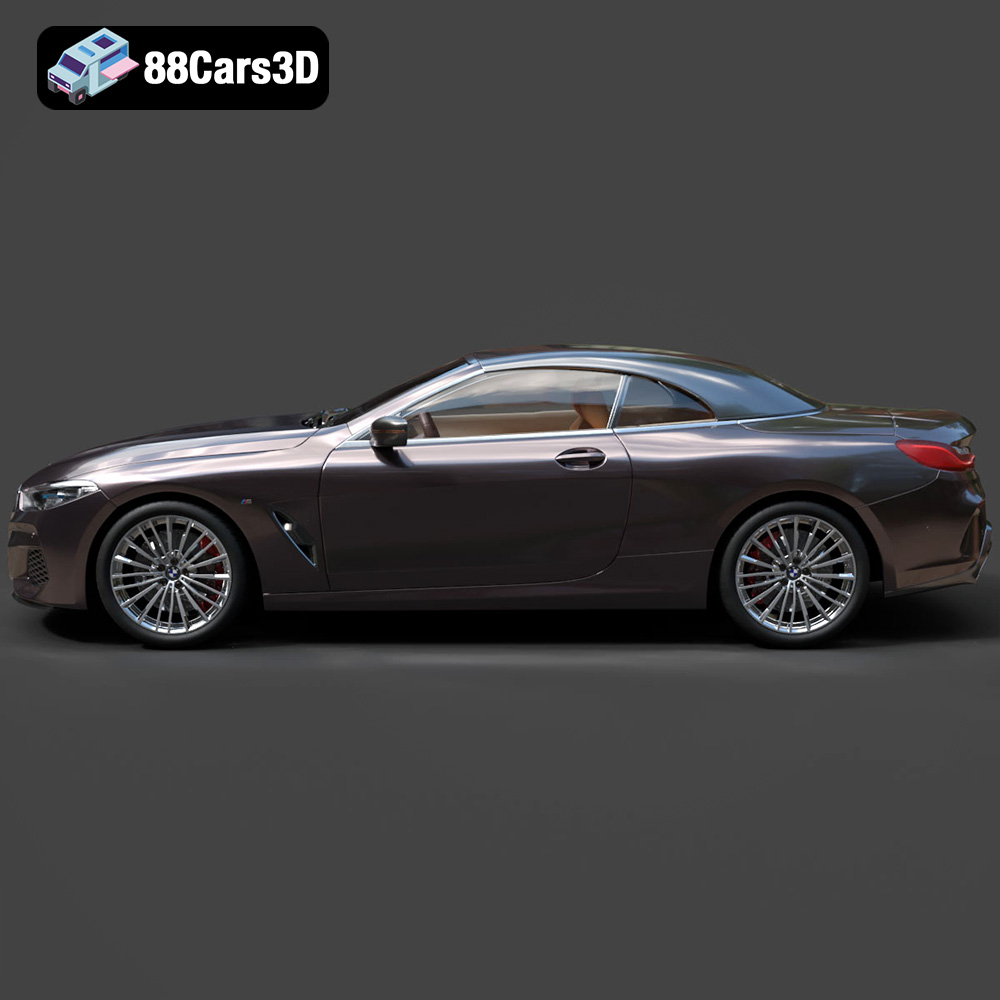
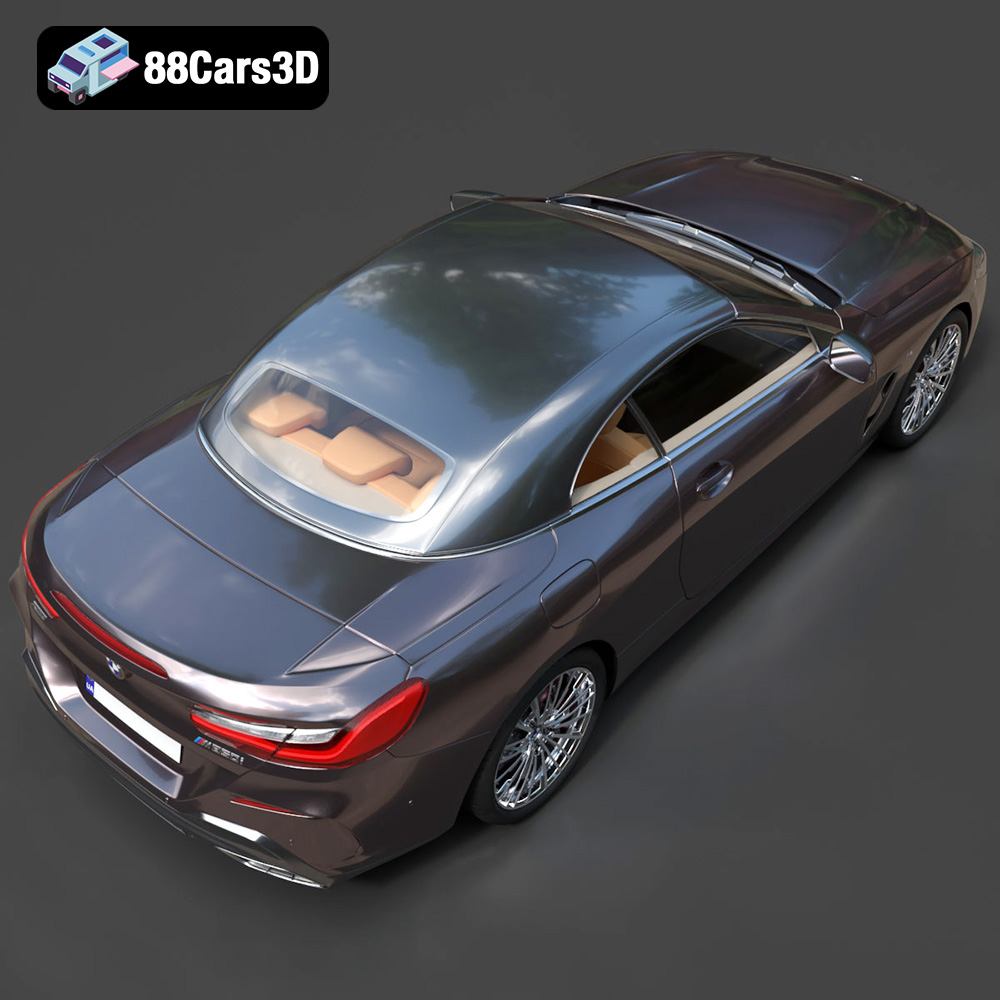
Consider a prime example of such an asset: the BMW 8-Series G14 Convertible M850i 2019 3D Model. This particular model stands out as an embodiment of the meticulous craftsmanship and technical prowess demanded by contemporary digital artists and developers. It provides a foundation for stunning visuals and seamless integration into various professional workflows, from advanced automotive rendering to dynamic game environments.
The Art and Science of Premium 3D Car Models
Creating a truly premium 3D car model is a complex process that marries artistic vision with rigorous technical standards. It goes far beyond simply replicating a vehicle’s silhouette; it involves capturing its essence, its engineering, and its presence down to the minutest detail. The goal is not just a copy, but a digital twin that behaves and appears as its real-world counterpart would in any given digital environment.
Precision Modeling and Texturing
At the core of any high-quality 3D car model is its geometry. This means clean, quad-based topology that facilitates smooth deformations and renders beautifully without artifacts. For an asset like the BMW 8-Series G14 Convertible M850i 2019 3D Model, every curve, every panel gap, and every interior component must be sculpted with exceptional accuracy. This often involves working from CAD data, blueprints, and extensive photographic references to ensure perfect proportions and dimensions.
Beyond the mesh, realistic materials and textures are crucial. Modern PBR (Physically Based Rendering) workflows are standard, requiring meticulously crafted albedo, metallic, roughness, normal, and ambient occlusion maps. These maps dictate how light interacts with the surface, mimicking the reflectivity of paint, the sheen of chrome, the texture of leather, and the transparency of glass. The attention to detail extends to the interior, where individual stitches on upholstery, the textures of dashboard materials, and the functioning of digital displays are replicated to enhance immersion.
Optimizing for Performance
While visual fidelity is critical, a premium 3D car model must also be performant. This involves careful polygon budgeting, especially for game assets. High-end rendering might accommodate millions of polygons, but real-time applications require optimization without sacrificing visual quality. Techniques like efficient instancing, LOD (Level of Detail) implementation, and effective UV unwrapping ensure that the model can be rendered smoothly across different hardware specifications and platforms.
For a model like the BMW 8-Series G14 Convertible M850i 2019 3D Model, this means finding the perfect balance. It must be detailed enough for close-up renders and cinematics, yet robust enough for integration into interactive experiences where frame rates are paramount. This optimization extends to clean, non-overlapping UVs that allow for efficient texture baking and consistent material application across all surfaces.
Understanding 3D Model File Formats
The flexibility and utility of any 3D asset are heavily dependent on its availability in various file formats. Each format serves a specific purpose, catering to different software ecosystems, project requirements, and output destinations. Understanding these distinctions is crucial for professionals seeking to integrate a 3D car model like the BMW 8-Series G14 Convertible M850i 2019 into their pipelines efficiently. High-quality vendors like 88cars3d.com understand this necessity, offering a comprehensive suite of formats to ensure maximum compatibility and workflow flexibility.
The Ecosystem of Digital Assets
The digital world thrives on interoperability. A single 3D model might begin its life in one application, be rendered in another, and finally deployed in a third. This journey necessitates robust file formats capable of preserving critical data such as geometry, UVs, materials, animations, and even scene configurations.
- .blend: This is Blender’s native file format. It’s a complete scene package, containing not just the 3D car model but also its materials, textures, lighting setups, cameras, and even animation data if present. For Blender users, a .blend file offers maximum editability, allowing full control over every aspect of the asset. It’s ideal for artists who want to customize, animate, or re-render the model within the Blender environment.
- .fbx: Developed by Autodesk, FBX (Filmbox) is one of the most widely adopted interchange formats in the 3D industry. It’s renowned for its ability to store not only mesh data but also animations, rigging, skinning, lights, and cameras. This makes it an ideal format for transferring animated or rigged 3D car models between different 3D software applications (like 3ds Max, Maya, Blender) and, critically, for importing into game engines such as Unreal Engine and Unity. Its versatility makes it a cornerstone of real-time pipelines.
- .obj: The Wavefront OBJ format is a universal, open standard that has been around for decades. It’s excellent for geometry transfer, supporting vertex, normal, UV, and face data. While it doesn’t store animation or scene information, its simplicity and widespread support make it compatible with virtually every 3D application on the market. It’s a reliable choice when you need a clean mesh for cross-software compatibility, often accompanied by .mtl (material library) files for basic material definitions.
- .glb: GLB (GL Transmission Format Binary) is an increasingly important format, especially for web-based 3D, AR (Augmented Reality), and VR (Virtual Reality) applications. It’s a binary version of glTF, designed to be compact and efficient for quick loading and display. A .glb file encapsulates the model, textures, and animations into a single file, making it perfect for interactive web viewers, social media 3D posts, and lightweight AR experiences on mobile devices.
- .stl: STL (STereoLithography) is the standard format for 3D printing. It describes only the surface geometry of a 3D object using a collection of triangular facets. It doesn’t carry color, texture, or material information, focusing purely on the physical shape required for additive manufacturing. If your goal is to bring the BMW 8-Series G14 Convertible M850i 2019 3D Model into the physical world, .stl is your go-to format.
- .ply: The Polygon File Format (PLY) is primarily used for storing 3D data from 3D scanners. It can store a variety of properties, including color, transparency, normals, texture coordinates, and data confidence values, per vertex or per face. While not as universally used as .obj or .fbx for general asset exchange, it’s valuable for precision mesh analysis, scientific visualization, or scenarios where detailed point cloud or polygonal data from real-world scans is being utilized or referenced.
- .unreal: While not a standard generic file extension in the same way as .fbx or .obj, this often refers to a pre-configured asset or project package specifically designed for Unreal Engine. Such a package might include the .fbx file already imported, with materials set up using Unreal’s PBR shaders, LODs configured, collision meshes created, and potentially even blueprint functionality. It streamlines the integration process, providing an engine-ready asset for immediate use within real-time environments.
- .max: This is the native file format for Autodesk 3ds Max. Like .blend, it’s a complete scene file, containing all the model’s geometry, materials, lighting, cameras, and animation data. For 3ds Max users, this format offers the highest level of editability and control, making it ideal for professional rendering studios that rely on V-Ray, Corona Renderer, or Arnold within 3ds Max for high-end automotive rendering and animation.
Each of these formats ensures that the detailed craftsmanship of 3D car models like the BMW 8-Series G14 Convertible M850i 2019 can be leveraged optimally, regardless of the target platform or software. Choosing the right format is a fundamental decision that impacts workflow efficiency and project compatibility.
Unleashing Creativity: Workflows with the BMW 8-Series G14 Convertible M850i 2019 3D Model
The true power of a meticulously crafted 3D asset lies in its versatility across diverse professional applications. The BMW 8-Series G14 Convertible M850i 2019 3D Model, with its high fidelity and range of file formats, empowers artists and developers to push the boundaries of digital visualization. Let’s explore some key workflows.
Photorealistic Automotive Rendering in 3ds Max and V-Ray/Corona
For automotive marketing, configurators, and high-end visualization, photorealism is non-negotiable. Using the .max file provided, artists can import the BMW 8-Series into 3ds Max, a powerhouse for architectural and automotive rendering. The clean geometry, accurate UVs, and PBR-ready materials make it an ideal base.
- Environment Setup: Artists begin by creating a realistic environment. This could be a studio setup with controlled lighting, an outdoor scene with HDRIs (High Dynamic Range Images) for natural illumination, or a dynamically generated landscape.
- Material Refinement: While the model comes with realistic materials, fine-tuning is often necessary to match specific brand guidelines or achieve a particular aesthetic. This involves adjusting paint reflectivity, tire rubber roughness, chrome brilliance, and interior material properties using V-Ray or Corona’s advanced material systems.
- Lighting and Camera: Strategic lighting highlights the car’s design cues, emphasizing its sleek lines and luxurious details. Cameras are positioned and animated to mimic real-world automotive photography, employing depth of field, motion blur, and cinematic aspect ratios to enhance realism. The “fully modeled interior” of the BMW 8-Series G14 Convertible M850i 2019 3D Model means interior shots and close-ups are just as compelling as exterior views.
- Post-Production: The rendered passes are then composited and enhanced in software like Adobe Photoshop or After Effects to add final touches like color grading, lens flares, and atmospheric effects, elevating the image to a marketing-ready masterpiece.
Integrating into Game Engines: Unreal Engine & Unity
For game developers and creators of interactive experiences, the BMW 8-Series G14 Convertible M850i 2019 3D Model serves as an exceptional game asset. Its .fbx and .unreal formats are specifically designed for seamless integration into real-time environments like Unreal Engine and Unity.
- Import and Optimization: The .fbx file allows for straightforward import, bringing in the mesh, UVs, and potentially basic material slots. Developers can then apply engine-specific PBR materials. If an .unreal package is provided, much of this setup is already done, saving significant development time.
- Level of Detail (LODs): For optimal performance in games, LODs are crucial. The model’s optimized mesh structure is ideal for generating multiple levels of detail, swapping to lower-poly versions when the car is far from the camera, thereby minimizing render cost without noticeable visual degradation.
- Collision Meshes and Physics: Custom collision meshes are generated for accurate physics simulation, allowing the car to interact realistically with the game world. This enables dynamic racing experiences, realistic crashes, and responsive handling.
- Interactive Elements: For enhanced immersion, developers can rig doors, wheels, and steering to be interactive. The “fully modeled interior” can be explored in first-person views, or used for driver POV in racing simulations.
Beyond Traditional Rendering: AR/VR and Simulation
The model’s .glb format and optimized mesh structure open doors to cutting-edge applications in Augmented Reality (AR) and Virtual Reality (VR), as well as sophisticated simulation platforms.
- AR/VR Experiences: With .glb, the BMW 8-Series G14 Convertible M850i 2019 3D Model can be easily deployed in web-based AR configurators, allowing users to place a virtual BMW in their real-world environment via a smartphone. In VR, it creates immersive showrooms or virtual test drives, letting users explore the car’s luxurious interior and exterior in a fully interactive 3D space.
- Driving Simulators: For professional training, automotive research, or entertainment, the accurate geometry and realistic materials make it a perfect candidate for advanced driving simulators. These simulations can analyze vehicle dynamics, test autonomous driving algorithms, or simply provide an incredibly realistic driving experience.
Case Studies: Professional Applications of High-Fidelity 3D Car Models
The value of premium 3D car models extends across various industries, providing foundational assets for a multitude of professional endeavors. The BMW 8-Series G14 Convertible M850i 2019 3D Model exemplifies how a single, high-quality asset can serve vastly different, yet equally demanding, applications.
Automotive Marketing & Visualization
Leading automotive brands invest heavily in digital visualization for advertising and sales. Instead of costly physical photoshoots, they often rely on 3D renders. A model like the BMW 8-Series G14 Convertible M850i 2019 3D Model allows marketing teams to:
- Generate Campaign Imagery: Create stunning, photorealistic images and animations for brochures, websites, and TV commercials long before a physical prototype is available, or to showcase specific features and color combinations that might be impractical to photograph.
- Develop Online Configurator Tools: Empower potential buyers to customize their dream car with different paint colors, wheel options, and interior trims, seeing the changes in real-time, all powered by the underlying 3D model.
- Produce Immersive Showroom Experiences: Utilize VR and AR to create virtual dealerships where customers can walk around, sit inside, and interact with the car from anywhere in the world.
Such applications require not just a beautiful model but one with clean geometry, optimized materials, and robust file formats, precisely what 88cars3d.com offers.
Game Development and Interactive Experiences
The gaming industry is a major consumer of high-quality 3D assets. Realistic vehicles are crucial for racing games, open-world adventures, and even simulations. The BMW 8-Series G14 Convertible M850i 2019 3D Model, provided as a game asset in .fbx or .unreal formats, is ideal for:
- Racing Simulations: Integrating the model into a racing game offers players an authentic driving experience, complete with accurate vehicle dimensions and dynamics.
- Open-World Games: Populating vast game worlds with diverse, high-fidelity vehicles enhances environmental realism and player immersion.
- Educational Simulators: Developing interactive tools for automotive design students or mechanics to explore vehicle construction and components.
Product Design and Prototyping
While often associated with finished products, 3D models play a critical role in the design and prototyping phases. For designers working on aftermarket accessories or related products, the BMW 8-Series G14 Convertible M850i 2019 3D Model can be used for:
- Fitment and Compatibility Studies: Designers can import the model to accurately test how new parts (e.g., custom wheels, body kits, roof racks) would fit and look on the vehicle, reducing the need for expensive physical prototypes.
- 3D Printing Prototypes: The .stl file format allows for the creation of physical scale models, enabling designers to evaluate ergonomics, aesthetics, and structural integrity in a tangible form.
The Technical Edge: What Defines a Production-Ready 3D Asset
Beyond aesthetic appeal, a truly production-ready 3D car model is characterized by its underlying technical quality. This “technical edge” ensures that the asset is not only beautiful but also efficient, flexible, and future-proof. When sourcing 3D car models, particularly from platforms like 88cars3d.com, these are the critical benchmarks to consider.
Mesh Topology and UV Mapping for Flawless Results
A superior 3D model, such as the BMW 8-Series G14 Convertible M850i 2019 3D Model, features exemplary mesh topology. This means:
- Clean Quads: The geometry primarily consists of four-sided polygons (quads). This ensures predictable subdivision (for smoothing) and clean deformations, which are vital for animation or dynamic simulation. Avoidance of n-gons (polygons with more than four sides) and excessive triangulation (tris) is key for a robust mesh.
- Optimized Poly Count: The model strikes a balance between detail and performance. While high-poly versions are excellent for cinematics, efficiently optimized versions with appropriate LODs are crucial for real-time applications, preventing performance bottlenecks without sacrificing visual fidelity at relevant distances.
- Perfect UV Unwrapping: UV mapping is the process of flattening the 3D surface into a 2D space for texture application. Production-ready models have clean, non-overlapping UVs that are scaled appropriately to minimize texture stretching and maximize texture resolution. This meticulous UV work is essential for applying realistic PBR materials and ensures consistent texturing across all rendering engines.
Material PBR Workflow for Realistic Surfaces
The industry standard for realistic material representation is the Physically Based Rendering (PBR) workflow. A high-quality 3D car model comes with PBR-ready materials, meaning it has been set up with maps that accurately describe how light interacts with its surfaces:
- Albedo/Base Color: Defines the diffuse color of the surface.
- Metallic: Determines if a surface is metallic or dielectric.
- Roughness: Controls the smoothness or roughness of the surface, affecting reflections.
- Normal/Bump Maps: Simulates surface detail without adding actual geometry, saving poly count while enhancing visual realism (e.g., for intricate panel lines or interior textures).
- Ambient Occlusion: Adds subtle shadows where surfaces are close together, enhancing depth and realism.
These maps, when correctly applied, enable the BMW 8-Series G14 Convertible M850i 2019 3D Model to look consistent and realistic under various lighting conditions and in any PBR-compliant renderer or game engine.
Scalability and Future-Proofing Your Assets
A well-engineered 3D asset is scalable and adaptable to future technologies and project requirements. This means:
- Modularity: Components like wheels, doors, and interior elements are often separate objects, allowing for easier customization, animation, or damage modeling.
- Layered Materials: The PBR setup is often designed to be easily modified or extended, allowing artists to swap out paint colors, adjust wear and tear, or apply custom decals with minimal effort.
- Broad Compatibility: The provision of multiple industry-standard file formats (.max, .blend, .fbx, .obj, .glb, .stl, .ply, .unreal) ensures that the model can be used across a wide spectrum of software and pipelines, from legacy systems to emerging AR/VR platforms, guaranteeing its utility for years to come.
Investing in such robust 3D car models saves countless hours in conversion, optimization, and re-texturing, allowing professionals to focus on creative execution rather than technical remediation.
Conclusion
In the dynamic world of 3D visualization, the quality of your foundational assets dictates the ceiling of your creative output. High-fidelity 3D car models are more than just digital representations; they are pivotal tools that power everything from photorealistic automotive rendering to immersive game assets and innovative AR/VR experiences. The intricate balance of artistic precision and technical optimization is what transforms a simple mesh into a production-ready masterpiece.
The BMW 8-Series G14 Convertible M850i 2019 3D Model stands as a testament to this philosophy. Its meticulously crafted exterior, fully modeled interior, clean topology, and comprehensive suite of industry-standard file formats make it an exceptionally versatile and reliable asset for professionals across various disciplines. Whether you’re a seasoned visualiser in 3ds Max, a game developer working in Unreal Engine, or an innovator exploring AR/VR, this model provides the technical foundation for stunning and performant results.
For those seeking to elevate their projects with unparalleled realism and efficiency, investing in premium 3D assets is a strategic decision. Explore the extensive collection of high-quality 3D car models, including this exquisite BMW, at 88cars3d.com. Discover how precision-engineered assets can streamline your workflow and unlock new creative possibilities, driving digital excellence in every project.
Featured 3D Model
BMW 8-Series G14 Convertible M850i 2019 3D Model
Experience unmatched realism and precision with the BMW 8-Series G14 Convertible M850i 2019 3D Model. Designed for professionals and enthusiasts, this exceptionally detailed vehicle replica captures the sleek, aggressive lines and luxurious open-top profile of the iconic sports car. From its meticulously crafted exterior to a fully modeled interior, every element reflects the sophisticated engineering of the original design.
$19.99
View This Model