Get 20% OFF All Premium 3D & STL Models!

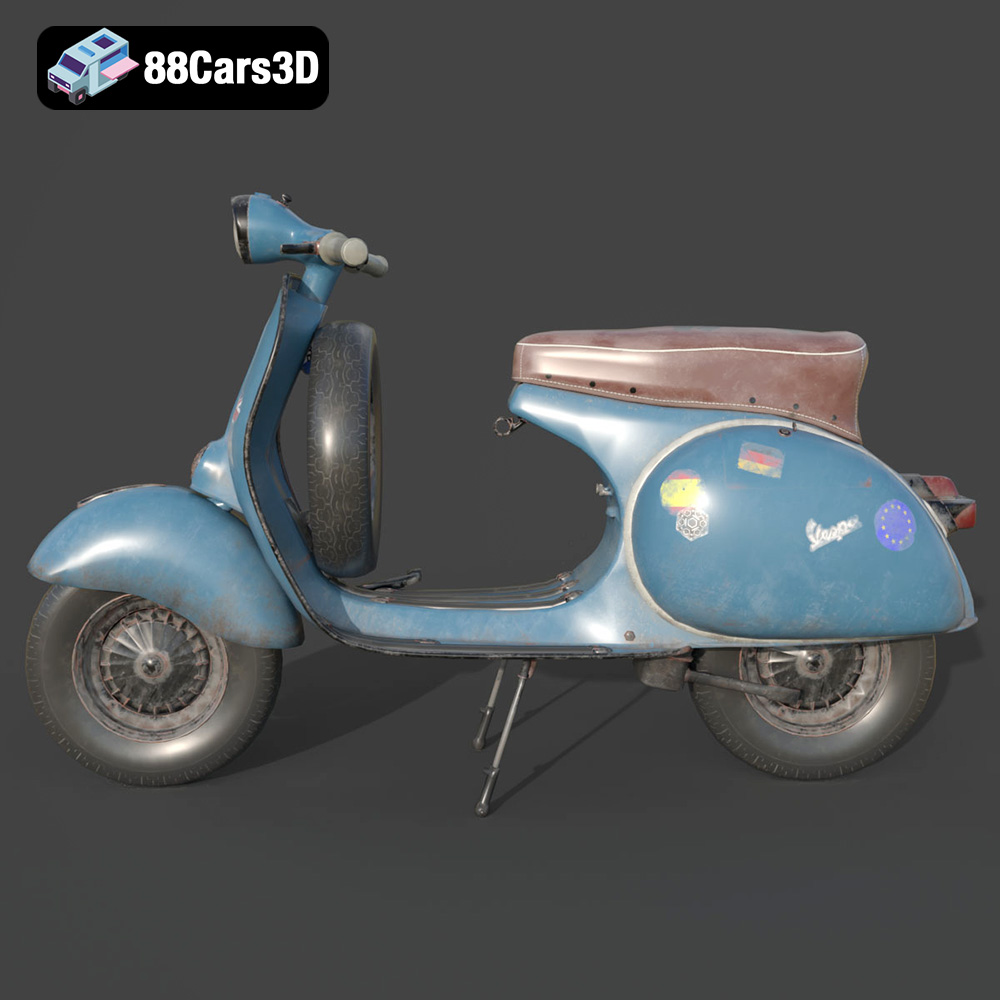
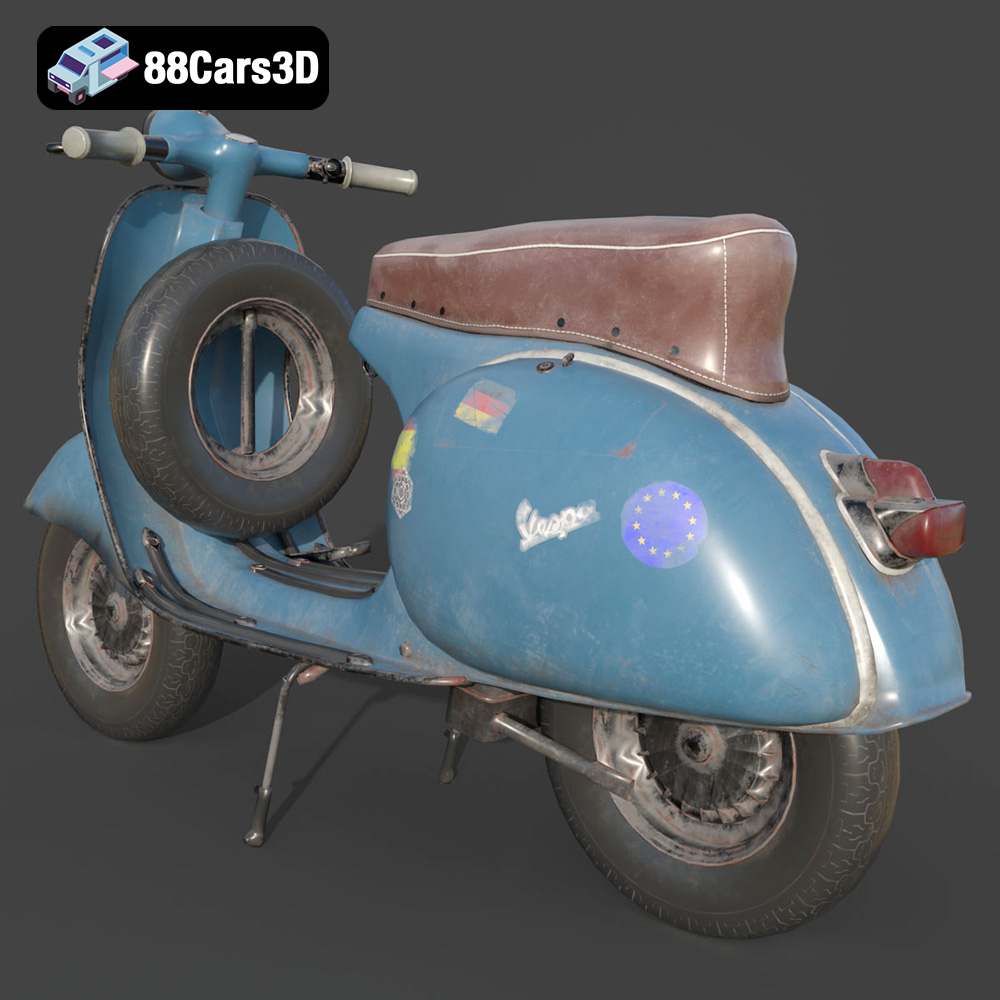
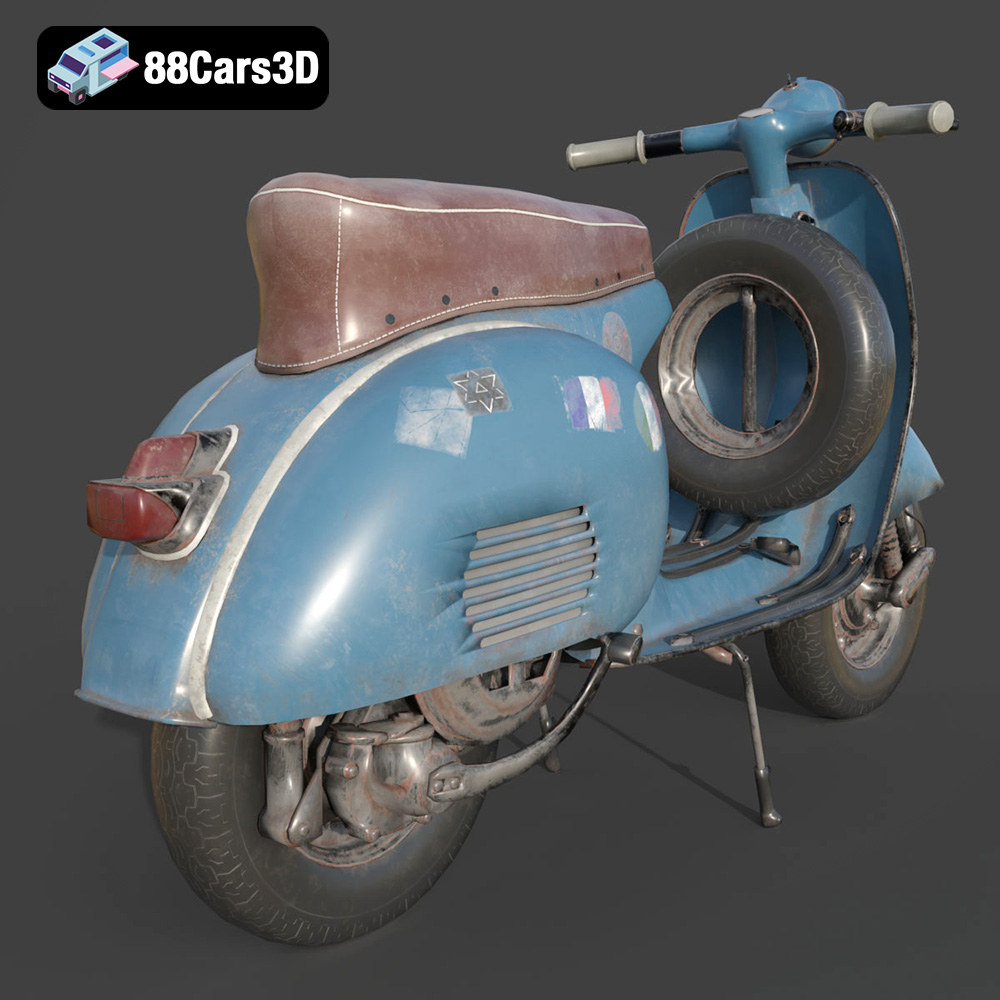
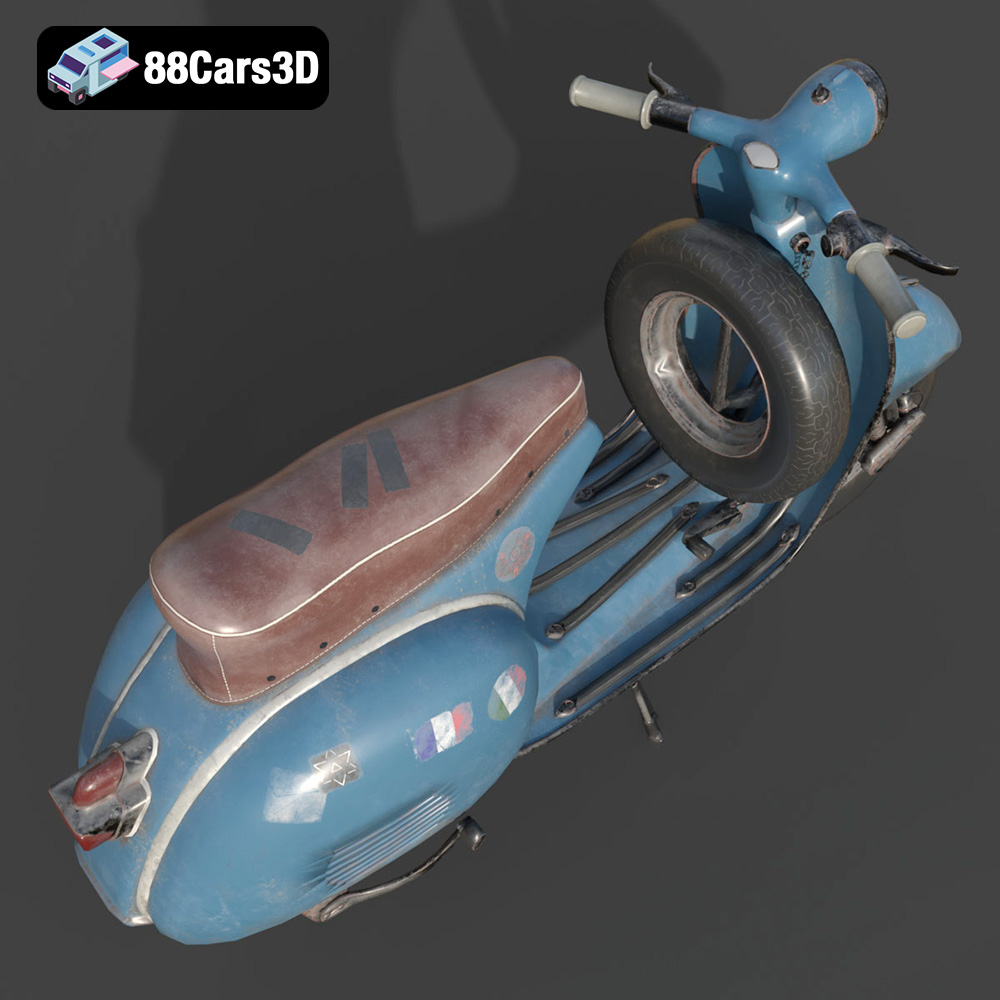
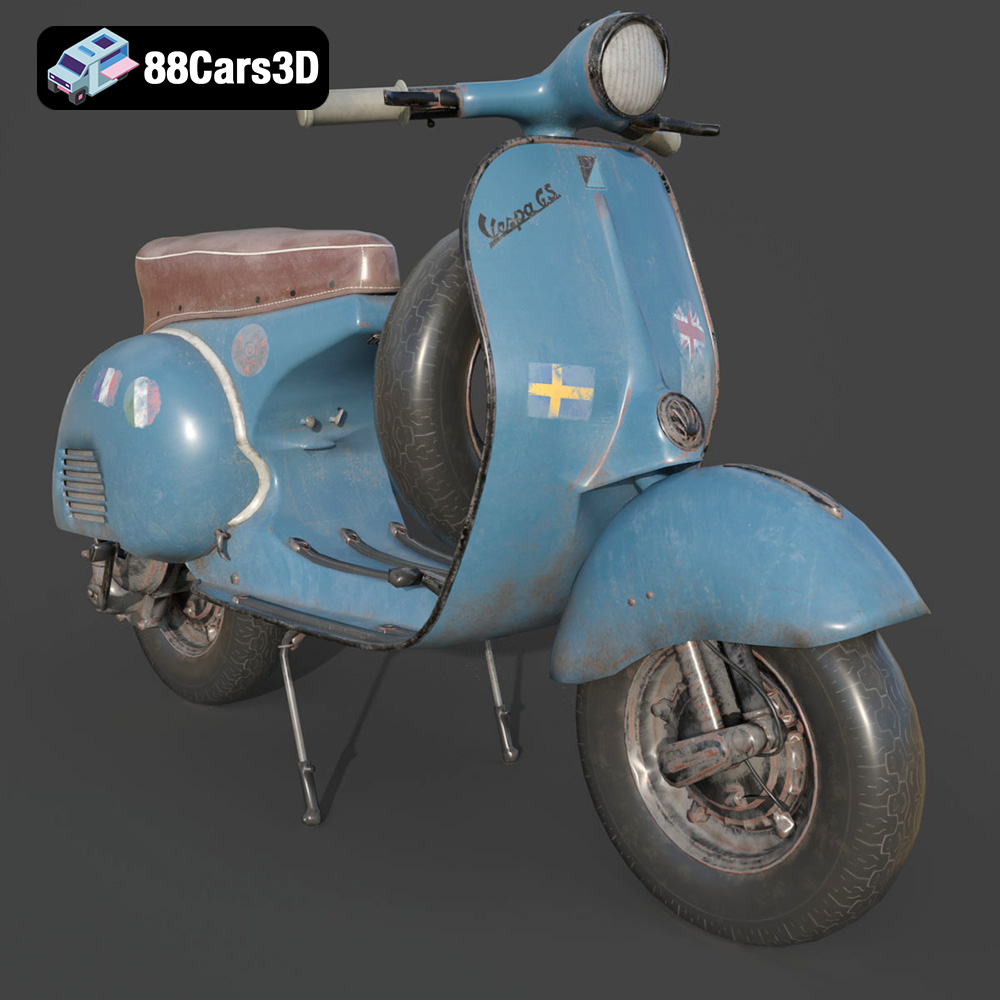
Few vehicles have captured the imagination and epitomized an era quite like the Vespa GS 150. More than just a scooter, it’s a symbol of post-war Italian design, freedom, and an unparalleled sense of style. With its elegant aerodynamic curves, distinctive unibody frame, and pioneering status as the first mass-market sports Vespa, the Gran Sport remains a coveted masterpiece. Its presence instantly evokes sun-drenched European streets, classic cinema, and a timeless cool that transcends generations.
In the realm of digital creation, the demand for authentic and high-quality representations of such iconic vehicles is immense. Whether you’re a game developer crafting a bustling open-world city, an architect visualizing a vibrant street scene, a product designer showcasing a vintage aesthetic, or a filmmaker producing a visually stunning render, the accuracy and detail of your 3D assets are paramount. This is where a meticulously crafted 3D model of the Vespa GS 150 becomes an invaluable tool, bridging the gap between historical charm and cutting-edge digital fidelity. The Vespa GS 150 3D Model available at 88cars3d.com is precisely such an asset, designed to empower creators across a multitude of industries with a perfect blend of visual realism and technical optimization.
The challenge in creating a digital replica of a classic like the Vespa GS 150 lies in preserving its soul while adapting it for modern workflows. This isn’t merely about replicating geometry; it’s about translating the vehicle’s design philosophy, its historical textures, and its mechanical nuances into a format that performs flawlessly in real-time engines and renders beautifully in static visualizations. From the signature swept-back leg shield to the authentic 150cc two-stroke engine layout, every detail must be considered and executed with precision. A high-quality 3D asset provides an immediate, ready-to-use solution that bypasses the arduous and time-consuming process of modeling from scratch, allowing artists and developers to focus on integration and creative direction.
The applications for a premium 3D model of an iconic vehicle are incredibly broad. For game developers, it’s a high-performance, game-ready asset that can populate virtual worlds. For architectural visualization, it adds character and realism to exterior renders. For marketing and advertising, it provides a flexible tool for compelling brand narratives. And for enthusiasts, it can even be a tangible piece of history through 3D printing. The Vespa GS 150 3D Model addresses these diverse needs by offering robust technical specifications and broad compatibility, ensuring it can be a cornerstone asset in nearly any digital project.
Navigating the diverse landscape of 3D model file formats is crucial for any professional working with digital assets. Each format serves a specific purpose, offering unique advantages in terms of compatibility, data retention, and optimization for particular workflows. The Vespa GS 150 3D Model download from 88cars3d.com comes equipped with an extensive range of these formats, ensuring maximum flexibility and seamless integration into virtually any production pipeline. Understanding when and why to use each format is key to unlocking the full potential of your 3D assets.
The .blend format is native to Blender, the powerful and increasingly popular open-source 3D creation suite. When you download the Vespa GS 150 in .blend format, you’re receiving a fully editable Blender scene. This means all materials, textures, lighting setups, animation rigs, and scene organization are preserved exactly as they were created within Blender. This format is ideal for users who primarily work in Blender, offering immediate access to the model’s full capabilities for further customization, animation, or rendering with Cycles or Eevee. It provides the most comprehensive data integrity within its native environment.
.fbx (Filmbox) is arguably the most widely adopted proprietary file format for 3D data exchange, especially prominent in game development. Developed by Autodesk, it’s designed to store a wide range of 3D data, including model geometry, skeletal animation, blend shapes, lights, cameras, and materials. The .fbx format is ideal for transferring the Vespa GS 150 into real-time engines like Unreal Engine and Unity, as well as other major 3D software packages like 3ds Max, Maya, and Cinema 4D. Its robust support for animation and scene hierarchy makes it an indispensable component of professional pipelines for game assets and animated visualizations.
The .obj (Wavefront OBJ) format is a universal, open-standard format primarily focused on storing 3D geometry – vertices, normals, UV coordinates, and faces. While it doesn’t typically store animation or scene information like .fbx, it is exceptionally compatible across almost all 3D software. For the Vespa GS 150, the .obj file is perfect for scenarios where you need the core mesh and UVs to import into a new application and re-setup materials from scratch, or for applications that have limited import options. Its simplicity ensures reliable data transfer for the model’s core structure, making it a dependable fallback and a great choice for static renders or integration into niche tools.
.glb (GL Transmission Format Binary) is a binary version of the glTF (Graphics Language Transmission Format) standard. It’s quickly becoming the go-to format for efficient transmission and loading of 3D scenes and models in AR, VR, and web-based applications. A single .glb file packages all necessary data, including geometry, materials (PBR ready), textures, and animations, into a compact, single-file payload. The Vespa GS 150 in .glb is perfectly optimized for interactive 3D viewers on websites, mobile AR experiences, and performance-critical VR environments due to its small file size and quick parsing capabilities.
The .stl (STereoLithography) format is the long-standing industry standard for 3D printing. It represents 3D models as a series of connected triangles, defining only the surface geometry without color or texture information. For hobbyists or professionals looking to bring the Vespa GS 150 into the physical world, the .stl file is what your slicer software will use to prepare the model for printing. The provided .stl for the Vespa GS 150 is designed to be convertible and suitable for display-scale hobbyists, ensuring the intricate details of the scooter are preserved for physical fabrication.
.ply (Polygon File Format) is another format primarily used for storing 3D data from 3D scanners, CAD applications, and for scientific analysis. It can store not only geometry but also color, transparency, and sometimes normal vectors per vertex, offering higher precision than .stl in certain aspects. For the Vespa GS 150, the .ply format can be particularly useful for users requiring highly accurate mesh data for reverse engineering, detailed measurement, or integration into specialized CAD or engineering simulation software where precise geometric definition is paramount.
The .unreal format, or more accurately, assets prepared for Unreal Engine, are typically distributed as .fbx files optimized with Unreal Engine specific naming conventions, material setup, and potentially collision meshes and LODs already configured. While not a distinct file extension like .fbx or .obj, “unreal” here implies an asset that has been specifically processed and optimized to slot directly into Unreal Engine projects with minimal setup. This means the Vespa GS 150 model supplied with this designation is tailored for peak performance and visual quality within Epic Games’ powerful real-time engine, potentially saving hours of import and optimization work for game developers.
The .max format is the native file type for Autodesk 3ds Max, one of the leading software packages for 3D modeling, animation, and rendering. Similar to .blend for Blender, the .max file contains the complete scene data, including the Vespa GS 150’s geometry, materials, lighting, cameras, and any scene-specific settings. This format is indispensable for 3ds Max users who require full editability, allowing them to leverage the software’s powerful rendering capabilities (like V-Ray or Corona) or integrate the model into complex architectural visualizations or animations with ease. It offers the highest fidelity and control within the 3ds Max environment.
Achieving photorealistic quality in 3D rendering and optimal performance in real-time applications requires a deep understanding of technical specifications. The Vespa GS 150 3D Model from 88cars3d.com exemplifies this balance, meticulously engineered to deliver both visual fidelity and efficiency. Let’s delve into the specific technical advantages that make this model stand out.
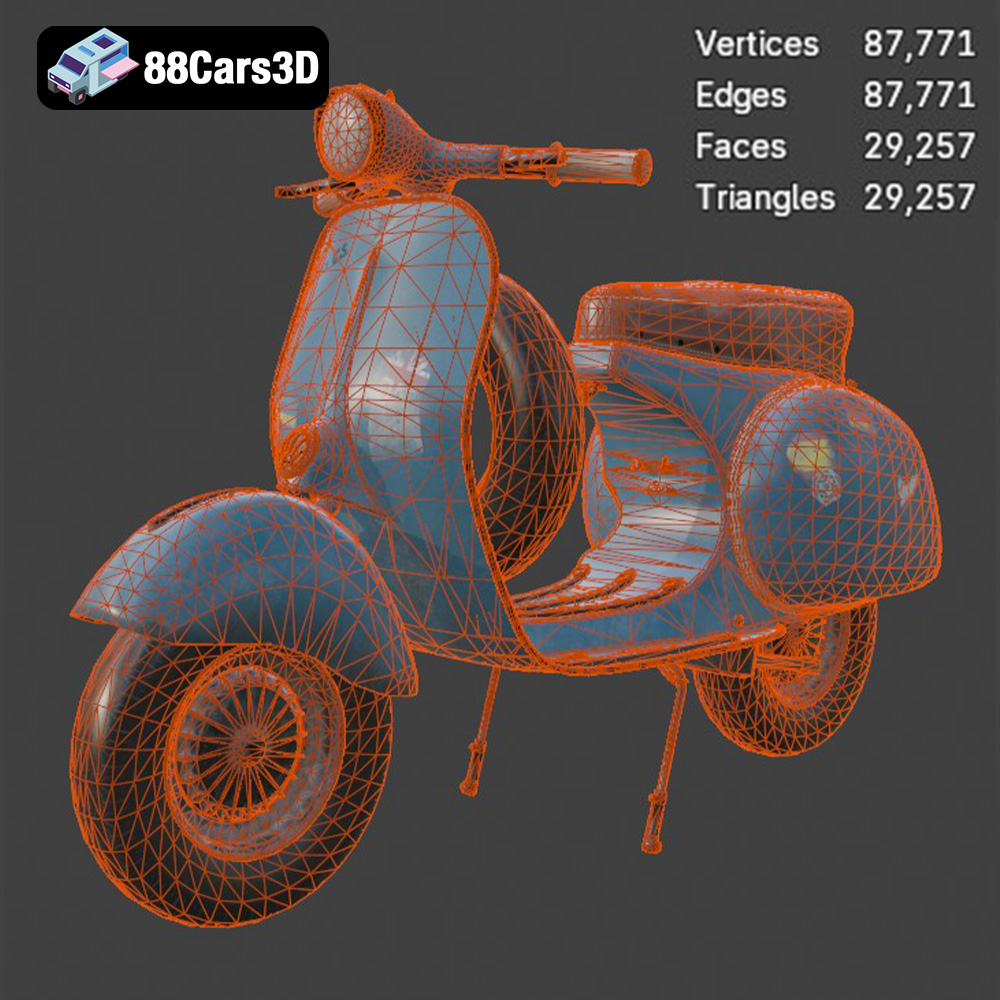
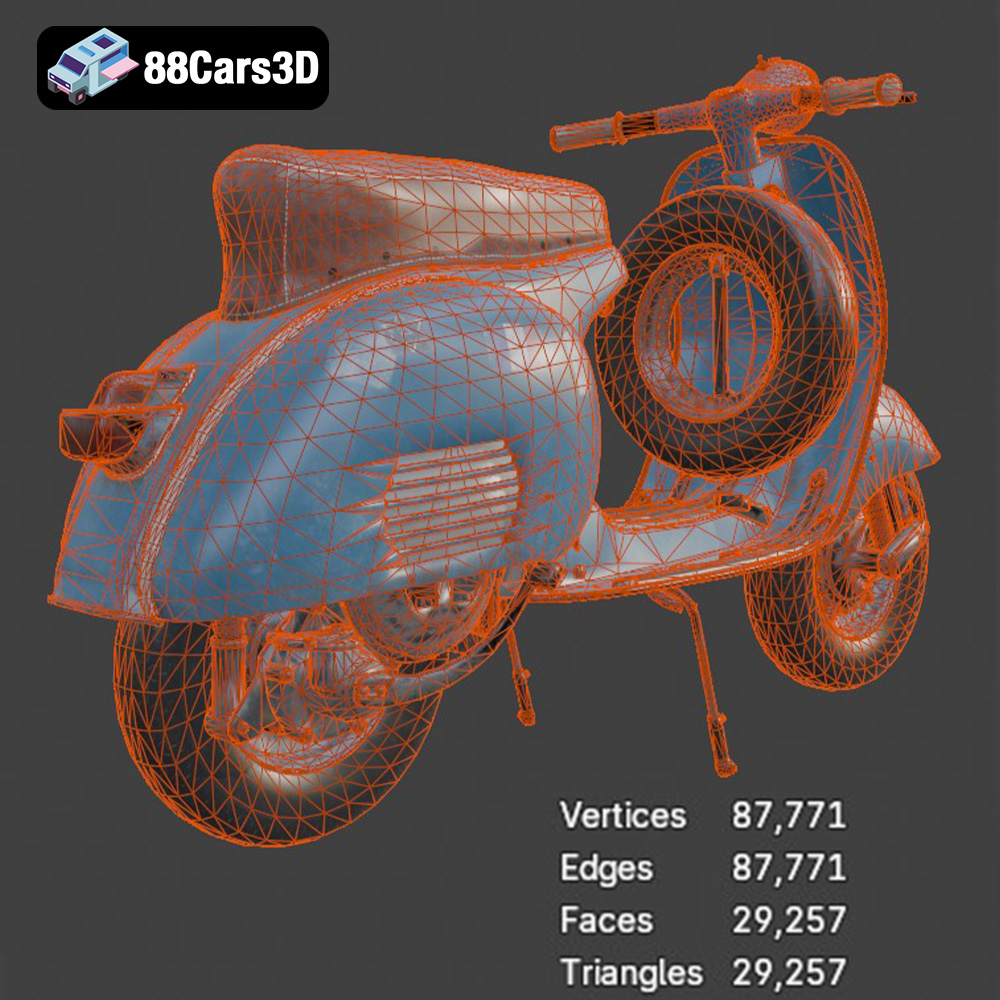
A key technical highlight of this Vespa GS 150 model is its well-optimized topology, boasting approximately 200,000 triangles. This polycount strikes a crucial balance: it’s high enough to ensure exceptional visual fidelity for close-up renders, capturing the iconic curves and intricate details of the scooter without visible faceting. Simultaneously, it remains “game-ready,” meaning it’s optimized for real-time engines like Unreal and Unity. A lower polycount might sacrifice detail, while an excessively high one would hinder performance in interactive environments. This ~200k triangle count allows for smooth performance without resorting to aggressive LOD (Level of Detail) systems immediately, providing a rich base model that can be easily scaled up or down if needed for specific hardware targets.
Beyond geometry, the realism of any 3D model hinges on its materials and textures. While the immediate description doesn’t detail PBR (Physically Based Rendering) texture maps explicitly, the “rich texturing” for the dual saddle/long bench seat and the overall high-quality promise strongly suggest a modern PBR workflow. This involves maps like Albedo (color), Normal (fine surface detail), Roughness (micro-surface imperfections), Metallic (reflectivity of metallic surfaces), and Ambient Occlusion (simulated shadows). These maps work in conjunction to accurately simulate how light interacts with different surfaces, from the glossy paint of the unibody frame to the weathered leather of the seat and the metallic sheen of chrome accents.
For any vehicle 3D model, its utility extends beyond static renders to dynamic applications. The Vespa GS 150 3D Model is designed with animation in mind:
The true value of a premium 3D asset lies in its seamless integration into various professional workflows. The Vespa GS 150 3D Model is engineered for broad compatibility, making it a versatile tool for artists, designers, and developers across industries. Let’s explore how this model can be effectively utilized in leading 3D software and real-time engines.
For artists leveraging powerful offline renderers, the Vespa GS 150 provides an excellent foundation. Its availability in .max and .blend formats means users of these popular software packages can drop the model directly into their scenes with materials and setup largely preserved. For other software, the .fbx or .obj formats ensure broad compatibility.
The “game-ready” optimization (~200,000 triangles) and availability in .fbx and specifically prepared “.unreal” formats make the Vespa GS 150 a prime candidate for game development.
The utility of a high-quality 3D model extends far beyond traditional rendering and game development. The Vespa GS 150 3D Model is also perfectly suited for cutting-edge immersive technologies like Augmented Reality (AR) and Virtual Reality (VR), as well as the tangible world of 3D printing, offering new avenues for interaction and creation.
Augmented Reality and Virtual Reality are transforming how we interact with digital content, offering unparalleled levels of immersion. The Vespa GS 150 3D Model, particularly in its .glb format, is a natural fit for these applications.
For enthusiasts, collectors, or model makers, the ability to 3D print a digital asset is a game-changer. The Vespa GS 150 3D Model includes an .stl format, specifically tailored for 3D printing, allowing you to create a tangible replica of this iconic scooter.
The versatility of the Vespa GS 150 3D Model is further enhanced by its inherent customizability, allowing creators to tailor it precisely to their project’s aesthetic and performance requirements. Understanding these options and implementing best practices ensures you get the most out of this premium asset.
The flexibility built into the 3D model means you’re not stuck with a single look. You can easily adapt the Vespa to fit diverse visual styles and scenarios.
To maximize the impact and efficiency of the Vespa GS 150 3D Model in your projects, consider these best practices:
The Vespa GS 150 is more than just a scooter; it’s a piece of history, an icon of design, and a testament to timeless Italian craftsmanship. Bringing such a legendary vehicle into the digital age with accuracy and technical excellence is a feat that empowers creators across a myriad of fields. The Vespa GS 150 3D Model provides a high-fidelity, optimized, and incredibly versatile asset that serves as a cornerstone for everything from photorealistic architectural visualizations and immersive AR/VR experiences to dynamic game development and tangible 3D prints.
With its balanced polygon count, precise real-world scale, animated component readiness, and comprehensive file format support (.blend, .fbx, .obj, .glb, .stl, .ply, .unreal, .max), this model offers unparalleled flexibility. It frees artists and developers from the demanding task of creating complex assets from scratch, allowing them to focus their energy on creativity and project execution. Whether you’re populating a bustling digital street, crafting a nostalgic advertising campaign, or bringing a piece of classic Italian engineering to life in your game, this Vespa GS 150 model provides the quality and performance you need.
Investing in such a meticulously crafted 3D model from a reputable source like 88cars3d.com ensures you’re acquiring a professional-grade asset that will elevate your projects and stand the test of time, just like the iconic scooter itself.
The Vespa GS 150 (Gran Sport) is widely regarded as one of the most beautiful and iconic scooters ever produced. Known for its elegant aerodynamic curves, historical significance as the first mass-market sports Vespa, and unparalleled Italian styling, this classic masterpiece defined a generation. It features the signature swept-back leg shield, rounded side panels, and the distinctive 150cc two-stroke engine layout. This high-quality 3D model features a well-optimized topology (~200,000 triangles), ensuring exceptional visual fidelity while maintaining game-ready performance. The model is meticulously crafted to capture the essence of the classic scooter, making it a perfect asset for close-up renders, real-time engines, and detailed environment populating. Perfect for classic European street scenes, retro lifestyle visualizations, virtual showrooms, and historic racing games.
$19.99
.blend
.fbx
.glb
.max
.obj
.ply
.rendering
.scooter
.stl
.unreal
.vespa
classic-scooter
game asset
game-ready
gs-150
low-poly
motorcycle-3d-model
optimized
retro-scooter
scooter-3d-model
VR/AR