Get 20% OFF All Premium 3D & STL Models!

In the fast-paced world of digital content creation, the demand for realism, efficiency, and versatility has never been higher. From breathtaking cinematic sequences to immersive game environments and precise architectural visualizations, a foundational element in achieving these ambitious goals is the quality of the 3D assets employed. When it comes to automotive design and rendering, a meticulously crafted 3D car model isn’t just a visual prop; it’s a complex digital sculpture, engineered to perform across a multitude of platforms and applications.
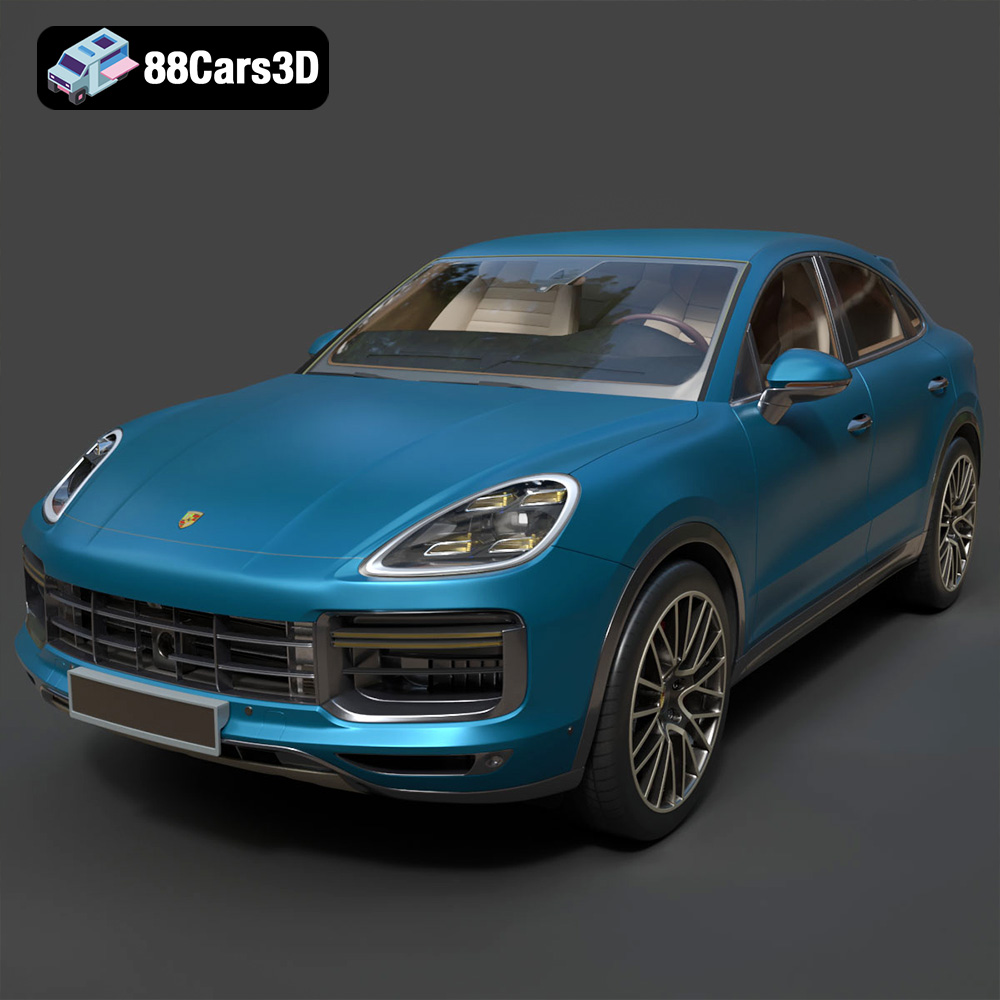
Consider the iconic Porsche Cayenne Turbo Coupe 2020. Its blend of sports car dynamism and SUV utility makes it a design marvel, and translating that intricate engineering and aesthetic into a digital format requires immense skill and attention to detail. A truly exceptional 3D model of such a vehicle doesn’t merely replicate its form; it captures its essence, ready to be integrated into any professional workflow, whether that involves high-octane racing simulations, photorealistic advertising campaigns, or interactive AR/VR experiences. This article will delve into the technical underpinnings, professional applications, and critical considerations when working with premium 3D car models, using the Porsche Cayenne Turbo Coupe 2020 as a prime example of excellence in the field.
The choice of file format for a 3D car model is far from trivial; it dictates compatibility, functionality, and the efficiency of your workflow. Different formats are optimized for specific purposes, from real-time engine integration to precision CAD work and 3D printing. Understanding their nuances is crucial for any professional working with digital automotive assets. The Porsche Cayenne Turbo Coupe 2020 3D model, for instance, is offered in a comprehensive suite of formats, ensuring maximum versatility for artists and developers.
The .blend format is native to Blender, a powerful open-source 3D creation suite. When you acquire a .blend file, you’re not just getting the mesh; you’re getting a fully editable Blender scene. This includes all materials, textures, lighting setups, cameras, animation data, and modifiers used during its creation. For artists primarily working in Blender, this is often the most convenient format, offering direct access to the model’s construction, allowing for easy modifications, re-texturing, or integration into existing Blender projects without loss of data or needing to reconstruct shaders. It’s ideal for deep customization and leveraging Blender’s robust toolset for rendering or game asset preparation.
Autodesk’s .fbx (Filmbox) format is arguably the most widely adopted interchange format in the 3D industry, particularly for game development. It excels at transferring entire scenes or complex animated models between different software applications like Maya, 3ds Max, Cinema 4D, and critically, into game engines such as Unreal Engine and Unity. FBX files support geometry, materials, textures, cameras, lights, and robust animation data, including skeletal rigs and blend shapes. For the Porsche Cayenne Turbo Coupe 2020, an FBX file would be ideal for direct import into a real-time pipeline, ensuring that all pivot points for wheels, suspension, and the active spoiler are correctly preserved and ready for animation within the engine.
The .obj (Wavefront Object) format is a venerable and highly compatible format primarily focused on geometry and basic material information. It’s a universal choice for simple mesh transfer between virtually any 3D software. While it doesn’t support animation or complex material node setups, its simplicity ensures broad compatibility, making it an excellent fallback or starting point. An OBJ file for the Porsche Cayenne Turbo Coupe 2020 would provide a clean, tessellated mesh, suitable for sculpting, retopology, or as a base for custom material assignments in any renderer.
.glb (GL Transmission Format Binary) is an increasingly important format optimized for efficient transmission and loading of 3D scenes and models in web, augmented reality (AR), and virtual reality (VR) applications. It bundles the 3D model, textures, and animation data into a single, compact file, making it perfect for rapid deployment on browsers, mobile devices, and immersive platforms. Its efficiency is key for interactive configurators or virtual showrooms featuring models like the Porsche Cayenne Turbo Coupe 2020, where quick loading and smooth performance are paramount.
The .stl (STereoLithography) format is the de facto standard for 3D printing. It represents a 3D model as a collection of unconnected triangles (a triangulated surface mesh), defining only the surface geometry. It lacks color, texture, or material information, focusing solely on the shape needed by slicer software. For enthusiasts looking to bring the Porsche Cayenne Turbo Coupe 2020 from the screen to their desk, an STL file is essential for preparing the model for FDM or resin 3D printers, allowing for physical realization.
The .ply (Polygon File Format or Stanford Triangle Format) is another common format for storing 3D data, particularly from 3D scanners or for CAD applications. It can store a wider range of properties than OBJ, including color per vertex, normal information, and other mesh data. While less common for general-purpose asset exchange than FBX or OBJ, its precision and flexibility in storing mesh attributes make it valuable for scientific visualization, reverse engineering, or integrating highly detailed scan data into a project involving the Porsche Cayenne Turbo Coupe 2020.
The .unreal designation often refers to a model specifically prepared and optimized for direct import and use within Unreal Engine. This isn’t a single file extension in the same vein as FBX or OBJ, but rather a descriptor implying that the asset comes pre-configured with Unreal-specific materials, collision meshes, LODs (Levels of Detail), and possibly Blueprints, ensuring it drops seamlessly into an Unreal project with minimal setup. For the Porsche Cayenne Turbo Coupe 2020, an “Unreal-ready” asset means immediate deployment into a game, simulation, or visualization scene, leveraging the engine’s advanced rendering capabilities.
Similar to .blend for Blender, the .max format is native to Autodesk 3ds Max. It contains all the scene information, including geometry, modifiers, materials, textures, lighting, cameras, and animation keyframes. For professionals primarily using 3ds Max for automotive rendering, animation, or architectural visualization, the .max file provides the most complete and editable version of the Porsche Cayenne Turbo Coupe 2020, allowing full access to its construction for deep modifications or integration into complex 3ds Max projects.
A premium 3D car model, such as the Porsche Cayenne Turbo Coupe 2020 available on 88cars3d.com, is designed to be a versatile cornerstone in various professional digital pipelines. Its meticulous construction and optimization ensure it performs optimally, whether it’s navigating a virtual racetrack or gracing a high-definition advertisement.
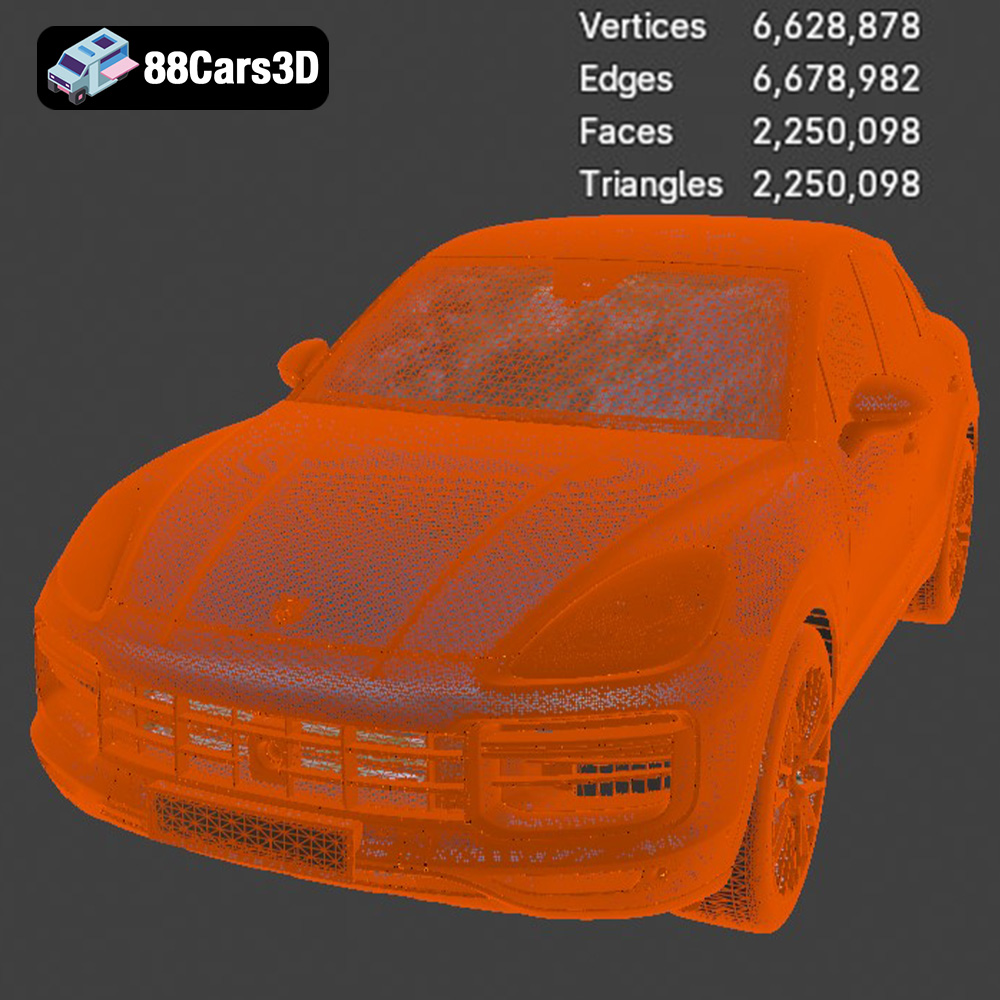
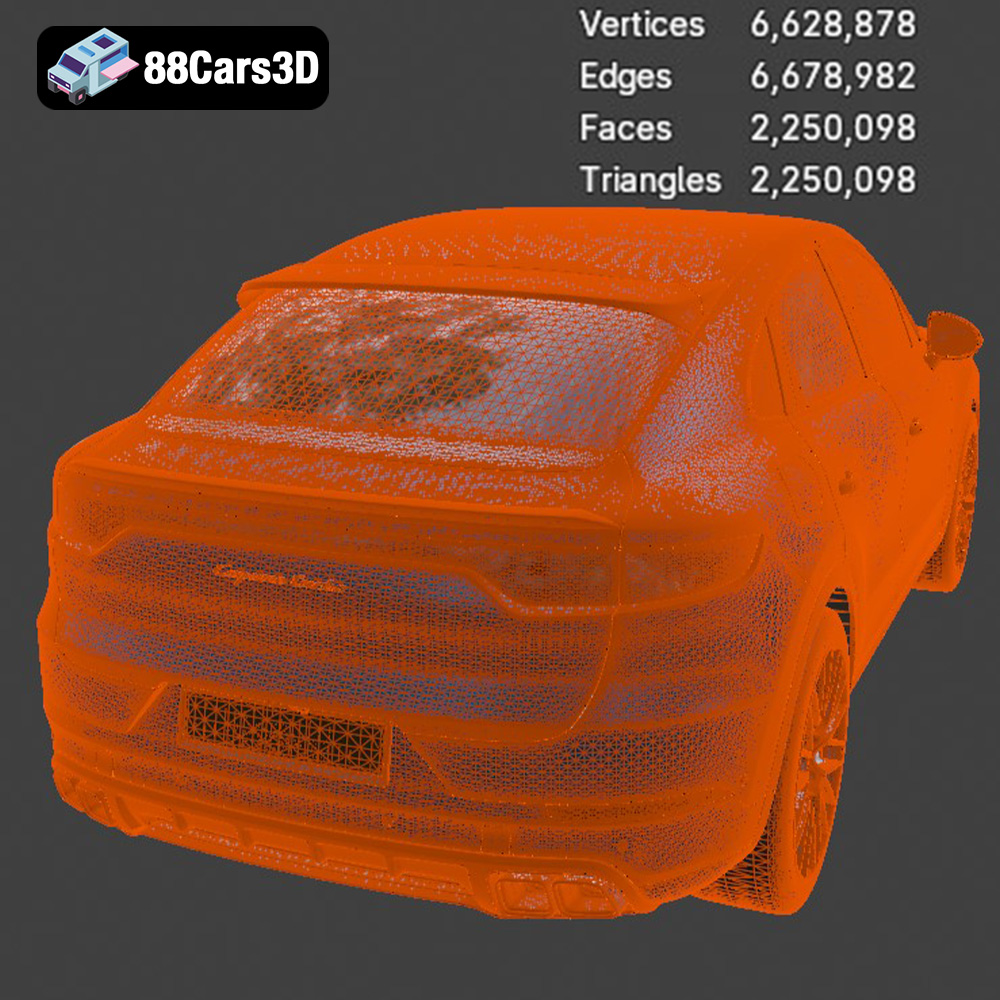
In game development, the balance between visual fidelity and performance is critical. The Porsche Cayenne Turbo Coupe 2020 3D model strikes this balance perfectly with an optimal triangle count of approximately 450,000. This polycount is sufficiently detailed to hold up in close-up shots and cinematics, yet efficient enough to ensure smooth frame rates in modern real-time engines like Unreal Engine and Unity. Its modular design, featuring separate wheels, suspension, steering components, and an active rear spoiler, is invaluable for realistic physics and animation. Proper pivot setups allow developers to effortlessly animate steering, wheel rotation, and suspension travel, essential for immersive driving mechanics in open-world racing games or detailed driving simulators. The model’s game-ready optimization means less time spent on asset preparation and more time on gameplay iteration.
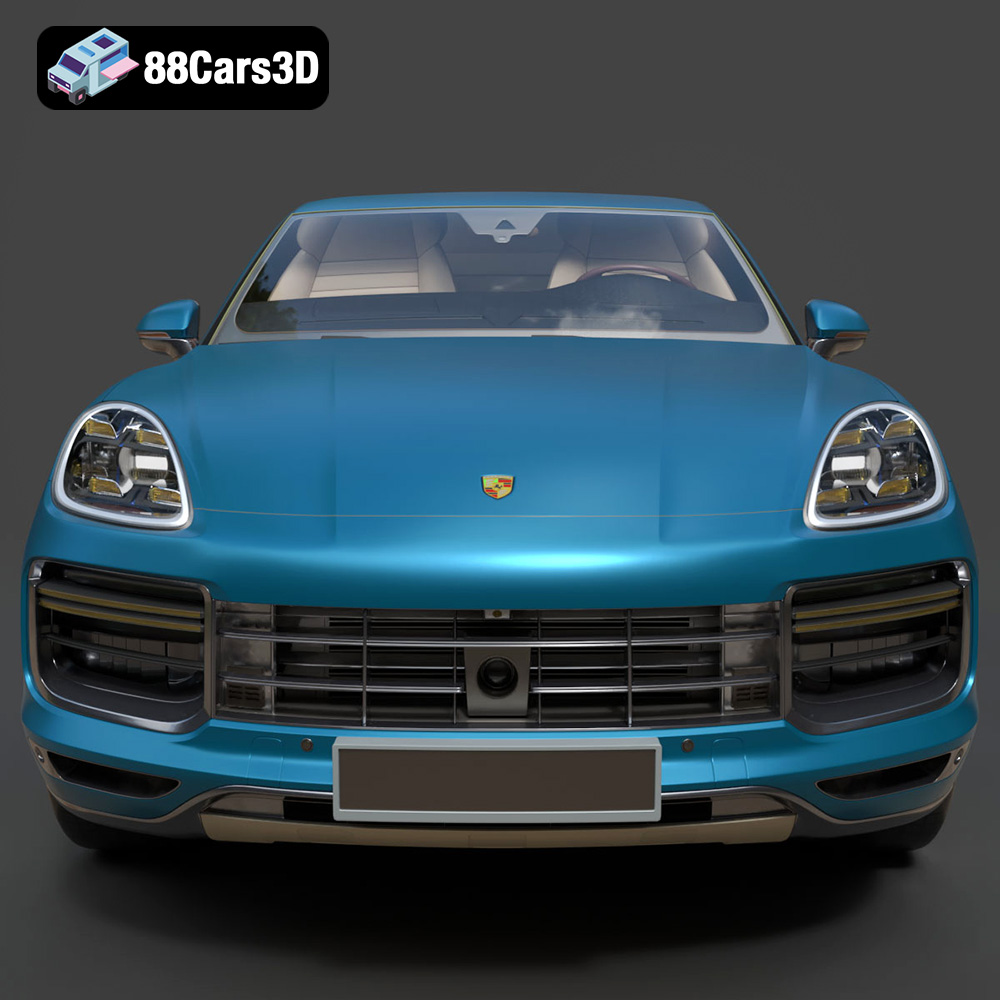
For architectural visualization (arch-viz) and high-end commercial rendering, realism is paramount. The Porsche Cayenne Turbo Coupe 2020 model excels here with its premium topology that precisely reflects light across its curved surfaces, replicating the vehicle’s luxurious finish. Its detailed exterior features, from the accurate frame geometry and aerodynamic proportions to the high-fidelity LED Matrix headlights and signature quad exhaust system, add an unparalleled level of authenticity to any scene. When placed in front of a meticulously rendered building or within a studio lighting setup, the model elevates the entire visualization, creating compelling and believable environments. The ability to easily customize body colors, material finishes (matte, gloss, metallic), and adapt lighting scenarios further enhances its utility for creating diverse visual narratives for brand campaigns or luxury lifestyle scenes.
Augmented Reality (AR) and Virtual Reality (VR) demand highly optimized assets that can render smoothly on a variety of devices, from powerful headsets to mobile phones. The Porsche Cayenne Turbo Coupe 2020 3D model, particularly when delivered in the .glb format, is ideal for these applications. Its efficient polycount ensures quick loading times and fluid interaction. The accurately modeled interior, with its authentic 18-way adaptive sport seats, detailed GT sports steering wheel, and Porsche Advanced Cockpit, is optimized for close-up first-person POV experiences, perfect for immersive virtual showrooms or interactive configurators where users can explore the vehicle’s interior in detail. This level of optimization and detail is crucial for creating truly engaging and believable immersive experiences.
The creation of a high-quality 3D car model is a fusion of artistic skill and technical precision. Every curve, every component, and every surface attribute is carefully considered to deliver both visual splendor and functional efficiency.
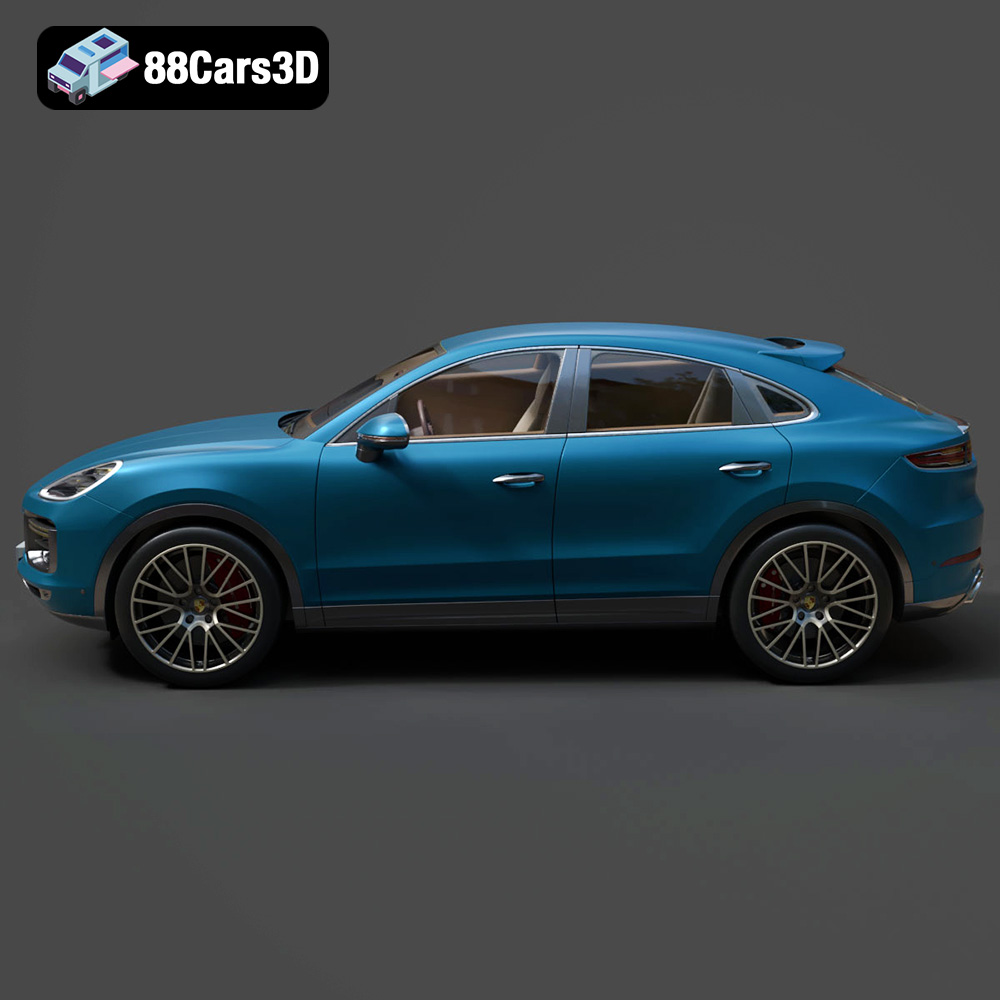
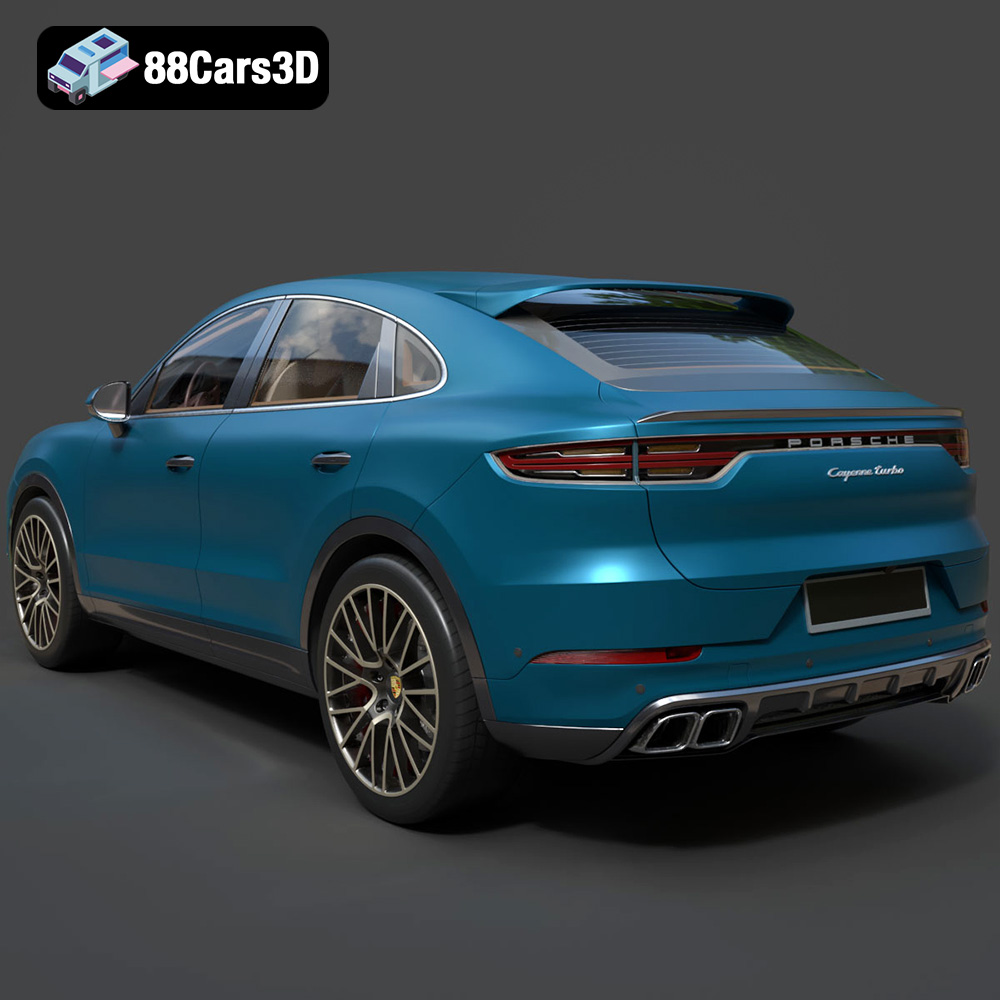
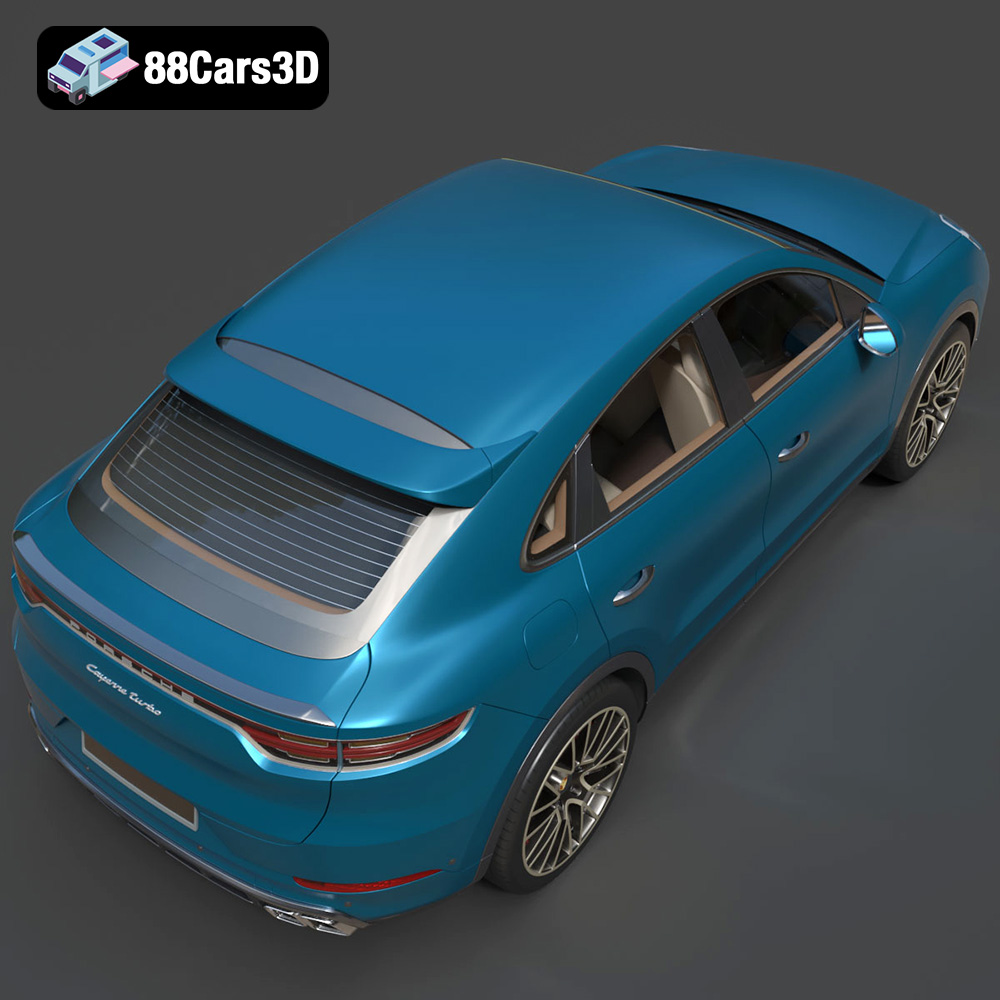
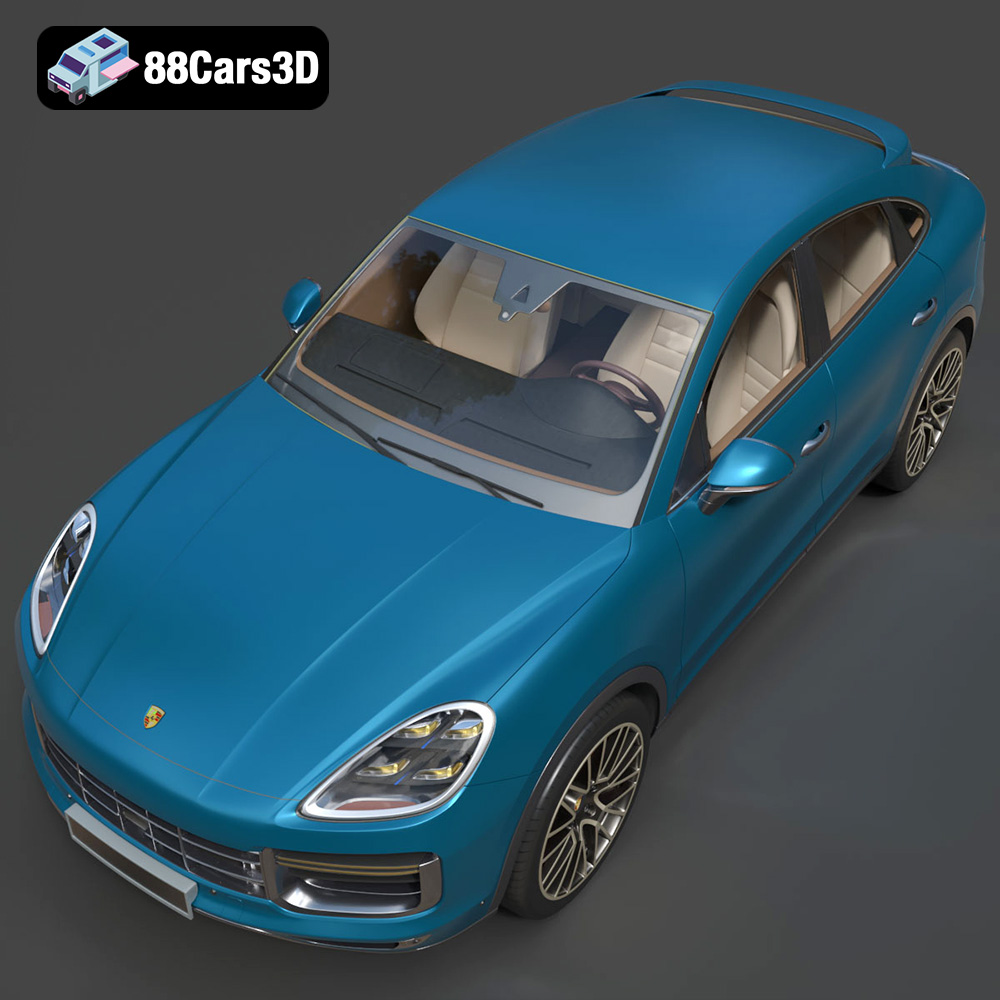
The exterior of the Porsche Cayenne Turbo Coupe 2020 3D model is a masterclass in automotive digital reproduction. Its accurate frame geometry and aerodynamic proportions are meticulously based on the actual vehicle, ensuring that its powerful stance and iconic silhouette are faithfully represented. Detail extends to the twin-turbo V8 engine bay layout, providing credibility even if only glimpsed. Signature elements like the quad exhaust system, aggressive rear diffuser, and the continuous LED taillight bar are recreated with high fidelity, contributing to the model’s overall photorealism. The distinctive 22-inch alloy wheels, complete with highly detailed brake calipers and cross-drilled rotors, showcase an uncompromising attention to micro-details. Furthermore, accurately modeled air suspension components and the undercarriage provide a complete, robust digital representation, essential for realism in complex simulations or detailed close-ups. The separate, animatable parts like wheels, suspension, steering components, and the active rear spoiler are not merely aesthetic additions; they are functional elements enabling realistic physics and animation without complex rigging from scratch.
While the exterior often grabs initial attention, the interior is where much of the driver’s experience resides, and the 3D model reflects this importance. The cockpit of the Porsche Cayenne Turbo Coupe 2020 features authentic 18-way adaptive sport seats, complete with intricate stitching details that convey luxury and craftsmanship. The detailed GT sports steering wheel, including its drive mode selector, and the Porsche Advanced Cockpit with its digital instrument clusters and infotainment screens, are all accurately modeled. The center console, with its shift lever, buttons, and climate controls, provides a rich environment for virtual interaction. Crucially, the interior geometry is optimized specifically for close-up first-person POV, making it perfect for game development, virtual reality tours, or even detailed instructional simulations where users might interact directly with the car’s controls.
The commitment to excellence extends to the model’s underlying structure. With approximately 450,000 triangles, the Porsche Cayenne Turbo Coupe 2020 achieves a perfect balance for real-time engines, maintaining stunning visual realism without compromising performance. This optimization is key for environments demanding numerous assets or high frame rates. The model adheres to real-world scale accuracy, based on the actual vehicle chassis, ensuring correct proportions and interaction with other scaled assets in any digital environment. Proper pivot setups for steering, wheel rotation, suspension travel, and active aero deployment are pre-configured, drastically reducing setup time for animators and technical artists. This level of technical consideration ensures that the model is not just visually appealing but also functionally robust and easy to integrate into complex production pipelines.
The utility of a high-quality 3D car model extends far beyond the screen. For automotive enthusiasts, collectors, or designers, the ability to physically manifest a digital model through 3D printing offers a tangible connection to the design process.
The inclusion of the .stl format for the Porsche Cayenne Turbo Coupe 2020 3D model makes it directly suitable for 3D printing. This means hobbyists, designers, or even automotive manufacturers can bring a physical representation of this luxury SUV to life. Whether for display models, concept validation, or creating custom parts, the STL file provides the necessary geometry for additive manufacturing. It transforms the digital asset into a physical object, allowing for a tactile appreciation of its design and engineering.
Achieving a high-quality 3D print of a complex model like the Cayenne Turbo Coupe requires specific settings and post-processing. Recommended scales such as 1:12, 1:18, or 1:24 allow for a good balance between detail and printability. For capturing the fine exterior details, resin printing (SLA/DLP) is highly recommended over FDM, due to its ability to produce much finer layer heights (0.04–0.12 mm) and smoother surfaces. Wall thickness should be between 1.2–2.0 mm to ensure structural integrity, and an infill of 20–30% provides a good compromise between strength and material usage. Supports are essential for overhangs and intricate features like the exhaust, side mirrors, wheels, and aerodynamic components. Printing the frame angled, and wheels and active spoiler separately, can improve print quality and simplify support removal. Post-processing, including sanding to remove layer lines, applying primer, and finally painting with authentic Porsche factory colors (e.g., Carmine Red, Lava Orange) with gloss or metallic finishes, can elevate the printed model to a showroom-quality miniature.
One of the core strengths of purchasing a professional 3D car model from a reputable marketplace like 88cars3d.com is the inherent flexibility and customization options it offers. These models are not rigid, unchangeable assets; they are dynamic tools designed to adapt to a project’s unique vision.
The Porsche Cayenne Turbo Coupe 2020 3D model provides extensive customization capabilities. Artists can effortlessly change body colors to match any iconic Porsche factory paint or experiment with custom wraps, giving each iteration a unique identity. Tire textures can be modified to reflect different scenarios, from high-performance street tread to winter tire variants, adding another layer of realism. Material finishes can be adjusted between matte, gloss, metallic, or enhanced with carbon fiber accents, allowing for a vast range of aesthetic expressions. Furthermore, adapting lighting for daytime running lights, nighttime beams, or braking scenarios allows for dynamic and context-specific rendering, crucial for storytelling and visual impact. This level of control empowers creators to tailor the vehicle to specific brand guidelines, artistic directions, or environmental conditions.
The availability of high-quality 3D car models like the Porsche Cayenne Turbo Coupe 2020 from 88cars3d.com significantly streamlines production pipelines. Instead of spending countless hours modeling a vehicle from scratch, artists and developers can access meticulously crafted assets, saving valuable time and resources. The comprehensive range of included file formats (.blend, .fbx, .obj, .glb, .stl, .ply, .unreal, .max) ensures compatibility across virtually all major 3D software and game engines. This versatility makes 88cars3d.com an invaluable resource for game developers, architectural visualizers, AR/VR creators, and even 3D printing enthusiasts. The commitment to premium topology, optimal triangle counts, and real-world accuracy means that these models are not just visually stunning but also technically sound, ready for immediate integration and customization in any professional endeavor.
The digital landscape of 3D modeling continues to evolve, pushing the boundaries of realism and interactivity. At the heart of this evolution lies the critical need for high-quality 3D car models that are not only visually spectacular but also technically robust and versatile. The Porsche Cayenne Turbo Coupe 2020 3D model stands as an exemplary representation of this standard, offering an unparalleled level of detail, optimization, and cross-platform compatibility.
From powering immersive game environments and creating photorealistic architectural visualizations to enabling cutting-edge AR/VR experiences and even facilitating tangible 3D prints, this model demonstrates the profound impact a meticulously crafted digital asset can have. Its availability in a wide array of formats, combined with its optimized geometry and extensive customization options, ensures it is a valuable asset for any professional or enthusiast. By choosing premium 3D car models like those found at 88cars3d.com, creators can elevate their projects, achieve stunning realism, and streamline their workflows, allowing them to focus on innovation and creativity.
Experience the ultimate fusion of sports car performance and SUV versatility with the Porsche Cayenne Turbo Coupe 2020. This exceptional 3D model captures the striking athletic stance, the dramatically sloping coupe-style roofline, and the legendary Porsche design DNA. From its prominent front air intakes to the dynamic active rear spoiler and signature continuous LED taillight strip, every iconic visual element has been meticulously recreated to honor this high-performance luxury powerhouse. Crafted with premium topology and an optimal triangle count, this 3D model delivers spectacular visual fidelity while maintaining exceptional game-ready optimization. The geometry is intelligently structured to reflect light precisely across its curved surfaces, making it a highly versatile asset for developers and artists. Whether you are building an interactive configurator or placing background traffic in a cinematic sequence, the model’s efficient polycount ensures smooth performance in modern real-time engines. Perfect for open-world racing games, luxury architectural visualizations, high-end commercial rendering, and immersive virtual reality showrooms.
$19.99
.blend
.fbx
.glb
.luxury suv
.max
.obj
.ply
.porsche
.rendering
.stl
.unreal
car-3d-model
cayenne-turbo-coupe-2020
game asset
game-ready
low-poly
optimized
performance suv
VR/AR