Get 20% OFF All Premium 3D & STL Models!

In today’s visually driven world, the demand for high-fidelity 3D assets across various industries is at an all-time high. From blockbuster game titles and cinematic sequences to cutting-edge architectural visualizations and interactive AR/VR experiences, precision and realism are paramount. Nowhere is this more evident than in the realm of automotive design and visualization, where every curve, reflection, and material surface must convey authenticity.
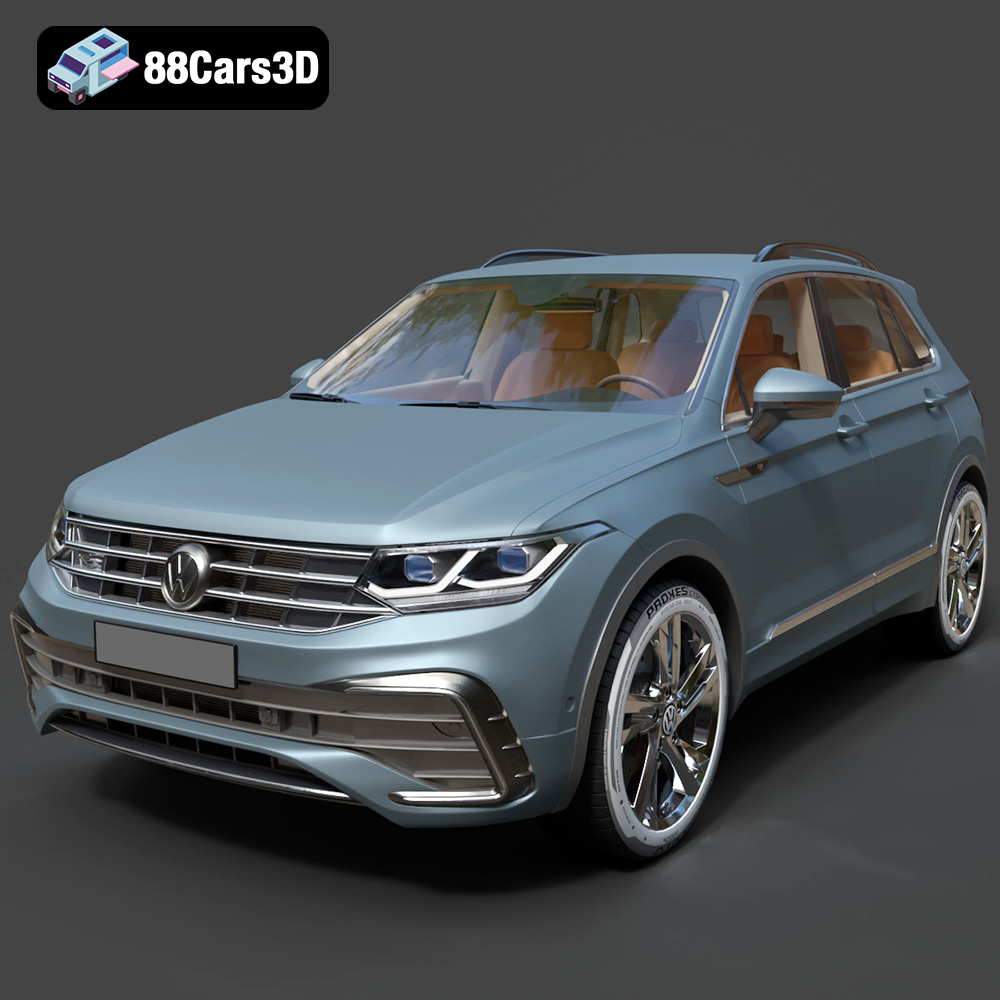
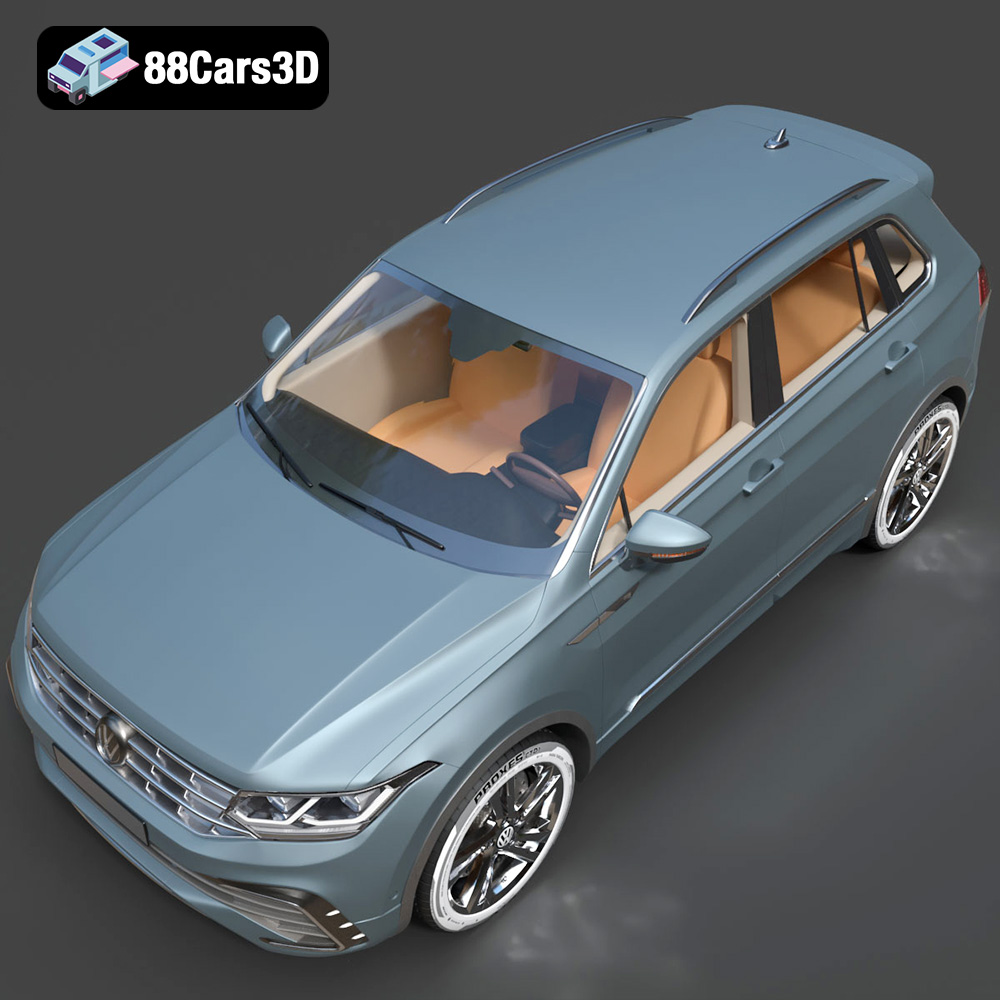
At the heart of this digital transformation lies the crucial role of meticulously crafted 3D car models. These aren’t just decorative elements; they are indispensable tools that drive innovation, streamline workflows, and deliver unparalleled visual impact. Imagine bringing a new vehicle concept to life with photorealistic renders long before a physical prototype exists, or integrating a popular SUV seamlessly into an immersive virtual environment. This is where professional-grade assets shine, exemplified by offerings like the stunning Volkswagen Tiguan 2021 3D Model available on 88cars3d.com. This model stands as a testament to the level of detail and optimization required by industry professionals, capturing the modern styling and sophisticated details of the popular SUV with exceptional fidelity.
Creating compelling digital content starts with foundational assets that can withstand scrutiny from every angle. For automotive projects, this means 3D car models that go beyond mere representation, offering accuracy in proportion, clean topology, and materials that react realistically to light. Without this bedrock of quality, even the most advanced rendering engines or game development tools will struggle to produce convincing results.
Automotive manufacturers and design studios heavily rely on 3D models throughout their product lifecycle. From initial concept ideation and aerodynamic simulations to final marketing campaigns and configurators, the accuracy of the digital model dictates the success of the project. A high-quality model allows designers to iterate rapidly, test different material finishes, and present concepts to stakeholders with unprecedented realism. The Volkswagen Tiguan 2021 3D Model, with its clean geometry and accurate proportions, provides an ideal starting point for such critical applications, ensuring that any visualization or simulation reflects the real vehicle’s characteristics precisely.
Whether it’s a game engine requiring efficient polygon counts and optimized UVs, or a cinematic render demanding intricate detail and complex shader networks, professional 3D car models must be versatile. They need to strike a balance between visual richness and technical performance. Assets that are poorly optimized can lead to performance bottlenecks in real-time applications or inflate render times unnecessarily in offline rendering scenarios. The emphasis on well-structured topology and optimized mesh in models like the Tiguan ensures that they are ready for demanding applications, delivering both outstanding visual fidelity and efficient performance.
The choice of file format is a critical decision in any 3D workflow, directly impacting compatibility, functionality, and performance across different software and platforms. Professionals must understand the nuances of each to ensure seamless integration and optimal results. The Volkswagen Tiguan 2021 3D Model, like many high-quality assets from 88cars3d.com, is offered in a comprehensive range of formats, making it incredibly versatile.
The .blend format is the native file type for Blender, a powerful open-source 3D creation suite. When you acquire a .blend file, you’re getting a complete Blender scene, often including not just the model, but also its materials, lighting setup, cameras, and even animations. This makes it ideal for Blender users who want full editability and control over every aspect of the asset within their preferred environment. Technical details often include a full node-based shader setup, non-destructive modifiers, and perhaps even rigging, offering maximum flexibility for customization and advanced rendering.
The .fbx (Filmbox) format, developed by Autodesk, is the industry standard for interoperability between 3D software and game engines like Unreal Engine and Unity. It excels at transferring 3D models, skeletal animations, blend shapes, and PBR (Physically Based Rendering) materials. Its binary structure makes it efficient for real-time applications, storing a rich dataset while remaining relatively compact. For game developers, .fbx is often the go-to for exporting characters, props, and vehicles like the Tiguan, ensuring all necessary data—mesh, UVs, normal maps, and potentially collision geometry—is packaged correctly. The product also offers an explicit .unreal format, which signifies a pre-configured, engine-ready asset specifically tailored for Unreal Engine use, potentially saving significant setup time by having materials, LODs (Levels of Detail), and collisions already optimized within an Unreal project structure.
The .obj (Wavefront OBJ) format is one of the oldest and most universally compatible 3D file formats. It’s an excellent choice when broad software compatibility is key, as almost every 3D application can import and export it. OBJ files primarily store geometric data (vertices, normals, texture coordinates) and references to external material files (.mtl). While it doesn’t support animation or advanced scene data like FBX, its simplicity ensures robust transfer of mesh data. The .max format is the native file type for Autodesk 3ds Max, a leading software for 3D modeling, animation, and rendering. Similar to .blend, a .max file offers a fully editable 3ds Max project, allowing artists to delve into the scene’s complex material setups (e.g., V-Ray, Corona), lighting rigs, animation data, and modifier stacks. It’s crucial for professionals operating within a 3ds Max pipeline who require full control over the asset for high-end rendering and animation projects.
The .glb (GLB format, often referred to as glTF Binary) is a relatively newer format gaining traction, especially for web-based 3D, augmented reality (AR), and virtual reality (VR) applications. It is a binary version of the glTF (GL Transmission Format) and combines model data, textures, and animation into a single, compact file. Its optimization for efficient transmission and rendering makes it perfect for interactive 3D viewers in browsers or mobile AR experiences. For additive manufacturing, the .stl (Stereolithography) format is the standard. It represents a 3D model as a series of triangular facets, ideal for 3D printing and prototyping. While it lacks color or texture information, its simplicity makes it universally accepted by 3D printers and slicing software. Finally, the .ply (Polygon File Format) is often used for storing 3D data from 3D scanners or for CAD applications, capable of storing color, transparency, and other properties per vertex or face, offering precision for analysis and high-fidelity visualization where mesh integrity is paramount.
The true value of a premium 3D asset like the Volkswagen Tiguan 2021 3D Model lies in its seamless integration into diverse professional pipelines. Its availability in multiple formats ensures flexibility, allowing artists and developers to leverage its quality regardless of their preferred software ecosystem.
For high-end automotive rendering, artists often turn to powerful software like 3ds Max paired with renderers like V-Ray or Corona, or Blender with Cycles or Eevee. The .max and .blend formats of the Tiguan model provide a complete scene with pre-configured materials and lighting, offering an excellent head start. In 3ds Max, an artist might import the .max file, fine-tune material parameters for specific reflections and refractions, set up complex studio lighting environments using HDRI maps and physical lights, and then render high-resolution stills or animations for advertising campaigns. Similarly, Blender users can open the .blend file, modify the node-based materials to achieve bespoke looks, animate camera movements around the vehicle, and produce stunning photorealistic sequences. The clean geometry of the Tiguan model ensures smooth subdivisions and avoids rendering artifacts, crucial for close-up shots and high-fidelity output.
When developing games or real-time interactive experiences, performance is key. The .fbx and .unreal formats of the Volkswagen Tiguan 2021 3D Model are explicitly designed for this purpose. Developers can import the .fbx into Unreal Engine or Unity, where it will come in with proper UVs, material assignments, and potentially even LODs. For Unreal specifically, the .unreal file will minimize setup time significantly. Once imported, the model can be integrated into game levels, have its materials adapted for the engine’s PBR workflow, and even be rigged for physics-based interactions or simple animations (e.g., opening doors). Optimized poly counts and efficient UV mapping on models from 88cars3d.com help maintain high frame rates while delivering visually rich environments, making this Tiguan a perfect game asset.
Architectural visualization (ArchViz) often requires context, and realistic vehicles are essential for populating scenes and conveying scale and lifestyle. The Tiguan model can be easily imported into ArchViz software (often via .obj, .fbx, or directly into 3ds Max) to enhance exterior renders of buildings, or even be used in interactive walkthroughs. For AR/VR experiences, the .glb format is particularly valuable. Imagine a potential car buyer using their smartphone to place the Volkswagen Tiguan 2021 3D Model virtually in their driveway, examining it from all angles, and even configuring different color options. This interactive capability, driven by optimized .glb models, provides an immersive way to engage with products.
Beyond file formats and software compatibility, the underlying technical integrity of a 3D model dictates its utility and quality. A truly professional asset is built with precision, optimization, and scalability in mind.
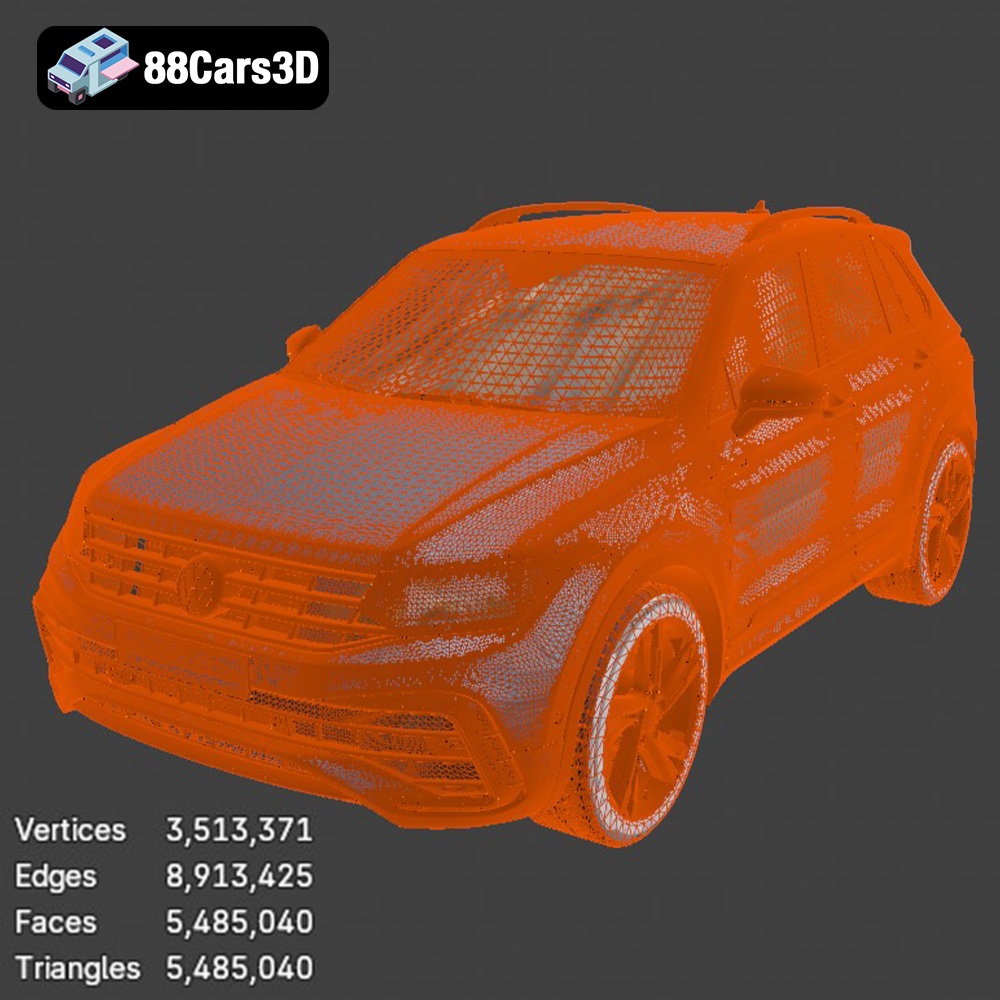
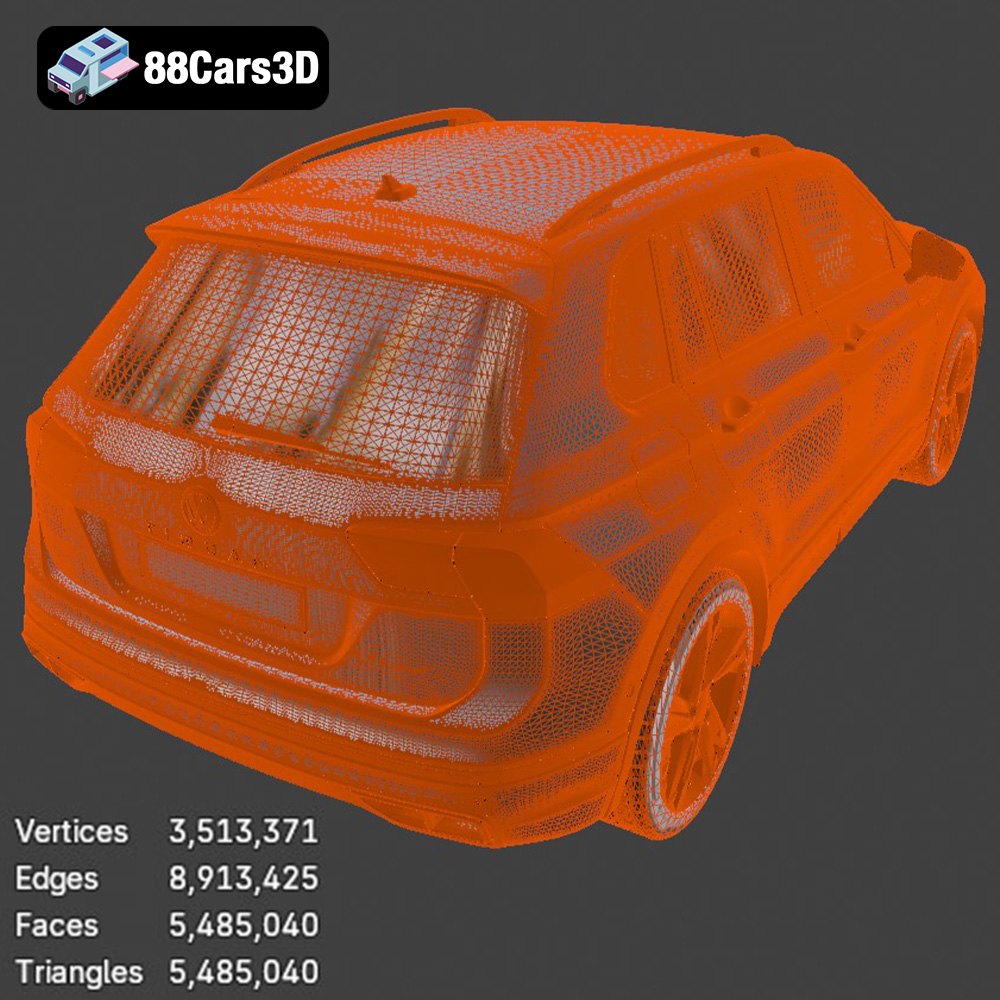
The “clean geometry” and “well-structured topology” mentioned for the Tiguan model are not buzzwords; they are fundamental indicators of a high-quality asset. Good topology means the mesh is primarily composed of quads (four-sided polygons) with efficient edge loops that follow the natural contours of the vehicle. This ensures smooth deformation during animation, clean subdivision (for high-resolution rendering), and avoids pinching or artifacts. Optimized poly counts strike a balance between visual detail and performance. While exact poly counts vary depending on the asset’s intended use and LODs, a professional 3D car model aims for efficiency without sacrificing crucial details. Furthermore, proper UV mapping—the process of unwrapping the 3D mesh into a 2D space for texture application—is critical for flawless texture display and avoids distortion.
Modern rendering relies heavily on Physically Based Rendering (PBR) workflows, which simulate how light interacts with surfaces in a physically accurate manner. A professional 3D car model, such as the Volkswagen Tiguan 2021, should come with a comprehensive set of PBR textures: diffuse/albedo, roughness, metallic, normal, and potentially ambient occlusion maps. These textures, combined with accurate material setups, ensure that the car’s paintwork, glass, tires, and interior elements react authentically to various lighting conditions, achieving photorealistic results. The fidelity of these textures (e.g., 4K resolution) is crucial for close-up renders and detailed views.
A truly versatile 3D car model is scalable. This often means providing different Levels of Detail (LODs) – versions of the model with varying poly counts. A high-poly version is ideal for cinematic close-ups, while lower-poly versions are perfect for distant shots in games or AR/VR environments to maintain performance. A well-constructed model allows for easy generation of LODs, or ideally, comes with them pre-made. This adaptability ensures that the Volkswagen Tiguan 2021 3D Model can perform optimally across a spectrum of demanding applications, from hyper-realistic studio close-ups to expansive dynamic real-time environments.
The applications for high-quality 3D car models extend far beyond static renders or simple game assets, venturing into areas that revolutionize how we interact with and understand automotive products.
The automotive industry is a prime example of leveraging 3D car models for marketing. Before a physical prototype is even built, a new vehicle can be showcased through breathtaking CGI advertisements, interactive online configurators, and virtual showrooms. Companies use models like the Volkswagen Tiguan to create a consistent visual identity across all media, allowing customers to explore features, experiment with colors and trims, and experience the vehicle long before it hits the dealership floor. This not only saves costs associated with physical photography but also provides unparalleled flexibility in creating diverse marketing content.
High-fidelity 3D car models are fundamental to advanced training simulators for drivers, engineers, and even emergency services. These simulators require accurate vehicle dynamics and visual representation to provide realistic feedback. Furthermore, in the rapidly evolving field of autonomous driving, 3D models of vehicles and their environments are critical for training AI algorithms. Simulating various driving scenarios, weather conditions, and road obstacles with precise 3D assets allows autonomous systems to learn and adapt in a safe, controlled virtual space before real-world deployment.
Augmented Reality (AR) offers a new frontier for interacting with 3D car models. Imagine a potential buyer using an AR app on their smartphone to project a full-scale Volkswagen Tiguan 2021 3D Model onto their driveway or living room. They can walk around it, open doors, change colors, and even “look inside” – all from their current location. This level of immersive pre-purchase experience is transformative, allowing customers to visualize how a vehicle fits into their life in a highly personalized way. The optimized .glb format of the Tiguan model is perfectly suited for such innovative AR applications, offering lightweight yet detailed representations.
The digital landscape is constantly evolving, and the demand for professional-grade 3D assets continues to grow. High-quality 3D car models are not just commodities; they are strategic investments that empower creators across automotive design, game development, cinematic rendering, and innovative AR/VR experiences. The intricate detail, clean geometry, and multi-format versatility found in assets like the Volkswagen Tiguan 2021 3D Model exemplify what it means to be a truly professional resource.
Whether you’re a seasoned 3D artist aiming for photorealistic renders, a game developer optimizing for real-time performance, or an innovator building the next generation of interactive experiences, the right 3D asset can dramatically enhance your project’s quality and efficiency. For those seeking such exceptional digital assets, 88cars3d.com offers a curated selection of high-quality 3D car models designed to meet the rigorous demands of professional pipelines. Investing in assets that prioritize technical excellence and broad compatibility ensures that your creative vision is never limited by the tools at hand.
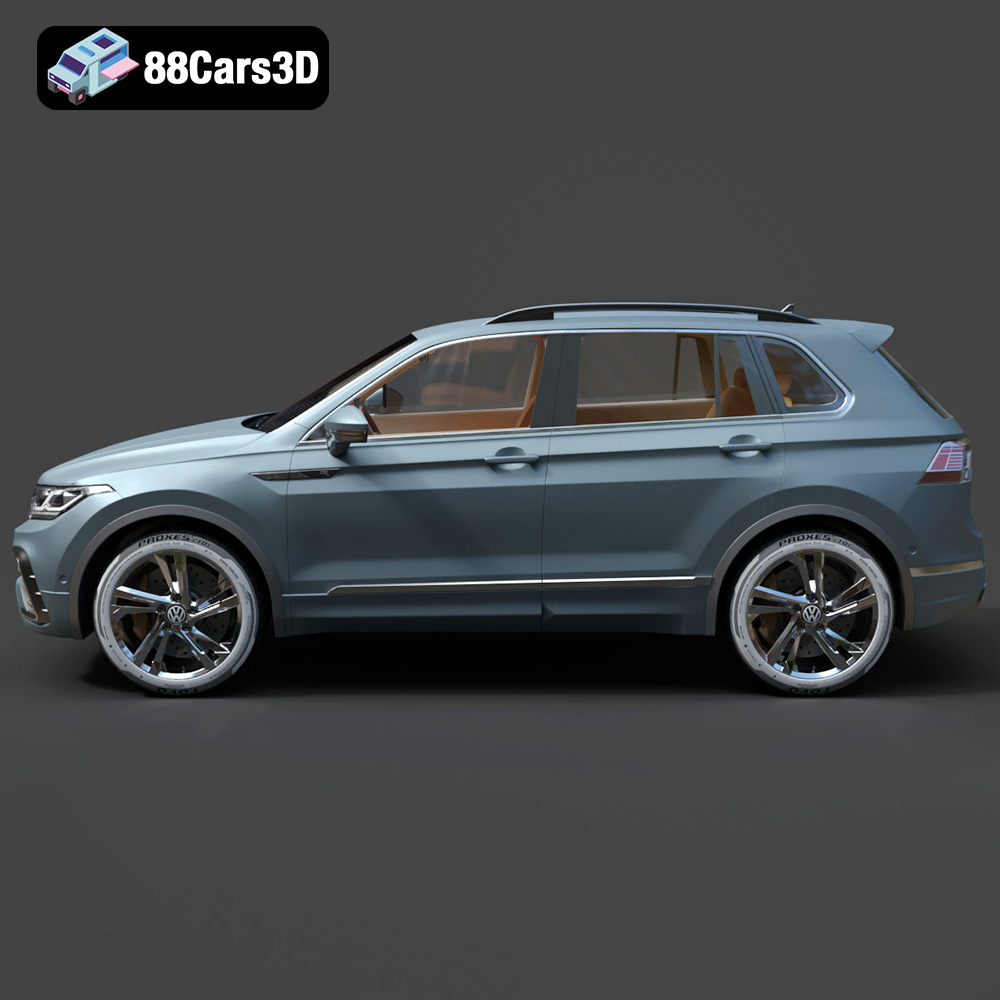
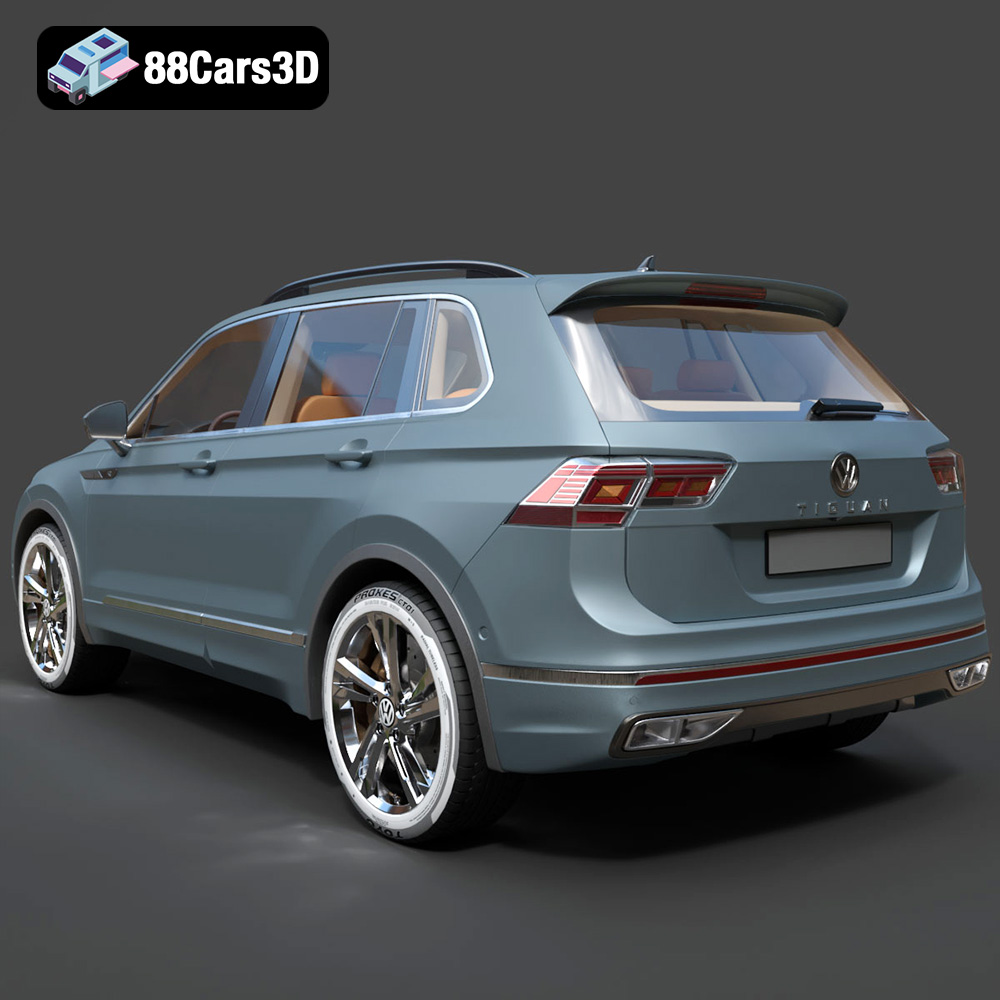
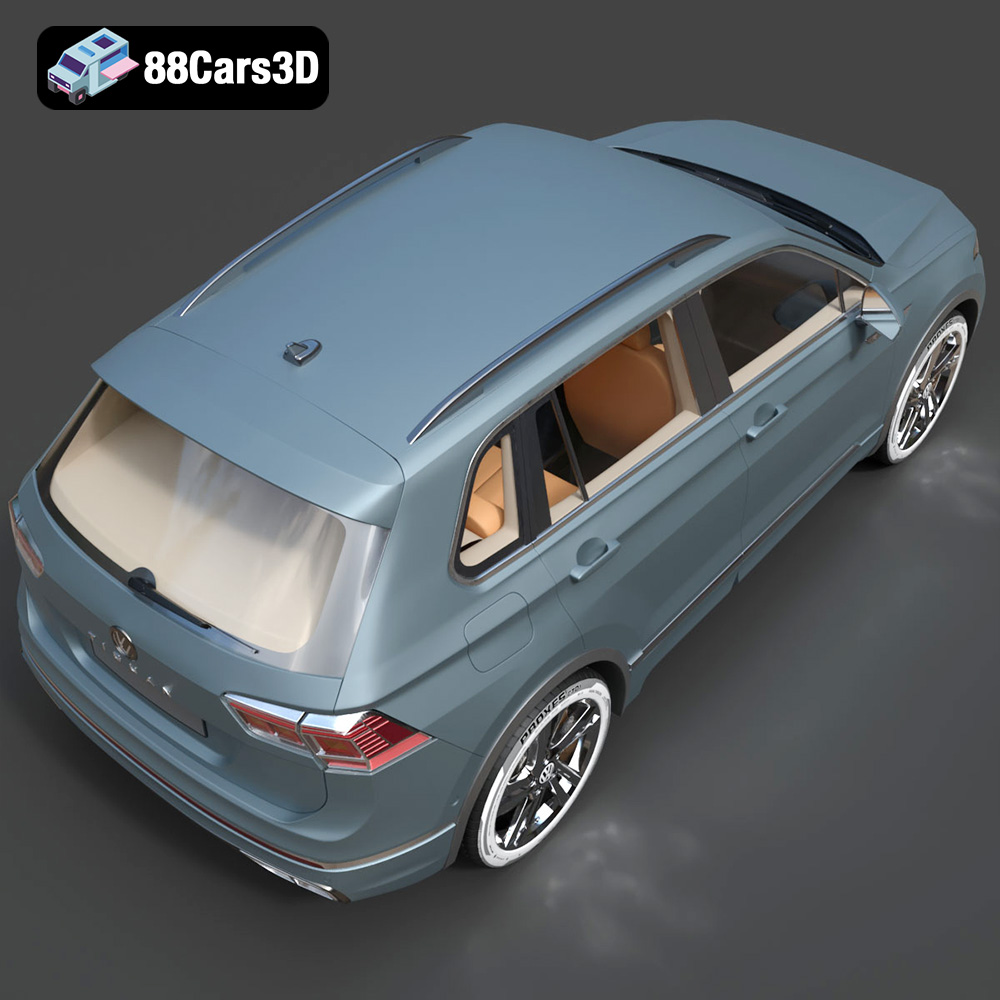
Experience the precision of the Volkswagen Tiguan 2021 3D Model, a realistic digital replica designed to meet professional standards. This model perfectly captures the modern styling, dynamic stance, and sophisticated details of the popular SUV, providing an exceptional asset for a diverse array of digital projects.
Engineered with an emphasis on performance and visual fidelity, this 3D vehicle features clean geometry, accurate proportions, and realistic materials. The well-structured topology allows for seamless workflow integration, ensuring outstanding results in both tight studio close-ups and expansive dynamic environments.
This versatile model is optimized for demanding applications, making it an excellent choice for game development, cinematic rendering, augmented and virtual reality (AR/VR) experiences, and architectural visualization. The comprehensive package is structured to integrate flawlessly into your preferred professional pipeline.
Available file formats include:
Tags: .volkswagen, .tiguan, .suv, .crossover, .car3dmodel, .rendering, .simulation, .gameasset, .arvr, .blend, .fbx, .obj, .glb, .stl, .ply, .unreal, .max
$19.99
.arvr
.blend
.car3dmodel
.crossover
.fbx
.gameasset
.glb
.max
.obj
.ply
.rendering
.simulation
.stl
.tiguan
.unreal
.volkswagen
SUV