Get 20% OFF All Premium 3D & STL Models!

In the dynamic world of 3D visualization, automotive design, and game development, the demand for high-fidelity 3D car models is ever-present and continually evolving. From crafting breathtaking advertising campaigns to building immersive virtual worlds, precision and realism are paramount. A meticulously detailed 3D vehicle asset isn’t just a digital object; it’s the foundation upon which compelling narratives, engaging experiences, and cutting-edge simulations are built. It allows artists, designers, and developers to bring their creative visions to life with unparalleled authenticity.
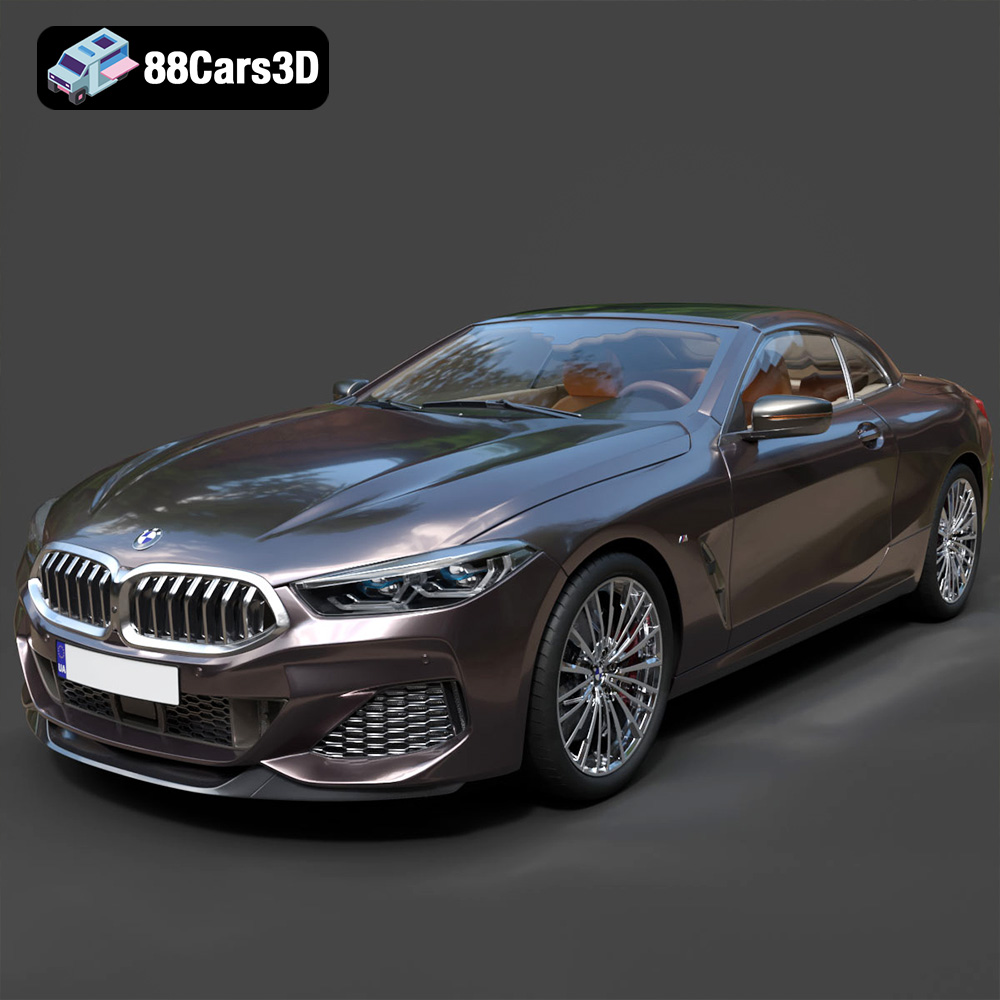
The ability to accurately represent the intricate curves, the luxurious finishes, and the unique character of an automobile in a digital space is a testament to skilled 3D artistry and technical prowess. This article delves into the critical aspects of professional 3D car models, exploring their applications, technical requirements, and the profound impact they have across various industries. We will specifically highlight the exceptional qualities of assets like the BMW 8-Series G14 Convertible M850i 2019 3D Model, an exemplar of precision engineering translated into the digital realm, available on platforms like 88cars3d.com, a leading source for premium 3D vehicle assets.
The creation of a high-quality 3D automotive model is far more than just replicating a vehicle’s shape. It involves a deep understanding of automotive design principles, material science, and computational geometry. These models serve as versatile tools that bridge the gap between concept and reality, enabling artists and engineers to explore designs, validate functionalities, and present products in the most compelling light possible.
In the automotive industry itself, 3D models are indispensable from the earliest stages of design. Before a single physical component is manufactured, engineers and designers utilize highly accurate digital twins to iterate on concepts, test aerodynamics, evaluate ergonomics, and fine-tune aesthetics. Models like the BMW 8-Series G14 Convertible M850i 2019 3D Model provide a blueprint that can be manipulated, textured, and analyzed, drastically reducing development costs and accelerating time to market. They allow for virtual wind tunnel tests, crash simulations, and interior comfort assessments, all within a digital environment.
For marketing and advertising professionals, high-fidelity 3D car models are a game-changer. They offer unparalleled flexibility in creating photorealistic renders and animations without the logistical challenges and costs associated with physical photography or videography. Imagine showcasing a luxury vehicle like the BMW 8-Series G14 Convertible M850i 2019 3D Model in any environment, under any lighting condition, and with any custom finish, all without moving a single car. This capability allows for dynamic campaigns that resonate deeply with target audiences, presenting vehicles in aspirational and visually stunning ways. The precision of surface details, accurate reflections, and realistic materials are critical for achieving this level of visual fidelity.
Choosing the correct 3D model file format is crucial for workflow efficiency, compatibility, and achieving desired output quality. Each format is designed with specific use cases and software environments in mind, offering unique advantages regarding data preservation, optimization, and interoperability. The BMW 8-Series G14 Convertible M850i 2019 3D Model exemplifies the importance of multi-format availability, ensuring that professionals can integrate it into virtually any pipeline.
The .blend format is native to Blender, a powerful open-source 3D creation suite. When you acquire a .blend file for a 3D car model, you’re not just getting the mesh; you’re often getting a fully editable Blender scene. This includes all materials (often set up using Blender’s Principled BSDF shader for physically based rendering), lighting setups, camera angles, and even animation data if present. It’s ideal for Blender users who want full control over the asset, allowing for easy modifications, re-texturing, scene assembly, and rendering directly within Blender. Its comprehensive nature makes it perfect for artists who prefer to work entirely within the Blender environment, leveraging its robust toolset for modeling, sculpting, and animation.
.fbx (Filmbox) is arguably the most widely adopted proprietary file format for 3D data exchange, especially within game development and animation pipelines. Developed by Autodesk, .fbx supports geometry, materials, textures, rigging, skinning, and animations. Its strength lies in its ability to transfer complex scene information between different 3D software applications (like 3ds Max, Maya, Cinema 4D, and Blender) and, critically, into game engines such as Unreal Engine and Unity. When a 3D car model is provided as .fbx, it signifies its readiness for real-time applications, with meshes often optimized for performance and materials set up for engine compatibility. It is the go-to format for bringing assets like the BMW 8-Series G14 Convertible M850i 2019 3D Model into an interactive environment.
The .obj (Wavefront Object) format is a simple, universal 3D data format primarily used to exchange geometry data. It stores vertex positions, UV coordinates, normals, and polygon faces. While it doesn’t typically store advanced scene data like rigging or animation, it’s highly compatible across virtually all 3D software due to its simplicity. An accompanying .mtl (Material Template Library) file usually defines basic material properties (color, diffuse, specular). It’s an excellent choice for straightforward mesh import and is often used as a fallback for cross-software compatibility when more complex formats aren’t supported or necessary.
.glb (GL Transmission Format Binary) is the binary version of glTF, a royalty-free specification for the efficient transmission and loading of 3D scenes and models by applications. It’s quickly becoming the “JPEG of 3D” due to its optimization for web-based, AR (Augmented Reality), and VR (Virtual Reality) experiences. A .glb file encapsulates all necessary data—geometry, materials, textures, animations—into a single, compact file. This makes it incredibly efficient for streaming and display in browsers and mobile AR/VR applications, making assets like the BMW 8-Series G14 Convertible M850i 2019 3D Model readily deployable for immersive digital experiences.
The .stl (Stereolithography) format is the standard for 3D printing. It represents 3D surfaces as a collection of unconnected triangular facets. It is a ‘dumb’ format in that it carries no color, texture, or material information, only geometry. Its strength lies in its simplicity and universal acceptance by 3D printing software. For professionals looking to create physical prototypes or models of the BMW 8-Series G14 Convertible M850i 2019, an .stl version provides the watertight mesh required for additive manufacturing, ensuring accurate physical replication.
.ply (Polygon File Format or Stanford Triangle Format) is a file format for storing graphical objects that are described as a collection of polygons. It can store a wider range of properties than .obj or .stl, including color, transparency, normals, texture coordinates, and data reliability information for each polygon. It’s particularly useful in applications requiring precision mesh data, such as CAD, scientific visualization, and 3D scanning, where a richer dataset beyond simple geometry is needed for analysis or high-fidelity reconstruction.
The .unreal designation often refers to assets that have been specifically pre-configured and optimized for direct import and use within Unreal Engine. This typically means the .fbx file (or a similar intermediary) has been processed, materials correctly set up using Unreal’s physically based rendering (PBR) pipeline (e.g., textures assigned to Base Color, Normal, Roughness, Metallic, Ambient Occlusion), and potential LODs (Levels of Detail) or collision meshes are included. This format saves significant setup time for developers, allowing immediate integration of the 3D car model into their Unreal Engine projects without extensive post-import tweaking.
Similar to .blend for Blender, the .max format is native to Autodesk 3ds Max. It contains an entire 3ds Max scene, including geometry, materials (often V-Ray, Corona, or standard Max materials), lighting, cameras, animation, and any modifiers or procedural effects applied. For professionals working within 3ds Max, this format offers the most flexibility for editing, animation, and high-end rendering. It’s perfect for complex scene creation, architectural visualization integration, and advanced rendering pipelines, providing full artistic control over the BMW 8-Series G14 Convertible M850i 2019 3D Model within this powerful software environment.
The true value of a high-quality 3D car model lies in its ability to integrate seamlessly into diverse professional workflows. Whether it’s for cinematic rendering, architectural visualization, or product configurators, a well-prepared asset dramatically speeds up production and enhances creative possibilities.
For artists focusing on photorealistic rendering, 3ds Max coupled with renderers like V-Ray or Corona is a powerhouse. When utilizing an asset like the BMW 8-Series G14 Convertible M850i 2019 3D Model, the workflow typically involves importing the .max file, or an optimized .fbx, into 3ds Max. Artists can then fine-tune materials, set up realistic lighting environments (HDRI, physical lights), and add subtle details like dust or imperfections for ultimate realism. The clean topology and accurate UV mapping of such models are critical here, ensuring textures apply flawlessly and subdivisions render smoothly without artifacts. This process is essential for creating stunning automotive advertisements or showcase renders.
Blender has emerged as a formidable tool for 3D artists, offering a complete production suite. Importing the .blend file of a 3D car model provides immediate access to pre-configured materials and lighting, making it easy to jump straight into rendering with Cycles or Eevee. For those receiving an .fbx or .obj, Blender’s robust import tools handle the geometry, and artists can quickly rebuild or refine materials using its node-based shader editor. The community-driven nature and powerful features of Blender make it an excellent choice for independent artists and studios seeking cost-effective yet high-quality production pipelines, capable of producing results on par with industry giants when used with models from 88cars3d.com.
In the realm of interactive experiences, 3D car models transition from static beauty shots to dynamic, controllable entities. Game development and real-time visualization demand not only visual fidelity but also strict optimization for performance.
Game engines like Unreal Engine and Unity are at the forefront of real-time rendering. Integrating a 3D car model like the BMW 8-Series G14 Convertible M850i 2019 requires careful consideration of poly count, draw calls, and material complexity. Models provided with an “.unreal” or optimized “.fbx” format are ideal. These often include:
This meticulous optimization ensures that the luxury car looks stunning even at 60+ frames per second, making it perfect for racing games, open-world environments, or interactive architectural walkthroughs.
Beyond traditional games, real-time 3D car models are revolutionizing product visualization through interactive configurators and virtual showrooms. Customers can explore a vehicle from every angle, customize colors, interior trims, wheel designs, and even open doors or activate lights, all in real-time. This immersive experience, often built in Unreal Engine or Unity, empowers potential buyers with a personalized view of the product. The fidelity of assets like the BMW 8-Series G14 Convertible M850i 2019 3D Model is crucial here, as any visual inaccuracies would detract from the premium feel of the product being showcased.
The versatility of high-quality 3D car models extends far beyond traditional screens, delving into augmented reality, virtual reality, and intricate simulations, each presenting unique technical requirements and opportunities.
Augmented Reality (AR) and Virtual Reality (VR) are transforming how we interact with digital content. For automotive applications, this means everything from virtual test drives to interactive educational experiences. A well-optimized 3D car model, particularly in formats like .glb, is essential for these platforms. AR experiences might overlay the BMW 8-Series G14 Convertible M850i 2019 onto a real-world environment via a smartphone, allowing users to “place” the car in their driveway. VR experiences could transport users into the driver’s seat of the M850i, enabling them to explore the meticulously modeled interior and exterior in a fully immersive 3D space. Low latency and efficient rendering are critical for comfortable and believable AR/VR interactions.
While often associated with digital display, 3D car models also bridge into the physical world through 3D printing. Designers can use an .stl formatted version of a detailed model to create scale prototypes, concept models, or even physical merchandising. This is invaluable for tactile evaluation of design elements, presentation to stakeholders, or simply as a high-fidelity collectible. The process requires a watertight mesh without errors, ensuring the model can be correctly sliced and manufactured by a 3D printer. The availability of formats like .stl for the BMW 8-Series G14 Convertible M850i 2019 3D Model underscores its comprehensive utility.
In fields requiring rigorous analysis and training, 3D car models serve as the backbone for sophisticated simulations. This includes driver training simulators, autonomous vehicle development, and forensic accident reconstruction. The accurate geometry and physical properties derived from a precise 3D model are vital for realistic physics simulations. For instance, testing an autonomous driving algorithm requires a virtual environment with exact vehicle dimensions, weight distribution, and collision properties. A model that boasts “accurate geometry” and “clean topology” directly contributes to the reliability and scientific validity of these advanced simulation scenarios.
To maximize the potential of high-quality 3D car models, understanding and implementing best practices in your workflow is key. From initial import to final render or game integration, attention to technical details will yield superior results.
When you acquire a detailed 3D car model, such as the BMW 8-Series G14 Convertible M850i 2019 from 88cars3d.com, the first step is often importing it into your preferred 3D software. For .fbx or .obj files, always check import settings for scale, unit conversion, and normal smoothing. If using a native format like .blend or .max, much of the material and scene setup might already be complete, saving considerable time. It’s good practice to organize the scene by grouping vehicle components (body, wheels, interior) for easier manipulation and material assignment.
Even with realistic materials provided, subtle adjustments can significantly enhance visual fidelity. In most modern renderers and game engines, physically based rendering (PBR) workflows are standard. This involves meticulously tuning parameters like roughness, metallicness, and normal maps to accurately simulate real-world surfaces. Experiment with HDRI (High Dynamic Range Image) lighting for realistic reflections and global illumination. For interiors, adding subtle fill lights or emission shaders to dashboard elements can create a believable ambiance. The quality of the provided base materials in models like the BMW 8-Series G14 Convertible M850i 2019 offers an excellent starting point for this refinement.
For real-time applications, optimization is non-negotiable. This involves:
A model designed with “meticulously optimized mesh structure” inherently provides a head start in these crucial performance aspects.
The landscape of 3D visualization is continuously expanding, and at its core lies the need for high-quality assets that can meet the rigorous demands of professional production. From the detailed polygons that shape a vehicle’s iconic exterior to the intricate textures that bring its interior to life, 3D car models are indispensable tools across a multitude of industries.
The BMW 8-Series G14 Convertible M850i 2019 3D Model stands as a prime example of what a premium asset should offer: unmatched realism, precision engineering, clean topology, and broad compatibility through a comprehensive suite of file formats. Whether your project involves crafting stunning automotive renders, developing dynamic racing games, creating immersive AR/VR experiences, or conducting precise simulations, such a model provides the technical reliability and visual fidelity necessary to achieve exceptional results.
Investing in high-quality 3D car models is an investment in efficiency, flexibility, and creative freedom. They empower artists and developers to push the boundaries of digital content creation, transforming ideas into breathtaking realities. For a curated selection of professional-grade 3D car models that truly drive innovation, explore the extensive catalog at 88cars3d.com.
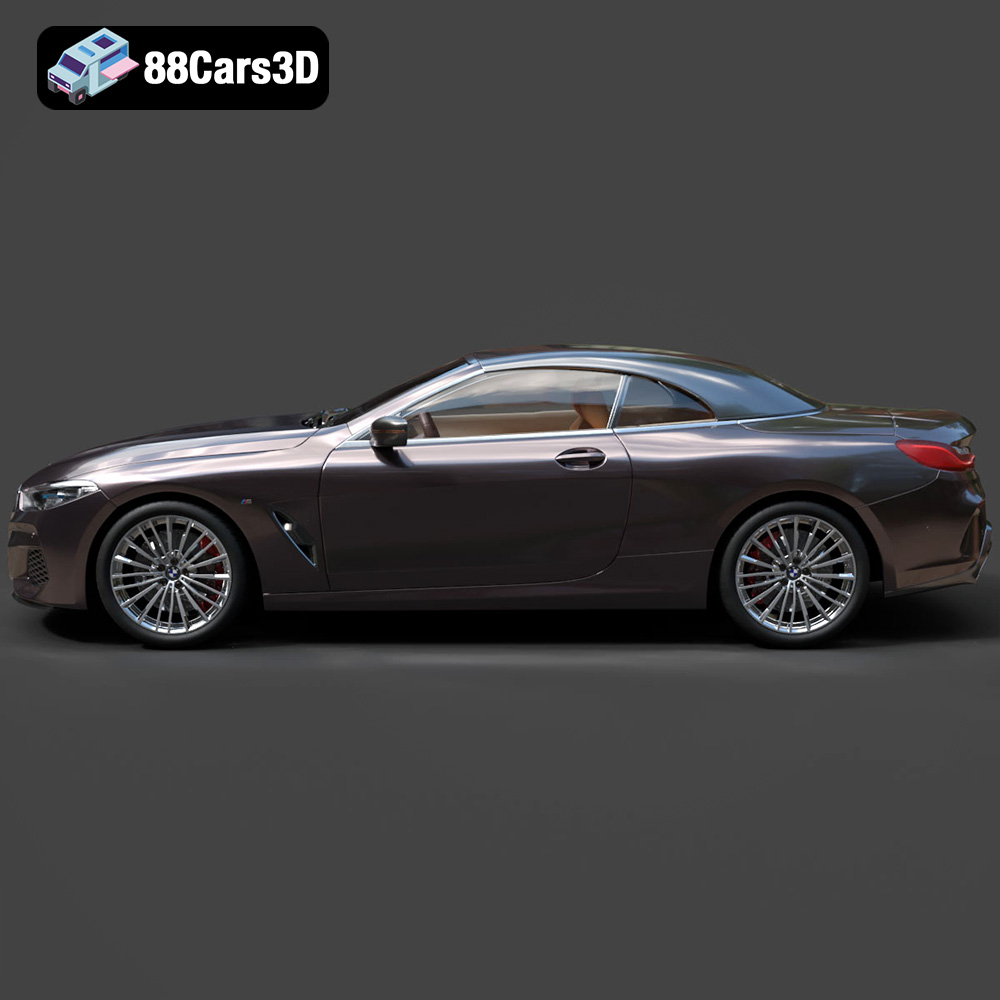
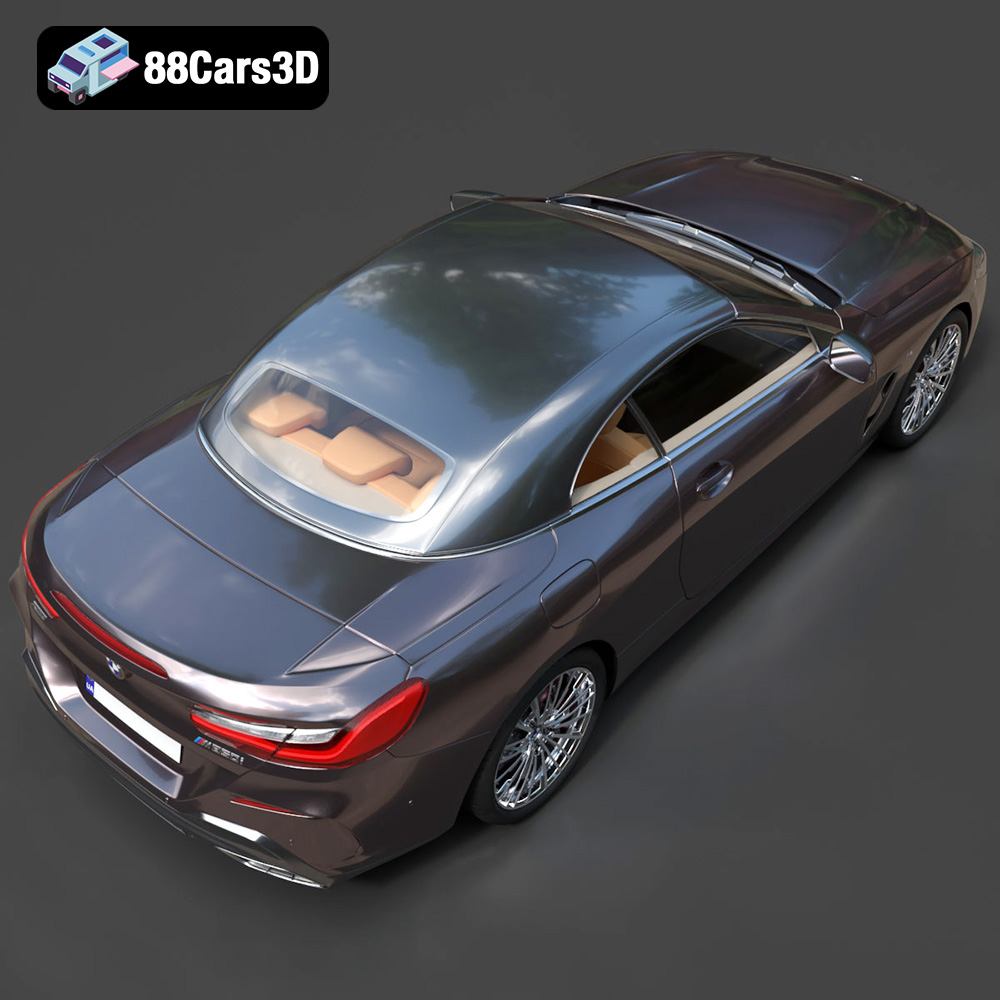
Experience unmatched realism and precision with the BMW 8-Series G14 Convertible M850i 2019 3D Model. Designed for professionals and enthusiasts, this exceptionally detailed vehicle replica captures the sleek, aggressive lines and luxurious open-top profile of the iconic sports car. From its meticulously crafted exterior to a fully modeled interior, every element reflects the sophisticated engineering of the original design. This model features clean topology, accurate geometry, and realistic materials tailored for advanced digital environments. The meticulously optimized mesh structure ensures seamless performance, allowing you to focus on your creative vision. Whether you are developing dynamic racing games, producing photorealistic renders, creating immersive AR/VR experiences, or running simulations, this versatile asset delivers exceptional visual fidelity and technical reliability. Available in a comprehensive suite of industry-standard file formats, this model ensures maximum compatibility across all major 3D software applications and game engines: .blend, .fbx, .obj, .glb, .stl, .ply, .unreal, .max.
$19.99