Get 20% OFF All Premium 3D & STL Models!

In the dynamic world of 3D visualization, the demand for high-quality, meticulously crafted 3D car models is ever-present. From captivating automotive rendering projects to immersive game environments and precise architectural visualizations, the foundation of any outstanding visual lies in the realism and technical integrity of its 3D assets. Today, we delve into the intricate details of what makes a premium 3D model indispensable, highlighting how assets like the Honda VFR 801 3D Model from 88cars3d.com exemplify professional-grade excellence.
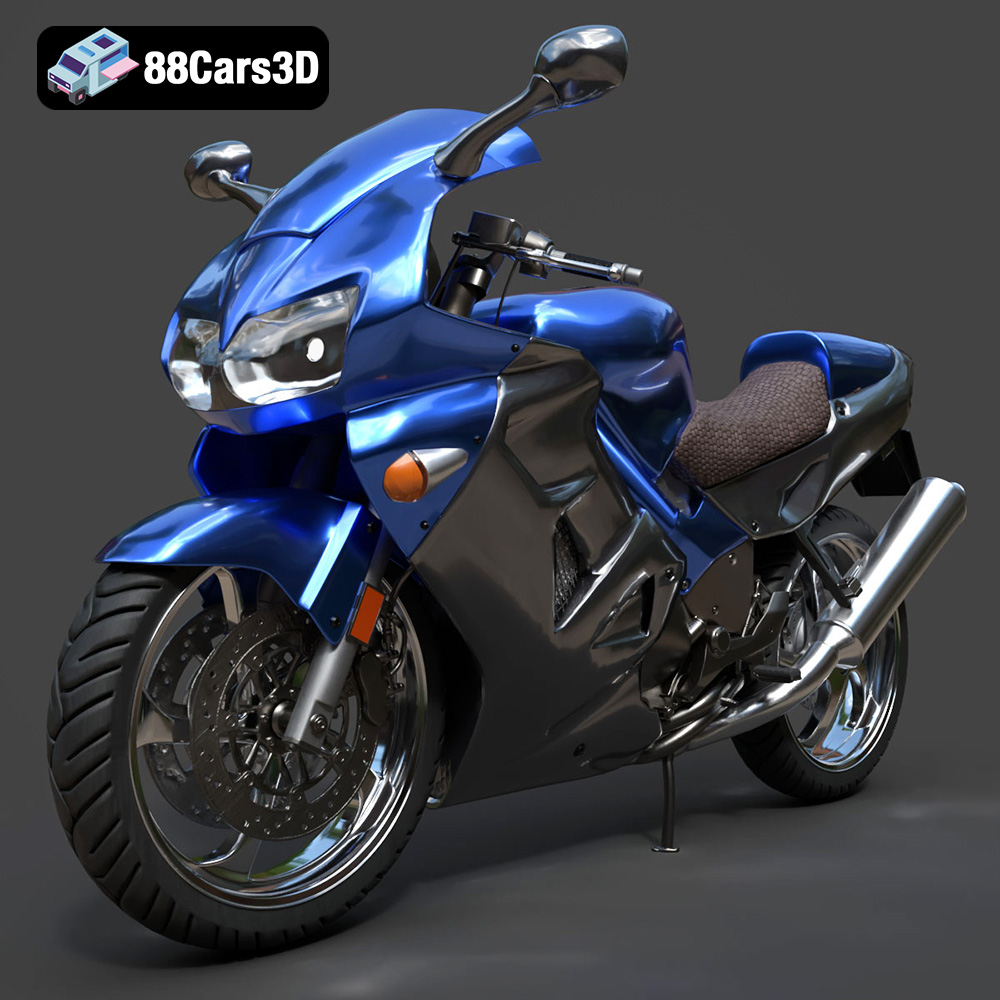
The Honda VFR 801-002 3D Model is more than just a digital representation; it’s a testament to engineering precision and artistic dedication. Designed for those who refuse to compromise on detail, this model captures the iconic essence of the Honda VFR with accurate scaling, clean polygon geometry, and true-to-life aesthetics. Whether you’re a seasoned 3D artist, a game developer, or an AR/VR specialist, understanding the nuances of such an asset is crucial for maximizing its potential in your pipeline.
Creating a truly high-fidelity 3D vehicle model is a complex undertaking that blends artistic skill with rigorous technical understanding. It’s not just about replicating shapes; it’s about capturing the soul of a machine, ensuring every curve, every joint, and every material reacts authentically to light and environment.
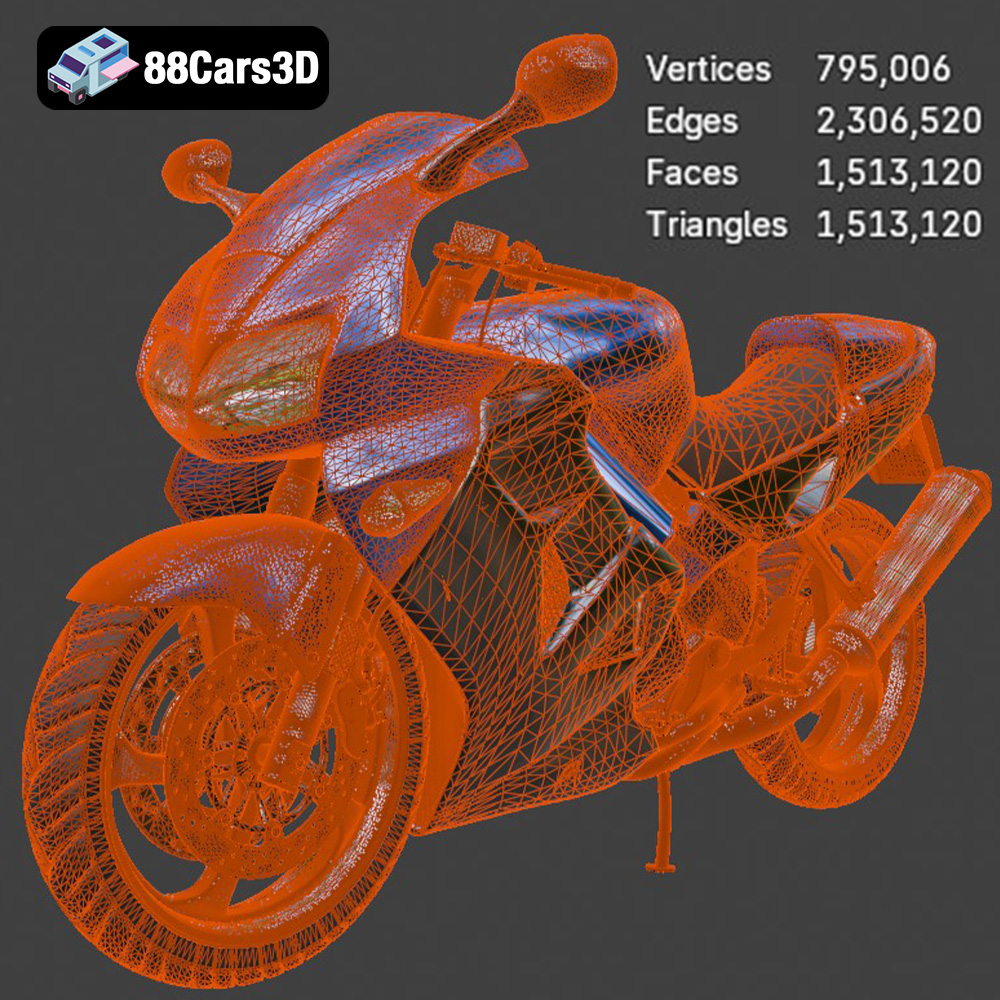
For automotive rendering, precision is paramount. A high-quality 3D car model, such as the Honda VFR 801 3D Model, starts with accurate blueprints and reference imagery. Modelers meticulously trace these references, building the mesh with an eye towards realistic proportions and surface continuity. This initial phase dictates the model’s ability to hold up under close-up shots and varying camera angles. Polygons must flow smoothly, enabling flawless subdivision for incredibly detailed close-ups, where even the slightest imperfection can break the illusion of reality. Professional models also account for real-world manufacturing processes, ensuring components like panels, lights, and mechanical parts are accurately separated and structured.
Beyond visual accuracy, functional accuracy plays a significant role. This refers to the logical construction of the model, allowing for articulation and animation. For a motorcycle like the Honda VFR, this means separate, pivot-ready components for the wheels, suspension, handlebars, and other moving parts. While the Honda VFR 801 3D Model is primarily optimized for visual fidelity, its clean topology inherently supports such functional applications, making it versatile for animations and simulations. This foresight in modeling saves countless hours in downstream production, as artists don’t have to rebuild parts for specific movements.
One of the most critical aspects of working with 3D assets, especially premium ones like the Honda VFR 801 3D Model, is understanding the various file formats available. Each format serves specific purposes, catering to different software, pipelines, and end-use scenarios. Choosing the right format can significantly impact workflow efficiency, compatibility, and the final output quality.
Achieving photorealistic automotive rendering demands a meticulous approach to materials, textures, and lighting. A well-constructed 3D asset like the Honda VFR 801 3D Model provides the perfect canvas for these techniques, allowing artists to focus on artistic expression rather than remedial modeling.
The realism of a 3D car model hinges significantly on its materials. For the Honda VFR 801 3D Model, this involves crafting convincing paint shaders with metallic flakes and clear coat reflections, realistic rubber for tires, reflective chrome, matte plastics, and intricate engine components. Each material requires a unique set of properties: diffuse color, roughness, metallic values, normal maps for fine surface details, and often subsurface scattering for translucent elements like indicator lights. High-resolution PBR (Physically Based Rendering) textures are essential for conveying intricate wear, dust, and imperfections that add character and believability. The model’s clean UV mapping is crucial here, ensuring textures apply without stretching or distortion.
Lighting is the soul of any render. For automotive subjects, High Dynamic Range Images (HDRIs) are often preferred, providing realistic environmental lighting and reflections that instantly ground the model in a real-world context. Beyond HDRIs, strategic use of area lights, spot lights, and volumetric effects can emphasize contours, create dramatic shadows, and highlight specific details of the Honda VFR. For studios pushing the boundaries of realism, rendering in software like V-Ray, Corona, or Cycles with sophisticated global illumination and caustic effects brings unparalleled visual fidelity, making the 88cars3d.com asset shine.
The journey of a high-detail 3D car model from a static render to a dynamic, interactive game asset or AR/VR experience involves specific optimization strategies. Game assets, unlike render-only models, must perform flawlessly under strict computational budgets.
When bringing the Honda VFR 801 3D Model into a game engine like Unreal Engine, the focus shifts to real-time performance. The provided .fbx and .unreal formats are invaluable here. The process typically begins with importing the model, which includes its mesh and PBR textures. Materials are then recreated or adjusted within Unreal’s powerful material editor, leveraging nodes for parameters like metallic, roughness, and normal maps. Crucially, the model’s topology, optimized for smooth subdivision in renders, might need further optimization for games through techniques like decimation or the creation of Levels of Detail (LODs). LODs automatically swap out higher-poly versions of the model for lower-poly ones as the camera moves further away, maintaining visual quality while drastically reducing GPU load.
Beyond LODs, collision meshes are vital for realistic physics interactions. A simplified, often convex, mesh is created around the main model to define its physical boundaries within the game engine, preventing complex polygon calculations. UV mapping, in addition to being clean for texturing, is also important for lightmap generation, ensuring realistic baked lighting in game environments. For the Honda VFR 801 3D Model, the attention to detail in its base geometry and UVs means developers spend less time cleaning up and more time integrating and animating. This level of preparation ensures that the model transitions smoothly from a high-poly asset for renders to an efficient game-ready asset, capable of being driven, crashed, or showcased in an interactive setting.
The versatility of a well-executed 3D model extends across numerous professional applications, making assets like the Honda VFR 801 3D Model a cornerstone for diverse industries.
In architectural visualization (arch-viz), vehicles often serve as contextual elements, adding scale, realism, and a sense of life to otherwise static building renders. A high-quality motorcycle like the Honda VFR can instantly elevate an exterior scene, placing a sleek sportbike outside a modern home or parked beside a commercial building, contributing to the narrative of the design. Similarly, for product showcasing, especially in the automotive or lifestyle sectors, integrating a motorcycle model into an environment helps visualize its presence and appeal. The Honda VFR 801 3D Model’s realistic materials and accurate proportions make it perfect for these high-stakes presentations, where visual fidelity directly impacts client perception.
The rise of AR/VR technologies has opened new frontiers for 3D models. For virtual showrooms, interactive product configurators, or even immersive driving simulations, the Honda VFR 801 3D Model provides the digital twin for realistic experiences. The .glb format, optimized for these platforms, allows for seamless integration into web-based AR viewers or dedicated VR applications. Furthermore, in professional training simulations, especially for motorcycle mechanics or driving schools, a detailed 3D model can be used for virtual inspections, assembly/disassembly exercises, or hazard perception training, offering a safe and cost-effective alternative to physical prototypes.
In the fast-paced world of 3D production, time is a precious commodity. Creating a complex 3D car model from scratch, like the Honda VFR 801, can take hundreds of hours of expert labor. This is where specialized marketplaces like 88cars3d.com become invaluable resources for professionals.
Purchasing a pre-made, high-quality 3D model significantly accelerates production timelines. Instead of allocating resources to model creation, teams can immediately focus on scene composition, lighting, animation, or game integration. The Honda VFR 801 3D Model, with its clean topology, optimized UVs, and multiple file formats, arrives ready for action, allowing artists to jump directly into the creative process. This efficiency is crucial for meeting tight deadlines and managing project budgets effectively.
When investing in 3D assets, quality assurance is paramount. Reputable marketplaces like 88cars3d.com curate their collections to ensure models meet professional standards, guaranteeing clean geometry, accurate scale, and robust material setups. This assurance saves artists from potential headaches associated with poorly constructed models that require extensive cleanup. Furthermore, comprehensive product descriptions and clear technical specifications, like those provided for the Honda VFR 801 3D Model, empower users to make informed decisions, knowing exactly what they are acquiring and how it will perform in their specific pipelines.
The journey of a 3D car model from concept to a fully realized digital asset is intricate, demanding both artistic flair and technical mastery. High-fidelity assets like the Honda VFR 801 3D Model are foundational to achieving stunning automotive rendering, immersive game environments, and compelling AR/VR experiences. By understanding the nuances of file formats, the principles of realistic material and lighting setup, and the specific optimizations required for real-time applications, artists and developers can fully leverage these powerful tools.
Investing in professionally crafted 3D models from trusted sources such as 88cars3d.com is not merely a purchase; it’s an investment in efficiency, quality, and the boundless creative potential of your projects. The Honda VFR 801 3D Model stands ready to integrate seamlessly into your workflow, providing the detail and realism needed to bring your visions to life with unmatched fidelity.
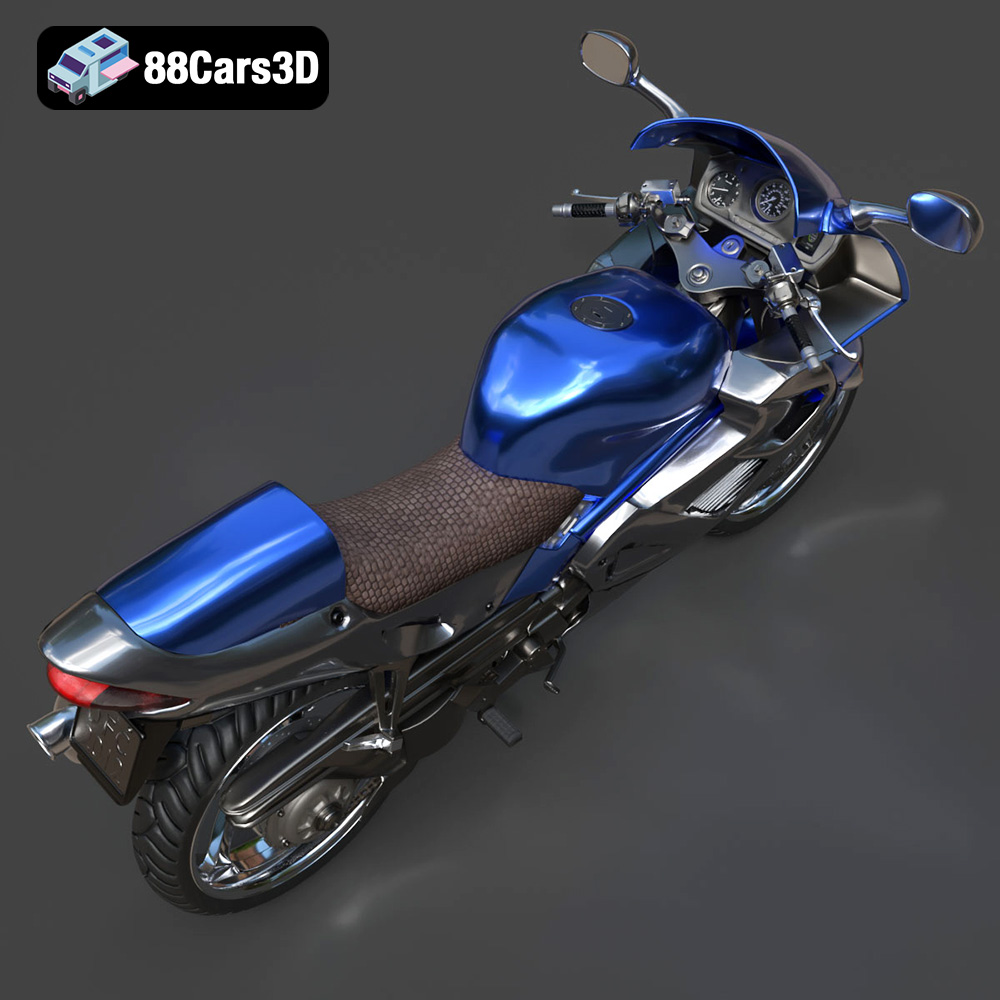
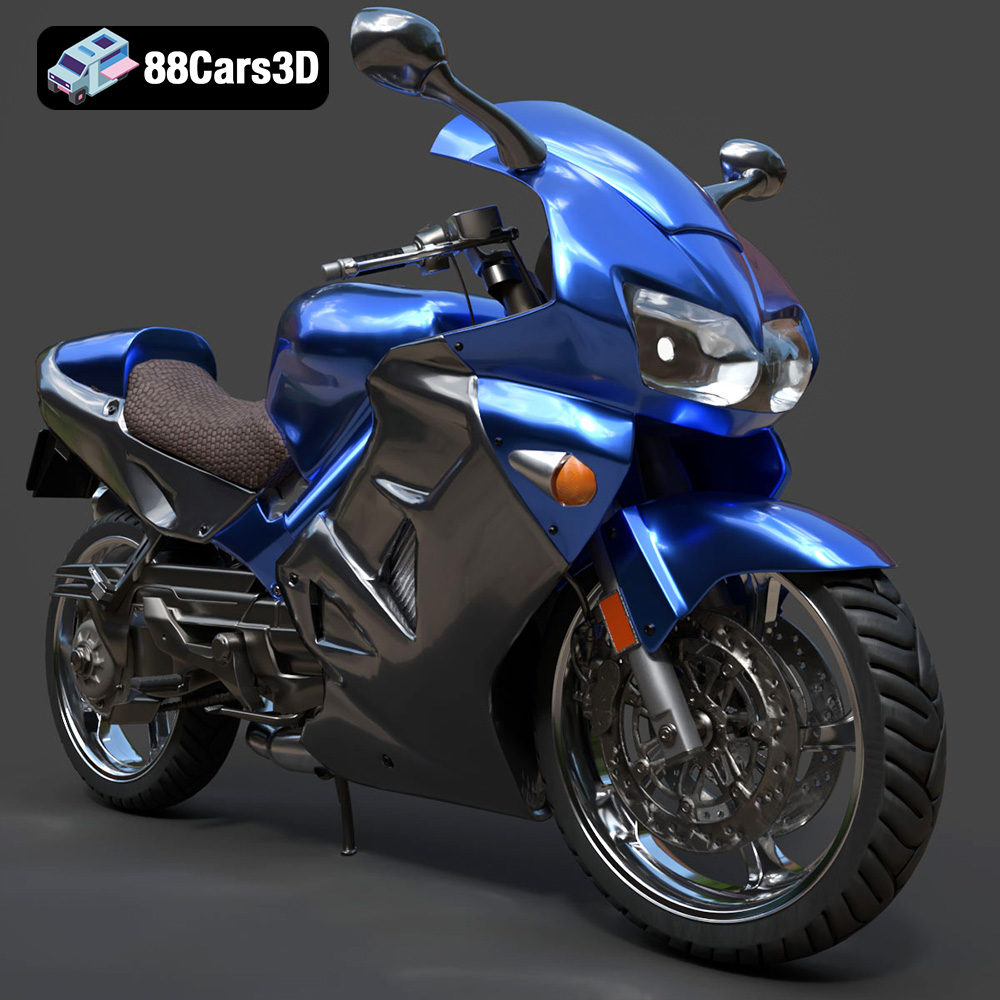
Experience unmatched realism with the Honda VFR 801-002 3D Model. Constructed with meticulous attention to detail, this professional 3D asset captures the dynamic essence and engineering precision of the iconic Honda VFR. It is designed to elevate your visual projects with accurate scaling and true-to-life aesthetics.
Key features include clean polygon geometry, realistic materials, and exceptional detailing. The topology is fully optimized for smooth rendering and seamless subdivision, ensuring professional-grade results whether utilized for static imagery or dynamic animations.
This versatile 3D model is ideal for a wide range of applications. From digital rendering and simulation to game development and immersive AR/VR experiences, it integrates seamlessly into your existing pipeline to deliver outstanding visual fidelity.
Tags: .honda, .vfr, .motorcycle, .sportbike, .twowheeler, .car3dmodel, .rendering, .simulation, .gameasset, .arvr, .blend, .fbx, .obj, .glb, .stl, .ply, .unreal, .max
Tags:
.honda, .vfr, .motorcycle, .sportbike, .twowheeler, .car3dmodel, .rendering, .simulation, .gameasset, .arvr, .blend, .fbx, .obj, .glb, .stl, .ply, .unreal, .maxBuick Wildcat Convertible 1963 3D Model 3D Printable STL
$19.99
.arvr
.blend
.car3dmodel
.fbx
.gameasset
.glb
.honda
.max
.motorcycle
.obj
.ply
.rendering
.simulation
.sportbike
.stl
.twowheeler
.unreal
.vfr