Get 20% OFF All Premium 3D & STL Models!

In the vast landscape of 3D design, few subjects capture the imagination quite like classic vehicles. The elegant lines, the historical resonance, and the sheer craftsmanship of vintage automobiles and scooters translate beautifully into digital artistry. For designers, game developers, visualization artists, and enthusiasts alike, having access to high-quality 3D car models is paramount to creating immersive and believable virtual worlds. These digital assets serve as the backbone for everything from cinematic renders and photorealistic product showcases to engaging game environments and interactive AR/VR experiences.
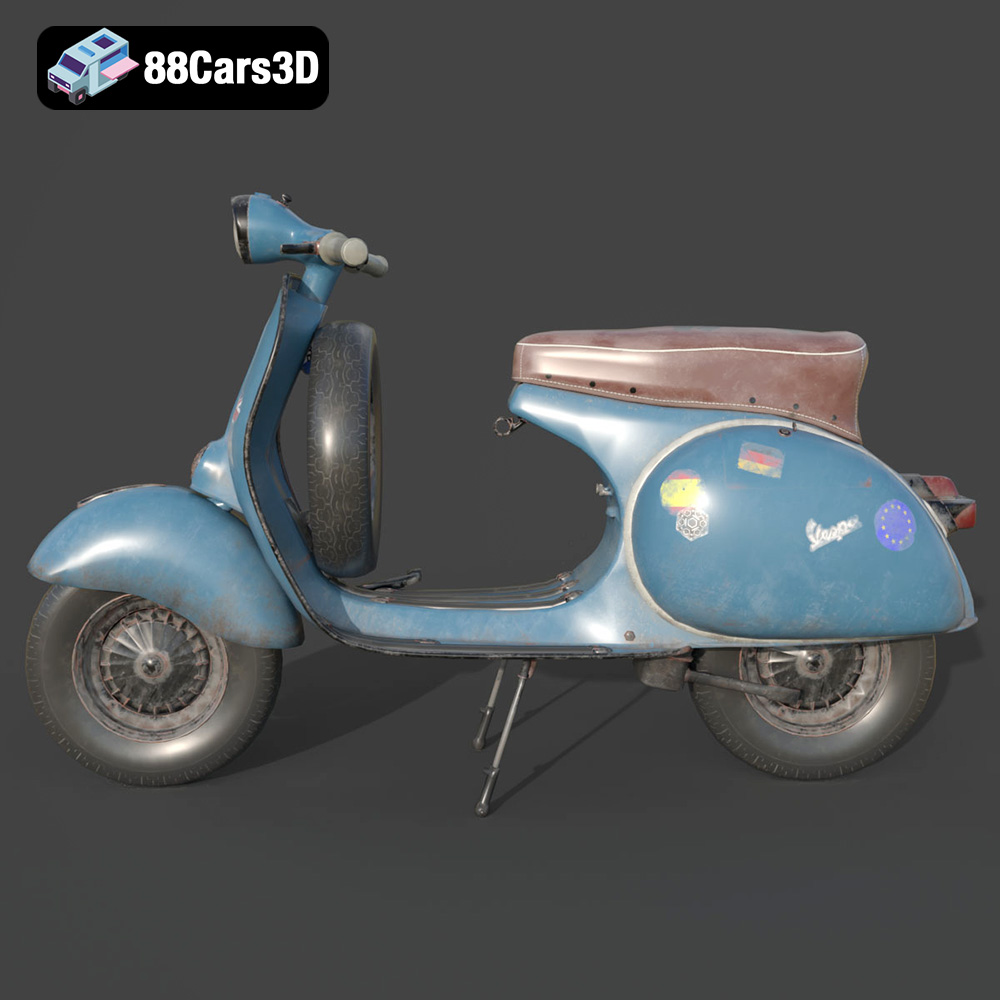
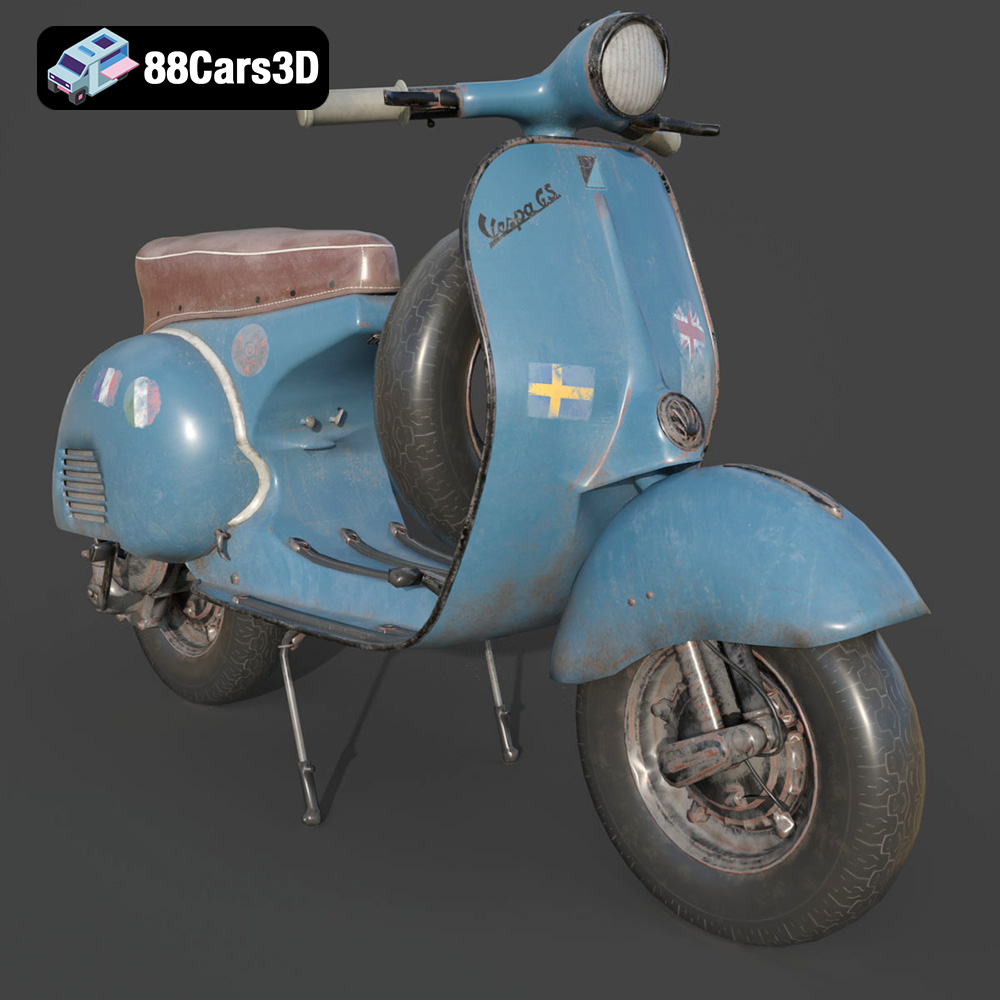
Among the pantheon of automotive legends, the Vespa GS 150 (Gran Sport) holds a special place. Revered for its groundbreaking design, its status as the first mass-market sports Vespa, and its unmistakable Italian flair, the GS 150 is more than just a scooter; it’s a cultural icon. Its signature swept-back leg shield, aerodynamic curves, and distinctive 150cc two-stroke engine layout evoke a timeless sense of freedom and style. Capturing such an iconic vehicle in a 3D model requires meticulous attention to detail, optimized topology, and versatile file formats to ensure it meets the rigorous demands of modern digital production pipelines.
This article delves into the technical intricacies and creative possibilities offered by professional-grade 3D car models, using a meticulously crafted Vespa GS 150 3D Model as our prime example. We’ll explore the critical role of various file formats, dive into seamless integration workflows across industry-standard software like 3ds Max, Blender, and Unreal Engine, and uncover the diverse applications ranging from game development to architectural visualization and even 3D printing. Whether you’re a seasoned professional seeking to enhance your asset library or an aspiring artist looking to understand the nuances of digital automotive design, join us as we explore how quality 3D assets empower creativity and technical excellence.
When sourcing 3D models, especially complex automotive assets like the Vespa GS 150, understanding the various file formats is not just helpful—it’s essential. Each format is designed with specific use cases, compatibility, and technical characteristics in mind. The right format ensures a smooth workflow, preserves data integrity, and maximizes the utility of your 3D car models across different software and platforms. A high-quality model, such as the Vespa GS 150 3D Model available at 88cars3d.com, typically offers a wide array of formats to cater to diverse professional needs.
The .blend file is Blender’s native format, offering a fully editable scene complete with meshes, materials, textures, lighting, cameras, and animation data. For Blender users, this format is invaluable as it preserves all aspects of the original artist’s setup, allowing for deep customization and modification without any loss of information during import. It’s ideal for those who wish to dissect the model, learn from its construction, or make significant changes before integrating it into their projects. The Vespa GS 150 in .blend format provides a perfect starting point for Blender artists to leverage its robust features.
Autodesk’s .fbx (Filmbox) format is widely recognized as the industry standard for 3D data interchange, particularly for animation and game development. It efficiently stores complex scene information, including geometry, animation, skinning, and materials, making it ideal for transferring assets between different 3D software packages (e.g., Maya, 3ds Max, Cinema 4D) and, critically, for import into game engines like Unreal Engine and Unity. Its robust support for skeletal animations and PBR (Physically Based Rendering) materials makes the .fbx version of the Vespa GS 150 a go-to for real-time pipelines.
The .obj (Wavefront Object) format is one of the oldest and most universally supported 3D formats. It’s a simple, text-based format primarily used for transferring static mesh data, including vertices, normals, UV coordinates, and material references (via an accompanying .mtl file). While it doesn’t support animation or rigging, its widespread compatibility ensures that virtually any 3D software can open and import an .obj file. This makes the .obj version of the Vespa GS 150 a reliable fallback for cross-software compatibility, ensuring broad accessibility.
.glb (GLB file format) is the binary version of glTF (Graphics Library Transmission Format), designed for efficient transmission and loading of 3D scenes and models by applications. It’s quickly becoming the standard for 3D on the web, AR (Augmented Reality), and VR (Virtual Reality) platforms due to its compact size, single-file nature (embedding textures and animations), and excellent runtime performance. The Vespa GS 150 3D Model in .glb format is perfectly optimized for interactive experiences, virtual showrooms, and mobile AR applications, offering a lightweight and performant asset.
.stl (Standard Tessellation Language) is the most common file format used for 3D printing. It describes the surface geometry of a 3D object using a collection of interconnected triangles. While it contains no color or texture information, its simplicity makes it universally compatible with 3D printing software (slicers). The .stl version of the Vespa GS 150 is specifically tailored for physical output, allowing hobbyists and professionals to bring this digital icon into the tangible world through 3D printing, with clear recommendations for scaling and support structures.
.ply (Polygon File Format) is another format for storing 3D data, often used in scientific and engineering applications, as well as 3D scanning. It can store more complex data than .stl, including color, transparency, and sometimes even confidence values for scanned data. While less common for general asset distribution, its precision mesh capabilities make it valuable for CAD integration or detailed geometric analysis, ensuring the Vespa GS 150 model’s fidelity for advanced technical applications.
The .unreal format is specifically tailored for the Unreal Engine, often referring to an asset that has been pre-processed or packaged for direct import and optimal performance within the engine. This might involve specific material setups, optimized LODs (Levels of Detail), and collision meshes that conform to Unreal’s best practices. The .unreal version of the Vespa GS 150 offers a streamlined pipeline for game developers and real-time visualization artists, minimizing setup time and ensuring engine-ready performance.
Similar to .blend for Blender, .max is the native project file format for Autodesk 3ds Max. It stores all scene data, including geometry, materials, lighting, cameras, animation, and modifier stacks. For users of 3ds Max, this format provides the most comprehensive access to the model’s construction, allowing for full editing, rigging, and integration into existing Max projects. The .max version of the Vespa GS 150 offers maximum flexibility for artists working within the 3ds Max ecosystem for high-end rendering and animation.
By offering this comprehensive suite of formats, the Vespa GS 150 3D Model from 88cars3d.com ensures that artists and developers, regardless of their preferred software or end-use application, have the correct, optimized asset at their fingertips. This versatility is a hallmark of professional-grade 3D car models.
Creating a truly exceptional 3D model of a classic vehicle like the Vespa GS 150 goes far beyond simply mimicking its shape. It requires a deep understanding of its design philosophy, meticulous attention to detail, and a commitment to technical excellence. The Vespa GS 150 3D Model embodies these principles, ensuring it’s not just a visual representation but a highly functional and versatile digital asset.
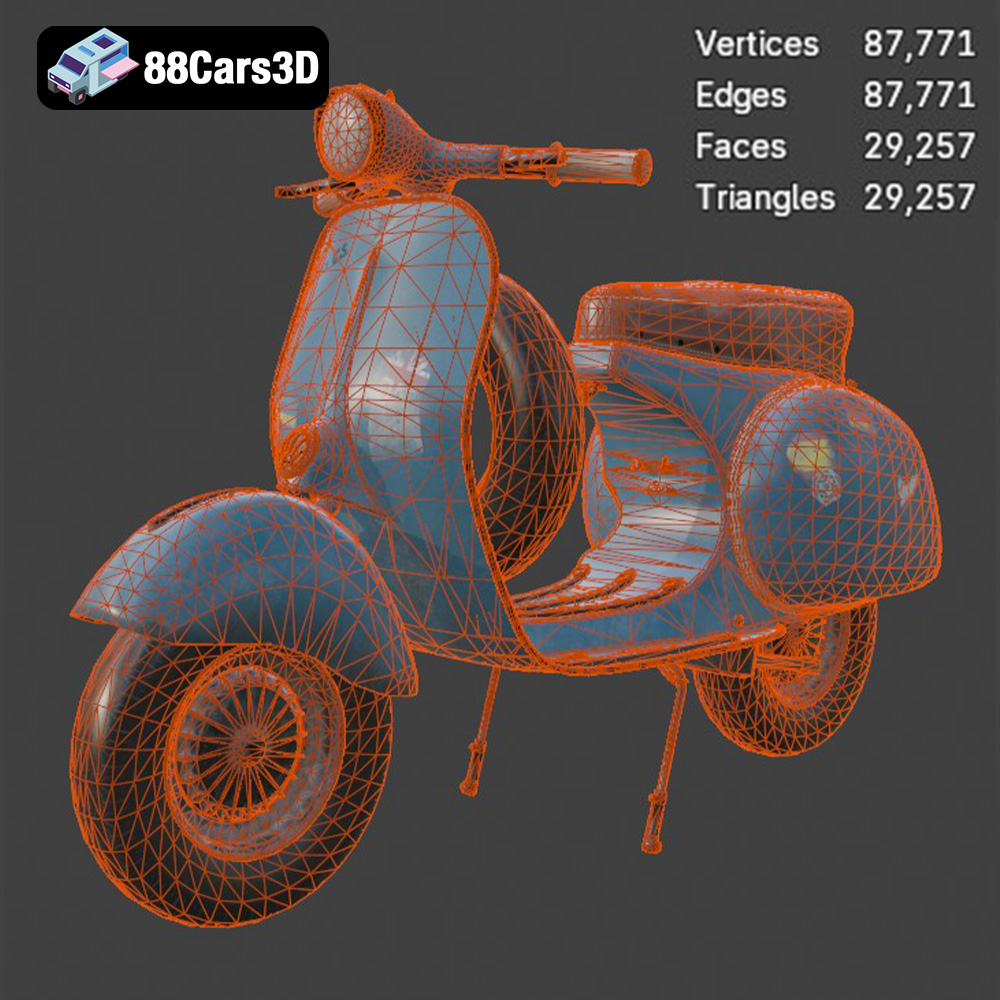
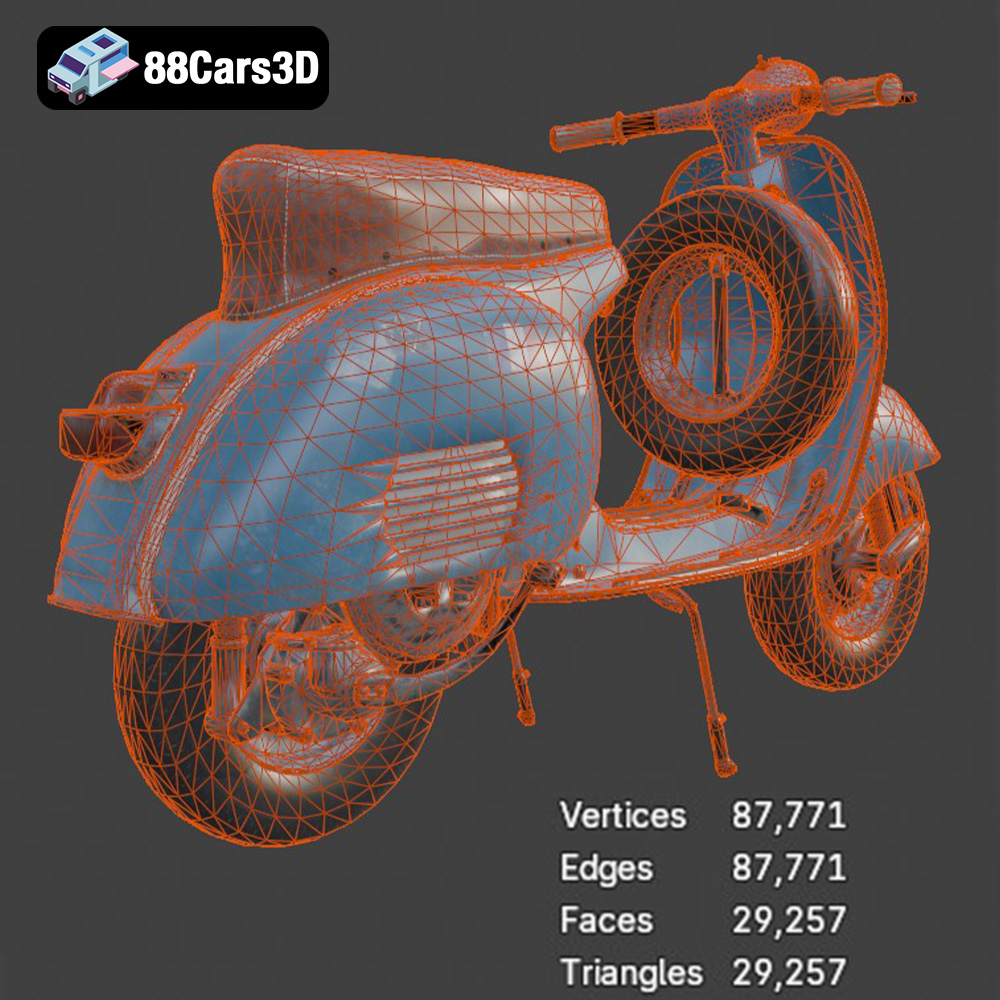
The Vespa GS 150 is renowned for its elegant aerodynamic curves and historical significance. The 3D model captures this essence with a well-optimized topology, boasting approximately 200,000 triangles. This polycount strikes a perfect balance: it’s detailed enough to support exceptional visual fidelity for close-up renders and cinematic shots, yet optimized to ensure game-ready performance in real-time engines like Unreal and Unity. This careful optimization means artists don’t have to compromise between stunning realism and efficient processing, a critical advantage for any professional project.
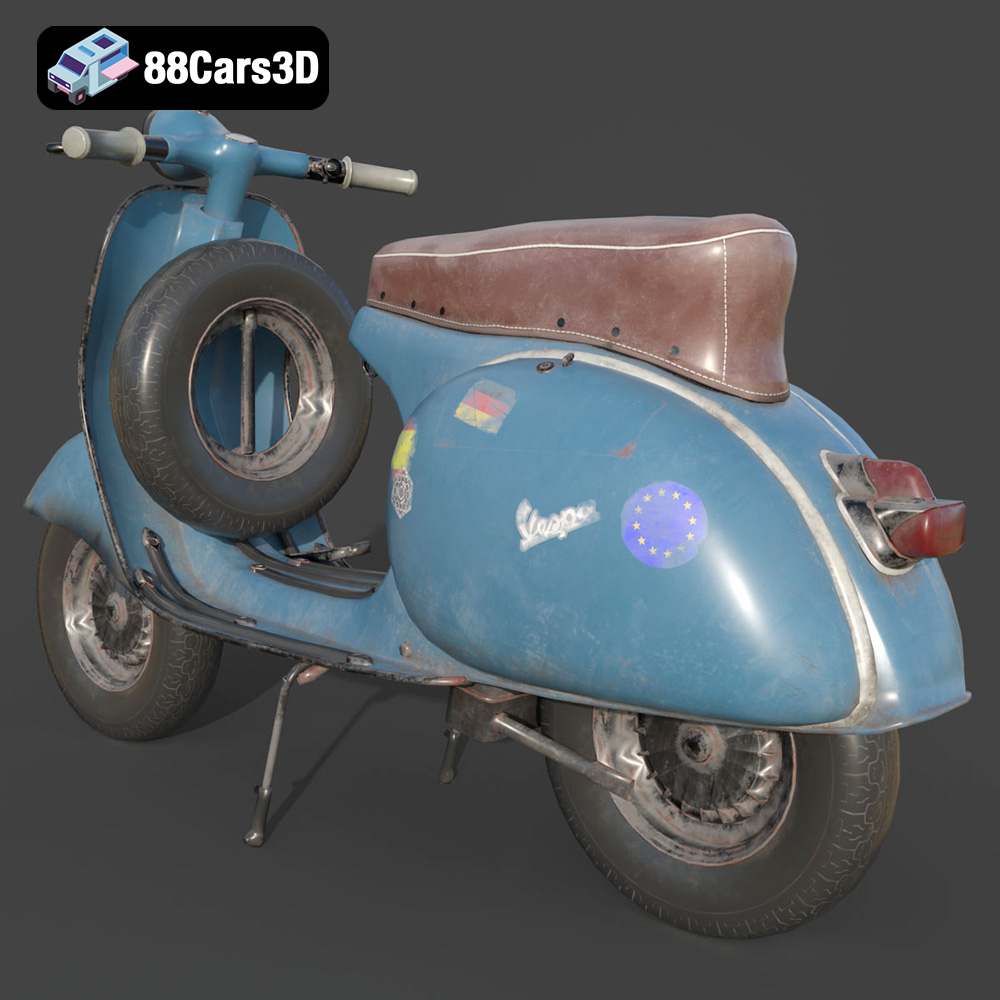
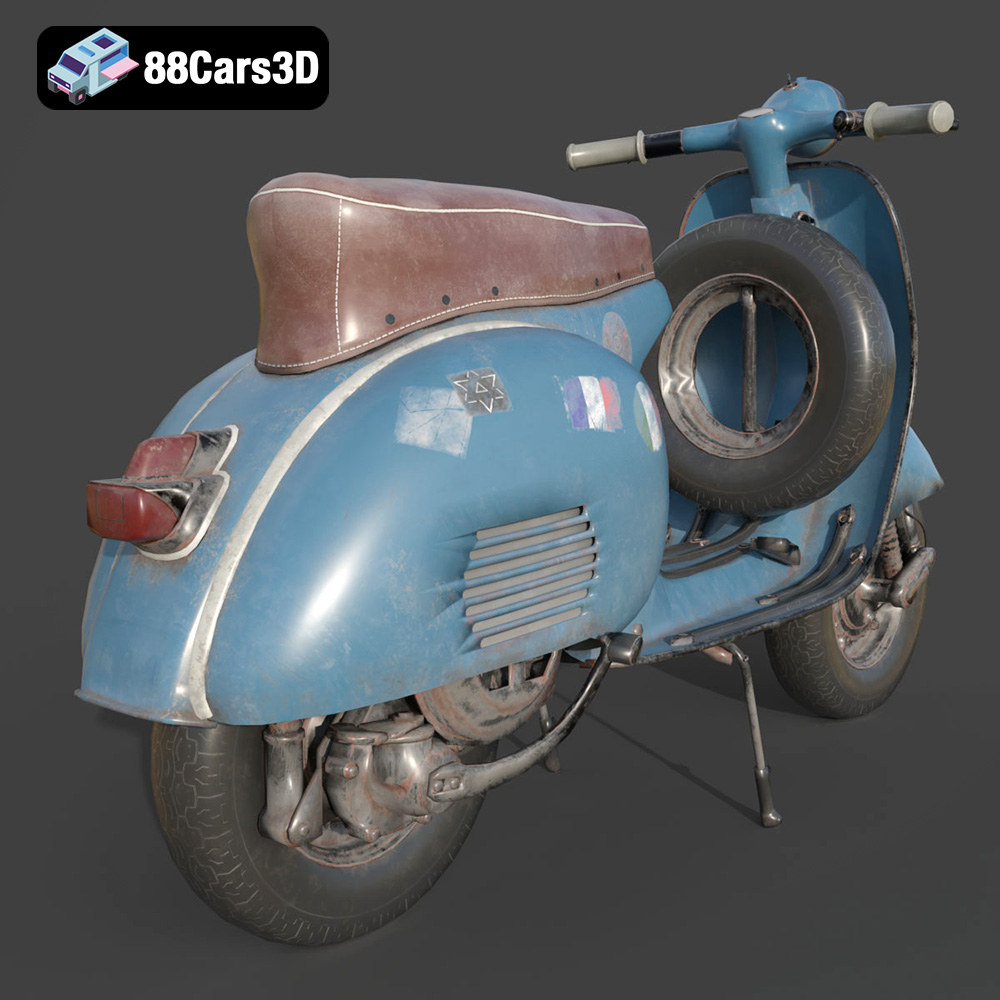
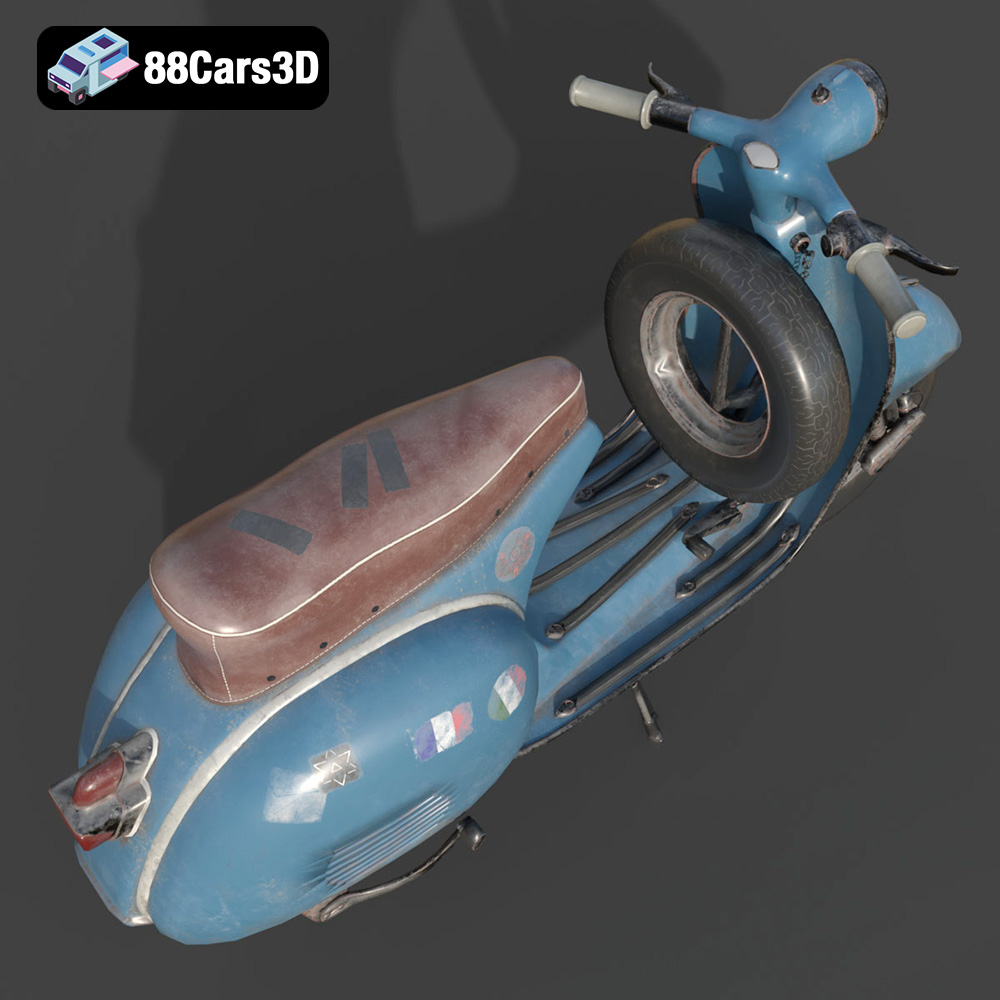
Every curve, every component of the original Vespa GS 150 has been faithfully recreated. The model features accurate unibody frame geometry and proportions, true to the original design. Key exterior details include:
The interior, or cockpit, is equally detailed, providing an immersive experience even from a first-person perspective in games:
Accuracy extends beyond visual detail. The model adheres to real-world scale based on actual vehicle chassis dimensions, making it straightforward to integrate into scenes alongside other assets without scaling issues. Furthermore, proper pivot setups have been meticulously implemented for steering, wheel rotation, and suspension travel. This critical technical detail makes the Vespa GS 150 3D Model instantly ready for animation, allowing developers and animators to quickly rig and bring the scooter to life with realistic movement.
The true measure of a versatile 3D asset lies in its ease of integration into various professional workflows. The Vespa GS 150 3D Model, with its optimized geometry and diverse file formats, is designed for seamless adoption across industry-standard 3D software and real-time engines. Here, we outline typical integration steps for some of the most popular platforms.
For users of 3ds Max, the inclusion of a native .max file is a significant advantage. This ensures all original scene data, including materials, lighting, and any initial rigging, is preserved.
When opening the .max file, the Vespa GS 150 model will appear in its original state. For rendering, artists typically utilize V-Ray or Corona Renderer. The included materials can often be directly converted or quickly re-linked to PBR (Physically Based Rendering) textures if not already configured for modern renderers. This involves assigning texture maps (Albedo/Base Color, Normal, Roughness, Metallic, Ambient Occlusion) to the appropriate slots in the material editor. The optimized UV mapping on the model simplifies this process, ensuring textures display correctly without stretching or distortion.
Integrating the Vespa into an architectural visualization or a complex urban scene is straightforward due to its real-world scale. Its separate, pivot-enabled components (wheels, steering, suspension) mean artists can immediately begin animating without extensive re-rigging. Whether it’s a simple rotation for a turntable render or a complex path animation through a street scene, the model is prepared for dynamic sequences.
Blender users benefit immensely from the native .blend file. This provides access to the full project hierarchy and original material setups, making customization intuitive.
Opening the .blend file instantly loads the Vespa GS 150 with its textures and materials ready. For photorealistic renders, Blender’s Cycles renderer offers unparalleled quality. Artists can fine-tune lighting, add depth of field, and experiment with different camera angles. For faster, real-time feedback, Blender’s Eevee renderer provides a robust solution, perfect for previewing animations or interactive presentations. The clean topology also ensures subdivision surfaces (if desired) maintain smooth curves without artifacts.
With separate components and proper pivot points, animating the Vespa in Blender is efficient. Users can easily keyframe wheel rotations, steering angles, and suspension compression for realistic motion. Beyond animation, Blender’s powerful modifiers and sculpting tools allow for extensive customization, from adding subtle wear and tear to changing paint finishes or even modifying tire patterns, as mentioned in the product’s customization options.
For game development and real-time visualization, Unreal Engine is a dominant force. The Vespa GS 150 3D Model, particularly its .fbx and .unreal formats, is primed for performance within this powerful engine.
Importing the .fbx file into Unreal Engine brings in the mesh and any embedded materials. For optimal flexibility, it’s recommended to create a master material (if not already provided in the .unreal package) and then create material instances for each part of the Vespa. This allows developers to easily change colors (e.g., body/tank colors), adjust metallic properties, or modify tire textures without recompiling shaders, directly addressing the model’s customization options. Setting up proper collision meshes is also a crucial step for game-ready assets.
The pre-set pivots are a major time-saver for Unreal Engine users. Simple animations for the wheels, steering, and suspension can be managed directly within Unreal’s sequencer. For interactive elements, Blueprint visual scripting can be used to control scooter movement, implement player input, or trigger specific animations based on game events. Whether populating a bustling open-world city in a game or creating an interactive virtual showroom, the Vespa GS 150 integrates seamlessly into Unreal’s robust ecosystem, providing a high-quality “game-ready” asset for modern game development.
The versatility of a well-crafted 3D car model, such as the Vespa GS 150, extends its utility across a multitude of professional domains. From the fast-paced world of game development to the cutting edge of AR/VR, and the precision of architectural visualization, these digital assets are indispensable tools for creative professionals.
For game developers, performance is key, but visual fidelity cannot be sacrificed. The Vespa GS 150 3D Model strikes this perfect balance with its optimized ~200,000 triangles. This makes it an ideal asset for:
Augmented Reality (AR) and Virtual Reality (VR) demand highly optimized, yet visually compelling assets. The .glb format, specifically, positions the Vespa GS 150 3D Model as a prime candidate for immersive applications:
High-fidelity rendering remains a cornerstone of advertising, product design, and architectural visualization. The detailed geometry and accurate proportions of the Vespa GS 150 make it a standout for:
Beyond the screen, the Vespa GS 150 3D Model offers the unique opportunity to be physically realized through 3D printing. The inclusion of the .stl format caters directly to this growing application:
The comprehensive support for diverse applications underscores the professional value of high-quality 3D car models from marketplaces like 88cars3d.com. Such assets are not merely decorative; they are foundational elements that drive creativity and deliver tangible results across the digital production spectrum.
In the realm of 3D asset creation, technical excellence is not a luxury; it’s a necessity. A high-quality 3D model, especially one designed for a range of professional uses like the Vespa GS 150, must be robust, efficient, and meticulously crafted. This section details the technical specifications and advantages that elevate the Vespa GS 150 3D Model beyond a mere visual representation.
The core of the model’s technical prowess lies in its “game-ready” optimization. With approximately 200,000 triangles, the Vespa GS 150 achieves a sweet spot between visual detail and real-time performance. For context, while hyper-realistic cinematic models can easily run into millions of polygons, 200k triangles for a detailed vehicle provides enough resolution for close-up shots and high-fidelity renders, while still being perfectly suitable for integration into game engines like Unreal and Unity without causing significant performance bottlenecks. This balance is critical for developers who need to populate scenes with numerous assets while maintaining smooth frame rates.
Precision in scale is fundamental for seamless integration into professional projects. The Vespa GS 150 model is built to real-world scale accuracy, based on actual vehicle chassis dimensions. This means:
One of the most valuable technical advantages for animators and game developers is the implementation of proper pivot points. The Vespa GS 150 has its components (wheels, suspension, steering) separated and correctly pivoted. This is critical because:
The model’s compatibility with major 3D software platforms and real-time rendering engines is not just about file formats; it also extends to material readiness. While specific PBR textures (Albedo, Normal, Roughness, Metallic, AO) might need re-linking based on the rendering engine, the underlying UVs and material ID assignments are clean and well-prepared. This ensures that artists can quickly apply their desired PBR workflows and achieve photorealistic results with minimal effort, leveraging the model’s clean mesh and optimized geometry.
The comprehensive technical specifications of the Vespa GS 150 3D Model underscore its suitability for demanding professional applications. From its balanced polycount to its animation-ready components, it represents a high-standard asset designed to accelerate workflows and deliver outstanding results for any project involving detailed 3D car models.
The digital realm offers incredible freedom, but there’s a unique satisfaction in holding a physical manifestation of a digital design. The Vespa GS 150 3D Model, with its inclusion of the .stl format, bridges this gap, enabling enthusiasts and professionals to bring this classic scooter into the tangible world through 3D printing. However, translating a digital model for successful physical output requires understanding specific considerations and best practices.
Successfully 3D printing a detailed model like the Vespa GS 150 depends heavily on appropriate print settings. These recommendations are designed to maximize detail and structural integrity:
Once the print is complete, post-processing is essential to achieve a professional, authentic finish:
The ability to transition the Vespa GS 150 3D Model from the screen to a physical object opens up exciting avenues for collectors, model makers, and even product designers who wish to hold and examine a tangible representation of this iconic scooter. It exemplifies the multi-faceted utility of high-quality 3D car models, serving both digital and physical creative needs.
The journey through the technical nuances and diverse applications of a premium 3D asset like the Vespa GS 150 3D Model underscores a fundamental truth in the digital content creation industry: quality matters. Whether for high-end automotive rendering, the demanding environments of game development, immersive AR/VR experiences, or even the tactile satisfaction of 3D printing, the foundational strength of any project lies in its core assets.
The Vespa GS 150 3D Model exemplifies what a truly versatile and professional-grade asset should be. Its meticulously optimized topology (around 200,000 triangles) strikes a perfect balance between stunning visual fidelity and game-ready performance. With accurate real-world scale, authentic details from its sweeping frame to its engine block, and critically, separated components with proper pivot setups for animation, it’s designed to slot seamlessly into any professional pipeline. The comprehensive suite of file formats—from native .blend and .max to universally compatible .fbx and .obj, and specialized formats like .glb for AR/VR and .stl for 3D printing—ensures maximum flexibility and accessibility for artists and developers worldwide.
Investing in high-quality 3D car models not only saves invaluable production time but also elevates the overall standard of a project. They serve as reliable, detailed building blocks that allow creative professionals to focus on artistic direction and innovative storytelling, rather than struggling with suboptimal assets. For anyone seeking to bring iconic vehicles to life in their digital or physical projects, the Vespa GS 150 3D Model offers an exceptional opportunity to do so with unparalleled quality and ease.
Explore this iconic model and many other premium 3D car models designed for professional excellence at 88cars3d.com, where quality meets versatility for all your automotive visualization and game asset needs.
The Vespa GS 150 (Gran Sport) is widely regarded as one of the most beautiful and iconic scooters ever produced. Known for its elegant aerodynamic curves, historical significance as the first mass-market sports Vespa, and unparalleled Italian styling, this classic masterpiece defined a generation. It features the signature swept-back leg shield, rounded side panels, and the distinctive 150cc two-stroke engine layout. This high-quality 3D model features a well-optimized topology (~200,000 triangles), ensuring exceptional visual fidelity while maintaining game-ready performance. The model is meticulously crafted to capture the essence of the classic scooter, making it a perfect asset for close-up renders, real-time engines, and detailed environment populating. Perfect for classic European street scenes, retro lifestyle visualizations, virtual showrooms, and historic racing games.
$19.99
.blend
.fbx
.glb
.max
.obj
.ply
.rendering
.scooter
.stl
.unreal
.vespa
classic-scooter
game asset
game-ready
gs-150
low-poly
motorcycle-3d-model
optimized
retro-scooter
scooter-3d-model
VR/AR