Get 20% OFF All Premium 3D & STL Models!

In the dynamic world of digital creation, the demand for realistic and technically sound assets is ever-growing. From photorealistic automotive rendering to immersive game environments and cutting-edge AR/VR experiences, the foundation of any compelling visual project often lies in the quality of its 3D models. A truly exceptional 3D car model can transform a concept into a tangible reality, providing the intricate details and precise geometry necessary for professional-grade output.
Consider the electric vehicle revolution. Models like the Volkswagen ID4 2021 have reshaped automotive design, blending sleek aesthetics with advanced technology. For artists and developers looking to integrate such modern icons into their digital projects, a meticulously crafted digital twin is indispensable. This is precisely where assets like the Volkswagen ID4 2021 3D Model shine, offering a highly detailed and versatile foundation for a myriad of applications. Whether you’re a visualization artist aiming for a marketing campaign, a game developer crafting an open world, or an engineer prototyping virtual scenarios, understanding the technical nuances of such assets is crucial for success.
The versatility of a high-quality 3D car model, such as the Volkswagen ID4 2021 from 88cars3d.com, is often defined by the range of file formats it supports. Each format is engineered for specific purposes, offering unique advantages in compatibility, data preservation, and workflow optimization. Understanding these differences is paramount for any professional dealing with 3D assets.
The .blend format is native to Blender, a leading open-source 3D creation suite. When you receive a .blend file, you’re not just getting a mesh; you’re often getting a fully editable Blender scene. This typically includes materials, textures, lighting setups, cameras, and even animation data, all neatly packaged. For artists working primarily in Blender, this format offers the most flexibility, allowing for direct manipulation of every aspect of the model without loss of fidelity or conversion artifacts. It’s ideal for deep customization, complex scene assembly, and leveraging Blender’s powerful rendering engines like Cycles or Eevee.
.fbx (Filmbox) is an Autodesk proprietary format, but it has become an industry standard for data interchange between various 3D applications, especially for game development. It excels at transferring not just mesh data, but also animation, rigging, skinning, materials (with limitations), and camera information. Its widespread adoption makes it ideal for pipelines involving Unreal Engine, Unity, Maya, 3ds Max, and more. When using .fbx for real-time applications, careful consideration of poly count, UV mapping, and material assignments is necessary to ensure optimal performance and visual quality.
.obj (Wavefront OBJ) is perhaps the most universally supported 3D file format. It’s a simple, text-based format primarily designed to store 3D geometry data, including vertex positions, UV coordinates, normals, and material references (via an accompanying .mtl file). While it doesn’t typically store animation or rigging data, its strength lies in its widespread compatibility. Almost every 3D software can import and export .obj files, making it an excellent choice for straightforward mesh transfer between different programs without concerns about proprietary data loss. It’s often used as a fallback or for archiving purposes.
.glb (GL Transmission Format Binary) is a relatively newer format gaining rapid traction, particularly in augmented reality (AR), virtual reality (VR), and web-based 3D applications. It’s a binary version of glTF, designed to be compact, efficient, and “transmission-ready.” A .glb file packages all necessary data (geometry, materials, textures, animations) into a single file, minimizing load times and simplifying deployment. Its PBR (Physically Based Rendering) material support makes it excellent for consistent visual quality across different platforms and engines, making it perfect for interactive web viewers or AR experiences featuring the Volkswagen ID4 2021.
.stl (STereoLithography) is the de facto standard for 3D printing. This format represents a 3D model as a series of connected triangles, describing only the surface geometry of an object without color, texture, or other properties. While not suitable for rendering or animation, its simplicity makes it ideal for quickly translating digital models into physical objects. For prototyping, scale models, or custom accessories related to the Volkswagen ID4 2021, an .stl file is essential.
.ply (Polygon File Format) is another format for storing 3D data, often used in scientific, CAD, and research contexts. It can store a wider range of properties than .obj or .stl, including color, transparency, surface normals, and even data from 3D scanners. While less common in standard rendering pipelines, it provides a robust, extensible format for precision mesh data, useful for detailed analysis or specific manufacturing processes.
The .unreal format, or rather, assets specifically prepared for Unreal Engine, represent models that have been pre-configured and optimized for direct integration into the engine. This means they often come with proper material instances, collision meshes, LODs (Levels of Detail), and sometimes even basic blueprints. For professionals working within the Unreal ecosystem, an .unreal asset significantly reduces setup time and ensures optimal performance and visual fidelity within the engine, making the Volkswagen ID4 2021 3D Model a true plug-and-play asset for game development or real-time visualization projects.
Similar to .blend for Blender, the .max format is native to Autodesk 3ds Max. It encompasses the entire 3ds Max scene, including geometry, materials, textures, lighting, cameras, animations, and modifiers. For artists who rely on 3ds Max for architectural visualization, product design, or animation, a .max file offers maximum editable control. It allows for advanced rendering with V-Ray, Corona, or Arnold, providing the highest level of detail and control for generating stunning marketing renders of the Volkswagen ID4 2021.
The provision of multiple formats, as seen with the Volkswagen ID4 2021 3D Model, empowers creators to choose the best option for their specific project requirements, ensuring seamless integration and maximum utility across diverse professional workflows.
Automotive rendering demands an unparalleled level of detail and realism. Whether for marketing campaigns, product showcases, or design reviews, a high-quality 3D car model is the cornerstone. The Volkswagen ID4 2021 3D Model exemplifies the kind of asset required for these demanding scenarios, providing clean geometry and accurate proportions essential for photorealistic output.
For many professionals, 3ds Max remains a go-to for high-end automotive visualization. With the included .max file for the Volkswagen ID4 2021, artists gain direct access to a fully editable scene. The workflow typically involves:
The accuracy of the model, from its distinctive headlights to the nuanced body lines, means less time is spent correcting geometry and more time focusing on artistic composition and lighting.
Blender, with its powerful Cycles and Eevee render engines, offers an equally compelling platform for automotive visualization. The .blend file for the Volkswagen ID4 2021 provides a head start with pre-configured materials and lighting.
Blender’s flexibility and active community make it an excellent choice for artists seeking robust tools for high-quality automotive rendering without a substantial software investment.
In game development, performance and visual fidelity must strike a delicate balance. High-quality game assets are crucial, but they must also be optimized for real-time environments. The Volkswagen ID4 2021 3D Model is designed with this in mind, offering formats ideal for popular game engines.
Unreal Engine is a powerhouse for creating visually stunning and highly interactive games and simulations. The .unreal file included with the Volkswagen ID4 2021 is a game-changer for developers.
For game studios or independent developers, having a production-ready model like the Volkswagen ID4 2021 streamlines the asset pipeline significantly, allowing more focus on gameplay and environment design.
Unity is another dominant force in game development, known for its versatility across multiple platforms. The .fbx format is the preferred method for importing complex 3D assets into Unity.
Whether for racing games, open-world adventures, or realistic simulations, the versatility of the Volkswagen ID4 2021 3D Model in .fbx format makes it a robust choice for Unity developers.
The utility of a detailed 3D car model extends far beyond traditional rendering and gaming. Augmented Reality (AR), Virtual Reality (VR), and even 3D printing represent emerging frontiers where high-quality assets play a pivotal role in creating engaging and tangible experiences.
AR and VR are transforming how we interact with digital content, offering immersive ways to experience products like the Volkswagen ID4 2021. The .glb format is specifically designed for these applications.
For automotive showrooms, online sales, or educational applications, the Volkswagen ID4 2021 3D Model in .glb format unlocks powerful new ways to engage with the vehicle.
Sometimes, a digital asset needs to cross into the physical realm. This is where 3D printing comes in, and the .stl format is its language.
While the .stl format doesn’t carry visual information, the underlying accurate geometry of the Volkswagen ID4 2021 3D Model ensures that any physical output will be a faithful representation of the digital design.
The phrase “high-quality” for a 3D car model is not merely subjective; it refers to specific technical attributes that ensure versatility, realism, and optimal performance across various applications. The Volkswagen ID4 2021 3D Model embodies these principles, making it a valuable asset for any professional pipeline.
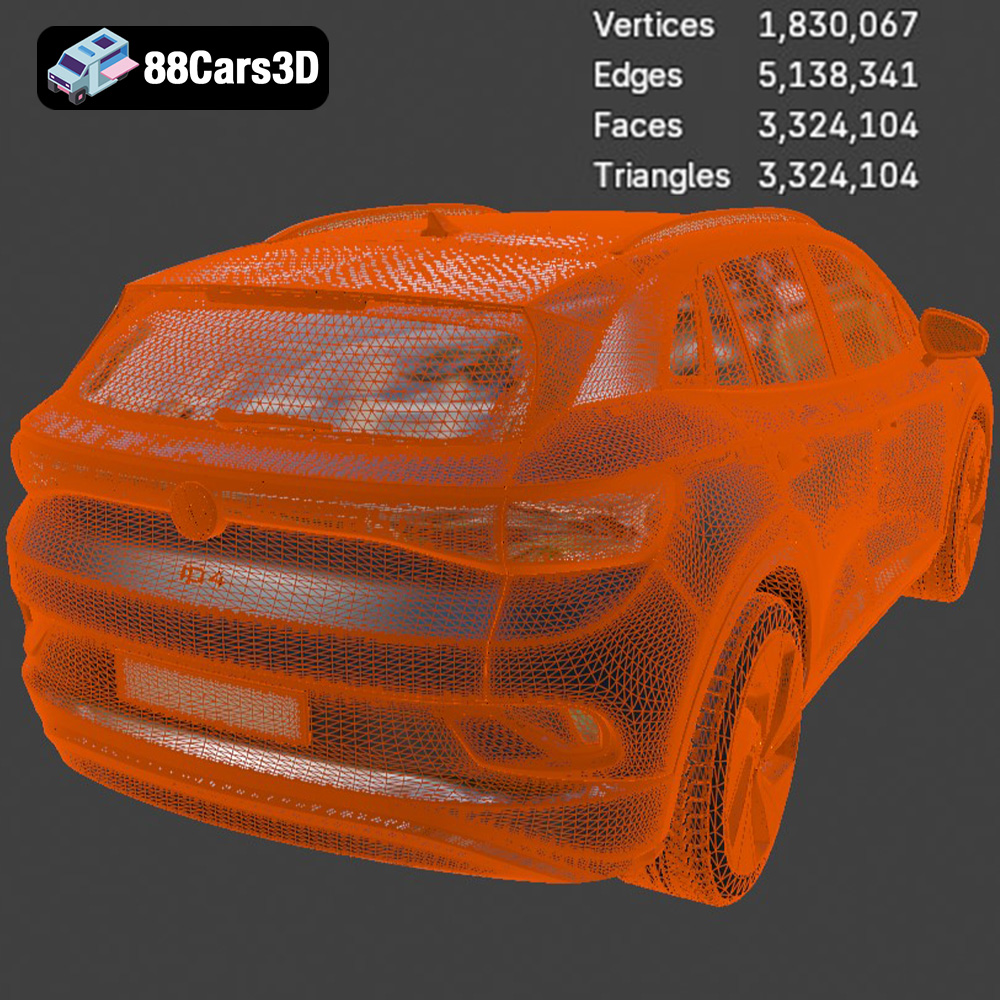
At the heart of any great 3D model is its geometry. “Clean geometry” means the mesh is free of errors such as non-manifold edges, inverted normals, or overlapping faces. “Optimized topology” refers to the efficient arrangement of polygons (quads, ideally) that accurately defines the object’s surface while maintaining a manageable poly count.
These geometric considerations are fundamental to producing stunning automotive rendering and performant game assets.
Beyond the mesh itself, the authenticity of a 3D model hinges on its adherence to real-world measurements and the fidelity of its surface properties.
These attributes combine to ensure that the Volkswagen ID4 2021 3D Model provides a true digital representation, perfect for professional digital environments and critical for immersive experiences.
Investing in a premium 3D car model like the Volkswagen ID4 2021 from 88cars3d.com is more than just purchasing an asset; it’s an investment in efficiency, quality, and versatility for your projects. This model’s comprehensive offerings empower professionals across diverse fields.
The primary advantage of a high-quality, multi-format 3D model is the significant time savings it offers. Instead of spending countless hours on modeling, UV unwrapping, and material creation, artists and developers can jump straight into creative execution.
This efficiency translates directly into cost savings and the ability to take on more projects or meet tighter deadlines.
The breadth of included file formats for the Volkswagen ID4 2021 3D Model ensures it can be seamlessly integrated into almost any professional pipeline.
By providing such a versatile and technically sound asset, 88cars3d.com empowers creators to focus on innovation and deliver exceptional results.
The journey through modern digital creation reveals a consistent truth: the quality of your foundational assets dictates the ultimate success of your project. For anyone involved in automotive rendering, crafting compelling game assets, or pushing the boundaries of AR/VR, a meticulously engineered 3D car model is an indispensable resource. The Volkswagen ID4 2021 3D Model stands as a testament to this principle, offering exceptional realism, clean geometry, and a comprehensive suite of file formats tailored for every professional need.
From the precise control offered by its native .max and .blend files for high-end visualization to the game-engine readiness of its .fbx and .unreal counterparts, and the AR/VR optimization of its .glb format, this model is designed to integrate seamlessly into diverse workflows. It reduces development time, enhances visual fidelity, and provides the technical bedrock for innovative digital experiences. Whether you’re aiming for a photorealistic advertisement, an immersive driving simulation, or a tangible 3D print, the Volkswagen ID4 2021 3D Model delivers the technical excellence required to achieve your vision. Explore this and other high-quality assets at 88cars3d.com to elevate your next project.
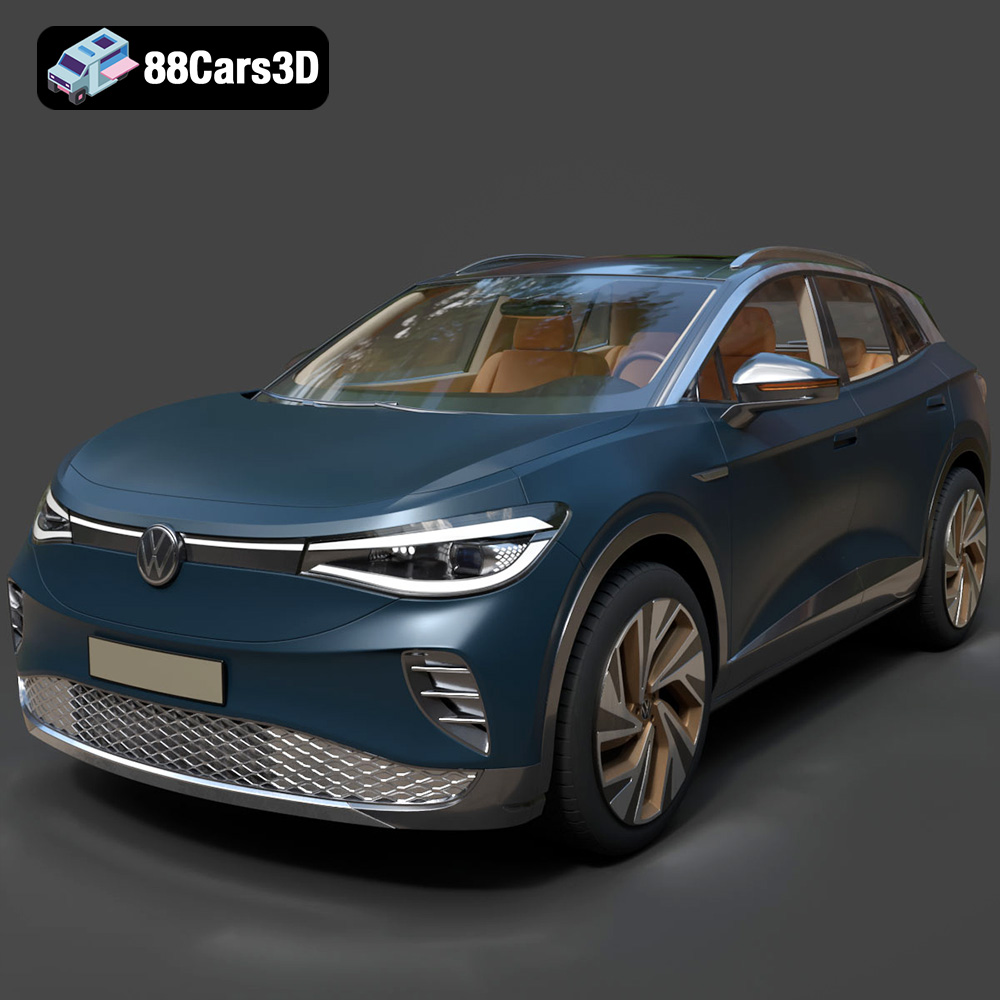
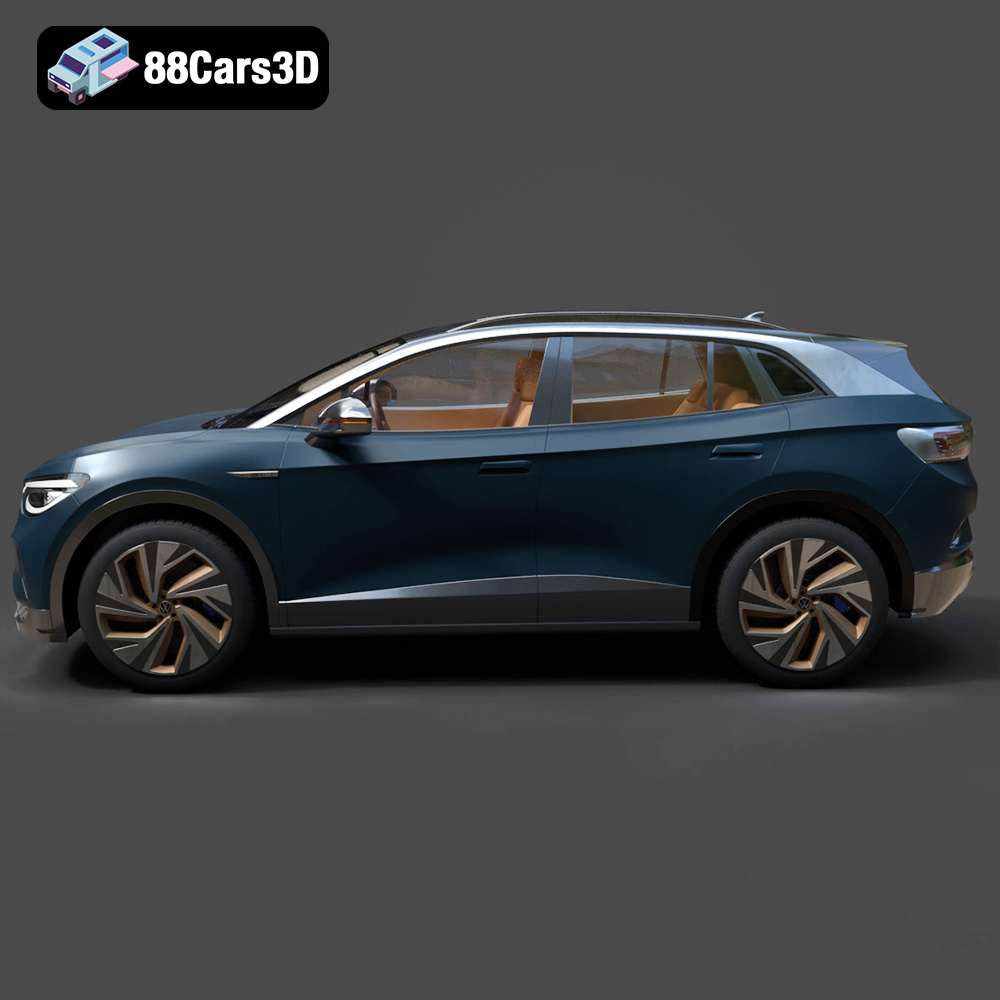
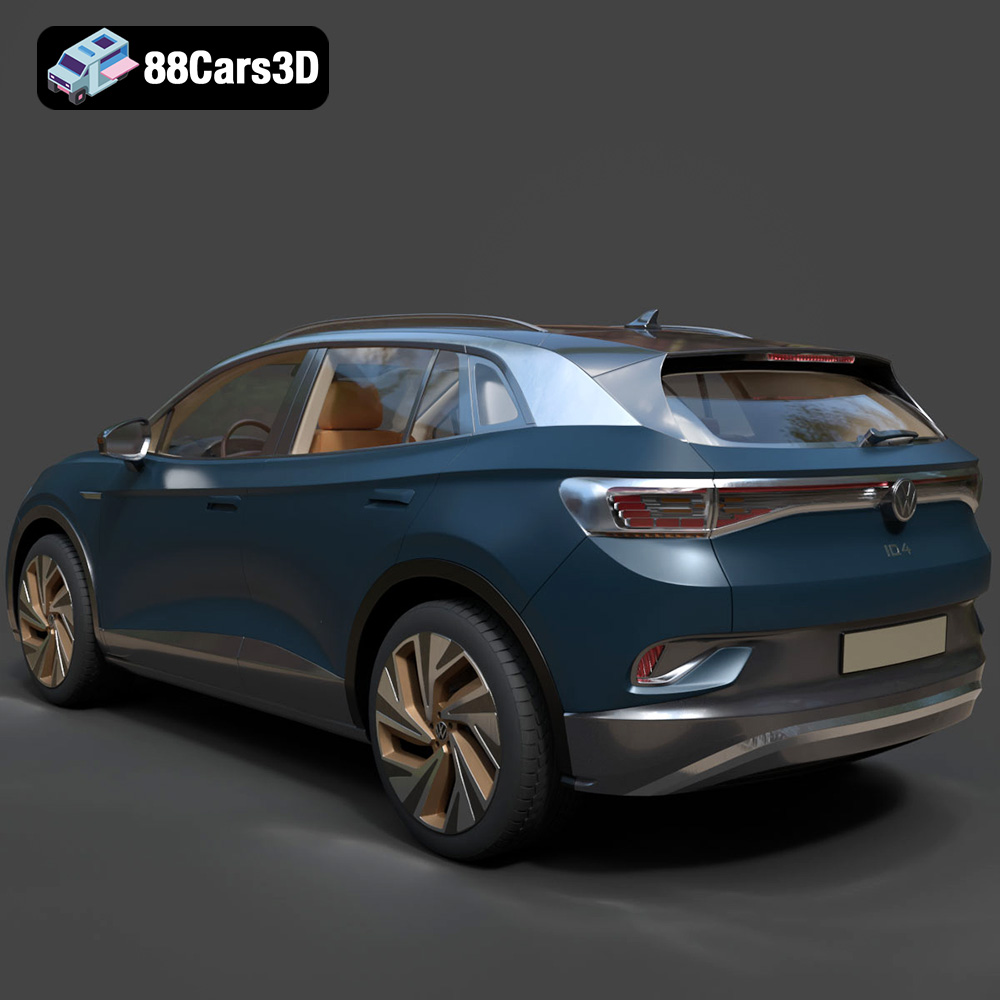
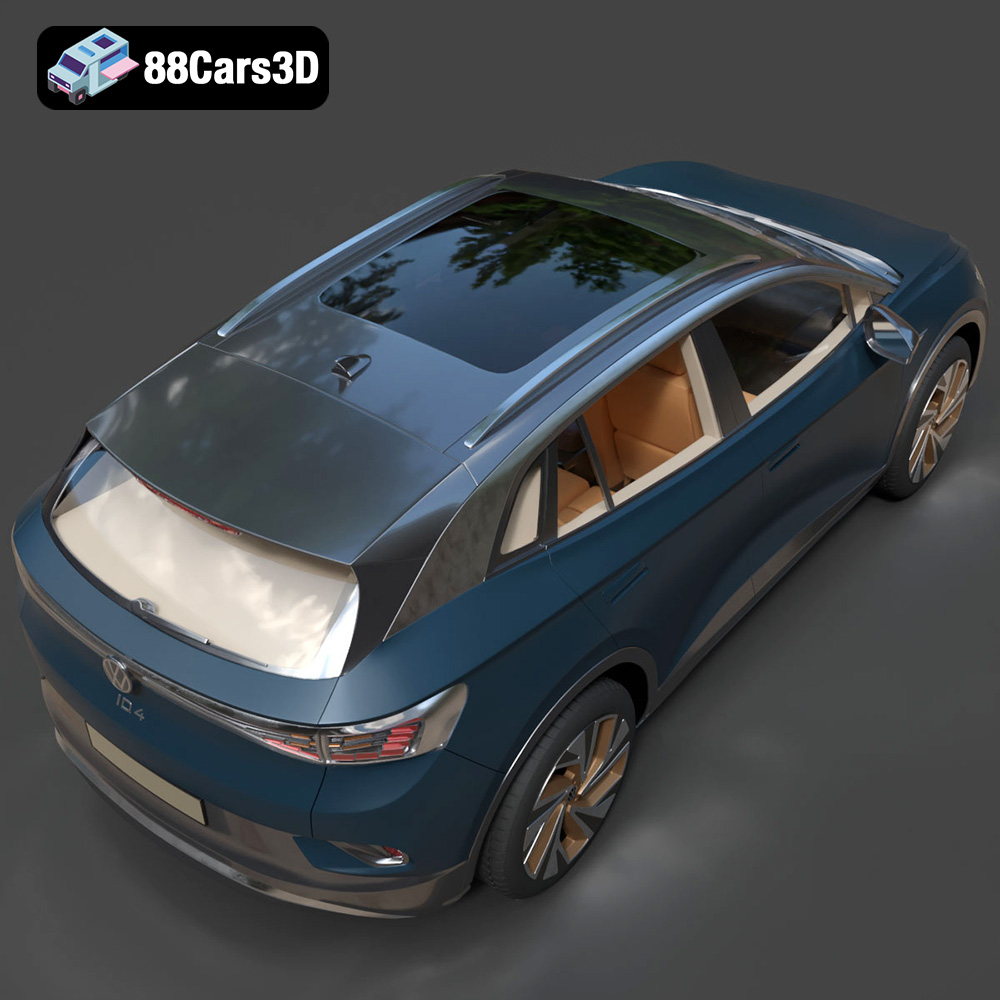
Experience exceptional realism with the Volkswagen ID4 2021 3D Model. This extensively detailed model perfectly captures the aerodynamic curves and modern design of the popular electric vehicle, providing an accurate representation suitable for professional digital environments.
Engineered with precision, this model features clean geometry, accurate proportions, and realistic materials. The intricately modeled interior and exterior elements ensure seamless integration into close-up shots and demanding digital scenes.
Ideal for a wide range of professional applications, this model is perfect for automotive visualization, game development, rendering, AR/VR experiences, and interactive simulations.
$19.99
.arvr
.blend
.car3dmodel
.crossover
.electricvehicle
.ev
.fbx
.gameasset
.glb
.id4
.max
.obj
.ply
.rendering
.simulation
.stl
.unreal
.volkswagen
SUV