Get 20% OFF All Premium 3D & STL Models!

In the dynamic world of digital content creation, the quest for realism and efficiency is ceaseless. From cinematic blockbusters and immersive video games to architectural visualizations and cutting-edge augmented reality experiences, the demand for meticulously crafted 3D assets is paramount. Automotive visualization, in particular, stands at the forefront of this evolution, requiring an unparalleled degree of precision and detail to bring vehicles to life on screen. A high-quality 3D car model is not just a digital object; it’s the foundation upon which entire digital narratives are built, marketing campaigns are launched, and interactive experiences are realized.
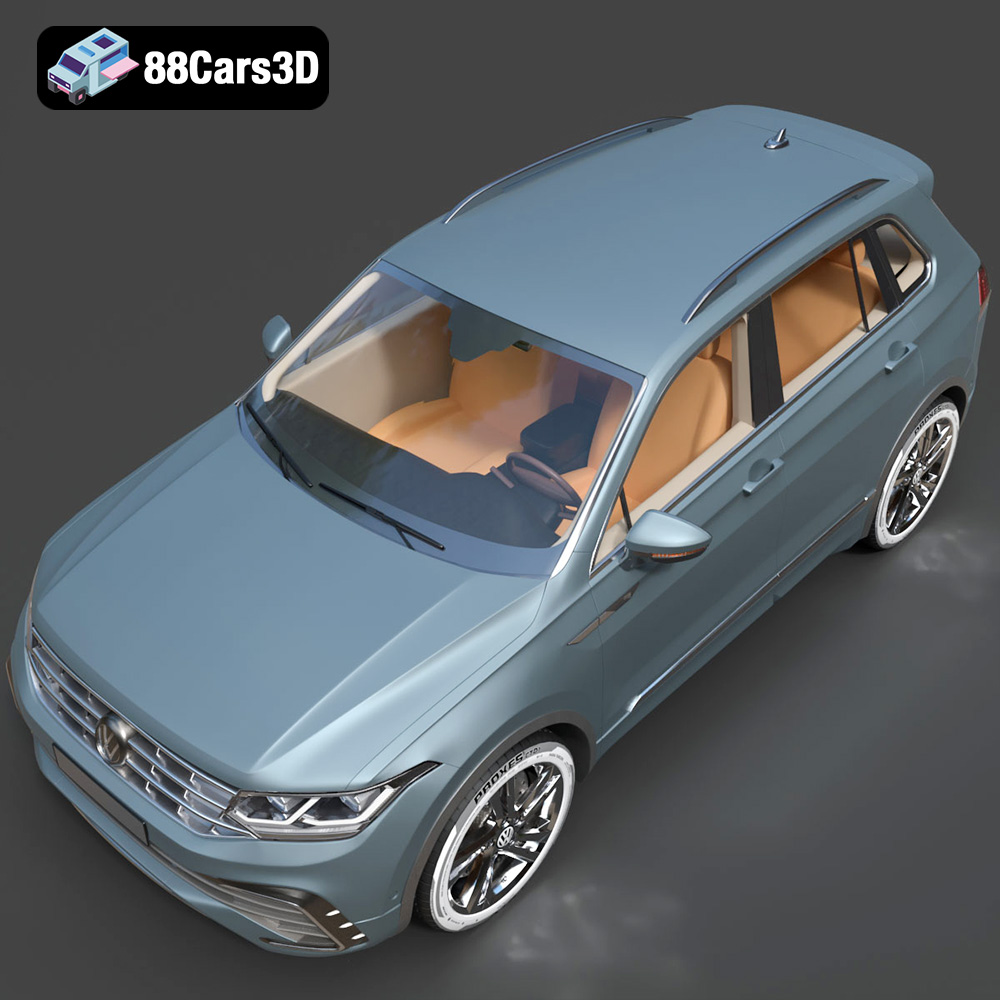
The core challenge lies in finding assets that seamlessly integrate into diverse professional pipelines, offering both visual fidelity and technical robustness. This is where models like the Volkswagen Tiguan 2021 3D Model shine. This exceptional digital replica embodies the modern styling and sophisticated details of the popular SUV, engineered with an emphasis on performance and visual fidelity. Its clean geometry, accurate proportions, and realistic materials make it an outstanding asset for a wide array of digital projects. Whether you’re a game developer striving for authentic vehicle physics, an architect needing to populate a scene with a lifelike car, or a marketing agency crafting compelling visual narratives, the quality of your 3D car models directly impacts the success of your project.
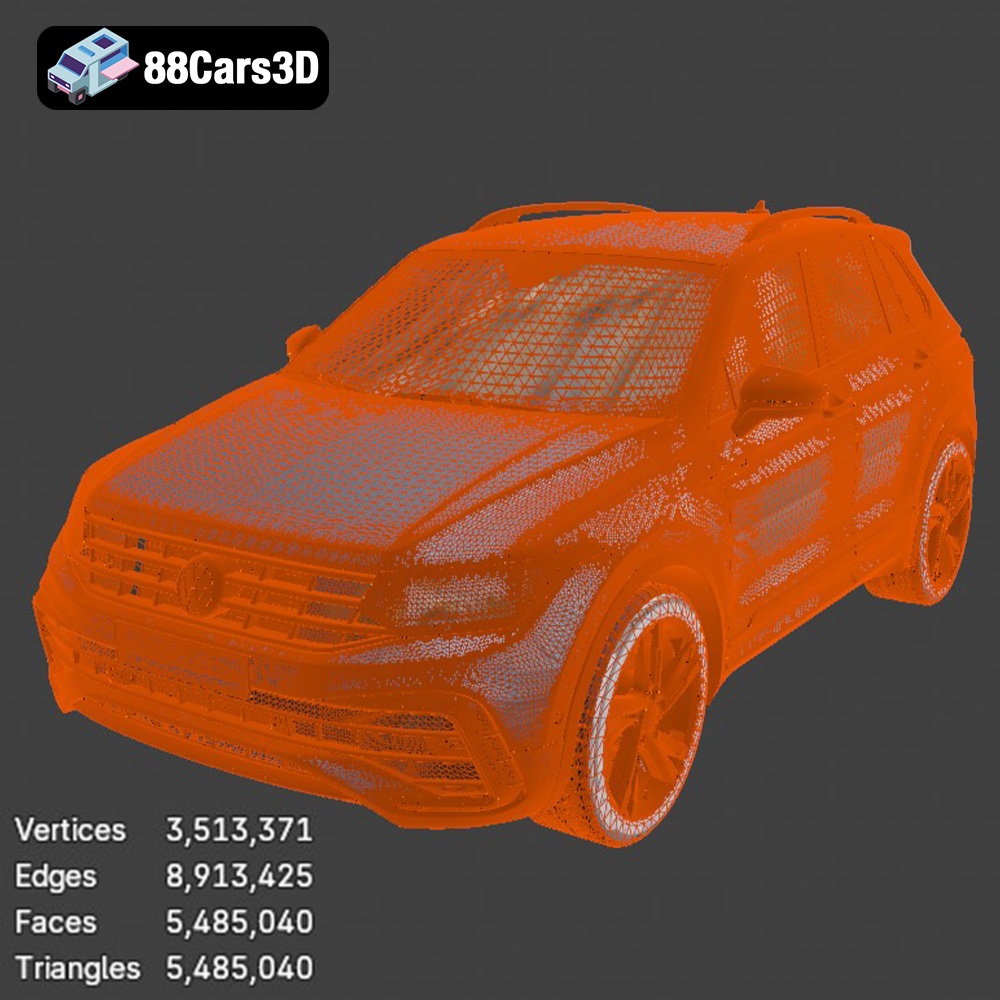
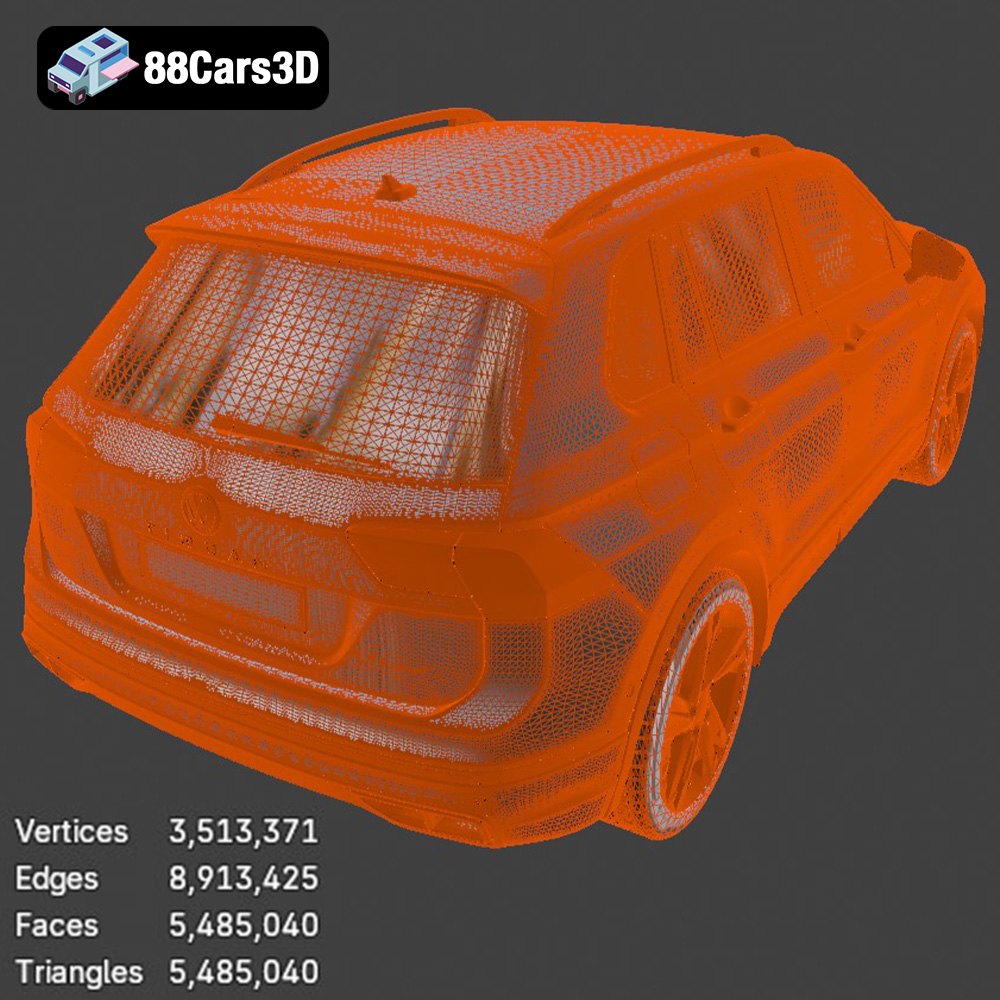
The digital automotive industry demands nothing less than perfection. Every curve, every reflection, and every material detail must be precisely replicated to achieve photorealism. Low-quality models often come with inherent issues like poor topology, stretched UVs, and unoptimized material setups, which can severely hinder a project’s progress and final output. Investing in a professionally built 3D car model, such as those available on 88cars3d.com, provides a robust starting point that saves countless hours in rectification and optimization.
A high-quality 3D car model starts with meticulous attention to design accuracy. This means replicating the real-world vehicle’s dimensions, curves, and unique styling cues with extreme precision. For instance, the Volkswagen Tiguan 2021 3D Model is engineered to perfectly capture the modern styling and dynamic stance of the actual SUV. This level of accuracy is critical for applications like automotive configurators, marketing materials, and forensic animations, where deviations from the original design are simply unacceptable. Incorrect proportions can immediately break immersion and undermine the credibility of the entire visualization, regardless of how well other elements are rendered.
Beyond geometric accuracy, the visual appeal of a 3D car model is heavily dependent on its materials and textures. Realistic paint shaders, accurate tire treads, detailed interior fabrics, and convincing glass reflections are what elevate a model from passable to professional. These elements require sophisticated PBR (Physically Based Rendering) materials that react appropriately to light in various environments. A well-structured UV layout is essential for applying these textures without distortion and for allowing artists to easily customize the vehicle’s appearance, perhaps for different trim levels or branding. The included materials in high-fidelity models are often pre-calibrated to deliver stunning results straight out of the box, significantly accelerating the rendering process.
The versatility of a 3D model is often defined by the range and quality of its available file formats. Each format serves specific purposes and is optimized for different software, engines, or end-use scenarios. Understanding these distinctions is crucial for selecting the right asset for your project and ensuring a smooth workflow. The Volkswagen Tiguan 2021 3D Model, for example, is available in a comprehensive suite of formats, catering to nearly any professional pipeline.
The .blend file format is native to Blender, the popular open-source 3D creation suite. When a 3D car model like the Tiguan is provided in .blend format, it typically includes not just the raw mesh data, but also the full Blender scene setup. This means all materials (often PBR-ready), textures, lighting, and even camera setups are preserved. Artists working in Blender gain maximum flexibility for customization, animation, and rendering with Cycles or Eevee. It’s the ideal format for users who want to dive deep into the model’s structure, modify its components, or render it within the Blender ecosystem, ensuring perfect integration with their existing Blender projects.
.fbx (Filmbox) is one of the most widely adopted proprietary file formats for 3D data exchange, especially within game development and animation. Developed by Autodesk, it supports geometry, materials, textures, bone rigs, and animations. Its robust nature makes it ideal for transferring 3D car models to game engines like Unreal Engine and Unity, where it ensures that all key elements like mesh data, UVs, and material assignments are correctly imported. For the Volkswagen Tiguan 2021 3D Model, an .fbx file would be optimized for real-time performance, potentially including LODs (Levels of Detail) and collision meshes, making it truly game-engine ready.
The .obj (Wavefront Object) format is a universal standard for storing 3D geometry. It’s a simple, widely supported format that describes only the geometry (vertices, normals, texture coordinates, and faces) and references external material (.mtl) files. While it doesn’t support advanced features like animation or rigging, its universality makes it an excellent choice for cross-software compatibility. Almost every 3D application can import and export .obj files, making it a reliable interchange format for basic mesh data of 3D car models when the primary focus is on geometry rather than a complex scene setup.
.glb (GL Transmission Format Binary) is the binary version of glTF, a royalty-free specification for 3D scenes and models. It’s quickly becoming the standard for 3D content delivery on the web, in AR (Augmented Reality), and VR (Virtual Reality) applications due to its efficiency and compactness. A single .glb file can embed all textures, materials, and animations, making it extremely easy to share and load. For models like the Volkswagen Tiguan 2021 3D Model, .glb ensures optimal performance in web viewers, Snapchat lenses, or AR apps, enabling interactive 3D experiences directly in a browser or on mobile devices.
The .stl (Stereolithography) format is the de facto standard for 3D printing. It represents a 3D object as a collection of unconnected triangular facets, making it simple for 3D printers to interpret and build the physical object layer by layer. While it lacks color, texture, or material information, its simplicity and widespread support make it indispensable for prototyping and manufacturing. When designing custom car accessories or scale models based on a digital asset, an .stl version of the Volkswagen Tiguan 2021 3D Model would provide the necessary geometry for accurate physical production.
.ply (Polygon File Format or Stanford Triangle Format) is another format for storing 3D data, particularly useful for high-resolution scan data and academic applications. It can store a wider range of information than .obj, including color per vertex, transparency, and sometimes even material properties. While less common for general rendering, .ply files are valuable for precision mesh analysis, CAD applications, and scientific visualization where detailed vertex attributes are crucial. For specific engineering or analytical tasks involving a 3D car model, the .ply format offers a robust data structure.
The inclusion of a .unreal file (or specific Unreal Engine asset packages) signifies that the model is truly pre-configured for direct use within Unreal Engine. This often means the asset has been imported, optimized, materials set up with Unreal’s PBR shaders, LODs generated, and potentially even collision meshes created within the engine environment. For the Volkswagen Tiguan 2021 3D Model, this translates to an almost plug-and-play experience for Unreal developers, saving significant setup time and ensuring that the model adheres to engine best practices for performance and visual quality in real-time environments.
The .max file format is native to Autodesk 3ds Max, a leading software for 3D modeling, animation, and rendering in architectural visualization, film, and game development. A .max file contains all aspects of a 3ds Max scene, including geometry, modifiers, materials (often V-Ray or Corona ready), lighting setups, cameras, and animations. Providing the Volkswagen Tiguan 2021 3D Model in .max format gives 3ds Max users complete control over the asset, allowing for extensive customization, integration into complex scenes, and high-fidelity rendering with industry-standard renderers. It’s the ultimate package for professionals who rely on 3ds Max as their primary creative tool.
Professionals in automotive design and visualization constantly seek ways to streamline their workflows while elevating visual quality. High-end 3D car models serve as an invaluable starting point, providing a solid foundation upon which artists can build their projects without needing to spend countless hours on modeling from scratch. The Volkswagen Tiguan 2021 3D Model, with its clean geometry and versatile file formats, exemplifies this efficiency, allowing artists to focus on creative aspects rather than technical hurdles.
Blender artists leveraging the .blend file of the Volkswagen Tiguan 2021 3D Model will find a perfectly structured scene ready for customization. They can immediately begin experimenting with different paint finishes using Blender’s powerful shader editor, perhaps creating a metallic flake clear coat or a matte finish. The well-structured topology allows for easy modifications, such as opening doors, adjusting suspension, or adding custom accessories without distorting the mesh. Using Cycles or Eevee, artists can set up sophisticated lighting environments – from studio shots with softboxes to outdoor scenes with HDRI lighting – to achieve photorealistic renders. The model’s clean UVs ensure that any additional decals or texture maps, such as racing stripes or custom branding, can be applied flawlessly.
For 3ds Max users, the included .max file of the Volkswagen Tiguan 2021 3D Model opens up a world of advanced animation and rendering possibilities. Artists can use 3ds Max’s robust toolset to animate the vehicle’s components, such as wheels rotating, doors opening, or suspension reacting to terrain. Integration with industry-standard renderers like V-Ray or Corona allows for hyper-realistic renders, complete with global illumination, caustic effects, and accurate reflections. This is crucial for automotive commercials, product showcases, and high-fidelity architectural visualizations where the car needs to be presented in its best light. The clean mesh and material IDs facilitate rapid material adjustments and scene integration.
Achieving cinematic quality with 3D car models requires attention to detail that extends beyond basic rendering. This includes realistic tire deformation, dynamic dirt and wear effects, and convincing motion blur. Artists working with the Volkswagen Tiguan 2021 3D Model can leverage advanced techniques like displacement mapping for subtle surface imperfections, procedural textures for dynamic wear, and advanced rigging to simulate realistic suspension and tire physics for impressive animations. The model’s optimized topology ensures that these complex operations can be performed efficiently without bogging down the workstation, leading to faster iterations and superior final output.
The gaming industry and emerging AR/VR sectors are constantly pushing the boundaries of real-time rendering. For these applications, a 3D car model must not only look incredible but also perform flawlessly within strict computational budgets. Models like the Volkswagen Tiguan 2021 3D Model are specifically engineered with game development and immersive experiences in mind, offering a balance of visual fidelity and optimization that is critical for smooth, interactive performance.
Unreal Engine is a powerhouse for creating visually stunning real-time experiences. The availability of the Volkswagen Tiguan 2021 3D Model in .fbx and specific .unreal formats is a game-changer for developers. The .fbx format allows for straightforward import of geometry, UVs, and material assignments. Even better, the .unreal package often means the model comes with pre-configured materials using Unreal’s physically based rendering system, correctly scaled collision meshes, and potentially even LODs (Levels of Detail) that automatically swap out less complex versions of the model as the camera moves further away. This optimization is crucial for maintaining high frame rates in open-world games or detailed simulations, ensuring the Tiguan looks superb without crippling performance.
Augmented Reality (AR) and Virtual Reality (VR) demand highly optimized assets due to the real-time interactive nature and often limited processing power of devices. The .glb format of the Volkswagen Tiguan 2021 3D Model is perfectly suited for this. Its compact, single-file nature with embedded textures allows for quick loading and efficient rendering in AR/VR applications, whether it’s a virtual showroom experience on a mobile phone or an immersive test drive in a VR headset. Developers can use the Tiguan model to create interactive product demonstrations, virtual training simulations, or dynamic elements in a virtual world, all while maintaining a smooth and engaging user experience.
While digital visualization remains the primary use for many 3D car models, their utility extends into the physical realm through 3D printing. For designers, engineers, and hobbyists, the ability to transition from a digital concept to a tangible object is invaluable. The Volkswagen Tiguan 2021 3D Model, with its precise geometry and .stl format, bridges this gap, enabling physical prototyping and model creation.
3D printing allows for rapid prototyping of automotive components, scale models, or even custom accessories. An .stl file of the Volkswagen Tiguan 2021 3D Model provides a triangulated mesh that modern 3D printers can interpret to build a physical representation. This is crucial for design reviews, ergonomic testing of interior components, or simply creating collectible scale models. Engineers might use a printed prototype to evaluate fit and finish, while marketing teams could use physical models for promotional events, all derived from the same high-quality digital asset.
For successful 3D printing, the geometry of a model must be “watertight,” meaning it has no holes or non-manifold edges. A professionally crafted 3D car model, such as those found on 88cars3d.com, typically boasts clean, error-free geometry, making it inherently more suitable for 3D printing processes. While some minor preparation might still be needed depending on the printer and specific print requirements, starting with a solid, well-constructed mesh significantly reduces the effort required to make it print-ready, saving valuable time and material.
In a saturated market of digital assets, finding truly professional-grade 3D car models can be a daunting task. However, marketplaces like 88cars3d.com specialize in curating high-quality assets that meet the rigorous demands of various industries. When you acquire a model like the Volkswagen Tiguan 2021 3D Model from a reputable source, you’re not just purchasing files; you’re investing in a reliable asset that comes with the assurance of clean geometry, accurate proportions, and optimized setups for diverse applications.
88cars3d.com understands that different projects have different requirements. Their collection of 3D car models caters to a broad spectrum of needs, from photorealistic rendering to game development and AR/VR experiences. Each model, including the Volkswagen Tiguan 2021 3D Model, is thoroughly described, detailing its specifications and included file formats, allowing professionals to make informed decisions. This focus on quality and versatility ensures that artists and developers can quickly find and integrate assets that seamlessly fit into their creative vision.
Time is a critical resource in any professional project. By providing pre-optimized, multi-format 3D car models, 88cars3d.com helps streamline your pipeline. Instead of spending days or weeks modeling a vehicle from scratch, or endlessly fixing topology issues on a lesser-quality model, you can immediately jump into texturing, lighting, animation, or integration. This efficiency translates directly into reduced project timelines, lower costs, and the ability to deliver higher quality results faster, giving you a competitive edge in a demanding industry.
The journey from a blank digital canvas to a compelling visual experience is paved with high-quality assets. For automotive visualization, the 3D car model stands as the undisputed cornerstone. Its precision, detail, and technical robustness dictate the success of projects ranging from cinematic productions and immersive games to interactive AR/VR experiences and physical prototypes. The Volkswagen Tiguan 2021 3D Model serves as an excellent example of a versatile, professionally engineered asset, ready to integrate flawlessly into any demanding workflow.
By understanding the nuances of different file formats – from .blend and .max for comprehensive studio work, to .fbx and .unreal for real-time engines, and .glb for web-based applications – professionals can harness the full potential of such models. Sourcing these critical assets from reputable platforms like 88cars3d.com ensures that you’re investing in quality that will elevate your projects and accelerate your creative process. Embrace the power of premium 3D car models and unlock new possibilities in your digital automotive endeavors.
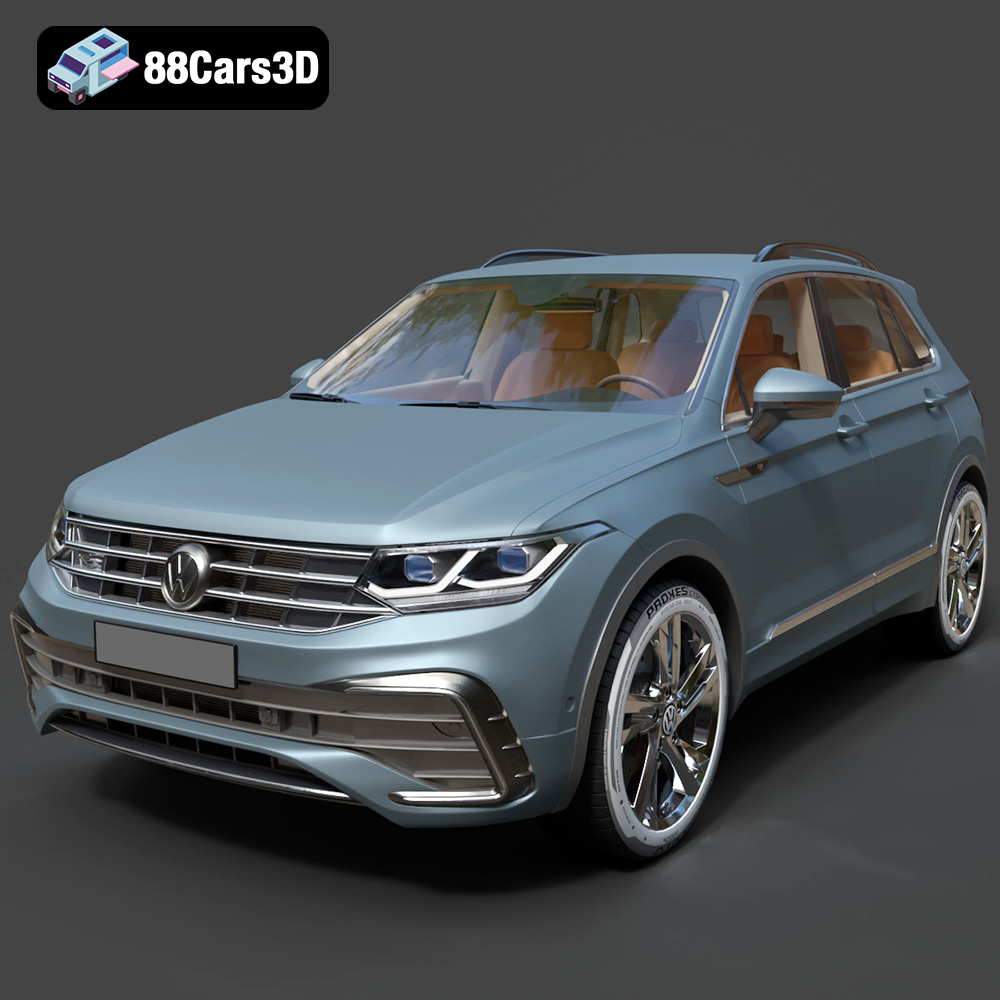
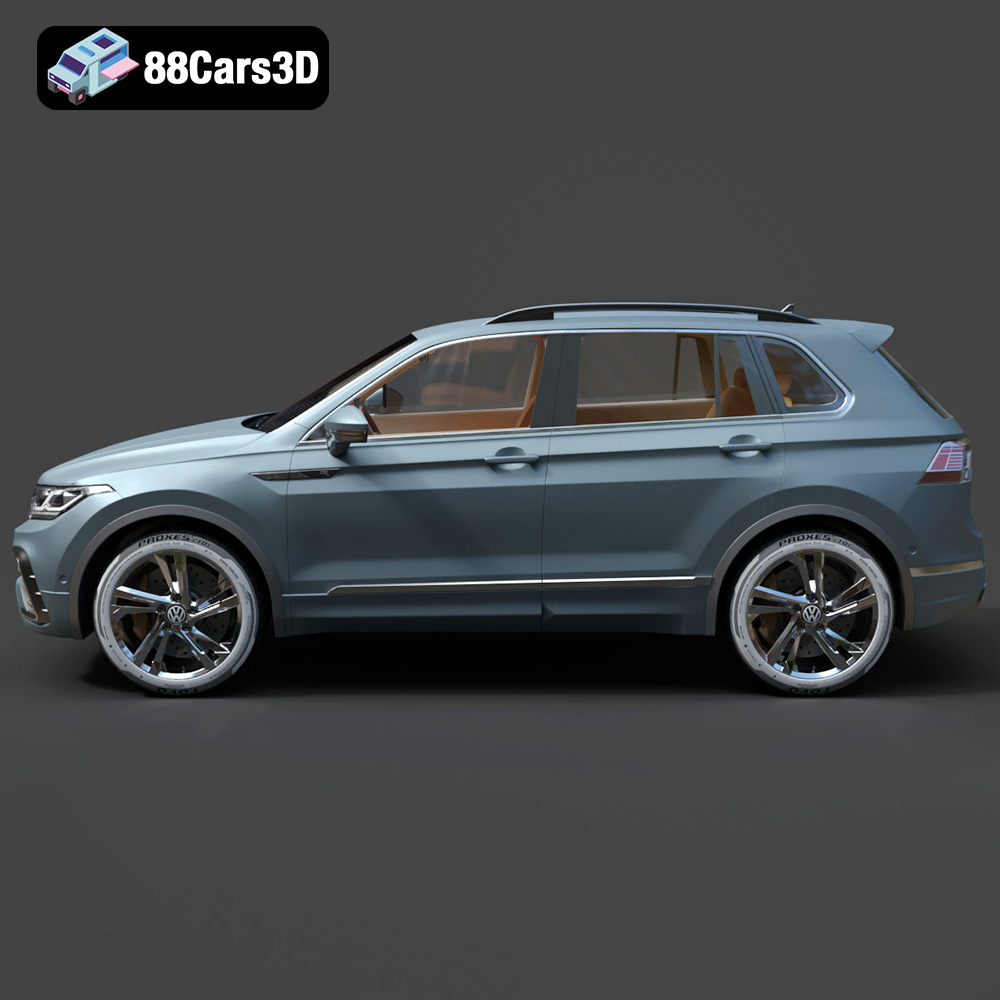
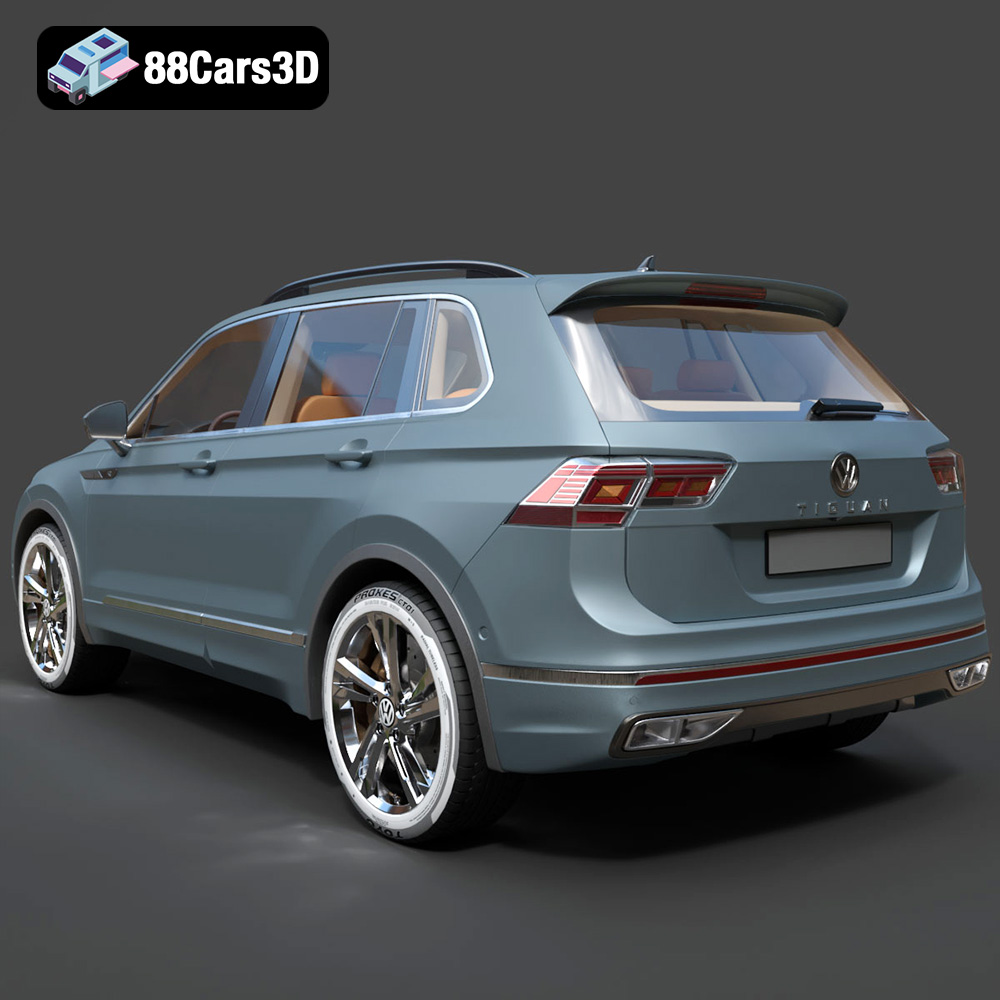
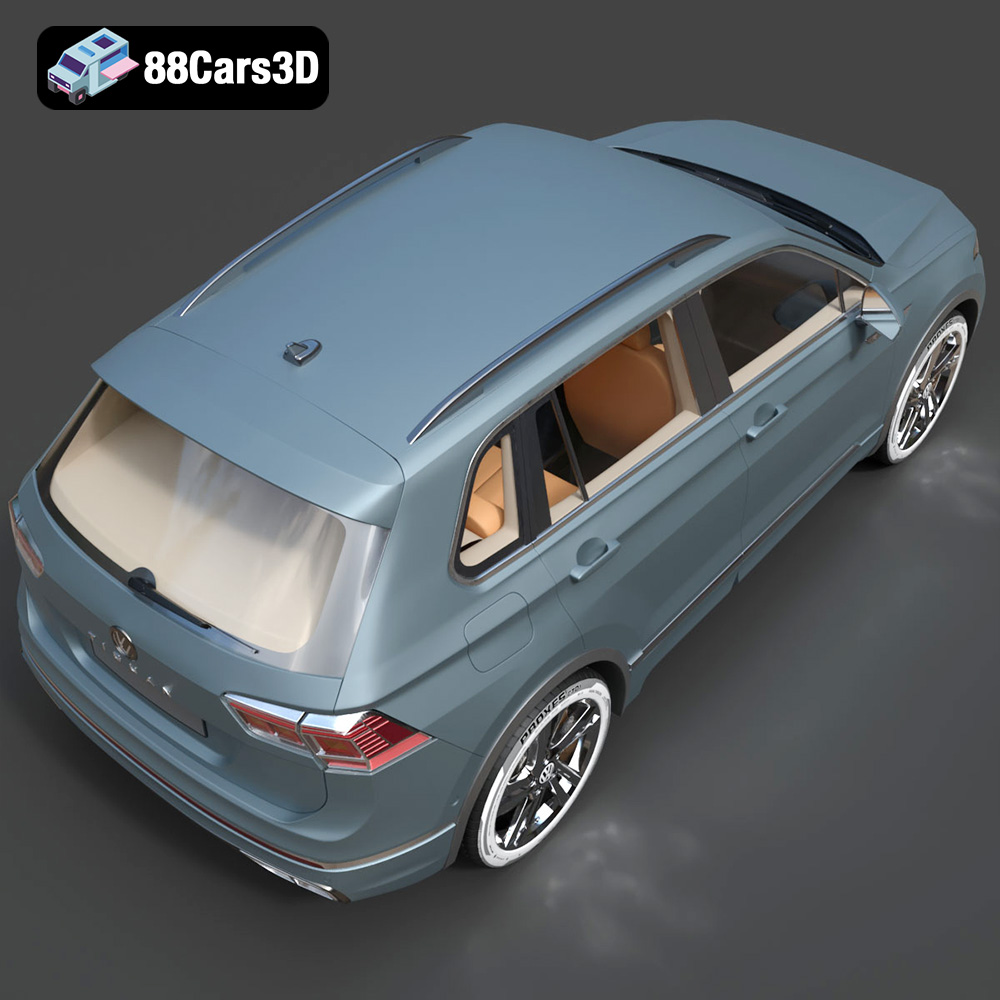
Experience the precision of the Volkswagen Tiguan 2021 3D Model, a realistic digital replica designed to meet professional standards. This model perfectly captures the modern styling, dynamic stance, and sophisticated details of the popular SUV, providing an exceptional asset for a diverse array of digital projects. Engineered with an emphasis on performance and visual fidelity, this 3D vehicle features clean geometry, accurate proportions, and realistic materials. The well-structured topology allows for seamless workflow integration, ensuring outstanding results in both tight studio close-ups and expansive dynamic environments. This versatile model is optimized for demanding applications, making it an excellent choice for game development, cinematic rendering, augmented and virtual reality (AR/VR) experiences, and architectural visualization. The comprehensive package is structured to integrate flawlessly into your preferred professional pipeline. Available file formats include: .blend – Editable Blender file with materials and lighting setup; .fbx – Game-engine ready format for Unreal Engine and Unity; .obj – Standard 3D model format compatible with all major software; .glb – Optimized for AR/VR and web-based visualization; .stl – Suitable for 3D printing and prototyping; .ply – Detailed polygon mesh for analysis and visualization; .unreal – Pre-configured for Unreal Engine use; .max – Editable 3ds Max file for rendering and animation.
$19.99
.arvr
.blend
.car3dmodel
.crossover
.fbx
.gameasset
.glb
.max
.obj
.ply
.rendering
.simulation
.stl
.tiguan
.unreal
.volkswagen
SUV