Get 20% OFF All Premium 3D & STL Models!

In today’s fast-paced digital landscape, the demand for high-fidelity 3D assets is more critical than ever. From blockbuster video games and cinematic automotive advertisements to cutting-edge AR/VR experiences and detailed engineering simulations, the underlying quality of a 3D model dictates the success of the final output. Photorealism, precise geometry, and seamless integration are not just desirable traits; they are fundamental requirements for professionals aiming to push the boundaries of visual fidelity and interactive engagement.
Within this intricate ecosystem, 3D car models stand out as particularly challenging assets to create due to their complex curves, intricate mechanical details, and the expectation of absolute accuracy. It’s a task that demands significant expertise, time, and computational resources. This is precisely why readily available, meticulously crafted models, such as the Volvo C40 Recharge 3D Model from 88cars3d.com, are invaluable. They empower artists, developers, and designers to bypass the arduous modeling phase and jump straight into production, leveraging assets that are already optimized and studio-ready. This approach accelerates workflows, reduces costs, and ensures a consistent standard of excellence across diverse projects.
The world of 3D modeling is vast, and a critical aspect of navigating it successfully is understanding the various file formats available. Each format serves specific purposes, optimized for different stages of the production pipeline, software ecosystems, or end-use applications. Selecting the correct format can significantly impact workflow efficiency, compatibility, and the final quality of your project. When sourcing professional assets, like those found on 88cars3d.com, it’s essential to know which format best suits your immediate and long-term needs. Let’s delve into the most common and crucial formats provided with high-quality 3D car models, using the Volvo C40 Recharge 3D Model as a prime example of versatility.
The .blend file format is the native format for Blender, a powerful open-source 3D creation suite. A .blend file typically encapsulates an entire scene, including not just the mesh data, but also materials, textures, lighting setups, camera positions, animations, and even scripts. For users deeply embedded in the Blender ecosystem, this is the most comprehensive and editable format. It allows for full control over every aspect of the model, from tweaking polygon topology to refining complex node-based material shaders. Artists can easily modify the Volvo C40 Recharge’s interior details, exterior paint, or lighting to fit specific rendering scenarios directly within Blender, making it ideal for those who prefer to customize extensively.
.fbx (Filmbox) is a proprietary file format developed by Autodesk, widely recognized as the industry standard for interoperability between various 3D software applications and game engines. It excels at transferring 3D model data, including meshes, materials, textures (often referenced rather than embedded), rigging, animations, and even cameras and lights. Its robustness makes it the go-to format for exporting assets like the Volvo C40 Recharge to game engines such as Unreal Engine and Unity, ensuring that complex hierarchical structures and animations are preserved. The .fbx format is designed for efficiency in pipelines where assets move between multiple specialized software packages.
.obj (Object) is one of the oldest and most universally supported 3D file formats. It’s a simple, text-based format primarily used to store geometric data, including vertices, faces, normals, and UV coordinates. While it can reference external material (.mtl) and texture files, it doesn’t support advanced features like animation or rigging. Its strength lies in its widespread compatibility; almost every 3D software can import and export .obj files. For basic mesh transfer or as a fallback format, the .obj version of the Volvo C40 Recharge ensures cross-software compatibility for almost any 3D artist, providing a clean mesh that can be further developed in their preferred application.
.glb (GL Transmission Format Binary) is an increasingly popular format optimized for efficient transmission and loading of 3D scenes and models in web and AR/VR applications. It’s the binary version of glTF, which packages all necessary assets (geometry, materials, textures, animations) into a single, compact file. This “all-in-one” characteristic makes .glb incredibly efficient for real-time rendering and deployment in environments where file size and load times are critical, such as augmented reality experiences on mobile devices or interactive web viewers. The .glb version of the Volvo C40 Recharge 3D Model is perfectly suited for showcasing the vehicle in a browser-based configurator or an immersive AR experience.
The .unreal format, while not a standalone file type in the traditional sense, refers to assets specifically packaged and optimized for direct import into Unreal Engine. This often implies a curated asset with appropriate material setups, collision meshes, LODs (Levels of Detail), and potentially even Blueprint integrations, ready to be dropped into a project with minimal setup. For game developers working with Unreal Engine, having a pre-configured .unreal version of the Volvo C40 Recharge dramatically accelerates development, ensuring performance and visual fidelity out-of-the-box.
.stl (Stereolithography) is the most common file format for 3D printing. It represents a 3D model as a series of connected triangles (a tessellation of the surface geometry) without color, texture, or other CAD attributes. Its simplicity makes it universally compatible with 3D printers and slicing software. When a physical prototype of the Volvo C40 Recharge is needed for scale models, ergonomic studies, or promotional items, the .stl version provides the clean mesh data required for accurate additive manufacturing.
.ply (Polygon File Format or Stanford Triangle Format) is designed to store data from 3D scanners, making it excellent for precision mesh data. It can store a variety of properties beyond just geometry, including color, transparency, texture coordinates, and even properties specific to the object’s surface or material. While not as universally used as .obj or .fbx for general modeling, .ply is valuable for scientific visualization, 3D scanning workflows, and applications requiring highly detailed and attributed mesh information, such as forensic analysis or certain types of simulations. For detailed analysis or rendering specific aspects of the Volvo C40 Recharge’s surface, the .ply format offers a robust solution.
Finally, .max is the native file format for Autodesk 3ds Max, one of the leading software packages for 3D modeling, animation, and rendering in the design and entertainment industries. Similar to .blend, a .max file contains the complete scene data, allowing for full editing capabilities within 3ds Max. This format is crucial for professionals who use 3ds Max as their primary tool for high-end automotive rendering, architectural visualization, or complex animation sequences involving the Volvo C40 Recharge. It offers access to all modifiers, materials, and scene settings, making it perfect for custom high-resolution renders and animations.
The digital age has transformed the way products are designed, marketed, and experienced. In the automotive sector, 3D car models are no longer just supplementary visuals; they are integral to every stage of a vehicle’s lifecycle, from conceptualization to consumer engagement. The demand for meticulous detail, accurate proportions, and realistic material representation has never been higher, setting a new benchmark for excellence.
High-quality 3D models serve as the foundational bridge between a designer’s vision and its tangible manifestation. Before a single physical component is manufactured, automotive designers rely on advanced 3D modeling to iterate on shapes, test aerodynamics, and visualize color and trim options. The 88cars3d.com Volvo C40 Recharge 3D Model, with its “incredibly accurate proportions and sleek styling,” provides an ideal starting point for such explorations. Its precise geometry allows for immediate application in design reviews, eliminating costly physical prototypes in early stages and significantly compressing the development timeline.
In marketing and advertising, the ability to render a vehicle in a multitude of virtual environments with absolute realism is paramount. Consumers expect to see every curve, every reflection, and every interior stitch in photographic detail. The Volvo C40 Recharge 3D Model delivers on this promise, featuring a “fully modeled interior with detailed dashboard components and seating.” This level of detail is crucial for close-up shots, virtual showrooms, and interactive configurators, allowing brands to tell compelling visual stories that resonate with potential buyers. Such assets are not just pictures; they are experiences.
Automotive rendering is an art form that merges technical precision with creative vision. The goal is to produce images and animations so lifelike that they are indistinguishable from photographs. Achieving this requires not only powerful software and rendering engines but also exceptionally well-modeled assets. The Volvo C40 Recharge 3D Model provides a robust foundation for achieving stunning results in any rendering pipeline.
For professionals utilizing industry-standard rendering packages like Autodesk 3ds Max or Blender, the Volvo C40 Recharge 3D Model is immediately ready for high-end production. The included .max and .blend files often come with pre-configured materials, lighting setups, and optimized geometry, significantly reducing setup time. In 3ds Max, artists can leverage powerful renderers like V-Ray or Corona to dial in photorealistic shaders for the car’s paint, glass, and intricate interior materials. The model’s “realistic textures” ensure that PBR (Physically Based Rendering) workflows yield authentic reflections, refractions, and surface imperfections. Similarly, Blender users can harness Cycles or Eevee, utilizing the model’s clean UVs to apply detailed textures and achieve stunning results, whether for static renders or animated sequences showcasing the vehicle’s dynamic presence.
The success of any automotive rendering hinges on the quality of its materials and textures. The Volvo C40 Recharge 3D Model is described as having “realistic textures,” which implies a sophisticated approach to material definition. This includes carefully painted diffuse maps, highly detailed normal or bump maps for subtle surface variations, roughness/glossiness maps for accurate reflections, and metallic maps for the car’s body and trim. These maps, combined with the model’s optimized geometry, allow for the creation of intricate shader networks in rendering engines. For instance, creating a multi-layered car paint shader that reacts realistically to light, showing clear coat reflections and metallic flake underneath, is made possible by the model’s precise UV unwrapping and texture quality.
Beyond static images, the Volvo C40 Recharge 3D Model is an excellent asset for crafting dynamic visual narratives. Imagine an animated sequence showcasing the car driving through a vibrant city, or a virtual studio environment highlighting its sleek design. With the editable .max or .blend files, animators can easily rig the vehicle, animate its wheels, doors, or even suspension. The model’s “incredibly accurate proportions” ensure that these animations look natural and convincing, whether for a television commercial, an online promotional video, or an interactive client presentation. The level of detail in the interior further supports shots that zoom in on the dashboard or passenger cabin, offering a complete and immersive experience.
The realm of interactive entertainment and real-time visualization demands a unique set of considerations for 3D assets. Performance, alongside visual fidelity, is paramount. Game developers and AR/VR creators constantly seek models that strike this delicate balance, offering stunning visuals without bogging down frame rates. The Volvo C40 Recharge 3D Model, with its “clean, optimized geometry,” is perfectly poised for these challenging environments.
The availability of the Volvo C40 Recharge in .fbx and specifically .unreal formats directly addresses the needs of game developers using Unreal Engine and Unity. The .fbx format is a workhorse for transferring complex models into these engines, preserving mesh, UVs, and often even basic material assignments. For Unreal Engine users, the dedicated .unreal asset takes this a step further, often arriving pre-configured with materials, collision meshes, and potentially even LODs (Levels of Detail). This means less time spent on setup and optimization and more time on gameplay development. Developers can quickly integrate the Volvo C40 Recharge into racing games, open-world simulations, or virtual showrooms, confident in its technical readiness.
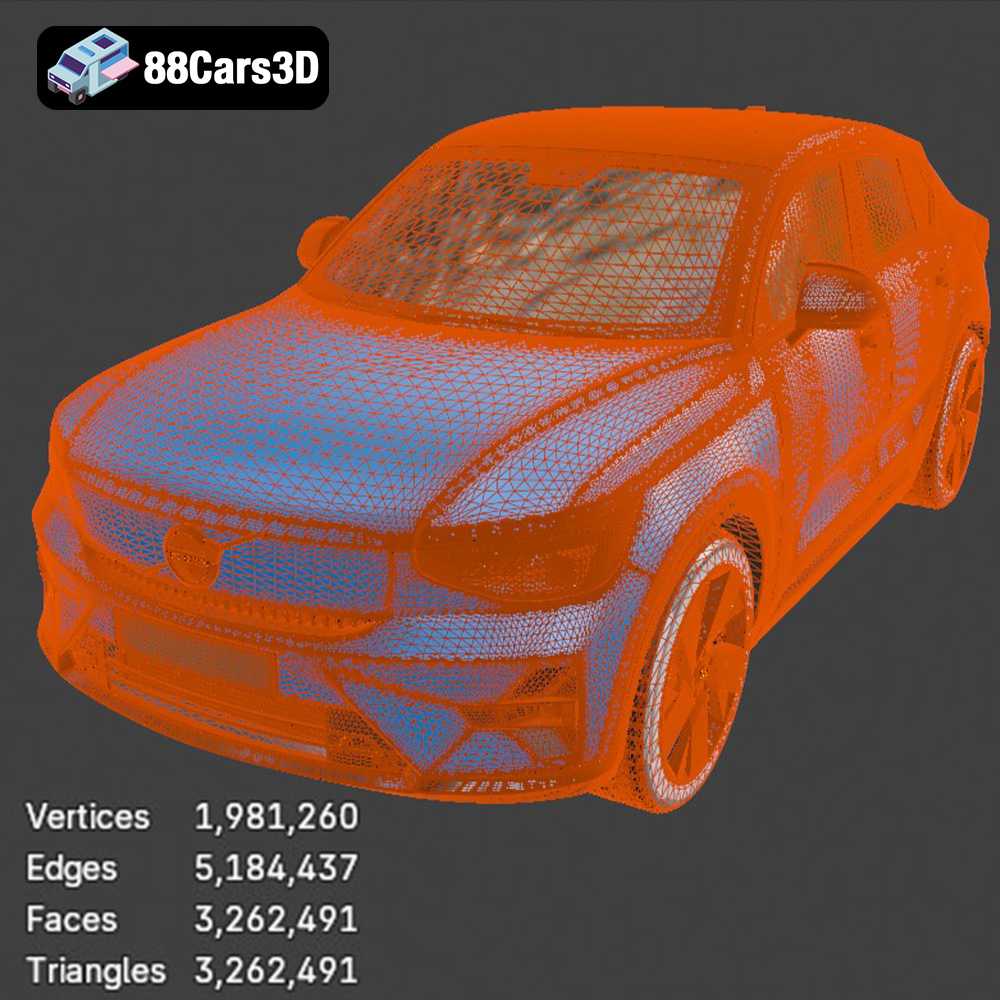
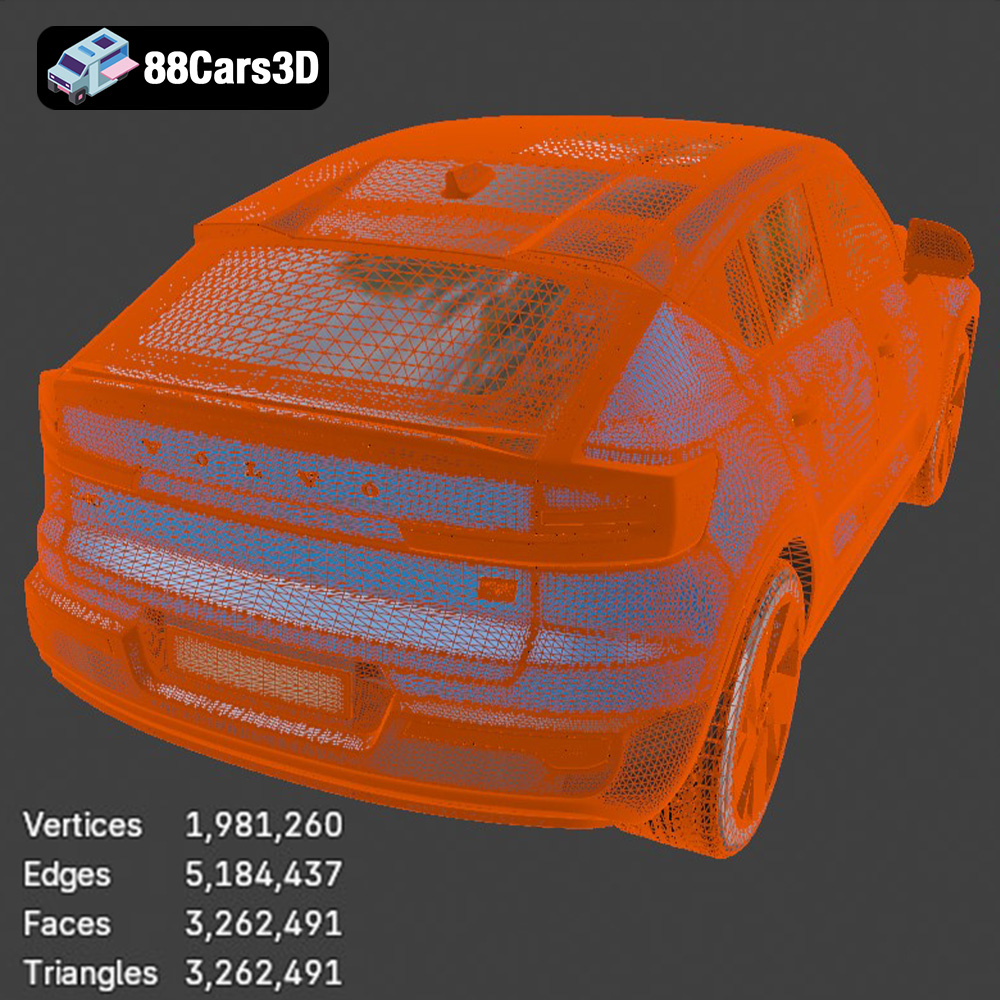
Achieving realistic visuals in real-time requires intelligent optimization. While the Volvo C40 Recharge 3D Model boasts high detail, its “clean, optimized geometry” suggests it’s designed with performance in mind. This typically involves efficient polygon distribution, well-organized UV maps to minimize texture atlases, and potentially even pre-baked ambient occlusion or lighting information for static objects. For game development, strategies like creating multiple Levels of Detail (LODs) are crucial. A high-poly version can be used for close-up views, while progressively lower-poly versions are swapped in as the vehicle moves further from the camera, maintaining smooth frame rates. The quality of textures and materials also plays a significant role; PBR textures ensure that the car looks consistent and realistic under various lighting conditions in the game engine’s real-time renderer.
The burgeoning fields of Augmented Reality (AR) and Virtual Reality (VR) thrive on optimized assets. The .glb format, specifically designed for web and real-time distribution, makes the Volvo C40 Recharge 3D Model an excellent candidate for these immersive platforms. Whether creating a virtual test drive in VR, an AR application that lets users “place” the car in their driveway via a smartphone, or an interactive training module, the .glb version ensures quick loading times and smooth performance. Its compact, self-contained nature simplifies deployment, allowing creators to focus on the interactive elements of their AR/VR projects without extensive asset preparation. The model’s detailed exterior and interior translate directly into a highly engaging and believable virtual object for users to interact with.
The utility of a high-quality 3D car model extends far beyond traditional rendering and game development. Its precise geometry and comprehensive data make it an invaluable tool for a variety of specialized applications, from engineering analysis to physical prototyping.
For engineers and product designers, 3D models are essential for conducting simulations. The “detailed polygon mesh” of the Volvo C40 Recharge 3D Model, particularly accessible through formats like .ply, can be used for computational fluid dynamics (CFD) to analyze aerodynamic performance, or for finite element analysis (FEA) to test structural integrity and crashworthiness in a virtual environment. While specific simulation-ready meshes often require further preparation (e.g., watertight geometry, clean quad topology), a high-quality base model like this provides an excellent starting point, ensuring that simulation results are based on accurate vehicle dimensions and forms. This allows for iterative design improvements before physical manufacturing begins.
The rise of 3D printing has revolutionized prototyping and small-batch manufacturing. Having the Volvo C40 Recharge 3D Model available in .stl format opens up possibilities for creating physical scale models, functional prototypes, or even custom parts for enthusiasts. Designers can print detailed replicas of the car to study its ergonomics, evaluate different finishes, or present physical mock-ups to clients. The .stl format’s simplicity ensures compatibility with virtually all 3D printers and slicer software, making the transition from digital asset to physical object seamless. This capability enhances both the design validation process and provides unique merchandising opportunities.
The automotive industry is increasingly moving towards digital sales experiences. High-quality 3D car models are the backbone of interactive online configurators and virtual showrooms, allowing customers to explore vehicles in unprecedented detail. The Volvo C40 Recharge 3D Model, with its detailed interior and multiple available formats, is perfect for such applications. Customers can change paint colors, wheel designs, interior upholstery, and even view the car from every angle, inside and out. These interactive tools not only enhance the customer experience but also streamline the sales process, providing a rich, informative, and engaging way to explore complex products. The optimization for AR/VR via .glb further enhances these possibilities, allowing for “try before you buy” experiences in the comfort of one’s home.
The landscape of 3D visualization and interactive experiences is continually evolving, demanding assets that are not only visually stunning but also technically robust and versatile. High-quality 3D car models are at the forefront of this evolution, serving as indispensable tools across design, marketing, entertainment, and engineering. The comprehensive features and multi-format availability of models like the Volvo C40 Recharge 3D Model underscore their critical role in empowering professionals to achieve their creative and technical goals.
From producing photorealistic renders in 3ds Max and Blender, optimizing for real-time game engines like Unreal, to enabling immersive AR/VR experiences and precision 3D printing, a well-crafted 3D car model acts as a catalyst for innovation. By choosing assets that offer “incredibly accurate proportions, sleek styling, and realistic textures,” professionals can significantly reduce production times, enhance visual fidelity, and ensure seamless integration into complex workflows.
Exploring marketplaces like 88cars3d.com offers a streamlined pathway to acquiring such premium resources. The Volvo C40 Recharge 3D Model exemplifies the commitment to quality and technical readiness that discerning professionals require. Whether you’re a seasoned automotive renderer, a game developer pushing visual boundaries, or an engineer seeking precise digital twins for simulation, investing in top-tier 3D car models is a strategic decision that drives efficiency and elevates output to new heights. Elevate your next project by leveraging assets that are designed for success, right out of the box.
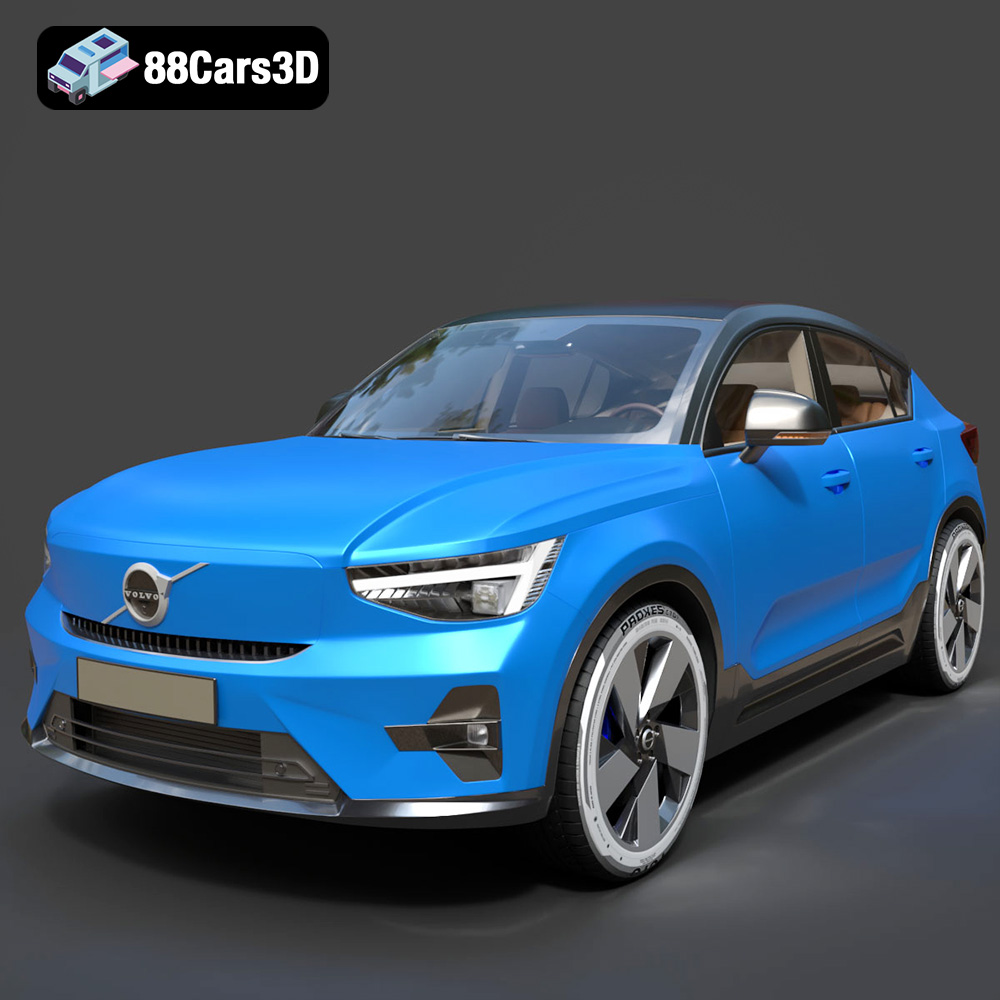
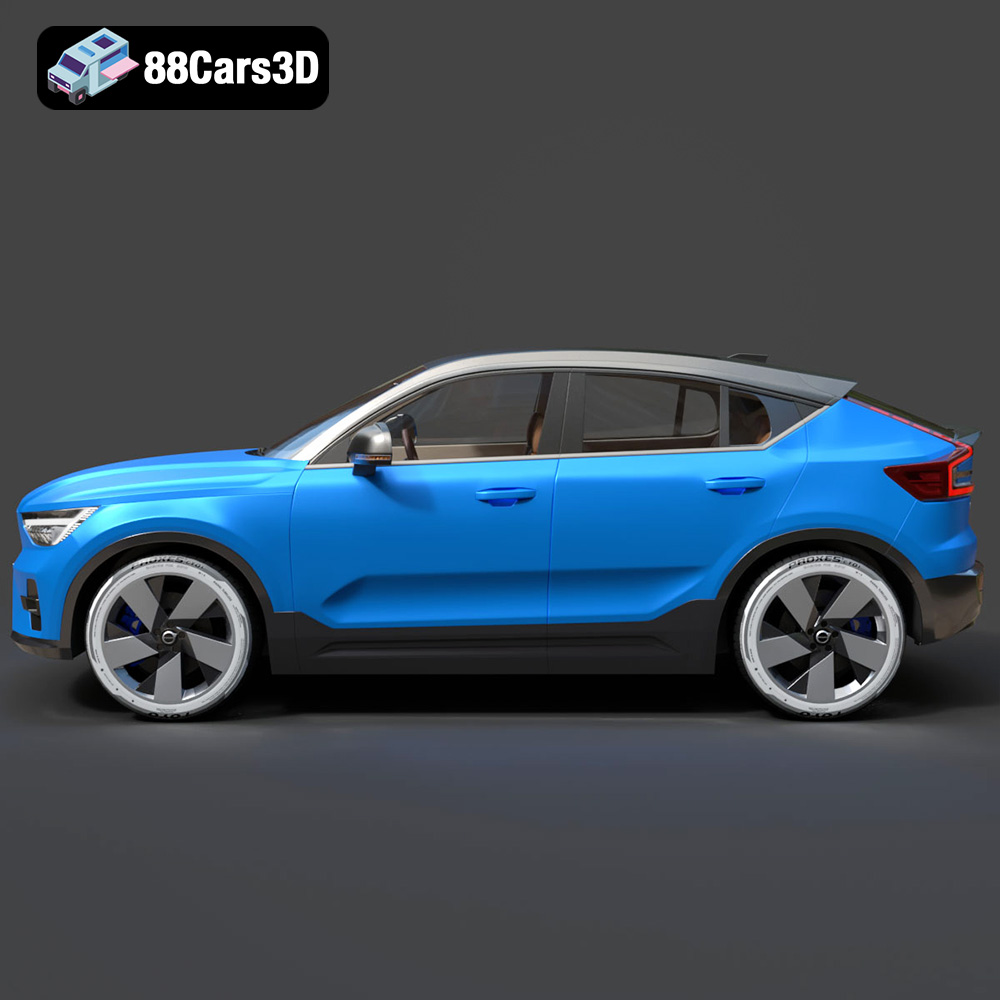
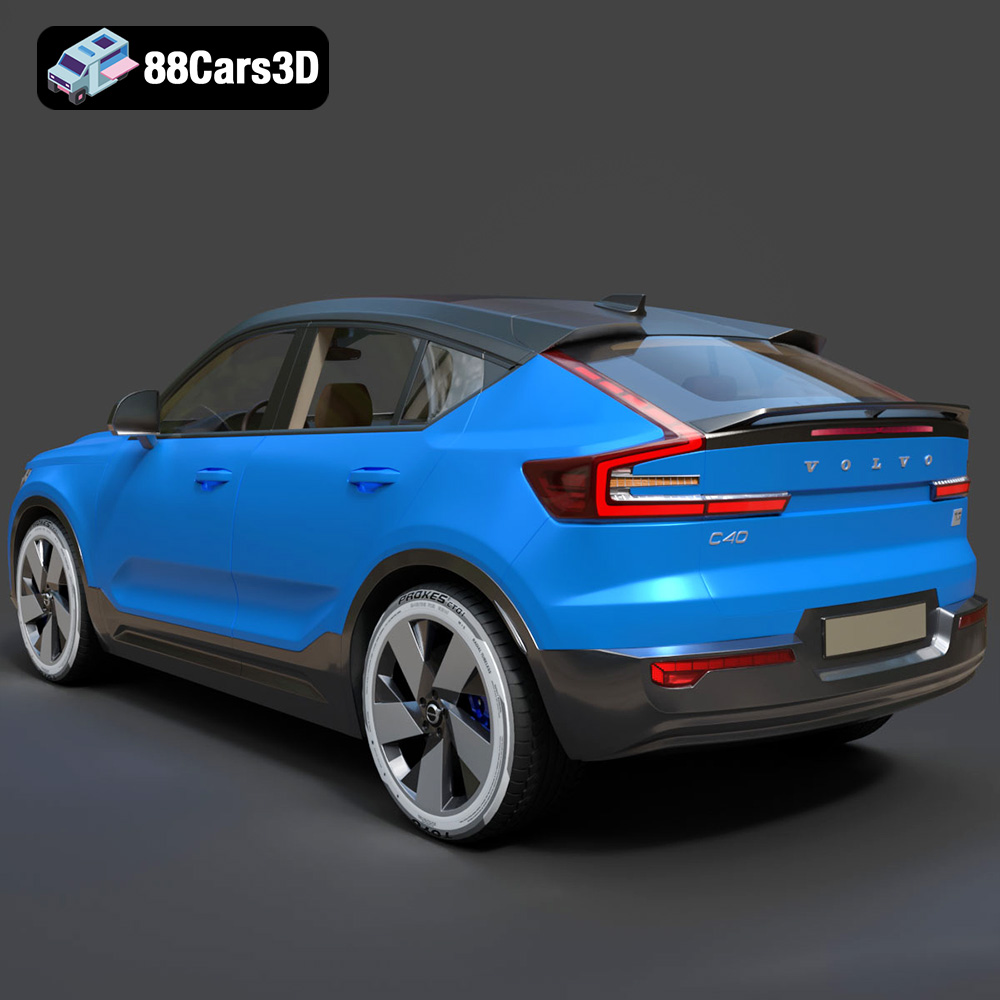
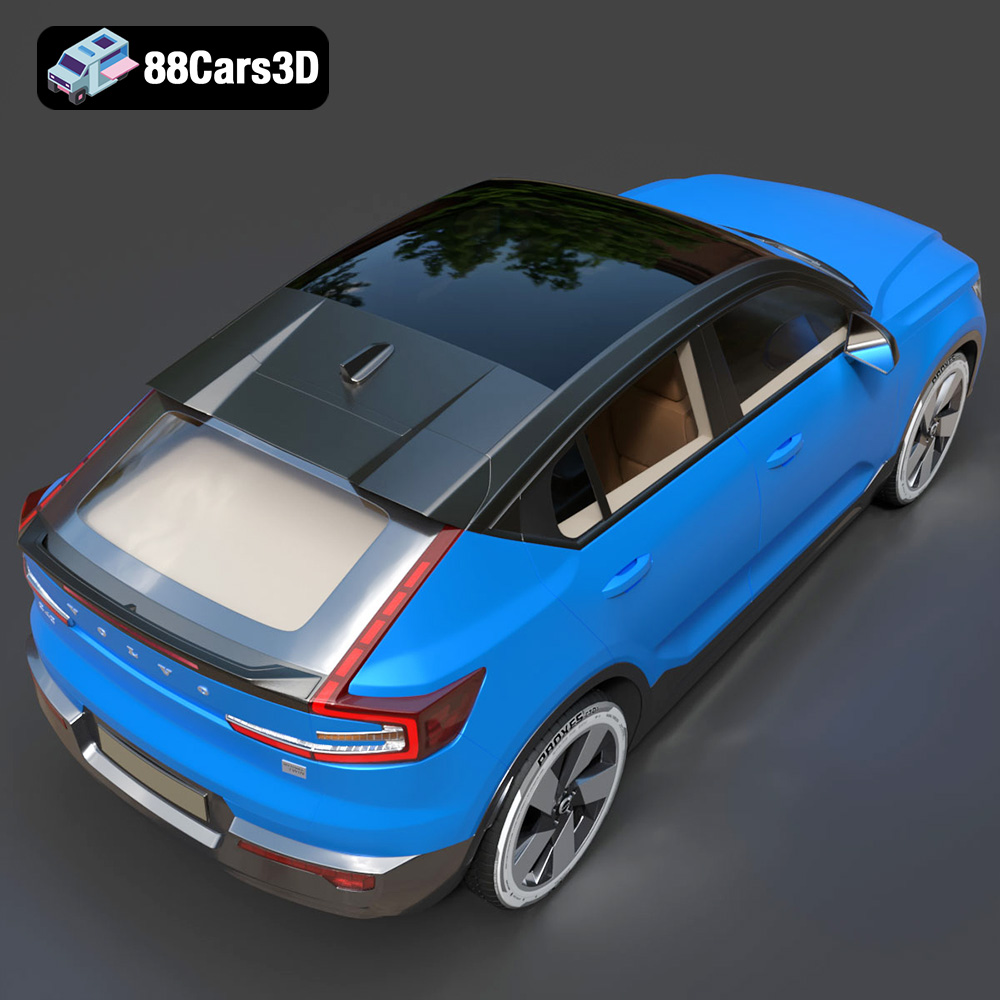
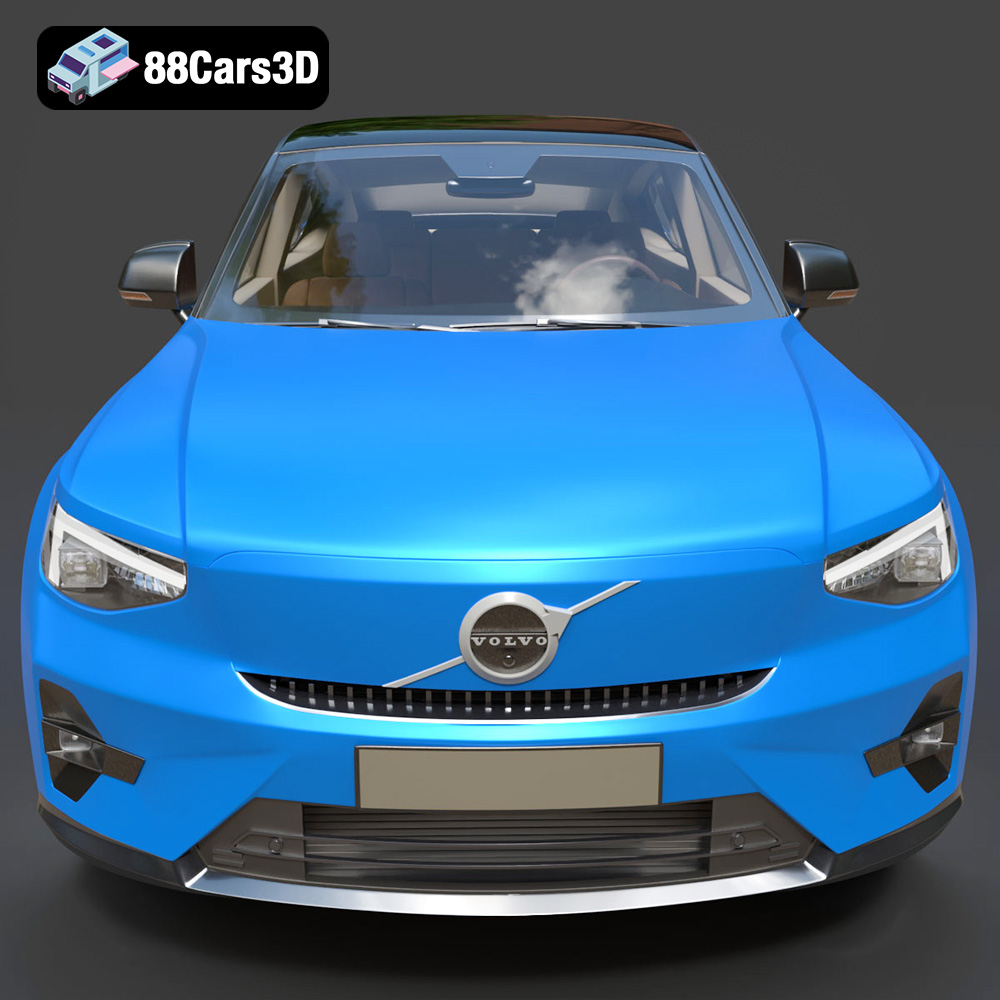
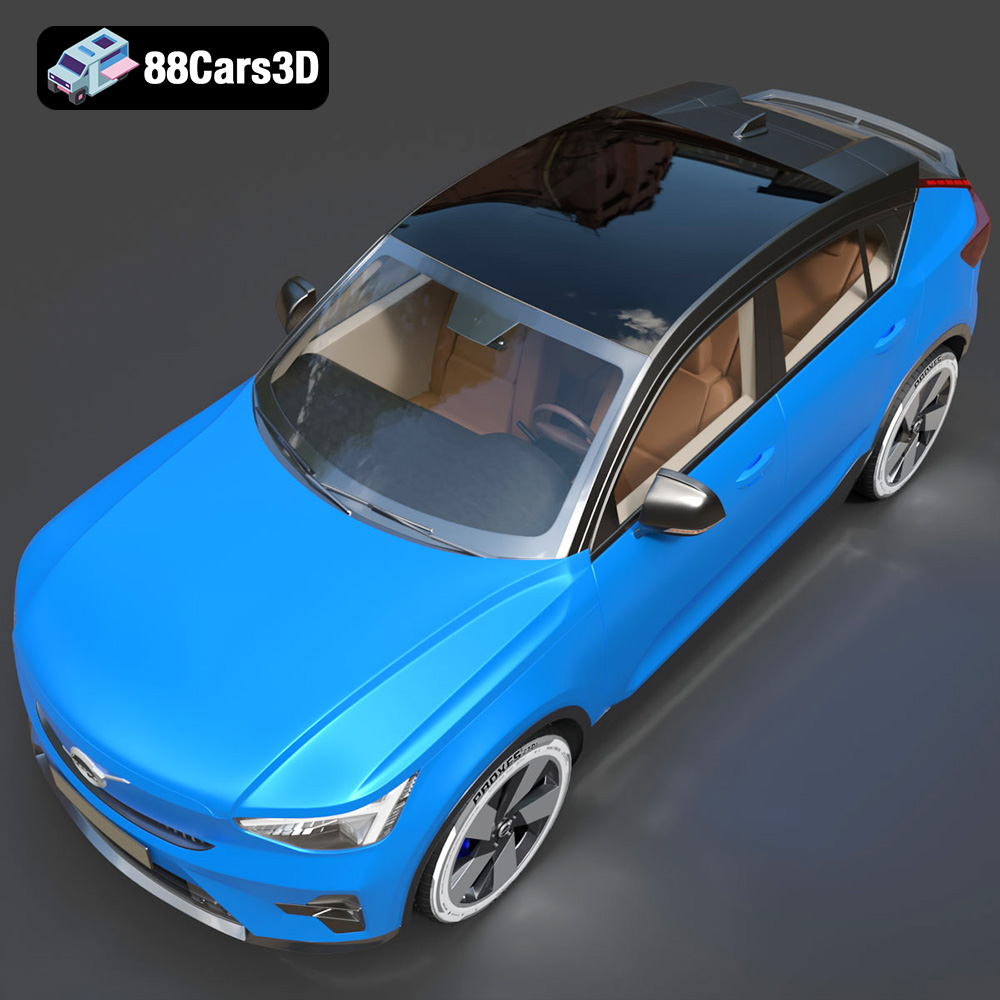
Discover the exceptional realism of the Volvo C40 Recharge 3D Model. Carefully crafted to mirror the actual vehicle, this 3D asset provides incredibly accurate proportions, sleek styling, and realistic textures ideal for any digital environment.
Featuring clean, optimized geometry and an intelligently organized structure, this model ensures seamless integration into your workflow. The exterior perfectly captures the distinctive aesthetic of the modern electric crossover, while the fully modeled interior presents detailed dashboard components and seating, enhancing its suitability for close-up shots and immersive experiences.
Whether you are developing cutting-edge video games, producing hyper-realistic automotive renderings, building interactive AR/VR applications, or conducting simulations, this versatile 3D model delivers outstanding performance and visual fidelity.
Available in a comprehensive range of industry-standard file formats to suit any pipeline:
$19.99
.arvr
.blend
.c40
.car3dmodel
.crossover
.electriccar
.ev
.fbx
.gameasset
.glb
.max
.obj
.ply
.recharge
.rendering
.simulation
.stl
.unreal
.volvo
SUV