Get 20% OFF All Premium 3D & STL Models!

In the expansive and ever-evolving landscape of digital design, the demand for high-fidelity 3D assets is paramount. From the intricate details of a virtual showroom to the adrenaline-pumping realism of an open-world racing game, the quality of a 3D model dictates the immersive power of the final experience. Professionals across automotive visualization, game development, AR/VR experiences, and even product design rely on meticulously crafted digital representations to bring their visions to life.
At the heart of this digital transformation are 3D car models that serve as the fundamental building blocks. These aren’t just static objects; they are complex data sets optimized for performance, visual accuracy, and versatility across diverse platforms. Imagine recreating the rugged appeal of a modern utility vehicle, capable of navigating challenging terrains in a game, or showcasing its robust design in a high-end commercial rendering. This requires a model that not only looks authentic but is also technically sound and adaptable.
Today, we’re delving deep into what makes a truly exceptional 3D car model, using the Mitsubishi L200 Crew Cab 2019 3D Model Download as our prime example. This particular model, available at 88cars3d.com, encapsulates the blend of visual fidelity and technical optimization that professionals seek. We’ll explore its features, its place in various workflows, and why understanding the underlying technicalities is crucial for anyone working with 3D automotive assets.
The pursuit of realism in digital environments is an unending journey, and high-quality 3D car models are indispensable companions on this path. Whether it’s for a stunning advertising campaign, an interactive product configurator, or the core mechanics of a simulation, the visual integrity and technical efficiency of the vehicle model are critical determinants of success.
For automotive designers and marketers, automotive rendering is far more than just creating pretty pictures. It’s about conveying the essence, functionality, and aesthetic appeal of a vehicle long before physical prototypes are available. High-quality 3D models allow for exhaustive exploration of design variations, material finishes, and lighting scenarios in a cost-effective and rapid manner. A model like the Mitsubishi L200 Crew Cab 2019, with its accurate frame geometry and detailed components, provides an unparalleled foundation for virtual photography, showcasing every curve and angle with precision that mirrors real-world photography.
In today’s competitive digital landscape, attention to detail is not merely a luxury but a necessity. Consumers and audiences are accustomed to photorealistic experiences, and anything less can break immersion. This applies equally to architectural visualization where a car model grounds a scene in reality, to game development where a vehicle needs to withstand close scrutiny, and to AR/VR where the model is viewed from every angle. A robust model with optimized topology, proper UV mapping, and well-structured materials ensures that regardless of the viewing distance or interactive context, the vehicle maintains its visual integrity and performance efficiency.
Choosing the correct file format is a critical decision in any 3D workflow, as it dictates compatibility, data retention, and optimization for specific applications. The Mitsubishi L200 Crew Cab 2019 3D Model Download exemplifies this versatility by offering a comprehensive suite of formats, each tailored for distinct professional needs.
Understanding these formats ensures that users can select the optimal file for their project, maximizing efficiency and achieving the desired results with the Mitsubishi L200 Crew Cab 2019 3D Model.
The Mitsubishi L200 Crew Cab 2019, also known as the Triton in some markets, stands as a testament to robust utility and modern aesthetics. Translating this real-world vehicle into a high-quality 3D car model requires a meticulous approach, balancing authentic visual fidelity with optimized performance. The model available on 88cars3d.com perfectly embodies this philosophy.
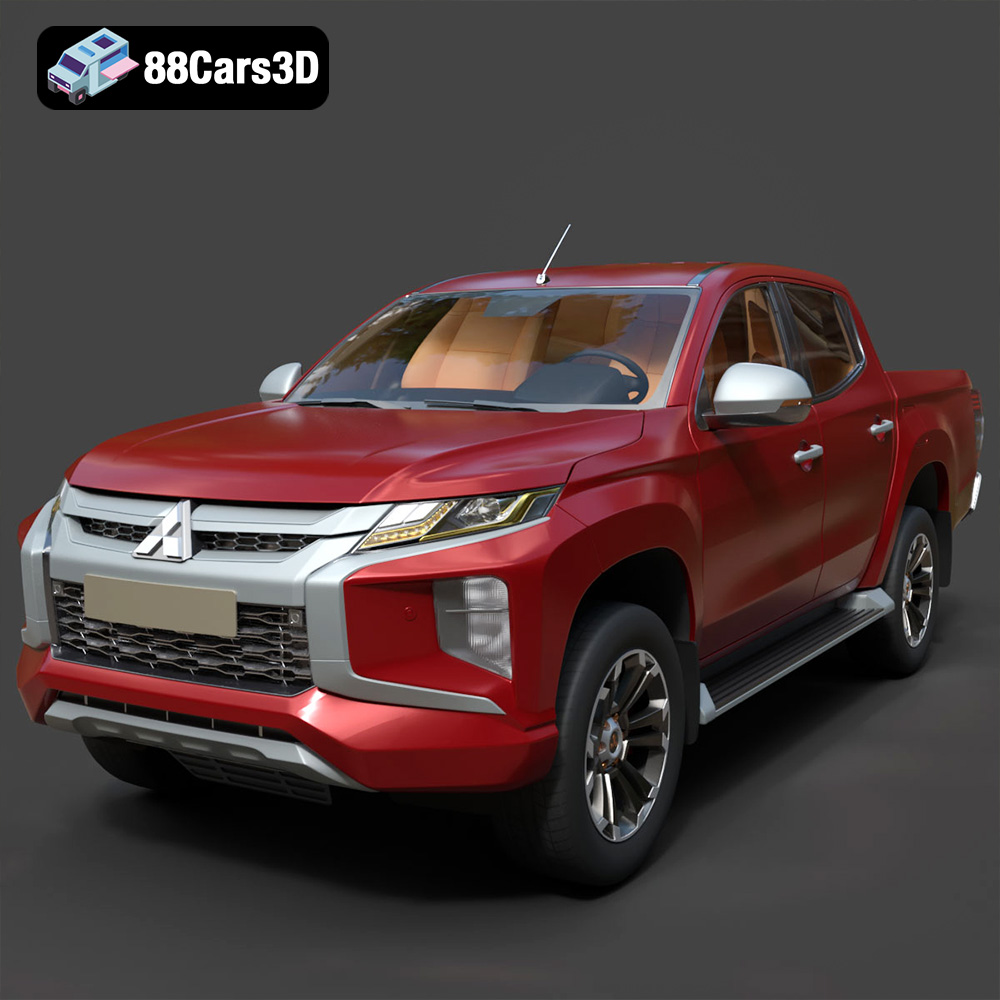
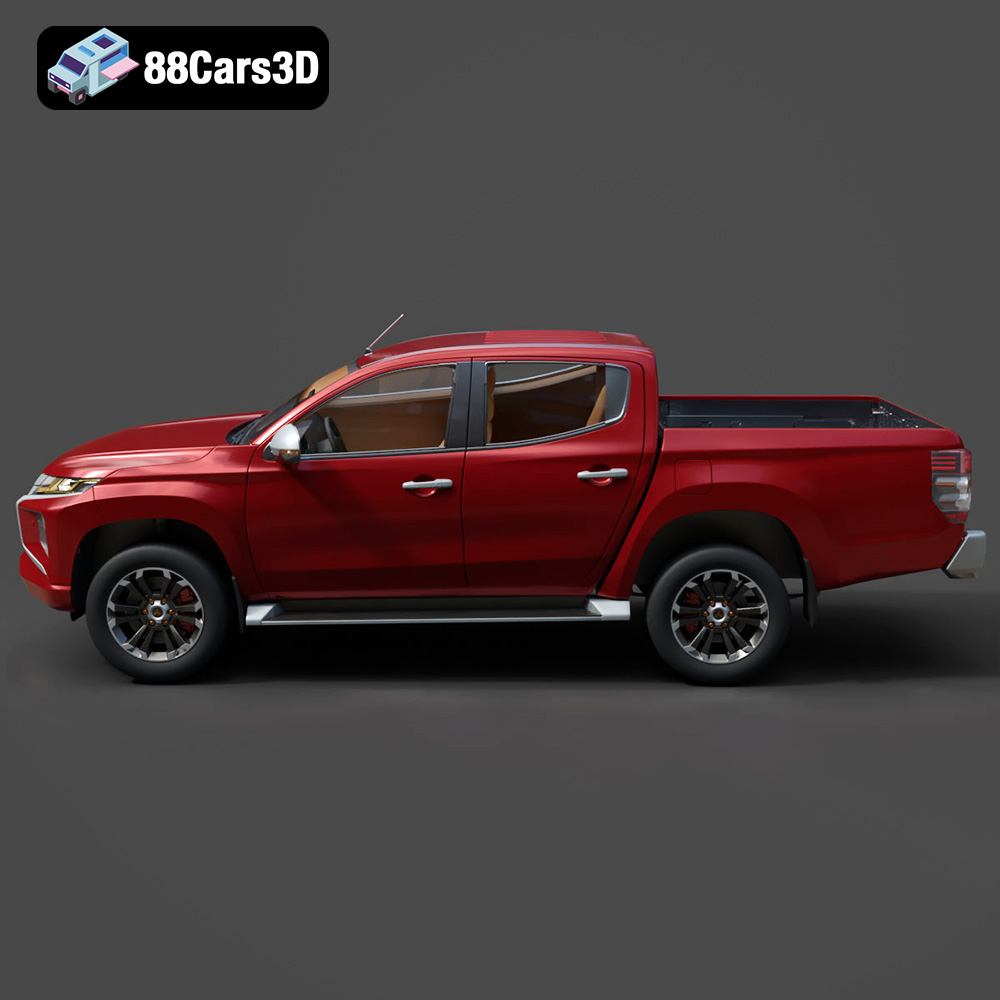
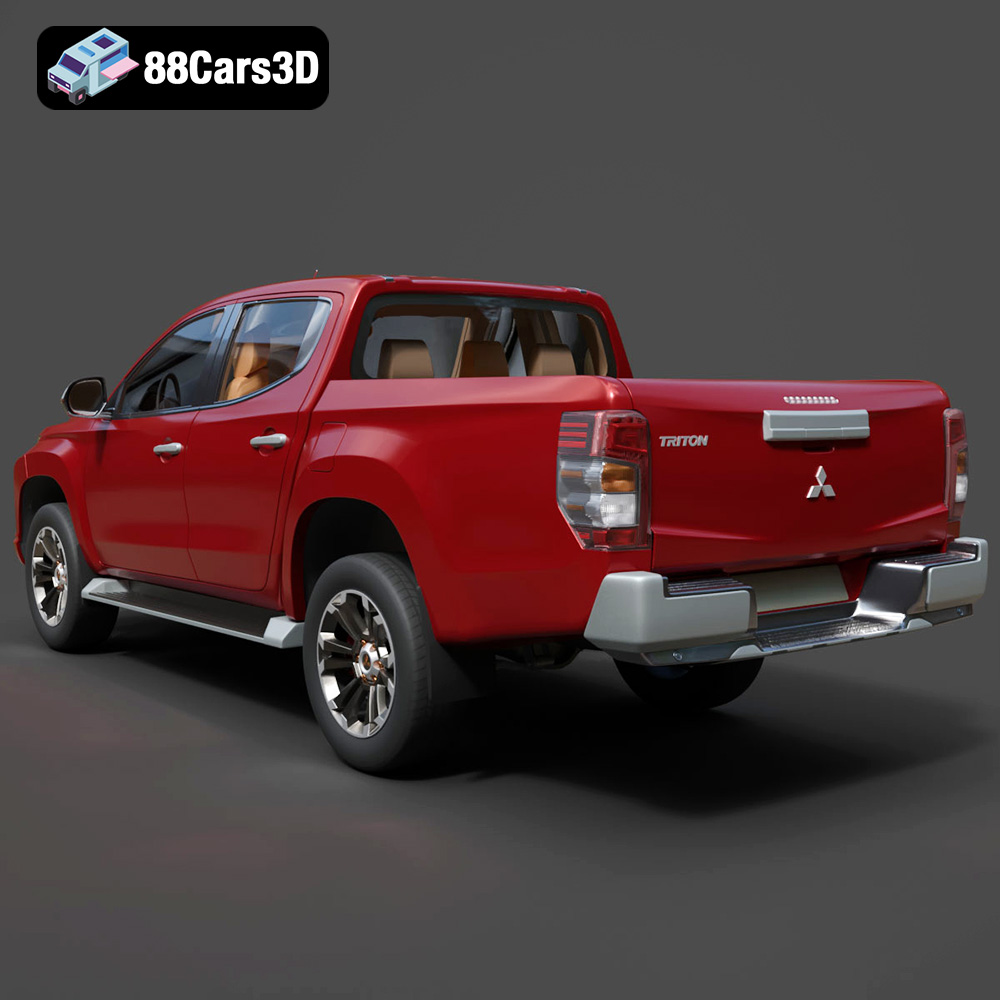
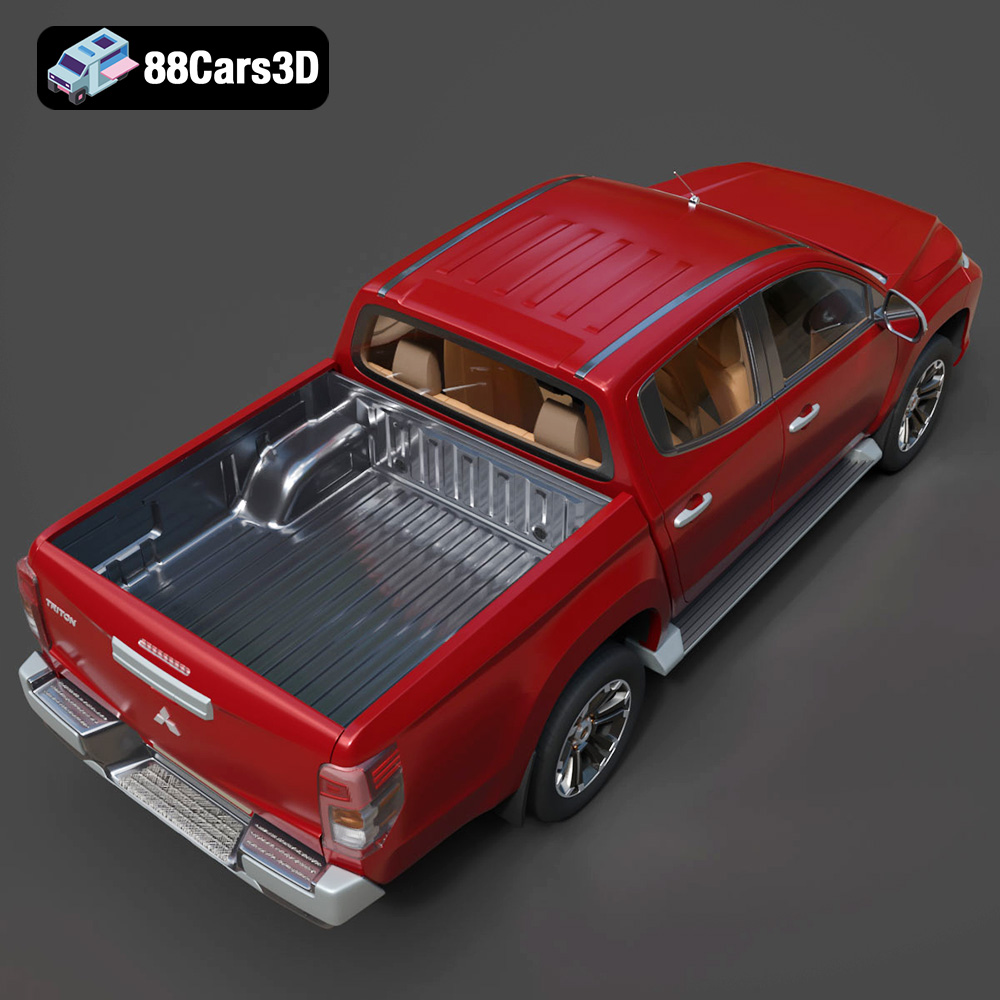
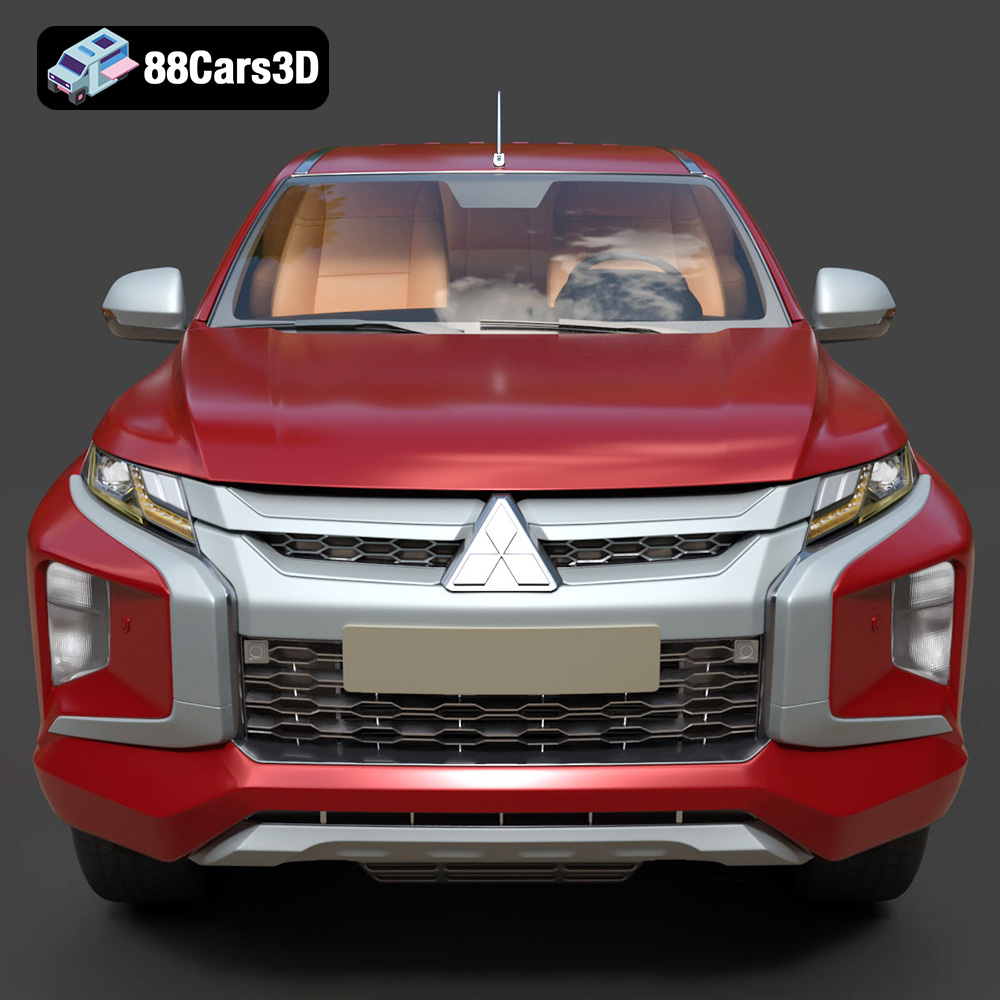
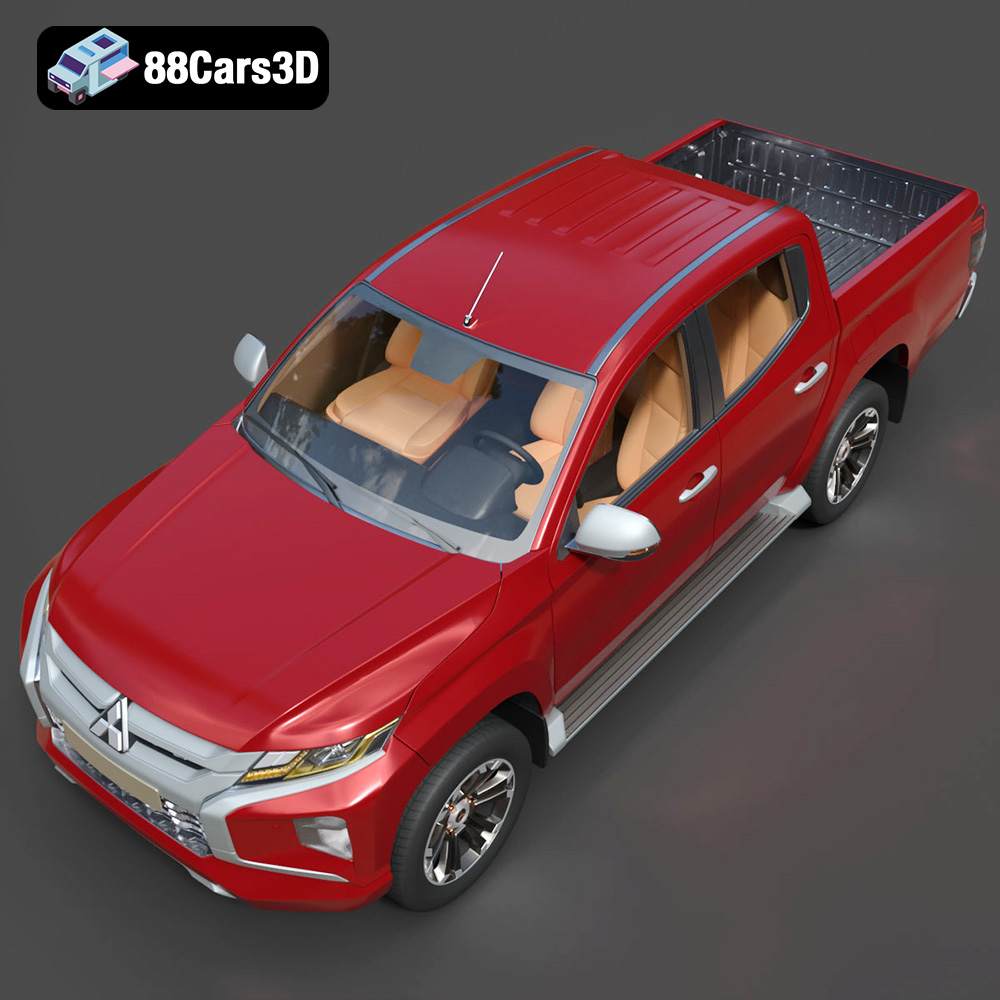
The first impression of any 3D vehicle model stems from its visual accuracy. The Mitsubishi L200 model captures the truck’s distinctive “Dynamic Shield” front fascia, a hallmark of Mitsubishi’s contemporary design language. This includes the prominent front grille and the striking LED headlight arrays, which are not just simple textures but distinct geometric elements. Sculpted side panels, authentic tailgate details on the rugged cargo bed, and accurate alloy wheel designs with detailed all-terrain tires further enhance the realism. Even visible suspension components and undercarriage chassis elements are included, providing an impressive level of detail crucial for close-up shots or complex off-road simulations.
The attention to detail extends into the interior. The spacious five-seat crew cab configuration is accurately represented, complete with upholstery details, a detailed steering wheel bearing the brand insignia, and multi-function buttons. The instrument cluster and modern center infotainment display are faithfully reproduced, along with precise control details like pedals, the gear selector, and climate vents. This makes the L200 model not just a shell, but a complete digital replica, ready for first-person POV in gaming or detailed interior renders for visualization.
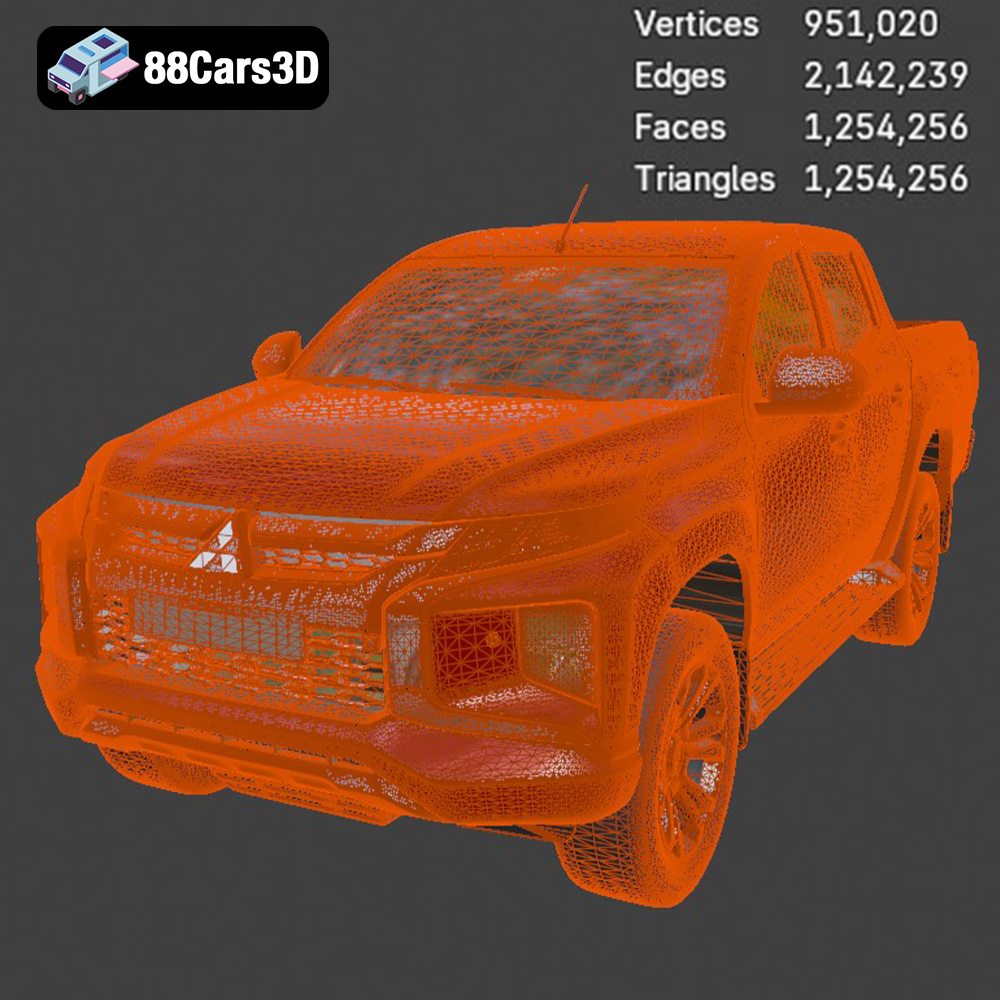
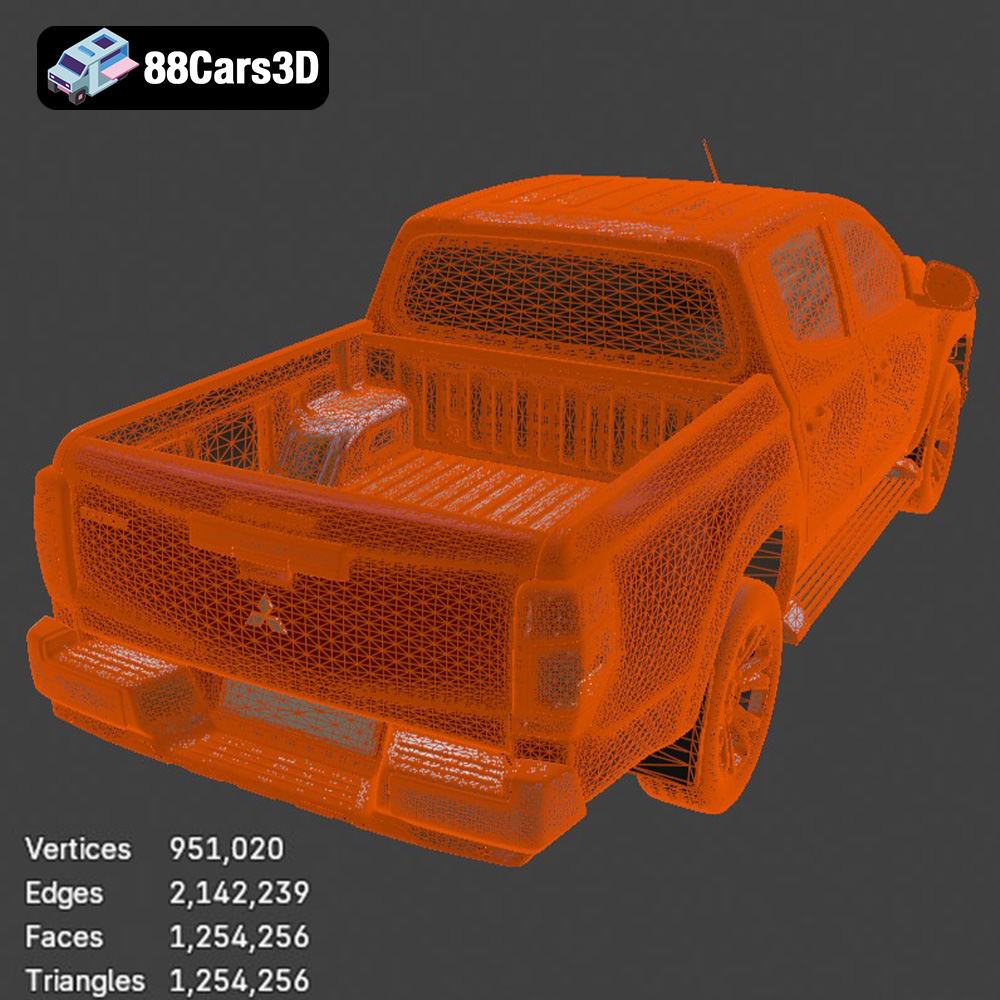
Visual fidelity without technical optimization is often impractical in production environments. The Mitsubishi L200 Crew Cab 2019 3D model strikes a perfect balance with an optimized topology featuring approximately 550,000 triangles. This polycount is strategically chosen to provide high-end visual realism without burdening real-time engines like Unreal or Unity. For game assets, this means smoother frame rates and efficient resource usage, critical for immersive experiences. For automotive rendering, it ensures sufficient detail for high-resolution output while keeping render times manageable.
Beyond polycount, the model boasts real-world scale accuracy, based on the actual vehicle chassis, which is essential for integration into scenes alongside other assets or architectural models. Furthermore, proper pivot setups for steering, wheel rotation, and suspension travel are included. This seemingly small detail is incredibly important for animation and interactive applications, allowing developers to easily implement realistic vehicle dynamics without extensive rework.
Creating a truly “game-ready” asset like the L200 involves more than just optimizing polygon count. It encompasses clean geometry, efficient UV mapping (which allows textures to be applied without distortion), and logical material breakdowns. The model’s design for game development implies a careful balance of detail for close-up views and efficiency for distant rendering. This optimization extends to the structural separation of elements like wheels, suspension, and steering, which are crucial for rigging and animating vehicle movement accurately, whether for an off-road simulator or a racing title.
A high-quality 3D car model is only as valuable as its usability within professional production pipelines. The Mitsubishi L200 Crew Cab 2019 3D model, with its versatile file formats and optimized structure, is designed to seamlessly integrate into various industry-standard workflows.
For high-end automotive rendering and visualization, Autodesk 3ds Max remains a dominant force, often paired with powerful renderers like V-Ray or Corona. The .max file provided for the Mitsubishi L200 is invaluable here. Artists can directly open the model, which typically comes with PBR-ready materials, and immediately begin setting up studio lighting, backplates, and camera angles. The separated components (wheels, suspension) allow for easy adjustments to vehicle pose, simulating turns or bumps. Scene integration, material tweaking for specific finishes (matte, gloss, metallic, as per customization options), and advanced lighting setups for photorealistic outputs are streamlined, dramatically reducing production time for marketing collateral, configurators, or architectural scene integration.
Unreal Engine is a powerhouse for creating immersive real-time experiences, from AAA games to interactive simulations. The .fbx and .unreal formats of the L200 model are specifically tailored for this environment. Importing the .fbx allows developers to bring in the mesh, basic materials, and skeletal hierarchy. The optimized 550,000 triangle count ensures excellent performance. Further, the Unreal-ready asset potentially means pre-configured materials using Unreal’s robust PBR shader system, correct pivot points, and possibly even basic vehicle blueprints. This significantly accelerates the integration process, allowing game designers to focus on gameplay mechanics, environmental design, and adding vehicle physics rather than spending hours on asset optimization and setup. The accurate real-world scale also ensures the truck fits proportionally within any game environment.
Blender has emerged as a formidable tool for 3D artists, especially within independent studios and for individual creators. The native .blend file for the Mitsubishi L200 Crew Cab 2019 3D model offers maximum flexibility for Blender users. All original scene data, including materials and mesh organization, is preserved. Artists can leverage Blender’s powerful animation tools to create custom vehicle rigs, simulate suspension dynamics, and create stunning cinematic sequences. For indie game developers, Blender’s Cycles or Eevee renderers can be used for pre-rendered cutscenes, or the model can be exported to game engines directly from Blender, ensuring consistency and control over the asset’s entire lifecycle.
The utility of a meticulously crafted 3D car model like the Mitsubishi L200 Crew Cab 2019 extends far beyond static renders or even game environments. Its versatility makes it a potent asset for emerging technologies and creative endeavors, supported by inherent customization capabilities.
Augmented Reality (AR) and Virtual Reality (VR) are transforming how consumers interact with products and experiences. For automotive brands, this means virtual showrooms, interactive configurators, and mobile AR apps that allow customers to “see” a car in their driveway. The L200 model, especially in its .glb format, is perfectly suited for these applications. The optimized polycount and single-file structure of GLB ensure rapid loading and smooth performance on mobile devices and VR headsets. Imagine a user exploring every angle of the Mitsubishi L200, customizing colors, and even peeking inside the detailed cockpit, all within an immersive virtual space powered by this high-fidelity asset.
The inclusion of an .stl file for the Mitsubishi L200 opens up fascinating possibilities for physical production. While 3D printing a car model requires specific considerations, the provided technical specifications for recommended scale, layer height, wall thickness, and support structures are invaluable. Hobbyists can create highly detailed display models, collectors can add unique pieces to their collections, and even designers can produce small-scale prototypes. Resin printing is specifically recommended for capturing the fine details of the L200’s exterior features, from the “Dynamic Shield” grille to the intricate wheel design and suspension components, translating digital fidelity into a tangible object.
One of the most powerful advantages of working with a professional 3D model is the inherent flexibility for customization. The Mitsubishi L200 Crew Cab 2019 model is designed with this in mind. Artists can effortlessly change body colors, experimenting with factory shades or entirely custom finishes to match a brand’s aesthetic or a client’s specific vision. Modifying tire textures to switch between rugged off-road variants and sleek street versions can instantly alter the vehicle’s character. Adjusting material finishes—from matte to gloss to metallic—allows for precise control over how light interacts with the surfaces, enhancing realism in renders. Furthermore, adapting lighting for different environments, from a sunny desert road to a moody urban street, is a standard practice that elevates the final output. This level of control ensures the L200 model can be endlessly repurposed for diverse projects, making it a truly versatile game asset or visualization tool.
In the fast-paced world of 3D production, time is a precious commodity, and quality is non-negotiable. Opting for premium 3D car models like the Mitsubishi L200 Crew Cab 2019 from reputable sources like 88cars3d.com is not merely a purchase; it’s a strategic investment that yields significant returns.
Creating a high-fidelity 3D vehicle from scratch is an incredibly time-consuming and complex endeavor, requiring hundreds of hours of modeling, UV unwrapping, texturing, and optimization. By leveraging a pre-made, professionally crafted asset, studios and individual artists can drastically cut down on development cycles. The L200 model, ready for integration with optimized polycounts, proper pivots, and multiple file formats, eliminates the arduous initial stages of asset creation. This allows teams to reallocate valuable time and resources to more critical aspects of a project, such as scene composition, animation, lighting, or gameplay development, thereby accelerating overall production efficiency and meeting tight deadlines.
The quality of an asset directly impacts the final visual output. A professionally developed 3D car model, such as the Mitsubishi L200, is meticulously sculpted to achieve photorealistic detail and accurate proportions. This level of craftsmanship is difficult to replicate quickly and consistently without significant expertise. Using such a model ensures that the automotive rendering or game environment maintains a high standard of visual fidelity, which is crucial for client satisfaction, audience engagement, and overall brand perception. It guarantees that every render, every game scene, and every AR/VR experience presents the vehicle in its best possible light, reflecting professionalism and attention to detail. This dedication to excellence is what distinguishes exceptional projects from the rest, reinforcing the value proposition of choosing premium assets from a trusted marketplace like 88cars3d.com.
The world of 3D content creation is driven by a constant pursuit of realism, efficiency, and versatility. High-quality 3D car models are the cornerstones of this pursuit, enabling professionals to craft immersive digital experiences across diverse industries. From the meticulous detail required for high-end automotive rendering to the optimized performance demanded by modern game assets, the underlying technical foundation of a 3D model is as critical as its visual appeal.
The Mitsubishi L200 Crew Cab 2019 3D Model Download stands as an exemplary representation of what a premium 3D vehicle asset should be. Its faithful recreation of the vehicle’s “Dynamic Shield” aesthetic, coupled with a highly optimized ~550,000 triangle count, makes it suitable for demanding real-time applications and breathtaking visualizations alike. With support for a wide array of industry-standard file formats—including .blend, .fbx, .obj, .glb, .stl, .ply, .unreal, and .max—it offers unparalleled flexibility for integration into virtually any professional workflow, be it 3ds Max, Blender, or Unreal Engine.
Whether you’re developing an open-world racing game, designing an immersive AR configurator, or producing a high-impact commercial render, this model provides the technical sophistication and visual fidelity needed to elevate your project. It’s not just a model; it’s a versatile tool designed to save time, enhance creative output, and ensure your digital automotive visions are realized with utmost precision and realism. For those seeking such uncompromising quality and adaptability, exploring the offerings at 88cars3d.com is an excellent starting point for your next ambitious project.
The 2019 Mitsubishi L200 Crew Cab (also known as the Triton) is a masterclass in rugged utility and modern design. Known for its robust “Dynamic Shield” front fascia, aggressive styling, and exceptional 4WD capabilities, this pickup truck bridges the gap between commercial workhorse and comfortable family vehicle. Key visual elements include the distinctive front grille, striking LED headlight arrays, sculpted side panels, and a durable cargo bed designed to handle any load. This high-quality 3D model strikes the perfect balance between high-end visual fidelity and game-ready optimization. Featuring an optimized topology with approximately 550,000 triangles, it ensures smooth performance in real-time applications without sacrificing intricate details. It is meticulously crafted to serve primary use cases like game development, immersive AR/VR experiences, high-end animation, and architectural or automotive visualization. Perfect for rugged off-road game environments, virtual automotive showrooms, architectural visualization scenes, and commercial rendering campaigns.
$19.99
.2019
.4×4
.blend
.fbx
.glb
.max
.mitsubishi
.obj
.ply
.rendering
.stl
.unreal
car-3d-model
crew-cab
game asset
game-ready
l200
low-poly
off-road
optimized
pickup-truck
utility-vehicle
VR/AR