Get 20% OFF All Premium 3D & STL Models!

The world of 3D modeling continually pushes the boundaries of digital realism, transforming abstract ideas into visually stunning and interactive experiences. From blockbuster films and immersive video games to cutting-edge architectural visualizations and virtual training simulations, high-fidelity 3D assets are the bedrock of modern digital content creation. At the heart of this revolution lies the meticulous craft of creating compelling 3D vehicle models – assets that demand not only artistic flair but also deep technical understanding to perfectly replicate the complex interplay of design, engineering, and material science.
Few vehicles embody a blend of history, design, and raw mechanical beauty quite like a classic motorcycle. Its intricate components, flowing lines, and iconic silhouette present a unique challenge and opportunity for 3D artists. Whether it’s the roar of the engine or the gleam of polished chrome, capturing these nuances digitally requires precision and a commitment to detail. This is where truly professional 3D car models, and indeed, motorcycle models, distinguish themselves. Today, we’ll delve into the technicalities and creative applications of such assets, using an exceptional example: the Harley Davidson Knucklehead 3D model available on 88cars3d.com. This asset is a prime illustration of how a single, well-crafted model can serve a multitude of professional needs, from cinematic rendering to real-time game development.
The journey of any 3D model from concept to deployment involves a crucial choice: the file format. Each format is designed with specific use cases, compatibility requirements, and technical advantages in mind. Understanding these distinctions is paramount for any professional working with 3D car models or any complex asset like the Harley Davidson Knucklehead. The versatility of a model is often defined by the range of formats it supports, ensuring seamless integration across various software and platforms.
The .blend format is Blender’s native file type. It encapsulates an entire Blender scene, including mesh data, materials, textures, lighting setups, camera positions, animations, and even physics simulations. For artists primarily working within Blender, this is the most convenient and powerful format. It offers full editability, allowing users to modify geometry, adjust materials, re-rig, or tweak any aspect of the scene without loss of data. When you download a .blend file for a 3D model like the Harley Davidson Knucklehead, you’re getting the complete project file, ready for immediate iteration and customization within Blender’s robust environment.
.fbx (Filmbox) is arguably the most widely adopted proprietary 3D file format for inter-application data exchange. Developed by Autodesk, it excels at transferring 3D models, animation data, cameras, and lights between different 3D software applications such as Maya, 3ds Max, Blender, and crucially, game engines like Unreal Engine and Unity. Its strength lies in its ability to preserve complex scene hierarchies, blend shapes, skinning, and animation curves. For game developers, .fbx is often the go-to choice for importing high-fidelity game assets, ensuring that the Harley Davidson Knucklehead maintains its intricate details and material assignments as it transitions into a real-time environment.
The .obj (Wavefront OBJ) format is a widely supported, simpler alternative to FBX. It primarily stores geometry data (vertices, normals, texture coordinates, and faces) and references to external material files (.mtl). Its simplicity ensures excellent compatibility across almost all 3D software packages, making it a truly universal format. While it doesn’t typically store animation or rigging data, its robustness for static mesh exchange makes it invaluable for archival purposes or when broad software compatibility is prioritized. For general visualization or foundational mesh work with a 3D car model, .obj remains a reliable choice.
.glb (GL Transmission Format Binary) is the binary version of glTF, a royalty-free specification for the efficient transmission and loading of 3D scenes and models by applications. It’s designed to be a “JPEG for 3D,” focusing on optimization for real-time applications, especially in augmented reality (AR), virtual reality (VR), and web-based displays. A single .glb file can contain geometry, materials, textures, animations, and scene graph information, all packaged into one self-contained binary blob. This makes it incredibly efficient for streaming and display on platforms with limited resources, perfect for showcasing the Harley Davidson Knucklehead in an interactive web viewer or an AR app.
.stl (STereoLithography) is the de facto standard file format for 3D printing. It represents a 3D model as a collection of unconnected triangular facets, defining only the surface geometry without color, texture, or material information. While simple, this triangular mesh representation is ideal for additive manufacturing processes. If your goal is to physically manifest the Harley Davidson Knucklehead as a tangible model or prototype, the .stl format is your essential starting point, providing the necessary data for slicing software to prepare for printing.
The .ply (Polygon File Format) is designed to store graphical objects as a list of polygons. It’s more flexible than .stl, as it can store not only XYZ coordinates but also color, transparency, normals, texture coordinates, and other data for each vertex or face. It’s particularly useful in fields like 3D scanning, scientific visualization, and CAD, where precise mesh data for analysis or direct manipulation is required. For detailed examination or reverse engineering of the Harley Davidson Knucklehead’s geometry, .ply can offer a more comprehensive data set.
While often used in conjunction with .fbx, the inclusion of a dedicated .unreal or Unreal-ready asset implies a package specifically configured for direct import and optimal performance within Unreal Engine. This might include pre-configured materials using Unreal’s PBR workflow, optimized mesh collision, appropriate scale, and potentially even blueprint setups. For game developers targeting Unreal Engine, such an asset significantly streamlines the integration process, reducing the amount of post-import work required to get the Harley Davidson Knucklehead functioning perfectly in-engine.
Similar to .blend for Blender, the .max format is the native file type for Autodesk 3ds Max. It stores the complete 3ds Max scene, including all modeling, animation, lighting, and rendering data. For users proficient in 3ds Max, this format offers the highest degree of flexibility and editability. It’s perfect for complex rendering setups, detailed animations, or further modifications to the Harley Davidson Knucklehead within a powerful professional environment.
The availability of such a diverse array of formats for a single 3D model, like the Harley Davidson Knucklehead from 88cars3d.com, underscores its professional-grade quality and versatility, ensuring that it can be integrated into virtually any workflow.
Achieving photorealistic results with 3D car models, especially a classic like the Harley Davidson Knucklehead, is a meticulous process that marries artistic vision with technical precision. It’s about more than just a good model; it’s about how that model interacts with light, environment, and materials to evoke emotion and tell a story. Professional automotive rendering transforms a static 3D mesh into a breathtaking digital image or animation, indistinguishable from real-world photography.
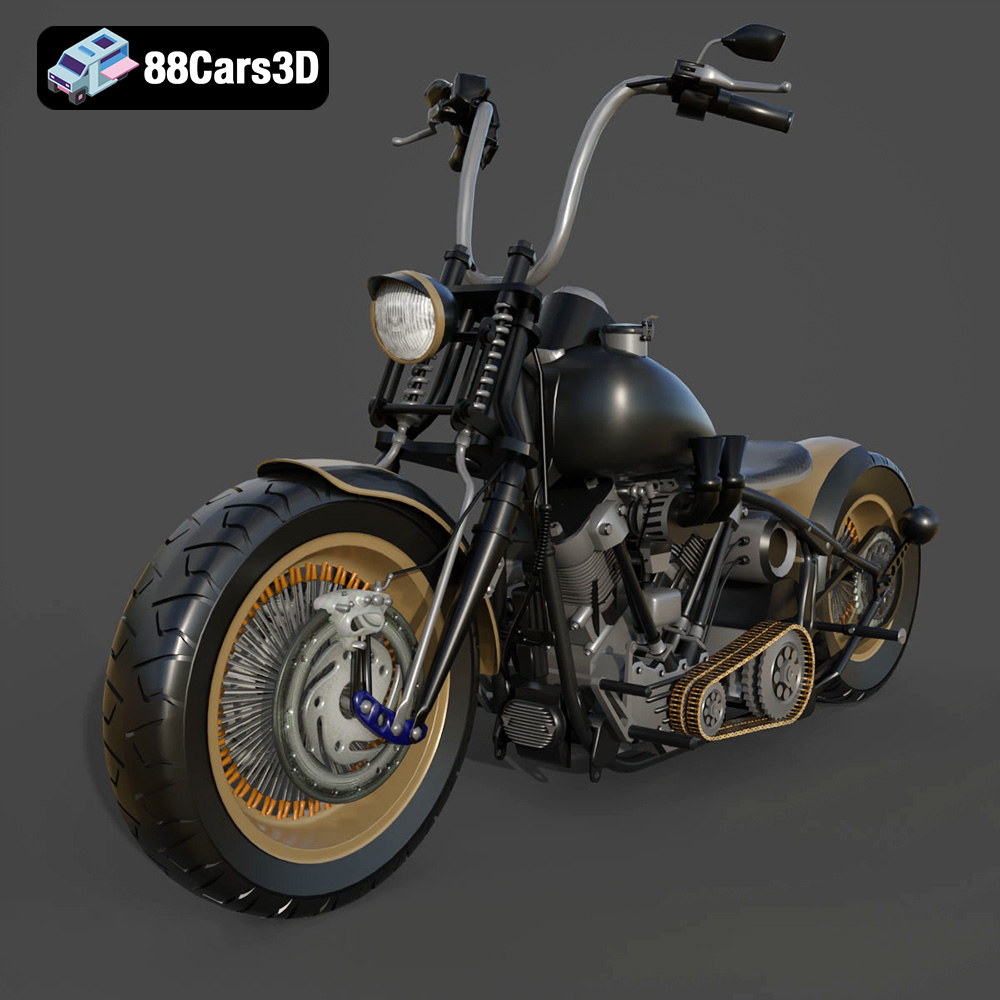
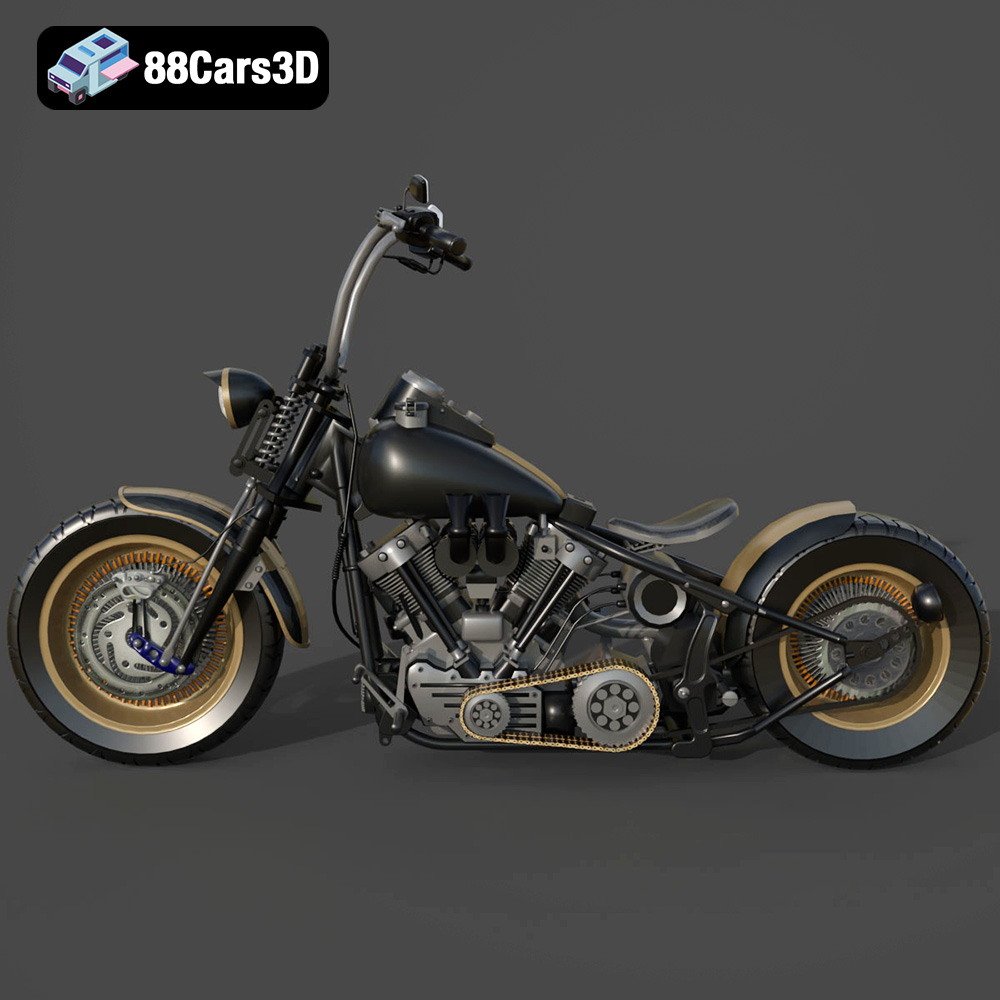
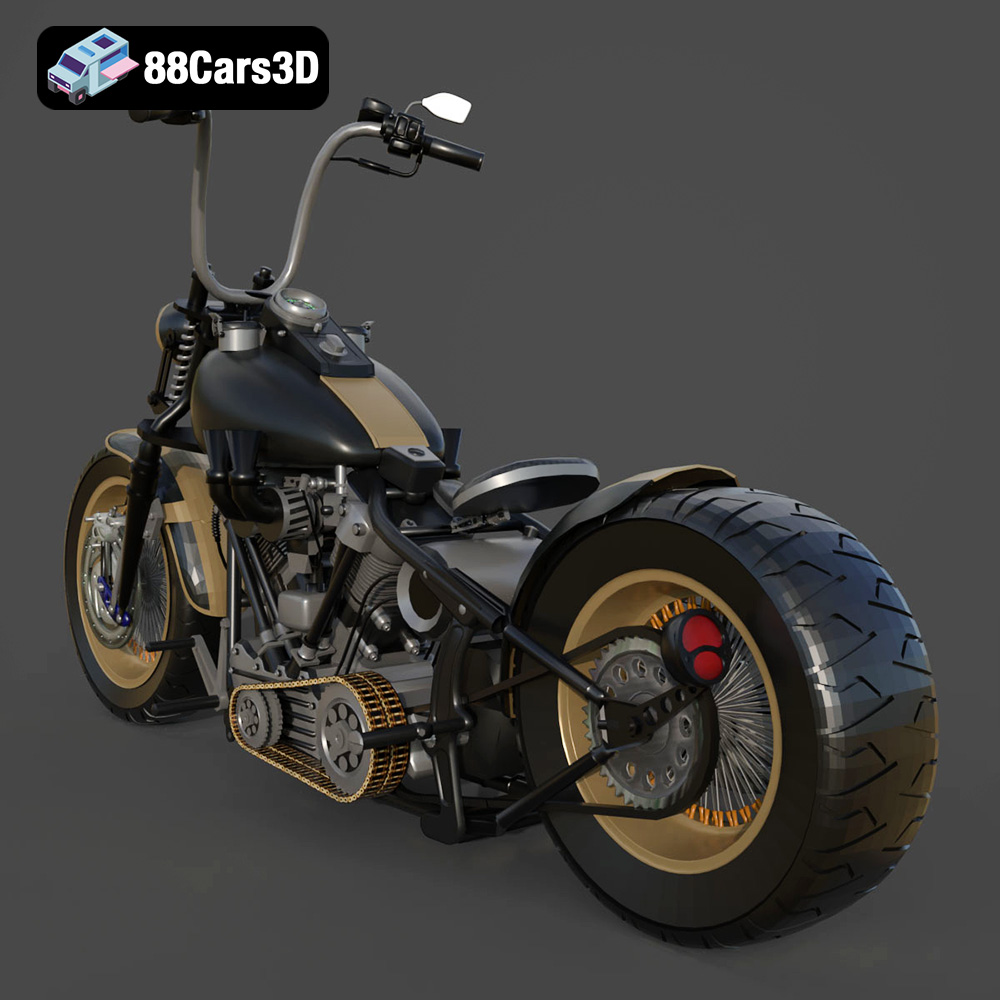
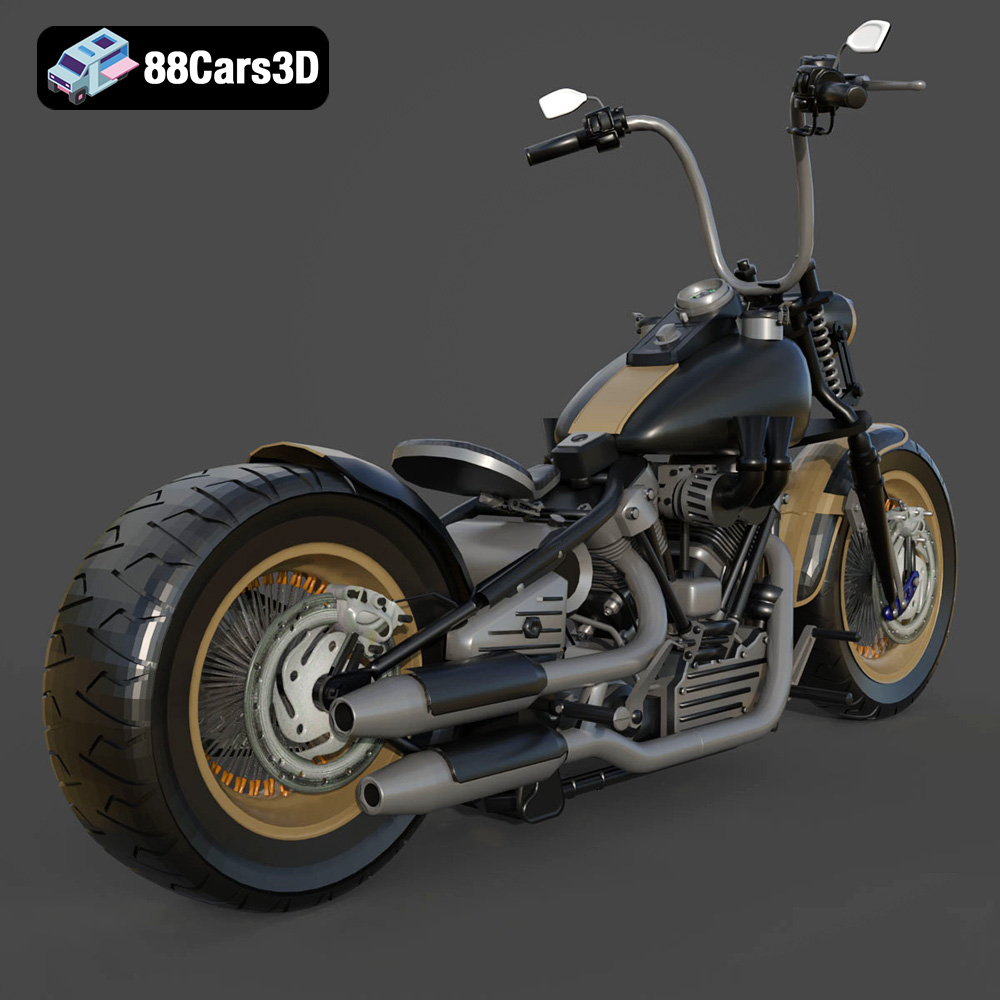
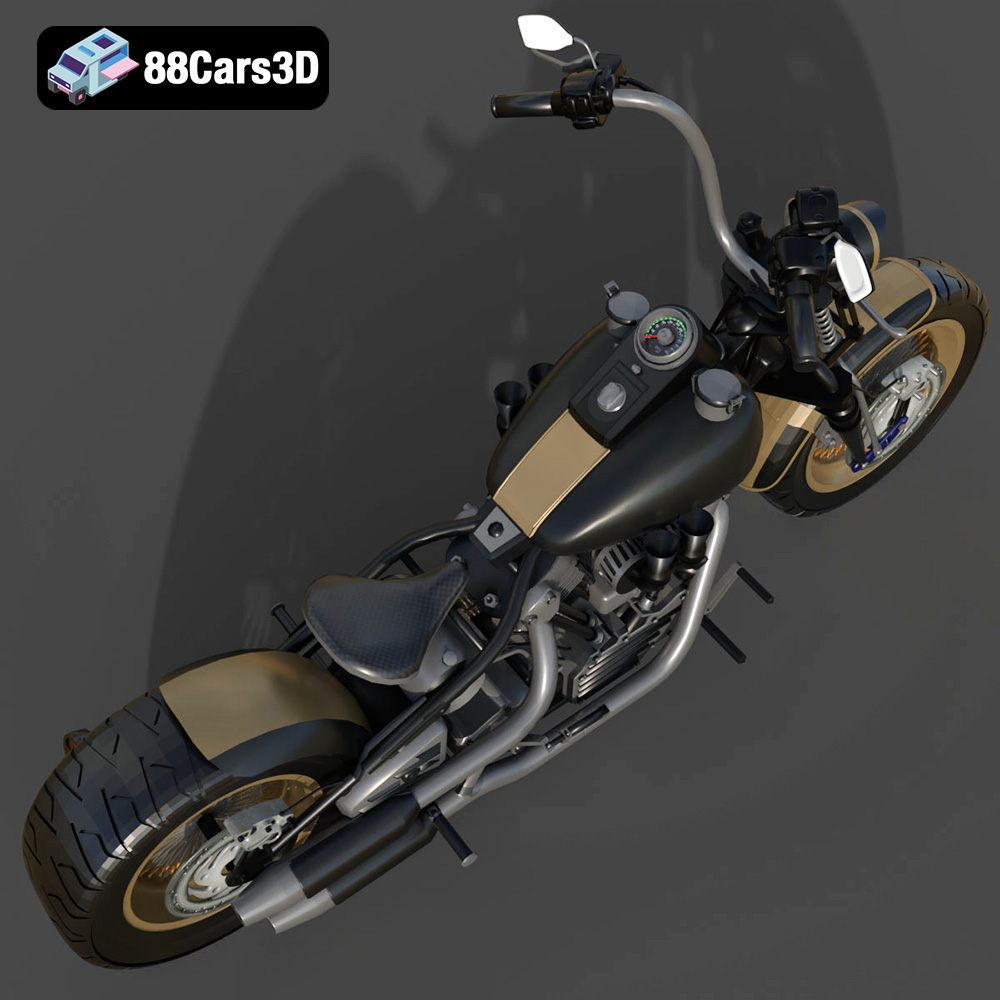
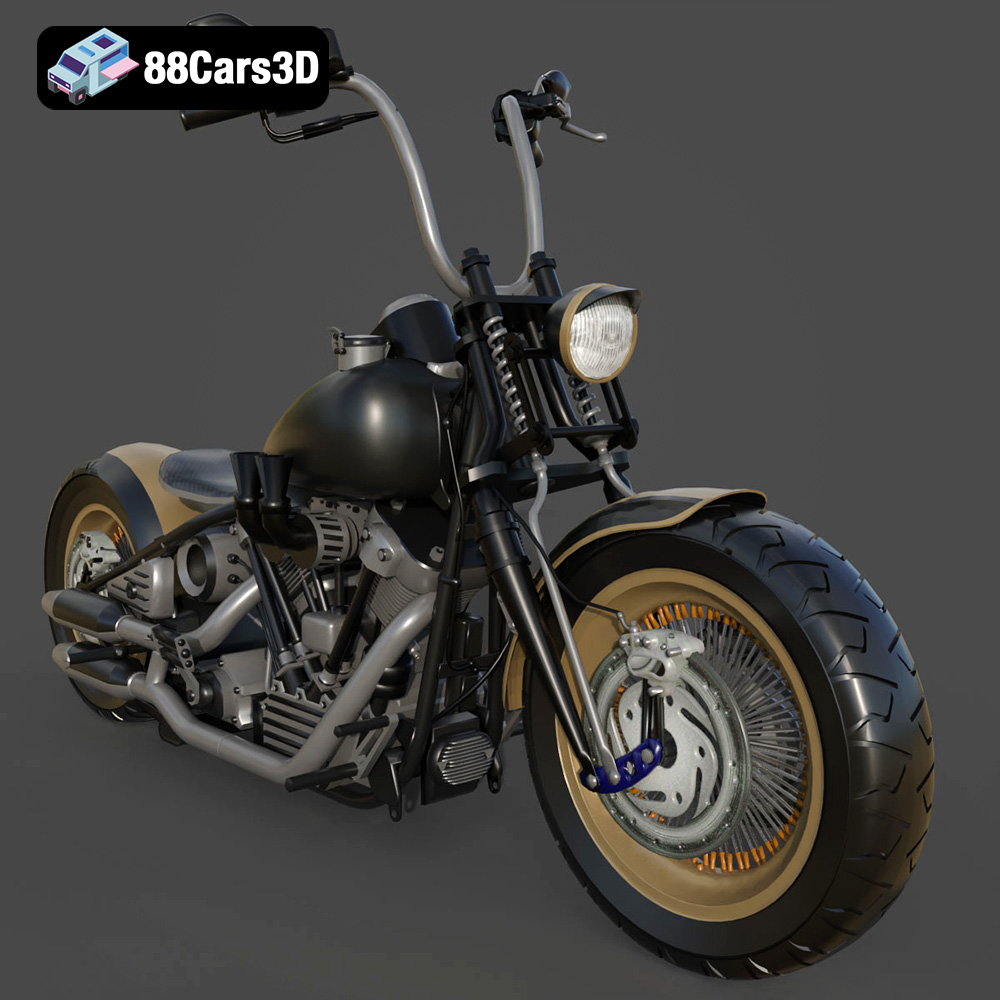
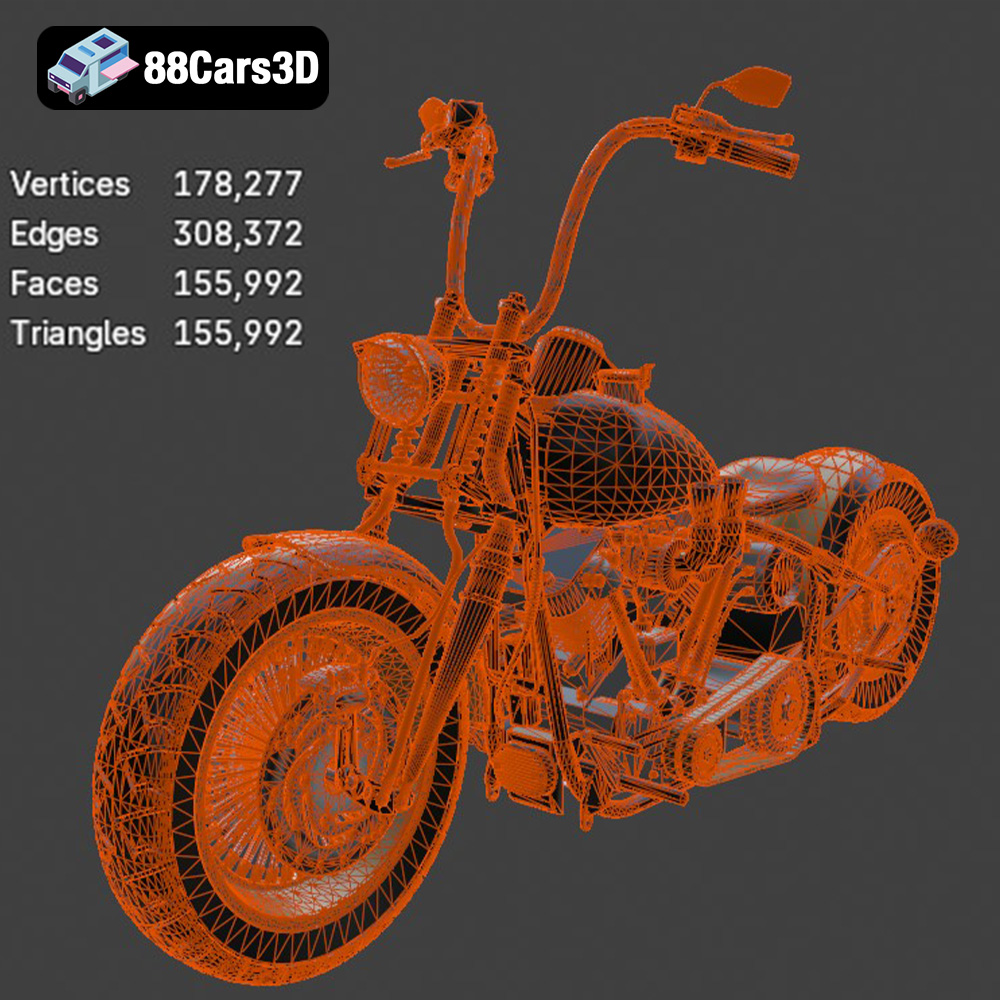
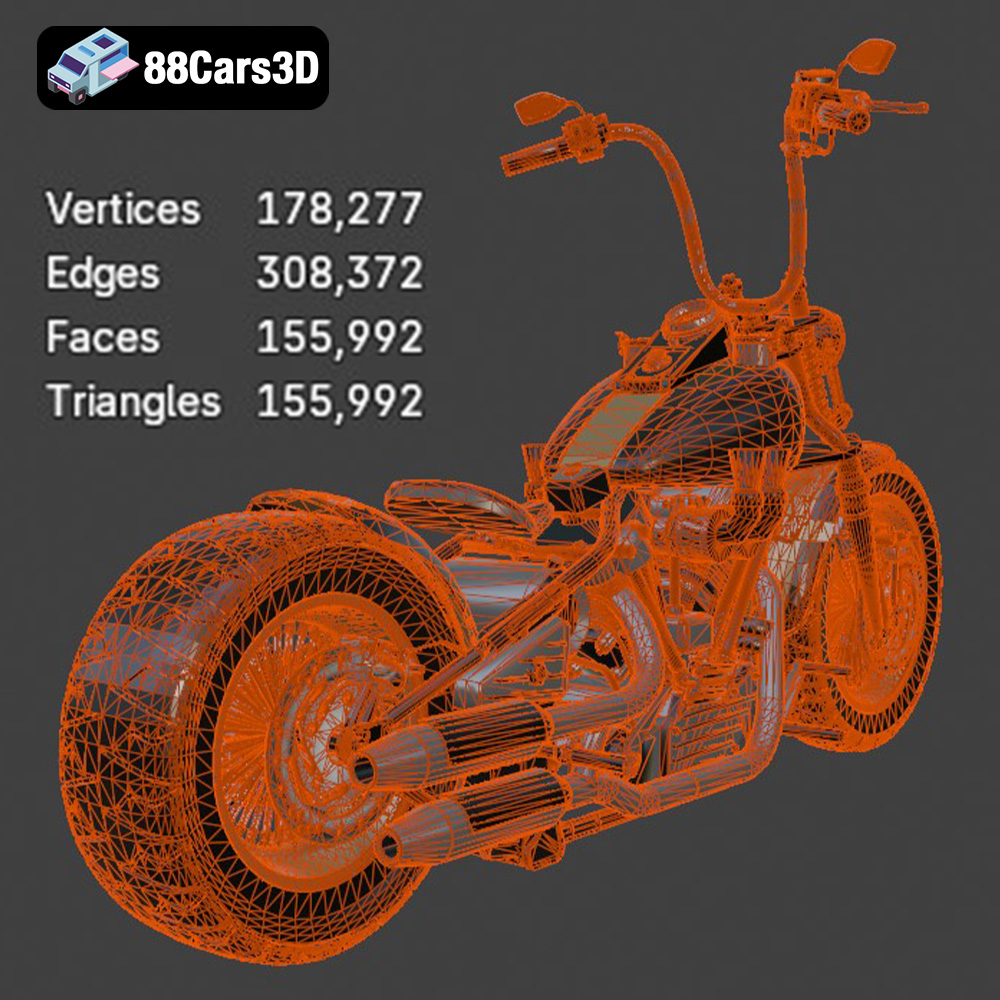
The foundation of any realistic render is an impeccably modeled asset. For the Harley Davidson Knucklehead 3D model, this means a clean, optimized polygon count that captures the iconic curves and sharp edges without being overly dense, which could hinder performance in real-time applications. High-quality geometry ensures smooth reflections and accurate shading. Crucially, the model features meticulously configured materials, often employing Physically Based Rendering (PBR) workflows. This involves texture maps such as Albedo (base color), Normal (for fine surface detail), Roughness (how light scatters), Metallic (metallic vs. dielectric properties), and Ambient Occlusion (contact shadows). These maps accurately simulate how light interacts with different surfaces – the gleam of chrome, the subtle texture of leather seats, the deep luster of painted fenders, and the gritty details of the engine components. The distinct knuckle valve covers, the intricate chassis, and the detailed instrumentation all contribute to an authentic visual experience.
Once the model and its materials are prepared, lighting becomes the sculptor. Studio lighting setups, often mimicking real-world photography studios, utilize a combination of key lights, fill lights, and rim lights to define form and highlight details. High Dynamic Range Imagery (HDRI) environments are also essential, providing realistic global illumination and reflections that instantly ground the model in a plausible space. For a motorcycle like the Knucklehead, careful attention must be paid to reflective surfaces. Chrome, in particular, requires precise lighting to show off its specular highlights and environmental reflections without becoming blown out or distracting. Understanding how light bounces off these complex forms and setting up sophisticated PBR shaders in render engines like V-Ray, Corona, or Cycles (in Blender) is what brings the model to life, ensuring the material properties react naturally to light.
The final step in achieving truly cinematic automotive rendering is post-processing. This stage, often performed in software like Adobe Photoshop or DaVinci Resolve, adds the final layer of polish. Techniques include color grading to set the mood and tone, adjusting contrast and exposure, and adding subtle effects like depth of field to draw the viewer’s eye to specific details. Motion blur can be introduced for animated sequences to convey speed and dynamism. Lens flares, chromatic aberration, and film grain can further enhance the photorealistic illusion, making the digital render of the Harley Davidson Knucklehead feel like it was captured by a high-end camera, rather than generated by a computer.
Game development demands a unique blend of visual fidelity and performance optimization. High-quality 3D car models, such as the Harley Davidson Knucklehead, must not only look fantastic but also run smoothly in real-time environments. The transition from a high-poly render-ready asset to a game-ready asset involves strategic optimization and pipeline understanding, especially when targeting engines like Unreal Engine or Unity.
For game assets, polygon count is a critical factor. While the Harley Davidson Knucklehead 3D model is built with an optimized polygon count, further optimization might be necessary depending on the target platform (PC, console, mobile, VR) and the number of vehicles on screen. Techniques include creating Levels of Detail (LODs), where simpler versions of the model are swapped in at greater distances from the camera. Efficient UV mapping is crucial for texture memory and performance, often utilizing texture atlases to combine multiple material textures into one for fewer draw calls. Material complexity also needs to be managed, typically leveraging highly optimized PBR shaders within the game engine. The Knucklehead’s carefully structured meshes and UV maps ensure seamless integration and efficient rendering within demanding real-time scenarios.
Beyond static appearance, game assets often require interaction. For a motorcycle, this means rigging – creating a skeletal system of bones and joints that allows for animation. At a minimum, the wheels need to be rotatable, and a more complex setup might include suspension compression, steering, and even individual engine components for cutscenes or detailed inspections. While the primary model might be static, a well-structured asset allows for easy rigging. Game developers can then animate the Harley Davidson Knucklehead to move, lean, and react to player input, creating a truly immersive driving experience within the game world.
The workflow for bringing 3D car models into game engines is highly refined. Artists often model in software like 3ds Max or Blender, ensuring clean topology and efficient UVs. The primary export format for game engines is typically .fbx, which carries not only the mesh but also material assignments, rigging, and animation data. For the Harley Davidson Knucklehead 3D model, the provision of both .fbx and a dedicated .unreal format highlights its readiness for professional game development pipelines. The .unreal format implies pre-configured settings, potentially including material instances, collision meshes, and even initial blueprints, significantly accelerating the integration process into Unreal Engine, allowing developers to focus more on gameplay and less on asset setup.
The utility of a high-quality 3D car model extends far beyond traditional rendering and game development. With the rise of augmented reality (AR), virtual reality (VR), and advanced manufacturing techniques like 3D printing, versatile assets like the Harley Davidson Knucklehead are finding new and exciting applications across various industries.
AR and VR offer unparalleled opportunities for immersive visualization. Imagine being able to walk around, inspect, or even “sit on” a classic Harley Davidson Knucklehead in a virtual showroom or overlaid onto your living room floor. For these applications, highly optimized models are paramount to maintain smooth frame rates and avoid motion sickness. The .glb format, included with the Knucklehead model, is specifically designed for this purpose. Its efficient, self-contained nature makes it ideal for streaming and real-time display on mobile AR devices (like those using ARKit or ARCore) and standalone VR headsets. This opens doors for interactive product configurators, virtual museum exhibits, or even educational tools where users can disassemble and study the intricate mechanics of the motorcycle in a fully immersive environment.
3D printing bridges the gap between the digital and the physical. By utilizing the .stl file format, the Harley Davidson Knucklehead 3D model can be transformed into a tangible object. This capability is invaluable for various purposes: creating scale models for collectors, rapid prototyping for designers wanting to examine physical forms, or even producing custom parts (if the model is engineered appropriately). When preparing for 3D printing, considerations like print orientation, support structures, and material choice (e.g., PLA, ABS, resin) become crucial. A well-modeled asset like this provides a clean, watertight mesh essential for successful printing, allowing enthusiasts to hold a physical representation of this classic machine.
High-quality vehicle models also play a significant role in architectural visualization (ArchViz) and product design presentations. Placing a realistic Harley Davidson Knucklehead within a modern garage design, a bustling street scene, or an elaborate showroom rendering instantly adds realism, scale, and a focal point of interest. In product design, the motorcycle could be showcased alongside complementary products or integrated into promotional materials that demand a sense of luxury or heritage. The sheer detail and precision of the Knucklehead model ensure it seamlessly blends into these professional visualizations, enhancing the overall presentation and storytelling.
The true measure of a 3D model’s quality lies in its utility across diverse professional pipelines. A robust asset like the Harley Davidson Knucklehead 3D model is not just a pretty render; it’s a flexible tool that saves time, reduces costs, and elevates the final output for studios and individual artists alike. Accessing such high-caliber 3D car models from reputable sources like 88cars3d.com streamlines production significantly.
In the highly competitive world of automotive advertising, visual appeal is paramount. Studios frequently use 3D models for virtual photography, creating stunning promotional images and videos without the logistical challenges and costs associated with real-world photoshoots. The Harley Davidson Knucklehead, with its exceptional realism and detailed materials, is perfect for such campaigns. Imagine a digital advertisement showcasing the bike against various backdrops, from a sun-drenched desert road to a moody urban alley, all rendered virtually. This approach allows for endless creative iterations, easy updates, and consistency across all marketing channels.
Classic vehicles like the Knucklehead are not just modes of transport; they are pieces of history. 3D models serve as invaluable tools for historical recreation, documentaries, and digital preservation projects. Museums can create interactive exhibits allowing visitors to explore every angle and detail of a rare motorcycle, even if the physical artifact is fragile or inaccessible. Documentary filmmakers can use the model for detailed breakdowns of its mechanical components, illustrating historical context in a visually engaging manner. The precision built into the Harley Davidson Knucklehead 3D model ensures its suitability for educational and archival purposes, preserving its legacy in the digital realm.
Developing a high-fidelity 3D model from scratch is an incredibly time-consuming and expensive endeavor, requiring specialized skills in modeling, texturing, and optimization. For studios and freelance artists, sourcing pre-built, professional-grade assets from marketplaces like 88cars3d.com offers immense value. The Harley Davidson Knucklehead 3D model exemplifies this by providing a complete, ready-to-use solution across multiple formats. This allows creators to bypass the initial modeling phase, dedicating their resources instead to lighting, rendering, animation, or integration into their specific project. It’s a strategic decision that significantly accelerates project timelines and optimizes budgets, ensuring that even complex requirements for 3D car models can be met efficiently without compromising on quality.
The journey through the diverse applications and technical specifications of professional 3D vehicle models underscores their indispensable role in today’s digital landscape. From the intricate demands of cinematic automotive rendering to the rigorous optimization required for game assets, and the innovative possibilities presented by AR/VR and 3D printing, a high-quality model is a cornerstone of success. The Harley Davidson Knucklehead 3D model stands as a testament to this, offering an unparalleled level of detail, versatility across numerous file formats, and meticulous craftsmanship designed to fit seamlessly into any professional workflow.
Whether you’re a game developer seeking an iconic classic for your next title, an architect aiming to elevate your visualizations, an animator crafting a compelling story, or a designer exploring new product concepts, this model provides a robust foundation. It encapsulates the engineering elegance and timeless appeal of a legendary motorcycle, ready to be brought to life in countless digital and physical forms. Explore the possibilities and enhance your projects with top-tier 3D car models by visiting 88cars3d.com, where quality and versatility meet.
Experience the iconic design of the classic American motorcycle with the Harley Davidson Knucklehead 3D model. Designed for exceptional realism, this asset perfectly replicates the legendary engine, sweeping lines, and mechanical intricacies that make this vintage bike a timeless masterpiece. Built with professional-grade precision, the model features clean geometry, an optimized polygon count, and meticulously configured materials. Every component, from the distinct knuckle valve covers to the detailed chassis and instrumentation, has been crafted to deliver maximum visual fidelity without compromising performance. This versatile 3D model is ideal for a wide range of applications, including AAA game development, cinematic rendering, architectural visualization, and immersive AR/VR experiences. The carefully structured meshes and UV maps ensure seamless integration into any professional production pipeline.
$19.99
.arvr
.blend
.car3dmodel
.classicmotorcycle
.cruiser
.fbx
.gameasset
.glb
.harleydavidson
.knucklehead
.max
.motorcycle
.obj
.ply
.rendering
.simulation
.stl
.unreal